

HERITAGE RESTORATION
Quick Answer — What is this story actually about?
A heritage restoration story about an 1880s prairie house — its move across Manitoba, the stubborn bones that survived a century, and the work of returning warmth, strength, and dignity to a home that’s earned every board it carries.
1880s prairie home moved across Manitoba
St. Vital origin → post‑WW2 relocation
Balloon‑frame clues and early construction style
Floors, walls, additions, and cold‑weather challenges
Restoration philosophy: repair, reinforce, honour
A home carried forward with stubborn prairie grit
Restoring a Prairie Home
This ramble looks at the heritage restoration of a 1880’s prairie house — its move across Manitoba, its stubborn bones, and the work of returning what time has taken.
BY THE END OF THIS STORY
You’ll understand the history, the move, and the restoration philosophy behind this 1880s prairie home. You’ll see how heritage restoration becomes a conversation between past and future.
Read time: 3 minutes
Quick Summary
This story traces the life of an 1880s prairie house — born in St. Vital, hauled across Manitoba in the 1940s, and stubborn enough to survive a century of storms, families, winters, and time. It explores the philosophy of heritage restoration: repairing what needs strength, honouring what deserves to stay, and returning warmth and dignity to a home that already knows its worth. The work becomes a conversation between past and future, carrying forward a house that wasn’t built here, but was entrusted to stand here.
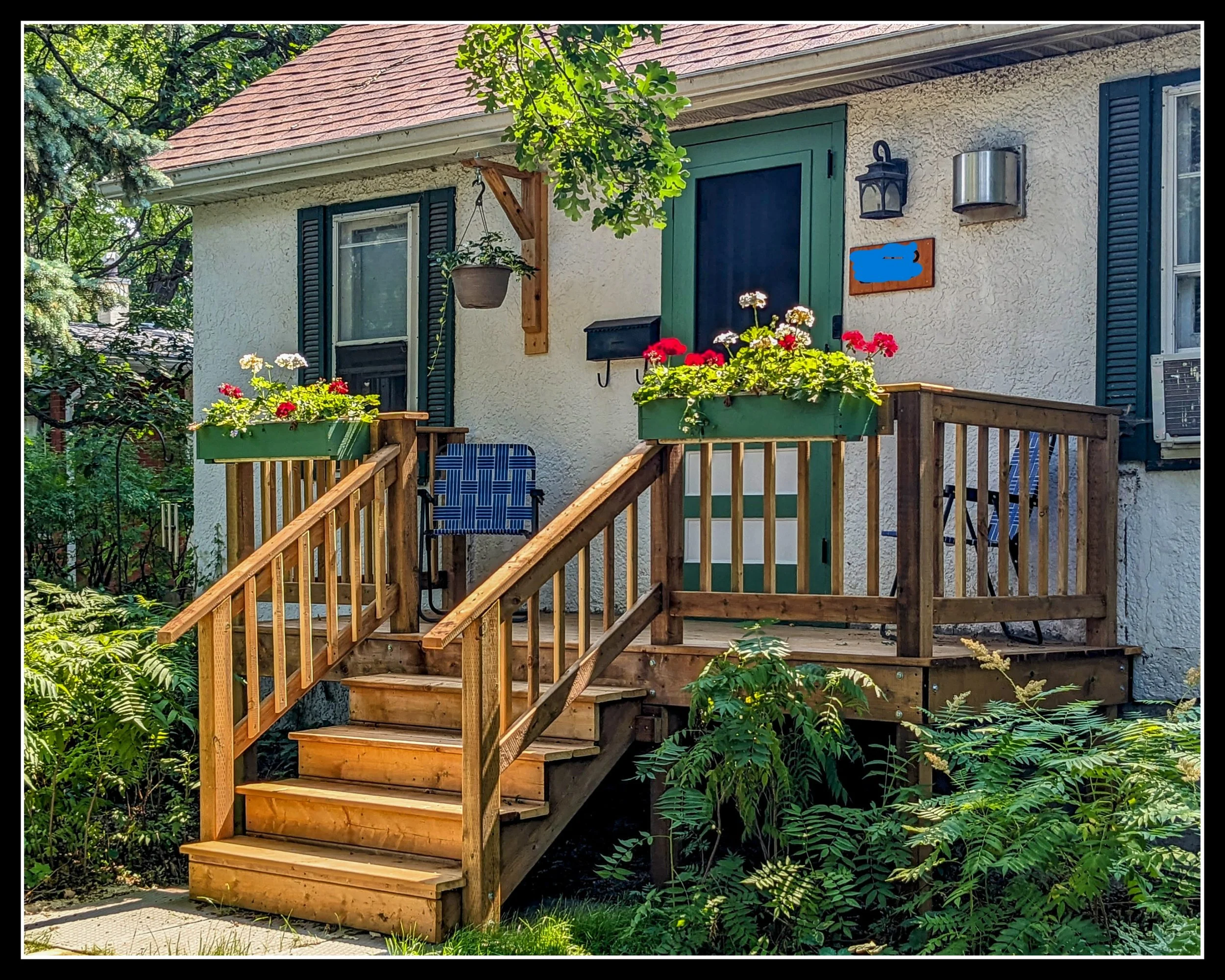
Heritage Restoration — The Prairie House That Refused to Quit
This little prairie house has stood through moves, storms, winters, and time itself. Born in the 1880’s and hauled across Manitoba in the 1940’s, it’s a home that didn’t just survive — it persisted. This Ramble looks at the work of returning strength, warmth, and dignity to a house that’s earned every board and every story it carries.
THE HOUSE THAT ARRIVED BEFORE I DID
This house didn’t wait for me. It didn’t wait for anyone. It crossed the river of time on its own terms — picked up, hauled, and set down, told to start over. No complaints. No drama. Just a house doing what houses do: stand.
Born in the 1880’s
It was born in the 1880’s, back when the world was still shaking off the settler era. and the population was booming. But it didn’t start its life here. It started in St. Vital. Then, sometime in the 1940’s, after WW2 ended, someone jacked it up, put it on wheels, and hauled it down a gravel road into what is now its home — a rural stretch of prairie and stubborn hope. That’s how it got here. Not built. Moved. Dragged across time and dirt and distance because someone believed it still had more to give.
A Prairie Home Built by Hands
When it landed, it had no basement. They cut a hole in the floor and climbed down into the dark to build one. No plumbing. Just a cistern, an outhouse, and a coal furnace that probably coughed more than it burned. The walls were upgraded to fiberboard. The wiring was copper. Everything was simple, honest, and built by hands that didn’t waste motion.
The Old‑Timer’s Story
When I moved in, back in the 90’s, an old‑timer stopped me on the street. He pointed at the place like he was pointing at an old friend. “That house wasn’t built here,” he said. “They moved it in the 40’s. After the war. Came down the gravel road from St. Vital.” He said it the way prairie people say things that matter — plain, steady, without ceremony. Suddenly the whole place made sense. The bones. The stubbornness. The way it sits on the land like it’s earned the right.
Time Always Wins the First Round
But a hundred and forty years is a long time to stand guard on the prairie. The years took their share. They always do. Floors sagged. Walls shifted. Additions leaned. Cold crept in through places cold shouldn’t be able to find. Not because the house was weak, but because time always wins the first round.
That’s where I come in.
I’m not here to modernize this place into something it never was. I’m not here to erase its scars or straighten out its personality. I’m here to give it back what time stole — warmth, strength, dignity, a future. Heritage restoration isn’t about making an old house new. It’s about making an old house whole.
Working With the Grain of the Story
I work with the grain of the story, not against it. I rebuild what needs rebuilding, reinforce what needs strength, and honour what deserves to stay exactly as it is. Every board, every joint, every repair is a conversation between the past and the future. Between the people who built it, the people who carried it, and the people who will live here long after I’m gone.
A House That Already Knows Its Worth
A house like this doesn’t need to be convinced of its worth. It already knows. It has survived moves, storms, winters, families, repairs, mistakes, and miracles. All I’m doing now is meeting it where it stands. Listening to what time has done. Returning what time has taken. Carrying the story forward with the same stubbornness that carried it here in the first place.
Entrusted
Some homes are built.
Some are inherited.
And some — like this one — are entrusted.
Update — Ongoing Research
As restoration work continues, I’m uncovering more clues about this house’s true age — possibly an 1880s balloon‑frame build. For anyone interested in the construction style of that era, I’ve written a deeper dive called Early Balloon Frame Housing in Manitoba.
Stories gathered in one place so the restoration stories stay connected — easy to find, easy to return to, and shaped by the slow work of bringing a home forward.
SHARE
House & Hearth — Inside the Heritage Home
All of House & Hearth lives together, gathered in one place so the restoration stories stay connected — easy to find and easy to return to. One click away.
If you’d like to hear from me only when something big is happening — a launch, a milestone, or a major project — you can join the mailing list below.
Written by David Flather, Red Seal cabinetmaker and founder of Knotty Dave’s Fine Woodworking — a Manitoba shop rooted in heritage restoration, storytelling, and real craft.
All photos shot by David Flather — in the shop, on the road, and in the places where craft and story meet.
Related Stories:
The Workshop Library
If you enjoyed this story, there’s lots more like it inside The Workshop Library — and it’s free to explore.
Wood Archive — species, grain, working properties, and real‑world craft notes
Behind the Grain — the deeper stories inside wood, craft, and heritage
The Working Side of the Craft — tools, shop life, workflow, and the realities of making
Digital to Sawdust — Design Studio — geometry, proportion, visual flow, and design thinking
The Stories of the Shop — the personal side of craft, the shop’s history, and the quiet moments that shape the work
House & Hearth — heritage home restoration, the hearth room, winter culture, and the lived‑in side of craft
I’m just one man with a shop, building this archive one story at a time. If you’d like to follow the journey as it unfolds, explore The Workshop Library — new stories every week.
