

Old Cedar
Quick Answer — Why Old Cedar Performs Better
Old cedar outperforms modern lumber because decades of weathering remove weak earlywood and reveal dense, tight‑grained heartwood that’s more stable, richer in colour, and naturally rot‑resistant.
Old-growth cedar has tighter grain
Reclaimed boards often have deeper colour
Weathering removes weak earlywood
Old cedar resists rot better than new lumber
Milling reveals stable, dense heartwood
Reclaiming Fifty‑Year‑Old Cedar
This story follows the journey of fifty‑year‑old cedar deck boards from demolition pile to finished Muskoka chairs — a look at reclaimed wood, old‑growth character, and the lessons that come from giving material a second life.
BY THE END OF THIS STORY
You’ll understand why reclaimed cedar can outperform modern lumber, how old‑growth character hides beneath weather and rot, and why salvaged wood often carries tighter grain, deeper colour, and more strength than anything you’ll find at a box store. You’ll see how milling reveals the story inside each board — and why giving wood a second life matters.
Read time: 6 minutes
Comparison — Old Cedar vs Modern Cedar
Old‑growth cedar — tighter grain, deeper colour, more heartwood
Modern cedar — faster‑grown, wider grain, more earlywood
Reclaimed cedar — weathered, stable, dense, high‑value
Store‑bought cedar — knotty, sappy, inconsistent
Heartwood vs earlywood — the real reason old cedar performs better
Quick Summary
This story follows fifty‑year‑old cedar deck boards from demolition pile to finished Muskoka chairs. Weathering removed weak earlywood, leaving tight‑grained, old‑growth heartwood beneath the rot. Milling revealed deep colour, stability, and strength — proof that reclaimed cedar often outperforms modern lumber. It’s a lesson in salvage, craft, and giving good material a second life.
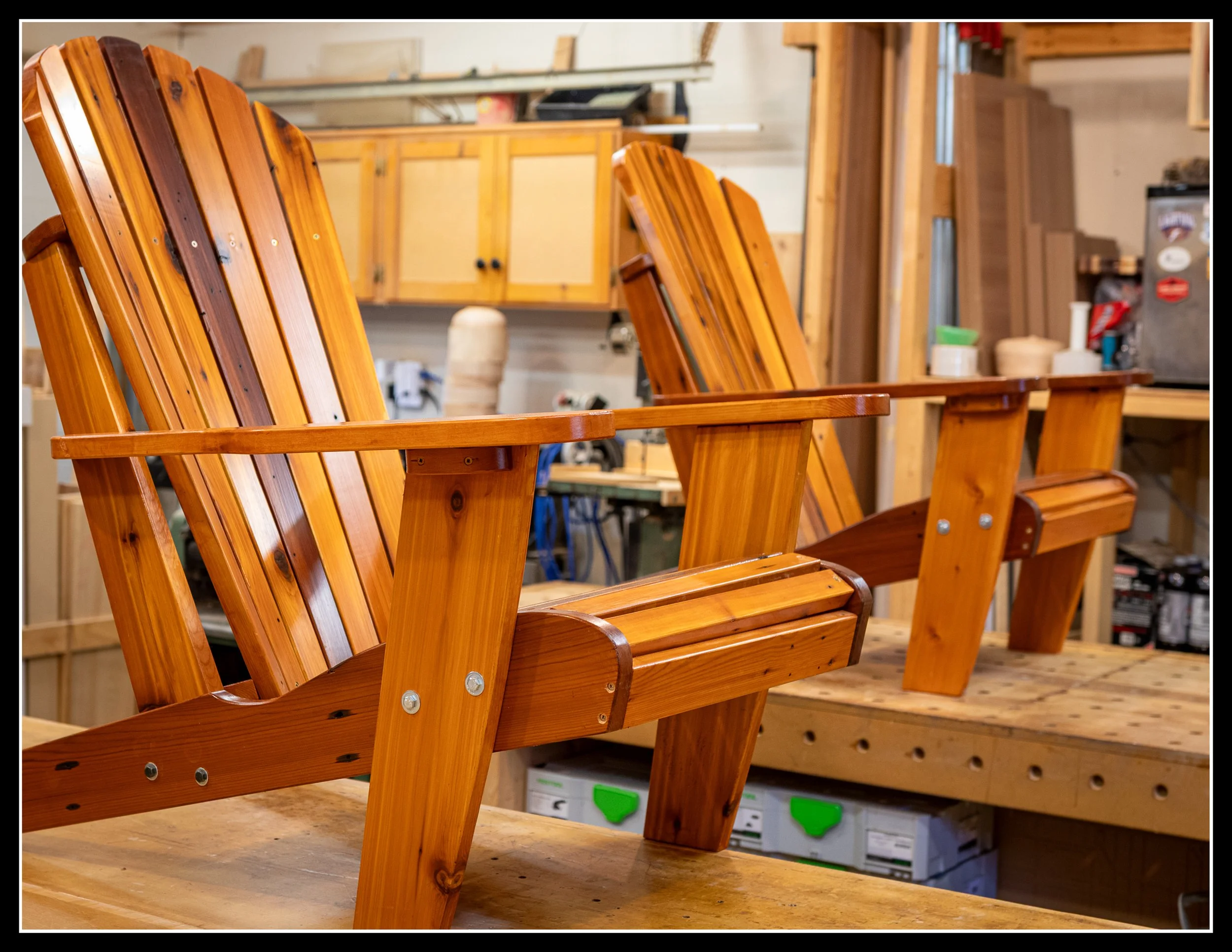
The Finished Cedar Chairs — A Second Life After Fifty Years
Here are the two Muskoka chairs we built from that reclaimed cedar, finished and glowing in the shop. The grain that once hid under rot and weather now shows its depth and colour, proof of what old wood can become with patience, milling, and a bit of sweat. Leo made his first set, I made mine, and together we turned fifty‑year‑old deck boards into something that will sit proudly on the new deck for decades more. A second life for the wood — and good father-son time for us.
Where the Cedar Came From
The cedar was dried and fresh off the planer, its warm, aromatic, sap‑rich scent flooding the shop. The glow of all its summer seasons felt like a small pleasure offered up on a blustery January afternoon.
This wasn’t store‑bought, pre‑milled, knotty, cracked, sappy box‑store lumber. This was reclaimed from our decks last summer as we replaced them—those decks had tested time for fifty years at least, until the rot finally took them. I had no plans for the wood. I just started ripping the deck up on a whim.
Rot, Nails, and Hidden Potential
The boards had soft, spongy end grain that oozed water and decay when squeezed. There was old rot and new rot, yet somehow those old nails held firm despite the wood’s condition. They were slick to the touch, leaving my hands feeling dirty. Piled high with rusted nails standing on guard in a hazardous heap of construction waste, the stack didn’t inspire the usual “oh, the things I can build.” It was more like: how fast can I get this mess off my property.
But to me, I still saw cedar. Yes, it had mould, rot, small stones embedded in the surface, and bugs crawling in the shadows. Many boards, hundreds of nails. But it was cedar that had lasted fifty years serving this house and the people who lived here. I had to look—simply because that’s who I am.
They weren’t all rotten. I took one with deep dark stain and rot and at least ten nails. Pulled them, cut the rotten ends off, and cleaned the board. Three passes through the jointer.
The wood was incredible. Old and deeply weathered, but solid. No rot. It looked like old growth, aged the way real wood does. And this was something that had value—at least to me. This wood wasn’t done. It was just done being a deck. If I wanted, it could be converted into more. If this had been any other wood, it would have been tossed. But cedar? Yeah, it has potential.
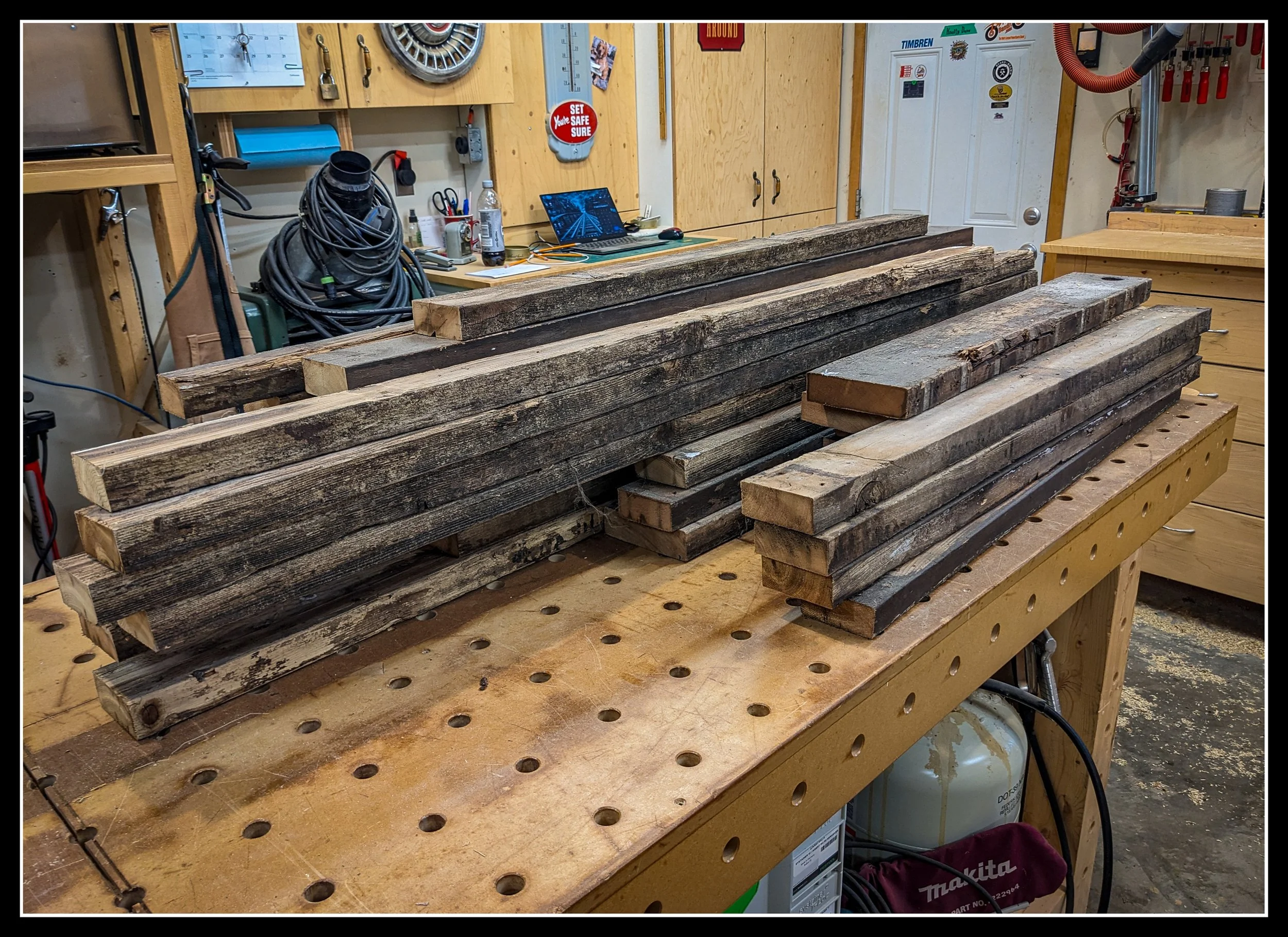
The Cedar After Drying — Ready for Milling
Here’s the reclaimed cedar after drying in the summer air, stacked in the shop and waiting for its second life. Still rough, still weathered, still carrying fifty years of Manitoba seasons — but solid. This is the moment before the planer knives open the grain, before the scent floods the shop, before the boards reveal the old‑growth heartwood hiding under rot and dirt. The turning point where waste becomes material, and material becomes something worth building.
Drying the Boards for a Second Life
Much to the displeasure of my boys, they were voluntold to start pulling nails and cutting off rotten ends. They laid the boards out in the sun to dry in the summer air.
Milling: When the Grain Finally Opens
A couple of weeks later, we brought them into the shop for milling. This was the moment those old, dirty, smelly decking boards breathed again. Their grain opened, showing texture and colour that ran deep from fifty weathered Manitoba years. Each pass through the planer’s—steel knives removing the years—revealed secrets hidden beneath dirt and mold. That rich, signature cedar scent was alive, kept safe from time and weather.
Common Mistakes
Throwing out boards that look rotten
Not drying reclaimed wood long enough
Milling before removing nails
Assuming weathered boards are weak
Skipping grain inspection before milling
Old‑Growth Character Revealed
The grain was tight. The colour deep, rich, and all heartwood. Knots were sparse. It read like old growth. I’ll call it such anyway.
After several hours of sweat and noise in the hot summer shop air—sawdust grit sticking to foreheads and arms—we had a clean, straight pile of cedar ready for building. It was rewarding watching the process unfold. Seeing what could be saved and what couldn’t. Where the wood rotted and where it didn’t.
And yes, it was hard on planer blades and jointer knives. But a trip to the sharpeners shop and forty bucks later, all was back to normal.
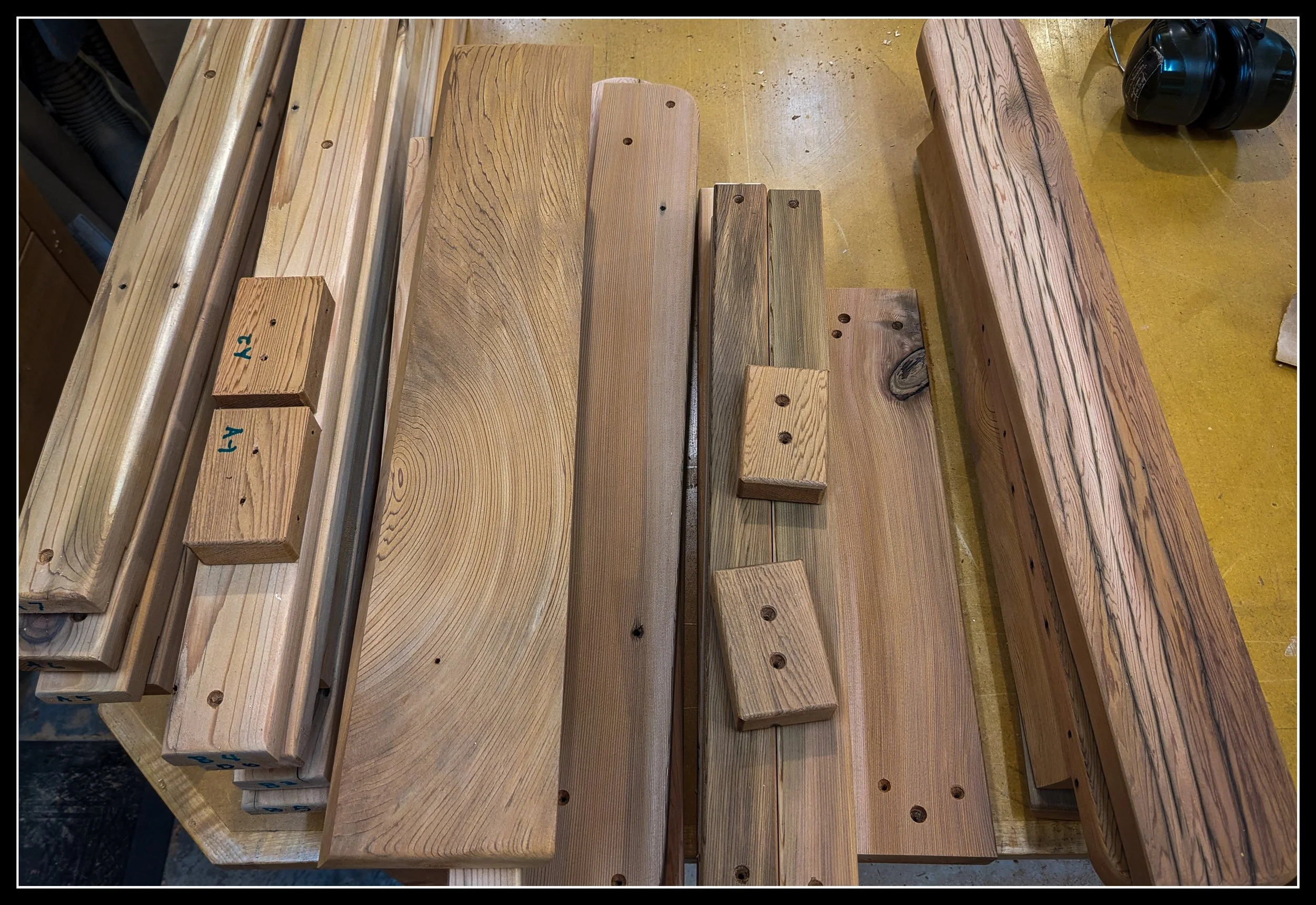
Cedar Grain — Clean, Sanded, and Ready for Finish
A close look at the reclaimed cedar after sanding, showing the warm colour, tight grain, and old‑growth character that survived fifty Manitoba years. This is the stage where the wood finally reveals itself — smooth, straight, and ready for finish. Cedar grain has a signature look: soft shimmer, subtle contrast, and a depth that comes alive once the surface is cleaned. This is the beauty hiding under rot, nails, and weather, waiting for a second life.
Teaching Leo: A New Craftsman’s First Cedar Build
We saved as much material from the dump as we could. Even the nails went for recycling. And after half a century of wear and weather, the wood would give up one more lesson as I taught Leo—a new‑generation craftsman—to build some deck chairs.
Most importantly, this wood gets another chance in our home. These chairs will sit proudly on our new deck, fresh‑faced and with many years left. I can already picture this summer: sitting in a new Muskoka chair, cracking a cold one, knowing exactly where that chair came from.
Building the Muskoka Chairs
But today, the cold wind was whipping snow and whispering through the shop door. The whisper was lost in the hum of machines and the sweet summer scent of cedar. Milling was well underway as Leo and I finally cut into the pile. He had never made deck chairs, so it was time—every cabinetmaker needs to make his first set. My dad taught me, and now I’ll teach my son.
Leo milled, glued, sanded, traced, cut, sanded more, and applied finish to the cedar. Then assembled. Seeing firsthand how those rotted deck boards actually had value. I like building with cedar occasionally—the smell alone is worth it. Compared to what I’m used to, these chairs are a break from chasing perfection. After all, we let them sit outside with squirrels crawling on them, birds crapping on them, and spiders living in any joint they can find. But that’s okay. The rain will keep them clean. Cedar builds are a fresh breath from serious cabinetmaking.
A Second Life for Cedar — And a Good Afternoon
Once the chairs were complete, Leo was proud of his. And we weren’t waiting for summer for a maiden voyage. We took them out into the snow and lit a fire in the pit. Grabbed some drinks and settled in. It was a bit cold, but we had a good afternoon.
What Fifty Years of Weather Leaves Behind
This wood had already survived so many winters in this yard. These chairs weren’t strangers to a Manitoba winter—they’d lived through fifty years of seasons. Sitting in them on their second lease on life, it felt like the wood was saying bring it on.
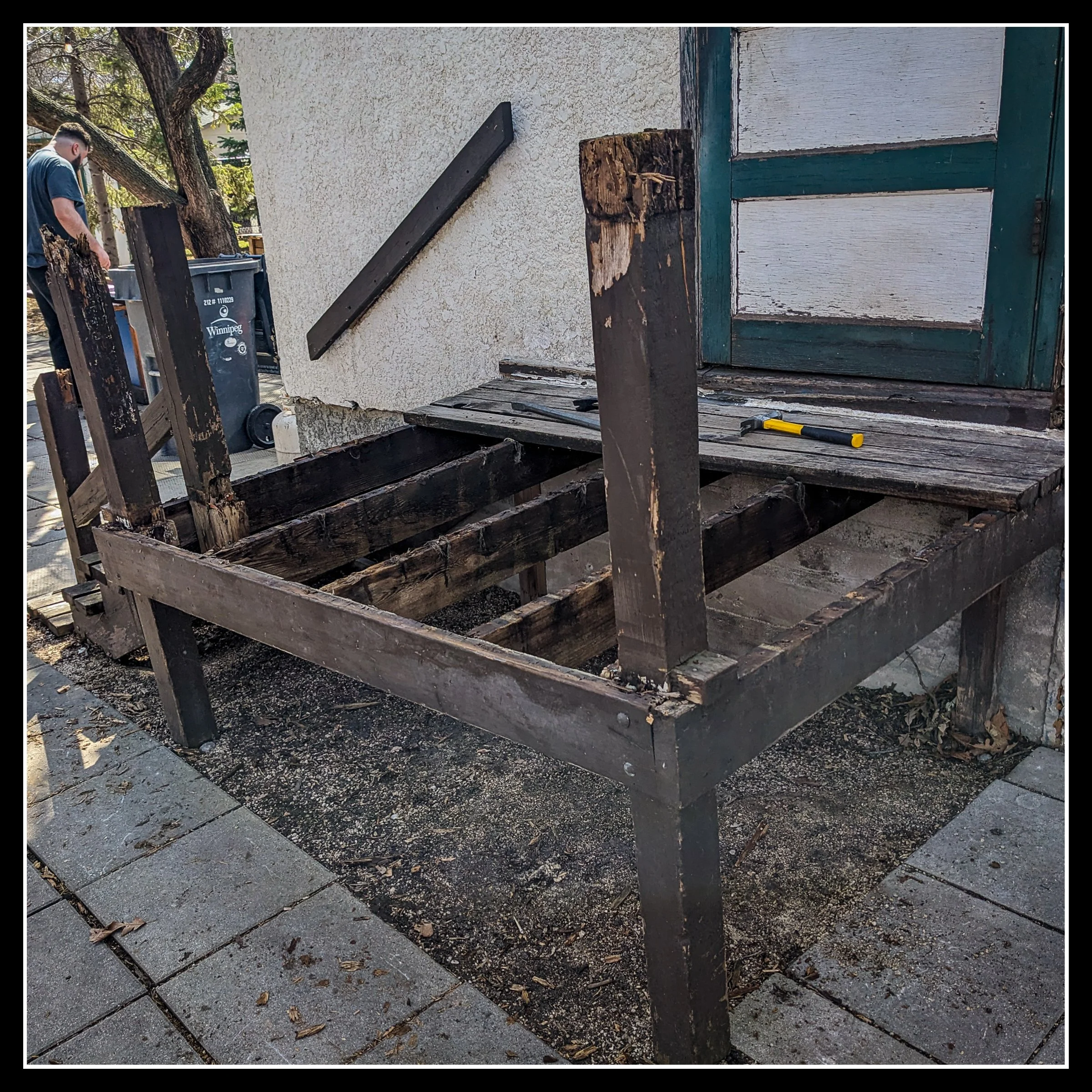
The Old Deck — Where the Cedar Came From
This is one of the old decks we tore apart, the source of all that reclaimed cedar. You can see the rot on the ends, the weathered posts, the cracked boards that had survived fifty Manitoba years. Most people would have tossed this pile without a second thought, but buried inside the mess was tight‑grained, old‑growth cedar waiting to be uncovered. This is where the story starts — the raw material that became Muskoka chairs, memories, and a lesson in seeing value where others don’t.
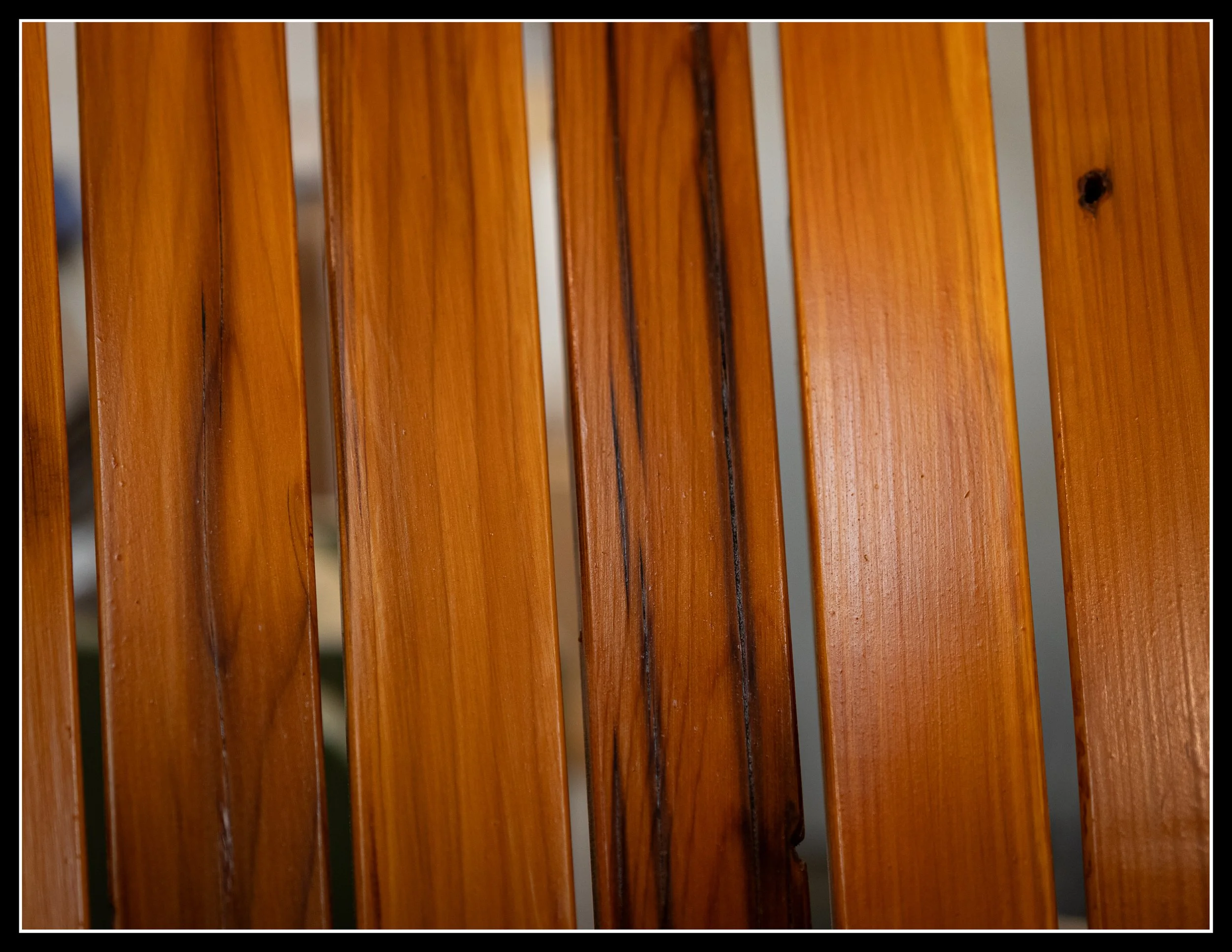
Cedar Grain Revealed — Fifty Years Hidden Beneath Weather and Rot
A close‑up of the reclaimed cedar after milling and finish, showing the tight grain, deep colour, and old‑growth character that had been buried under decades of weather. This is the moment the wood finally breathed again — the proof that those rotten deck boards still carried beauty worth saving. The grain tells the whole story: fifty Manitoba summers, fifty winters, and still enough life left for a second purpose.
Where every species, every board, and every lesson in wood science comes together — a place to explore the materials that shape our craft.
SHARE
The Wood Archive — All the wood Stories in One Place
For the living side of woodworking — the stories shaped by walnut, oak, maple, cherry, elm, cedar, and poplar — head to the Wood Archive.
If you’d like to hear from me only when something big is happening — a launch, a milestone, or a major project — you can join the mailing list below.
Written by David Flather, Red Seal cabinetmaker and founder of Knotty Dave’s Fine Woodworking — a Manitoba shop rooted in heritage restoration, storytelling, and real craft.
All photos shot by David Flather — in the shop, on the road, and in the places where craft and story meet.
Related Stories:
Pine Wood Explained: Eastern White Pine and the Family of Fire‑Adapted Trees
Douglas Fir: The Wood That Built a Generation — Memory, Craft, and Grandfather’s Shop
If you would like to read more about cedar and see more photos, visit:
The Workshop Library
If you enjoyed this story, there’s lots more like it inside The Workshop Library — and it’s free to explore.
Wood Archive — species, grain, working properties, and real‑world craft notes
Behind the Grain — the deeper stories inside wood, craft, and heritage
The Working Side of the Craft — tools, shop life, workflow, and the realities of making
Digital to Sawdust — Design Studio — geometry, proportion, visual flow, and design thinking
The Stories of the Shop — the personal side of craft, the shop’s history, and the quiet moments that shape the work
House & Hearth — heritage home restoration, the hearth room, winter culture, and the lived‑in side of craft
I’m just one man with a shop, building this archive one story at a time. If you’d like to follow the journey as it unfolds, explore The Workshop Library — new stories every week.
