

HEIRLOOM FURNITURE BUILDS — Solid Wood, Real Craft, and the Work That Lasts
Quick Answer — What is “Heirloom Furniture Builds” actually about?
A long‑form story about heirloom‑grade hardwood furniture — solid walnut, maple, elm, and red oak builds shaped by intention, joinery, grain decisions, and the urgency of time. This collection shows how real furniture is made: milling, turning, veneering, finishing, and delivery, all built to last, built to matter, and built to be remembered.
Heirloom furniture is built from solid hardwood
Joinery, grain, and proportion define the craft
Every piece is designed to last decades
Time, illness, and purpose sharpen the work
Each photo is a chapter in the build
Heirloom quality is non‑negotiable
Why Heirloom Work Matters
A look at the hardwood, the joinery, the philosophy, and the life‑shaping urgency behind heirloom furniture — pieces built to last, built to matter, and built to be remembered.
BY THE END OF THIS STORY
You’ll understand what makes heirloom furniture different — the standard, the intention, and the craft behind every piece. You’ll see how time, illness, and purpose shaped the way these builds come to life.
Read time: 5 minutes
Fast Summary
This story explores the heirloom side of the shop — solid hardwood furniture built with intention, precision, and long‑form craft. It follows the process from raw lumber to finished pieces: milling, joinery, turning, veneering, finishing, and delivery. These builds carry the emotional weight of time, illness, and purpose, showing how heirloom furniture becomes legacy, memory, and the heart of real woodworking.
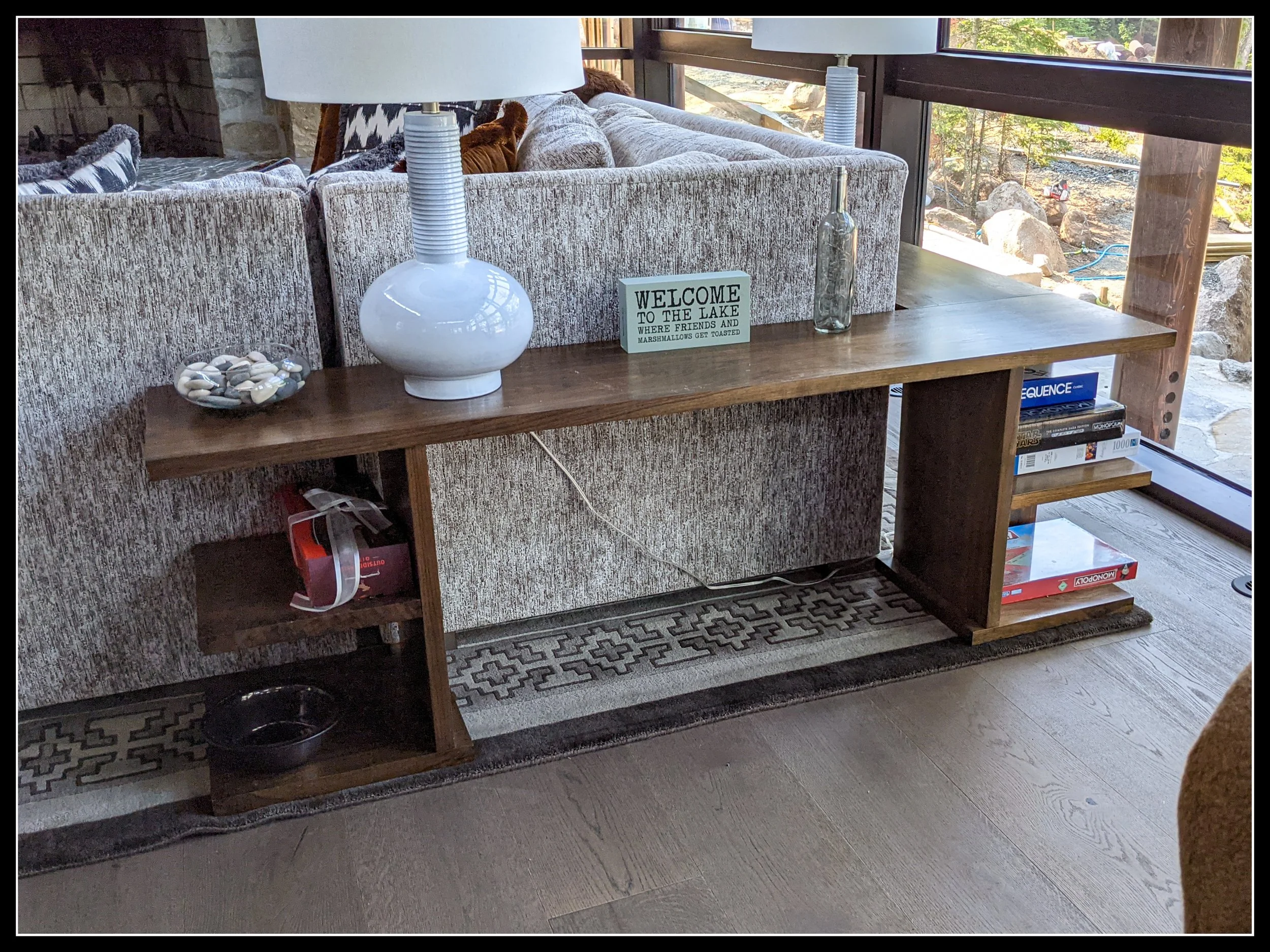
Solid Walnut Wrap‑Around Sofa Table
This sofa table is solid walnut, built to wrap around the corner of the sofa and give the room real hardwood presence. The grain runs clean across the top and shelves, and the design blends storage with function — a place for board games, lamps, and everyday living. Walnut is perfect for heirloom furniture: dense, stable, rich in colour, and strong enough to stay beautiful for decades. This piece isn’t mass‑produced; it’s built with intention, built to fit the room, and built to last.
When Life Gets Stripped Down
There’s a point in life where everything gets stripped down to what’s real. Cancer does that. It changes the way you see time — how you spend it, where you spend it, and who you spend it with. It forces you to decide what matters and what doesn’t.
Creating Matters
For me, creating matters. Look at this website — I built this. I spend hours shaping stories, refining pages, improving the work so anyone who lands here finds something worth reading. I’m proud of it. And I’ll be back tomorrow, because I know things like this — the work I make — are what people will remember if this disease ever takes me.
Why Heirloom Quality Is Non‑Negotiable
But I’m a builder. Whether I’m writing a story, filming a YouTube video, shooting photos, or standing at the bench with a piece of walnut, my mind is at peace when I’m creating. This is my job, and dammit, I love it.
And because time feels different now, there’s no half‑assed approach left in me. Everything I build has to be the best I can do. It has to be heirloom quality. Cancer is at my heels — harsh, relentless — and that awareness sharpens every decision. If I’m going to spend my time on something, it has to be worth it. No regrets. No wasted hours. If I start a build, it’s because I know it will be amazing.
BUILT FOR A CENTURY. BUILT FOR A FAMILY. BUILT FOR A STORY.
I don’t think about building something that will outlive me — life doesn’t guarantee that kind of timeline. I think about the people who will sit at the table. How many tears it’ll see. How many laughs it’ll hear. How many meals it’ll hold. Thanksgiving dinners, birthday cakes, late‑night coffees. New babies will touch it for the first time. Old folks will visit it for the last time. And all those memories start right here in my shop.
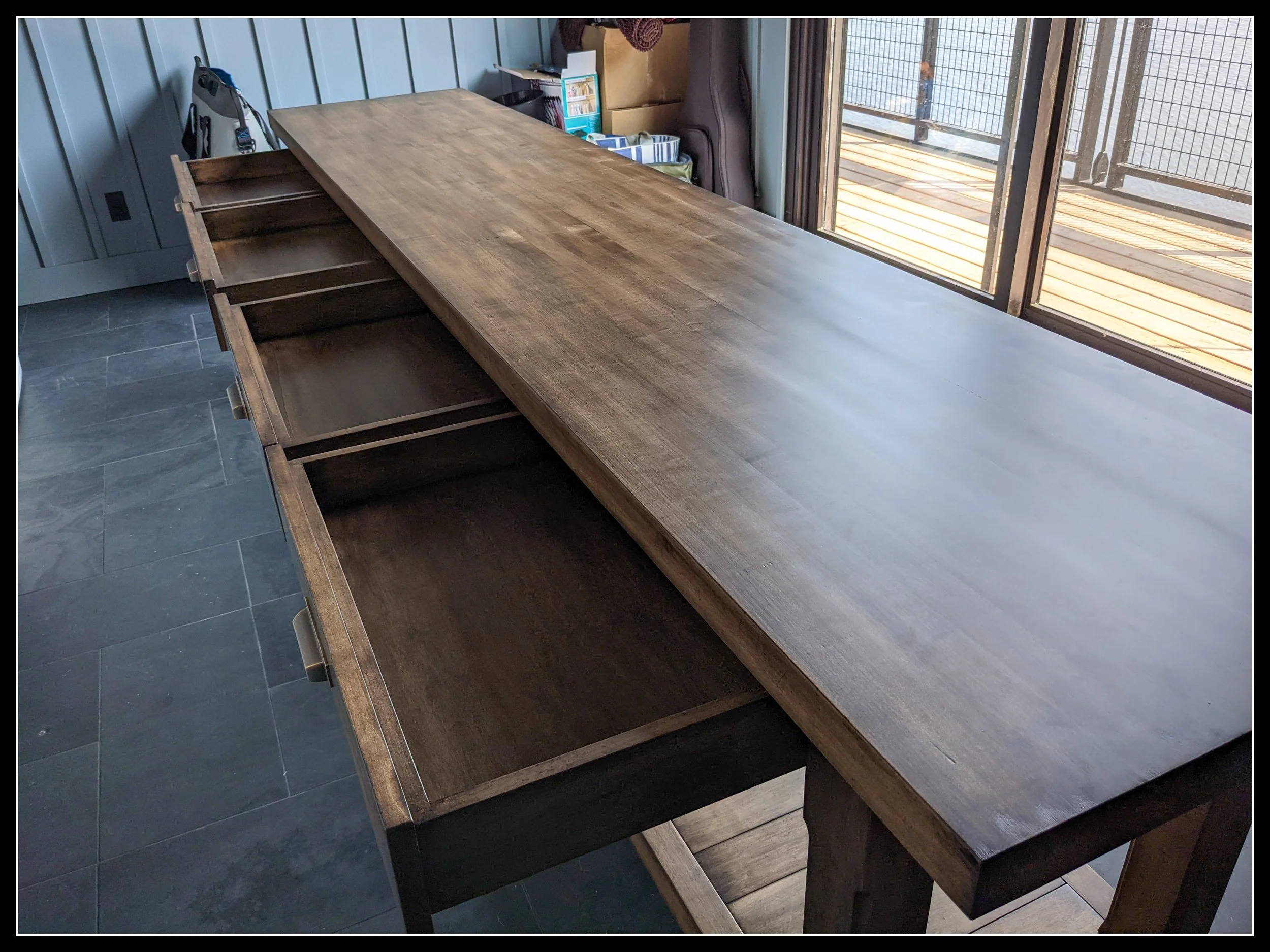
Solid Maple Heirloom Table With Maple Drawer Boxes
This table is built from solid maple, and every drawer is solid maple to match — no skipped details, no shortcuts, no mixed materials hiding inside. The grain runs clean across the exterior, the drawer boxes carry the same hardwood weight, and the entire piece feels like a single, unified build. Maple is perfect for heirloom furniture: strong, stable, bright, and honest. A table like this isn’t just functional — it’s built to last, built to be repaired, and built to be passed down. Solid wood everywhere, craftsmanship in every joint, heirloom in every inch.
What Heirloom Means to Me
To me, “heirloom” means real. Skill in every joint. Design refined until it’s right. Local. Canadian. Not something you click and ship — something you build and earn. When someone touches a piece I’ve made, I want them to feel that it’s theirs. Not generic. Not mass‑produced. A piece built for them and no one else. Solid. Honest. Home.
As for joinery, grain, finish, longevity? I don’t worry about it because I don’t make crap. Crap is made elsewhere. I do this because I love it — because it’s a lifestyle, not a paycheck. My furniture isn’t landfill in five years. It gets refinished, repaired, passed down. Maybe for a century. Maybe longer. That’s the point.
And the emotional core at the centre of it? It’s the moment I step back, look at the finished piece, and say:
“Damn. I built that.”
That feeling never gets old.
I like the whole process — from meeting the client to sketching the design to choosing the material. I love picking up and unloading an order of hardwood. It’s one of the most real, grounded materials I can get. Heavy, honest, full of potential. Unpacking rolls of veneer is the same: every order is different, every sheet a surprise. You never know what you’re going to get until you peel it open.
Then comes the milling. The first cuts. The discovery of the order of operations — the part where yesterday’s impossible problem becomes today’s clean solution. That’s the craft. That’s the puzzle. That’s the part that keeps a woodworker humble and hooked.
The Moment It Stands on Its Own
And then there’s the moment when the raw piece stands on its own for the first time. No finish yet. No hardware. Just form. Just promise. That’s when you know whether you’ve built something worth finishing.
Finishing — The Final Breath
Finishing is its own art. Jon at Western Paint gets the shine, the depth, the texture just right. He brings the piece to life in a way that makes the grain speak. It’s the final breath before delivery.
Delivery — The Reward
And delivery — that’s its own reward. Dropping off a finished project, seeing it in its new home, watching it settle into the room like it was always meant to be there. Just the other day, I was at a client’s house having coffee. She opened a drawer for a spoon, and I thought, “Now that looks like a nice drawer box.” Then I remembered — I built it years ago.
That’s a good feeling.
That’s heirloom.
That’s why I do this.
What Heirloom Really Means — Gallery
Heirloom furniture isn’t a style. It’s a standard. It’s the difference between something that fills a room and something that defines it. Every piece in this collection was built the way real furniture used to be built — solid hardwood, honest joinery, hand‑shaped details, and finishes that reveal the grain instead of hiding it. Walnut, maple, elm, red oak, white oak… each species chosen with intention, each project carrying its own story. These aren’t mass‑produced pieces. They’re one‑of‑a‑kind builds made to outlast trends, outlast wear, and outlast us. Step into the work. Every photo is a chapter. Every detail is a promise.
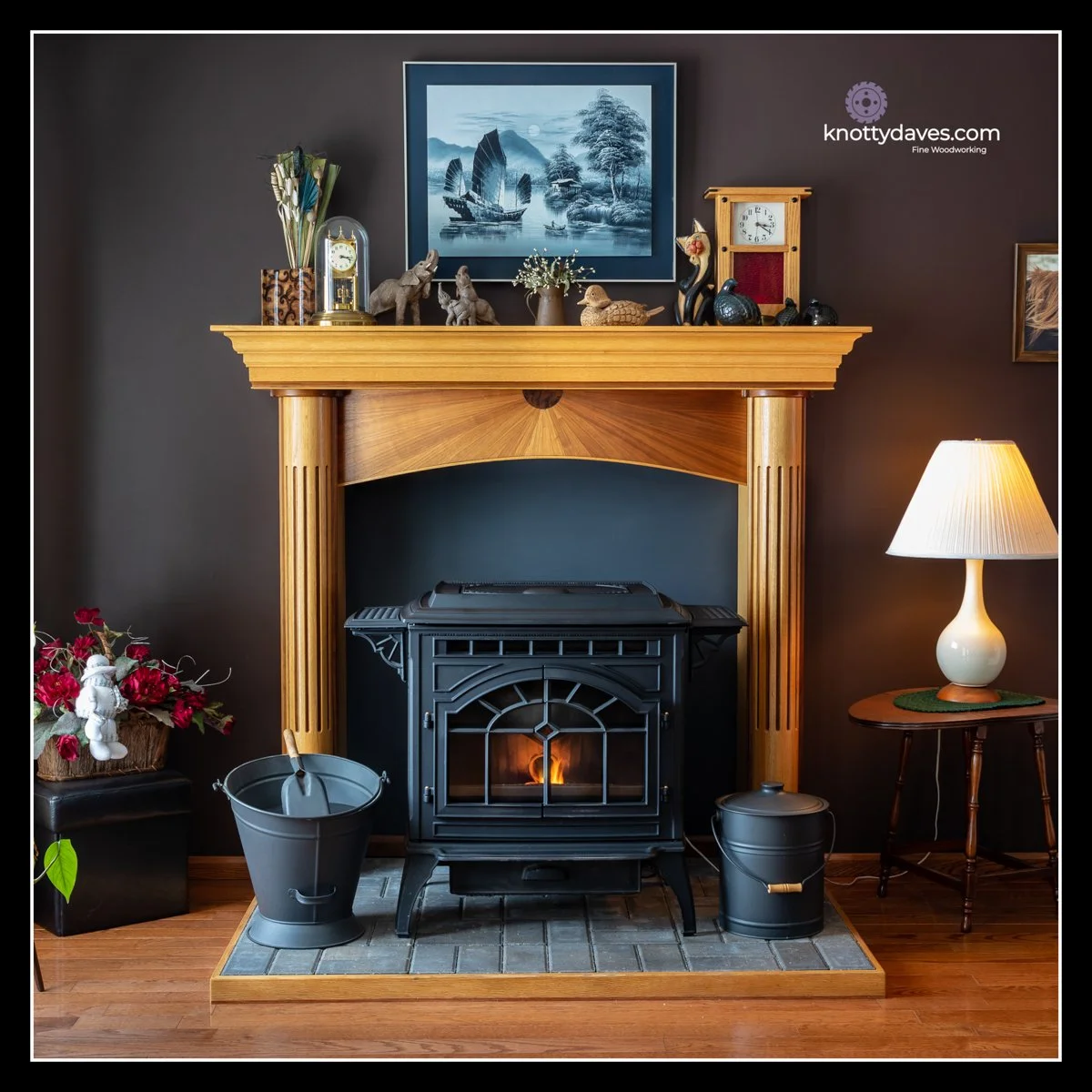
Red Oak & Walnut Heirloom Mantel
This mantel is a full heirloom build — red oak, walnut, veneer work, fluting, inlay, and a starburst arch built for a cast‑iron stove. The red oak columns carry hand‑cut flutes with walnut inlay, the arch is veneered in a tight starburst pattern, and the whole piece anchors the room with real hardwood weight. This is the kind of furniture that defines a home: Canadian hardwood, traditional joinery, and a design meant to last a century. Built for a cast‑iron stove, built for daily use, built to be remembered.
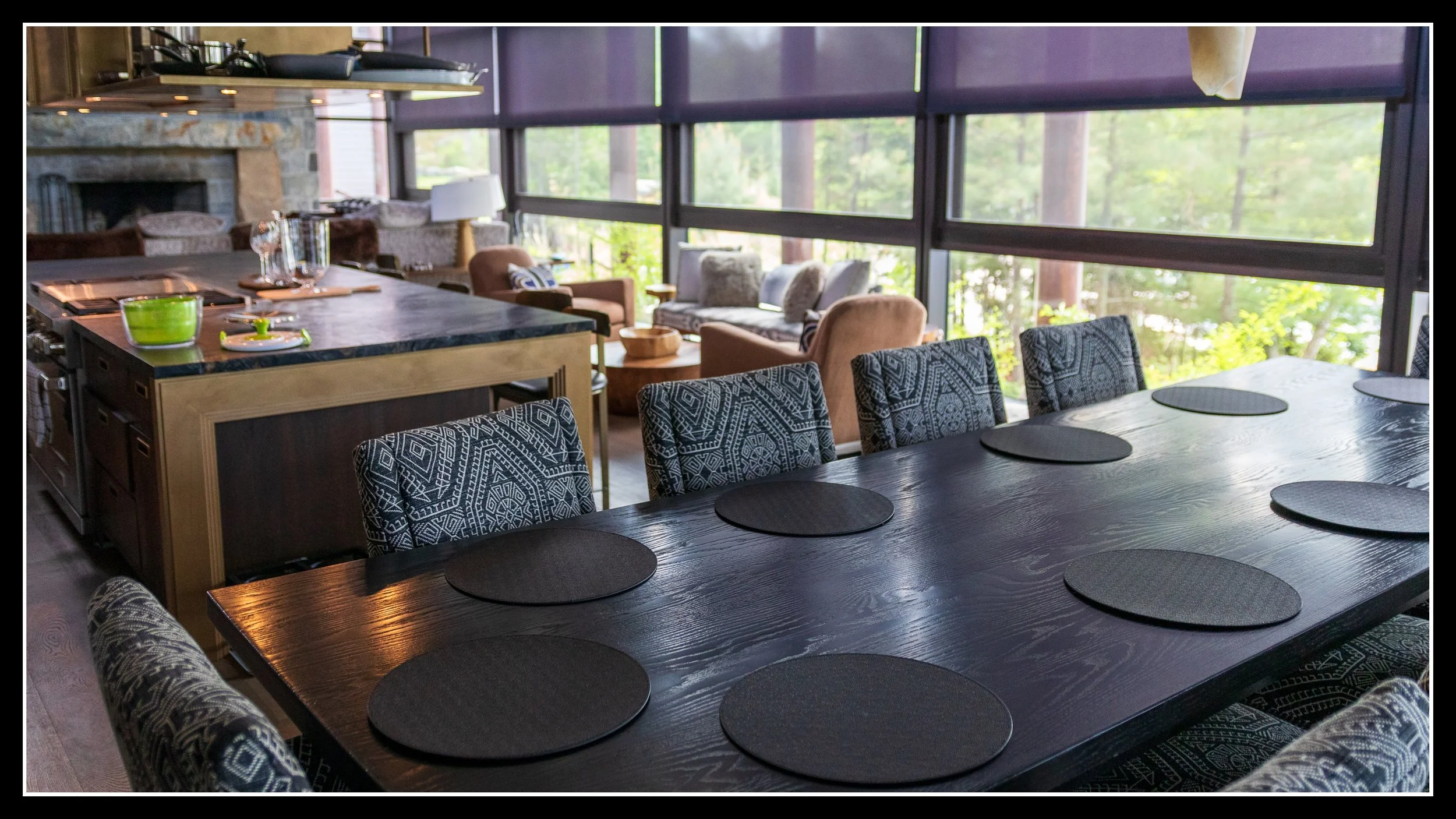
12‑Foot Red Oak Dining Table
This is a 12‑foot red oak dining table — solid wood top, dark stain, built for a room that needs presence. Long‑grain red oak carries the weight, the length, and the warmth, giving the space a real hardwood anchor instead of a factory piece. Tables like this aren’t bought; they’re built. Every board milled, every joint aligned, every inch finished for a century of meals, gatherings, and family stories. This is heirloom furniture: Canadian hardwood, solid construction, and a design meant to outlast trends and time.
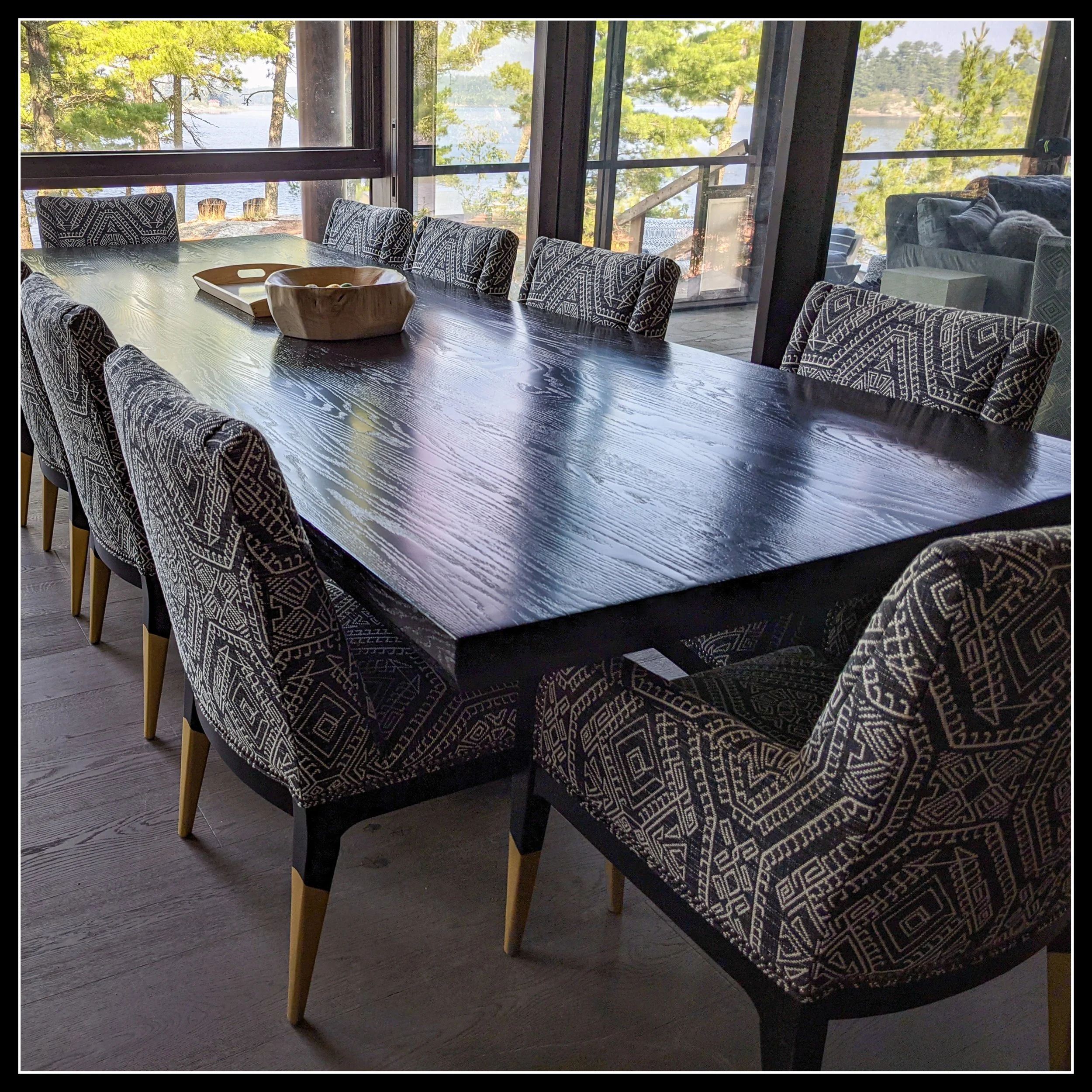
12‑Foot Dark‑Stained Red Oak Dining Table
This is the second image of the 12‑foot by 4‑foot red oak dining table — dark‑stained, long‑grain, and built to command the room. Red oak takes a dark stain beautifully, pulling out the grain without losing clarity, and the length gives the table a presence you can feel the moment you walk in. This is heirloom work: solid hardwood, clean lines, and a scale that turns the dining room into a gathering place. Two images tell the full story — the craftsmanship up close, and the impact in the room.
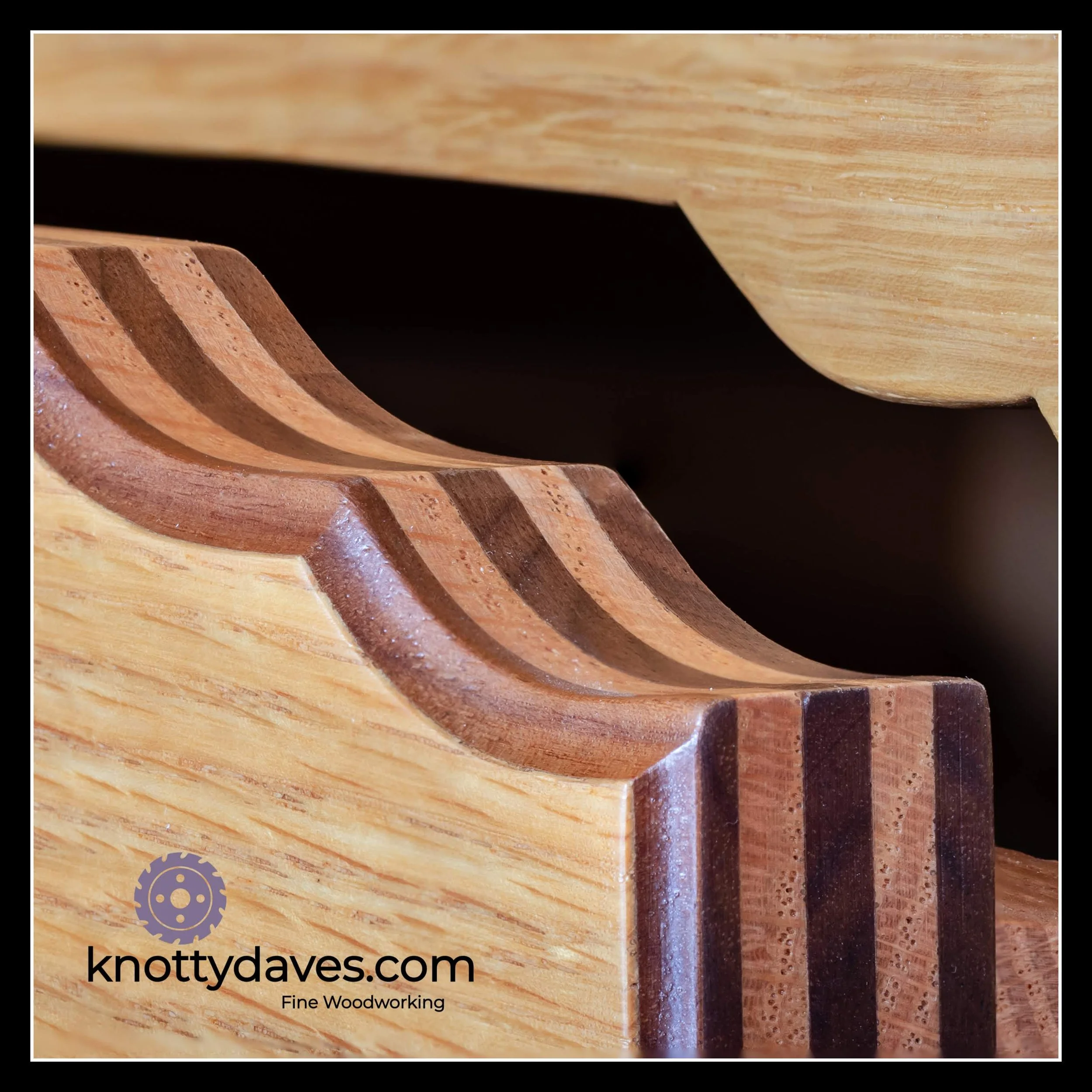
Red Oak & Walnut Bent‑Lamination Drawer Front
This drawer front is a bent‑lamination of red oak and walnut — layered, curved, profiled, and finished clear to show every line of the grain. The alternating hardwood layers create a sculpted detail that only hand‑built furniture carries. No veneer shortcuts, no factory shortcuts — just real Canadian hardwood shaped into a curve that stays stable for decades. This is heirloom joinery: red oak for strength, walnut for contrast, and a profile cut clean enough to stand as its own piece of craftsmanship.
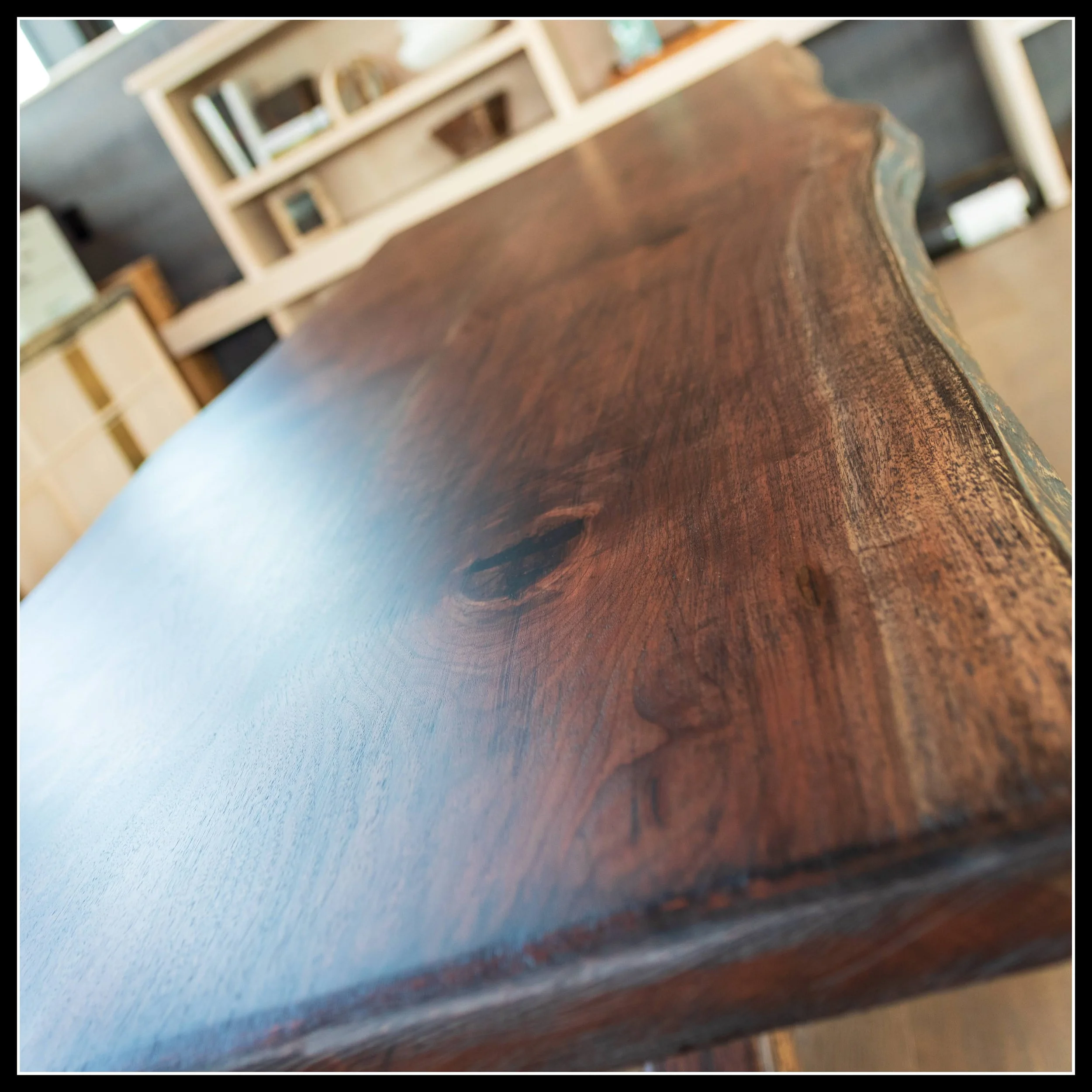
Hand‑Scraped Walnut Live‑Edge Desk Top
This desk top is solid walnut, hand‑scraped and finished to carry a rugged, aged look — the kind of surface that feels lived‑in from day one. The live edge keeps the natural line of the tree, and the hand scraping adds depth, texture, and character you can’t get from machines. Walnut is built for heirloom work: dense, stable, rich in colour, and perfect for a desk meant to last decades. This is real hardwood craftsmanship — Canadian walnut, hand‑tooled surface, and a finish that celebrates the grain instead of hiding it.
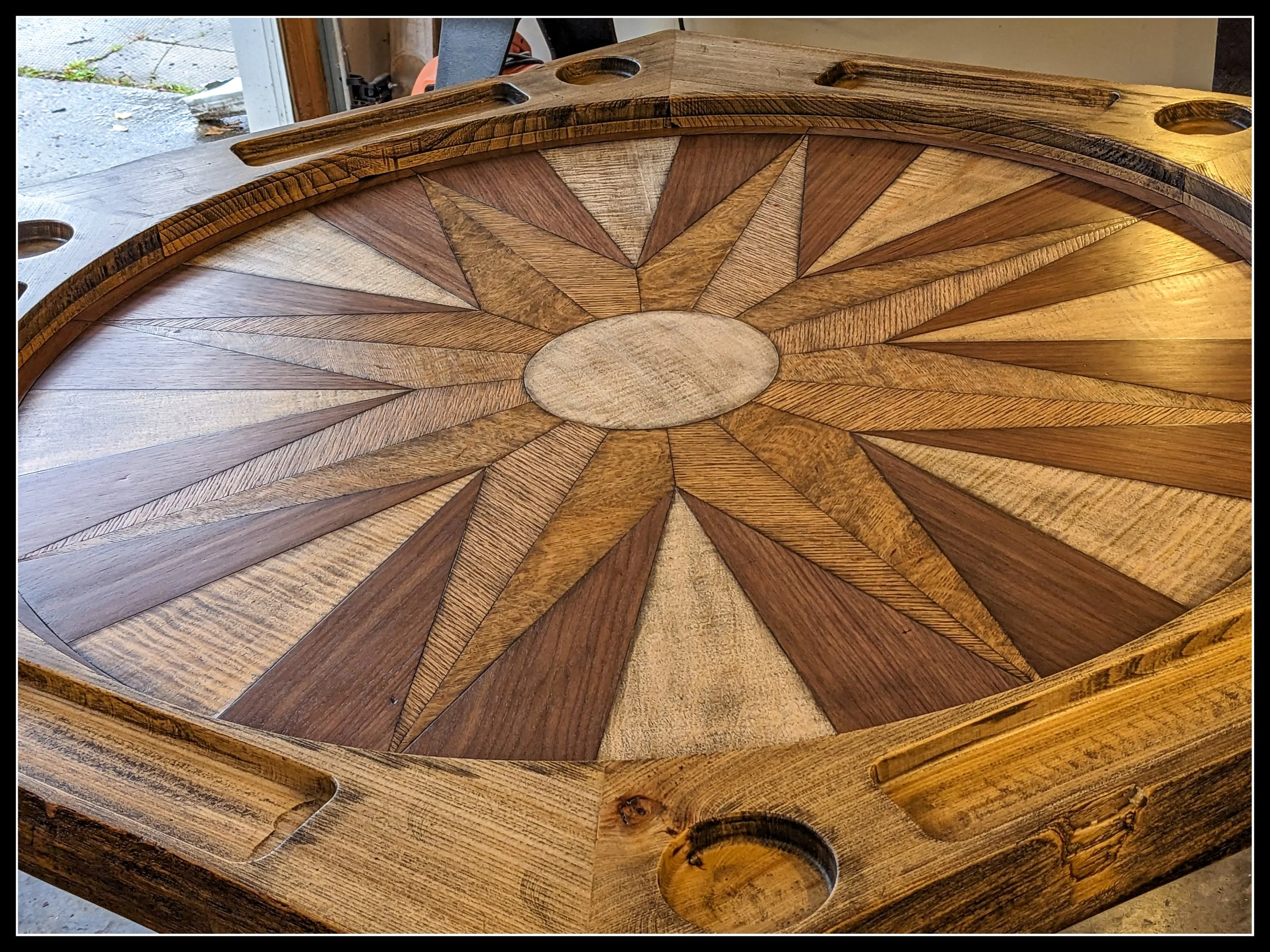
Elm Racetrack Games Table With Starburst Veneer
This games table uses a solid elm racetrack paired with a starburst veneer made from maple, walnut, red oak, and white oak. The mixed hardwood species create contrast, texture, and movement — the eye follows the geometry from the centre out to the racetrack. Elm gives the table its strength and warmth, while the starburst pattern adds heirloom detail you only get from hand‑cut veneer work. This is fine woodworking: multi‑species design, geometric precision, and a table built for late‑night cards, conversation, and decades of use.
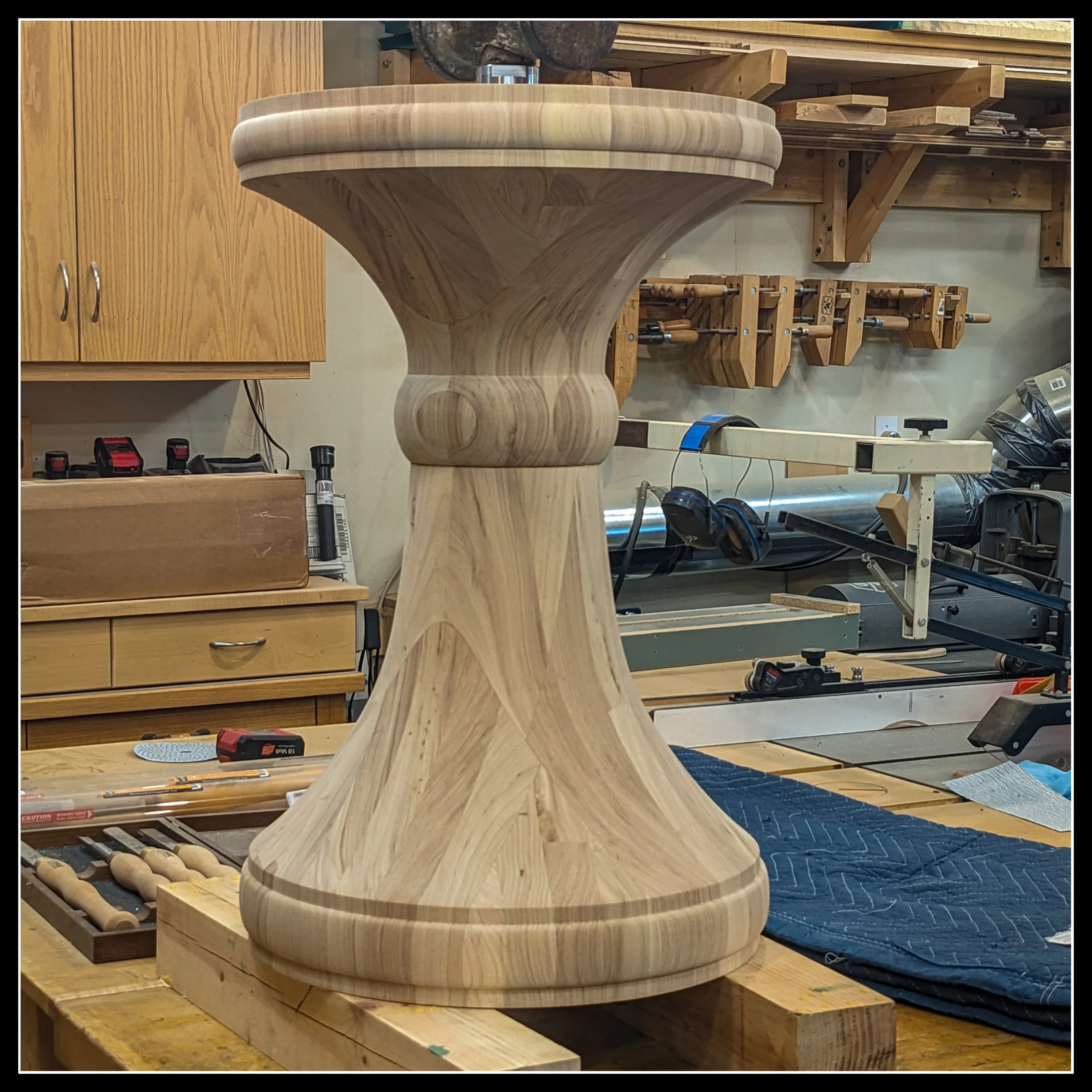
Solid Elm Pedestal for Starburst Games Table
This is the full pedestal assembled — solid elm, turned clean, balanced, and built to carry the starburst games table. Elm is one of the best hardwoods for pedestal work: strong, stable, shock‑resistant, and full of grain movement that shows beautifully once the curves come off the lathe. The two turned sections lock together into a single form, giving the table a centre column that feels substantial and heirloom‑grade. This is fine woodworking at scale: solid elm, precise turning, and a pedestal built to support a multi‑species starburst top for decades of cards, conversation, and family use.
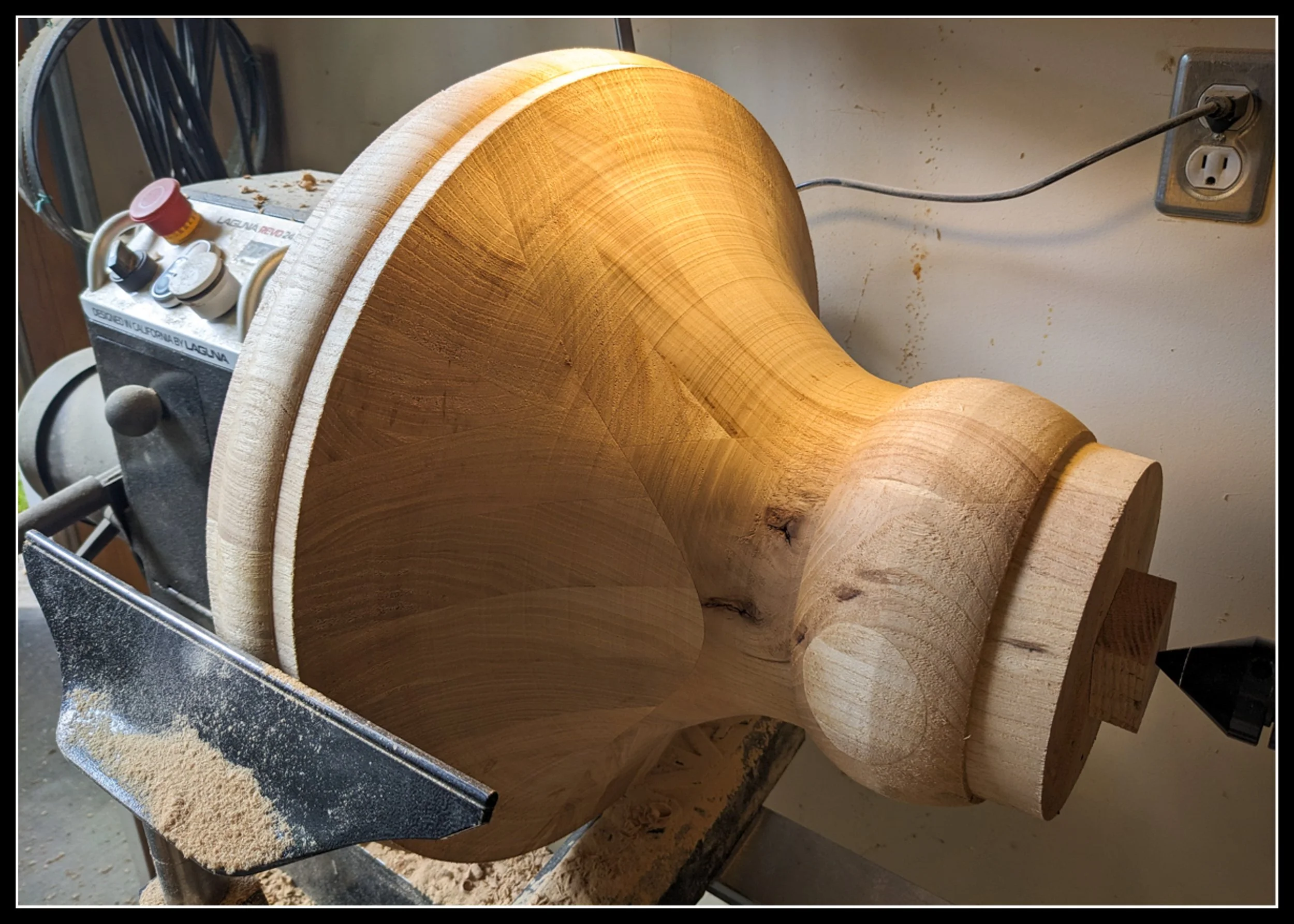
Elm Pedestal Turned on the Lathe
This is the elm pedestal for the games table, turned on the lathe in two parts. Elm is perfect for pedestal work — strong, shock‑resistant, and full of grain character that shows beautifully once the curves come off the lathe. The two‑part turning keeps the proportions clean and the geometry tight, giving the finished pedestal the strength and balance an heirloom games table needs. This is classic hardwood turning: solid elm, careful shaping, and a form built to carry weight for decades.
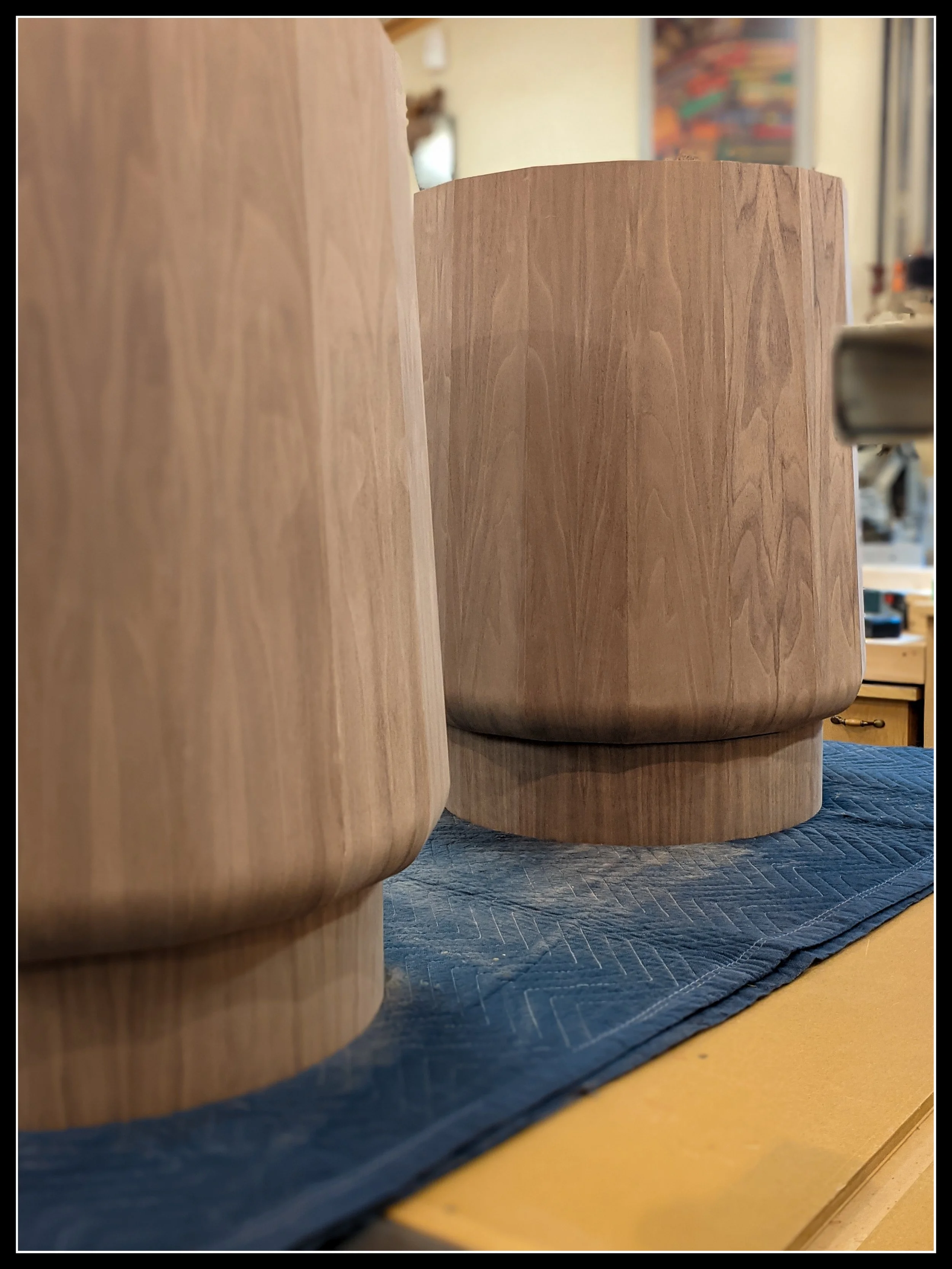
Walnut Stave‑Built Pedestals for 12‑Foot Oval Table
These pedestals are solid walnut, cut into staves, glued up thin, and veneered to create a one‑of‑a‑kind form for the 12‑foot oval table. Stave construction lets the walnut curve cleanly without stress, giving the pedestal a seamless round profile that looks carved from a single block. The veneer adds depth, contrast, and grain movement that machine‑made columns can’t replicate. This is heirloom work: custom geometry, solid hardwood, hand‑built structure, and a design meant to anchor a table built for generations.
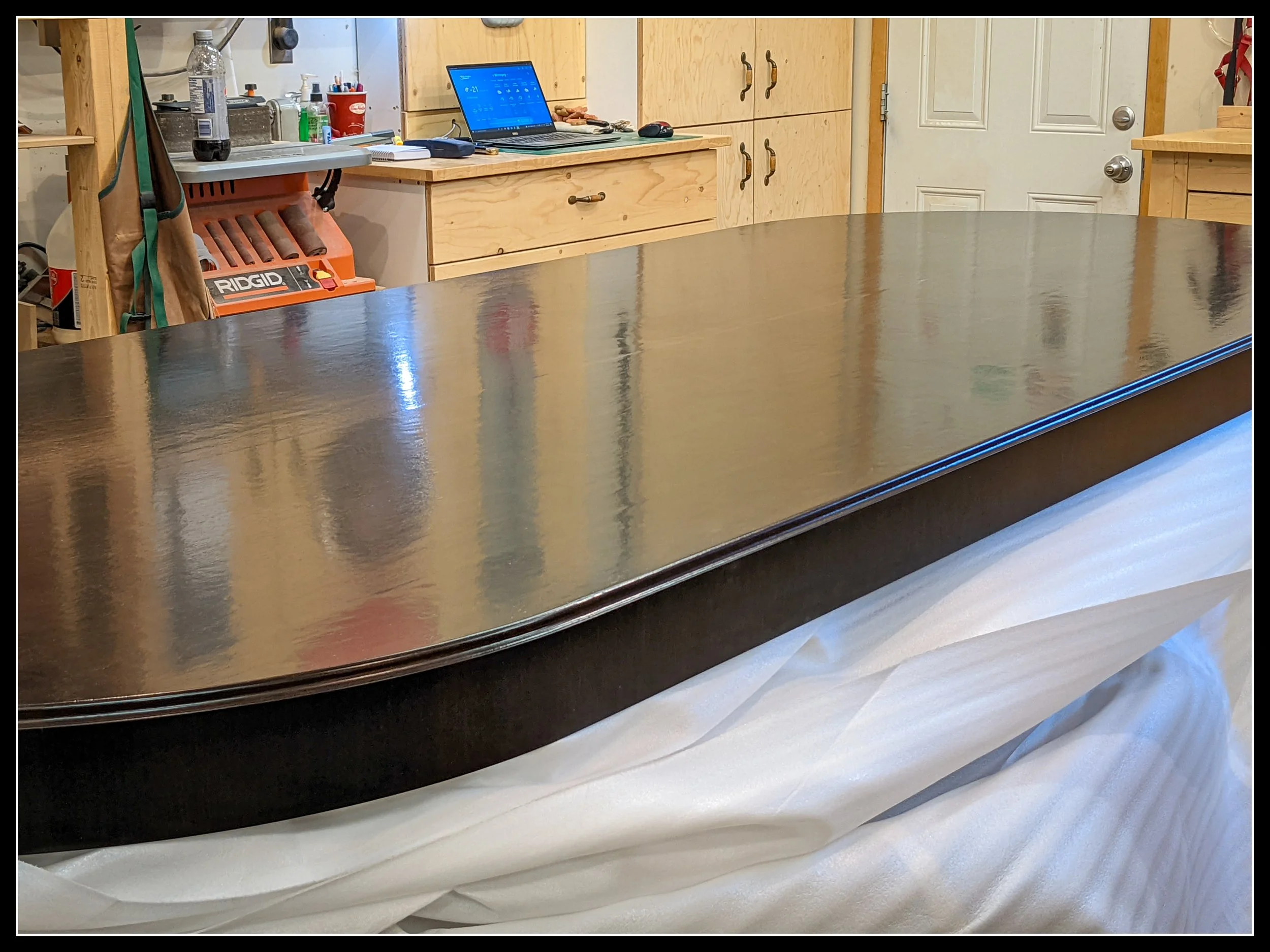
12‑Foot Walnut Oval Table Top
This is a 12‑foot walnut oval top, freshly stained and finished in the shop and ready for delivery. Walnut carries a depth and richness that comes alive under finish — the grain darkens, the figure sharpens, and the whole surface takes on that heirloom glow you only get from real hardwood. Large oval tops like this demand precision: perfect curves, balanced grain layout, and a finish that stays consistent across twelve feet of solid walnut. This is heirloom work at scale — built to anchor a room, built to last, built to be remembered.
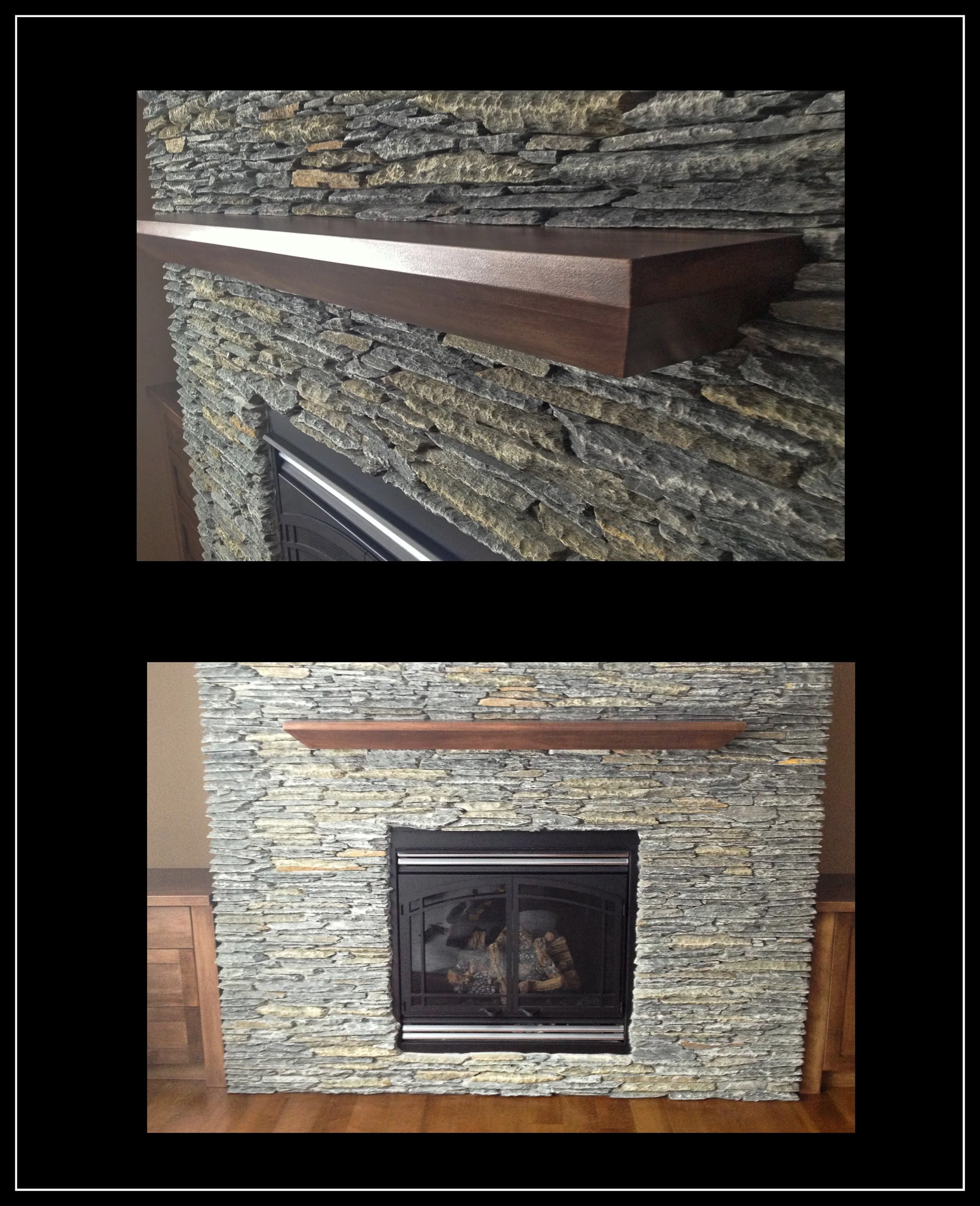
Solid Maple Heirloom Mantel
This mantel is solid maple, stained dark, and built to prove that heirloom doesn’t need to be complicated or oversized. Sometimes the simplest piece — clean lines, real hardwood, honest joinery — carries the most weight in a room. Maple takes stain beautifully, holding a deep tone while still showing its tight grain. Set above stone, it becomes a warm, grounding element that frames the fireplace without overpowering it. This is heirloom in its purest form: solid wood, thoughtful proportion, and craftsmanship that speaks quietly but lasts for decades.
Heirloom Furniture Builds — Closing Notes
Fourteen images, dozens of species, and a lifetime of craft — that’s the story these pieces tell. Every table, pedestal, rail, mantel, and surface in this collection carries the same promise: real wood, real work, built to last. Heirloom doesn’t shout. It doesn’t need to. It shows up in the details, the grain, the weight, the choices you make long before finish day. If you want more stories like this — the quiet kind, the honest kind, the ones shaped by hand and meant to outlive trends — step into Cabinetry. It stands right beside this page, carrying the same heart, the same craft, and the same commitment to the work. Or read Knotty Dave’s Fine Woodworking — that story carries the same beat and a gallery of photos as well.
live together, gathered in one place so the foundational pieces of the craft stay connected — easy to find, easy to return to, and built to carry the heart of the shop.
SHARE
The Stories of the Shop — The Heart of the Work
If you want the stories shaped by cabinetmaking roots, heirloom builds, early shop days, and the craft history behind Knotty Dave’s Fine Woodworking — the personal side of the workshop — Stories of the Shop is one click away.
If you’d like to hear from me only when something big is happening — a launch, a milestone, or a major project — you can join the mailing list below.
Written by David Flather, Red Seal cabinetmaker and founder of Knotty Dave’s Fine Woodworking — a Manitoba shop rooted in heritage restoration, storytelling, and real craft.
All photos shot by David Flather — in the shop, on the road, and in the places where craft and story meet.
Related stories:
The Workshop Library
If you enjoyed this story, there’s lots more like it inside The Workshop Library — and it’s free to explore.
Wood Archive — species, grain, working properties, and real‑world craft notes
Behind the Grain — the deeper stories inside wood, craft, and heritage
The Working Side of the Craft — tools, shop life, workflow, and the realities of making
Digital to Sawdust — Design Studio — geometry, proportion, visual flow, and design thinking
The Stories of the Shop — the personal side of craft, the shop’s history, and the quiet moments that shape the work
House & Hearth — heritage home restoration, the hearth room, winter culture, and the lived‑in side of craft
I’m just one man with a shop, building this archive one story at a time. If you’d like to follow the journey as it unfolds, explore The Workshop Library — new stories every week.
