

Custom Cabinetry & Architectural Millwork — Structure, Craft, and the Work Behind Every Room
Quick Answer: What makes cabinetry real craft?
Cabinetry is the structural backbone of woodworking — the part that carries the doors, trim, lighting, hardware, and architectural details. Real cabinetry blends design, engineering, and execution: square boxes, tight reveals, clean hinge lines, durable materials, and joinery that behaves for decades. It’s the work that makes every room function long before the finish ever shines.
Cabinetry — structure, precision, engineering
Furniture — form, proportion, joinery
Trim carpentry — detail, finish, installation
Millwork — architectural integration
Solid wood builds — material‑driven craft
Where Structure Meets Craft
Cabinetry tells the truth about a craftsman. Every cut, every reveal, every hinge line, every finish — it all shows whether the builder knows what they’re doing. These projects span homes, cottages, medical offices, jewellery stores, and architectural rooms, each one built to last and designed to work. Gloss‑grey arches, fluted doors, lathe‑turned panels, hidden mechanisms, granite‑top commercial counters, maple retail displays, and clean modern kitchens — sixteen pieces of proof that real cabinetry is equal parts design, engineering, and execution. This is high‑skill, long‑term, professional woodworking, built in Manitoba and made to outlive trends.
BY THE END OF THIS STORY
You’ll understand why cabinetry is the structural backbone of the craft — the part that holds every story together. You’ll see how design, engineering, and execution shape the work long before the finish ever shines.
Read time: 5 minutes
Fast Summary
This story explores cabinetry as the structural backbone of woodworking — the part that carries the doors, trim, lighting, hardware, and architectural details. It follows the craft from apprentice days to high‑skill architectural builds, showing how design, engineering, and execution shape every room long before the finish ever shines.
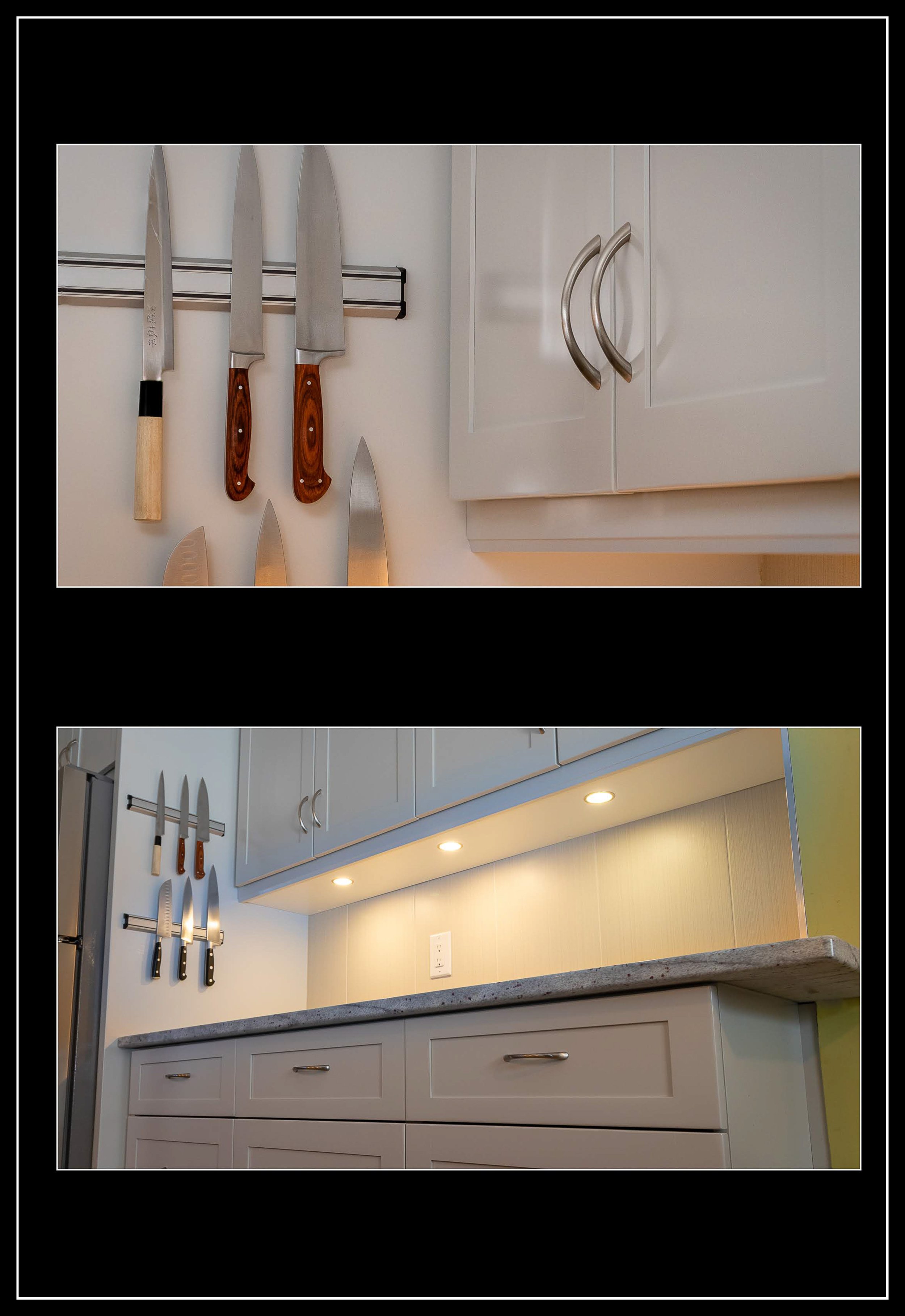
Grey Kitchen Cabinetry — Five‑Piece Doors, Stainless Pulls, and Functional Beauty
Cabinetry doesn’t have to be flashy to be good — sometimes functional beauty is the whole point. This kitchen shows it: grey five‑piece doors, stainless pulls, under‑cabinet lighting, and a clean knife‑storage setup that keeps the counter ready for real work. It’s simple, practical, and built to be used every day. Good proportions, good layout, and honest materials — the kind of cabinetry that earns its keep without needing attention.
Why This Work Matters
Cabinetry is the part of the craft most people never think about — the structure behind every finished room. It’s the quiet engineering that makes kitchens behave, commercial counters survive traffic, and architectural rooms feel intentional. This story shows the work that holds everything together.
The bones that hold the story together
You know what a cabinetmaker hates about cabinetmaking?
The cabinets.
The square boxes with no soul. The plywood coffins we build because we have to, not because they inspire anything. We build them because they’re the bones everything else hangs off, but on their own, they’re about as exciting as a one‑hole outhouse.
I’ve built hundreds of them. Hundreds.
Learning the Trade
But before all that, there was a time — back when I was a young apprentice — when getting a bench of my own felt like the big milestone. A place to store my tools and tame my chaos. A place where I could finally feel like a domesticated cabinetmaker instead of a machine‑room worker. CNC operators get respect, and they even have their own language, G‑code. Glue‑press operators have their swagger too. But the bench… that’s where I wanted to be.
The Bench That Changed Everything
I started slow, learning the basics running those machines, thinking I was pretty good at it. Most apprentices do. Then one day they moved me to a bench, and I began working under different senior cabinetmakers depending on whatever job was in a rush. Some jobs were complicated — curved walls, reception desks, restaurant banquettes, massive bar fronts. Some had custom veneer, some plastic laminate, sometimes solid surface — that ½‑inch decorative countertop material you see in fast‑food restaurants.
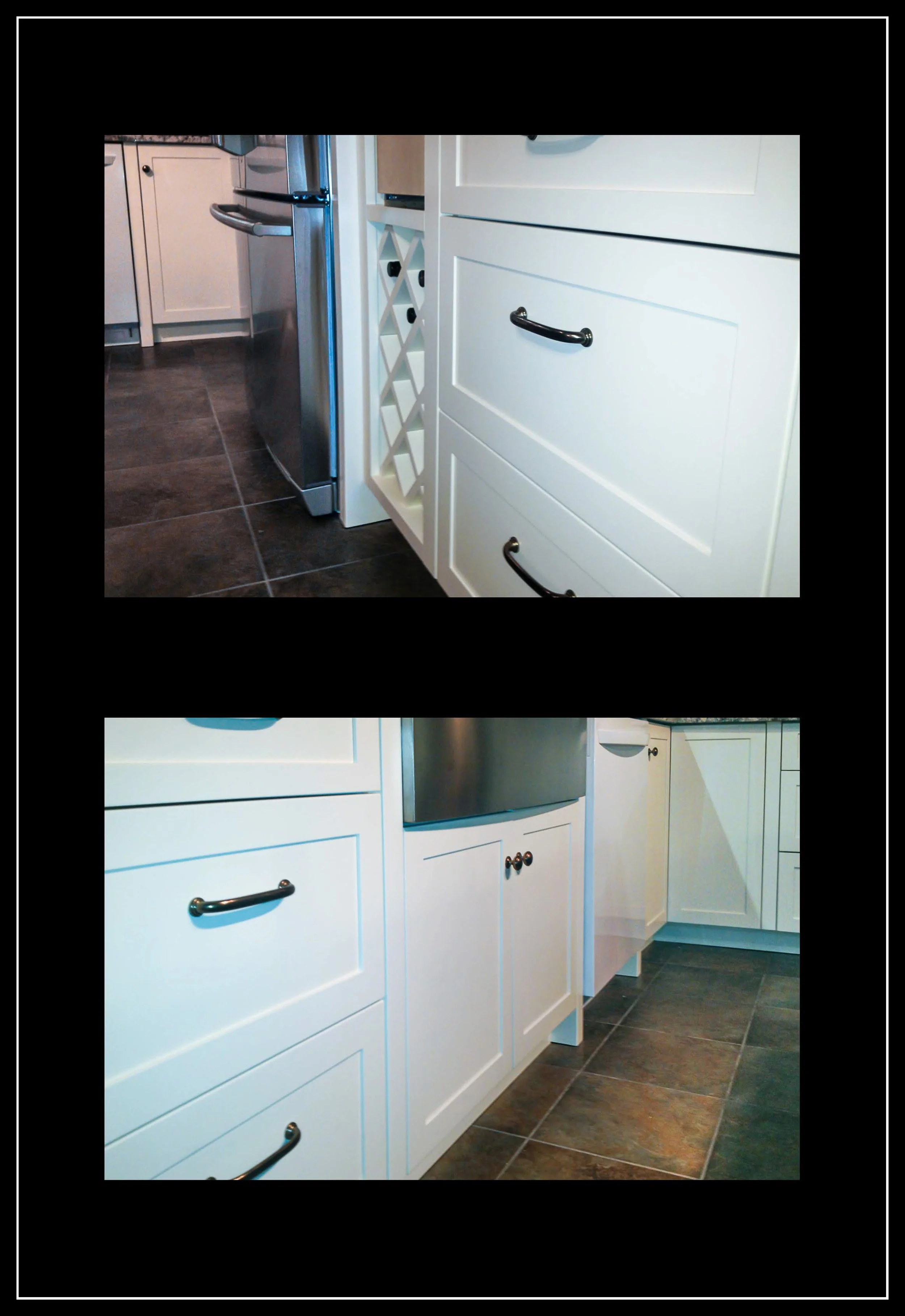
White Kitchen Cabinetry — Farmhouse Sink, Wine Rack, and Stainless Details
A good kitchen works because the details do. White cabinetry with clean lines, a stainless farmhouse sink, a built‑in wine rack, and hardware that matches the appliances — all sitting on a dark tile floor that grounds the whole space. It’s functional design done honestly: strong proportions, practical storage, and materials chosen to be used, not just admired. Cabinetry that feels lived‑in, durable, and ready for real life.
Square Boxes and the Grind
And sometimes we built offices: square boxes, over and over. Uppers, lowers, drawer banks, gang locks — one key opening three drawers at once. It didn’t take long to discover that square cabinets get boring. That became my normal. I was solid enough that the senior guys didn’t need to hover, so I settled into the grind of building boxes and occasionally helping on the custom work when someone needed an extra set of hands.
Then came the laminate.
The Laminate Years
Let me tell you about plastic laminate. I spent a full year — a year — doing nothing but laminate countertops and slab doors. Sheet after sheet. Glue, roll, trim, repeat. I got good at it. Too good. Good enough that they kept me on it because I was fast and clean, which is exactly why it became soul‑sucking. Three years in that shop before I was allowed to assemble my first cabinet. When I finally did, I was proud as hell. That was a long time ago. Hundreds of cabinets ago.
Why Cabinets Still Matter
Now I build them when they’re needed, not because I’m chasing some romantic idea of “cabinetry.” Let’s be honest — nobody is.
And no, they’re not “cupboards.” My college instructor preached that word like it was gospel. Nobody says cupboards in his shop. When Leo — my son and apprentice — goes to class next year, I’m buying him a shirt that says:
“PROFESSIONAL CUPBOARD MAKER.”
He’ll be so popular. And I’ll be blamed. Worth it.
The Quiet Genius Inside the Box
But here’s the thing: cabinets matter. They’re not glamorous, but they’re essential. They’re the structure that carries the trim, the doors, the lighting, the hardware — the stuff people actually notice. The beauty is in the finished piece, the whole composition, the symphony.
The cabinet itself? It’s just the instrument case.
But you still need the bones. You need the structure. You need the thing that holds the story together. And that’s why I still build them. Not because they thrill me — they don’t — but because they’re the foundation that lets the real craft happen.
And sometimes, buried in all that box‑building, there’s a moment of quiet genius. A perfect joint. A dead‑square carcass. A face frame that clicks into place like it was always meant to be there. Those moments matter. They’re small, but they’re honest.
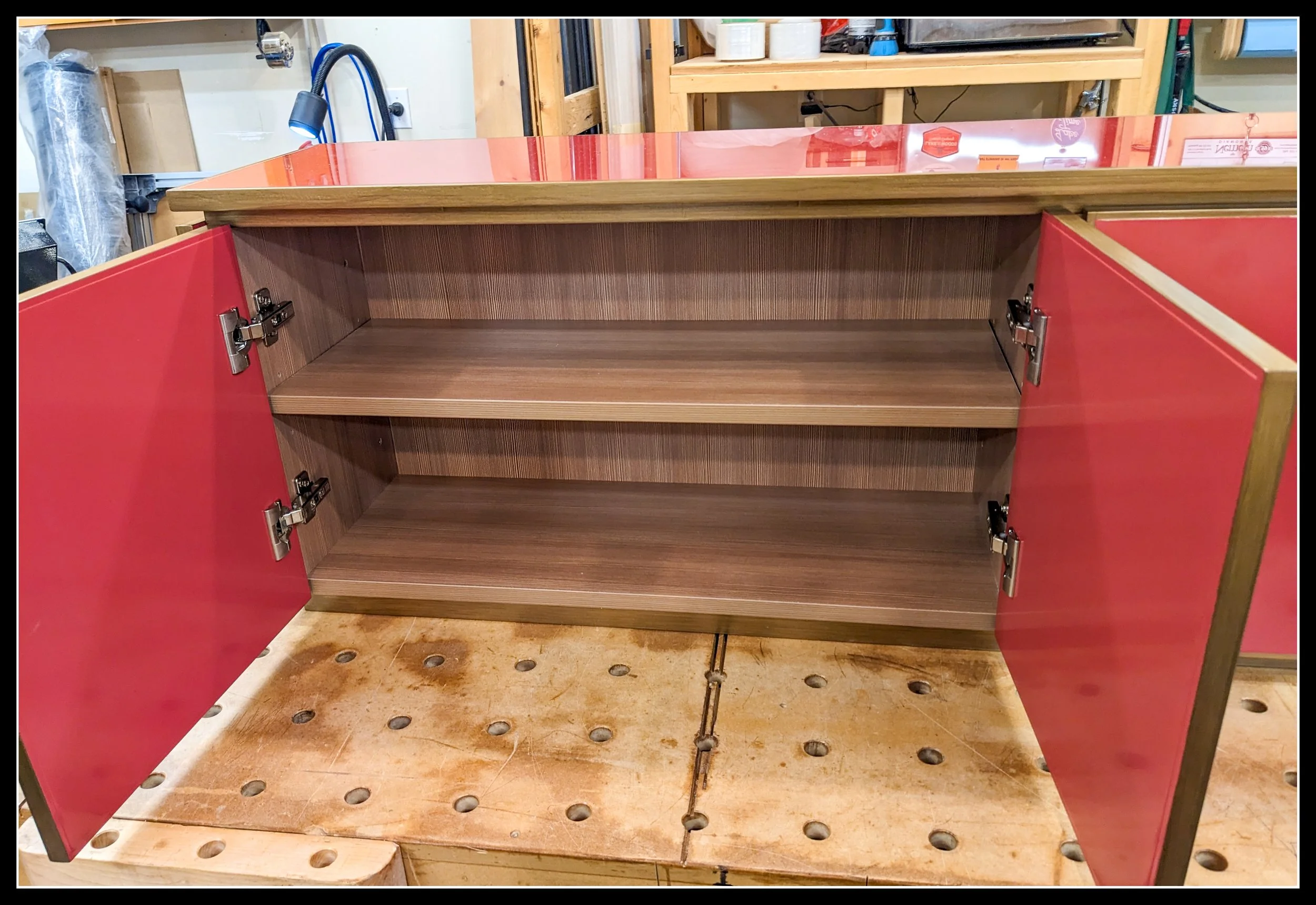
Cabinetry Bones — The Structure Behind the Gloss‑Red Console
The magic is in the finished piece, but the truth lives inside the box. This view shows the bones of the gloss‑red console — the clean joinery, the solid structure, the layout that makes everything else possible. The walnut accents, brass hardware, and painted glass only work because the cabinet underneath is square, strong, and honest. This is the part most people never see, but every cabinetmaker knows: the innards are the craft, and everything beautiful attaches to this.
What Cabinetry Teaches You
Cabinetry also teaches you discipline. It teaches you to measure twice, cut once, and then measure again because you don’t trust yourself anymore. It teaches you that a millimetre is a mile and that plywood will always, always find a new way to warp just to keep you humble. It teaches you patience, problem‑solving, and the kind of stubbornness that keeps a project moving even when the material fights back.
Most people never see that part. They see the doors, the drawers, the finish. They don’t see the hours spent making sure the boxes behind them are square, strong, and willing to behave. They don’t see the clamps, the glue, the swearing, the small victories.
Cabinets aren’t the star of the show. They never will be. But without them, nothing else works.
And that’s why, after all these years, I still build them — not for the romance, but for the integrity. For the structure. For the craft that happens long before anyone sees the final piece.
Residential Cabinetry
Residential cabinetry is where design meets daily life — kitchens, built‑ins, closets, islands, and storage that has to look good, work hard, and last for decades. These pieces are shaped for real homes, real families, and real use, built with the same precision and honesty that carries through every project.
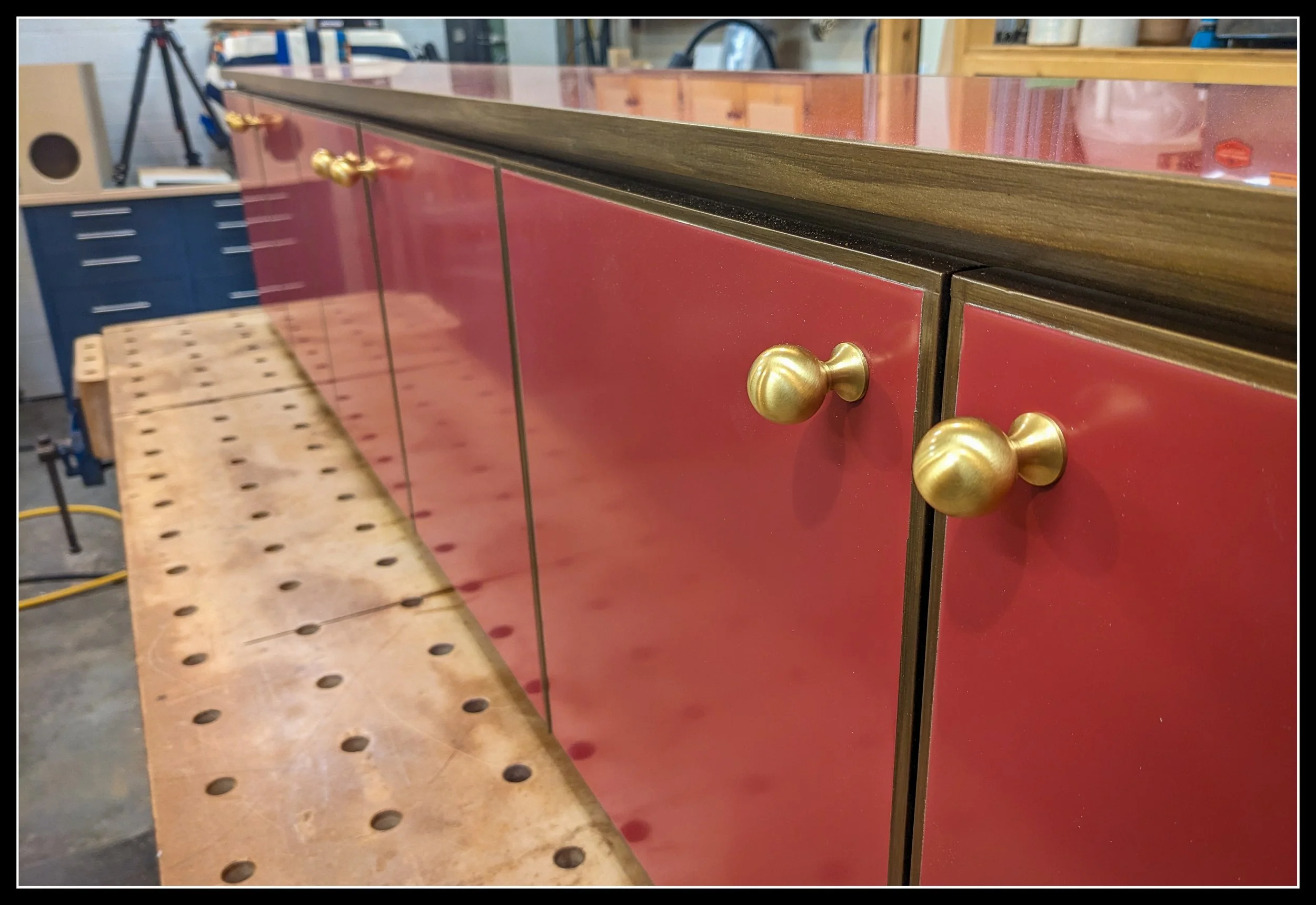
Gloss‑Red Cabinetry — Walnut, Brass, and the Bones of the Craft
Cabinetry isn’t glamorous, but sometimes the finished piece earns its moment. This console shows what happens when structure meets style — gloss‑red doors, walnut accents, and brass hardware working together in a clean, deliberate composition. Behind the colour and shine is the same truth every cabinetmaker knows: the boxes are the bones, the part nobody sees, the foundation that makes the whole piece behave. This is the quiet craft that holds every story together.
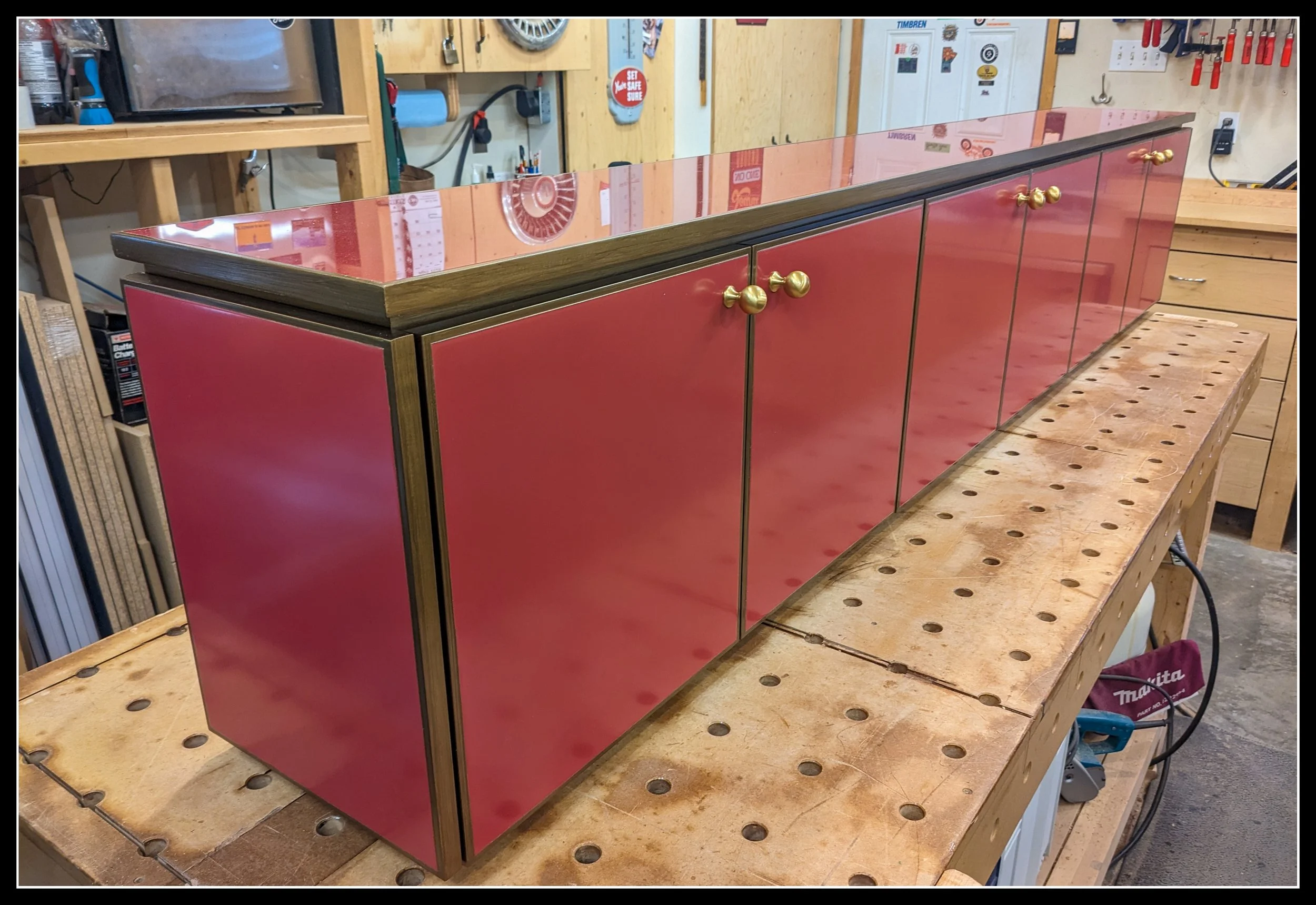
Gloss‑Red Cabinetry — Painted Glass Back and Brass Details
The front tells one story, but the back matters just as much. This angle shows the painted‑glass back panel in matching gloss red — a clean, modern detail that turns a simple cabinet into a finished piece. Walnut accents, brass hardware, and a fully painted interior give the console a sense of intention. Even when the boxes aren’t glamorous, the craft behind them can be. This is cabinetry at its most honest: structure built well enough to deserve the colour on top.
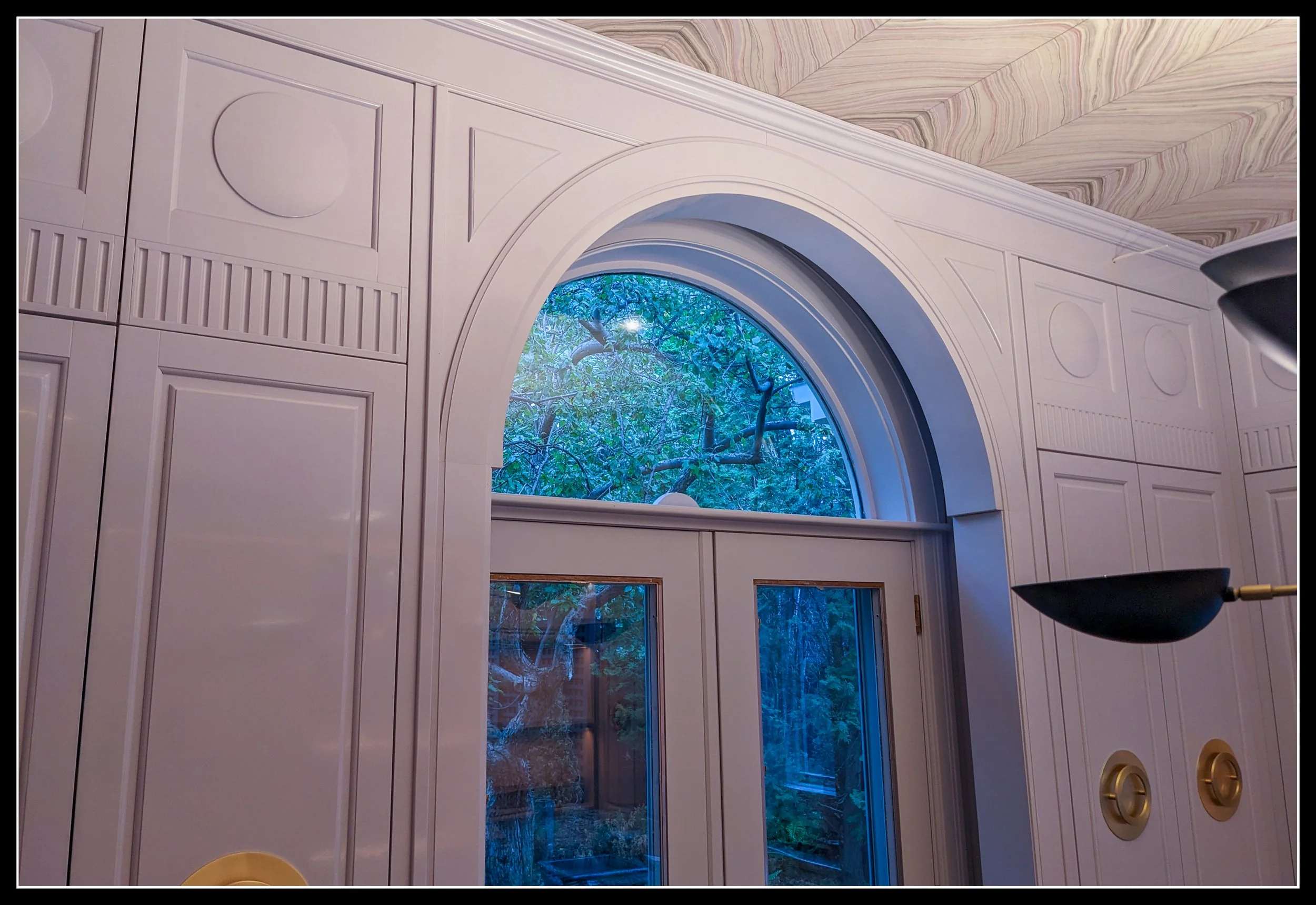
Grey Gloss Archway — High‑Skill Cabinetry From Design to Execution
An archway like this isn’t just trim — it’s cabinetry at its highest level. Grey gloss paint, perfect curves, tight reveals, and glass doors set into a fully paneled wall. Every part of this piece had to be designed, templated, machined, and finished with absolute precision. This is the kind of work that separates cabinetmaking from box‑building: complex geometry, flawless finishing, and execution that leaves no room for error. When structure and design meet clean craftsmanship, you get a doorway that feels like architecture instead of carpentry.
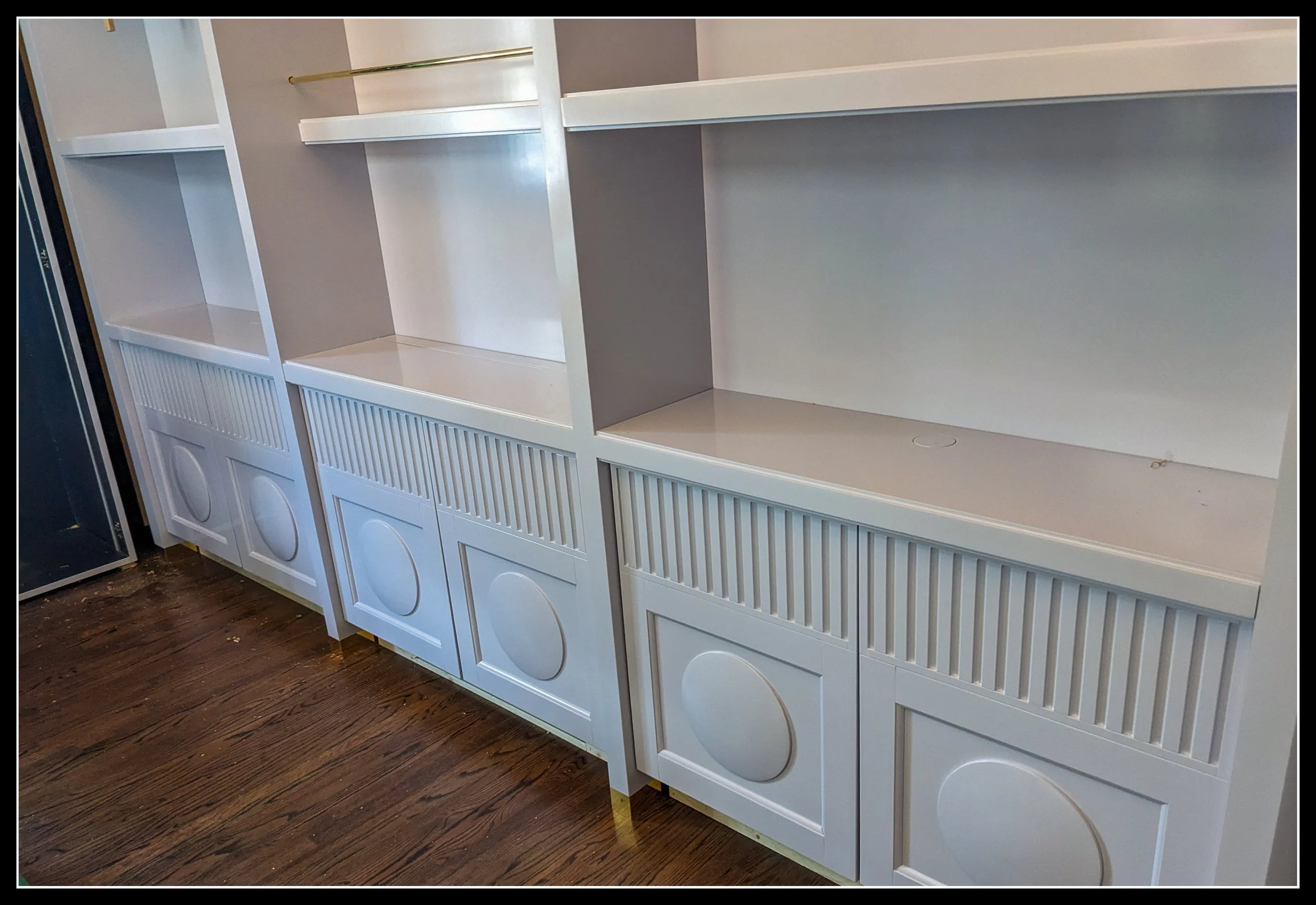
Gloss‑Grey Cabinetry — Lathe‑Turned Panels, Fluted Doors, and Premier Craft
This was a premier build — gloss‑grey cabinetry with raised panels turned on the lathe, fluted door details, and brass accents that tie the whole room together. The work looks simple at a glance, but it’s anything but: every panel, every reveal, every curve had to be machined, fitted, and finished with absolute precision. This is cabinetry at the architectural level — structure, design, and execution working together to create a piece that feels built into the room’s identity. High‑skill work, quiet confidence, and craftsmanship you only get from years at the bench.
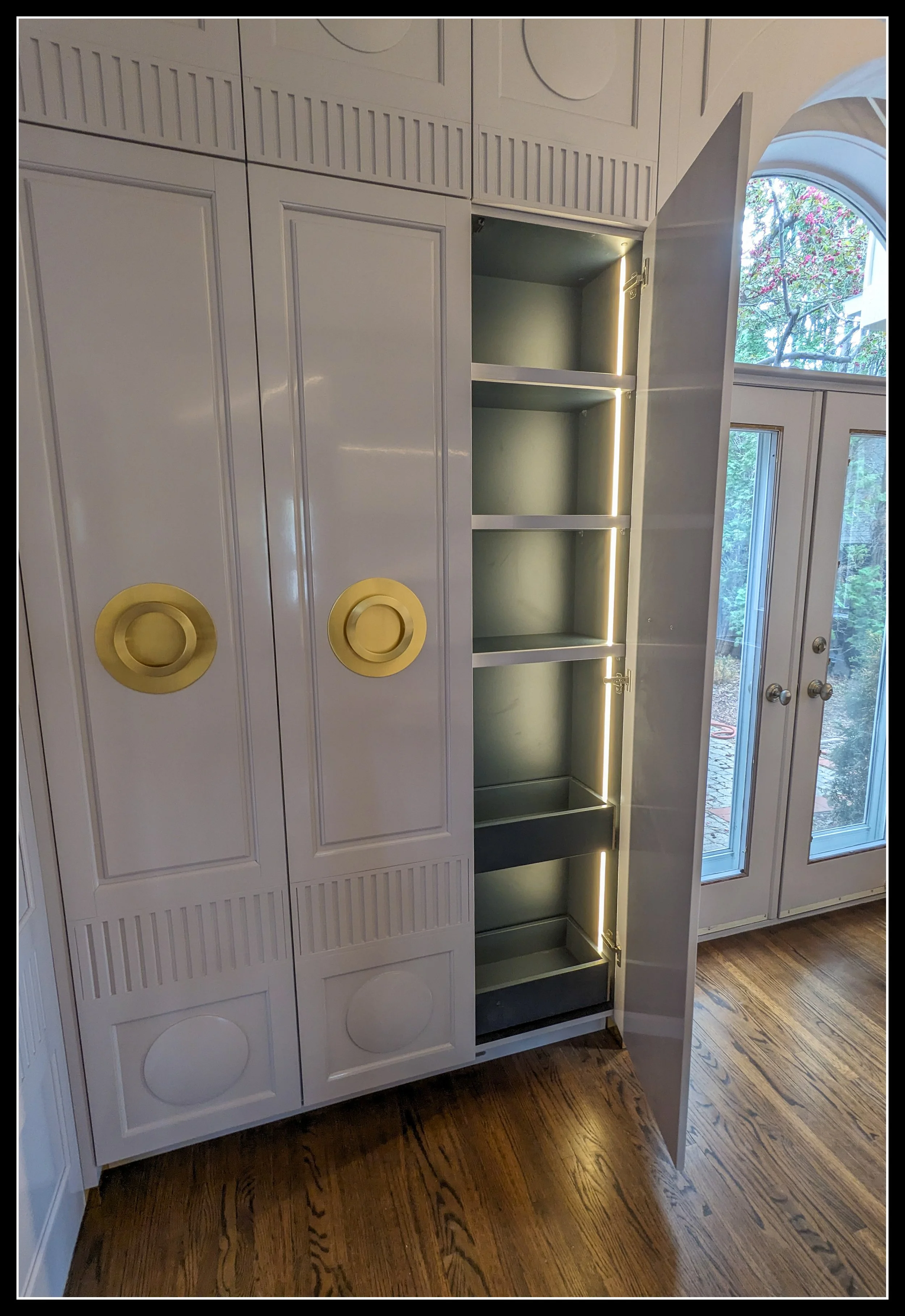
Tall Gloss‑Grey Cabinetry — In‑Cabinet Lighting, Fluted Doors, and Solid Brass Pulls
This tall cabinet shows the tech side of high‑skill cabinetry — integrated lighting, precision fluting, and solid brass pulls that anchor the whole design. The raised panels were turned on the lathe, giving the doors a depth you can’t fake. Inside, vertical LED strips wash the shelves in clean light, turning storage into display. Paired with the gloss‑grey finish and the architectural details in the room, this piece blends craftsmanship with modern design in a way only a premier build can.
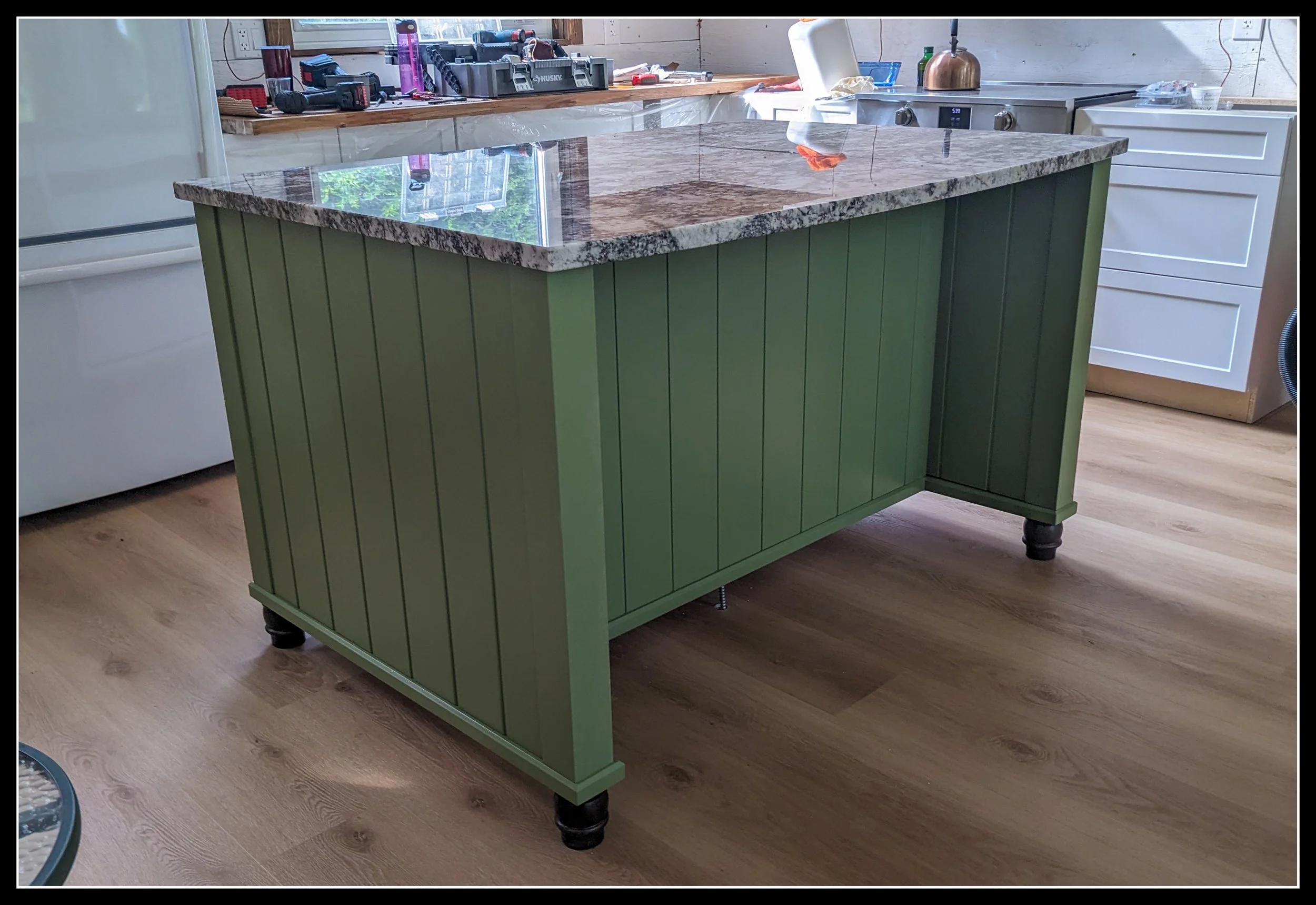
Green Cottage Island — Bead Board, Turned Feet, and Granite Top
A cottage island needs charm, not flash — and this one carries it. Bead‑board panels, turned feet, and a deep green finish give the piece a warm, lake‑house feel, while the granite top adds weight and durability. It’s the kind of cabinetry that looks simple until you build it: clean lines, tight corners, and traditional details that only work when the proportions are right. Cottage design meets real craftsmanship, the kind that holds up for decades of family use.
Retail & Jewellery Cabinetry
Retail cabinetry has to earn its keep — strong enough for daily traffic, clean enough to let the products shine, and precise enough to look good under bright commercial lighting. Jewellery counters, display cases, and retail workstations demand durability, clarity, and flawless presentation. These builds show how commercial cabinetry can be both functional and beautiful, designed to perform every single day.
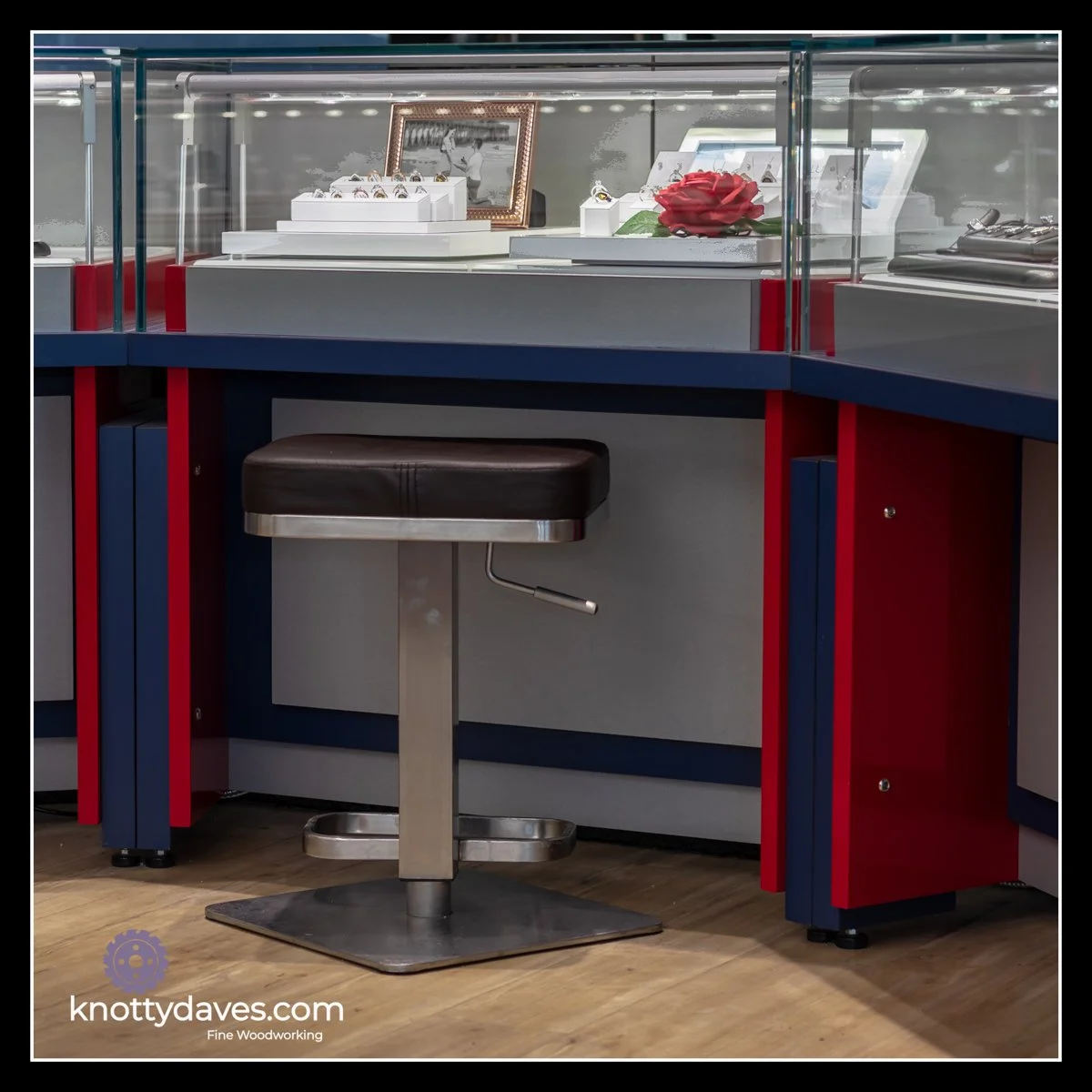
Jewellery Store Cabinetry — Red, Blue, Grey, Thick Glass, and Custom Lighting
Retail cabinetry has to do more than look good — it has to perform. This jewellery store build uses red, blue, and grey panels with ½‑inch thick glass and custom lighting designed to make every piece sparkle. Clean lines, strong colours, and commercial‑grade construction come together in a layout that’s built for daily use. It’s cabinetry that blends design with durability, turning a functional counter into part of the brand itself.
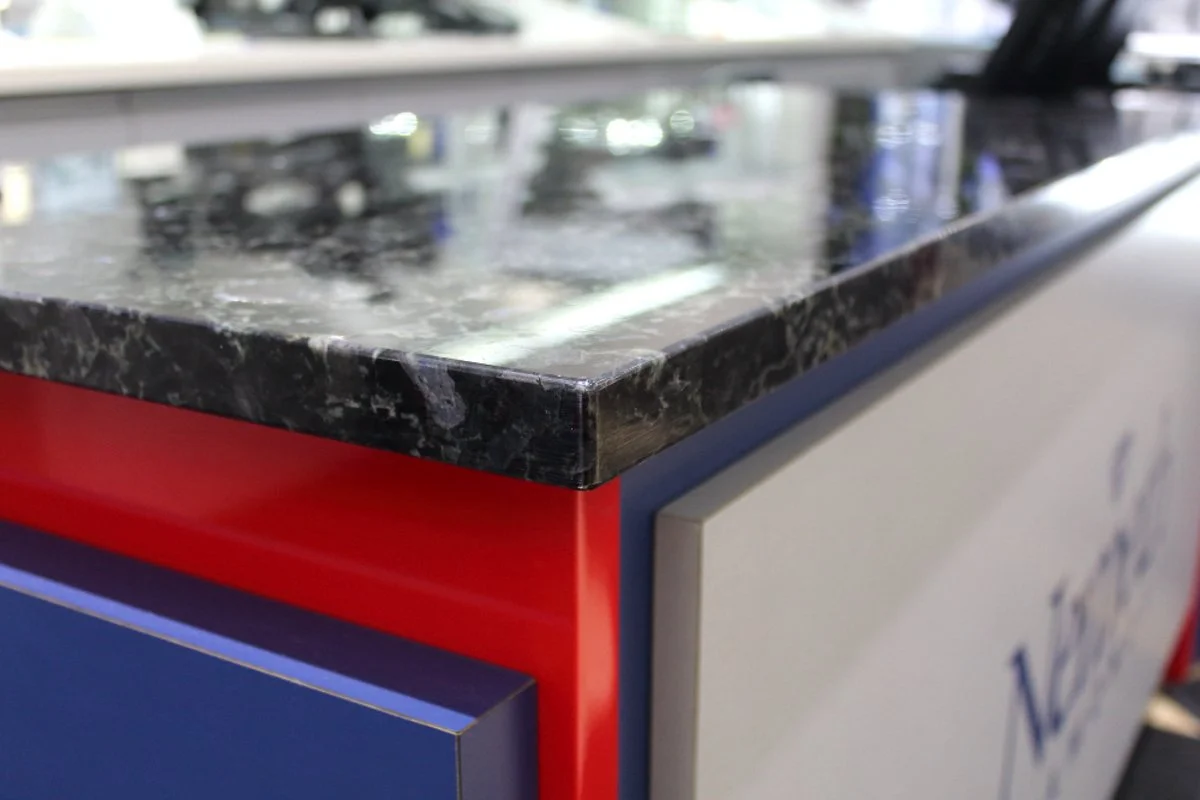
Jewellery Store Transaction Desk — Granite Top and Commercial‑Grade Cabinetry
A transaction desk takes the most abuse in a jewellery store — constant traffic, daily wear, and customers leaning on the counter. This one has held up for more than ten years. Granite top, red and blue cabinetry, and construction built for commercial use. Clean lines, strong materials, and a layout designed to survive real retail life. It’s the kind of cabinetry that proves its worth over time, not just on install day.
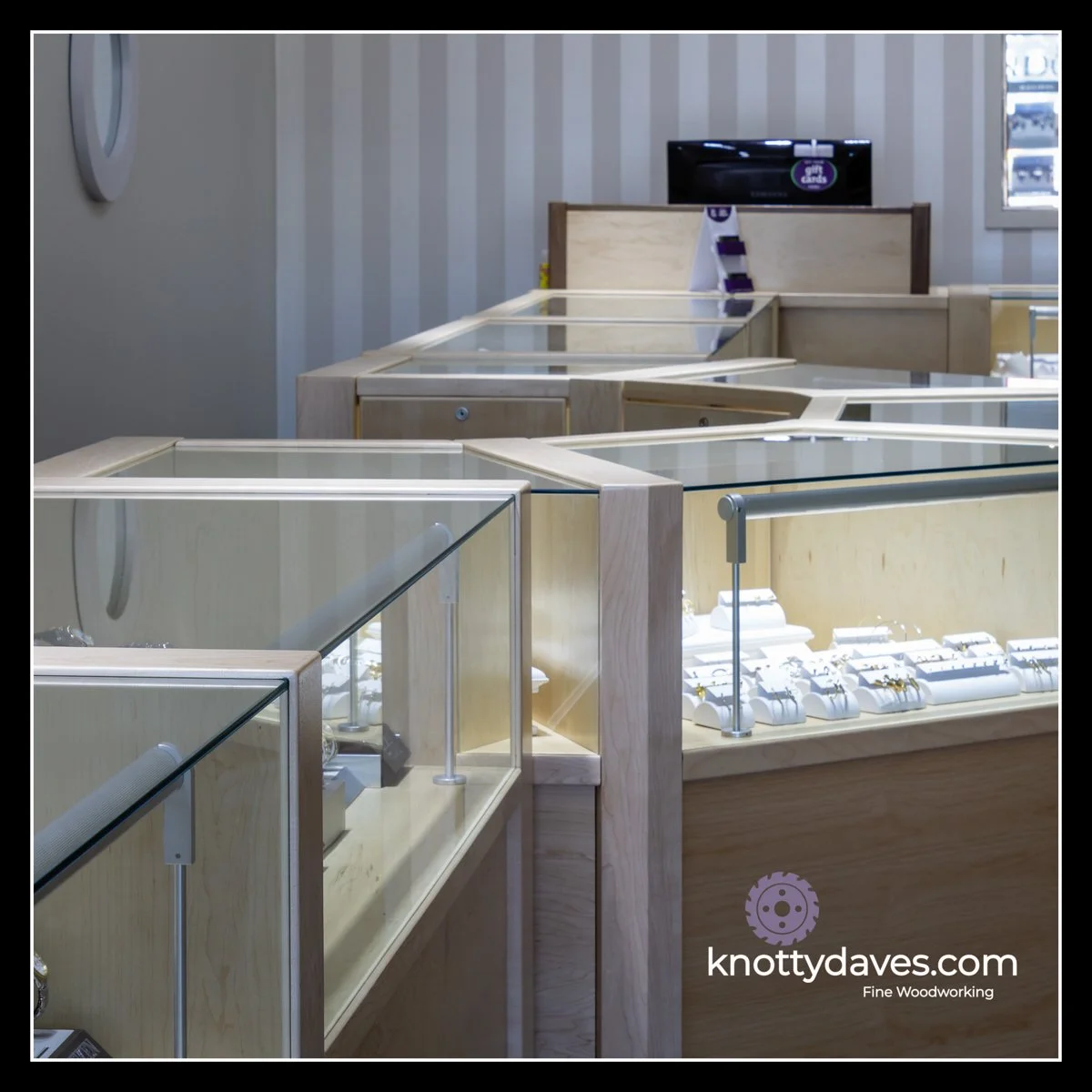
Maple Jewellery Store Cabinetry — Durable Design and Long‑Term Performance
Retail cabinetry has to earn its keep, and maple is perfect for it — strong, stable, and clean enough to let the jewellery take centre stage. These display cases were built to look good and last, with precise joinery, clear sightlines, and commercial‑grade construction that’s held up for years. Maple frames, glass tops, and a layout designed for both presentation and daily traffic. Craft that performs quietly in the background while the products shine.
Doctor’s Office Cabinetry
Medical cabinetry has a different job to do — it has to calm the room, organize the space, and disappear into the background while still working flawlessly every day. Clean lines, built‑ins, arches, and recessed storage create a quiet, orderly environment where everything has its place. These pieces show how cabinetry can shape the feel of a doctor’s office without ever calling attention to itself.
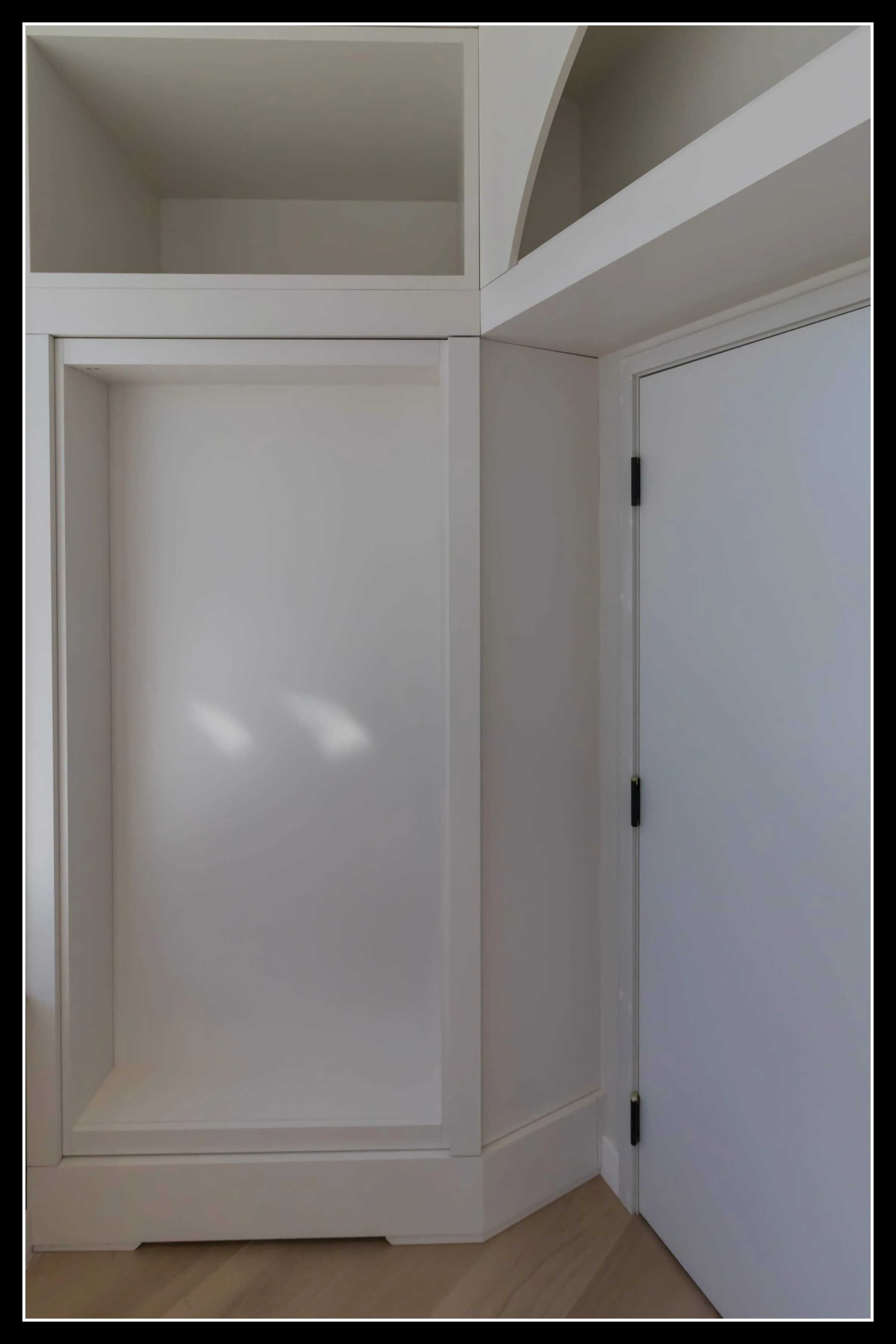
White Built‑In Cabinetry — Hidden Door and Clean Architectural Design
At first glance it’s just clean, white built‑in cabinetry — tight lines, recessed panels, and a layout that blends into the room. But one section isn’t what it seems. Behind the paint and trim is a fully functional secret door, built to disappear until it’s needed. This is the quiet side of high‑skill cabinetry: structure, proportion, and precision that let a hidden mechanism work without giving anything away. A piece that looks simple, behaves perfectly, and carries a bit of magic.
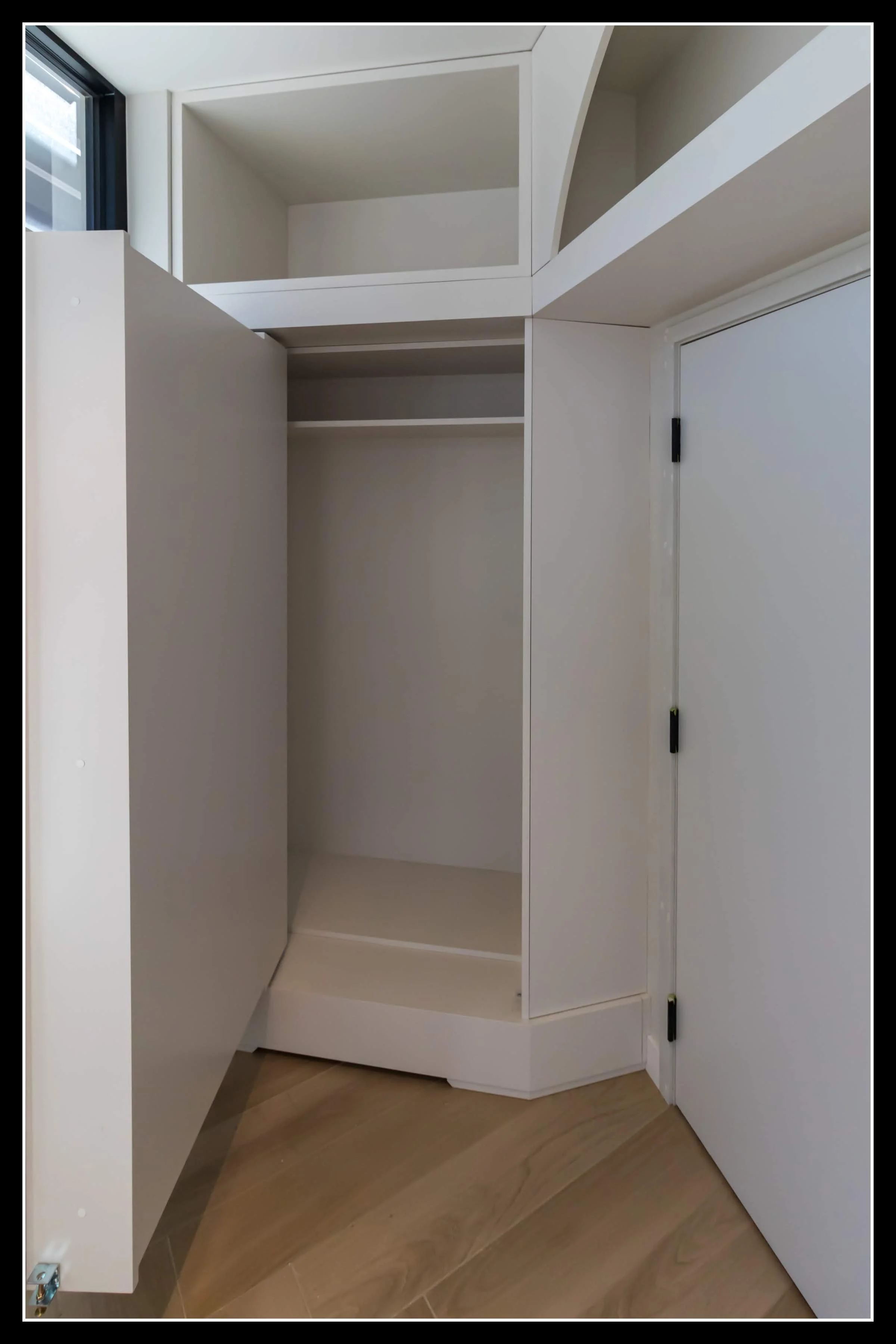
Hidden Door Cabinetry — White Built‑In with Secret Passage Open
The secret door is open here, and you can finally see the engineering behind the illusion. The white built‑in swings cleanly, revealing a full storage space behind it — proof that the proportions, hinges, and structure were all designed from the start to behave like real cabinetry while functioning as a hidden passage. Tight lines, recessed panels, and a layout that blends into the room when closed. This is high‑skill architectural cabinetry: quiet when it needs to be, flawless when it moves.
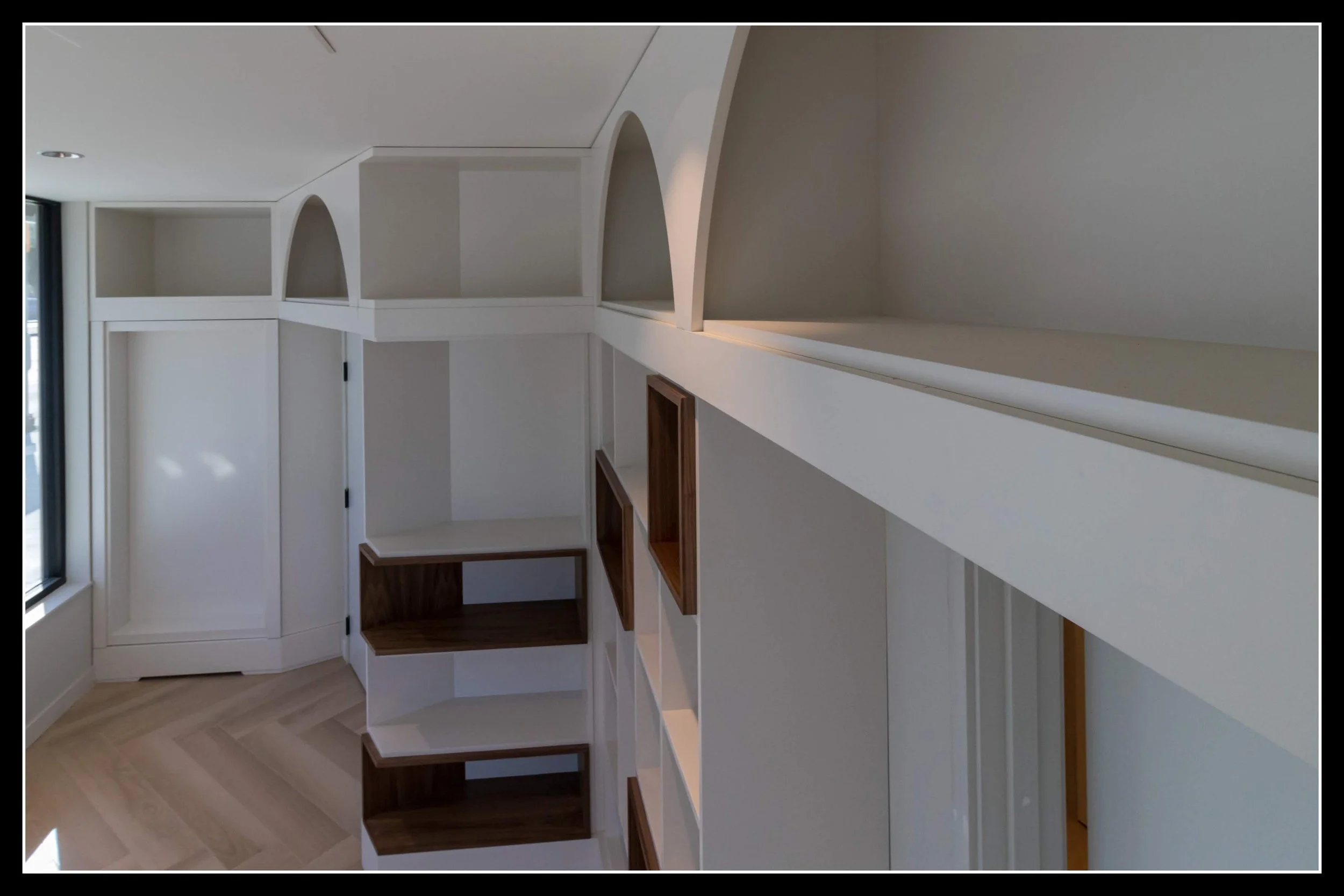
Doctor’s Office Cabinetry — Architectural Built‑Ins and Clean Modern Design
Stepping back, you can see the whole room — a doctor’s office shaped by cabinetry instead of decorated by it. Built‑ins with arches, recessed compartments, and clean white lines turn the space into quiet architecture. Everything is intentional: storage that disappears, proportions that calm the room, and details that make the space feel organized before a single chart or instrument is added. This is cabinetry doing more than holding things — it’s shaping how the room feels.
Realtor’s Reception Cabinetry
Reception cabinetry in a realtor’s office has to look sharp, stay durable, and handle constant daily use. Gloss‑white laminate, clean lines, and commercial‑grade construction create a workspace that feels professional the moment a client walks in. These desks and counters are built for traffic, paperwork, conversations, and first impressions — cabinetry that works hard without ever losing its shape.
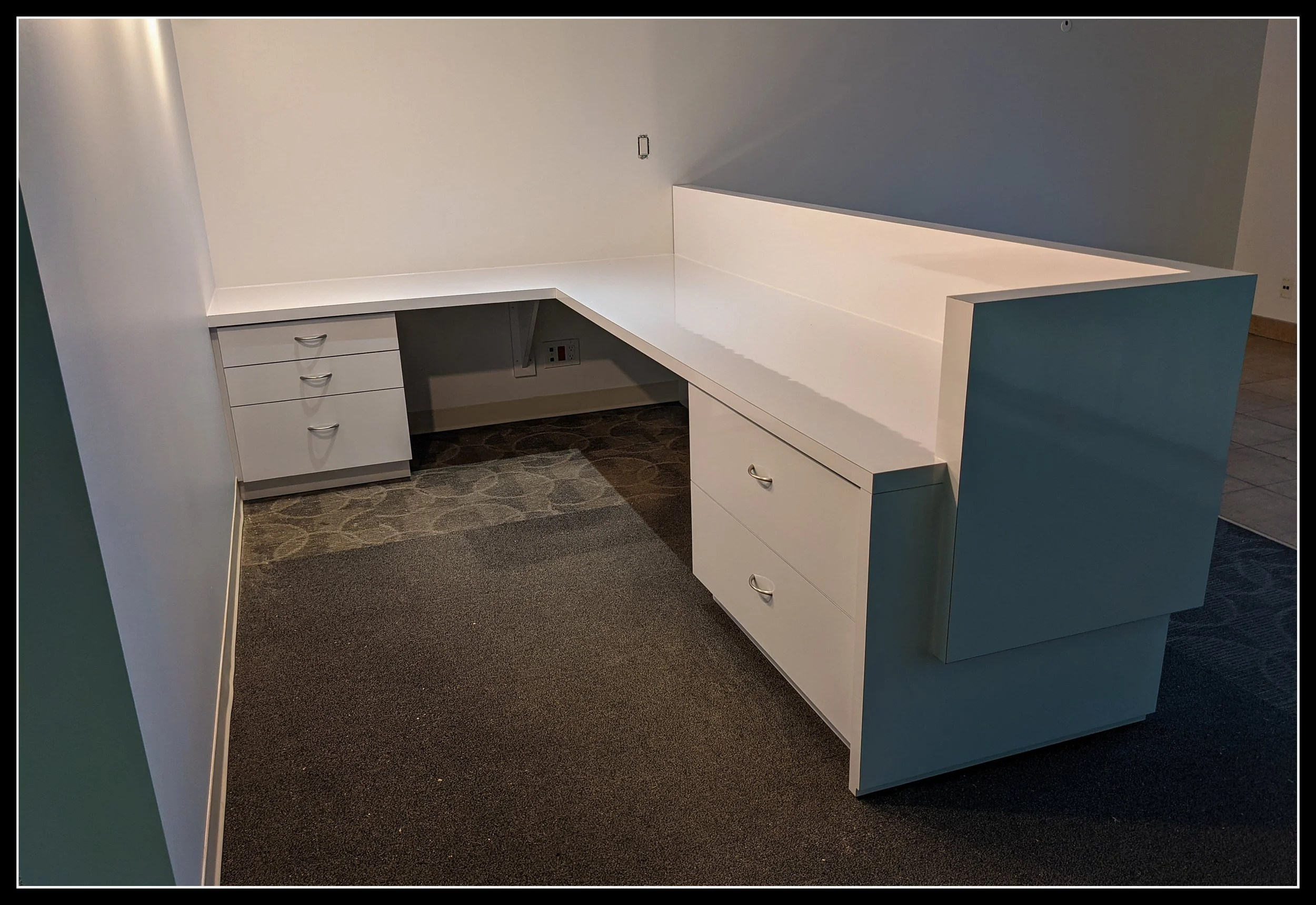
Realtor’s Office Reception Desk — Gloss‑White Laminate and Modern Cabinetry
Reception desks take a beating — phones, paperwork, clients leaning on the counter, constant movement. This gloss‑white laminate build was designed for exactly that. Clean lines, durable surfaces, and storage that works without drawing attention. It’s modern, simple, and built for daily use in a realtor’s office where function matters as much as appearance. Commercial cabinetry that stays sharp even after years of traffic.
The Work Speaks
If you’ve made it this far, you’ve seen the truth of the work — kitchens, cottages, commercial counters, jewellery stores, architectural rooms, hidden doors, gloss finishes, granite tops, maple displays, and cabinetry built to last. Every piece here was designed, built, and installed with the same intention: make something honest, make something durable, and make something worth looking at twice. Craftsmanship isn’t loud, but it leaves a mark. If you enjoyed this read, good — that means the work spoke for itself.
live together, gathered in one place so the foundational pieces of the craft stay connected — easy to find, easy to return to, and built to carry the heart of the shop.
SHARE
The Stories of the Shop — The Heart of the Work
If you want the stories shaped by cabinetmaking roots, heirloom builds, early shop days, and the craft history behind Knotty Dave’s Fine Woodworking — the personal side of the workshop — Stories of the Shop is one click away.
If you’d like to hear from me only when something big is happening — a launch, a milestone, or a major project — you can join the mailing list below.
Written by David Flather, Red Seal cabinetmaker and founder of Knotty Dave’s Fine Woodworking — a Manitoba shop rooted in heritage restoration, storytelling, and real craft.
All photos shot by David Flather — in the shop, on the road, and in the places where craft and story meet.
Related stories:
The Workshop Library
If you enjoyed this story, there’s lots more like it inside The Workshop Library — and it’s free to explore.
Wood Archive — species, grain, working properties, and real‑world craft notes
Behind the Grain — the deeper stories inside wood, craft, and heritage
The Working Side of the Craft — tools, shop life, workflow, and the realities of making
Digital to Sawdust — Design Studio — geometry, proportion, visual flow, and design thinking
The Stories of the Shop — the personal side of craft, the shop’s history, and the quiet moments that shape the work
House & Hearth — heritage home restoration, the hearth room, winter culture, and the lived‑in side of craft
I’m just one man with a shop, building this archive one story at a time. If you’d like to follow the journey as it unfolds, explore The Workshop Library — new stories every week.
