

Shop Projects
Quick Answer — What Are Shop Projects?
Shop projects are the quiet, unseen work that keeps a woodworking shop running — the jigs built for one impossible cut, the repairs nobody notices, the forgotten tools rediscovered years later, and the small fixes that make every big build possible. They’re the hidden chapters of the craft: problem‑solving, maintenance, invention, and the steady work that holds a shop together.
One‑hit‑wonder jigs — built for a single impossible cut, then shelved until rediscovered
Quiet repairs — the fixes nobody sees but the shop depends on
Forgotten tools — old planes, jigs, and gadgets waiting for the right moment
Daily maintenance — sharpening, tuning, cleaning, and keeping the workflow alive
Problem‑solving moments — small decisions that make big builds possible
Hidden craft — the behind‑the‑scenes work that holds a shop together
Why the Quiet Work Matters More Than the Big Builds
Most of the real work in a shop never shows up in the photos. It hides in the jigs built for one impossible cut, in the repairs no one notices, in the tools waiting for the right project and the right stretch of quiet time. Shop projects are the secret chapters — the fixes, the inventions, the forgotten brilliance that keeps the whole place running. This is the work that happens when no one’s looking.
BY THE END OF THIS STORY
You’ll understand why shop projects matter — the quiet fixes, the one‑hit‑wonder jigs, the forgotten tools, and the small victories that keep a working shop alive even when nobody sees them.
Read time: 4 minutes
Fast Summary
Shop projects are the quiet work behind the craft — the jigs, fixes, repairs, rediscovered tools, and one‑hit wonders that keep a shop alive. They’re the problem‑solving moments nobody sees, the small victories that make big builds possible, and the hidden chapters that hold a working shop together.
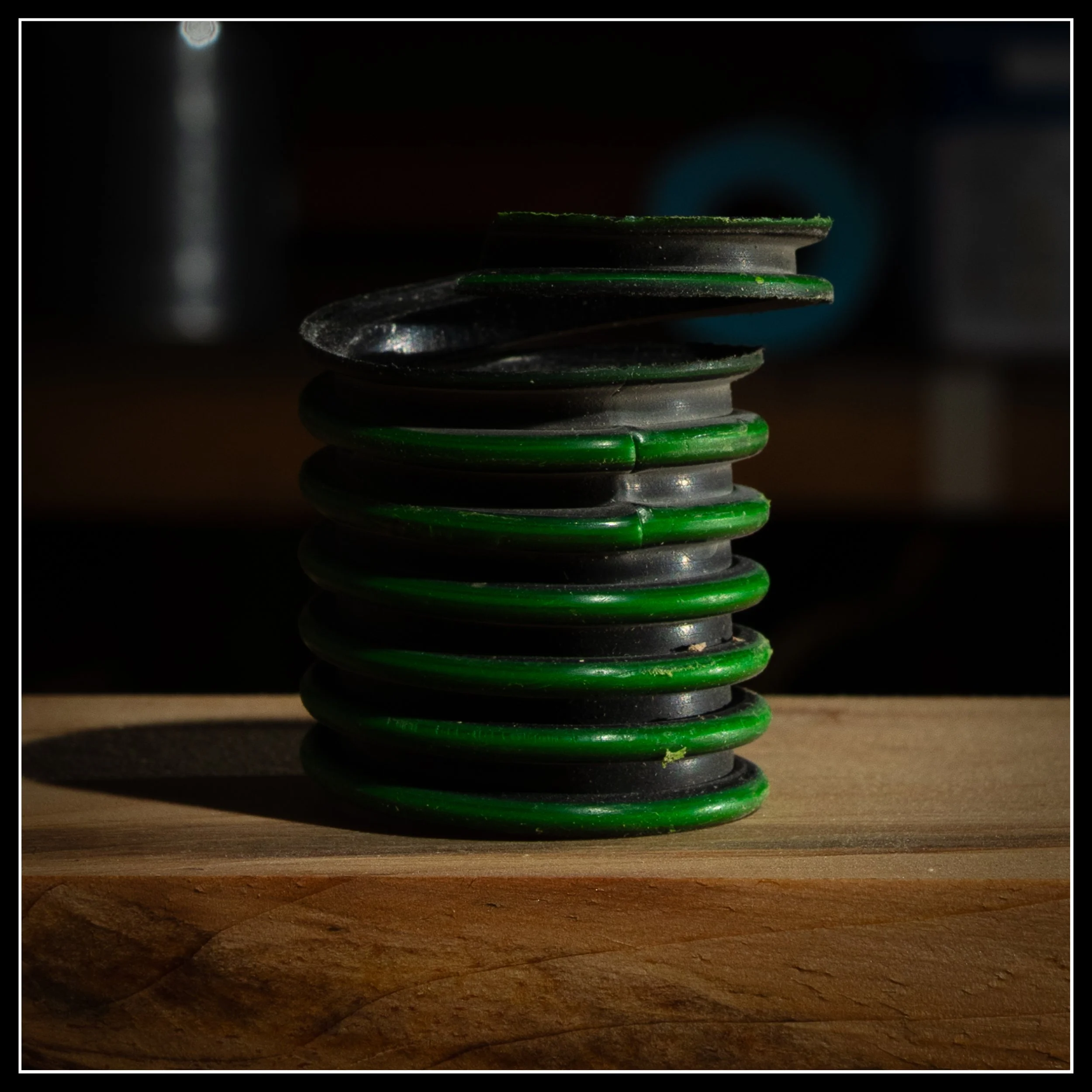
The Little Fixes That Keep a Shop Alive
This green coil is one of a thousand small shop jobs no one ever sees. It’s a cracked Festool Midi hose — nothing dramatic, nothing glamorous — but it kept the extractor running for years until it finally gave out. These are the quiet fixes, the unspoken repairs, the tiny moments of problem‑solving that never make it into photos but keep the whole shop moving. Every shop has them. This is one of mine.
THE WORK THAT HAPPENS WHEN NO ONE’S LOOKING
The shop is where most of my days begin and end. It’s not glamorous. It’s not staged. It’s not the kind of place you sweep just to take a picture. It’s a working room — loud some days, quiet others, always carrying the smell of sawdust and the weight of whatever project is on the bench. This is where ideas turn into lumber, and lumber turns into something worth keeping.
The Steady Work That Holds a Shop Together
Shop projects aren’t the big, dramatic builds. They’re the steady ones. The ones that keep the place running. The ones that teach you patience, precision, and humility. They’re the jigs, the fixtures, the repairs, the small victories that never make it to the front page but hold everything else together.
Some days it’s a cabinet repair. Some days it’s a custom jig that solves a problem no one else will ever see. Some days it’s a tool restoration — bringing an old plane or chisel back to life because the work deserves better than something that barely cuts. And some days it’s just sweeping the floor and sharpening blades, because even the quiet days matter.
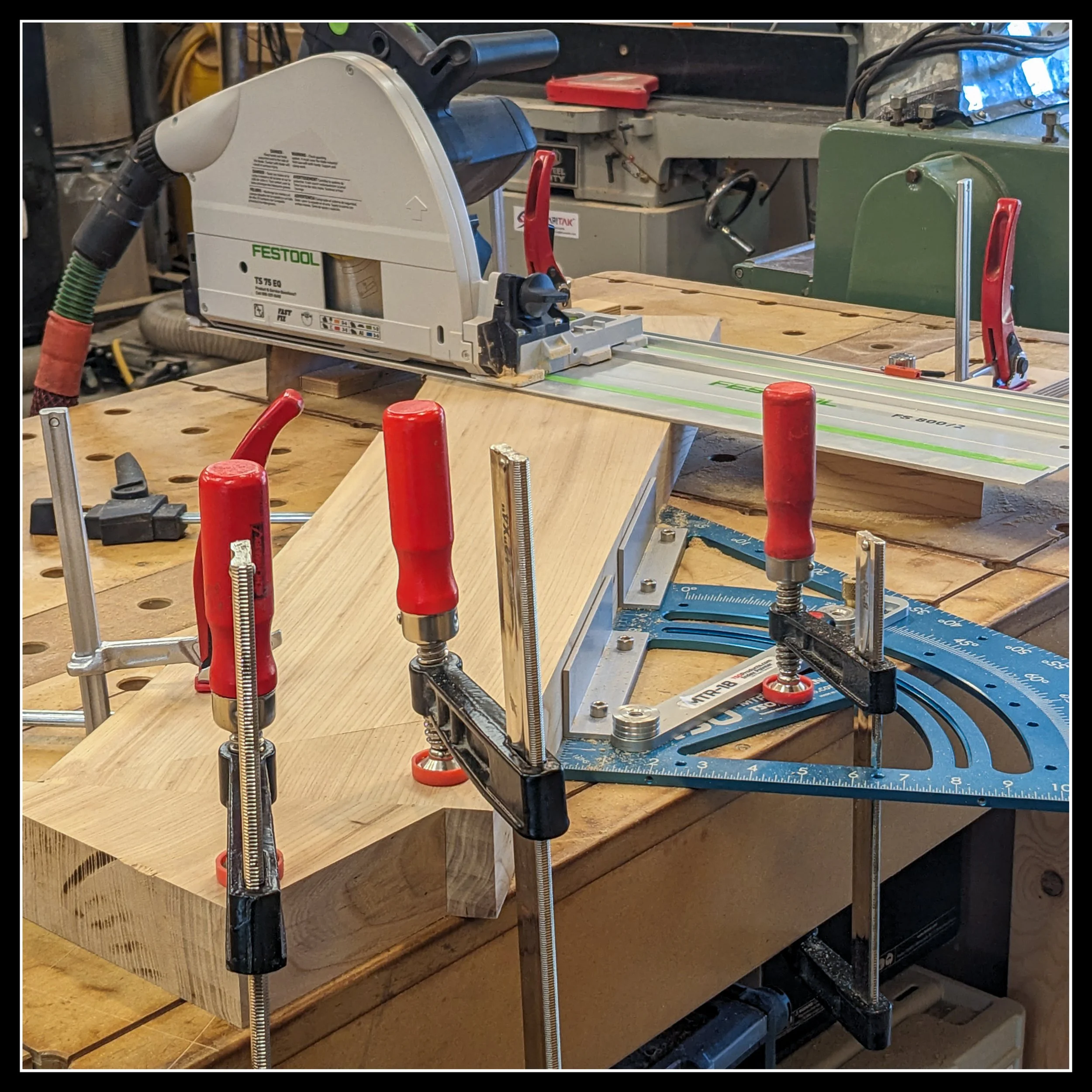
The Angle Jig — Precision on Demand
This store‑bought angle jig is built to work perfectly with my shop built MFT bench, and it’s one of the most precise systems in the shop. With clamps, guides, and the Festool track working together, it delivers crisp, repeatable angled cuts that would be risky or inconsistent any other way. It’s complex, but once it’s dialed in, it turns tricky cuts into predictable, confidence‑building workflow.
The One‑Hit Wonders and the Genius That Gets Forgotten
But the truth is this: a real shop runs on jigs, fixtures, Band‑Aids, and the forgotten brilliance of a working shop. The mundane, the remade, the lost, the rediscovered. The best secrets hide under a layer of dust until the day you need them — and by then you’ve already built three new ones and misplaced those too.
Some jigs are pure genius, little works of physics and art that make the impossible possible and the dangerous safe. They’re custom, precise, and part of the cost equation nobody ever sees. And the funny thing? They’re often one‑hit wonders. Built for a single moment of brilliance, used once, then shelved forever. That’s an expensive secret sitting in the dust.
I’ve had jigs that take a whole day to make, and when you finally put them to use, the actual work takes ten minutes. One time I needed a clean, controlled profile on a curved edge — something a freehand router would’ve butchered. So I built the jig. It was beautiful. Tight tolerances, smooth travel, perfect control.
Then I got onsite. The profile was fifteen feet up on a dark ceiling, the cabinet was painted black, and with a flashlight you could kind of see the detail if you squinted. But the job was correct. The jig did its job. And that’s the thing about shop work — sometimes the most precise, most thoughtful, most time‑consuming solutions disappear into the shadows where no one will ever notice.
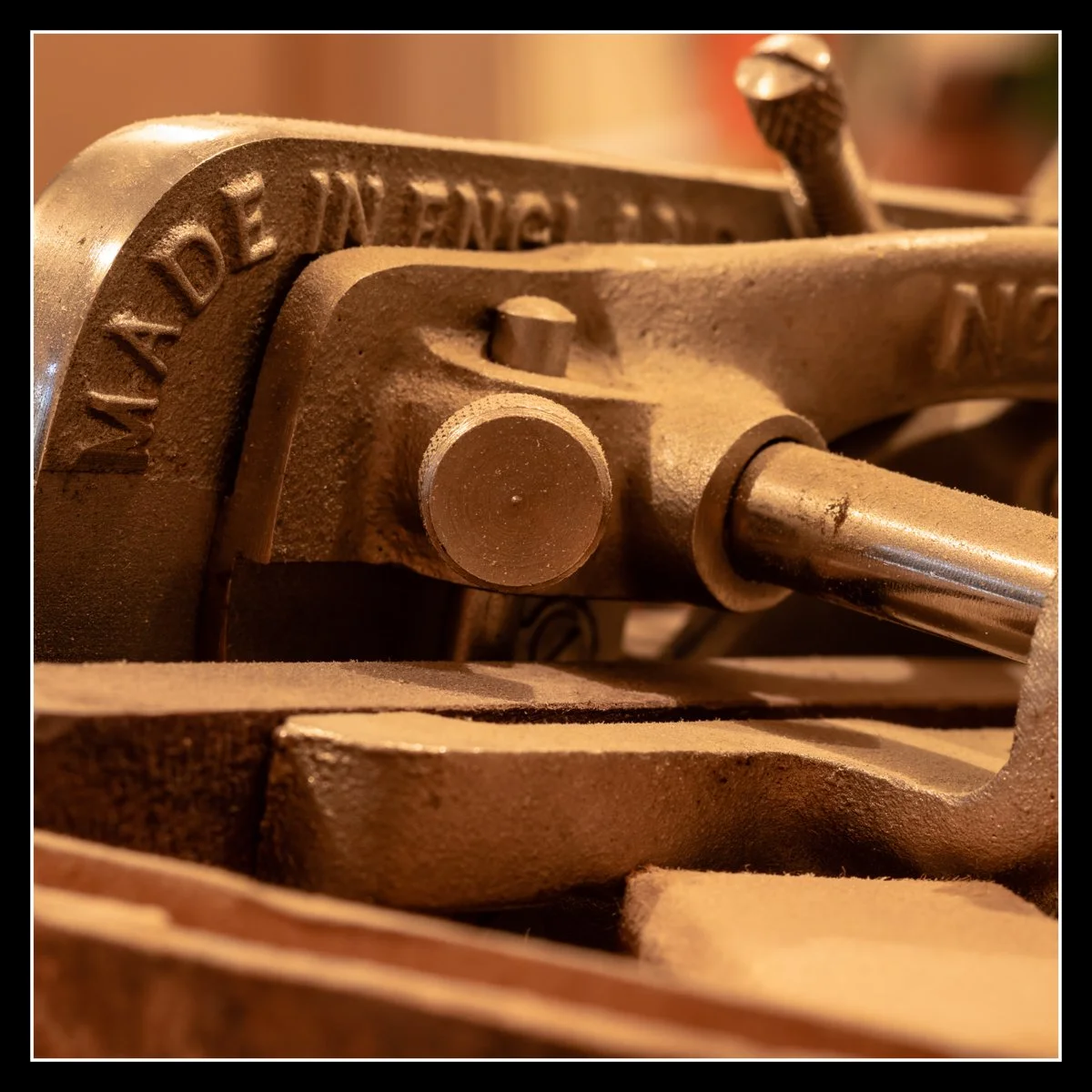
Record No. 050 — A Grooving Plane Waiting for Its Moment
This Record No. 050 grooving plane is one of those tools I’ve always wanted to spend more time with. It’s beautifully made, stamped Made in England, and full of potential — but shop life doesn’t always leave room for slow, careful hand‑tool work. One day I’ll have the right project and the right stretch of quiet shop time. When that day comes, this plane will finally get the attention it deserves.
The Shelf of Forgotten Brilliance
Then comes that special kind of frustration — the Screw this moment. You spend a whole day building a jig to end all jigs. A masterpiece. A tool so perfect it deserves a spotlight. You use it once, feel like a genius, then proudly place it on a high shelf where the world ignores it and the dust claims it like treasure.
Months pass. Maybe years. Then one wonderful day in the Knotty Dave workshop, you hit a problem and think, didn’t I make something for this? I look up. There it is. I climb the ladder, brush off the bug trails, and hold it like a relic. And damn, it’s perfect. Straight into action like it never left.
A lot of pride goes into these overly special jigs. Real pride. Genius‑level problem‑solving that nobody ever witnesses. It’s a private satisfaction, the kind only a craftsman understands.
And on the rare occasion I show Marie — full of energy, holding up this jig of wonders like I’ve just solved physics itself — she looks at me, we share a moment of silence, and she says:
“Yup.”
The end.
The Quiet Chapters That Hold the Craft Together
Shop projects are the quiet chapters of the story. They don’t demand attention, but they deserve it. They’re the proof that craft isn’t just about the big reveals — it’s about the daily work, the steady hands, the small decisions, and the belief that even the simplest build can carry a little dignity if you do it right.
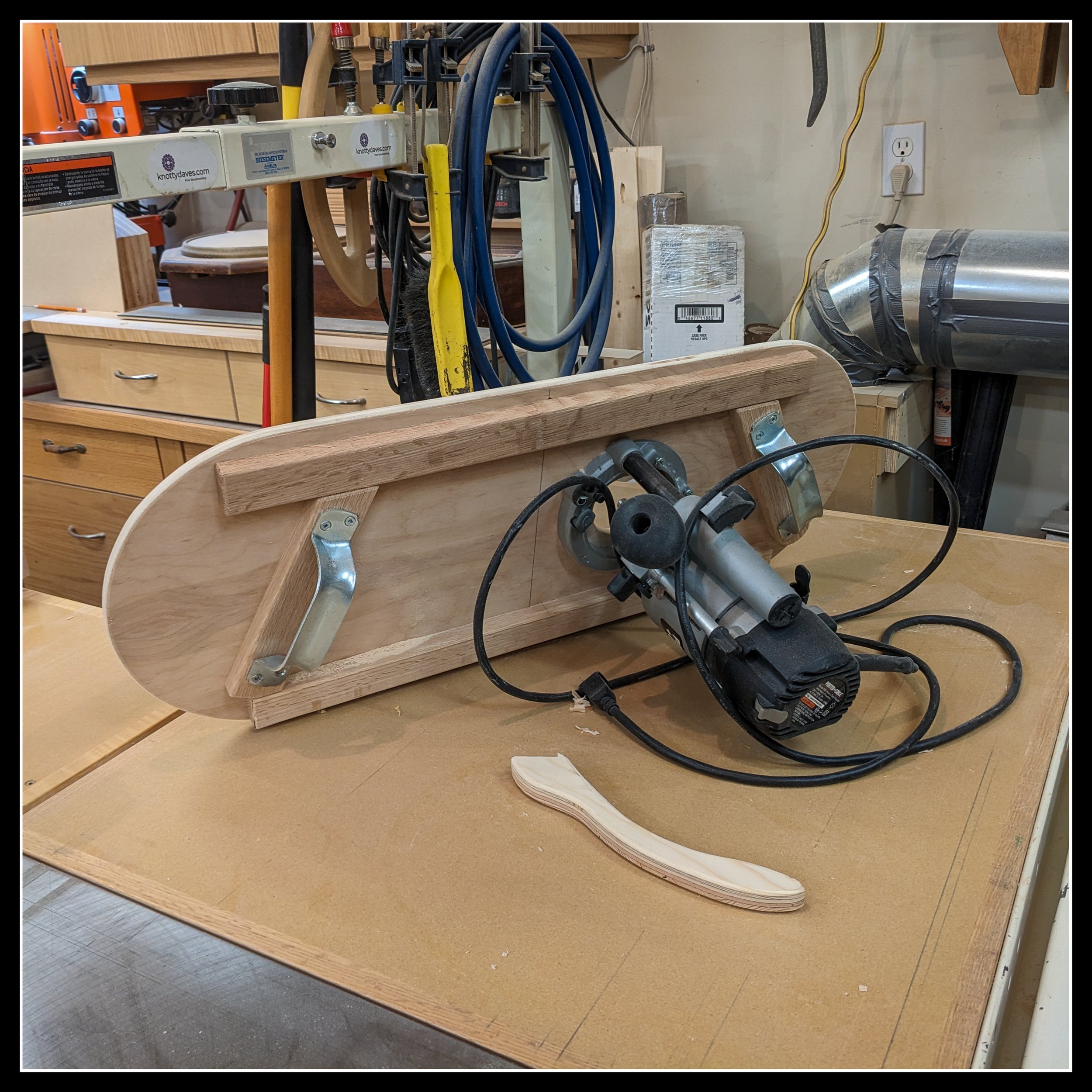
The Big‑Bit Router Sled — Safety, Control, and Forgotten Genius
This jig was built for the kind of router bits you should never run freehand — the big, heavy cutters that demand total control. With this sled, those dangerous cuts become safe, predictable, and clean. I rarely use it, but when a job needs ultimate control, this jig is the answer. I actually forgot I even had it until I found this photo buried deep in my images. That’s the truth about shop projects: the best solutions sit quietly on a shelf until the day you need them again.
Note: Every shop has its own way of making the unsafe safer. This jig works for me, but every woodworker should use their own judgment, tools, and comfort level.
Together, gathered in one place so the machine stories, tool reflections, and workflow moments stay connected — easy to find and easy to return to.
SHARE
The Working Side of the Craft — Connected Through Machines, Tools & Stories
If you want the stories shaped by table saws, bandsaws, grinders, fences, and jigs — the honest, noisy side of woodworking — the Working Side Of The Craft is one click away.
If you’d like to hear from me only when something big is happening — a launch, a milestone, or a major project — you can join the mailing list below.
Written by David Flather, Red Seal cabinetmaker and founder of Knotty Dave’s Fine Woodworking — a Manitoba shop rooted in heritage restoration, storytelling, and real craft.
All photos shot by David Flather — in the shop, on the road, and in the places where craft and story meet.
Related stories:
The World Runs on Pencils — Woodworking, Shop Life, and the Tool Everyone Loses
Shop Life — The Humour, Frustration, and Timing of a Working Day
The Radial Arm Saw: Forty‑One Years of Real Shop Use, Safety, and Cross‑Cut Accuracy
The Workshop Library
If you enjoyed this story, there’s lots more like it inside The Workshop Library — and it’s free to explore.
Wood Archive — species, grain, working properties, and real‑world craft notes
Behind the Grain — the deeper stories inside wood, craft, and heritage
The Working Side of the Craft — tools, shop life, workflow, and the realities of making
Digital to Sawdust — Design Studio — geometry, proportion, visual flow, and design thinking
The Stories of the Shop — the personal side of craft, the shop’s history, and the quiet moments that shape the work
House & Hearth — heritage home restoration, the hearth room, winter culture, and the lived‑in side of craft
I’m just one man with a shop, building this archive one story at a time. If you’d like to follow the journey as it unfolds, explore The Workshop Library — new stories every week.
