

Old Machines, New Machines, and the Quiet Math of a Working Life
Quick Answer — What’s the Quiet Math of Old and New Machines?
The quiet math is the real calculation behind every tool choice in a working shop — when to rebuild an old cast‑iron machine, when to buy new, when a compromise becomes a regret, and when a bigger, better tool opens creative doors. It’s the balance of cost, capability, reliability, and long‑term value that shapes a woodworker’s life.
Rebuildable cast‑iron value — old machines can be tuned, repaired, and kept alive for decades
New‑machine capability — modern tools add capacity, precision, and workflow expansion
Cost vs performance — the right machine is the one that fits the work, not the marketing
Regret math — compromises on power or size often become long‑term frustrations
Creative doors — some upgrades unlock projects you couldn’t build before
Long‑term value — the best machines pay for themselves through reliability and capability
How Old and New Machines Shape a Working Life
Old machines, new machines, and the quiet math behind every choice in a working shop. This Ramble looks at the tools that shaped my career — the cast‑iron legends I rebuilt, the modern machines that expanded what’s possible, and the decisions that separate a regret from a win. From a tuned General 490 to a SuperMax drum sander to the Laguna Revo 24|36 that unlocked whole new projects, this is a story about understanding your tools, respecting their limits, and choosing the ones that let creativity grow.
BY THE END OF THIS STORY
You’ll understand the quiet math behind choosing machines in a working shop — why some tools are worth rebuilding, why others demand buying new, how cast‑iron legends like the General 490 earn their keep, where modern machines like the SuperMax and Laguna expand what’s possible, and how every upgrade, regret, and win shapes the future of a woodworker’s life.
Read Time: 9 minutes
Fast Summary
Old machines offer cast‑iron stability and rebuildable value. New machines offer capability, capacity, and workflow expansion. Some tools are worth restoring; others demand buying new. Every upgrade shapes what becomes possible in the shop.
The Quiet Math of Old Machines
The wind poured over the highway with snow dust in tow. Its power was obvious as traffic pushed through. Drifts tried forming on the blacktop, only to be stirred apart by big trucks, their turbulent wake keeping the snow mobile and clouding the view as I navigated from behind my windshield. February on the Canadian prairie is a special brand of weather. Days are longer, the sun is warmer, and the snow cycles through surface melt and refreeze, leaving a slick, rutted mess. The wind doesn’t care. It pumps arctic air down our way, fighting for its full scheduled season of bitterness—making spring that much sweeter when it finally arrives.
Leo and I were on our way to pick up a mobile kit for our lathe so we could pull it away from the wall. Filming YouTube videos gets cramped otherwise. Backing up to the loading door at Wooden Edge Tools, we stepped out of the warm truck into soft drifts and biting wind, focused on getting inside to look at the tools. That got me thinking about my own machinery—the ones I bought used, the ones I bought new, and the ones I regret buying altogether.
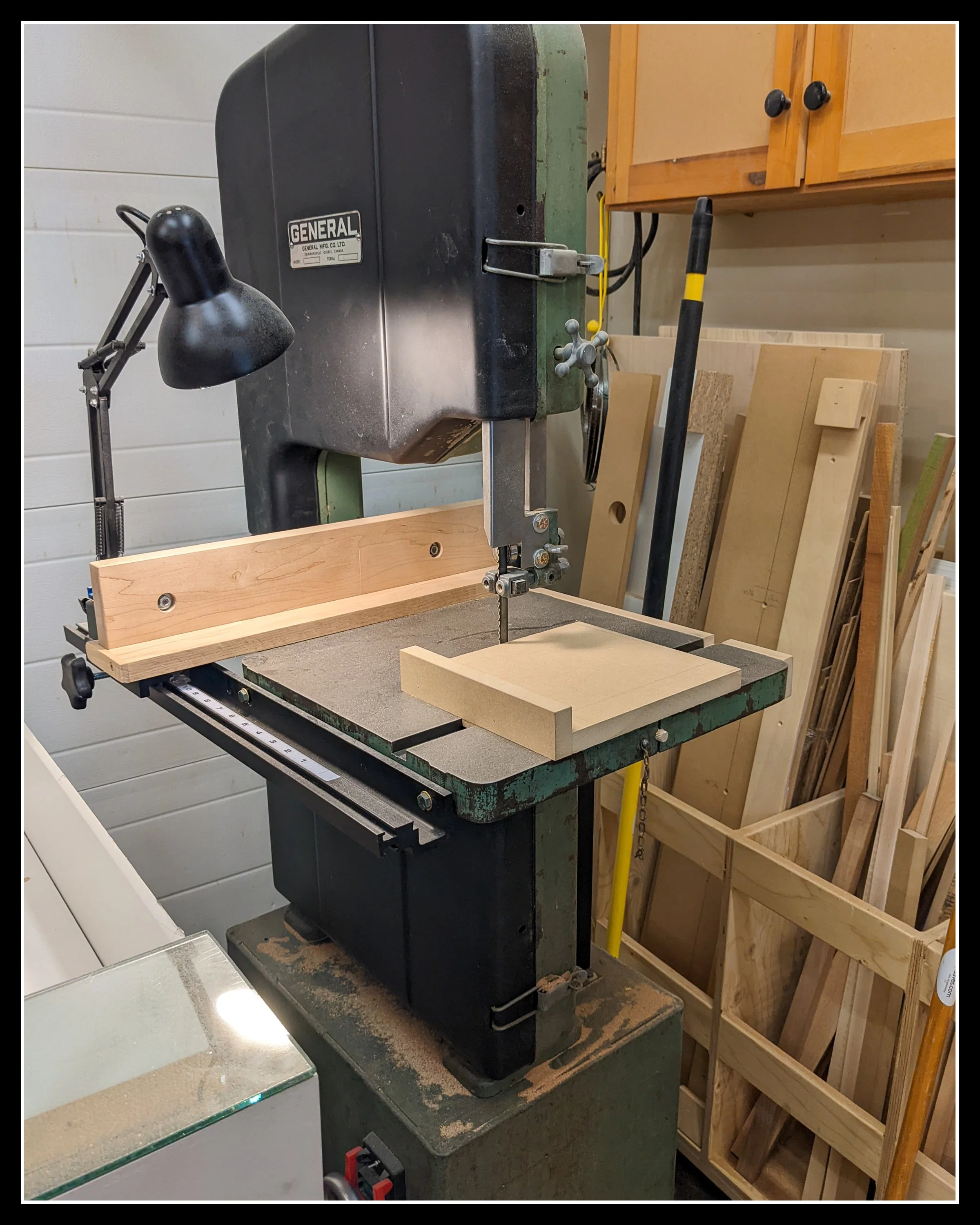
General 490 Bandsaw — Tuned, Trusted, and Built for Real Woodworking
This is my General 490 bandsaw with its new fence and shop light — a Canadian cast‑iron workhorse that looks rough but performs flawlessly. Machines like this prove the quiet math of woodworking: if you keep them tuned, understand how they behave, and respect their quirks, they’ll outlast anything shiny and new. This saw has been rebuilt, rewired, and dialed in, and it continues to cut clean, straight, and true. It’s not pretty, but neither am I — and we both work extremely well.
The Search for the Right Bandsaw
Let’s step back a few years to October 2021, when Covid was gripping and changing the world as we knew it. I’d been looking for a new bandsaw, and my research kept circling the same question: old or new? The trade-offs, the benefits, what I thought I needed versus what reality would allow. Funny how those two never line up.
New saws had marketing campaigns, shiny websites, specs, and YouTube reviews. Used saws had Kijiji, specs, and YouTube reviews. Information wasn’t the problem—maybe too much information was. But eventually the research was done, and my needs dictated what could be done. New saws had 12" resaw capacity and dust collection, two features a used saw wouldn’t have. Did I need them? Not really. A new saw was $3,000 plus tax with a 3hp 220v motor. Again—did I need that power?
Then on Kijiji, there it was: a Canadian-made General 490 for $900. No dust collection, 7" resaw with the guard off, a 1.5hp motor I could rewire for 220v, and a list of potential issues I wouldn’t know until it was in my shop. That’s the risk. But the price was attractive, and this was a Canadian cast-iron legend. I emailed the seller. He still had it. I headed straight over.
The saw was clean and complete, save for the blade guard. We started it up and it slowly came to speed like any 120v motor. I’d brought a piece of 2" maple to test it, and the saw ate it like butter. A few things were off—loose bolts, minor vibrations—but nothing that scared me off. I paid the $900 and drove home smiling. If the saw is complete and runs, I can fix it.
Rebuilding the General 490
Back at the shop, I started inspecting and found loose bolts everywhere. I concluded the previous owner had torn the saw apart, maybe dreaming of a full restoration. My vision was different: an ultra tuned saw that never fails. Patina included. So the rebuild began. Every part came off and was inspected. It seemed the saw had been assembled finger tight for the sale. But every part was there. I simply took it apart and put it back together properly. Rewired it to 220v. Made a new blade guard. One day of work.
When I was done, I had my ultra tuned saw. I ordered a fence and a light. It’s been perfect for years now with no regrets. Rebuilding it let me understand how it works, how it cuts, how it behaves. That knowledge is invaluable. It works for me—it’s not for everyone—but I increased the value of the saw, so if I ever sell it, I won’t suffer depreciation. A new saw can’t do that.
Bandsaws are basic. Their job is basic. As a used purchase, they’re easy. Not all machines are like that.
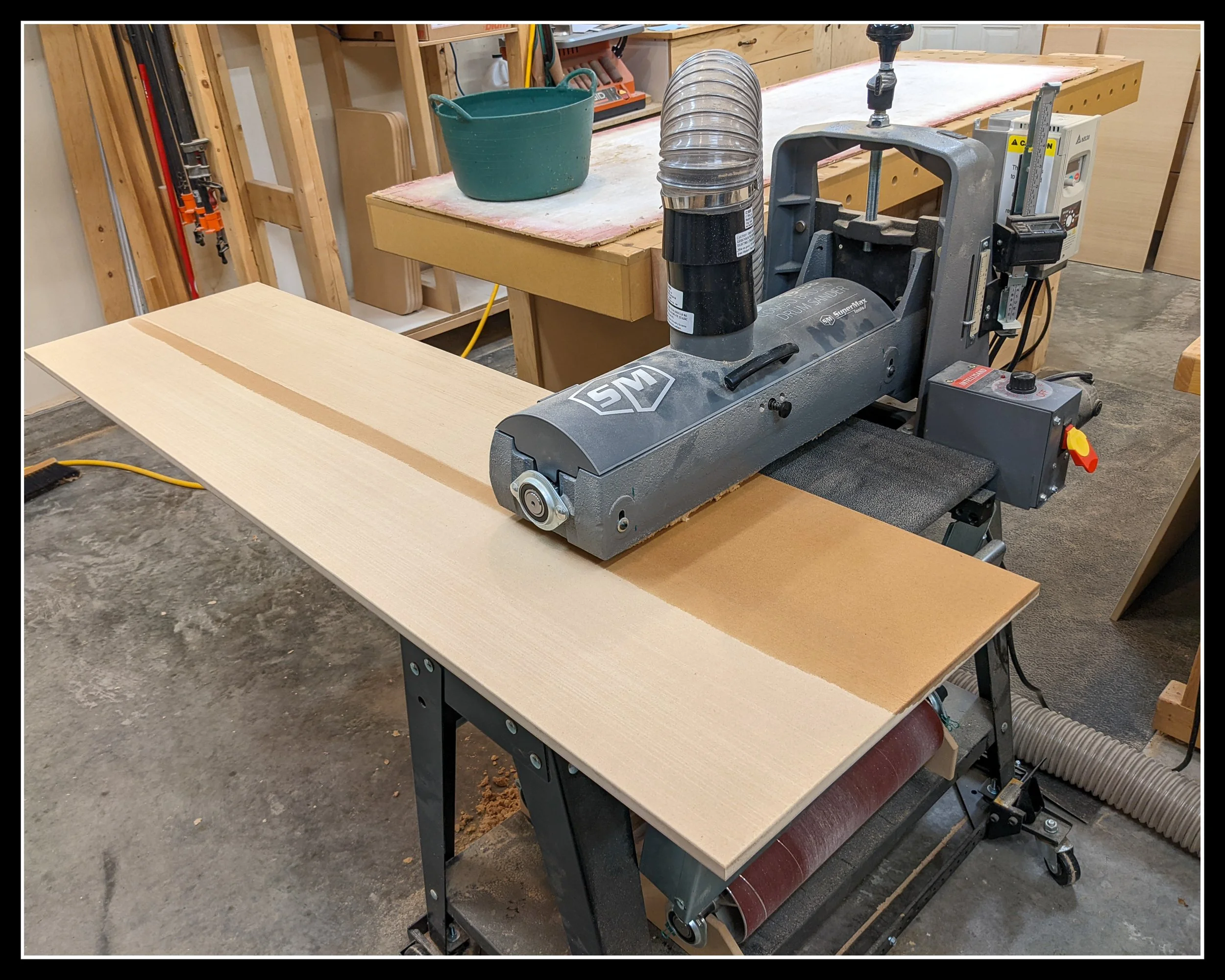
SuperMax Drum Sander — Small Shop Workhorse With Big‑Machine Expectations
This is my SuperMax drum sander — a compact machine that fits the shop and does the work I need, even if I was trained on industrial sanders worth over $100,000. That experience spoiled me on bigger tech, so this unit demands more attention: boards must stay moving, feed pressure must be monitored, and the belt needs babysitting to avoid stalls or ruts. It’s not perfect, but it’s paid for itself many times over, and it represents the quiet math of woodworking: choosing the machine that fits the space, the budget, and the reality of the work.
The Drum Sander That Taught Me a Lesson
There was a time I bought a new drum sander. This is a tool I wouldn’t buy used. It’s fussy, and it wasn’t mainstream 30 years ago, so used ones aren’t straightforward. I really like this sander, but I regret buying the model I chose. It fit my budget and it fit my shop—and that’s where the positives end. Its performance is lower than expected. It stalls too easily. The belt traction is inadequate, and wood can eject onto the floor. I should have spent more on a larger, more powerful sander. This one needs babysitting so pieces don’t stop moving and get a rut dug into them. That shouldn’t happen. I’m stuck with it until I sell and upgrade. But it has paid for itself, and it has done the work I needed. Live and learn. And I did—when I bought the lathe.
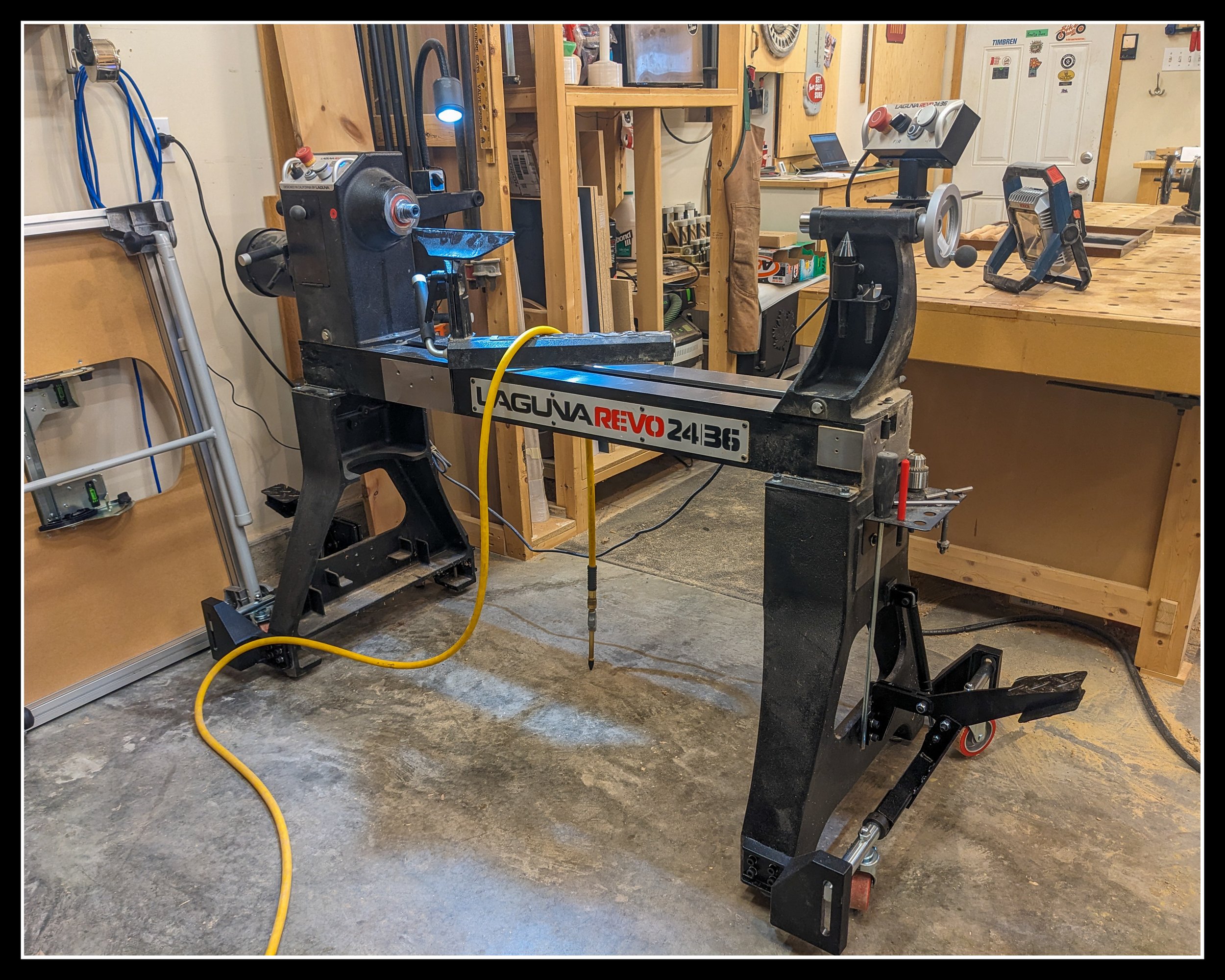
Laguna Revo 24|36 Lathe With Mobile Kit Installed — Power, Precision, and Shop Growth
This is the Laguna Revo 24|36 from the story — the lathe that changed what was possible in my shop. With the mobile kit installed, it can finally move away from the wall for filming and larger turning work. This machine represents the “quiet math” behind buying new tools: the cost, the capability, the long‑term value, and the doors it opens. It’s powerful, stable, and built for serious woodturning, and it has already paid for itself through the projects it made possible.
Choosing the Lathe That Changed Everything
When I needed a lathe, I immediately checked Kijiji. A big old General would have been perfect. But I needed the lathe for a job, and time wasn’t on my side. Nothing was available in Manitoba. All the good iron seems to live out east. So I started looking at new ones. A small midi lathe was my first thought. Easy to store, small footprint. I did the research and thought that was the way to go—until I saw them in person. Underwhelming. Hobby grade. My mind shifted.
I went to Wooden Edge Tools to look at their lathes. They had a nice mid size model, better than the midis, but I wanted time to think. I was already exceeding the budget. Back in the shop, fighting with the drum sander reminded me of its shortcomings. Wishing I had bought bigger made me rethink the lathe. A mid size would be another compromise. So I started looking at the biggest options. What was the limiting factor? What was the largest turning I’d ever need? Table pedestals. That was the answer.
The Laguna 24|36 was the biggest I could find that was still orderable. I ordered it. And yes—I’ve turned one pedestal so far, and more will come. This tool has paid for itself. No regrets. It lets me build things I couldn’t before. It lets me get creative.
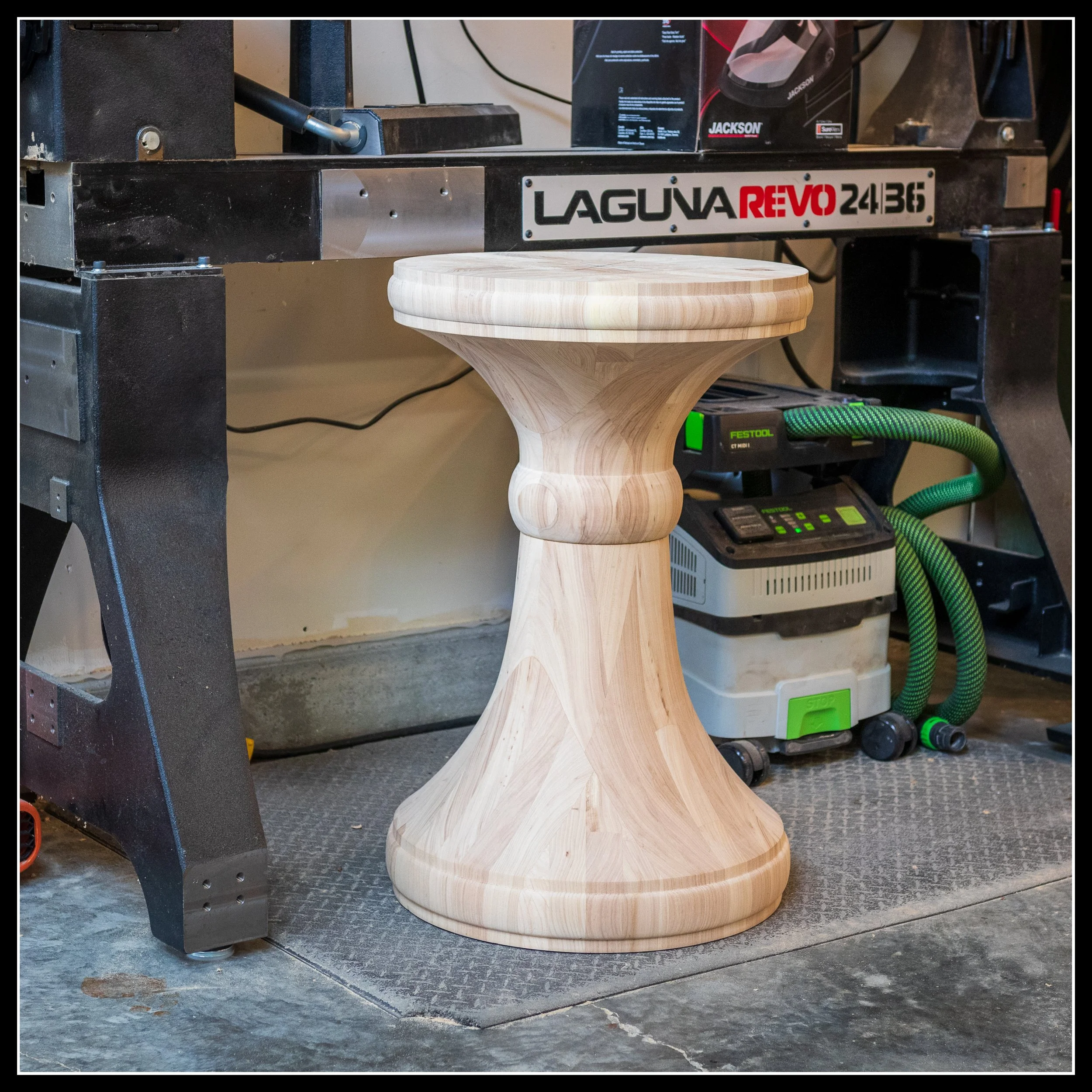
Turned Table Pedestal on the Laguna Revo 24|36 — Woodturning Power and Precision
This table pedestal was turned on the Laguna Revo 24|36 — the same lathe from the story, and the reason projects like this are now possible. The machine’s stability, power, and capacity make large, balanced turnings achievable, opening the door to furniture builds that were once out of reach. This pedestal represents the “quiet math” of buying the right machine: the cost, the capability, and the creative freedom that follows.
The Projects These Machines Made Possible
Each of these tools has a story, each one unique. But it’s the math that matters. I’ve bought old tools and used them until a bigger, better machine came along, and I’ve never lost a dollar selling a used one. I have several old machines—the drill press, a Delta is almost 80 years old and in great shape. It cost $200. How can I go wrong?
The drum sander cost about $2,700, and I’ll take a hit when I sell it. But it’s been useful and paid for itself long ago. And the lathe—very pricey. The base was $5,000, plus accessories and supporting tools. But no regrets. It allows growth in the shop. It expands what I can build. It opens doors.
The Future Machines Still Waiting
Now going forward, the future. The machines I haven’t bought, the ideas I haven’t had yet. That’s exciting. There are opportunities waiting, and when I find them, the successes and misses of the past will shape the decisions ahead. I’ve been wanting a used General #100 combination belt and disk sander for years. I used one in college, and that same sander is still in the shop today. It’s a difficult unit to find in Winnipeg and might require a multi‑day road trip out east if I really want one. I could easily pick up a new one at Wooden Edge tomorrow—not a General #100, but a modern sander. The General is real Canadian cast iron, a legend, and one day it’ll be rare. But it’s big, heavy, and most of them need 3‑phase power, which means extra equipment. Truth is, I don’t need this tool. It’s more of a want. But it pairs well with a lathe, especially with its 16" sanding disk. Reality is simple: it’s too big for my shop to justify the expense. Still, I’ll keep looking. It’s out there. I’ll find it one day.
Here we are, math done, Ramble finished on another cold February day, with a mobile kit to install and the lathe gaining another upgrade. And I will say: the hours on a lathe pass by easily as the chips fly and pile on the floor. No other tool provides as much enjoyment.
But that’s another story.
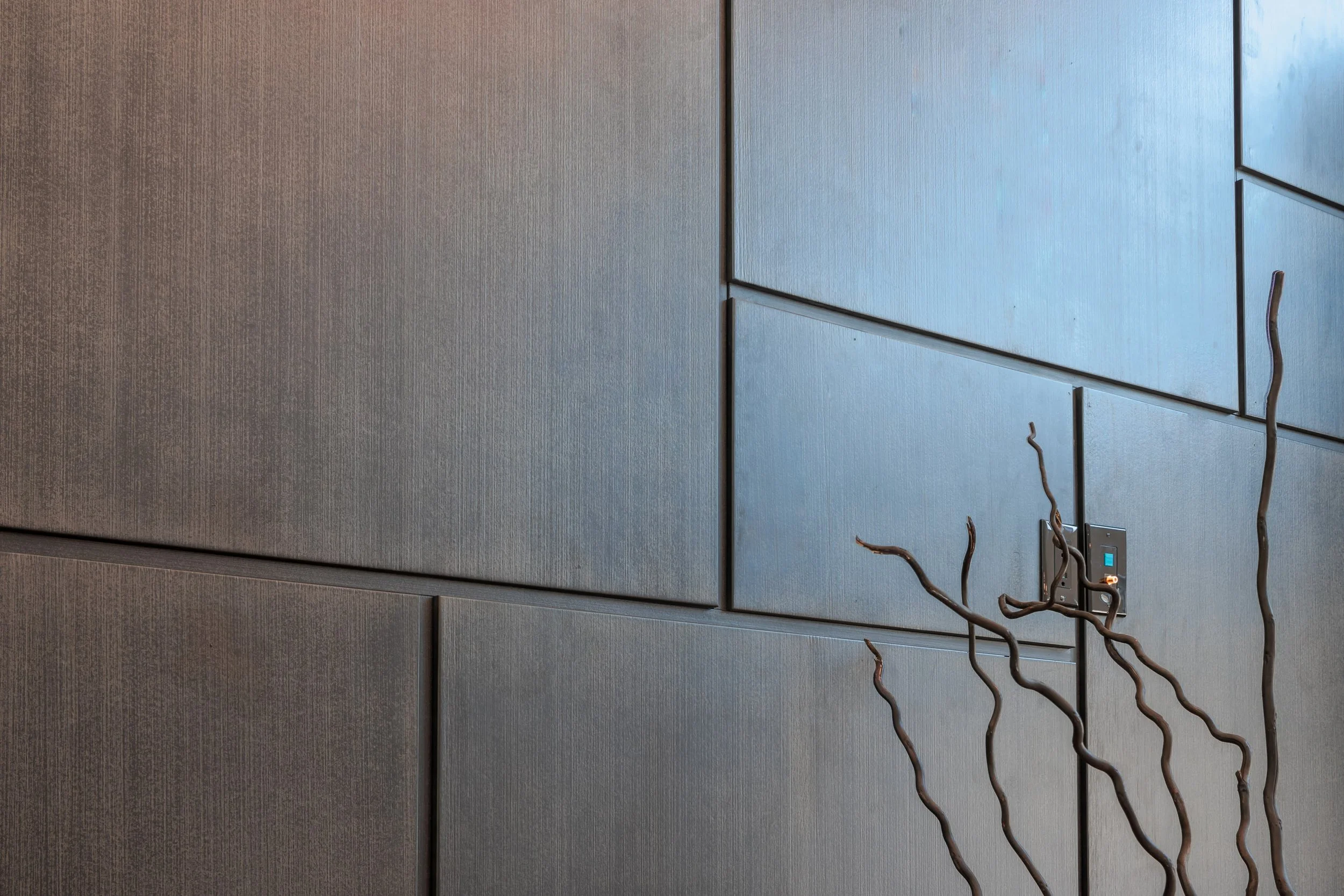
Textured MDF Wall Panels — Deep Scraped Collection Finishing Made Possible by Modern Machinery
These wall panels were made with brushed texture on MDF with the Super-Max, then painted, glazed, and clear‑coated — a finishing style I call the Deep Scraped Collection. Projects like this only exist because the machines in my shop give me the creative freedom, ability, and expression to push texture‑based finishing further. Veneers, MDF, solid wood — there are countless ways to build this look, but the point is simple: the right tools open doors. Old machines, new machines, each one adds to what’s possible.
Together, gathered in one place so the machine stories, tool reflections, and workflow moments stay connected — easy to find and easy to return to.
SHARE
The Working Side of the Craft — Connected Through Machines, Tools & Stories
If you want the stories shaped by table saws, bandsaws, grinders, fences, and jigs — the honest, noisy side of woodworking — the Working Side Of The Craft is one click away.
If you’d like to hear from me only when something big is happening — a launch, a milestone, or a major project — you can join the mailing list below.
Written by David Flather, Red Seal cabinetmaker and founder of Knotty Dave’s Fine Woodworking — a Manitoba shop rooted in heritage restoration, storytelling, and real craft.
All photos shot by David Flather — in the shop, on the road, and in the places where craft and story meet.
Related stories:
Kickback on the Table Saw — What Really Happens and How Woodworkers Prevent It
Contractor Saw vs Cabinet Saw: The Real Difference I Learned the Hard Way
The Radial Arm Saw: Forty‑One Years of Real Shop Use, Safety, and Cross‑Cut Accuracy
How a Jointer Removes Cup, Bow, Crook & Twist — The Straight Facts About Milling Wood
The Workshop Library
If you enjoyed this story, there’s lots more like it inside The Workshop Library — and it’s free to explore.
Wood Archive — species, grain, working properties, and real‑world craft notes
Behind the Grain — the deeper stories inside wood, craft, and heritage
The Working Side of the Craft — tools, shop life, workflow, and the realities of making
Digital to Sawdust — Design Studio — geometry, proportion, visual flow, and design thinking
The Stories of the Shop — the personal side of craft, the shop’s history, and the quiet moments that shape the work
House & Hearth — heritage home restoration, the hearth room, winter culture, and the lived‑in side of craft
I’m just one man with a shop, building this archive one story at a time. If you’d like to follow the journey as it unfolds, explore The Workshop Library — new stories every week.
