

Recovery Ramble
Quick Answer — What is Recovery Ramble actually about?
A Quiet Ramble about the slow days after surgery — the foggy moments, the reset, and the quiet strength it takes to keep building when life changes. This story reflects on recovery, the future of the woodworking website, and the beginnings of a gallery shaped by a cancer survivor’s craft.
Recovery slows life down but sharpens perspective
Foggy days reshape how work and creativity unfold
A woodworking gallery begins to take shape
Craft becomes a steadying force after surgery
Old tools and memories anchor the rebuilding process
Writing becomes a way to regain direction and momentum
Finding Perspective in the Slow Days of Recovery
Recovery slows life down, but it also sharpens perspective. This ramble explores the future of the website, the idea of a woodworking gallery, and what it means to keep building while navigating life after cancer — the slow days, the foggy moments, and the quiet strength it takes to keep moving forward.
BY THE END OF THIS STORY
You’ll understand how recovery reshapes the pace of work, the direction of the website, and the quiet strength it takes to keep building when life slows down.
Read time, about 4 minutes
Fast Summary
This Ramble follows the slow days after surgery — a moment when recovery reshapes the pace of work and the direction of the website. It explores the beginnings of a woodworking gallery, the legacy of old tools, and the quiet strength it takes to keep building while navigating life after cancer.

Winter Drift Over Snow: A Quiet Prairie Moment
A quiet winter moment on the prairie — soil drifted over snow from a nearby farmer’s field, dry grasses pushing through the cold, and a warm sunrise settling over the frozen ground. Scenes like this don’t fit neatly into the woodworking archive, but they shape the rhythm of the Rambles: the pauses between projects, the stillness that sharpens perspective, the beauty that reminds you why you keep building. It’s a landscape of recovery, reflection, and the quiet strength of Manitoba winters.
Slowing Down Enough to See Clearly
Recovery has a way of slowing the world down. I’m home from surgery now, moving at half‑speed and trying to find my footing again. The ideas for the website are still there — more than enough — but my mind feels foggy, drifting just out of reach. So I’m writing this ramble to reset my bearings, to nudge the needle forward again, even if only a little.
Thinking About the Future of the Website
I’ve been thinking a lot about the future of the website. One of the first pieces of feedback I ever received was the lack of a gallery. I’ve never wanted the site to look like a contractor’s page. This isn’t a portfolio. It’s a place for people to explore — discovery, education, entertainment. More like an online woodworking magazine than anything else.
A gallery could work, if it’s done right.
I picture a new page in the main navigation. I like to think of pages as rooms in a house, so this one might be called the Wood Room or the Gallery Room. Inside, it becomes a room full of doorways leading to places like the Walnut Gallery, Gallery of Oaks, Wood Finishing, Machines from the Shop, and many more. These would be photo‑ and story‑based galleries: stories about wood, its warmth and ruggedness, its stubbornness and its beauty; stories about veneer, sheet goods, and paint; stories about hand tools and power tools.
There would also be a project gallery, how‑tos, and digital downloads. YouTube videos would be embedded throughout. Google has already been recommending my site for how to photograph woodworking — that alone sounds like a gallery waiting to happen.
The best part is that these galleries are never finished. I can keep adding to them as new material is created. There’s potential for hundreds of pages. I’m at 31 as I write this; this ramble will be page 32. The Shop Rambles will build many of these pages, but together they’ll form a comprehensive woodworking website.
This is me living as a cancer survivor — adapted, still relevant, still building.
I’ve been thinking about a gallery on the scroll saw. Once very popular, now mostly forgotten. I could test it, see what it can do in a modern shop, and film the process. And of course, there’s a story behind the scroll saw. There’s a story behind every tool.
This is also an opportunity for sponsors once the site and YouTube channel are built out and showing growth. The story is still developing, and new ideas keep showing up. If you have any, I’d love to hear them.
Steadying Myself Through Writing
Writing this helped me steady myself and get moving again. Another surgery is coming in a month — another hurdle to clear — but your support makes the road feel less steep. If you’ve been following along, thank you. Subscribing to the Shop Rambles is the most uplifting support you can give; it means you’ve chosen to walk this journey with me from the beginning. I’m grateful you’re here.
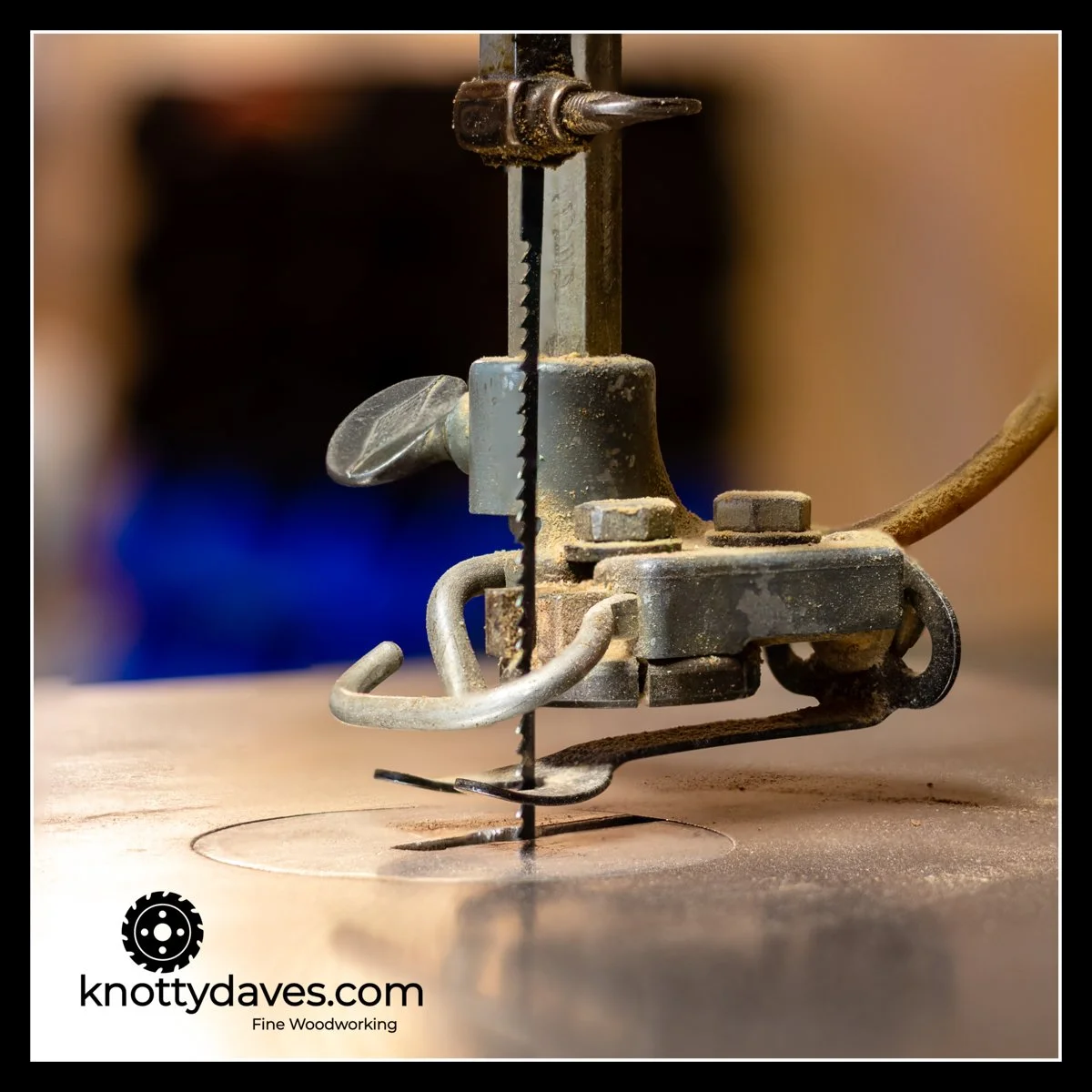
⭐ Foot of a 1950s Delta Scroll Saw: Cast‑Iron Heritage in the Woodshop
This photo captures the foot of my grandfather’s 1950s Delta 30‑inch scroll saw — a heavy cast‑iron machine that runs smooth, steady, and true. I used this saw throughout my youth, long before I understood how rare tools like this were becoming. Its weight, its balance, and the quiet confidence of old machinery shaped the way I see woodworking today. In the Recovery Ramble, this image anchors the idea of legacy in the shop — the tools we inherit, the stories they carry, and the way they keep us building even when life slows us down.
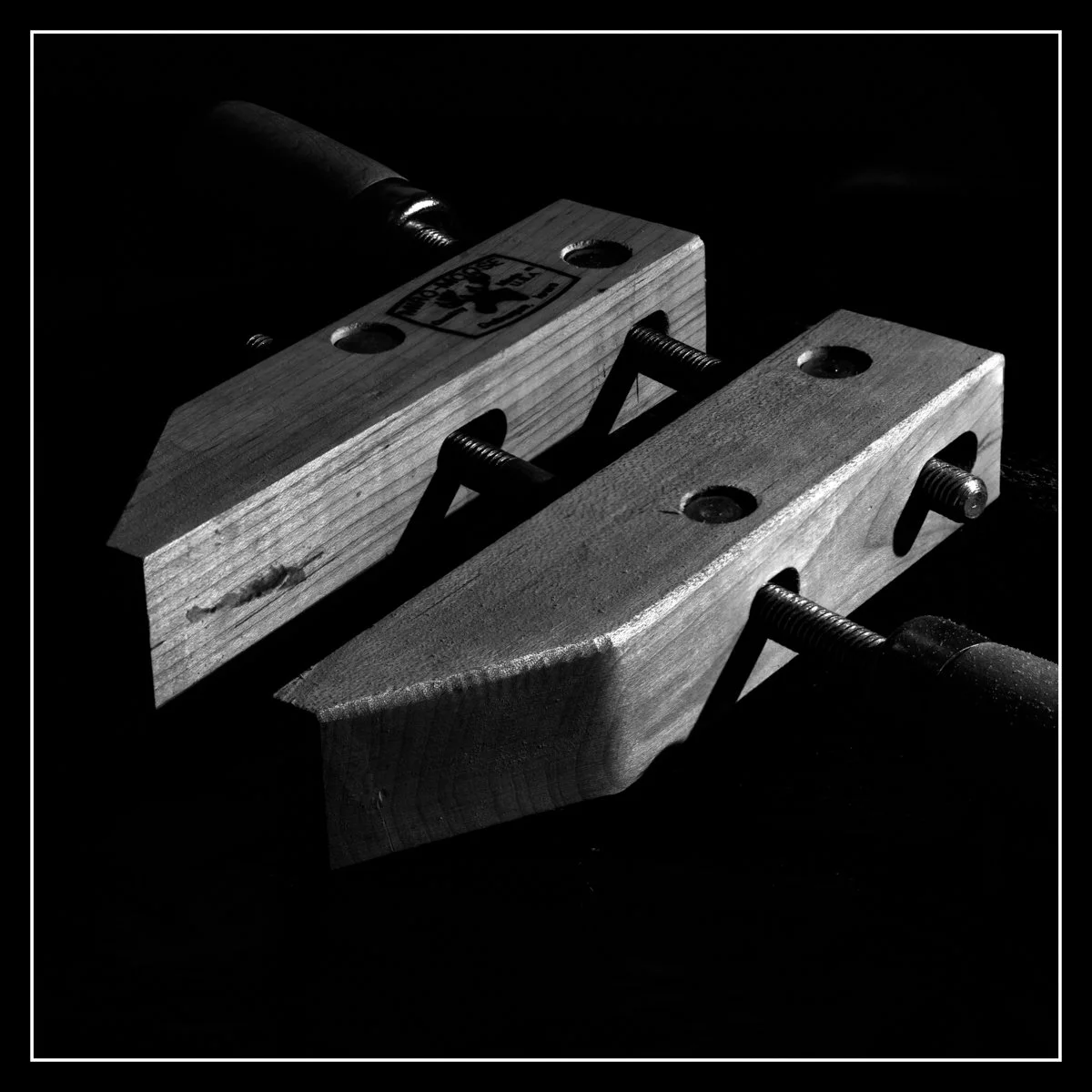
Wooden Handscrew Clamp in Creative Shop Lighting: A Moment of Perspective
A simple wooden handscrew clamp becomes something more under creative shop lighting — a quiet reminder that even the most ordinary tools have value, purpose, and a moment to shine. Recovery teaches perspective, and this photograph reflects that shift: slowing down enough to see beauty in the familiar, strength in the small things, and meaning in the tools that have been with you through every stage of the craft. In the Recovery Ramble, this clamp stands as a symbol of resilience, patience, and the steady work of rebuilding.
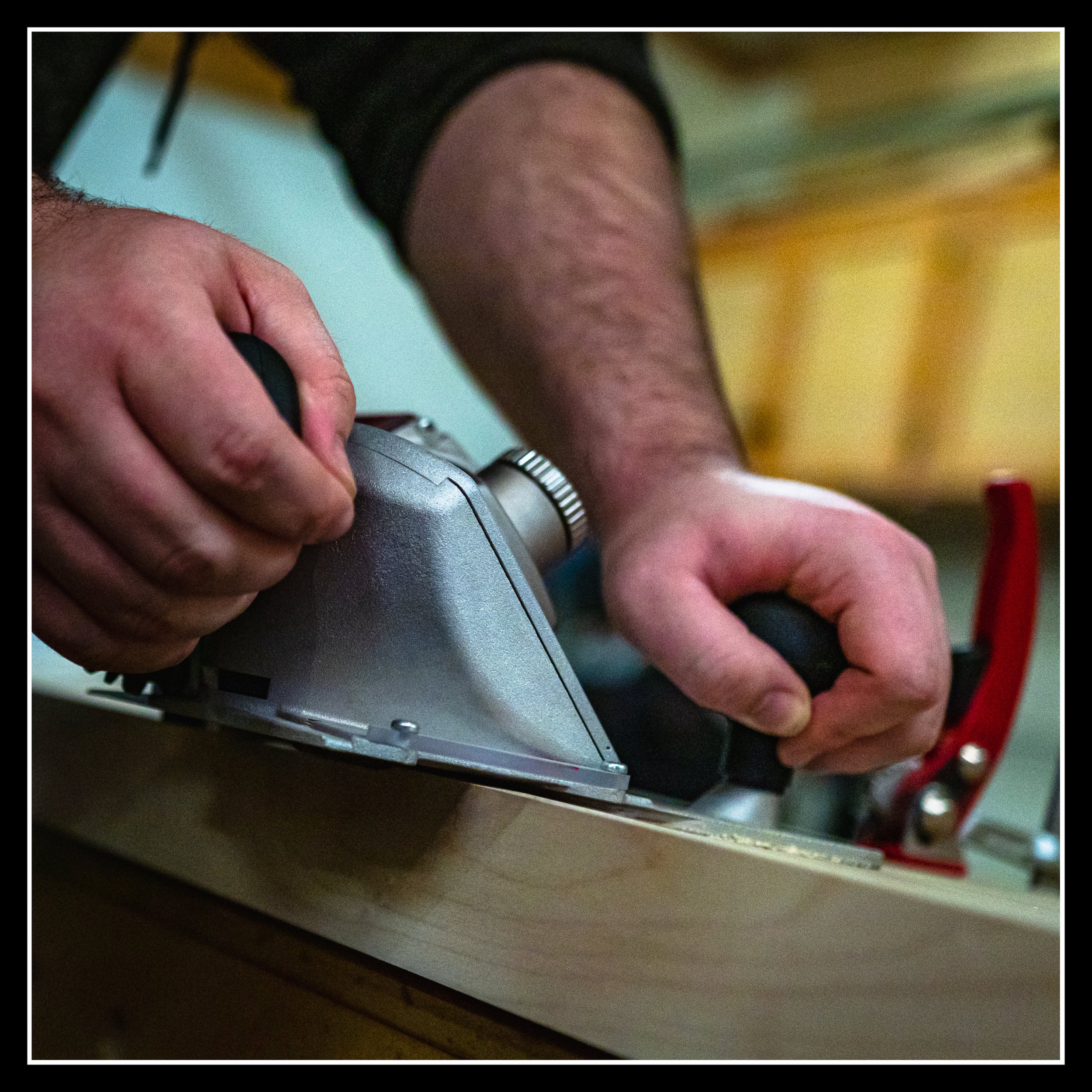
Trimming an Edge With the Lipping Planer: Slow, Steady Work in Recovery
Recovery changes the pace of the shop. Running the lipping planer, trimming an edge, becomes a slow and steady process — deliberate instead of rushed, careful instead of automatic. This moment captures the balance between healing and craft: hands guiding the planer with intention, wood responding with clean precision. Even small tasks like this remind me that progress doesn’t have to be fast to be meaningful. Recovery is still work, just measured differently.
This story is part of a small collection of honest reflections about pain, recovery, resilience, and the life‑shaping shifts that come with illness. These aren’t medical guides — they’re the moments, fears, and quiet victories that teach us how to see life differently, one hard season at a time.
SHARE
Living With Cancer — Connected Through Behind the Grain
All of the Living With Cancer stories live behind the grain, gathered in one place so the harder seasons stay together — easy to find, easy to return to, and always there when you need them.
If you’d like to hear from me only when something big is happening — a launch, a milestone, or a major project — you can join the mailing list below.
Written by David Flather, Red Seal cabinetmaker and founder of Knotty Dave’s Fine Woodworking — a Manitoba shop rooted in heritage restoration, storytelling, and real craft.
All photos shot by David Flather — in the shop, on the road, and in the places where craft and story meet.
Related Stories:
New Beginnings at Knotty Dave’s — A Late‑2025 Turning Point for the Shop and the Future
The Shift: How Cancer Changed My Time, My Craft, and My Purpose
Mini Kitchen — A Coleman Stove, a Tailgate Build, and Finding Focus Through Woodworking
The Workshop Library
If you enjoyed this story, there’s lots more like it inside The Workshop Library — and it’s free to explore.
Wood Archive — species, grain, working properties, and real‑world craft notes
Behind the Grain — the deeper stories inside wood, craft, and heritage
The Working Side of the Craft — tools, shop life, workflow, and the realities of making
Digital to Sawdust — Design Studio — geometry, proportion, visual flow, and design thinking
The Stories of the Shop — the personal side of craft, the shop’s history, and the quiet moments that shape the work
House & Hearth — heritage home restoration, the hearth room, winter culture, and the lived‑in side of craft
I’m just one man with a shop, building this archive one story at a time. If you’d like to follow the journey as it unfolds, explore The Workshop Library — new stories every week.
