

How to Arrive at Perfect
Quick Answer — What is How to Arrive at Perfect actually about?
A Quiet Story about tear‑out, stubborn boards, and the moment every woodworker realizes that “perfect” isn’t found in flawless cuts — it’s found in embracing the imperfect work that real wood demands. This story explains why perfection in woodworking only shows up when you stop chasing it.
Tear‑out teaches the truth about real wood
Imperfection is built into grain, knots, and reversals
“Perfect” in woodworking means embracing what wood gives you
Live‑edge and textured builds show honest craftsmanship
Machine marks and scars become character
Real perfection appears only when you stop forcing it
Why Perfection in Woodworking Isn’t What You Think It Is
Woodworking teaches patience long before it teaches skill, and this Quiet Story is one of those lessons — a moment in the shop where “perfect” revealed itself as something different than clean cuts and flawless boards. It’s a reflection on real wood, real work, and the quiet truth that perfection only shows up when you stop chasing it.
BY THE END OF THIS STORY
You’ll understand why perfection in woodworking isn’t a finish line — how real wood refuses to behave, how imperfection becomes character, and how “perfect” only appears when you stop trying to force it.
Read Time: 4 minutes
Fast Summary
This Quiet Story goes back to a moment in the shop when tear‑out revealed the truth about perfection — that real wood refuses to behave, and that “perfect” only appears when you embrace imperfection. It’s a reflection on how grain reversals, knots, and stubborn boards teach patience, honesty, and the kind of craft that lasts.
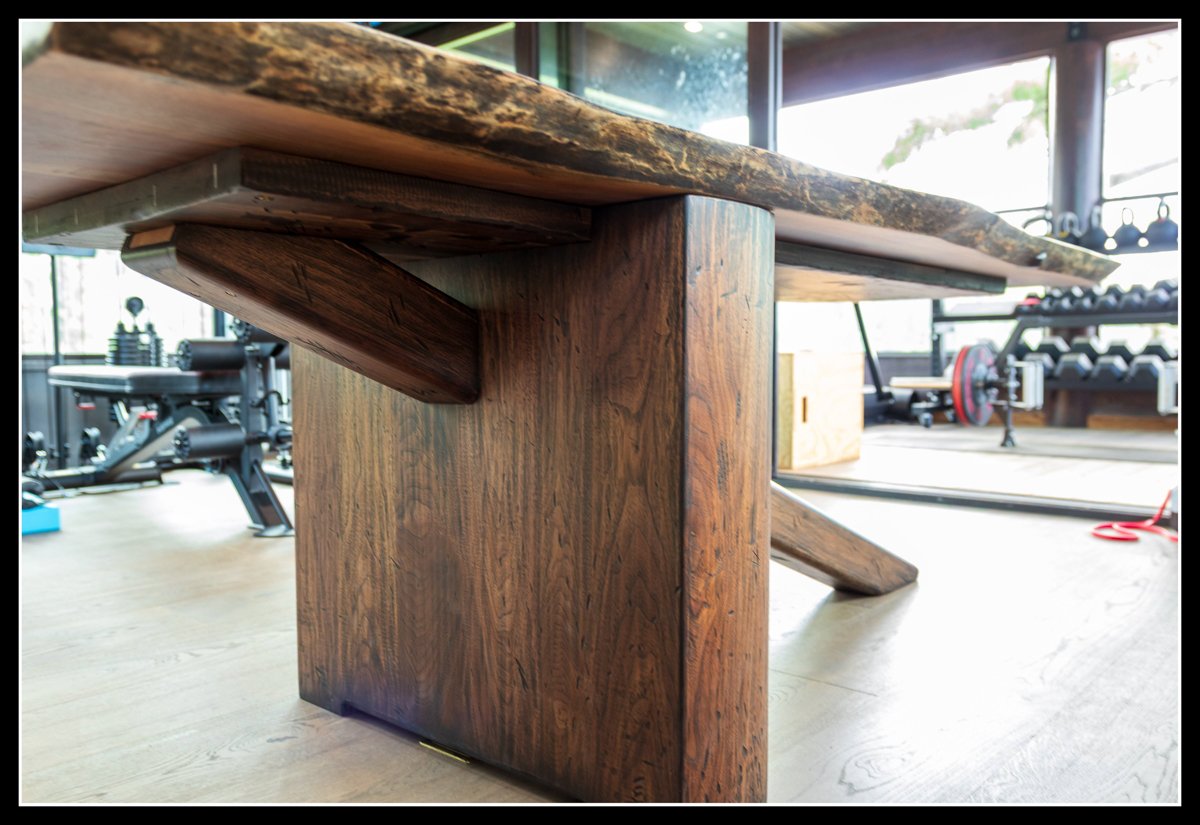
The Walnut Cantilever Desk
This solid‑walnut cantilever desk was a client build for his home office — a live‑edge slab with a distressed finish, balanced on a base that shouldn’t work but absolutely does. There isn’t another desk like it, and that’s exactly why I love it. The slab had its own attitude: knots, grain shifts, stubborn streaks that refused to behave. None of it was perfect, and none of it needed to be. Builds like this remind me why perfection in woodworking isn’t a finish line — it’s the moment when the wood’s imperfections become the best part of the piece. The desk is honest, textured, and unapologetically itself. That’s as close to perfect as handmade ever gets.
The Moment Imperfection Shows Up
I was in the shop today. Nothing special—just another ordinary day that shouldn’t have been worth writing about. But a familiar thought showed up again, the same one that always taps me on the shoulder at the worst possible moment.
You know the moment: everything’s looking good, the machining is clean, the board is flat, the cut is crisp… flip it over—and there it is. Tear‑out. If you’re unfamiliar, it’s exactly what it sounds like. Real wood doing what real wood does.
So I’m staring at this first board thinking, Yeah, okay, probably just this one.
Run another—of course it’s worse.
Ugh.
I adjust the setup, change the approach, and the rest came out fine. A little sanding, a little fill, and it’s all good. But that’s not tonight’s story. That was just the spark that lit up an old question I’ve carried through a lifetime of building:
Will I ever—just once—build something truly perfect?
To any aspiring woodworkers out there: I don’t think it’s possible. Not the way I imagine it. Not the way I’d like to see it go down. Not here, not for me, and not for lack of trying.
What Perfect Really Means in a Woodshop
Somewhere along the way, I realized that “perfect” in the shop doesn’t mean what it means anywhere else. Perfect is for machine‑made things. A new cellphone is perfect. A CNC part is perfect. But shop life? Hand tools? Real lumber? That’s a different world.
If something in a woodshop is called perfect, it’s only possible one way:
You have to embrace the imperfect. Only then does it become perfect.
And I know a few of you are wondering what I’m drinking while I write this nonsense.
Root beer. Obviously.
But hear me out.
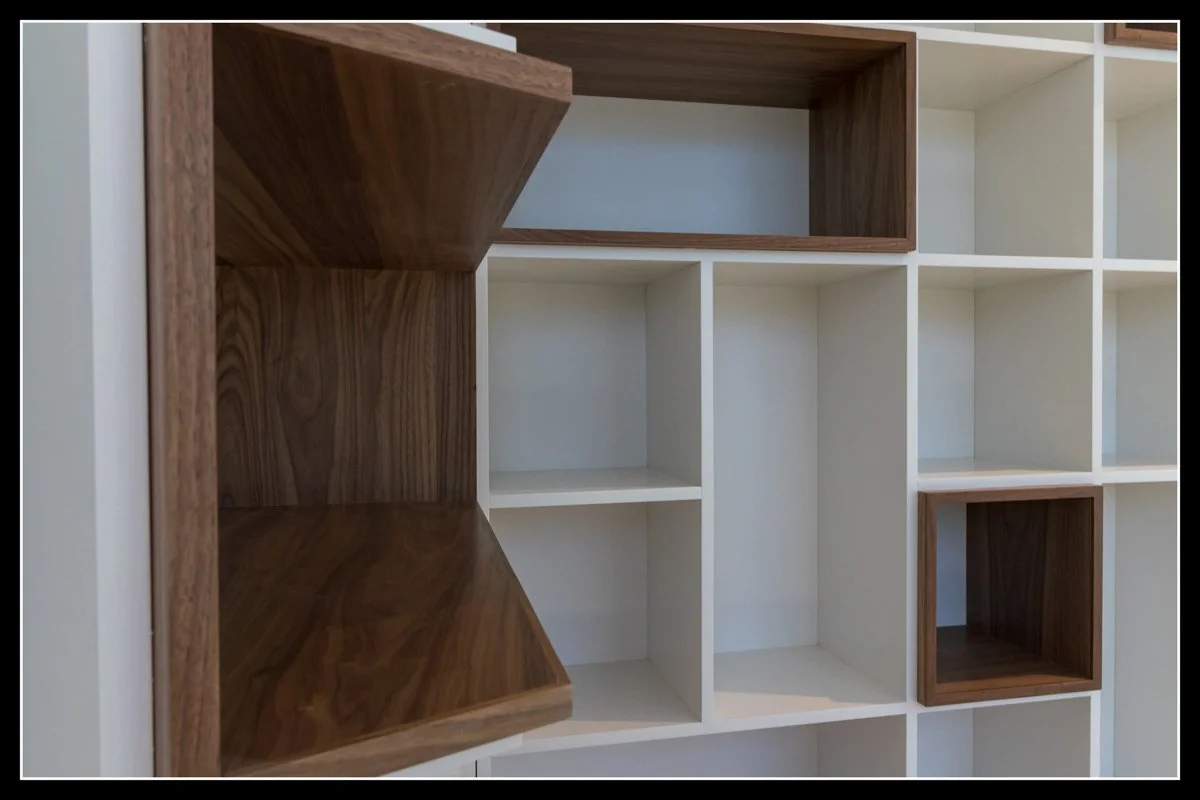
Geometric Shelving — Perfect Through Imperfection
A custom shelving wall unit built over angled walls, mixing white panels with warm wood inserts to create contrast, texture, and rhythm. The asymmetry is intentional — a reminder that real woodworking finds beauty in grain reversals, stubborn boards, and the small imperfections that give a piece its character. This design shows how “almost perfect” often becomes the most interesting work in the shop.
The Builds That Teach You What Perfect Actually Is
Wood—real wood—is imperfect. Why would I fight that? That’s the good stuff. The knots, the grain reversals, the stubborn streaks that refuse to plane clean. Even terrible wood has beauty if you know how to look at it. If you don’t see it, look harder.
I can build something beautiful out of rough, cranky, difficult boards simply because they’re wood. Wood never imitates plastic or metal. It has character, style, and a kind of stubbornness that keeps woodworkers like me from ever achieving the mythical “perfect build.”
After all these years, I’ve learned to take a breath and be patient.
The wood is just being wood.
Some of my favorite pieces—the ones I’m proudest of—are the rough‑textured, live‑edge, knotty builds with machine marks intentionally left behind. Texture you can feel. Scars that tell the story. Marks that let the piece breathe and carry a beat.
Wood is wonderful and frustrating all at once. But it’s a privilege to work with it, to chase perfection knowing I’ll never quite catch it.
Don’t get me wrong—I usually get almost perfect. And I’m my own worst critic. But handmade, with wood? I love it.
If I ever arrive at perfect, I’ll write about it.
Maybe.
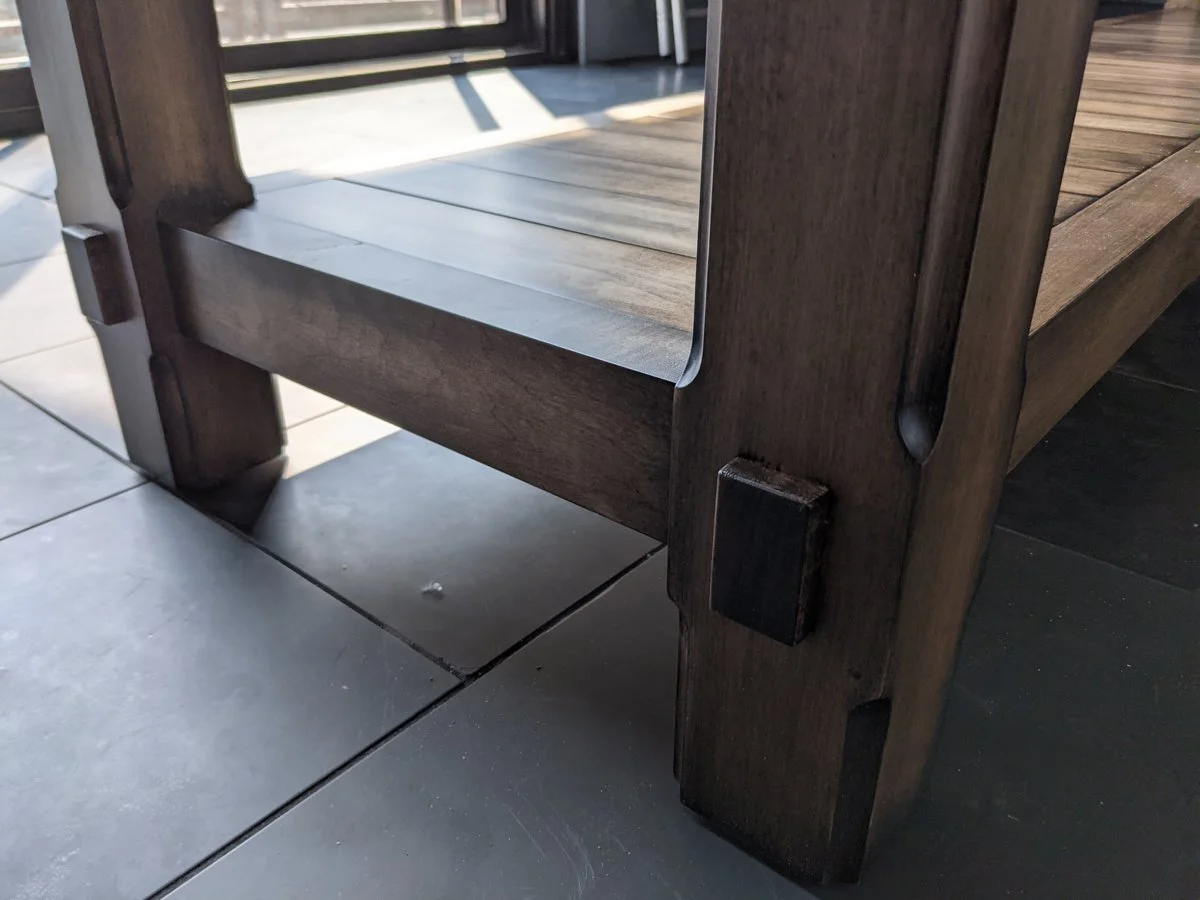
Maple Table — Through Tenons Built to Last
A maple laundry‑room table built with traditional through‑tenons and a pegged joint that locks the frame together like a workbench. The clean lines and sleek finish contrast with the rugged joinery underneath — proof that strength and refinement can live in the same piece. This is the kind of build where perfection comes from embracing real wood, real joinery, and the marks of honest craftsmanship.
This story is part of a small collection of reflections about the tools, lessons, and quiet moments that shape a woodworker’s life. These aren’t tutorials — they’re the memories and experiences that teach us how to see the craft differently, one quiet moment at a time.
SHARE
The Quiet Stories — Connected Through Behind the Grain
For the quiet side of woodworking — The Quiet Stories that sit behind the grain, where the background work, the memories, and the cancer chapters live — head to Behind the Grain.
If you’d like to hear from me only when something big is happening — a launch, a milestone, or a major project — you can join the mailing list below.
Written by David Flather, Red Seal cabinetmaker and founder of Knotty Dave’s Fine Woodworking — a Manitoba shop rooted in heritage restoration, storytelling, and real craft.
All photos shot by David Flather — in the shop, on the road, and in the places where craft and story meet.
Related stories:
The Power of Lazy: A Quiet Story About Working Smarter in the Shop
Sawdust — How a Radial Arm Saw Shaped a Lifetime of Woodworking
Grandpa’s Toolbox: A Quiet Story of Heritage Tools and Generational Woodworking
The Workshop Library
If you enjoyed this story, there’s lots more like it inside The Workshop Library — and it’s free to explore.
Wood Archive — species, grain, working properties, and real‑world craft notes
Behind the Grain — the deeper stories inside wood, craft, and heritage
The Working Side of the Craft — tools, shop life, workflow, and the realities of making
Digital to Sawdust — Design Studio — geometry, proportion, visual flow, and design thinking
The Stories of the Shop — the personal side of craft, the shop’s history, and the quiet moments that shape the work
House & Hearth — heritage home restoration, the hearth room, winter culture, and the lived‑in side of craft
I’m just one man with a shop, building this archive one story at a time. If you’d like to follow the journey as it unfolds, explore The Workshop Library — new stories every week.
