

PHOTOGRAPHY — How a Camera Teaches You to See Craft
Quick Answer: How does photography improve woodworking?
Photography teaches woodworkers to see light, texture, proportion, and story. It sharpens the eye for detail, reveals design flaws before they become mistakes, and turns everyday shop work into a visual record of craft. A camera becomes another tool — one that improves layout, highlights geometry, and documents the builds that matter.
Seeing light — reflections, shadows, highlights
Seeing texture — grain, tools, surfaces
Seeing proportion — layout, geometry
Seeing story — moments worth saving
Seeing craft — documenting the build
How Photography Teaches You to See Craft, Light, and Story
Most people see a tractor in a field or rocks on a frozen shoreline and keep walking. I don’t. Photography taught me to stop — to notice the quiet moments, the textures, the light, the stories hiding in plain sight. That Grade 11 darkroom never left me, and it still shapes how I see my shop, my tools, my builds, and the world I’m trying to save one frame at a time.
BY THE END OF THIS STORY
You’ll understand how photography shapes the way I see craft — how light reveals story, how texture becomes meaning, how the shop becomes a place worth documenting, and how the camera becomes another tool for saving the moments that matter.
Read time: 5 minutes
Comparison — Photography vs Other Shop Tools
Camera — reveals light, texture, proportion
Square — reveals alignment
Straightedge — reveals flatness
Lighting — reveals defects
CAD — reveals geometry
Quick Summary
Photography teaches woodworkers to see their craft differently — to notice light, texture, proportion, and story in ways the naked eye often misses. A camera sharpens your attention, reveals design flaws before they become mistakes, and turns everyday shop work into a visual record of the builds that matter. Once you learn how light shapes a scene, photography becomes another woodworking tool — one that helps you see your craft with clarity, intention, and honesty.

The Starbuck Train Bridge
I took this shot a few years ago, right after picking up my new Canon 80D. It’s the train bridge over the La Salle River in Starbuck, Manitoba — a black‑and‑white frame crawling with texture. The sky, the steel, the rails, the trees, even the gravel under the ties — every layer has its own grain and weight. It’s one of those photos where the camera disappears and the scene does all the talking, a reminder of why I fell in love with photography in the first place.
A Beginning in the Darkroom
My first taste of photography was back in Grade 11, sometime in the 1990’s. We shot black‑and‑white film on old Nikon SLRs — the real deal. The teacher had a cardboard box full of them, and we each grabbed one and took it home like it was ours. For five months, that camera lived with me. We could even borrow tripods the same way you’d borrow a book from the library. I’m pretty sure they were Manfrottos — solid, well‑made, professional gear.
How Early Photography Shaped the Way I See Craft
Looking back, none of us understood how lucky we were to have access to equipment like that in a public school. We even had a portrait studio with backdrops and big strobe lights with umbrellas to soften the light. There was a second studio set up for product photography too. And if that wasn’t enough, the school had equipment for mounting finished photos onto card stock — a professional touch you’d never expect in a high school.
We developed everything in the school’s darkroom It was a proper setup — trays, enlargers, safelights, the whole ritual. At the time, it just felt normal. Only years later did I realize how rare it was. And maybe that’s why it stuck with me. The school kept giving us film, roll after roll, and because it wasn’t coming out of our pockets, we weren’t afraid to experiment. We weren’t worried about wasting shots. We were free to actually learn — to be real photographers, even if we didn’t know it yet.
It was just a five‑month elective, but if I could have majored in it, I would have. That was my favourite class in all of high school. And the truth is, I still love photography today. It never left me.
All these years later, that early experience still shapes how I see the shop through a lens.
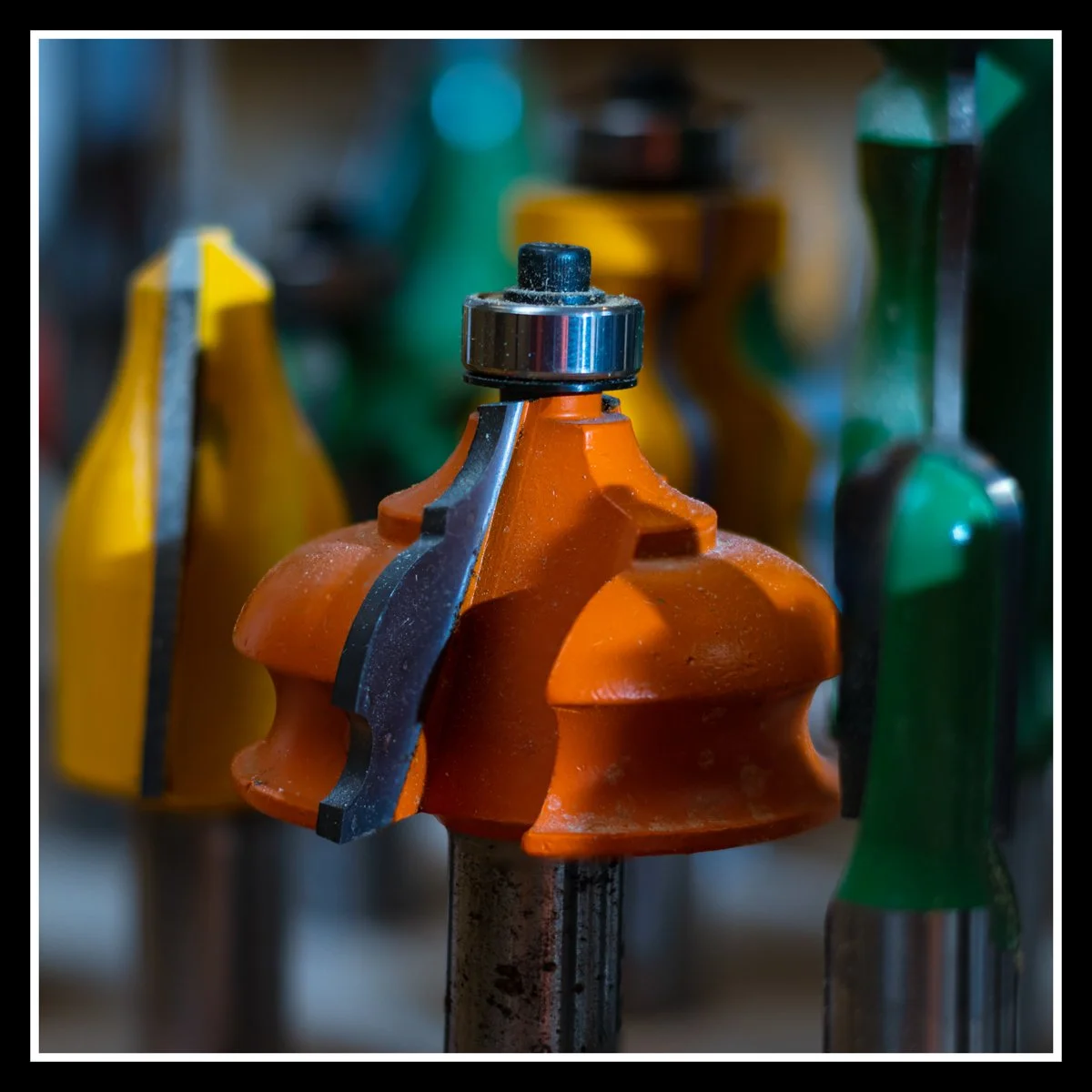
Photography — Seeing the Craft Differently
A handful of router bits can turn wood into anything you can imagine — curves, edges, details, stories. That’s how photography feels to me. The same spark that started in a Grade 11 darkroom still shapes how I see the shop today: every tool, every build, every moment worth saving. With a camera in hand, anything is possible.
SEEING THE WORLD DIFFERENTLY
I don’t just build things — I document them. Photography has become one of my favourite parts of this whole journey, not because it’s flashy or technical, but because it lets me see the world differently. A photo is time recorded. A memory documented. A moment that refuses to fade. It’s proof that something happened, that something mattered, that something was worth stopping for.
Great photos inspire. They encourage. They reveal the greatness hiding in the mundane — the things most people walk past without noticing. A clamp catching the light. A plane blade glinting like a secret. A pile of shavings that looks like art if you stop long enough to see it. The quiet geometry of a half‑finished cabinet. The way sawdust hangs in the air like smoke from a story still being written.
Photography slows me down in the best way. It forces me to pay attention. It reminds me that craft isn’t just about the finished piece — it’s about the thousand small decisions, the tiny victories, the moments of doubt, the stubbornness, the patience, the humour, the mess. When I have a camera in hand, anything is possible. I love that feeling — the spark, the freedom, the sense that the world is full of moments worth saving.
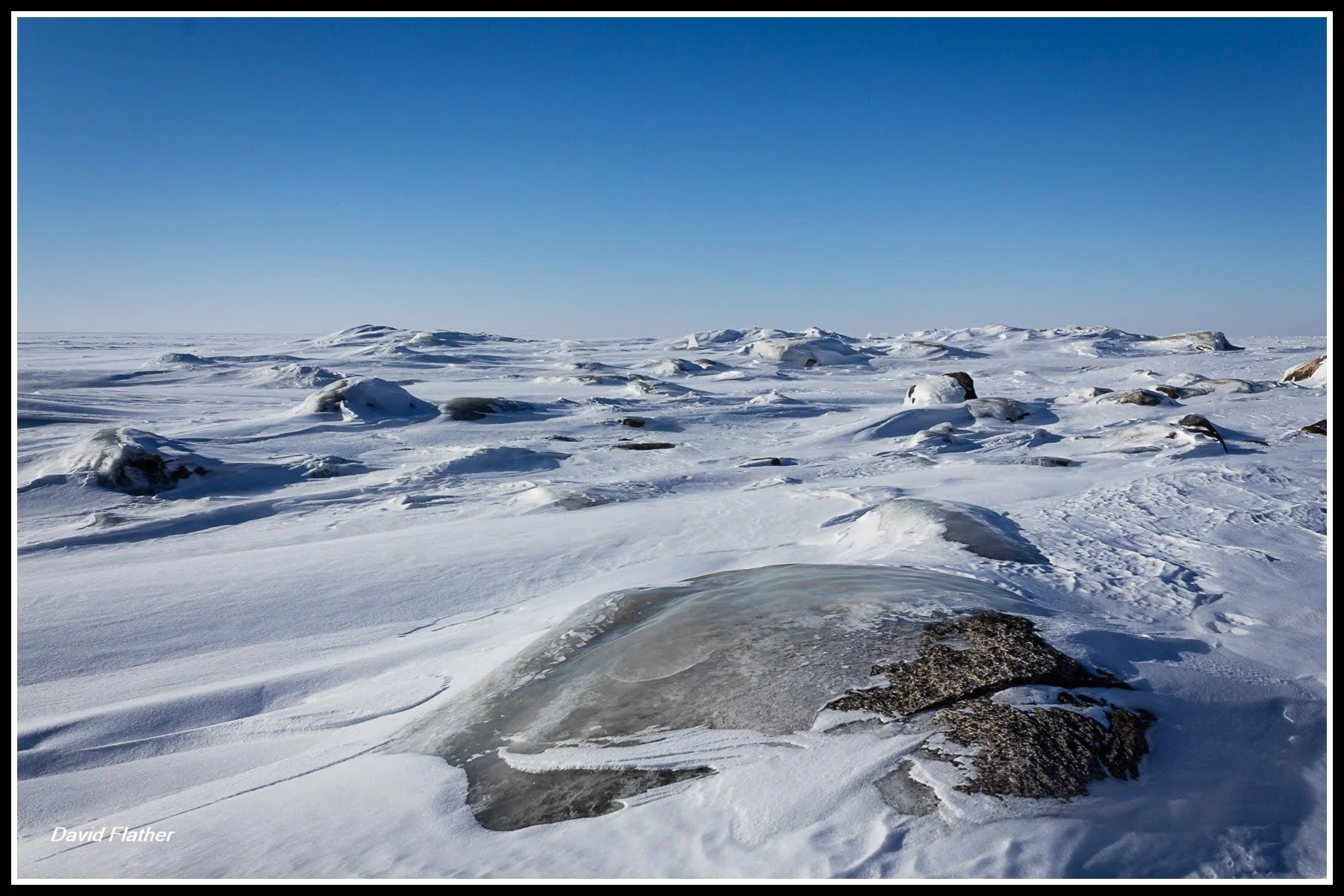
Photography — The Stories Hidden in Winter
A frozen Manitoba shoreline, windswept snow, scattered rocks, and a cold blue sky holding the faint promise of warmer days. It’s the kind of photo that doesn’t fit anywhere else on the site — except here. This is photography: noticing the quiet textures, the small truths, and the moments that tell a story even when the world is frozen solid.
Photography as Part of the Craft
And here’s the truth: photography isn’t a side hobby. It’s part of how I tell the story. It’s how I honour the craft, the house, the tools, the people, the memories. It’s how I show the work in a way that feels alive, not staged. It’s how I bring people into the shop, into the restoration, into the long fight to bring this old house back to life.
It’s also how I showcase the things I believe in — which matters when working with partners and sponsors. When I photograph something, I don’t just show it. I elevate it. I give it context. I give it atmosphere. I give it a place in the story. A tool isn’t just a tool — it’s a character. A material isn’t just a material — it’s a choice. A product isn’t just a product — it’s part of the build, part of the process, part of the legacy.
That’s the difference. I don’t take pictures to fill a feed. I take pictures to build a world.
The mantra says it all: “No regrets. Every cut is a story. Every build is a legacy. Every day is a victory.” That isn’t just a slogan. It’s how I live. It’s how I work. It’s how I see.
Photography is how I make sure those victories — big and small — don’t disappear. It’s how I share the journey with the people who care enough to follow along. And it’s how I invite others to join me, one frame at a time.
There’s still a small part of me — that 17‑year‑old kid in the darkroom — that wakes up every time I pick up a camera. He’s still in there, still curious, still chasing the perfect frame. And every time the shutter clicks, he smiles. It’s time to be a real photographer again.
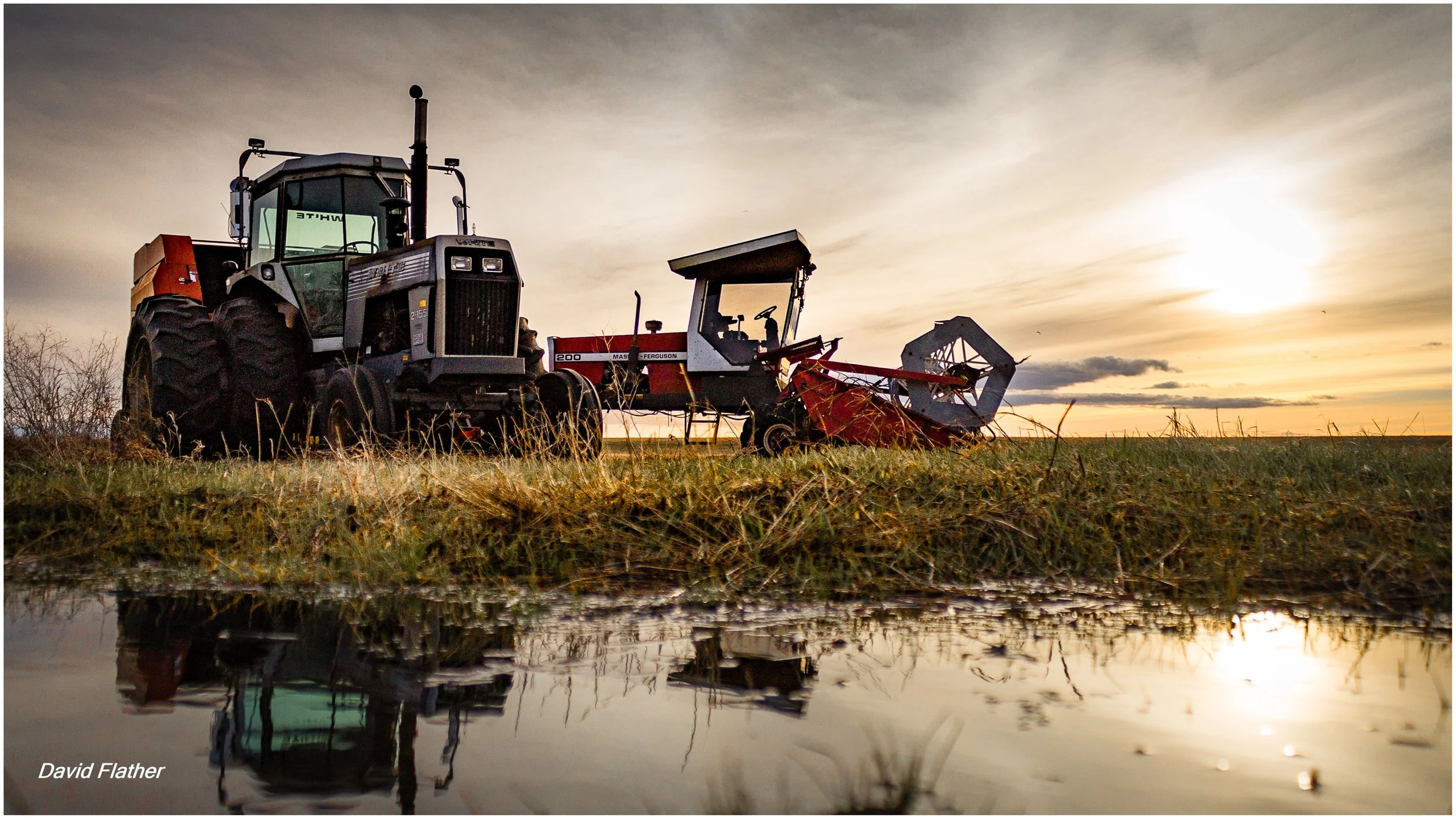
Photography — Stories Waiting in the Field
Mid‑spring, the rain has passed, the fields are drying, and the tractors sit waiting under a warming sun. The cool ground reflects the sky, the light catches the metal, and a quiet story settles into the moment. This is photography — finding meaning in places most people walk past, saving small truths in an image, and carrying that same instinct back into the shop where every tool and every build has a story worth keeping.
Digital to Sawdust — Design Studio
Digital tools, layout, and proportion — the design side of woodworking before the sawdust begins.
SHARE
Digital to Sawdust — Design Studio
Lessons in woodworking design, geometry, and digital layout — teaching how furniture is shaped with intention.— head to the Design Studio. Just one click away.
If you’d like to hear from me only when something big is happening — a launch, a milestone, or a major project — you can join the mailing list below.
Written by David Flather, Red Seal cabinetmaker and founder of Knotty Dave’s Fine Woodworking — a Manitoba shop rooted in heritage restoration, storytelling, and real craft.
All photos shot by David Flather — in the shop, on the road, and in the places where craft and story meet.
Related Stories:
Photography For Woodworkers: Turning Shop Light Into Real Photography
Woodworking Design: Getting It Right: The 60/40 Rule for Better Design Balance
Visual Weight in Woodworking: How Proportion Shapes the Feel of Furniture
The Quiet Geometry of Furniture: How Curves Change a Room, Softening Rectangular Design
The Workshop Library
If you enjoyed this story, there’s lots more like it inside The Workshop Library — and it’s free to explore.
Wood Archive — species, grain, working properties, and real‑world craft notes
Behind the Grain — the deeper stories inside wood, craft, and heritage
The Working Side of the Craft — tools, shop life, workflow, and the realities of making
Digital to Sawdust — Design Studio — geometry, proportion, visual flow, and design thinking
The Stories of the Shop — the personal side of craft, the shop’s history, and the quiet moments that shape the work
House & Hearth — heritage home restoration, the hearth room, winter culture, and the lived‑in side of craft
I’m just one man with a shop, building this archive one story at a time. If you’d like to follow the journey as it unfolds, explore The Workshop Library — new stories every week.
