

Does Cancer Have a Silver Lining?
Quick Answer — What is Does Cancer Have a Silver Lining? actually about?
A Quiet Ramble about the days cancer takes everything — strength, work, certainty — and the parts of a life it can’t touch. This story reflects on fatigue, identity, the work you lost, the writing that returned, and the pieces of yourself cancer couldn’t take: the craft, the shop, the teaching, and the stubborn need to keep creating.
Cancer reshapes identity, work, and daily life
Fatigue becomes a constant, unpredictable force
The old work life disappears — the creative life returns
Writing, photography, and craft survive the diagnosis
Recovery forces a recalibration of purpose
What cancer can’t take becomes fiercely protected
What Cancer Takes — and What It Can’t Touch
Written on a hard day.
Cancer doesn’t just interrupt your life — it forces you to face it. It tears away the routines, the work, the identity you spent decades building, and leaves you with whatever it couldn’t take. That’s why this story needs to be read. Because on the days when fatigue flattens me and recovery feels endless, I’m fighting to hold onto the parts of myself cancer couldn’t touch — the writing, the craft, the need to keep creating. This story exists because I need to remind myself that even when it feels like cancer takes almost everything, it doesn’t get to take all of me. Not till the end.
BY THE END OF THIS STORY
You’ll understand why cancer doesn’t offer a silver lining — but why the parts of your life that survive it become sharper, clearer, and more fiercely protected than ever before.
Read time: 6 minutes
Fast Summary
This Ramble follows a hard day in cancer recovery — the kind that strips away strength, work, and certainty. It explores the fatigue that reshapes life, the writing and craft that returned, and the parts of a woodworker’s identity cancer couldn’t touch. It’s a reflection on resilience, loss, and the stubborn need to keep creating when everything else falls away.
The Days That Break You
There are days I can write about wood species and tool stories for hours, and then there are days like this — days that make me question everything I do and every move I make. Days where fatigue rolls in like a tide I can’t stop, where a simple forty‑minute yard cleanup turns into a two‑day crash. The exhaustion keeps happening, keeps repeating, keeps reminding me that recovery isn’t a straight line. It makes research impossible, makes writing difficult, and leads me into pieces like this one.
This isn’t a feel‑sorry‑for‑me story. It’s a I‑can’t‑be-the-only-one-living-like-this story.
Because there must be others out there stuck in this world of constant recovery — people whose minds still long for the pre‑cancer days, while their bodies lag behind, chasing a recovery that always seems just out of reach.
The Work I Lost — and the Work That Stayed
Tomorrow will get better. It usually does. Better enough that I can write a worthwhile story about drill presses or jointers. The topic doesn’t matter — what matters is that I’m working. And maybe that’s the hardest part of this long recovery: not being able to work the way I used to. My mind is still locked into the 9‑to‑5 world, but my body keeps saying no. That’s why I dropped the clients I spent years trying to find. I couldn’t keep up. I couldn’t promise consistency. I couldn’t be the cabinetmaker I built my life around.
The Writing That Came Back
I’ve always liked writing. I discovered that when I was twenty. But I did nothing with it. I stuffed that desire into a box and buried it deep in the archive of skills I thought I didn’t need. Photography came back first — a way to document my builds — but the camera woke up something old in me. The hunt for perfect lighting, perfect angles, perfect moments. Still, I was a contractor. Bread and butter came from time behind a table saw, not behind a lens.
Cabinetmaking was my life. Furniture making was my life. The wood, the tools, the maintenance, the smells — all of it.
The thought of selling my tools, emptying my shop, letting go of the collection I built over a lifetime — it’s a nightmare I don’t want to face. But it’s a reality that might come one day.
I’m too young to have stage 4 cancer. I haven’t amassed enough money to retire from the trades. But here I am — no longer chasing client jobs, forced into a recalibration I never asked for.
Cancer has a way of rearranging your mind.
This recovery forced me to look at my website — originally a contractor’s site — and ask: What if? Could I? Should I? Why not?
I’m too tired to do the traditional work I trained for, but that forgotten box in my mind — the one where I hid my writing — wasn’t gone. It was waiting.
Cancer Didn’t Give Me a Gift — It Removed the Noise
I started writing again in December 2025, knowing surgeries were coming in 2026. I wrote, and then wrote more, and the bug hit me hard. The best writing I’ve ever done has been in 2026. The Value of Wood. American White Elm. Stories that needed research, photography, time, and patience. They’re the best stories on my site so far.
What bugs me most is this: I could have done this kind of work my whole life. I had the ability. I had the skill. I had the voice. I just didn’t use it.
Published writers told me I had real talent. They encouraged me. But paycheques won the day. Writing stayed buried.
It took cancer to free the stories. To get the camera snapping. To push me into website building. To mix a lifetime of entrepreneurship and a Red Seal certificate in cabinetmaking all into the same pot.
Cancer didn’t give me a gift — it shook loose everything I’d buried.
Now I have a website that combines all my favourite things into one place. It keeps me connected to the shop, to the woodworking world, to the part of myself I thought I’d lose.
I don’t know where this journey leads. But if nothing else, it’s a shield — something that keeps my head out of the darker thoughts, out of the fear of becoming useless in a world that still has so much to offer.
One of my instructors in college loved teaching. You could hear it in every class. He told us that when we grew into the trade, it was our duty to teach the next generation before we retire. Well, here I am — trying to fulfill that duty. Trying to give back to anyone who wants to read these stories, learn from my experiences, and feel the heartbeat of shop life.
Some stories take a few hours to write. Some take forty. But they all matter.
I’m facing a rough future when it comes to health, but there will be no regrets when the day comes and I’m facing the end. If cancer has any kind of silver lining, it’s that it brought me back to writing at a time in my life when I finally had something worth writing about. But I made that decision in spite of cancer.
Maybe I’ll be fine. This story is still unfolding. I’m living it in fatigue today, and this piece — the one you’re reading right now — is the shield I carry to keep depression and loneliness behind it. It’s proof I’m still living, still building, still shaping a life that might yet find a happy ending.
Until then, I’ll write my own stories — about wood, tools, and shop life in general.
What Survives Cancer
Cancer doesn’t offer a silver lining — it just takes. It takes strength, time, work, certainty, and the life I used to know. Whatever good I have now isn’t something cancer gave me; it’s something cancer couldn’t touch. The writing, the photography, the craft, the teaching — those were always mine. Cancer didn’t create them. Cancer is what’s new. The rest is what survived.
So I face the world with what’s left, and I deal with it in my own way. Cancer offers nothing. I’m the one who decides what stays.
Fuck cancer.
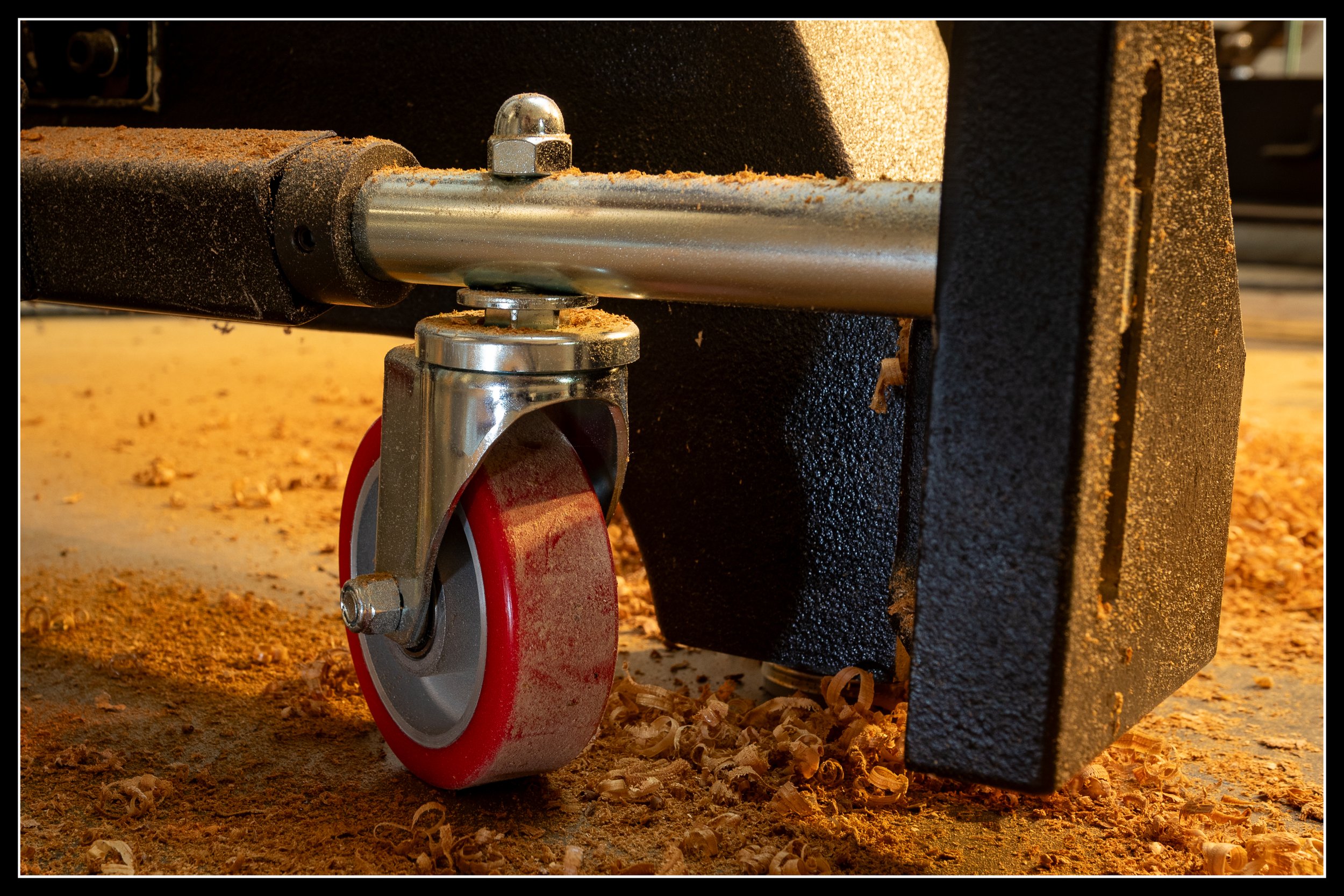
Foot of the Lathe
The foot of the lathe sits in the sawdust, minding its business while the shop moves around it. Nothing staged, nothing posed — just a caster doing what it does as shavings fall in quiet patterns. Its purpose is simple and clear, but none of it matters until I turn the lights on and bring the shop to life.
This story is part of a small collection of honest reflections about pain, recovery, resilience, and the life‑shaping shifts that come with illness. These aren’t medical guides — they’re the moments, fears, and quiet victories that teach us how to see life differently, one hard season at a time.
SHARE
Living With Cancer — Connected Through Behind the Grain
All of the Living With Cancer stories live behind the grain, gathered in one place so the harder seasons stay together — easy to find, easy to return to, and always there when you need them.
If you’d like to hear from me only when something big is happening — a launch, a milestone, or a major project — you can join the mailing list below.
Written by David Flather, Red Seal cabinetmaker and founder of Knotty Dave’s Fine Woodworking— a Manitoba shop rooted in heritage restoration, storytelling, and real craft.
All photos shot by David Flather — in the shop, on the road, and in the places where craft and story meet.
Related stories:
Cleaning the Shop During Cancer Recovery: Finding Strength, Space, and What Keeps Me Grounded
Recovery Ramble: Rebuilding Life and Craft After Cancer — The Future of Knotty Dave’s Woodworking
Mini Kitchen — A Coleman Stove, a Tailgate Build, and Finding Focus Through Woodworking
The Shift: How Cancer Changed My Time, My Craft, and My Purpose
The Workshop Library
If you enjoyed this story, there’s lots more like it inside The Workshop Library — and it’s free to explore.
Wood Archive — species, grain, working properties, and real‑world craft notes
Behind the Grain — the deeper stories inside wood, craft, and heritage
The Working Side of the Craft — tools, shop life, workflow, and the realities of making
Digital to Sawdust — Design Studio — geometry, proportion, visual flow, and design thinking
The Stories of the Shop — the personal side of craft, the shop’s history, and the quiet moments that shape the work
House & Hearth — heritage home restoration, the hearth room, winter culture, and the lived‑in side of craft
I’m just one man with a shop, building this archive one story at a time. If you’d like to follow the journey as it unfolds, explore The Workshop Library — new stories every week.
