

Why You Never Have Enough Clamps: My Shop’s Heavy Duty F Clamp Workhorses
Quick Answer — Why do woodworkers never have enough clamps?
Because every glue‑up lies to you. Wood shifts, pressure changes, boards drift, and the clamp count always rises mid‑glue‑up. Cheap clamps bend, jaws misalign, and threads strip — good F‑clamps hold true under pressure, last decades, and quietly save the entire workflow.
Glue‑ups always grow — boards shift, pressure changes, and the clamp count rises mid‑glue‑up
Cheap clamps fail — bent bars, slipping jaws, stripped threads, and unpredictable pressure
Good clamps hold true — solid bars, aligned jaws, reliable threads, and decades‑long durability
Organization saves glue‑ups — hung, sorted clamps prevent panic when glue starts to set
Professional shops prove it — heavy‑duty clamps survive communal abuse and constant overtightening
Inventory spreads wear — more clamps means less stress on each one, extending lifespan and reliability
Woodworking F‑Clamps in a Real Shop
If you’ve ever run out of clamps mid‑glue‑up, fought with cheap hardware, or wondered why professional shops all buy the same brand, this story shows exactly what clamps do, why they fail, and how the right ones quietly save your entire workday.
BY THE END OF THIS STORY
You’ll understand why woodworkers never have enough clamps, what separates cheap clamps from professional‑grade F‑clamps, how clamp organization affects glue‑up success, why Bessey dominates in production shops, and how Benchmark clamps keep a one‑person shop running smoothly without breaking the budget.
Estimated read time: 5 minutes
Fast Summary
A real‑world look at woodworking F‑clamps — why shops never have enough, how cheap clamps fail, why Bessey dominates professional shops, and how Benchmark clamps keep a one‑person shop running. This Ramble explains glue‑up pressure, clamp reliability, and why clamp organization matters more than people think.
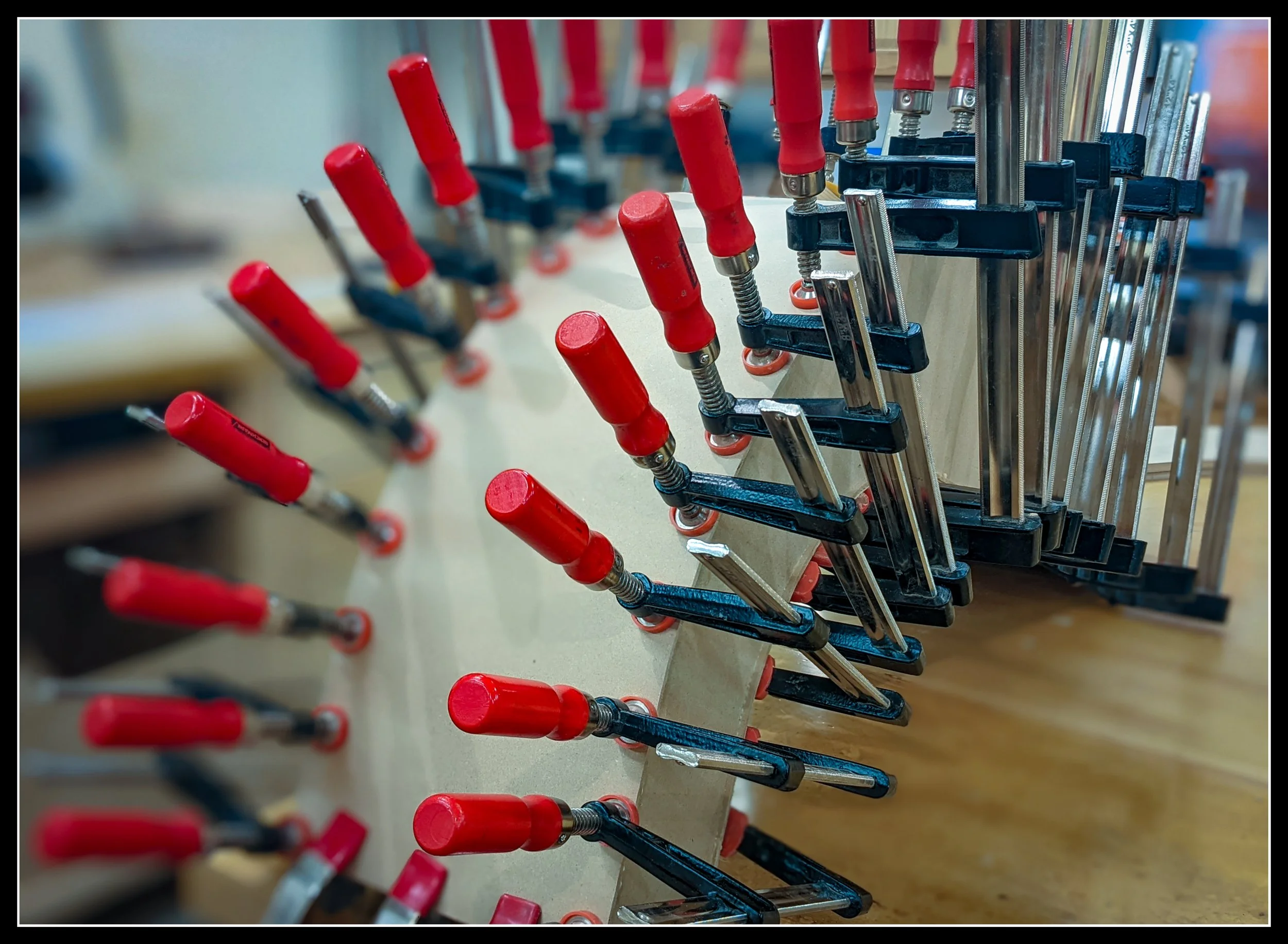
Not Enough Clamps
Every shop learns this the hard way — there are never enough clamps. You start a glue‑up thinking you’re covered, and suddenly you’re digging for one more just to keep the piece from drifting. This ring of clamps tells the truth: when the pressure’s on, you use everything you’ve got.
The stillness before the work begins, and the quiet tools that hold everything together.
Clamps aren’t the most exciting tools in the shop. They hang on the wall, out of the way and out of mind, and most days I forget they even exist. When I’m unloading fresh hardwood for a new project, clamps are the last thing on my mind. I’m focused on the raw material — that rough blank canvas that’s about to become something meaningful through my ideas and my hands.
I love that moment. The shop is quiet, the boards are stacked on the bench, and I’m already imagining the order of operations. The scent of new sawdust is in my head before the first cut even happens. I pick up a board, inspect the grain, glance at the plan, then at the table saw, jointer, planer, and bandsaw. It’s the calm before the hum of the machines tears into the silence of the moment.
Some boards get cross cut, straight edged, face jointed, and planed. Others need to be glued up first — edge to edge, face to face, or sometimes both. The bench is lined with paper, the glue bottle is in my hand… and still, clamps aren’t in my thoughts.
Why? Because I’ve been doing this a long time. I know my shop. I know my tools and their quirks. And most days, I have enough clamps — 90% of the time. They’re hanging on the wall, organized and ready.
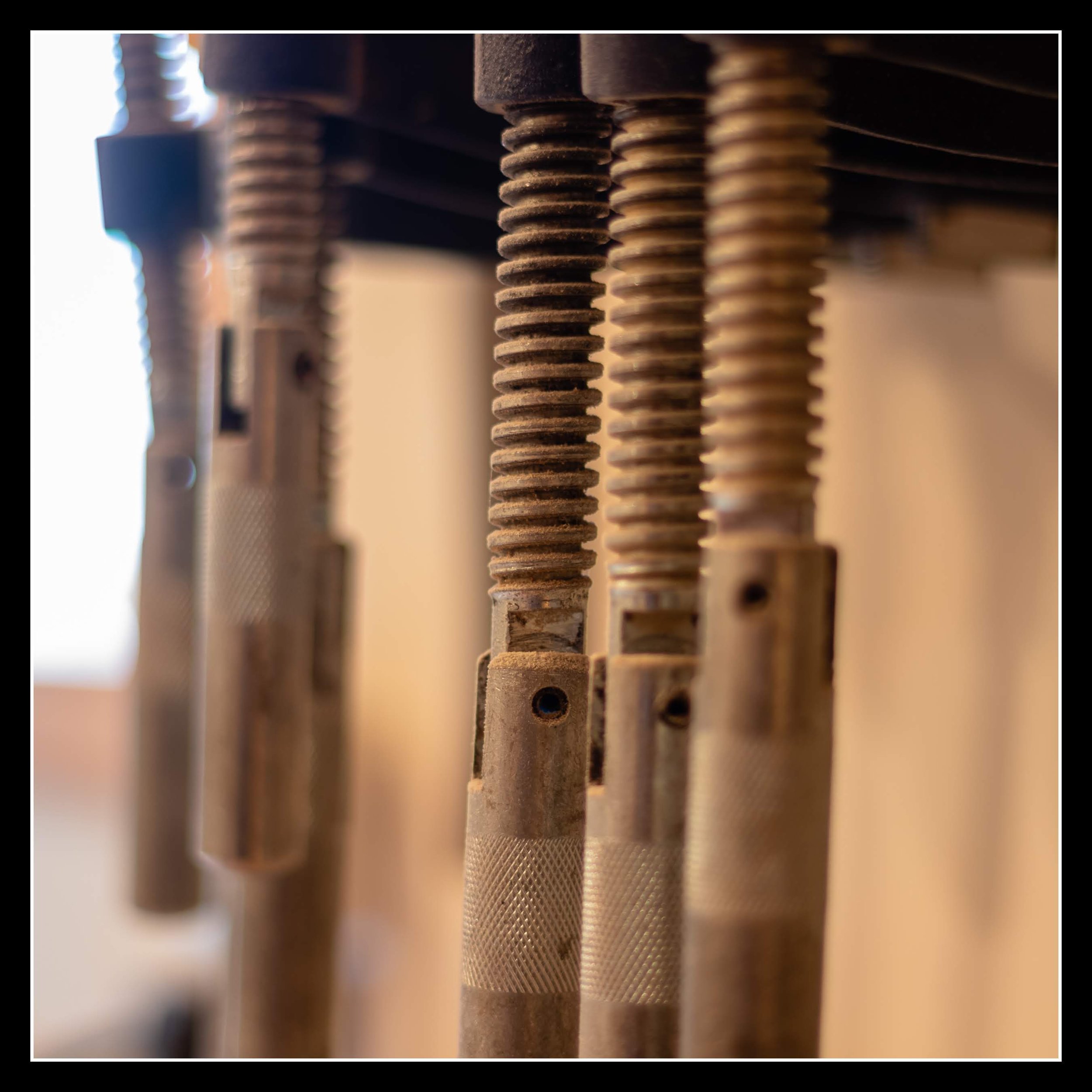
The Old Canadian Tire Clamps
This is the only photo I have of those old Canadian Tire clamps — long gone today. They had flat bars that deflected under pressure and loose, wiggly jaws that never stayed lined up. But more than twenty years ago, they were what I could afford, and they got me through the work. Cheap clamps are better than no clamps, and these were the proof. They held boards together when nothing else in the shop could, and that mattered more than perfection.
The Early Clamp Struggle (Woodworking Clamps 101)
When I started woodworking, I bought entry level clamps. Lots of them came from Canadian Tire during their 50% off sales. I’d head down and grab four more. Sears had sales too, so I added those to the pile. And it really was a pile — not hung, not organized, just a tangled mess.
Extension cords got caught in the heap. Clamps slid off the bench. Glue skinned over while I fought the pile. That’s why we wear steel toed boots — dropping a clamp on your foot teaches you fast.
Organization matters. Getting clamps hung and ready for action is one of the most underrated parts of a smooth glue up.
The Professional Shop Standard: Why Bessey F‑Clamps Dominate
As the years rolled by and I worked in college shops and professional shops, I noticed something: they all had Bessey F clamps. Every single one.
Bessey is the gold standard in the professional woodworking world. Why? Because those clamps get abused all day long. They’re communal tools — everyone uses them, everyone overtightens them, everyone drops them, and they still survive.
Other clamps don’t. Threads grind and strip. Bars bend. Jaws misalign or fall off. Handles are too narrow, probably on purpose, so workers can’t overtighten cheap clamps past their limits.
Professional shops aren’t dripping with clamps either. There’s never enough, and if two workers are gluing up at the same time, the scramble begins. Clamps get neglected and taken for granted until the moment they’re needed, and once the glue up is done they’re forgotten again — just like in any shop. But when it’s time to restock, they buy Bessey, because Bessey survives.
Clamps Are an Investment (Long‑Term Shop Tools)
Clamps are expensive because you never buy one — you buy sets. And sets add up fast. They’re major investments, just like mitre saws or drill presses, even though they look like small purchases.
A good clamp lasts decades. Store it properly and it’ll work like new thirty years later. A Bessey clamp can be handed down to a second or third generation. And if the day comes when you’re done woodworking, you can sell your clamps and get top dollar. Woodworkers always need more clamps.
After thirty years, how much did that clamp really cost? Compare that to any cordless tool.
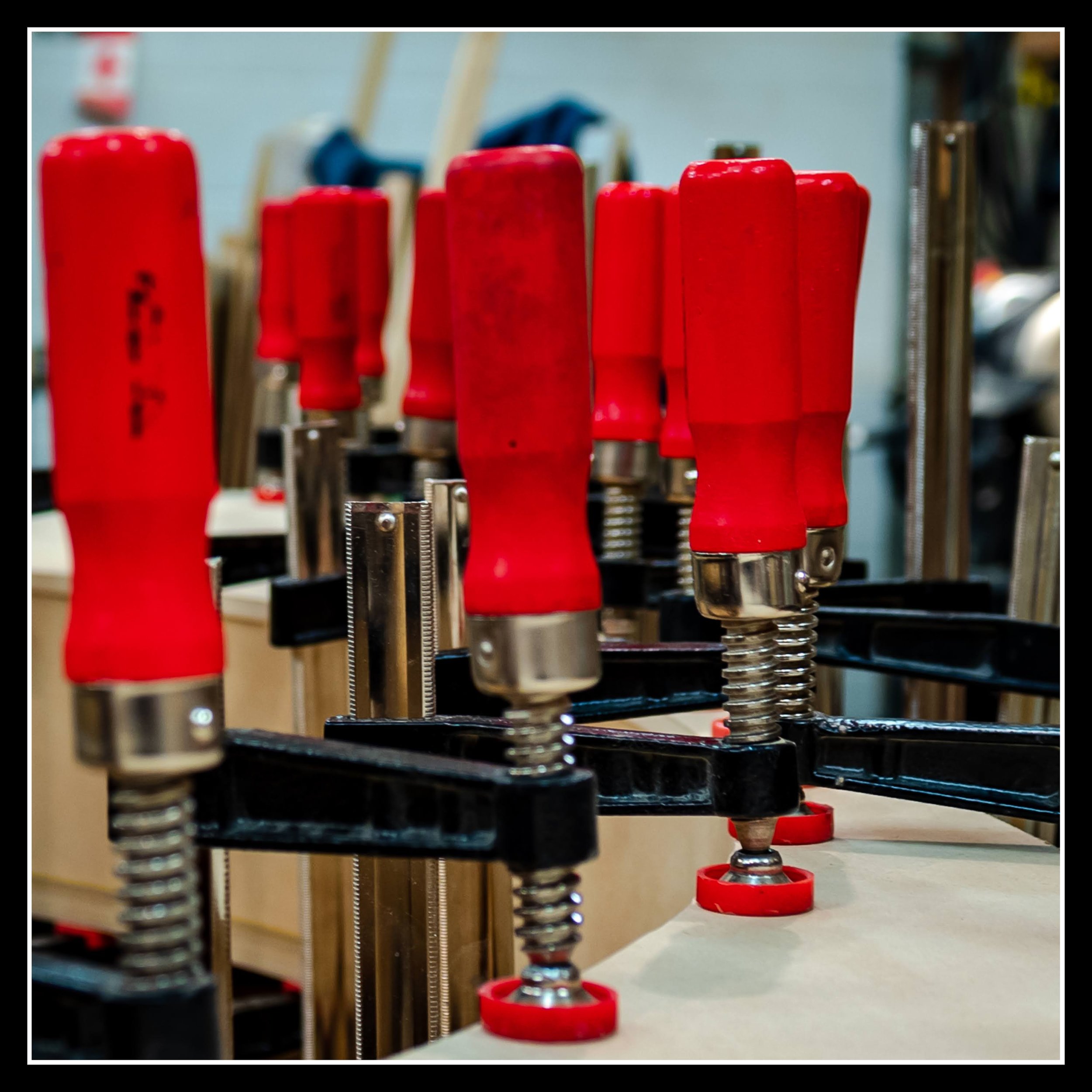
Benchmark Clamps at Work
These are the Benchmark clamps doing their work silently — not the best clamps in the world, but good enough to get the job done. They hold steady, bite cleanly, and keep the boards true when the glue starts to set. In a one‑person shop, reliability matters more than perfection, and these clamps earn their place on the wall by showing up every single time.
The Budget Reality (Affordable F‑Clamp Options)
But let’s be honest — not everyone can afford Bessey. There’s no shame in that.
My shop budget didn’t allow Bessey either. So I found the best alternative in Canada: Benchmark clamps from Home Hardware. All my F clamps came from there.
I’ve owned Irwin clamps — they all failed in under five years. Canadian Tire clamps bent and misaligned. Sears clamps were too light to get real pressure.
But Benchmark clamps? They’re good enough. They wouldn’t survive a professional shop, but in a one person shop, “good enough” gets you through the day.
And here’s something I learned: When you have lots of clamps, you’re not using the same clamp for every glue up. Wear gets spread across the inventory. When I had fewer clamps, I destroyed them faster. When there are thirty plus clamps on the wall, everything lasts longer.
Why You Never Have Enough Clamps
Because every glue‑up lies to you. You think you’ll need six clamps, then you reach for eight, then you grab ten, and by the time the glue starts to set you’re pulling the last two off the wall and wishing you had three more. Woodworking is a game of pressure, and pressure always wins. That’s why you never have enough clamps — and why you never will.
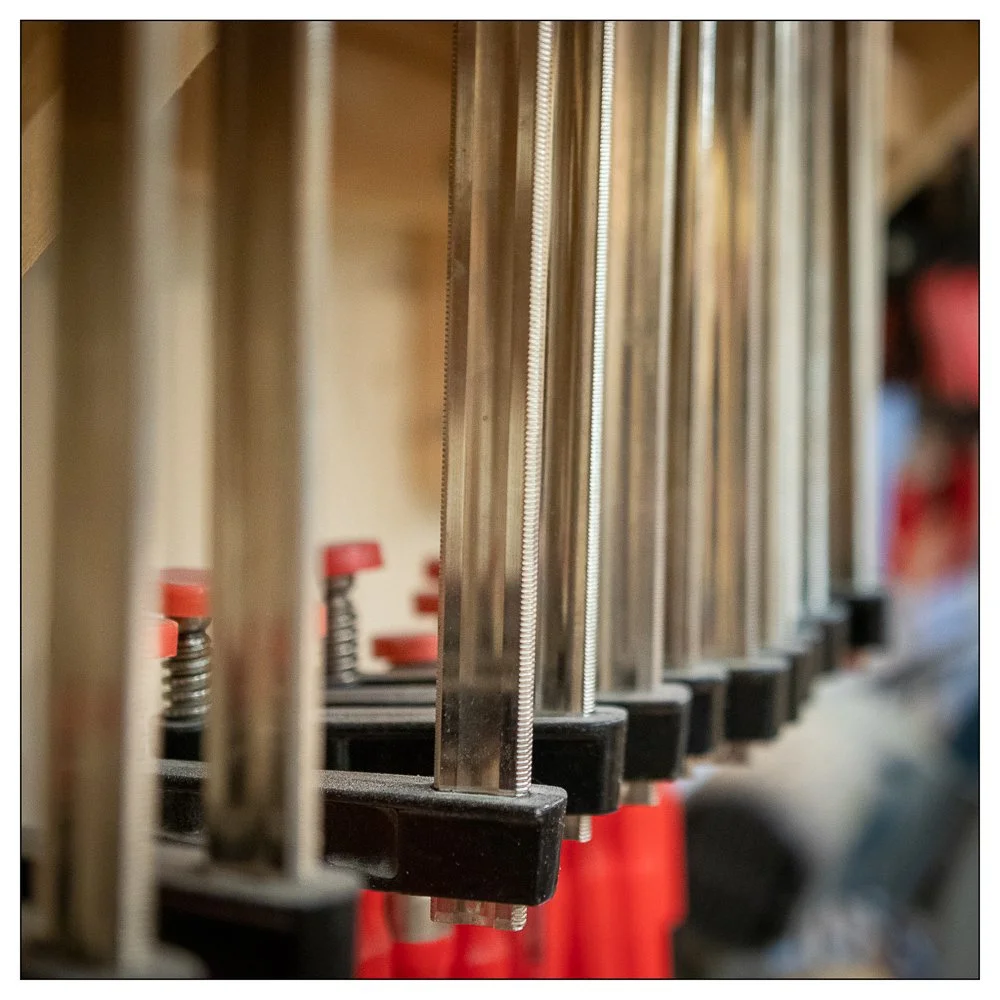
Clamps in Storage
These Home Hardware Benchmark clamps hang quietly on the wall, chrome bars catching the shop light. That chrome finish matters — wood glue won’t stick to it — and the I‑beam profile keeps the bar from bending under pressure, holding the jaws in line where cheaper clamps twist. They’re not the best clamps out there, but they’re dependable, and in a small shop that’s what counts.
Clamps Lined Up Like Soldiers
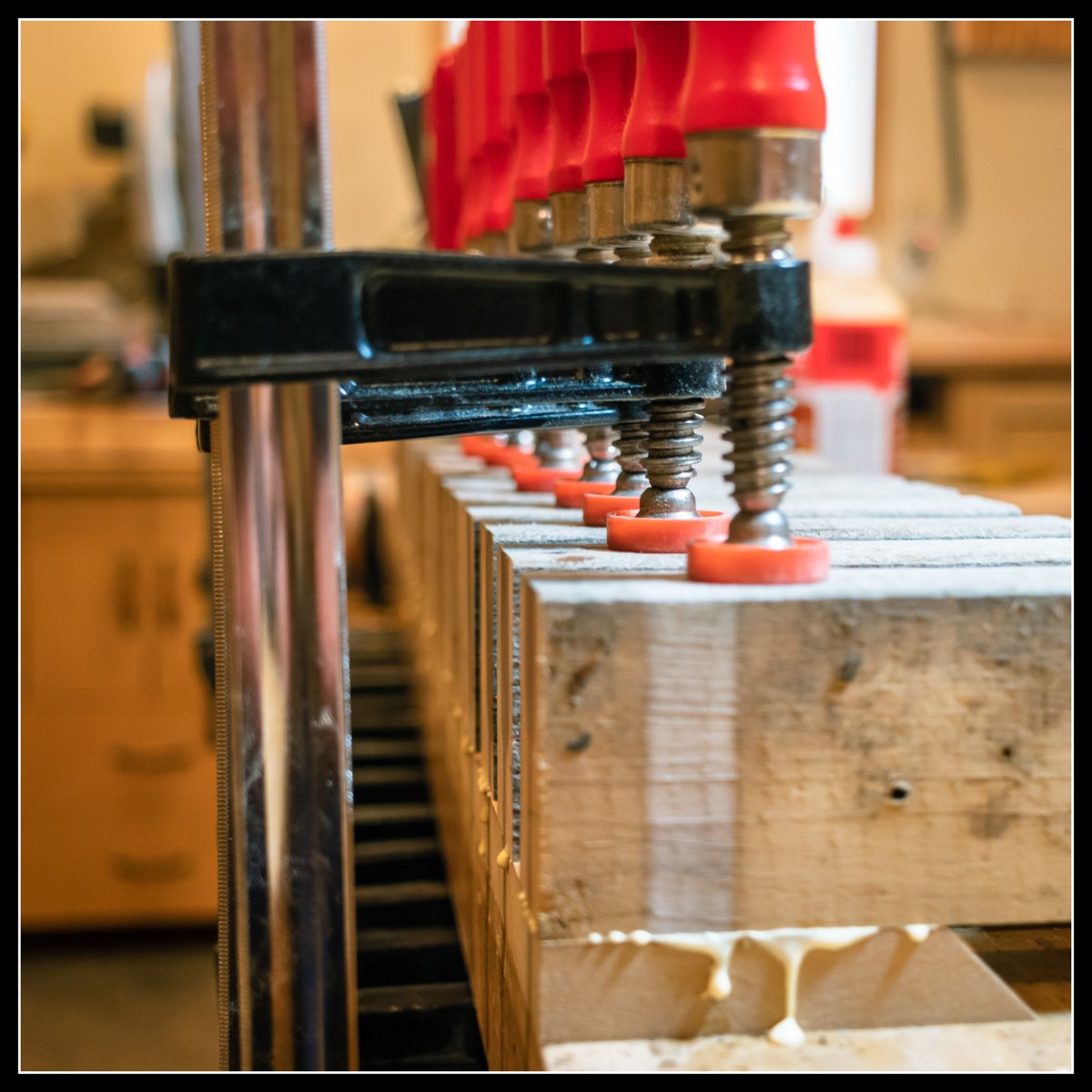
Lined up like soldiers, these Benchmark clamps were working out of the pipe‑clamp hangers today. It’s always the same weak point on every clamp — those red clamp pads. They get destroyed, lost, chewed up, and replaced more times than I can count. But even with beat‑up pads, these clamps still bite down and hold the line when the glue starts to squeeze out.
Together, gathered in one place so the machine stories, tool reflections, and workflow moments stay connected — easy to find and easy to return to.
SHARE
The Working Side of the Craft — Connected Through Machines, Tools & Stories
If you want the stories shaped by table saws, bandsaws, grinders, fences, and jigs — the honest, noisy side of woodworking — the Working Side Of The Craft is one click away.
If you’d like to hear from me only when something big is happening — a launch, a milestone, or a major project — you can join the mailing list below.
Written by David Flather, Red Seal cabinetmaker and founder of Knotty Dave’s Fine Woodworking — a Manitoba shop rooted in heritage restoration, storytelling, and real craft.
All photos shot by David Flather — in the shop, on the road, and in the places where craft and story meet.
Related stories:
Kickback on the Table Saw — What Really Happens and How Woodworkers Prevent It
The Radial Arm Saw: Forty‑One Years of Real Shop Use, Safety, and Cross‑Cut Accuracy
How Thickness Planers Really Behave: Tearout, Ridges & Grain That Fights Back
The World Runs on Pencils — Woodworking, Shop Life, and the Tool Everyone Loses
The Workshop Library
If you enjoyed this story, there’s lots more like it inside The Workshop Library — and it’s free to explore.
Wood Archive — species, grain, working properties, and real‑world craft notes
Behind the Grain — the deeper stories inside wood, craft, and heritage
The Working Side of the Craft — tools, shop life, workflow, and the realities of making
Digital to Sawdust — Design Studio — geometry, proportion, visual flow, and design thinking
The Stories of the Shop — the personal side of craft, the shop’s history, and the quiet moments that shape the work
House & Hearth — heritage home restoration, the hearth room, winter culture, and the lived‑in side of craft
I’m just one man with a shop, building this archive one story at a time. If you’d like to follow the journey as it unfolds, explore The Workshop Library — new stories every week.
