

Hickory
Quick Answer: What makes hickory so tough?
Hickory is one of the toughest hardwoods in North America — dense, shock‑resistant, and built from tight grain and strong fibres that evolved to survive storms, wind loads, insects, and ice. It’s harder than oak, stronger than ash, and famous for its ability to absorb force without breaking, which is why it became the wood behind axe handles, mallets, and impact tools.
Hickory is extremely tough
Shock‑resistant fibres
Harder than oak
Stronger than ash
Used for tools and handles
Evolution shaped its strength
Hickory — The Wood Behind the Legend
Hickory is one of the toughest woods in North America — a hardwood shaped by storms, insects, ice loads, and millions of years of evolution. Its reputation for strength didn’t start in the shop; it started in stories, movies, axe handles, and the idea of a wood that simply refuses to break. Before I ever touched real hickory, I knew the legend. This is the story of how that legend formed, and how the real wood proved every part of it true.
BY THE END OF THIS STORY
You’ll understand where hickory’s toughness actually comes from, why its evolution under storms, ice loads, insects, and competition made it one of North America’s most shock‑resistant woods, how that biology turns into BBQ flavour and impact tools, and what hickory really looks and feels like in the shop when it dulls knives, fights cutters, and outlasts years of bench work.
Estimated read time: 10 minutes
Hickory vs Other Hardwoods — Quick Comparison
Hickory — hardest, toughest, shock‑resistant
Oak — strong, stable, easier to work
Ash — springy, impact‑absorbing
Maple — hard, smooth, less shock resistance
Walnut — softer, beautiful grain, not as tough
Quick Summary
Hickory is North America’s toughest hardwood — a dense, shock‑resistant species shaped by storms, ice loads, insects, and competition in the eastern forests. Its fibres bend without breaking, absorb impact better than oak or ash, and carry the chemistry that gives hickory smoke its deep, sweet BBQ flavour. In the shop, hickory is stubborn, heavy, and hard on tools, but its strength shows in every cut, every handle, and every piece that survives decades of use. From Hollywood legend to real‑world milling, hickory’s reputation is earned: a wood that dulls knives, resists failure, and proves its toughness every time it’s worked.
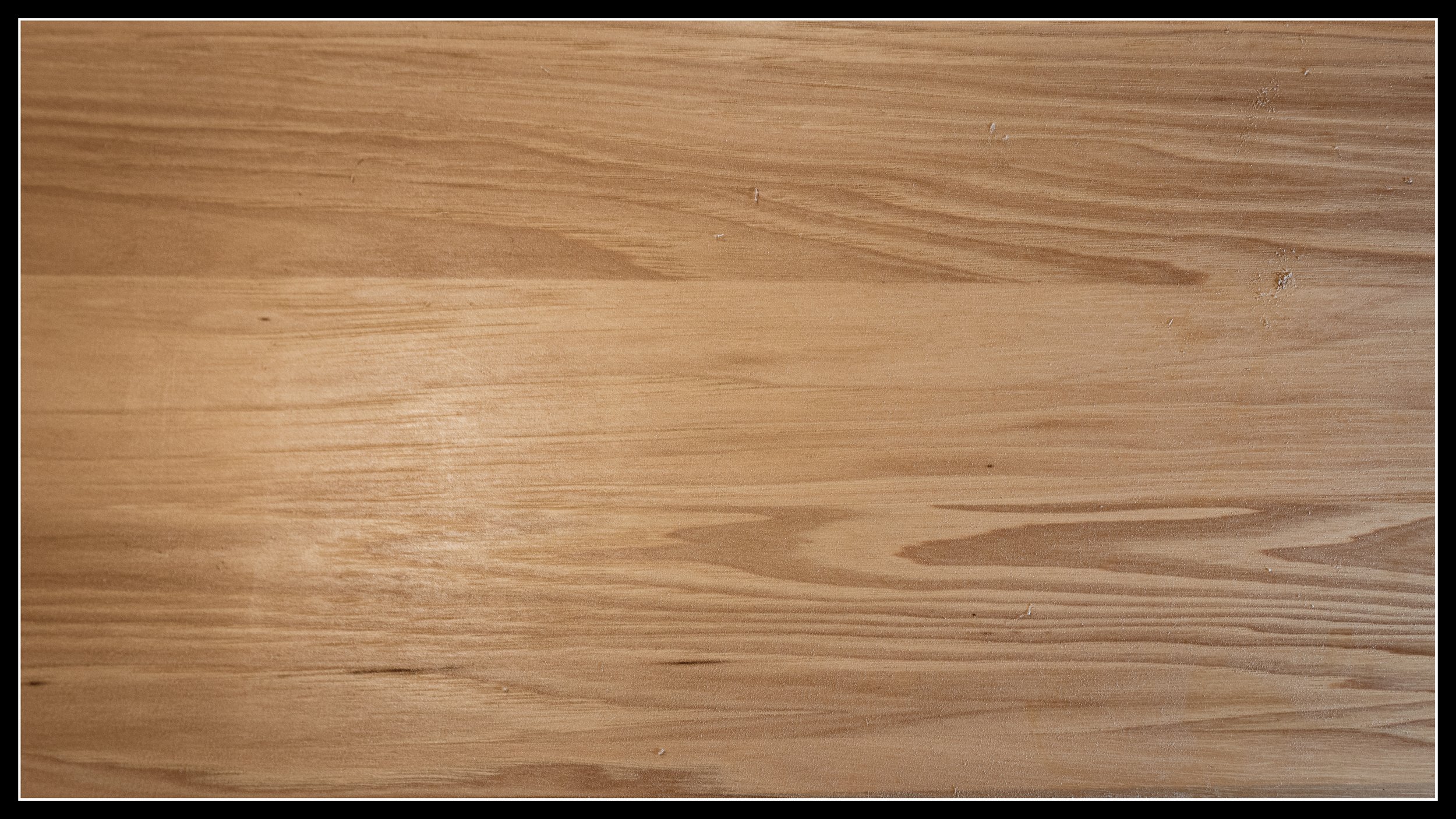
Hickory Wood Grain: What Real Hickory Looks Like Up Close
Hickory has one of the most recognizable grain patterns of any North American hardwood — dense, rugged, and full of contrast. This close‑up from the shop shows exactly what people mean when they describe hickory as “tough.” The grain is tight, fibrous, and visually heavy, with darker streaks running through pale sapwood. It’s the kind of grain that tells the truth about the wood: built for storms, built for impact, and unmistakable once you’ve seen it. If you’ve ever wondered what real hickory looks like, this is it.
Hickory and the Movies
There are woods that earn their reputation honestly, and then there are woods that arrive in your life as legend long before you ever touch them. Hickory was one of those. My first understanding of it didn’t come from a shop floor or a lumber rack — it came from a movie. Pale Rider. Clint Eastwood beating a gang senseless with an axe handle like it weighed nothing, then pausing just long enough to say: “There’s nothing like a nice piece of hickory.”
That line didn’t just describe a wood. It crowned one. And growing up in Winnipeg, where nobody stocked hickory and nobody used it, that single moment became the whole mythology. Hickory‑smoked BBQ was pre-seasoned meat in cardboard boxes. Axe handles were ash. The wood itself never appeared. But the reputation stuck — a picture painted by Hollywood, American advertising, and the idea of a wood so tough it could be used as a weapon.
Hickory’s toughness isn’t a myth; it’s the result of evolution and sheer determination to survive storms, insects, and time. That history shows up as an extremely tough wood — a reputation you see on the workbench, dulling tools and testing human grit. Hollywood didn’t create hickory’s reputation. Hickory did that all by itself.
As I grew up and time moved on, I became a cabinetmaker, and hickory still didn’t turn up often. I didn’t see it at the local lumber yard. The wood was just absent most of the time, almost like it belonged to another part of the continent.
But whenever hickory came up in woodworking circles, the description was always the same: difficult to work with, stubborn, a wood that laughs at dull saw blades and dulls the sharp ones faster than anything else. Tough as nails, but good‑looking.
Out west here we’re a long way from the hickory source, and heavy wood like hickory is expensive to ship. Add in the reputation for being nasty on tools, and woods like maple, oak, cherry, and walnut became the practical choice for most shops. Lumber yards stock what sells, and if hickory isn’t selling, they stop stocking it.
Finally Seeing Hickory
During my apprenticeship, a huge job came into the shop — and a major part of it was hickory. At last, I was looking at three lifts of the real thing. Pale, rugged, open grain. Strong contrast between heartwood and sapwood. It looked like wood, but after seeing it and working with it, I never mistake it for oak or elm. Hickory is easily identifiable at a glance. Nothing magical, but I was excited.
I asked the senior cabinetmakers about it. Every answer was the same: “It’s frustrating.” “It’s tough.” “I wish they spec’d something else.”
Designers choose the material. Cabinetmakers work with what they get.
Their complaints only reaffirmed the reputation. Hickory really was tough.
Where Hickory’s Toughness Comes From
Hickory grows from the Gulf of Mexico into southern Ontario — the entire eastern side of North America. Regions that get heavy snow in the north and hurricane winds in the south. For millions of years, hickory evolved to survive this environment.
Life spans: up to 300 years
Trunk diameters: 36" to 60" depending on sub‑species
Heights: 80–100 ft, with shellbark (a sub-spieces of hickory) reaching 120–140 ft
Hickory grew beside walnut, sugar maple, elm, American beech, and ash — some of the toughest hardwoods on the continent. To survive among them, it needed to grow tall for sunlight and endure storms without breaking. In the forest it was among the tallest, extending the canopy as high as the winds would allow.
A tree alone on a prairie behaves differently than a tree in a forest. Forest trees compete for light, water, and nutrients — but they also support each other, block wind for each other, and prevent ground erosion with intertwined root systems. The forest moves with the gusts of wind as a body of trees together. Hickory’s toughness contributed to the forest’s toughness. Younger hickories benefitted from shelter of older ones. This is millions of years of evolution expressed in wood grain and forest ecology.
But What About Hickory‑Smoked BBQ?
Hickory, like other hardwoods, defends itself against insects and fungi using phenols, tannins, and other natural compounds. It also has more lignin than most hardwoods — lignin is the structural material that gives wood its strength — and hickory has higher natural sugar content than oak or ash. Add in its density, which gives it a longer, slower burn, and you get smoke that is:
rich
sweet
deep
strong
aromatic
Smoke itself is just wood undergoing incomplete combustion — vaporized compounds that still carry the tree’s chemical makeup. Different woods smell different when they burn because each species evolved its own defenses, and those defenses show up in the smoke.
When hickory burns, its lignin breaks down into guaiacol and syringol, the exact compounds responsible for the classic BBQ flavor. The phenols that once protected the tree from insects become the smoky, savory notes people love. The sugars caramelize and add sweetness. The density keeps the smoke consistent.
The tree’s chemical defenses become flavour. Its toughness becomes aroma. Its evolution becomes BBQ.
Pitmasters describe hickory smoke as deep and sweet — the kind of aroma that clings to the air and announces itself before you ever taste the food.
Hollywood didn’t invent the reputation — the biology did.
The Part I Missed When I Was Young: Shock Resistance
Hickory isn’t just hard — it’s shock resistant. That’s the trait that matters.
Evolution selected for wood that could:
bend without breaking
absorb impact
survive torsion from wind
carry ice load without catastrophic failure
This is why hickory became the historical choice for:
axe handles
hammer handles
sledge handles
pickaxe handles
shovel handles
wagon wheels
drumsticks
early hockey sticks
baseball bats
lacrosse sticks
Humans recognized the same trait as nature selected it for. Hickory is the impact wood of North America.
Ash is flexible. Oak is strong. Maple is hard. Elm resists splitting.
But hickory absorbs shock. That’s the difference.
Back to the Apprenticeship Job
When the hickory arrived, I wasn’t part of milling, but I watched when I could. The noise was intense. In the lunch room I heard about dull blades, tear‑out, and frustration. This was the era of high speed steel (HSS) knives — today’s helical carbide heads would handle hickory better — but back then, hickory fought back.
My job was laminating boards: stacks of three, eight feet long. The glue‑ups were fine. After that, they went back for milling, then shaping into corner columns for a local mall. They’re still there. I still say hello to them when I walk through.
The boards with tear‑out? I took those home. They became bench edging in my shop. My benches are solid core doors — 1¾" particle board — but I edged each bench with ¾" hickory almost 20 years ago. I haven’t been nice to that edging. I didn’t need to be. It’s stood up to shop life exactly as its reputation suggested. I also made some raised‑panel doors that live in my shop as well. And yes — the reputation was founded in truth. Hickory really is as tough as Clint Eastwood made it out to be.
Closing
And that’s the thing about hickory. The reputation isn’t a story, or a movie line, or a BBQ commercial. It’s the wood itself. It’s the shock resistance baked into every fibre from millions of years of storms and ice loads. It’s the way it dulls knives, fights cutters, and refuses to give you a clean pass unless your tools are sharp and your feed rate is honest. It’s the way a hickory axe handle can take a lifetime of impact and still ask for more. I learned that in my apprenticeship, watching boards tear‑out under HSS knives and hearing the old cabinetmakers swear at it. I learned it again when those same boards became the edging on my benches and survived twenty years of shop life without a dent. Hickory doesn’t pretend to be tough. It is tough. Clint Eastwood wasn’t exaggerating. He was telling the truth. There really is nothing like a nice piece of hickory.
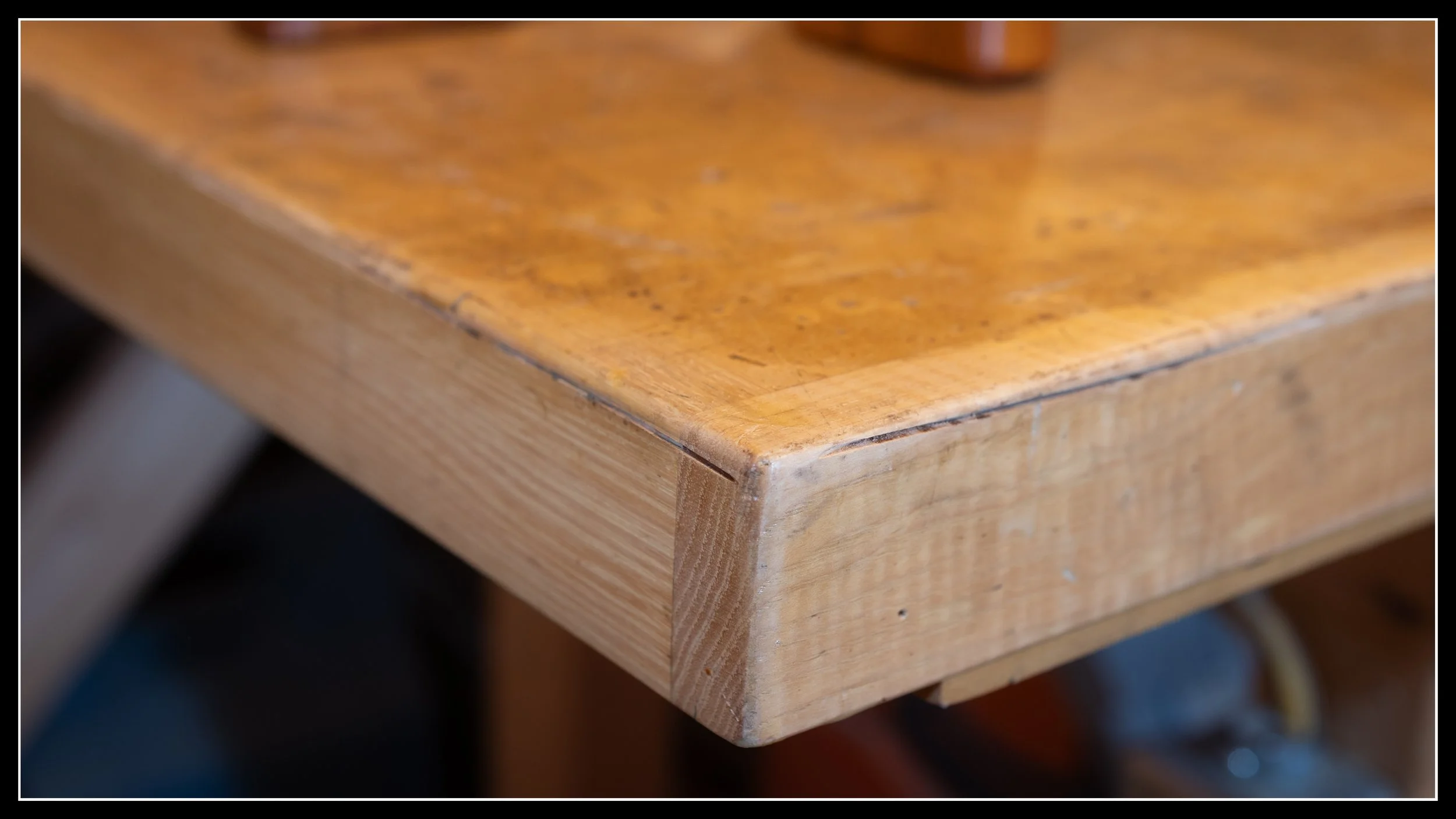
Hickory Workbench Edge: A Real Example of Long‑Term Durability
This hickory edging has been on my workbench since 2007, and it’s lived through every project I’ve built — thousands of cuts, clamps, impacts, and mistakes. Hickory’s toughness shows up here more than anywhere else: no stain, no colour tricks, just the wood itself taking everything a shop can throw at it. The grain is dense, the fibres are stubborn, and the edge still looks as tough as old Clint. If you want to know how hickory holds up in real woodworking conditions, this bench tells the story better than any chart or spec sheet.
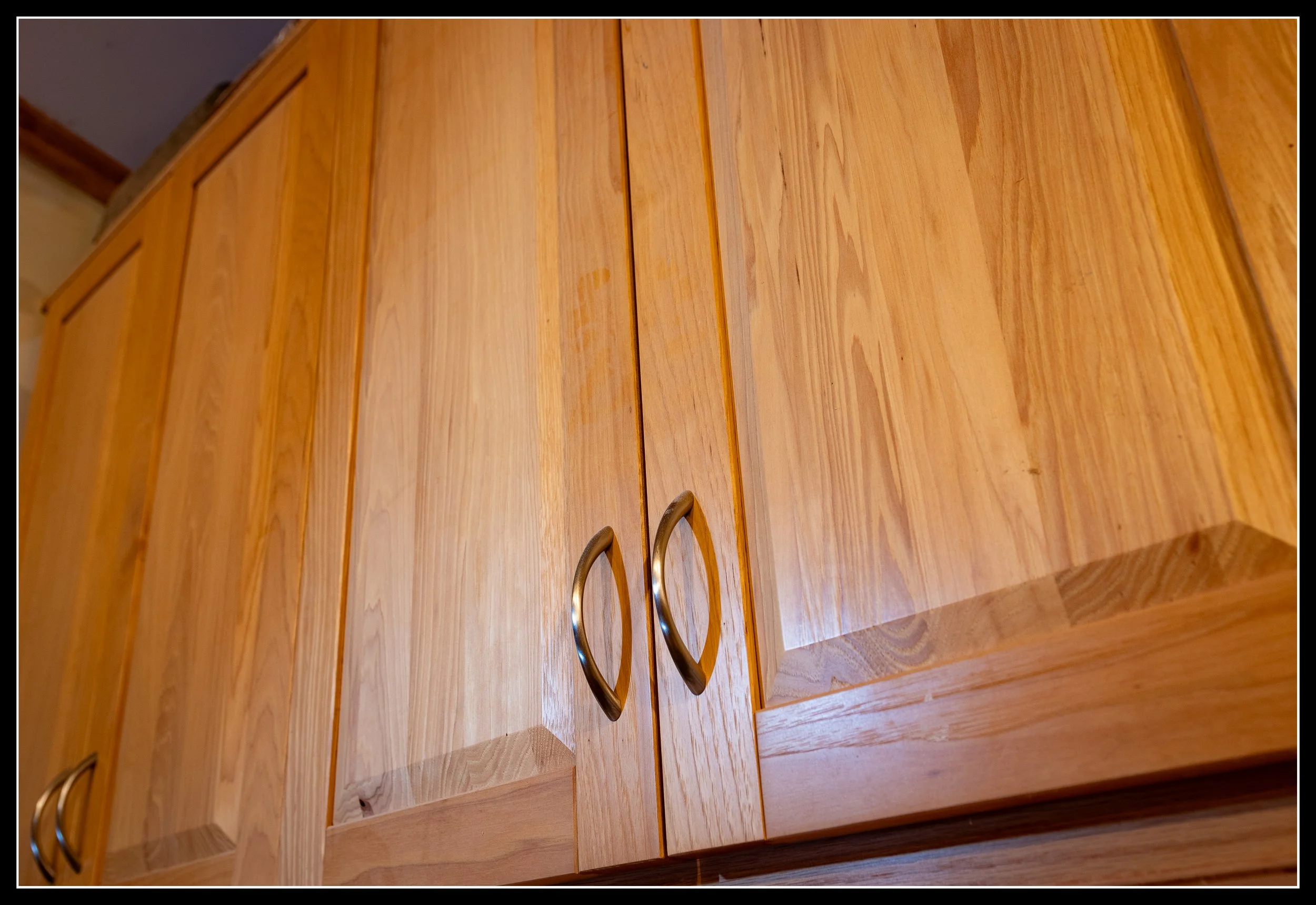
Hickory Raised Panel Door: Natural Grain and Unstained Finish
Hickory doesn’t need stain to make a statement — the wood brings its own character. These raised‑panel doors from the shop show hickory exactly as it is: pale sapwood, darker heartwood streaks, and a grain pattern that looks tough even before you touch it. There’s no colour added here, just a water‑based polyurethane to protect the surface and let the wood speak for itself. Hickory doors don’t pretend to be anything. They look good, they hold up, and they do the job the way hickory always has.
Where every species, every board, and every lesson in wood science comes together — a place to explore the materials that shape our craft.
SHARE
The Wood Archive — All the wood Stories in One Place
For the living side of woodworking — the stories shaped by walnut, oak, maple, cherry, elm, cedar, and poplar — head to the Wood Archive.
If you’d like to hear from me only when something big is happening — a launch, a milestone, or a major project — you can join the mailing list below.
Written by David Flather, Red Seal cabinetmaker and founder of Knotty Dave’s Fine Woodworking — a Manitoba shop rooted in heritage restoration, storytelling, and real craft.
All photos shot by David Flather — in the shop, on the road, and in the places where craft and story meet.
Related stories:
Outdoor Wood: Rot Resistance, Freeze‑Thaw Survival, and 200 Years of Real‑World Weather
Wood Doesn’t Lie: Understanding Grain, Movement, and the Truth Inside Every Board
The Mistake Every New Woodworker Makes: Understanding Wood Movement Before It Ruins Your Project
The Workshop Library
If you enjoyed this story, there’s lots more like it inside The Workshop Library — and it’s free to explore.
Wood Archive — species, grain, working properties, and real‑world craft notes
Behind the Grain — the deeper stories inside wood, craft, and heritage
The Working Side of the Craft — tools, shop life, workflow, and the realities of making
Digital to Sawdust — Design Studio — geometry, proportion, visual flow, and design thinking
The Stories of the Shop — the personal side of craft, the shop’s history, and the quiet moments that shape the work
House & Hearth — heritage home restoration, the hearth room, winter culture, and the lived‑in side of craft
I’m just one man with a shop, building this archive one story at a time. If you’d like to follow the journey as it unfolds, explore The Workshop Library — new stories every week.
