

Fast Hardwood — Reader Question
Quick Answer: What are fast hardwoods?
Fast hardwoods are pioneer species like aspen, poplar, willow, and soft maples that rush into disturbed ground after fire, storms, or windthrow. They grow quickly, spread aggressively, and dominate early‑succession forests. Slow hardwoods like oak, sugar maple, and beech grow slowly, live for centuries, and eventually replace the pioneers over 150–200 years.
fast hardwoods = pioneer species
slow hardwoods = long‑lived, late‑succession species
pioneers grow fast, spread fast, die young
slow hardwoods outlive and replace pioneers
softwoods reseed slowly and don’t compete in disturbed ground
A Quick Note About Reader Questions
This story answers a reader question about fast hardwoods — and it’s also a reminder that anyone can send questions through the contact page if something in a story needs clarity.
BY THE END OF THIS STORY
You’ll understand the difference between pioneer hardwoods and slow hardwoods, why early‑succession species like aspen, poplar, willow, and soft maples grow fast, spread fast, and dominate disturbed ground, and why long‑lived hardwoods like oak, sugar maple, and beech take centuries to replace them. You’ll also see how this relates to the Hardwoods vs Softwoods story and why the reader’s question was valid.
Estimated read time: 4 minutes
Quick Summary
This story explains what “fast hardwoods” really are — the pioneer species like aspen, poplar, willow, and soft maples that rush into disturbed ground after fire or storms. It shows how these trees grow quickly, spread aggressively, and prepare the forest for the slow hardwoods that follow centuries later. It also clarifies why softwoods don’t compete in disturbed sites and how forest succession shapes the landscapes we see today.
Summary
Early‑succession species
Grow fast, spread fast
Die young
Prepare the forest
Slow hardwoods replace them
Softwoods reseed slowly
Quick Comparison
Fast hardwoods — aspen, poplar, willow, soft maples
Slow hardwoods — oak, sugar maple, beech
Growth speed — pioneers grow fast; slow hardwoods grow slow
Forest role — pioneers stabilize soil; slow hardwoods take over
Lifespan — pioneers die young; slow hardwoods live centuries
Softwoods — slower reseeding, built for harsh ground
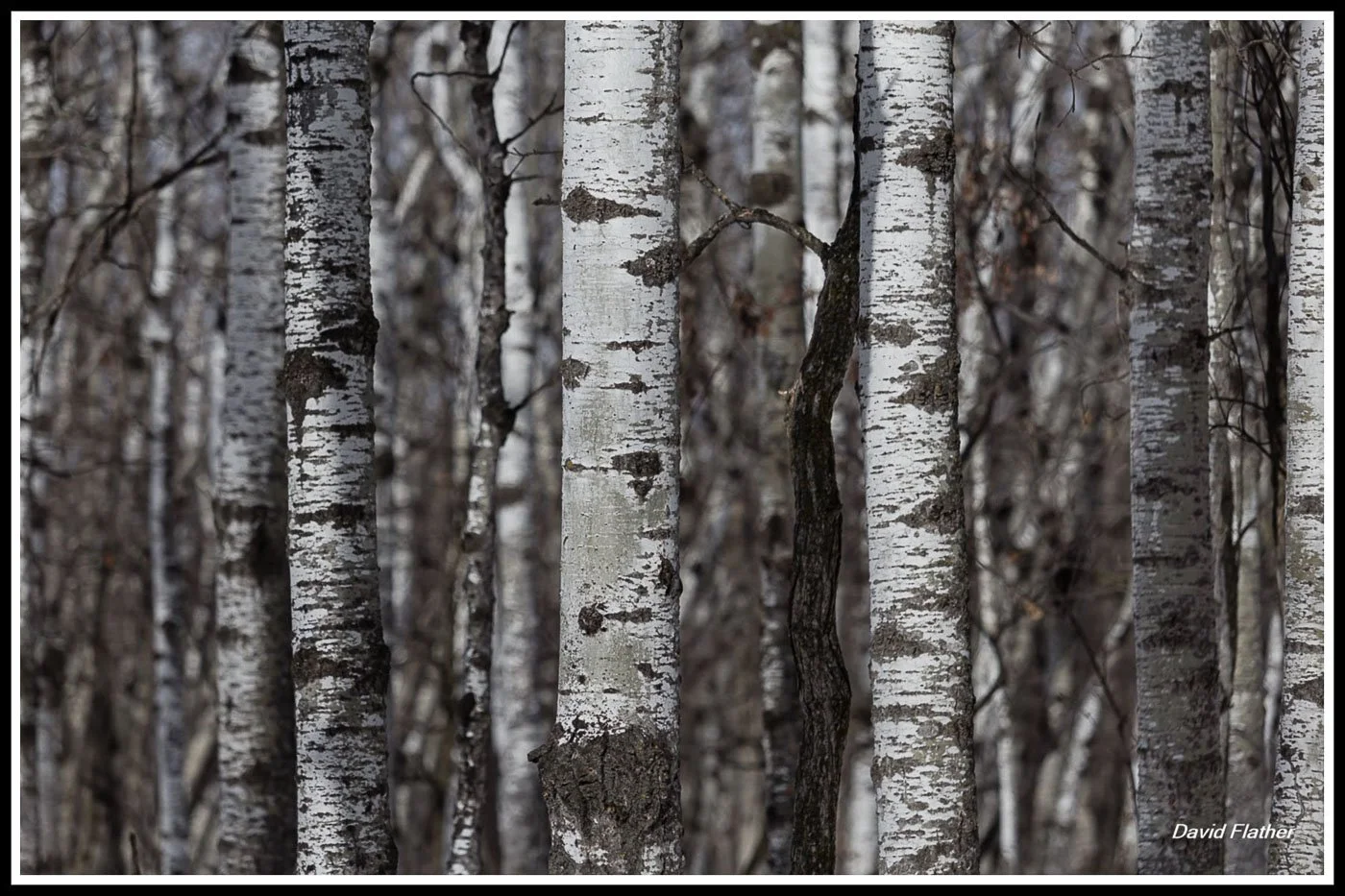
A winter grove of aspen at FortWhyte Alive.
Aspen is one of the true pioneer hardwoods — fast, light‑seeking, and built to rush into disturbed ground. It grows tall quickly, spreads by root, and forms dense stands like this long before the slow hardwoods arrive. This is the kind of forest I meant when I wrote about “fast hardwoods” in the asteroid section — not oak or sugar maple, but the early‑succession trees that race ahead and prepare the ground for everything that comes after.
The Reader’s Question
A reader sent in a good question about the story Hardwoods vs Softwoods:
“Hi Dave. Thanks for the latest issue.
I think you mixed up the growing rates of softwoods vs hardwoods.
Softwoods can be harvested in 40 years (spruce and pine).
Hardwoods take 100 years to harvest (oak, cherry).”
What “Fast Hardwoods” Really Means
It’s a fair point, and it comes down to what I meant by fast hardwoods in the asteroid section of the story.
In the piece, I wrote:
“This was a world that needed speed, and hardwoods were ready. These trees grew fast and spread fast.”
Pioneer Hardwoods — The First Wave
That line isn’t talking about oak or sugar maple.
It’s talking about the pioneer hardwoods — the fast, early‑succession species that rush into disturbed ground:
willow
soft maples (anything that isn’t sugar maple)
These trees are built for speed.
They grow tall fast, spread fast, reproduce fast, and die fast.
They’re the first wave after fire, windthrow, or any event that opens the canopy.
They create shade, stabilize soil, and build the conditions that slower trees need.
Slow Hardwoods — The Long Game
Once that pioneer forest is established, the slow hardwoods move in underneath:
sugar maple
beech
These trees grow slowly but live for centuries.
They don’t outrun the pioneers — they outlive them.
Over 150–200 years, the fast hardwoods die off due to competition and the slow ones take over, creating a mixed, stable forest.
So when I wrote that hardwoods “grew fast and spread fast,” I meant the pioneer hardwoods, not the long‑lived giants.
Why Softwoods Don’t Compete
Softwoods, by comparison, evolved for harsher, drier conditions.
They reseed more slowly, and they don’t rush into disturbed ground the way poplar and willow do.
They’re not built for speed — they’re built for survival in thin soils, wind, and drought.
Closing the Loop
If anyone has questions about a story I’ve published, send me an email through the contact page.
I’m always glad to answer.
Where every species, every board, and every lesson in wood science comes together — a place to explore the materials that shape our craft.
SHARE
The Wood Archive — All the wood Stories in One Place
For the living side of woodworking — the stories shaped by walnut, oak, maple, cherry, elm, cedar, and poplar — head to the Wood Archive.
If you’d like to hear from me only when something big is happening — a launch, a milestone, or a major project — you can join the mailing list below.
Written by David Flather, Red Seal cabinetmaker and founder of Knotty Dave’s Fine Woodworking — a Manitoba shop rooted in heritage restoration, storytelling, and real craft.
All photos shot by David Flather — in the shop, on the road, and in the places where craft and story meet.
Related stories:
Rarity of Wood: Why Old‑Growth Lumber Is Disappearing — And Why It Matters
The Value of Wood in the Fur Trade: Winter Logging, River Transport, and York Boat Timber
Understanding Wood: Why Trees Grow the Way They Do — And How That Shapes Every Board
Hardwood vs Softwood: The Real Difference, Strength, Uses, and How Each Tree Family Evolved
The Workshop Library
If you enjoyed this story, there’s lots more like it inside The Workshop Library — and it’s free to explore.
Wood Archive — species, grain, working properties, and real‑world craft notes
Behind the Grain — the deeper stories inside wood, craft, and heritage
The Working Side of the Craft — tools, shop life, workflow, and the realities of making
Digital to Sawdust — Design Studio — geometry, proportion, visual flow, and design thinking
The Stories of the Shop — the personal side of craft, the shop’s history, and the quiet moments that shape the work
House & Hearth — heritage home restoration, the hearth room, winter culture, and the lived‑in side of craft
I’m just one man with a shop, building this archive one story at a time. If you’d like to follow the journey as it unfolds, explore The Workshop Library — new stories every week.
