

Bur Oak: Giants and Legends
Quick Answer — Why Bur Oak Matters
Bur oak matters because it is a fire‑adapted, slow‑grown, centuries‑old prairie giant — ecologically critical, culturally significant, and one of Manitoba’s most durable, long‑lived hardwoods.
Fire‑adapted and able to survive prairie burns
Slow‑grown with dense, durable wood
Centuries‑old giants that shaped Manitoba’s oak savanna
Ecologically critical for wildlife, soil, and carbon storage
Culturally significant to prairie settlement and heritage
Bur Oak — Giants, Survivors, and the Oldest Prairie Trees
This ramble traces the story of Manitoba’s bur oak — its evolution after the asteroid, its place in the oak savanna ecology, its decline under settlement, and why planting bur oak today still matters.
BY THE END OF THIS STORY
You’ll understand bur oak as the northernmost oak in North America — a fire‑adapted, slow‑grown, thick‑barked survivor shaped by prairie ecology, glacial retreat, and centuries of weather. You’ll see how bur oak built the old savanna, how settlement collapsed that system, why Manitoba’s giants still matter, and why planting bur oak today is an act of preservation, carbon storage, and long‑term stewardship for people you’ll never meet.
Estimated Read Time: 10–12 minutes
Highlights
northernmost oak in North America
fire‑resistant bark built for tall‑grass prairie
slow growth, deep roots, centuries‑long lifespan
shaped Manitoba’s historic oak savanna
settlement collapsed the savanna ecology
planting bur oak today preserves carbon and heritage
Quick Summary
This story explores the history and ecology of Manitoba’s bur oak — a fire‑adapted, slow‑grown hardwood that built the old oak savanna and still stands as one of the province’s oldest living trees. It traces the oak’s evolution after the asteroid, its survival through fire, drought, ice, and settlement, and explains why planting bur oak today preserves carbon, heritage, and a landscape that once defined southern Manitoba.
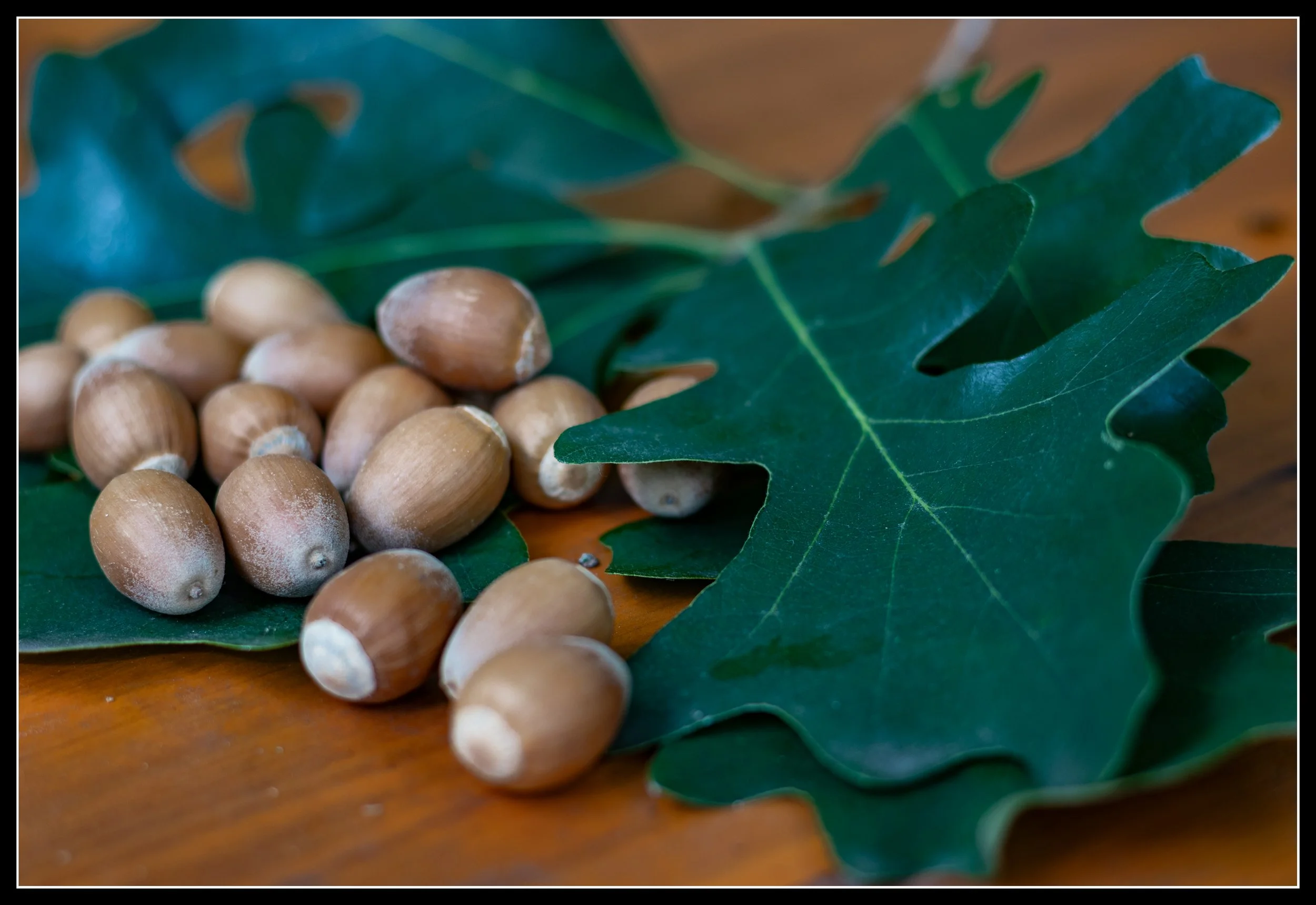
Bur oak acorns on summer leaves.
The future of a giant fits in the palm of a hand. These acorns carry the entire lineage of the old savanna — fire‑resistant bark, deep roots, wide crowns, and centuries of patience. Every bur oak that ever stood began as something this small, waiting for water, soil, and time. Plant one, and you’re planting a tree for people you’ll never meet.
Childhood Under the Giants
The treetops swayed in the summer breeze, the leaves rustled, and the branches groaned as the wind pushed through. The squirrels were chattering and the woodpeckers kept the beat as we ran through the forest.
The trees were big and we were just little kids, and being small made all things big. The woods went on and on, and we ran and climbed until the sun came down and the sky shifted into its orange evening hues. We found our way back home and did it all over again the next day.
As a kid living in the 70s and 80s, we moved to North Kildonan in Winnipeg. It was a new development then, not far from the Red River and close to Bunn’s Creek. Not many houses were there yet — ours was among the first built. I was young, and I saw the world around me as my playground, my adventure, my own hundred‑acre wood.
The trees were huge, girthy giants with canopies that shaded the soil on hot summer days. The forest floor had ferns and dogwoods and leaf fall from past seasons so thick it felt like a carpet over the soil. These were the giant old‑growth bur oaks of Manitoba — kings of the Red River Valley. The survivors from the old bur oak savanna, still standing exactly where the acorns fell.
My friends and I built forts and climbed these trees. I watched squirrels, hawks, and owls live in the branches. Deer wandered through like ghosts. It was a great time to be a kid and see this world still standing.
At home, the developer had raised the land three feet around the house to prevent flooding, but they left the oaks. My dad started digging the soil back down to the original forest floor around each tree. I didn’t understand why at the time — I just knew he cared about them, Dad said they would suffocate if left as they were. They were a young stand of bur oaks, and a few older giants stood in the yard too.
After he dug them out, he rolled sod over the mud, and the trees were fine. Dad told me they were hundreds of years old and that we needed to save them. He said, “Once they’re gone, they’re gone. I can’t plant new ones if they die.” He meant the value in these trees was time — and time can’t be replaced. It has to be preserved.
That stuck with me. A tree that might be 300 years old was standing in our yard. Even as a kid, I felt the weight of that. These trees had witnessed a tremendous amount of history, and that day they were witnessing Dad and me. From then on, I had a deep respect for the big trees, especially the bur oak.
But this was a new development, and development was coming. It was 1979. We lived there until 1986, and in those seven years I watched almost all the oaks get cut and hauled away. Some were left in yards, but the land was raised around them, and people didn’t know — like my dad did — to dig back down to the forest floor so the trees wouldn’t suffocate. They didn’t understand why the oaks died.
I did.
It was a tragedy to watch trees hundreds of years old disappear in a few short years. Firewood. Landfill. Gone. When we moved away, the forest was gone too — replaced with houses, lawns, and young poplars and maples. Twigs compared to the giants that once stood there.
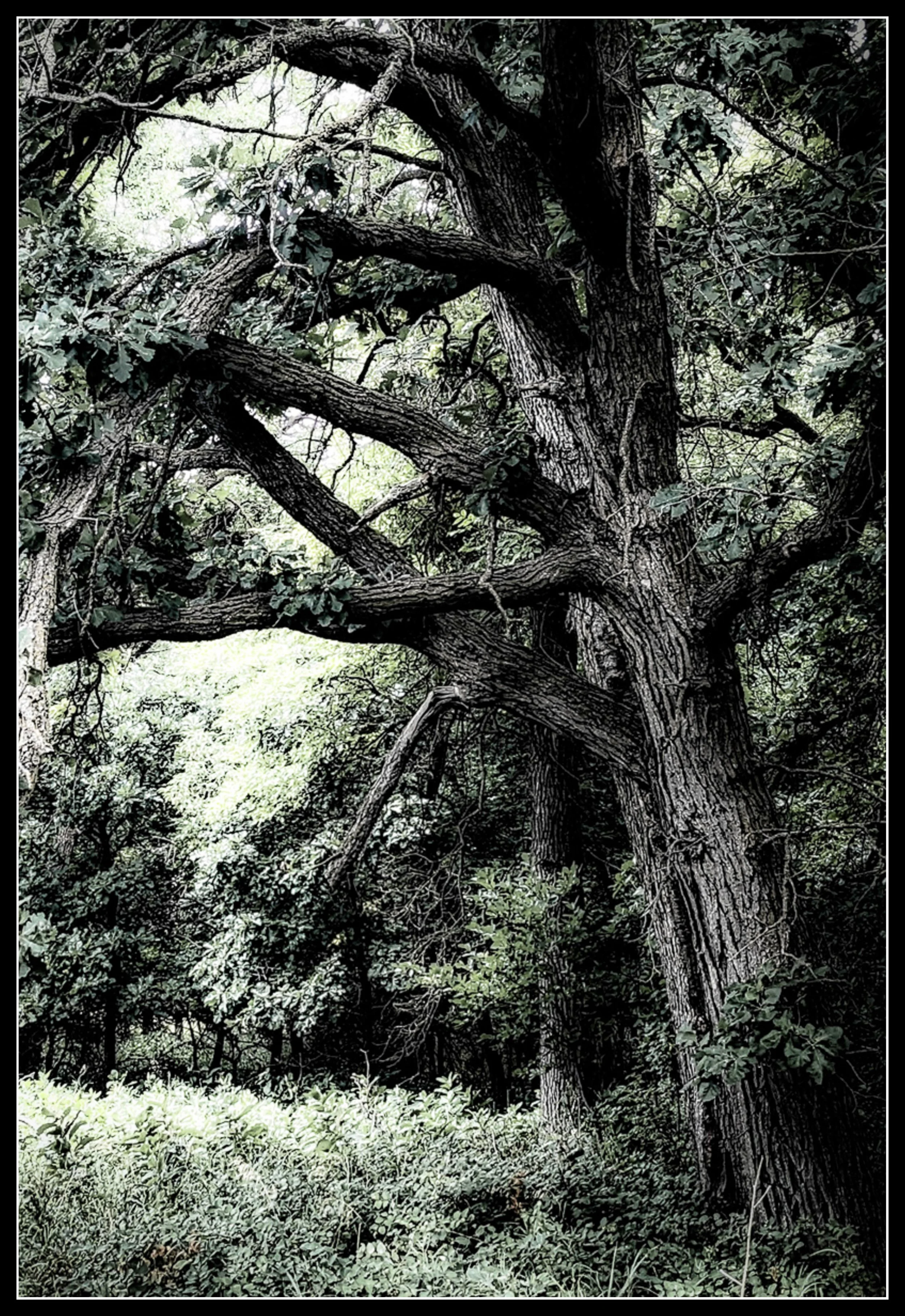
Bur oak in the summer mist, Lemay Forest.
A tree built for centuries, standing calm in the warm rain. The mist softens the branches, but the oak doesn’t bend to weather — it holds it. Thick bark, wide limbs, and the quiet confidence of a species that has survived fire, drought, ice, and time. This is the old savanna’s character, still alive in Winnipeg’s woods.
The Oak’s Story Begins Long Before Mine
My part of this story is at the end. To understand the beginning, we have to go back to when oaks were evolving and the world was regrowing.
Bur oak began its story in the ashes of the asteroid that killed the dinosaurs. Its ancestors survived fire, darkness, and extinction. Over millions of years they evolved into the prairie oak — the tree that followed the melting ice north and took root in Manitoba. The oaks here are living descendants of a lineage older than the prairie itself.
They arrived along riverbanks and tributaries, along lakes and the edges of marshlands. If there was water, the oaks came. They grew in rich soil, gravel, sand, and rocky granite outcrops. All these trees need is water and time — and they had both.
I’ve walked under trees that grew from sand dunes at Victoria Beach, along granite outcrops in the Whiteshell, and in the gravel lands of St. Malo. These trees all thrive with time and water. That’s all they need.
Bur Oak — The Northernmost Oak
Bur oak is the northernmost oak in North America. In Canada, its stronghold is Manitoba: the Red and Assiniboine River valleys, the shores of Lake Winnipeg, the southeastern corner of the province, and Riding Mountain.
These trees support squirrels, deer, wolves, bison, and bears — and many animals that have since gone extinct. They supported early humans when they first arrived thousands of years ago. These trees witnessed a world from the asteroid to this very day.
The Old‑Growth Savanna
The snow had melted and the land was dry. Under the oaks along the river, the leaves had not yet come out, but smoke was in the air, rising off the tall‑grass prairie. A wall of smoke rose in the distance, and soon the flames came. But the giant oaks waited as they always do — through floods and winters and drought. To them, this fire was just another Tuesday.
When it came, it rolled with the wind in a roar of fury, but the grass burns fast and often. It scorches the earth, killing shrubs and small trees like maples and ash, but the oaks — big and small — go on, their thick bark barely singed. The forest floor was scorched black, and the oaks hardly noticed. The squirrels and raccoons took refuge in the high branches and waited out the fire.
A week later, the land turned green again.
Fire, Wind, Drought, and Time
Imagine stepping into a world that isn’t forest and isn’t prairie — but something in between. A place built by fire, wind, drought, and time. A place where the sky is as much a part of the ecosystem as the soil.
Bur oaks stood far apart, with wide crowns and tall grass growing below. They are the most fire‑resistant oak there is, and they needed to be. On tall‑grass prairie, when the fires came, their thick bark saved them. Poplars and maples didn’t make it. The oaks evolved to thrive where fire made it impossible for other trees to survive.
Their acorns fed ecosystems — jays and squirrels, deer and bear, and eventually people. Their roots dug deep, surviving fire, drought, icy winters, and spring floods. This tree shaped Manitoba’s waterways and ecosystems like no other species could. It allowed life here to thrive.
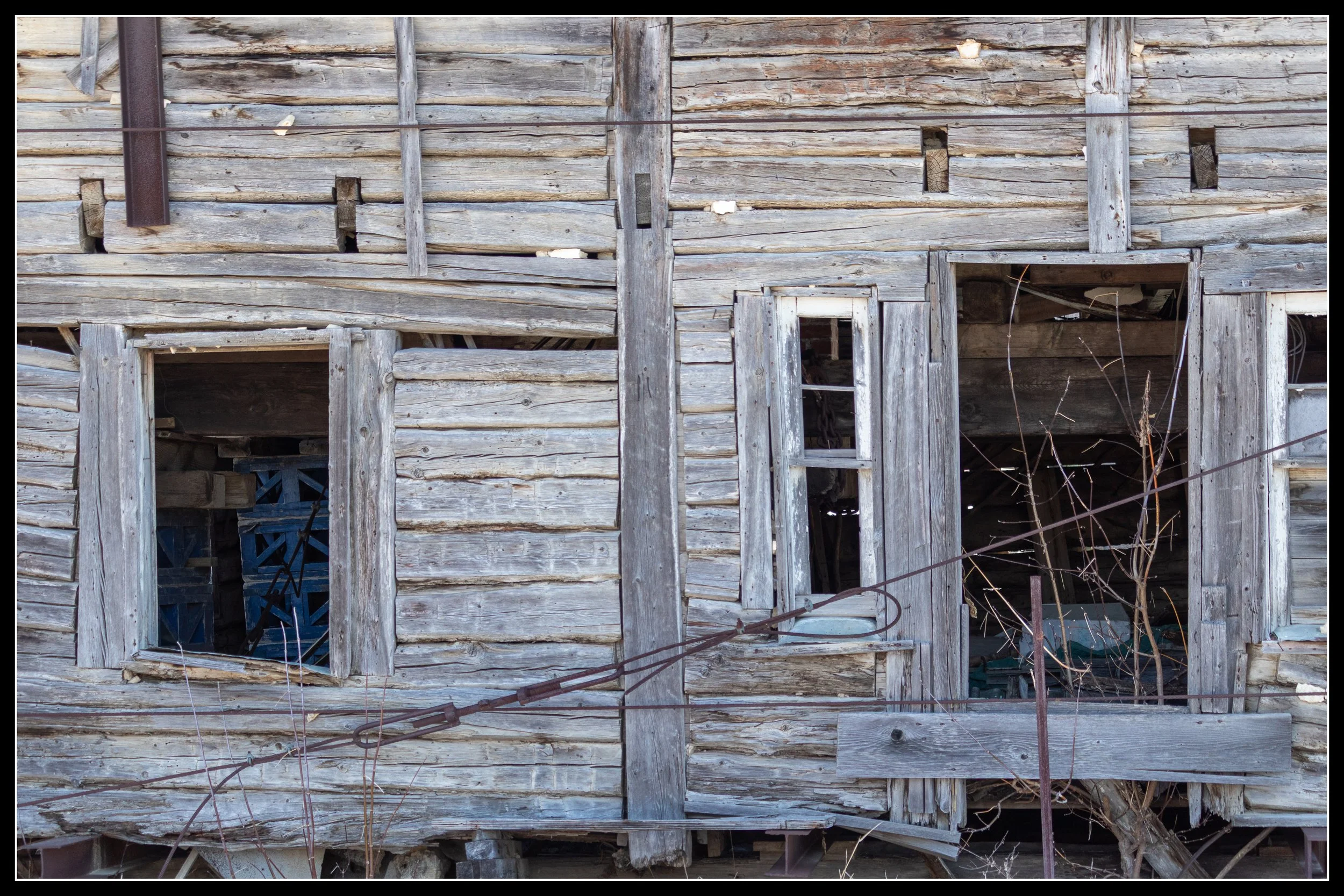
Henderson House — Bur Oak Bones of the Red River Settlement
The siding is failing and the windows are long gone, but the bur oak frame still stands. Built in the 1850s as a Red River post‑and‑frame home, Henderson House is Manitoba’s oldest surviving residence — a structure held together by squared oak timbers cut along the river nearly two centuries ago. Time has taken the roof and warped the walls, yet the oak remains, carrying the shape of the old settlement in every weathered beam.
The World Changes
Then the world changed as settlers invaded the savanna.
Imagine being a settler in the Red River Valley. You take a boat across an ocean to Hudson Bay. You and your four bags are loaded into a York boat, and you start paddling down the waterways toward the Red River Valley. It’s a nine‑hour car ride to Norway House from Winnipeg — that’s halfway — and they were in a York boat. You arrive here with your four bags and almost no infrastructure. Just what you brought.
Now what?
You cut trees. It was a hard life.
The first thing needed was firewood, building material, and charcoal for blacksmithing. Wood was needed for boats and carts, barns and furniture. Later, wood fuelled steam trains and steamboats. Trees were cleared for farmland.
And any savanna left soon failed. When settlers tilled the land and removed the tall grass, fire no longer swept through. Without fire, shrubs and fast‑growing trees took over, shading out young oaks. The open savanna closed, and the ancient system collapsed.
There are still stands of the old savanna, but limited now. Southern Manitoba is known for its open prairie and big sky, not its trees. The trees that were here were essential for human survival. When the trains came, they hauled lumber from forested regions to Winnipeg, but the land was forever changed.
The survivors of the old oak savanna still stand guard as monuments to a land that once was.
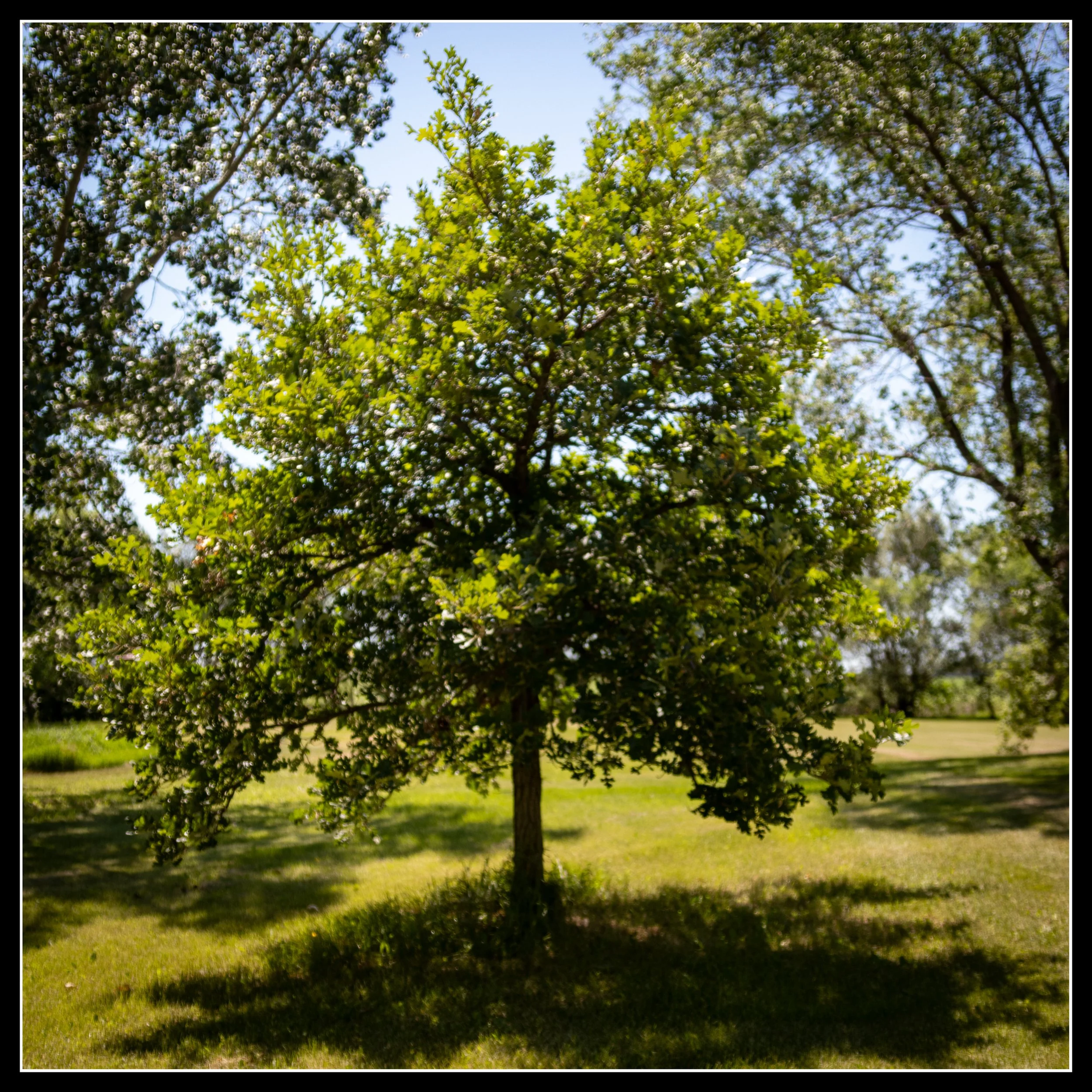
Bur Oak Sapling — Thirty‑Five Years of Prairie Time
This is the bur oak I planted in 1991, photographed in the summer of 2026. Slow‑grown, steady, and shaped by Manitoba weather, it carries the same lineage as the giants I grew up under — thick‑barked survivors built for fire, drought, ice, and time. It’s still young by bur oak standards, but it’s becoming exactly what a prairie oak should be: patient, rooted, and growing for people I’ll never meet.
What Remains
Today there is little left of what the old bur oaks built. Most of the structures made from their beams are gone. If I can find an example of a building that still stands, I’ll post a photograph.
As a kid who played among the old giants, the value of time stayed with me. When we moved in 1986 to southern Manitoba near New Bothwell, the bur oak didn’t exist there. Not many trees did. I planted trees and learned to care for them, but I missed the oaks.
So one day, 35 years ago, I drove down to the Red River and hunted for a bur oak sapling. I found one, dug it up with a spade, put it in the trunk of my car, drove home, and planted it. It’s still growing today. Slow, steady, stubborn — a tree for future generations unless someone cuts it down.
Oaks don’t ask for much. The soil doesn’t need to be great. They just need time and water. They can live up to 500 years, though wind takes almost all of them long before that.
In my own yard today, I have four big giants from the old savanna — so large I can’t wrap my arms around them; I’m ten inches short. These trees could be 250 to 300 years old. Those four trees were part of the reason I bought this house. They’re a reminder of the days I spent in North Kildonan with the long‑gone giants.
A New Day
Today is a new day, and tomorrow is up to us. It doesn’t matter that the savanna is gone. We can’t reverse that. But if someone plants a bur oak today, they’re planting a tree for people they will never meet.
The carbon capture of a bur oak outmatches any other Manitoba tree — it holds carbon for centuries. It won’t grow fast. It won’t shoot up like a poplar or amaple. It will take decades just to look like something, and centuries to become a giant.
But that’s the point.
A bur oak is a gift to the future. It’s a promise that the land will still have shade, and acorns, and a place for hawks to perch long after we’re gone. Planting one is an act of faith — the same faith the old savanna had when it grew here after the ice left.
Time is the only thing an oak asks for, and time is the only thing we can give it.
The old savanna is gone, but the oak’s story is older than loss.
It has survived fire, ice, drought, and time itself.
It will survive us too, if we let it.
All we have to do is plant — and trust the centuries to do the rest.
The Work Continues
Today, these trees still get removed — they die, or wind damages them, or they’re in the way of progress. Many are salvaged at Urban Lumber. They have a sawmill and kiln, and the trees are sold to folks like me so I can build in my shop with one of these legends.
It’s a privilege to work with them. And the respect owed to the history of a Manitoba bur oak will be given in my shop.
What’s Left of the Bur Oak Savanna Today
The savanna disappeared long ago, but the giants remain. In many neighbourhoods, old bur oaks still stand exactly where the acorn fell, holding the memory of the world they grew up in. They’re quiet survivors, carrying the shape of the old land in their bones.
Henderson House is one of the last surviving Red River frame homes, built around 1854 from squared bur oak cut along the Red River. Its beams came from the same giants described above—trees shaped by wind, fire, and prairie time. The house stands now as proof of what those oaks once were: the bones of the first homes on this land.
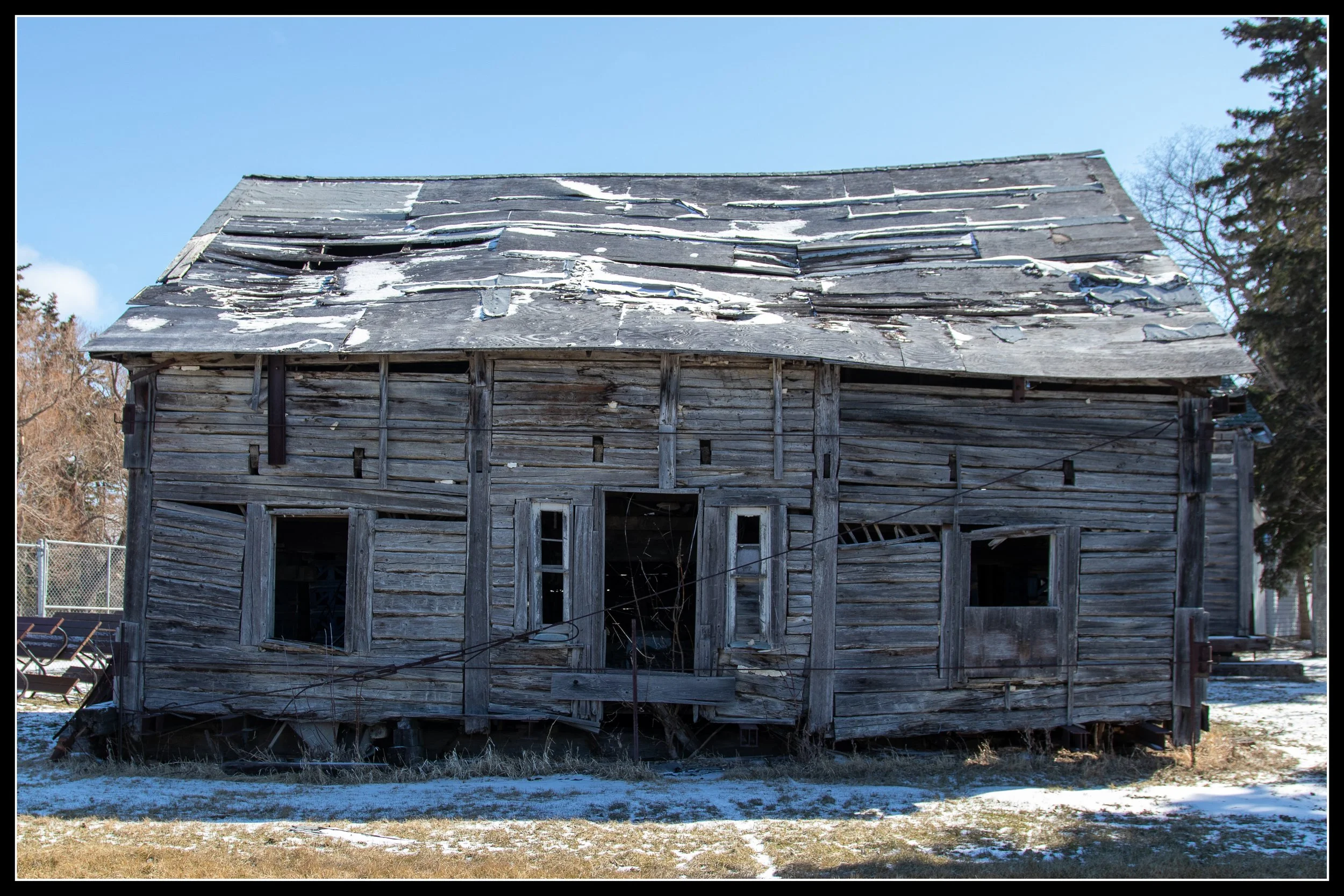
Henderson House, built in the 1850s
Manitoba’s oldest surviving home. A Red River post‑and‑frame house, its structure held together by squared bur oak timbers cut along the river nearly two centuries ago. The roof has collapsed and the siding is failing, but the frame still stands — proof of what bur oak can endure. This building is one of the last physical survivors of the old savanna, a rare piece of Manitoba’s earliest settlement history.
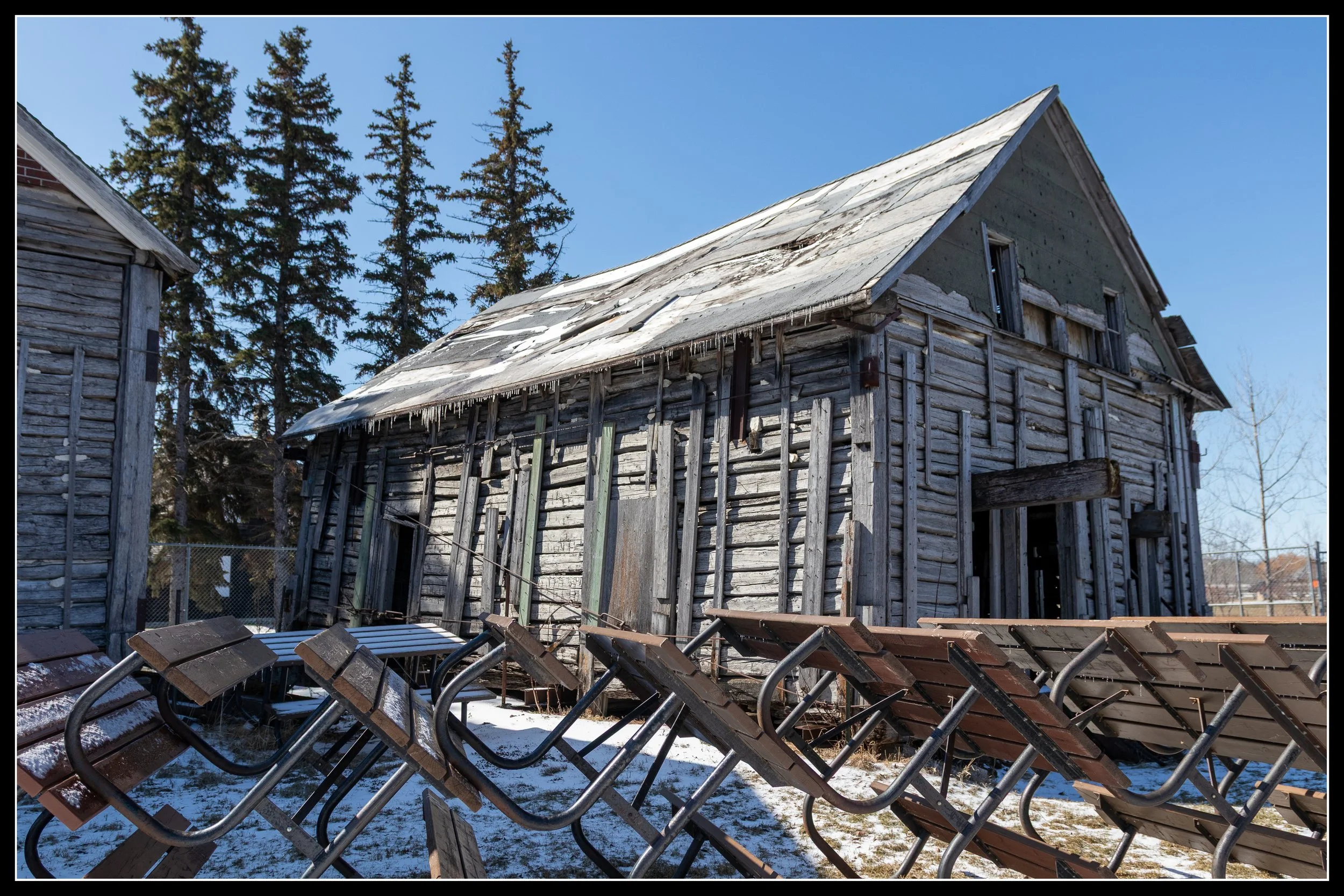
Henderson House — The Bur Oak Frame That Outlived the Roof
The roof has folded in and the siding is giving way, but the bur oak posts still stand. This 1850s Red River post‑and‑frame home — Manitoba’s oldest surviving house — was built from squared oak timbers cut along the river and fitted together. Bur oak that has held through storms, winters, and a century and a half of prairie weather.
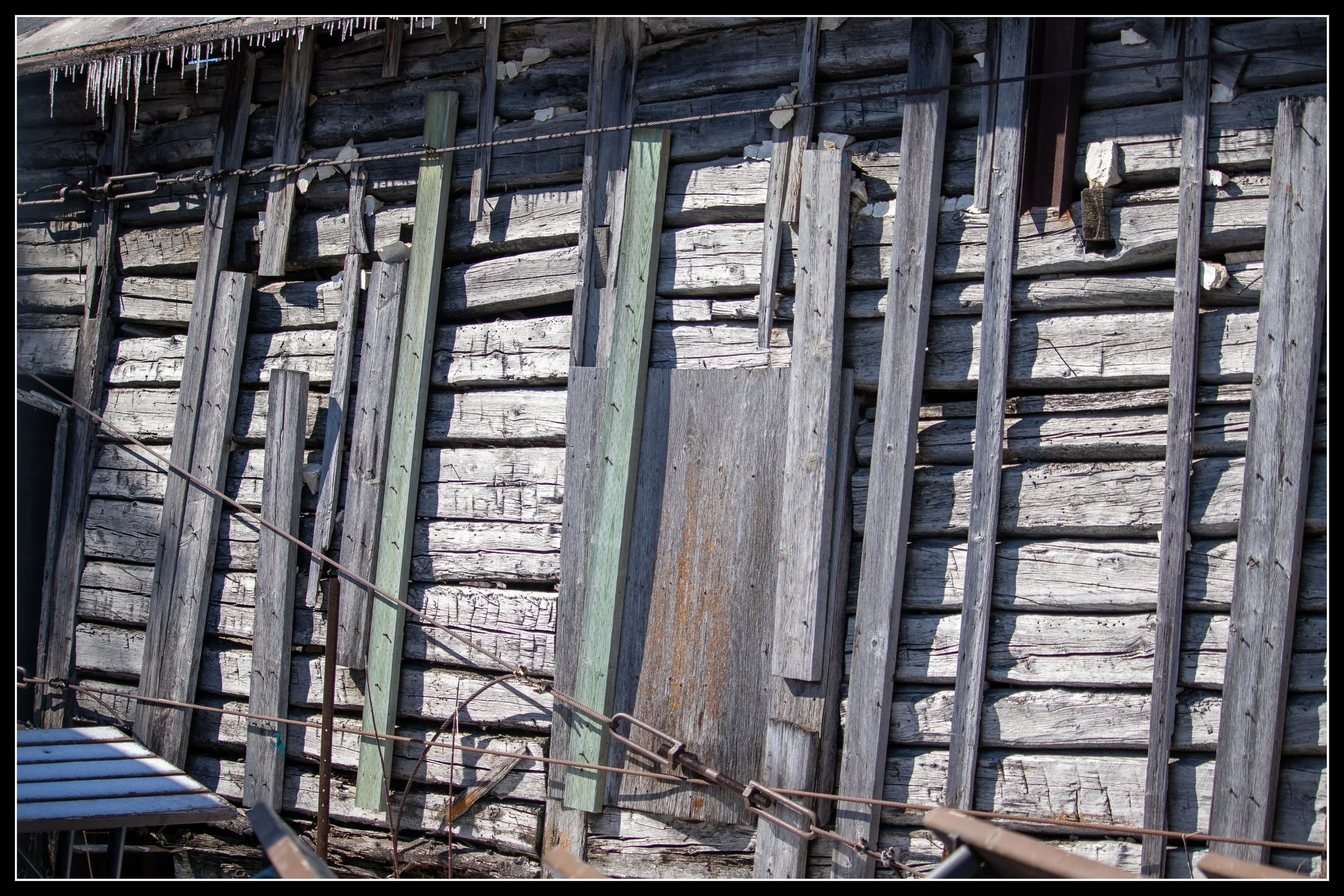
Henderson House — Bur Oak Holding Through Winter
The siding is patched with whatever boards were at hand, the wires sag across the wall, and icicles hang from the roofline. Yet the bur oak frame underneath still carries the weight. Built in the 1850s as a Red River post‑and‑frame home, Henderson House is Manitoba’s oldest surviving residence — a structure that has endured flood, frost, storms, and time itself. Even in this state, the oak shows why the settlers chose it: strength that doesn’t quit.
Where every species, every board, and every lesson in wood science comes together — a place to explore the materials that shape our craft.
SHARE
The Wood Archive — All the wood Stories in One Place
For the living side of woodworking — the stories shaped by walnut, oak, maple, cherry, elm, cedar, and poplar — head to the Wood Archive.
If you’d like to hear from me only when something big is happening — a launch, a milestone, or a major project — you can join the mailing list below.
Written by David Flather, Red Seal cabinetmaker and founder of Knotty Dave’s Fine Woodworking — a Manitoba shop rooted in heritage restoration, storytelling, and real craft.
All photos shot by David Flather — in the shop, on the road, and in the places where craft and story meet.
Related Stories:
The Value of Wood in the Fur Trade: Winter Logging, River Transport, and York Boat Timber
Red Oak: Fast Growth, Open Grain, and the Wood That Teaches Patience
The Elm Trees of North America: Canopy, Loss, and the Craft That Remains
The Workshop Library
If you enjoyed this story, there’s lots more like it inside The Workshop Library — and it’s free to explore.
Wood Archive — species, grain, working properties, and real‑world craft notes
Behind the Grain — the deeper stories inside wood, craft, and heritage
The Working Side of the Craft — tools, shop life, workflow, and the realities of making
Digital to Sawdust — Design Studio — geometry, proportion, visual flow, and design thinking
The Stories of the Shop — the personal side of craft, the shop’s history, and the quiet moments that shape the work
House & Hearth — heritage home restoration, the hearth room, winter culture, and the lived‑in side of craft
I’m just one man with a shop, building this archive one story at a time. If you’d like to follow the journey as it unfolds, explore The Workshop Library — new stories every week.
