

Poplar
Quick Answer — Why Poplar Matters
Poplar matters because it’s the quiet utility hardwood that keeps shops moving. It grows fast, sheds its lower branches early, stays mostly knot‑free, and produces straight, predictable boards that machine easily and take paint beautifully. It’s the behind‑the‑scenes hardwood — stable, uniform, and reliable — the wood that makes all the fancy woods possible.
Poplar — The Quiet, Fast-Grown Hardwood Behind the Scenes
Poplar has always been the paint‑grade workhorse in my world — humble, fast, and useful. It’s not the star of the show, but it’s the wood every shop leans on.
BY THE END OF THIS STORY
You’ll understand poplar as a fast‑grown pioneer hardwood built for sun and speed, why it became the paint‑grade workhorse of North American shops, how its green‑tan‑purple grain carries the story of a tree that races through open ground, and why this humble utility wood can take texture, stain, and finish far better than most people expect.
Read time: 4 minutes
Fast Summary
Poplar is the fast‑grown pioneer hardwood behind every paint‑grade project. It’s stable, predictable, mostly knot‑free, and built for speed — the quiet wood that makes the fancy woods shine.
Comparison — Poplar vs Soft Maple, Utility Hardwoods
Soft Maple — Harder, Heavier, More Variable
Soft maple sits one notch above poplar: denser, stronger, and slightly more temperamental.
More density — harder under tools, holds edges better
More colour variation — white, cream, grey, and occasional red streaks
Slightly harder machining — more prone to burning and grain tear‑out
Still a utility hardwood — often used where poplar is used, but with more strength
Soft maple is the heavier utility hardwood — still behind the scenes, but with more muscle.
Poplar — Fast, Stable, Predictable
Poplar is the classic paint‑grade hardwood: fast‑grown, uniform, and steady indoors.
Fast‑grown — tight, uniform grain from rapid pioneer growth
Stable indoors — predictable movement, ideal for paint‑grade work
Easy machining — forgiving under tools, minimal tear‑out
Takes finish well — better than most people expect, especially under texture
Poplar is the utility hardwood that keeps the shop moving — steady, simple, and reliable.
Bottom Line — Two Utility Hardwoods, Two Personalities
Poplar is fast, stable, and predictable — the easiest utility hardwood to work with. Soft maple is denser, stronger, and more variable — still utility‑grade, but with more bite.
Both woods live behind the scenes. Poplar keeps the shop moving. Soft maple carries a little more weight.
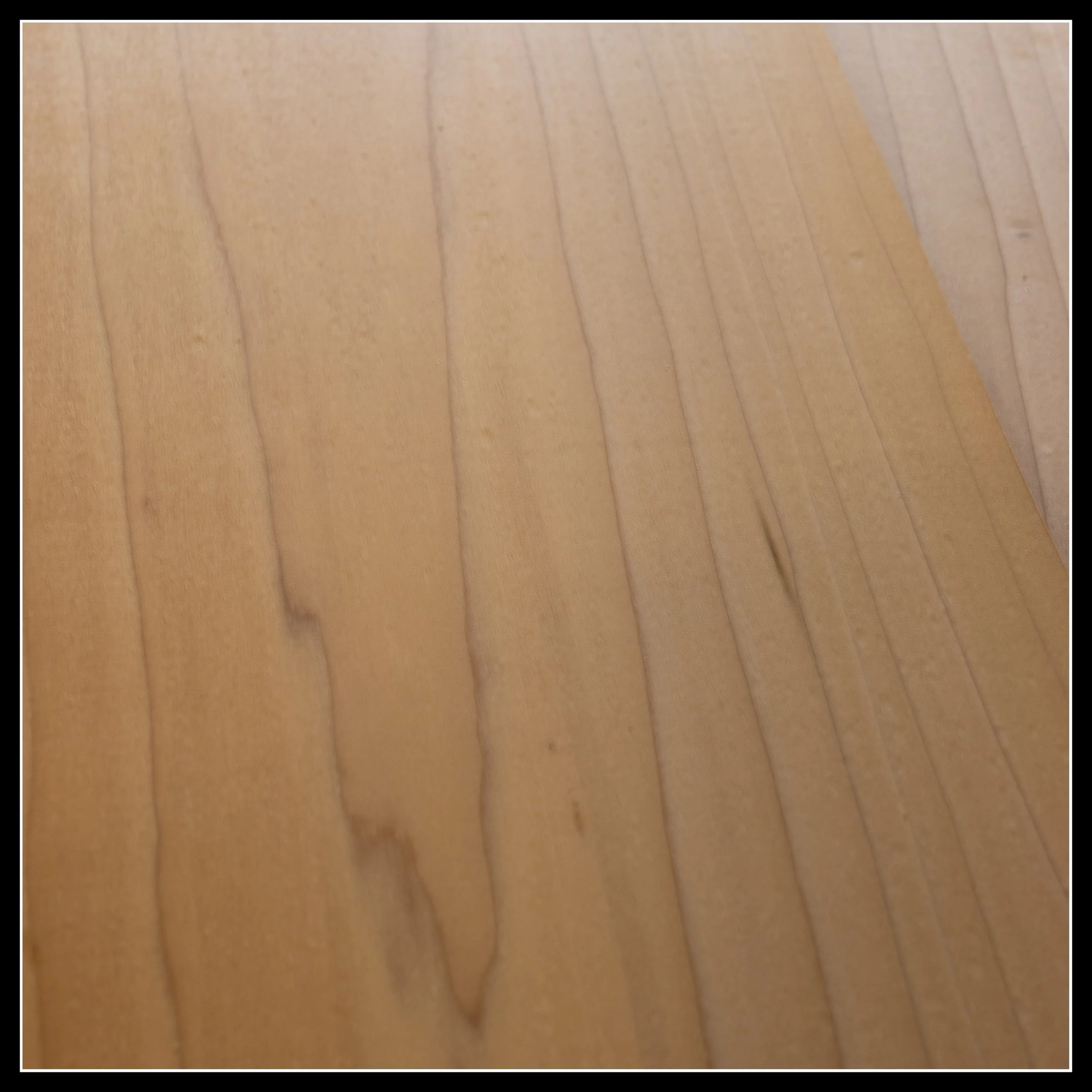
Poplar’s Quiet Grain
Poplar doesn’t shout. Its grain is soft, straight, and calm — pale tan with the faint green and purple undertones that only show up when you look closely. This is the wood most shops rely on for the work behind the work: drawer boxes, frames, interior parts, anything that needs to be stable and predictable. Up close, you can see why. Poplar is simple, steady, and honest, carrying its whole story in a quiet surface most people never stop to notice.
Poplar — The Working Wood
Poplar is the working wood — the background wood. It lives under paint, becomes drawer boxes, interior frames, and the hidden structure behind the showpiece. Poplar doesn’t get the spotlight. It sits in the shop beside the spruce, waiting to do the quiet jobs that make the fancy woods look good.
The Purple Poplar
When I was in college taking Cabinetmaking, we had to create a hypothetical cabinetry business. Everyone else named theirs after themselves or their pets. My buddy and I didn’t have a name. When it was our turn to present, he started to hum and stall, so I jumped in and said, “Our business name is The Purple Poplar.”
The instructor laughed and said, “What’s the slogan — All things paint grade?”
My buddy blurted, “I never agreed to this!” and the class cracked up.
And honestly, that’s poplar’s reputation. It’s the paint‑grade wood. The utility wood. The wood you reach for when the job doesn’t need to be fancy. But to understand its value, you have to understand the tree.
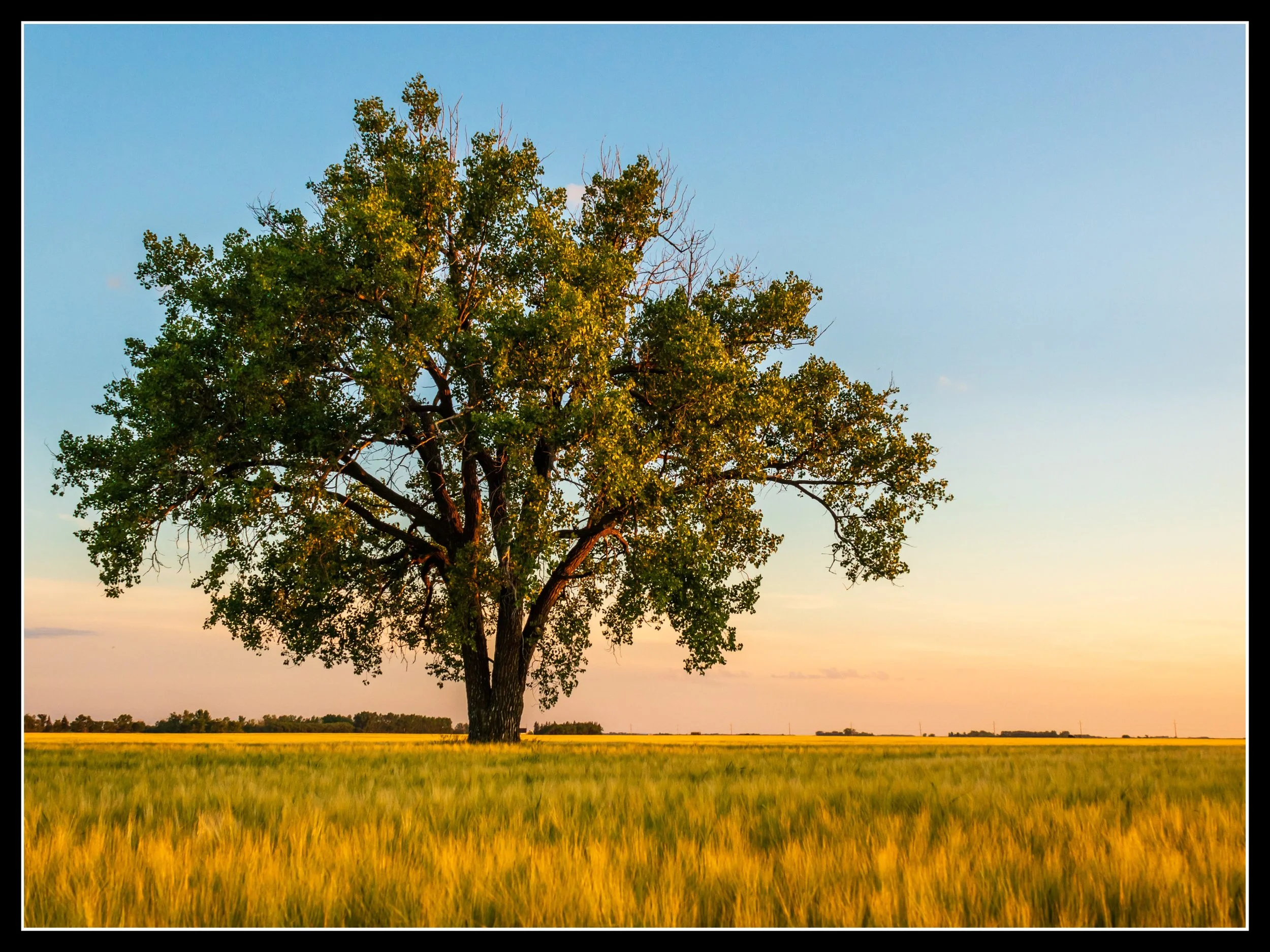
A Poplar That Outran the Prairie
This poplar stands alone in a farmer’s field, a giant that’s survived decades of storms, blizzards, and prairie wind. Poplar is a pioneer hardwood — built for speed, built for sun, built to take whatever the Red River Valley throws at it. Most poplars live fast and die young, but every once in a while one outlasts the odds and becomes a landmark. This tree shows what poplar can be when it gets the space, the light, and the years: tall, tough, and quietly impressive.
Poplar as a Pioneer Hardwood
Poplar is a pioneer hardwood species. After fire or windthrow clears a forest, poplar is the first tree into the sunbaked ground. Its strategy is simple: spread fast, grow fast, out‑race everything around it. It drops seeds that germinate quickly, shoots up in full sun, and fills the space. Poplar lives 30 to 70 years, then dies and rots fast. It’s here for a good time, not a long time.
Once poplar has shaded the ground, cooled the soil, and protected the seedlings underneath, the slow, strong hardwoods move in — oak, maple, elm. They grow in the shelter of the poplars, and all they have to do is outlive them. When they do, the poplars thin out and the forest shifts. That’s how hardwoods are “fast” as a group: some sprint, some endure.
Poplar in Managed Forests
Poplar’s value is its speed. In a managed forest, poplar can be harvested every 30–40 years. Hybrid poplar plantations can be ready in 15–20. It grows tall quickly, sheds its lower branches early, and produces straight, mostly knot‑free lumber. It’s soft, the colour can run green‑tan‑purple, and it’s not strong — but it’s stable, predictable, and good enough for the jobs it’s meant to do.
Poplar in the Shop
In the shop, poplar is a staple. It’s the cheap wood, but it’s good wood. It glues well, machines easily, and takes paint beautifully. It’s the wood behind the scenes, doing the work you don’t think about. Beginners often reach for spruce because it’s cheap and familiar, but poplar behaves far better indoors — it’s straighter, more stable, mostly knot‑free, and won’t twist itself out of a project the way framing lumber does.
It’s been a long time since college, and I did start my own business — the one I always wanted. And I’m glad I didn’t call it The Purple Poplar. Picking something wild like that would’ve been nuts. I got better at naming things.
Anyway — until next time, this is Dave at Knotty Dave’s Fine Woodworking.
See you in the Rambles.
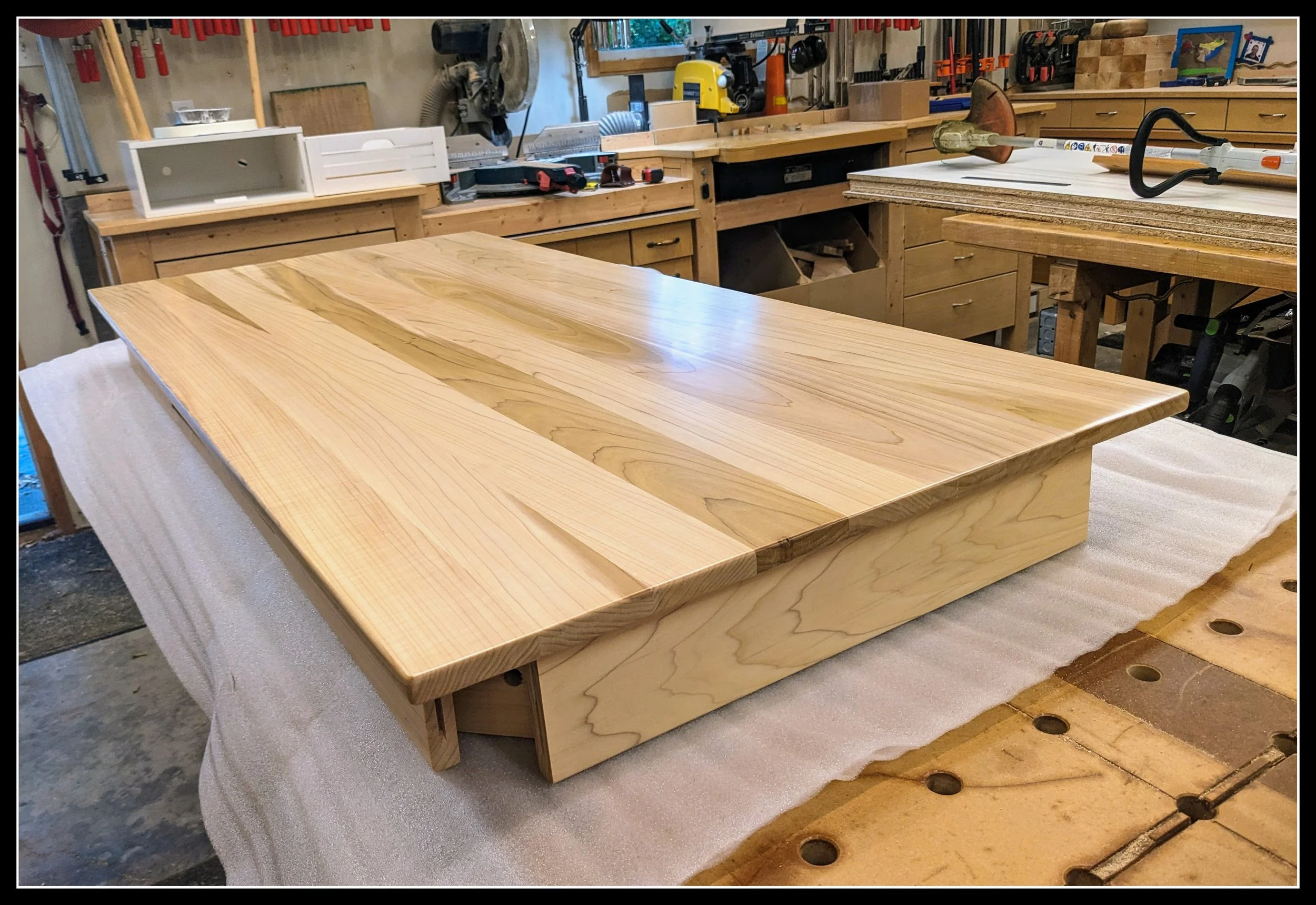
Poplar, When You Let It Be Itself
This desk is poplar with nothing to hide — no paint, no stain, just a clear coat over the wood’s natural colour. Poplar isn’t known for showpieces, but when you give it light and a clean finish, it reveals the quiet greens, tans, and soft purples that run through the grain. It’s still humble, still fast‑grown, still the background wood of the shop — but pieces like this prove that poplar can stand on its own when you let it.
Deep Scraped Poplar — Texture, Colour, and Craft
Poplar is usually the quiet wood in the shop, but when you push it, it takes texture and colour better than most people expect. These Deep Scraped Collection samples show what happens when you raise the grain, brush the earlywood, and layer stain, glaze, and 2K poly with intention. Poplar goes from paint‑grade utility board to a surface with depth, warmth, and character — proof that even the humblest hardwood can carry a dramatic finish when you treat it like it matters.
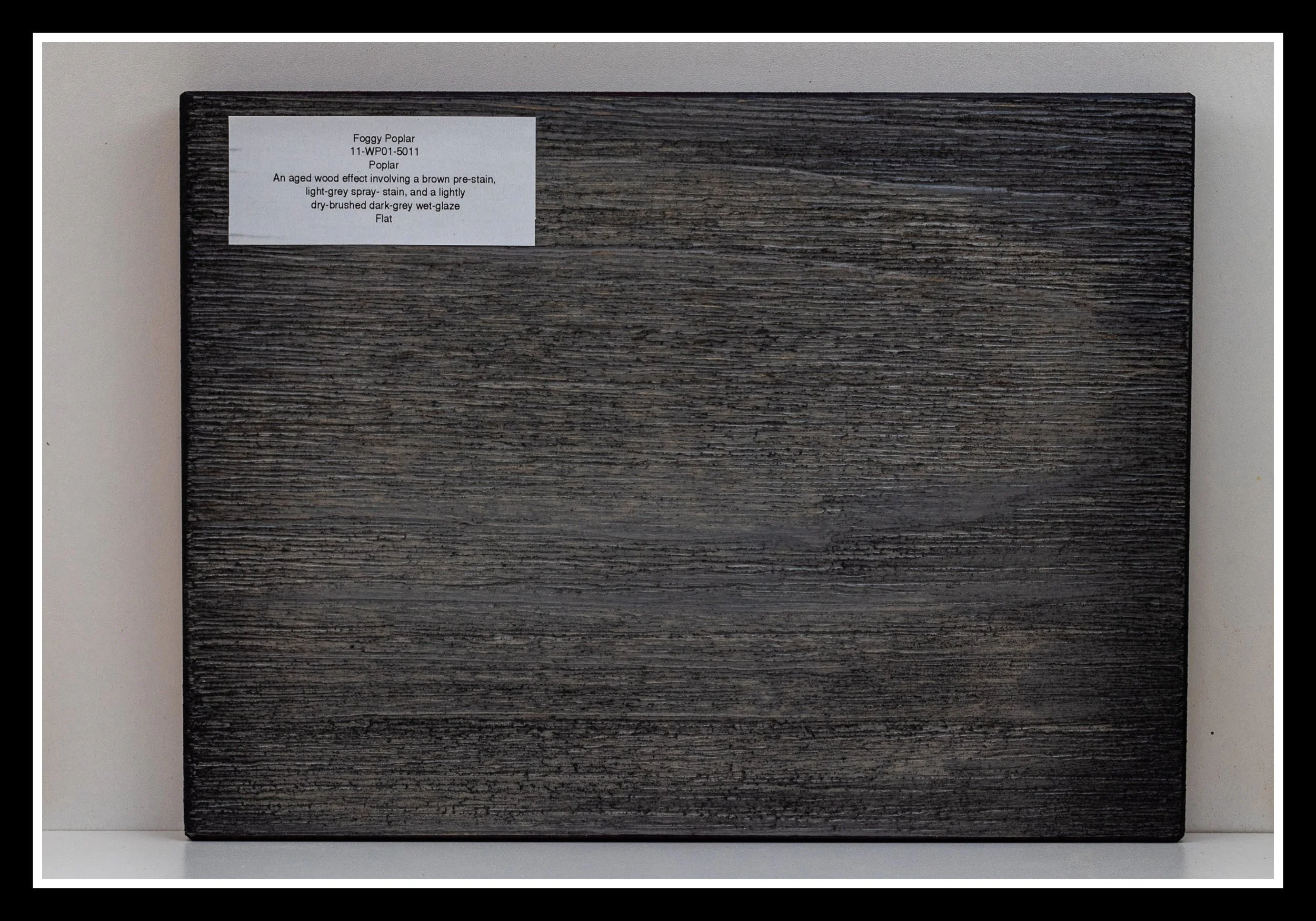
Foggy Poplar: Deep‑Scraped Textured Poplar Grain
Poplar is known for being smooth, calm, and easy to work — but when you push it, it takes texture beautifully. This sample is what I call foggy poplar: deep‑scraped, brushed for grain definition, stained, glazed, and finished with 2K poly. Poplar doesn’t just accept finish — it transforms under it. The brushing pulls the soft earlywood forward, the glaze settles into the texture, and the poly locks everything down into a surface that looks older, richer, and more dramatic than anyone expects from a “paint‑grade” wood. Poplar is excellent wood for finish when you treat it like a real hardwood instead of a utility board.
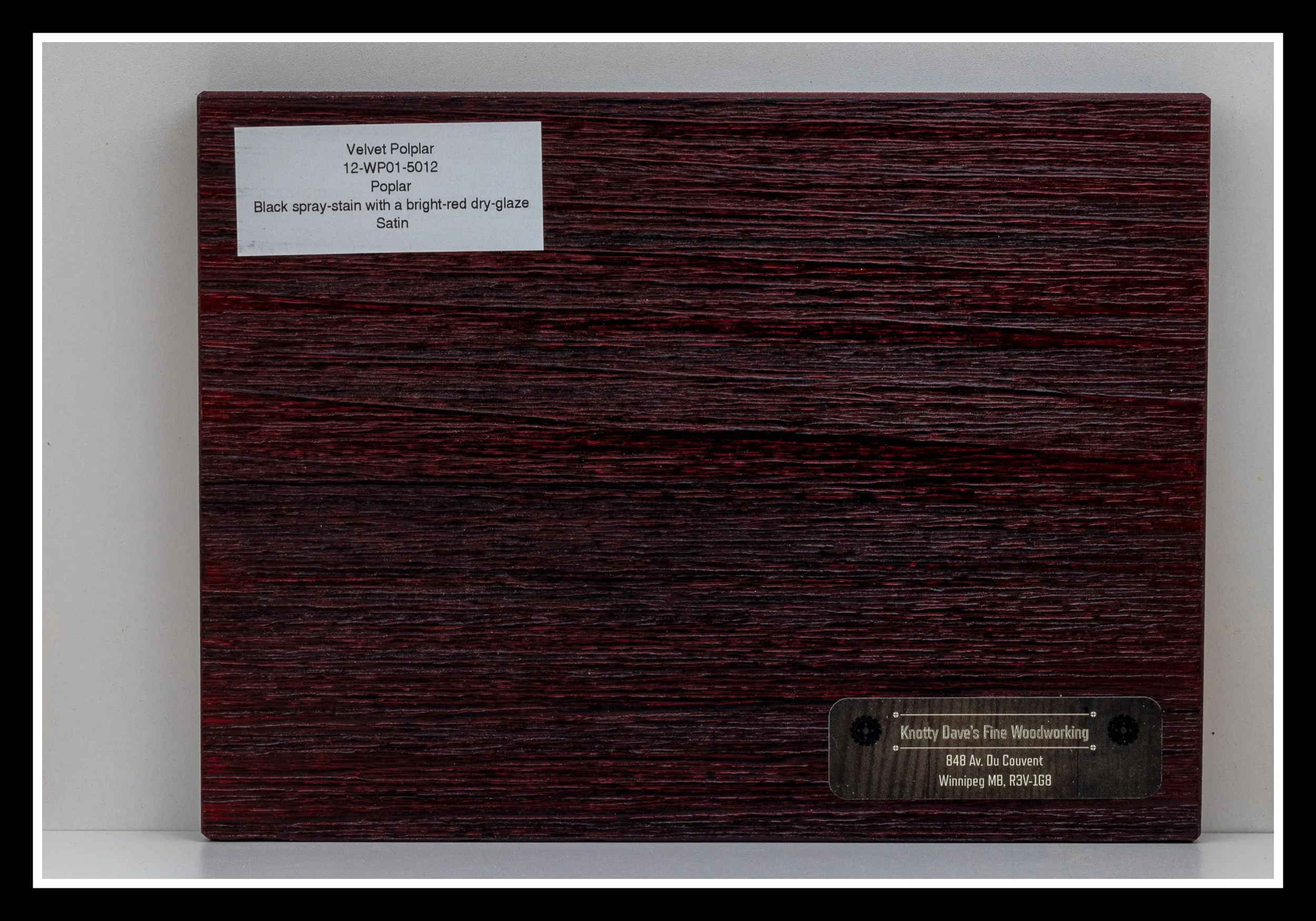
Velvet Poplar: Deep‑Scraped Red‑Black Textured Poplar Grain
Poplar doesn’t usually get dramatic, but this finish pulls something unexpected out of it. This is velvet poplar: deep‑scraped for texture, stained with a velvety red tone, glazed dark to settle into the grain, and locked under a 2K poly that gives the surface weight and depth. The scraping raises the earlywood, the red stain warms the whole board, and the glaze adds the shadow that makes the colour feel alive. Poplar is known as a paint‑grade wood, but finishes like this prove it can carry richness and mood when you treat it with intention.
Where every species, every board, and every lesson in wood science comes together — a place to explore the materials that shape our craft.
SHARE
The Wood Archive — All the wood Stories in One Place
For the living side of woodworking — the stories shaped by walnut, oak, maple, cherry, elm, cedar, and poplar — head to the Wood Archive.
If you’d like to hear from me only when something big is happening — a launch, a milestone, or a major project — you can join the mailing list below.
Written by David Flather, Red Seal cabinetmaker and founder of Knotty Dave’s Fine Woodworking — a Manitoba shop rooted in heritage restoration, storytelling, and real craft.
All photos shot by David Flather — in the shop, on the road, and in the places where craft and story meet.
Related Stories:
Old Cedar — Reclaimed Deck Boards, Cedar Grain, and Building Muskoka Chairs
Hickory Wood: Strength, Shock Resistance, and Why It’s Tougher Than Oak or Ash
Red Oak: Fast Growth, Open Grain, and the Wood That Teaches Patience
The Elm Trees of North America: Canopy, Loss, and the Craft That Remains
The Workshop Library
If you enjoyed this story, there’s lots more like it inside The Workshop Library — and it’s free to explore.
Wood Archive — species, grain, working properties, and real‑world craft notes
Behind the Grain — the deeper stories inside wood, craft, and heritage
The Working Side of the Craft — tools, shop life, workflow, and the realities of making
Digital to Sawdust — Design Studio — geometry, proportion, visual flow, and design thinking
The Stories of the Shop — the personal side of craft, the shop’s history, and the quiet moments that shape the work
House & Hearth — heritage home restoration, the hearth room, winter culture, and the lived‑in side of craft
I’m just one man with a shop, building this archive one story at a time. If you’d like to follow the journey as it unfolds, explore The Workshop Library — new stories every week.
