

Spruce
Quick Answer — Why Spruce Matters
Spruce matters because it’s the structural softwood of Canada — a northern tree built for cold wind, thin soil, and endurance. Its lumber is light, straight‑grained, strong for its weight, and stable enough to frame houses coast to coast. SPF spruce is plentiful, predictable, and universally available, making it the quiet backbone of Canadian construction and the wood most builders rely on every single day.
Northern softwood — adapted to cold, thin soil
Strong for its weight — dependable structural lumber
SPF lumber — backbone of Canadian construction
Universal availability — coast to coast to coast
Good enough in all the right places — stable, plentiful, reliable
Spruce — The Backbone of Canadian Softwood
Spruce is the wood behind the drywall and under the shingles — the quiet northern softwood that holds up houses, cabins, sheds, and everything in between. It grew in cold wind and thin soil, and the lumber still carries that character.
BY THE END OF THIS STORY
You’ll understand how spruce became the structural wood of Canada, why SPF lumber defines modern construction, how different spruce species shape northern forests, and why this quiet softwood is the backbone of houses, cabins, and everyday builds across the country.
Read time: 6 minutes
Fast Summary
Spruce is the structural softwood of Canada — light, strong for its weight, stable enough for framing, and plentiful enough to build a country. From SPF lumber to northern forests, spruce is the quiet backbone of Canadian construction.
Comparison — Spruce vs Pine, Canadian Softwoods
Pine — Softer, More Character, More Movement
More knots — especially in lodgepole and jack pine
More resin — gums up tools, affects finishing
More movement — cups, twists, and shrinks more dramatically
More colour variation — yellow, red, brown, streaked
Pine is the character softwood. Spruce is the structural softwood.
Spruce — Light, Straight, Reliable
Strong for its weight — ideal for studs, rafters, trusses
Straight grain — predictable cuts, clean joinery
Stable indoors — holds shape in framing
Widely available — the default Canadian softwood
Spruce is the backbone of SPF lumber — the structural wood of Canada.
Bottom Line — Two Softwoods, Two Jobs
Spruce builds the bones. Pine builds the personality.
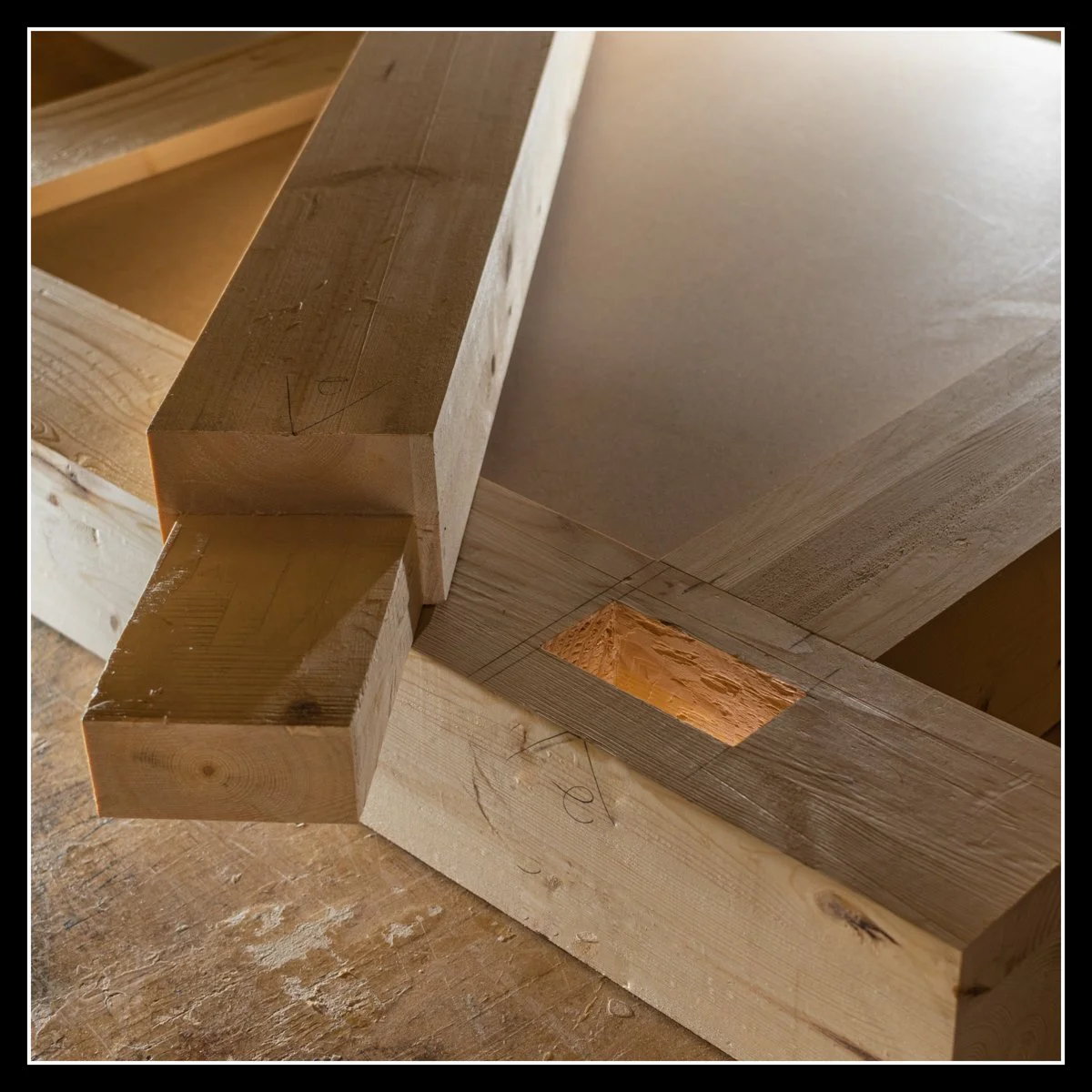
Spruce: Strong in the Joinery
A mortise‑and‑tenon joint shows what spruce is really made for. The wood cuts clean, stays straight, and holds fast once the glue sets. It isn’t fancy, and it isn’t trying to be — spruce is a structural wood, meant for frames, benches, and anything that needs to take weight without complaint. This joint is part of the same workbench built from cheap, plentiful lumber, yet it carries the quiet reliability spruce is known for. Good enough in all the right places, and strong where it matters.
Spruce — The Quiet Structural Softwood
Spruce isn’t made for beauty, hardness, or showpieces — it’s made for structure, cold climates, and quiet reliability. In Canada, spruce is universal. Spruce is the back bone of the Canadian softwood industry.
Spruce in Canada — A Universal Wood
It’s available for purchase at any lumber yard in any town that has one. In Canada, any house, garage, shed or dog house has spruce in its bones. Whether we see it or not it’s there inside the walls holding the house up and the electrical, plumbing and duct work in place. Spruce grows coast to coast and to the northern tree line of the arctic. We have more spruce trees in Canada than we need. So it’s available and cheap compared to other woods. Canada is built with spruce.
In Canada we don’t just have spruce — we have spruces. We see them everywhere: in yards, parks, golf courses, shelterbelts, and lining the Trans‑Canada Highway. Spruce grows in every province and territory, the tree of forest fires, summer camping trips, and the lifts of lumber at every construction site. No tree touches Canadian life the way spruce does. But it’s not one tree — it’s a whole northern family.
The Spruce Family — White, Black, and Sitka
The spruce-pine-fir (SPF) spruces are mostly white spruce, the prairie and shield workhorse, with some black spruce from the northern muskeg and bog mills. Out on the BC coast you get sitka spruce, a towering fog‑belt giant valued for guitars, pianos, boats, and aircraft — far too valuable and too coastal to ever end up as SPF. Different spruces, different worlds, all part of the Canadian story.
Spruce Through Time — A Northern Survivor
Spruce is an ancient conifer, with ancestors appearing around 145 million years ago, but it isn’t the oldest tree lineage — just one of the great survivors of the northern forests. It’s adapted to cold dry rocky thin soiled land. It’s adapted to this environment because this was the early world. Before rich soils and a green world. Spruce dominated the land before many other trees came along. This character is why it is where it is today in cold climates. It grows where other trees simply can’t. Spruce grows slow and steady, it survives by endurance in harsh climates. This is key to spruce’s character. Spruce isn’t the strongest wood, not a pretty wood, it’s just ok for long spans and heavy loads. It will rot quickly if it is exposed to wetness, it’s not even considered the best firewood. But we use it daily. Spruce is strong enough, soft enough, and plentiful enough and importantly it’s considered stable enough. When considering spruce, it’s a wood that’s good enough in all the right places. Maybe not the best but good enough and that’s a valuable wood. It’s strong for its weight and its screw holding ability is strong. It has knots but that’s life, all soft woods do and compared to Southern yellow pine the spruce knots pose less issue. Spruce is the king of good enough. And that is enough.
There’s not much to say about spruce, it doesn’t ask for attention, it just does its thing quietly in the background. So here are a few fun facts about spruce.
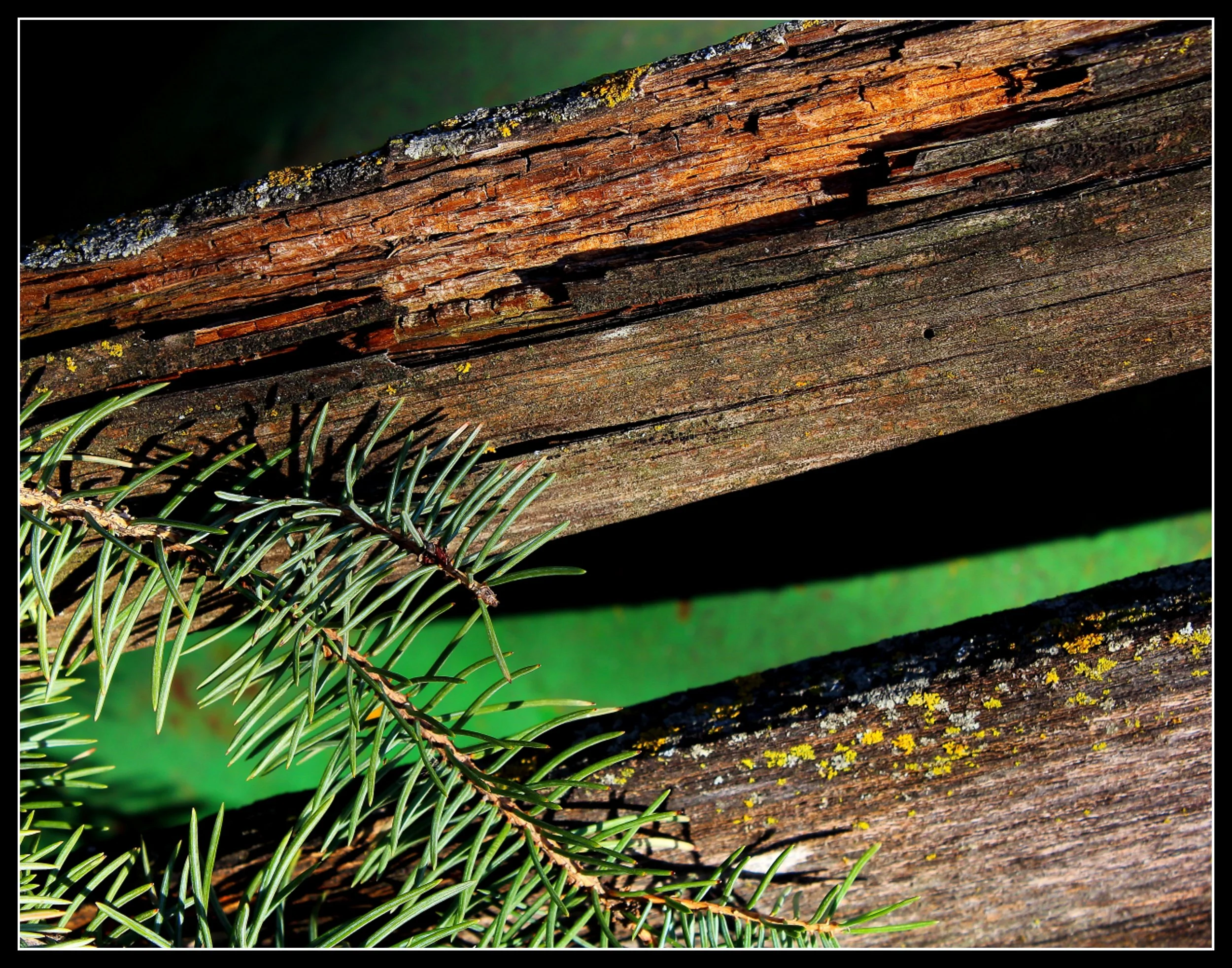
Spruce: Where Endurance Shows
Spruce grows in thin northern soil, and the lumber carries that history long after the tree is gone. These weathered boards — cracked, sun‑bleached, touched by lichen — show the same endurance that keeps spruce standing in cold wind and rocky ground. The fresh needles beside them are a reminder of how spruce lives: slow, steady, and built for harsh places. Even in decay, spruce tells the story of the environments that shaped it.
Spruce Fun Facts
• Spruce roots were used as natural rope.
Indigenous peoples used black spruce roots for sewing birchbark canoes, lashing frames, and making cordage. Strong, flexible, and rot‑resistant.
• Spruce gum was one of the first chewing gums in North America.
Collected from resin blisters, hardened, then chewed like modern gum.
• Spruce needles stay on the tree for 5–7 years.
That’s why spruce looks so dense and full compared to pine.
• Black spruce grows in “drunken forests.”
In muskeg and permafrost zones, the ground shifts and trees lean at odd angles — whole stands look like they’ve had a long night.
• Sitka spruce was used in WWII aircraft.
Its strength‑to‑weight ratio is so high that it was used in the frames of early planes, including the famous de Havilland Mosquito.
• The oldest known spruce clone is over 9,500 years old.
A single root system in Sweden keeps sending up new trunks — older than the pyramids.
• Spruce cones hang down; fir cones stand up.
A simple field trick for telling them apart.
• Sitka spruce is the soundboard wood of violins, guitars, and pianos.
Even though it’s not a furniture wood, it’s a music wood — light, resonant, and stable.
• Spruce forests burn like torches.
Resinous needles, thin bark, and low branches make spruce stands ignite fast and burn hot.
• Black Spruce naturally regenerates after fire better than it replants.
In many regions, foresters rely on seed fall from surviving trees rather than planting seedlings.
• White spruce can grow in places where soil is only a few inches deep.
It anchors itself into cracks in the Canadian Shield and still reaches full height.
• Black spruce is one of the slowest‑growing trees in Canada.
A 6‑inch diameter tree can be 80–100 years old.
• Spruce is the backbone of SPF lumber.
Most studs, rafters, and trusses in Canadian houses are spruce or spruce‑mix.
Spruce — Canada’s Wood
Spruce builds worlds. From thin northern soil to the studs behind our walls, it’s the tree that holds up cabins, houses, barns, and whole towns. It’s the smell of campfires, the lifts of SPF on every job site, the quiet backbone of Canadian life. Spruce isn’t perfect — it’s dependable. And that’s what a country is built on. Canada could’ve put a spruce on the flag, but spruce was too busy holding the country together while maple posed for the picture.
🟥🍁🟥
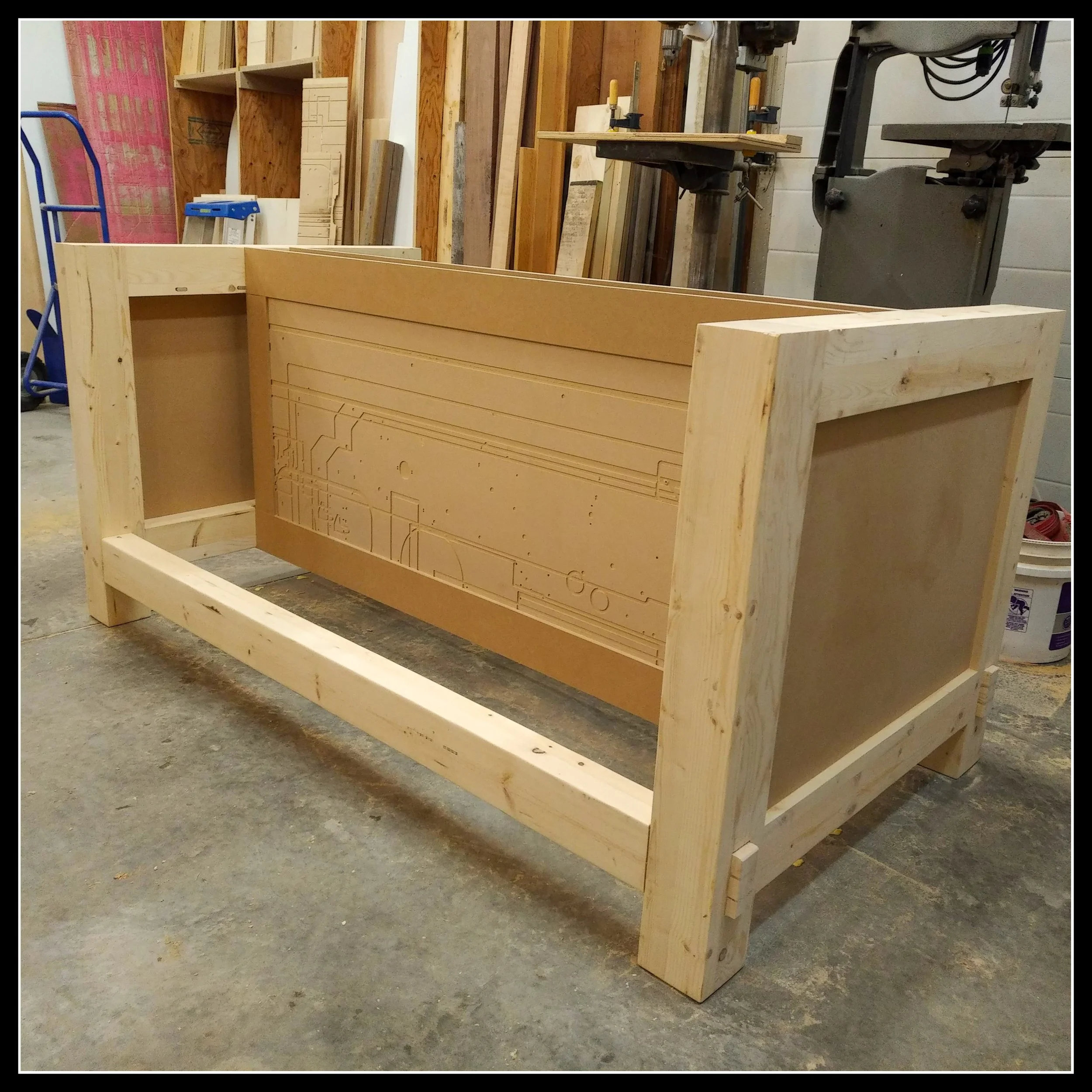
Spruce: Built for the Work
This workbench was built on spruce — cheap, plentiful, and tough enough to carry real weight. Spruce doesn’t pretend to be a furniture wood; it’s a structural wood, meant for frames, studs, and anything that needs to hold steady under load. In the shop, that character shows. The boards are light, straight, and easy to work, and once they’re fastened together they become something solid. Spruce is the quiet backbone of Canadian construction, and here it becomes the backbone of the bench that carries every project that follows.
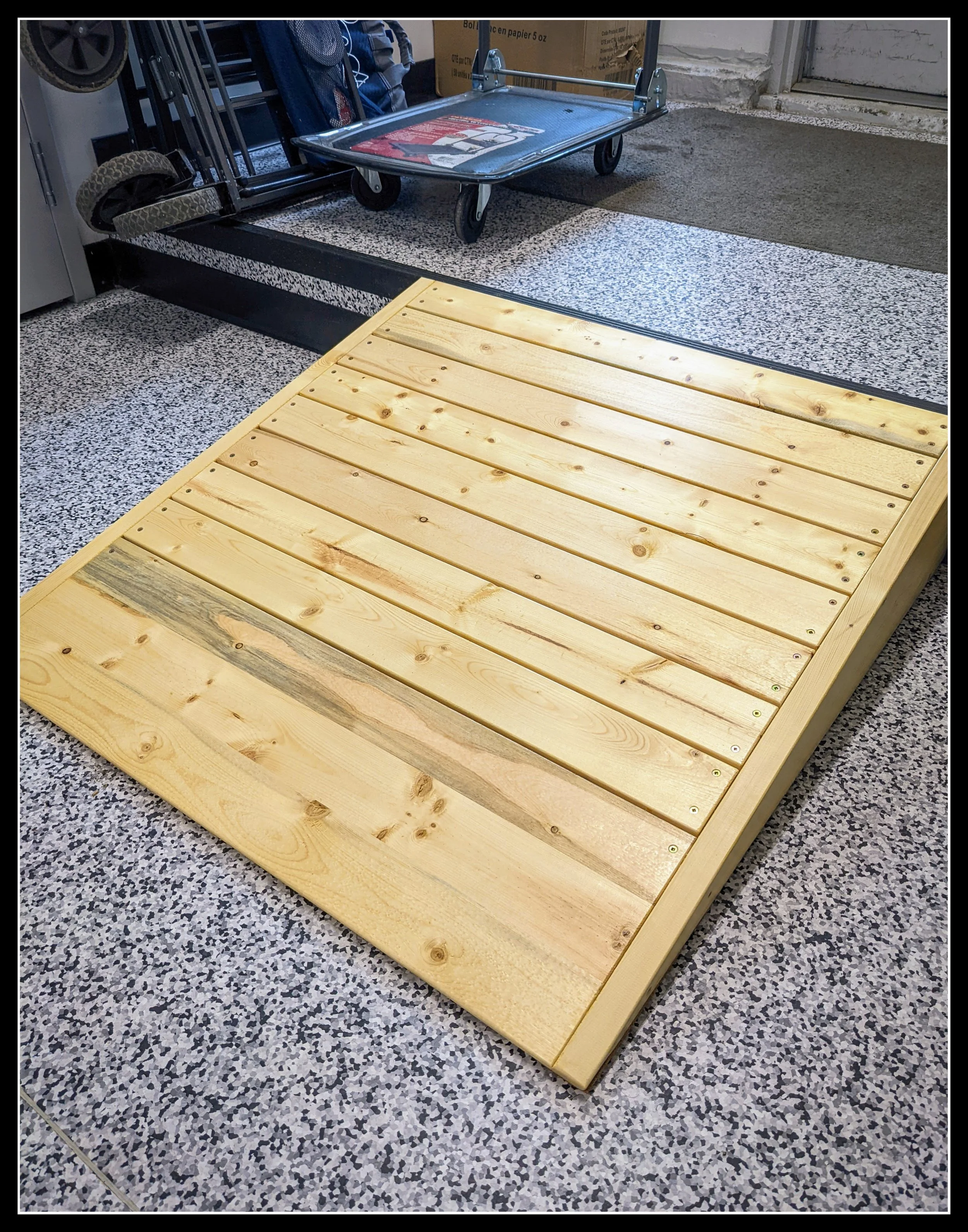
Spruce Doing Spruce Things
This ramp was built for a commercial kitchen — solid spruce, straight‑grained, and tough enough to take carts up and down a step all day without complaint. Spruce isn’t fancy, but it’s dependable. It’s the wood you reach for when you need something light, strong, and honest. This little ramp is exactly that: spruce doing spruce stuff, carrying weight without ever making a fuss.
Where every species, every board, and every lesson in wood science comes together — a place to explore the materials that shape our craft.
SHARE
The Wood Archive — All the wood Stories in One Place
For the living side of woodworking — the stories shaped by walnut, oak, maple, cherry, elm, cedar, and poplar — head to the Wood Archive.
If you’d like to hear from me only when something big is happening — a launch, a milestone, or a major project — you can join the mailing list below.
Written by David Flather, Red Seal cabinetmaker and founder of Knotty Dave’s Fine Woodworking — a Manitoba shop rooted in heritage restoration, storytelling, and real craft.
All photos shot by David Flather — in the shop, on the road, and in the places where craft and story meet.
Related rambles:
The Mistake Every New Woodworker Makes: Understanding Wood Movement Before It Ruins Your Project
Ash Trees: Green, White, Black, and the Emerald Ash Borer Threat
Walnut: The Truth Behind North America’s Most Famous Hardwood
Poplar: The Paint‑Grade Hardwood That Keeps the Shop Moving
The Workshop Library
If you enjoyed this story, there’s lots more like it inside The Workshop Library — and it’s free to explore.
Wood Archive — species, grain, working properties, and real‑world craft notes
Behind the Grain — the deeper stories inside wood, craft, and heritage
The Working Side of the Craft — tools, shop life, workflow, and the realities of making
Digital to Sawdust — Design Studio — geometry, proportion, visual flow, and design thinking
The Stories of the Shop — the personal side of craft, the shop’s history, and the quiet moments that shape the work
House & Hearth — heritage home restoration, the hearth room, winter culture, and the lived‑in side of craft
I’m just one man with a shop, building this archive one story at a time. If you’d like to follow the journey as it unfolds, explore The Workshop Library — new stories every week.
