

White oak
Quick Answer: What makes white oak so durable?
White oak is one of the most durable hardwoods in North America — built from tight growth rings, tyloses that seal the pores, and tannins that protect the wood from insects, fungi, and decay. These traits make white oak water‑resistant, rot‑resistant, and strong enough for barrels, boats, floors, furniture, and anything meant to last
tyloses seal pores and block water
tannins resist insects and fungi
tight rings from slow growth
stable, dense, long‑lived
ideal for barrels, boats, floors, furniture
White Oak — Strength, Memory, and the Wood Built to Last
White oak shows its character in the details — the tight grain, the dependable stability, and the quiet way it carries strength without needing to announce it. And when it’s quarter‑sawn, the wood reveals something only white oak can offer: ray fleck. Those bright medullary rays shimmer across the surface like threads of light, a natural fingerprint formed by the tree’s sideways water‑moving anatomy.
Ray fleck is more than decoration. It’s proof of the tree’s structure — dense, slow‑grown, and built to endure. Quarter‑sawing tightens the grain, increases stability, and exposes the rays that generations of builders recognized instantly. It’s the look that made white oak a heritage wood: calm, strong, and unmistakably itself.
BY THE END OF THIS STORY
You’ll understand white oak as a slow‑grown hardwood shaped by tyloses, tannins, and tight rings; why it resists water, decay, insects, and time; how its anatomy makes barrels possible; why it dries slowly and machines hard; and why generations trusted it for furniture, floors, trim, and anything meant to last. You’ll also see how white oak’s heritage, chemistry, and grain make it one of the most valuable hardwoods in North America.
Estimated read time: 12 minutes
White Oak vs Other Hardwoods — Quick Comparison
White Oak — sealed pores, decay‑resistant, stable
Red Oak — open pores, not water‑resistant
Maple — hard, smooth, less decay resistance
Walnut — softer, beautiful grain, not as durable
Ash — springy, impact‑absorbing, less decay resistance
White Oak — Fast Summary
This story explores why white oak is one of North America’s most durable hardwoods — from tyloses that seal its pores to tannins that protect it from insects and fungi. It explains how slow growth creates tight rings and stability, why white oak excels in barrels, boats, floors, and furniture, and how its heritage, chemistry, and grain made it the wood generations trusted for anything meant to last.
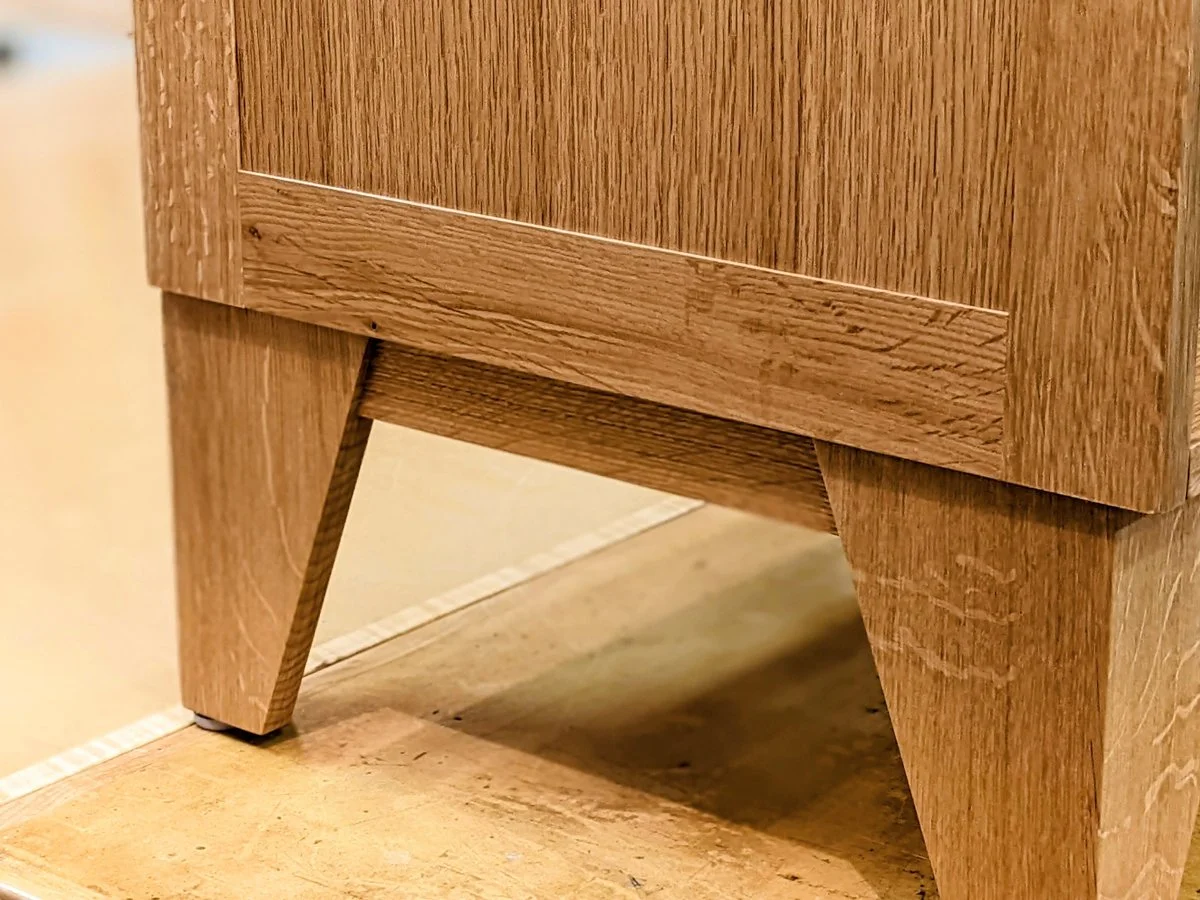
White Oak — Built to Hold a Lifetime
White oak shows its honesty in the details — the tight grain, the quiet shimmer, the way a leg meets a rail without needing anything more than good joinery and a steady hand. This cabinet carries the same traits the tree evolved over centuries: strength, stability, and a kind of dependable calm. A clear finish doesn’t dress it up; it reveals what the wood already is. This is the oak my grandparents trusted — the oak that made furniture feel like it would outlive the people who built it.
The Weight of Oak in My Family
White oak is strength, memory, and proof — a tree that survived everything nature threw at it, and a wood that carried that survival into the hands of the people who built with it.
I don’t know where my love of white oak comes from, but I’m almost certain it’s inherited. My grandparents used the word oak the way some people use the word royalty. When something was made of oak, it carried weight. It meant it would survive.
My Grandma Townend had a hard life — real hardship, the kind that leaves marks — but she never let it take her spirit. She hunted thrift shops and garage sales the way some people hunt treasure, and often I was right beside her. If she spotted a piece of oak furniture, she’d lean down to me and whisper, “See this old table, David?” Quiet, so the seller couldn’t hear. “This table is solid oak. And it’s old. That’s a quality table.”
She said it like oak was all that mattered. And to her, it was.
“That’s when they made tables that last,” she’d conclude, before turning to the seller and pointing out every flaw — the wobble, the scratches, the loose joints — working the price down with a straight face and a little mischief in her eyes. She always got the deal. That was my grandma.
And of course she was right. It was better. It was oak. It came from a world before particle board, before shortcuts, before everything was disposable. Proper joinery. Real wood. White oak that had already lived a long life and still had another century left in it.
She was teaching me the woodworking world when I was ten years old, without ever knowing she was doing it. Those memories stuck. They shaped me. And I miss her more than I ever expected to.
But there’s something worth noting here — the weight behind the word oak for her generation. She grew up in a world where white oak wasn’t rare or exotic. It was simply the wood the world was made from. In Manitoba, if something was oak, it was white oak. They didn’t need to specify the species. They just called it oak because that’s what builders used.
White Oak in the Places Built to Last
She would walk into church and the doors were oak, the trim was oak, the pews were oak, the floors were oak. The bank was the same. The train station. Government buildings. Schools. Everywhere she went, the places built to last were built with oak. In her own house the floors were white oak. She saw it hold up under decades of use, weather, boots, hands, and time. Oak didn’t just have a reputation — it had proof.
Then the world shifted. Particle board arrived. Veneers got thinner. Joinery got weaker. Everything got cheaper and faster. And yes, it worked — but to her, it wasn’t the same. She missed the weight of real oak, the honesty of it, the way it felt like a promise. That’s what I heard in her voice all those years ago, even if I didn’t understand it at the time. It took me years to realize she wasn’t just talking about furniture. She was talking about a world that valued things built to last.
Why White Oak Was the Wood of Quality
White oak was the definition of quality wood — then and now. It resists decay better than any other hardwood, it stays dimensionally stable, and it carries a strength and density you can feel the moment you lift a board. It has a quiet look, a subtle colour that warms with time, but when it’s quarter‑cut it puts on a show with medullary rays that shimmer like silk. There’s a lot to unpack with white oak, and the best place to begin is with the tree itself.
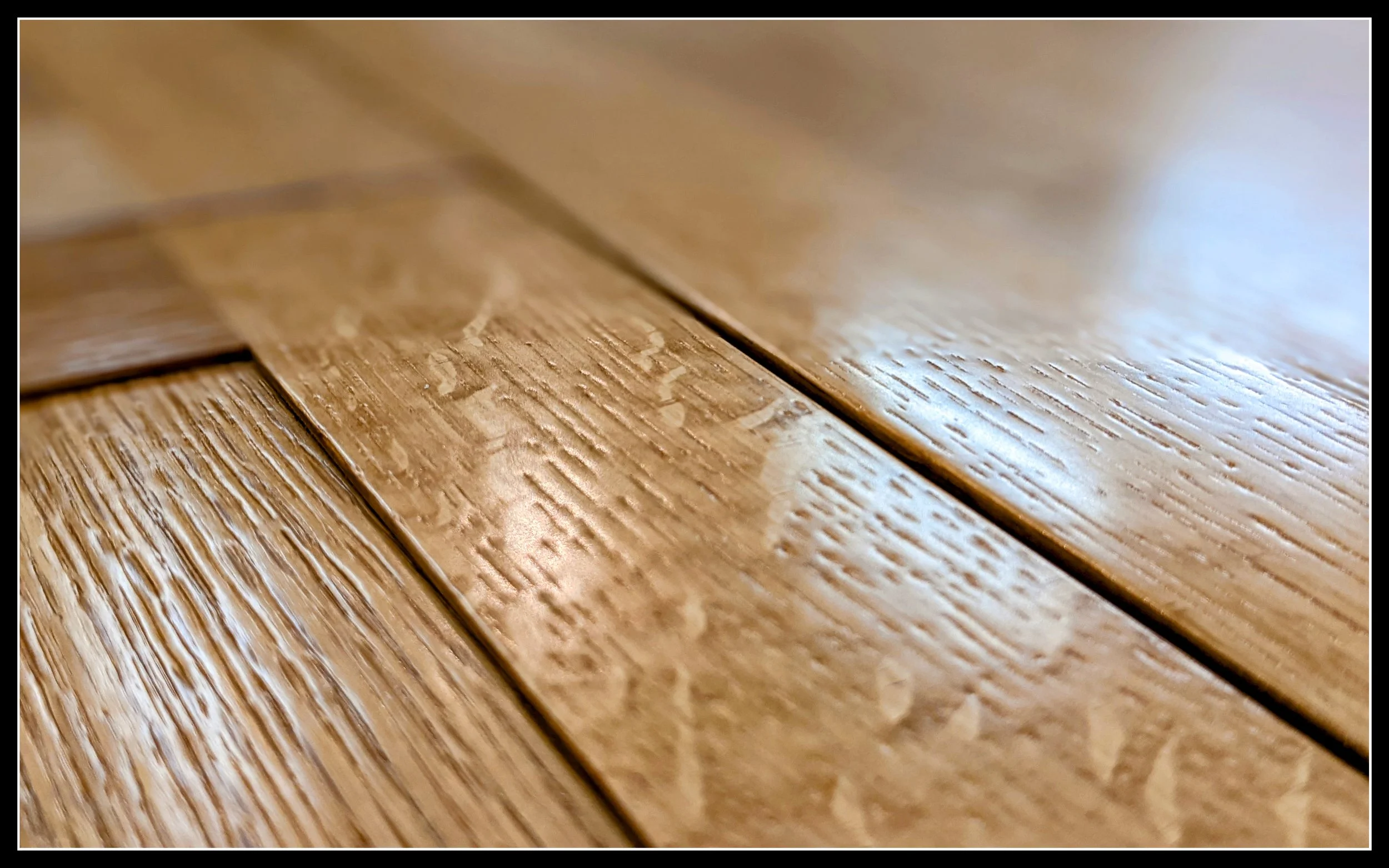
White Oak — Strength You Can See
White oak has a way of showing its character even in a simple cabinet door. The tight grain, the quiet shimmer, the way the light moves across the surface — it’s all proof of the tree it came from. Slow growth, dense rings, tyloses, tannins, and a lifetime of weather shape this wood long before it ever reaches the shop. A clear finish doesn’t hide anything; it lets the oak speak for itself. This is the kind of material generations trusted for the things meant to last.
American White Oak — Built for Survival
American white oak evolved to resist decay and insect damage in a world that demanded toughness. It grew in river valleys that flooded, yet still endured drought and fire. It lived in insect‑rich forests with fungi, beetles, and critters all around. To survive that environment, the tree developed two remarkable defences.
1. Tyloses — the evolutionary superpower
White oak forms tiny balloon‑like structures called tyloses that plug the pores of the wood. This does two things at once:
In a flood, the wood becomes watertight.
Water can’t move freely through the fibres.It blocks fungal invasion.
Fungi need open air passages to spread. White oak closes the door.
You can see this in the wood itself. White oak has a slightly waxy look and feel — not from actual wax, but from the tyloses filling the pores. It’s the reason white oak makes boats and barrels. The wood seals incredibly well. And because it’s tough as oak, barrels could be rolled, dropped, and hauled without failing.
2. Tannins — the chemical defence system
The second defence is chemical. White oak is loaded with tannins — from acorn to root, but especially concentrated in the heartwood. Tannins act as:
antifungal agents
antibacterial agents
insect deterrents
natural wound sealants
They preserve the wood from the inside out.
3. Slow growth — the structural advantage
White oak grows slowly, laying down tight growth rings. That density supports its entire defence system:
fewer entry points for decay
stronger heartwood
better moisture control
longer lifespan
The result
This combination — tyloses, tannins, and slow, dense growth — is why white oak is one of the toughest, most decay‑resistant hardwoods in North America. Its durability isn’t a coincidence. It’s evolution written directly into the grain.
Why White Oak Is So Valuable Today
How These Traits Make White Oak So Valuable Today
White oak’s value in the modern world comes directly from the traits it evolved over thousands of years. Its water resistance, decay resistance, and tight growth rings make it strong, stable, and dependable — the kind of wood you trust when failure isn’t an option.
White Oak in Barrels, Boats, and Leather
We use white oak for barrels in whiskey and wine not just because the wood holds liquid, but because the tannins slowly leach into the spirit as it ages, adding colour, structure, and flavour. The barrel isn’t just a container — it’s an ingredient. The tyloses keep the barrel watertight, and the tannins shape the drink.
Those same tannins once powered an entire industry. Leather tanning — the word tanning literally comes from tannin — depended on oak bark. The tannins softened the hide, preserved it, and protected it from decay and insects. Even today, high‑end vegetable‑tanned leather still uses oak for its durability and warm, natural colour.
White oak’s chemistry and structure make it valuable in ways that go far beyond woodworking. It’s a wood that works hard in the world — sealing, preserving, flavouring, protecting — because the tree had to do all those things to survive.
Drying White Oak — Slow, Difficult, and High‑Risk
White oak’s slow growth means the tree is often 100 to 120 years old before it’s harvested. Its tyloses block water movement inside the wood fibres — perfect for barrels and boats, but it’s a real challenge in the kiln. White oak takes time to dry. Rush the schedule and the boards can crack or honeycomb, destroying the wood. I’ll write a separate Ramble about drying defects, because they’re not exclusive to white oak, but white oak is at higher risk due to its density, tannins, and closed‑pore structure. That same density is also hard on blades and knives. All of these factors — slow growth, difficult drying, and demanding machining — are why white oak commands a premium price.
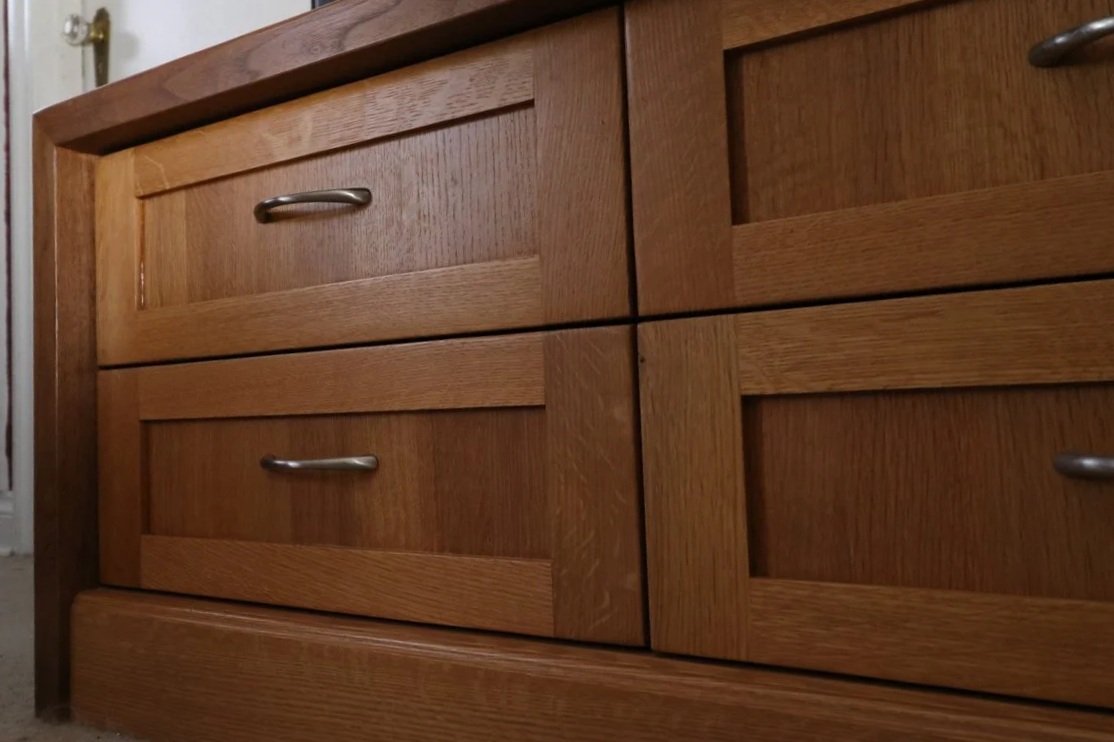
White Oak & Walnut — Honest Contrast
White oak carries a quiet strength, even under a light stain. The grain stays calm, the colour stays warm, and the wood shows exactly what it is. Pair it with a walnut countertop and the contrast becomes the point — pale oak holding the base, dark walnut anchoring the top. It’s a combination that feels old and modern at the same time, the kind of pairing builders have trusted for generations. Clearcoat doesn’t hide anything here; it lets both woods speak in their own voices.
Quarter‑Sawn White Oak — Rays, Stability, and Heritage
Quarter‑sawn white oak is famous for its medullary rays — the shimmering flecks that appear when the log is cut at a right angle to the growth rings. This cut defined Arts and Crafts furniture and remains one of the most stable, beautiful ways to use white oak. But quarter‑sawing is a universal concept across all species, so I’ll cover it in a separate Ramble rather than inside the White Oak page.
White oak got its name from the tree, not the lumber. The bark is pale and almost silvery compared to other oaks, and early foresters simply called it what it looked like — the white oak.
My old grandma didn’t know any of this. For her, oak was the wood that held the world together — strong, honest, dependable. No other wood carried that kind of promise. Just oak. And that, to me, is what white oak has always been. Thanks, Grandma.
Deep Scraped White Oak — Grain, Strength, and Heritage
White oak already carries its own weight — slow growth, tight grain, tyloses, tannins, and a lifetime of weather written directly into the wood. These Deep Scraped Collection finishes show what happens when you take that natural strength and push it through texture, stain, glaze, and 2K poly. Oak’s grain opens beautifully under brushing, its rays catch light even when scraped deep, and its density holds every layer without losing clarity. White oak has always been the wood built to last, and these finishes prove it can carry modern texture just as confidently as it carried the furniture of generations.
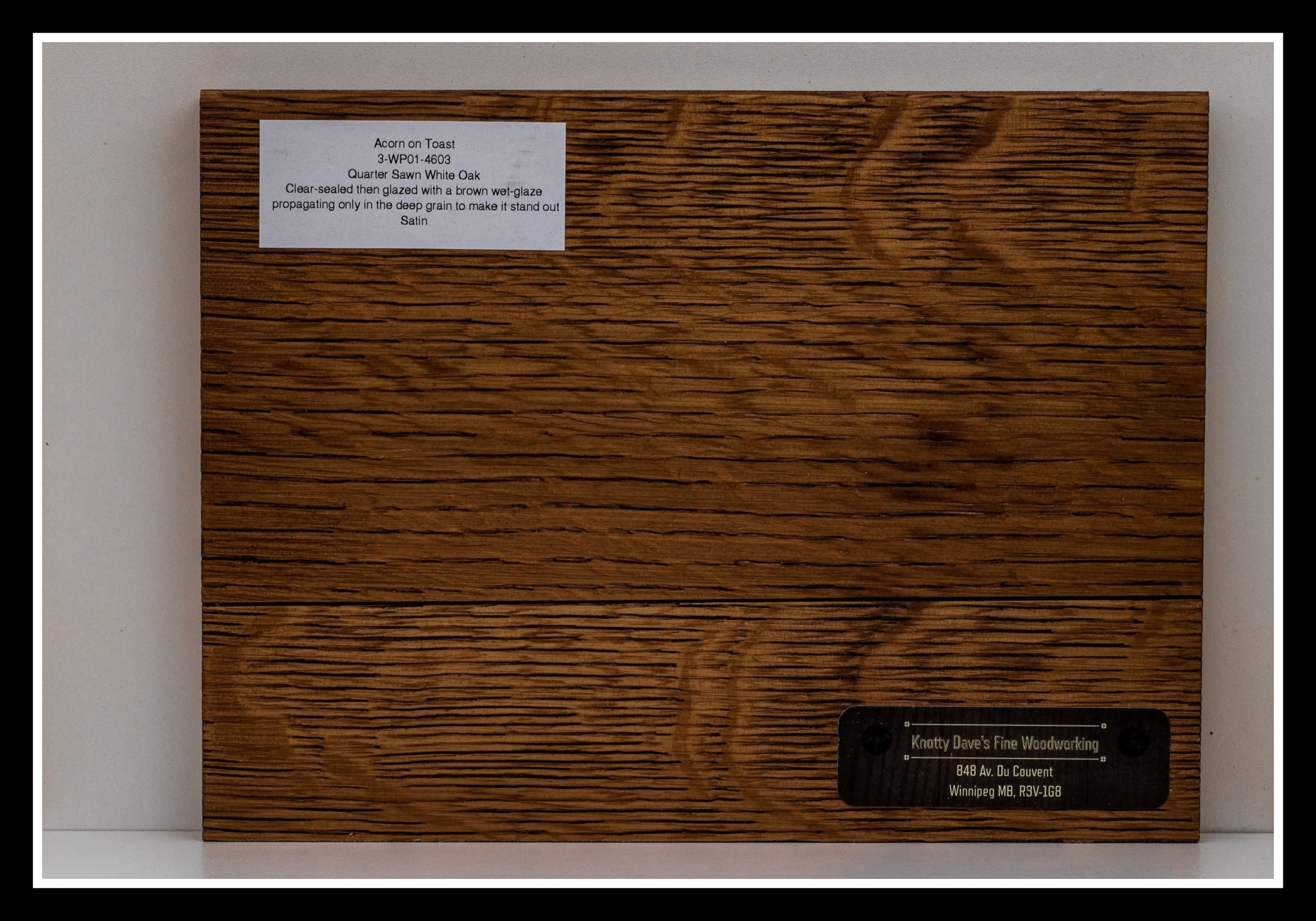
Acorn on Toast — Deep Scraped Texture
Acorn on Toast is built in layers — a light stain to warm the white oak, a clear coat to lock the colour, and a wet glaze that settles only into the brushed grain. The surface is scraped and textured so the oak shows its depth, letting the glaze ride the low spots while the high points stay clean. Quarter‑sawn rays catch the light, the satin topcoat softens the sheen, and the whole finish feels like something that’s already lived a little. This is white oak with maximum texture and a finish that earns its place.
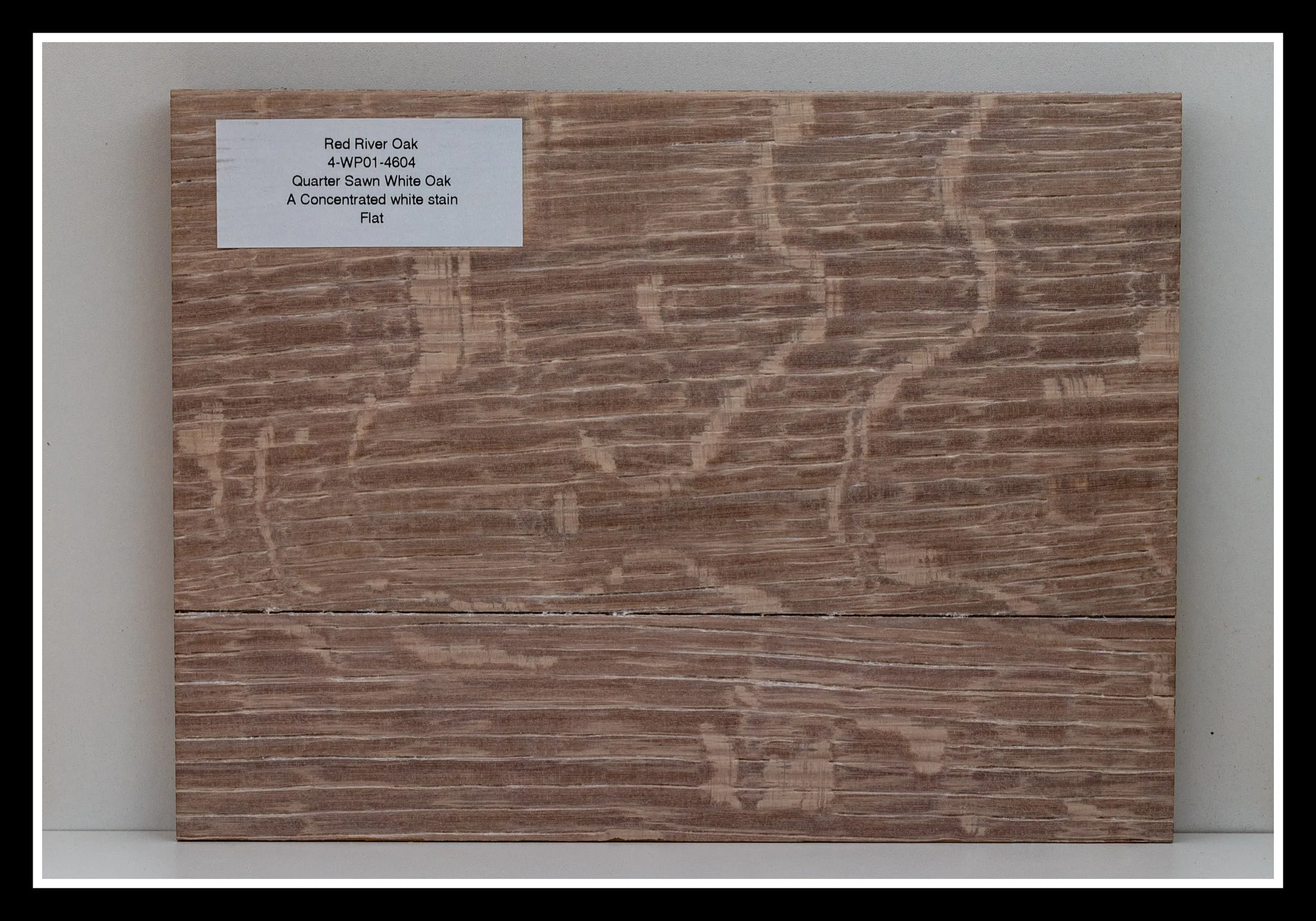
Red River Oak — Layered White Stain & Deep Texture
Red River Oak is the lighter side of the Deep Scraped Collection — a layered finish built on quarter‑sawn white oak that’s brushed hard to open the grain. A concentrated white stain settles into the texture, a clear coat locks the colour, and a soft glaze adds depth without muddying the tone. White oak takes stain exceptionally well, and this finish shows it: bright, textured, and grounded in the natural rays of the wood. It’s a clean, modern take on a heritage material.
White Oak at a Glance
Strength & stability
— dense, tight‑grained, and built to endure
Natural defences
— tyloses + tannins make it water‑resistant and decay‑resistant
Slow growth
— tight rings, long lifespan, exceptional durability
Takes finish well
— stains evenly, glazes beautifully, quarter‑sawn rays shimmer
Heritage wood
— the material generations trusted for the things meant to last
Where every species, every board, and every lesson in wood science comes together — a place to explore the materials that shape our craft.
SHARE
The Wood Archive — All the wood Stories in One Place
For the living side of woodworking — the stories shaped by walnut, oak, maple, cherry, elm, cedar, and poplar — head to the Wood Archive.
If you’d like to hear from me only when something big is happening — a launch, a milestone, or a major project — you can join the mailing list below.
Written by David Flather, Red Seal cabinetmaker and founder of Knotty Dave’s Fine Woodworking — a Manitoba shop rooted in heritage restoration, storytelling, and real craft.
All photos shot by David Flather — in the shop, on the road, and in the places where craft and story meet.
Related Stories:
Douglas Fir: The Wood That Built a Generation — Memory, Craft, and Grandfather’s Shop
Hickory Wood: Strength, Shock Resistance, and Why It’s Tougher Than Oak or Ash
The Elm Trees of North America: Canopy, Loss, and the Craft That Remains
Wood Doesn’t Lie: Understanding Grain, Movement, and the Truth Inside Every Board
The Workshop Library
If you enjoyed this story, there’s lots more like it inside The Workshop Library — and it’s free to explore.
Wood Archive — species, grain, working properties, and real‑world craft notes
Behind the Grain — the deeper stories inside wood, craft, and heritage
The Working Side of the Craft — tools, shop life, workflow, and the realities of making
Digital to Sawdust — Design Studio — geometry, proportion, visual flow, and design thinking
The Stories of the Shop — the personal side of craft, the shop’s history, and the quiet moments that shape the work
House & Hearth — heritage home restoration, the hearth room, winter culture, and the lived‑in side of craft
I’m just one man with a shop, building this archive one story at a time. If you’d like to follow the journey as it unfolds, explore The Workshop Library — new stories every week.
