

Oak vs Oak
Quick Answer: What’s the difference between red oak and white oak?
Red oak is an open‑pored hardwood that stains fast, machines easily, and shows grain boldly. White oak is a closed‑pored hardwood with tyloses that make it water‑tight, rot‑resistant, and ideal for barrels, boats, and long‑lasting floors. Red oak is lighter, more porous, and more common in builder‑grade work; white oak is denser, slower‑grown, and used for premium furniture and heritage architecture.
Red oak = open pores
Red oak = fast machining
Red oak = builder‑grade 70s–90s
Red oak = cheaper, faster to dry
White oak = tyloses (plugged pores, water‑tight)
White oak = slow, dense, scorch‑prone
White oak = heritage 1900s
White oak = expensive, slow to dry
Oak vs Oak — Red Oak, White Oak, and the Eras They Built
Around here, “oak” has carried different meanings depending on the decade. From white oak in early heritage homes to the red oak kitchens of the 70s through the 90s, each era left its mark. This ramble sorts out the two oaks and the stories they carry.
BY THE END OF THIS STORY
You’ll understand the real differences between red oak and white oak — their anatomy, grain, pores, tyloses, tannins, machining behaviour, and why each species shaped a different era of homes. You’ll see how red oak became the builder‑grade wood of the 70s–90s, how white oak built the early 1900s, why their reputations diverged, and how both woods still carry the stories of the decades that used them.
Estimated read time: 12 Minutes
Fast Summary
This story explains the real differences between red oak and white oak — from pores, tyloses, tannins, and grain structure to machining behaviour, drying time, cost, and the eras each species defined. It shows how white oak built the early 1900s with water‑tight, rot‑resistant strength, and how red oak shaped the builder‑grade boom of the 70s–90s with fast machining and open grain. You’ll see how anatomy, history, and supply chain shaped their reputations, and why “oak” has meant different things in Prairie homes for more than a century.
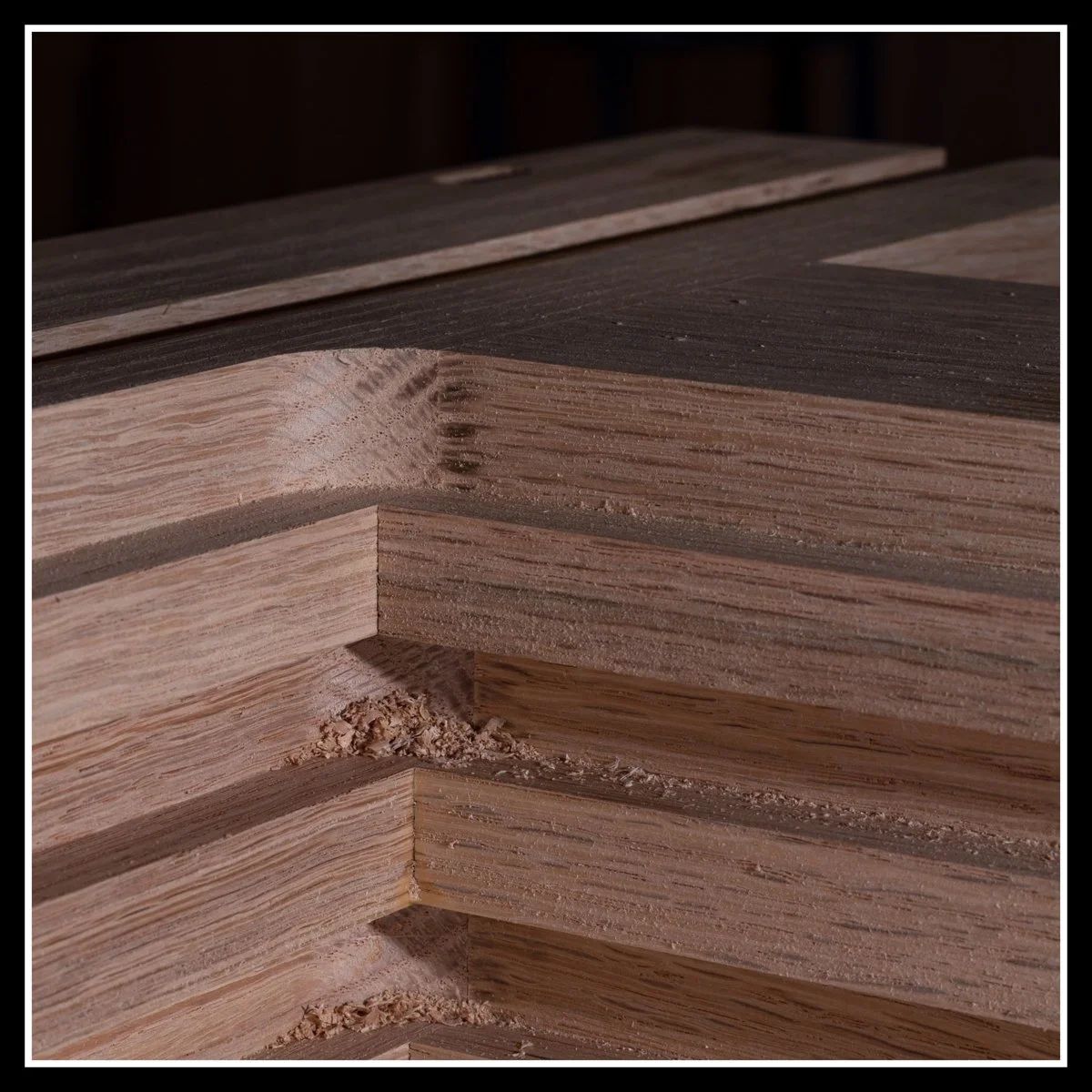
Red Oak — Fresh Off the Mill
Clean cuts, sharp edges, and that open‑pored grain you only get from red oak. These custom frames were milled from solid stock, still carrying the warmth and colour of fresh red oak before finish. Honest wood, shaped right from the start.
Oak vs Oak
Back in the late 1970s, when I was seven years old, my parents bought a new‑build house — the kind where the grass was still mud and the driveway wasn’t quite finished. Not that I cared. At that age the whole world was just a place to explore. For my parents, with my baby sister only a year old, this was the space they had saved and saved for until somehow they managed it. And in that house was a builder‑grade kitchen made from red oak: a mix of solid wood and thin veneers. The colour was a flat, dark brown. The cabinet doors slammed and rattled. The finish was thin and had no depth. I don’t know how I became a cabinetmaker looking at that as a kid, but here we are.
That kitchen wasn’t unique. Around here, a lot of homes from that era had the same red oak look — flat‑cut, mass‑produced, and finished just enough to get it out the door. At least the house was new. People my age still cringe when red oak is suggested as the wood of choice. Those old kitchens are a big part of the reason why. I still feel this way myself sometimes.
But “oak” is a broad term. There is white oak, and there is red oak. These two are the backbone of the oak lumber world, and what “oak” meant depended entirely on the era — especially in the Red River Valley and the Prairie provinces. Other regions too, I’m sure. Oak meant different things at different times.
Before getting into styles and timelines, it’s worth unpacking oak a little and understanding the difference between red oak and white oak.
I have full stories about white oak and red oak that go into detail. Below is just a summary of those stories.
Red Oak
Red oak is the wood most of us grew up with — the everyday oak, the one in the builder kitchens, the one you learn on. It’s open‑pored, eager, and honest. It takes stain fast, machines fast, and shows every mistake if you rush it. It’s not mythic like white oak, and it’s not rare. It’s the wood that teaches you grain direction, tear‑out, sanding, and patience. It’s common, familiar, and sometimes unfairly judged because of the era it was used in. But for a lot of us, red oak is where the craft began.
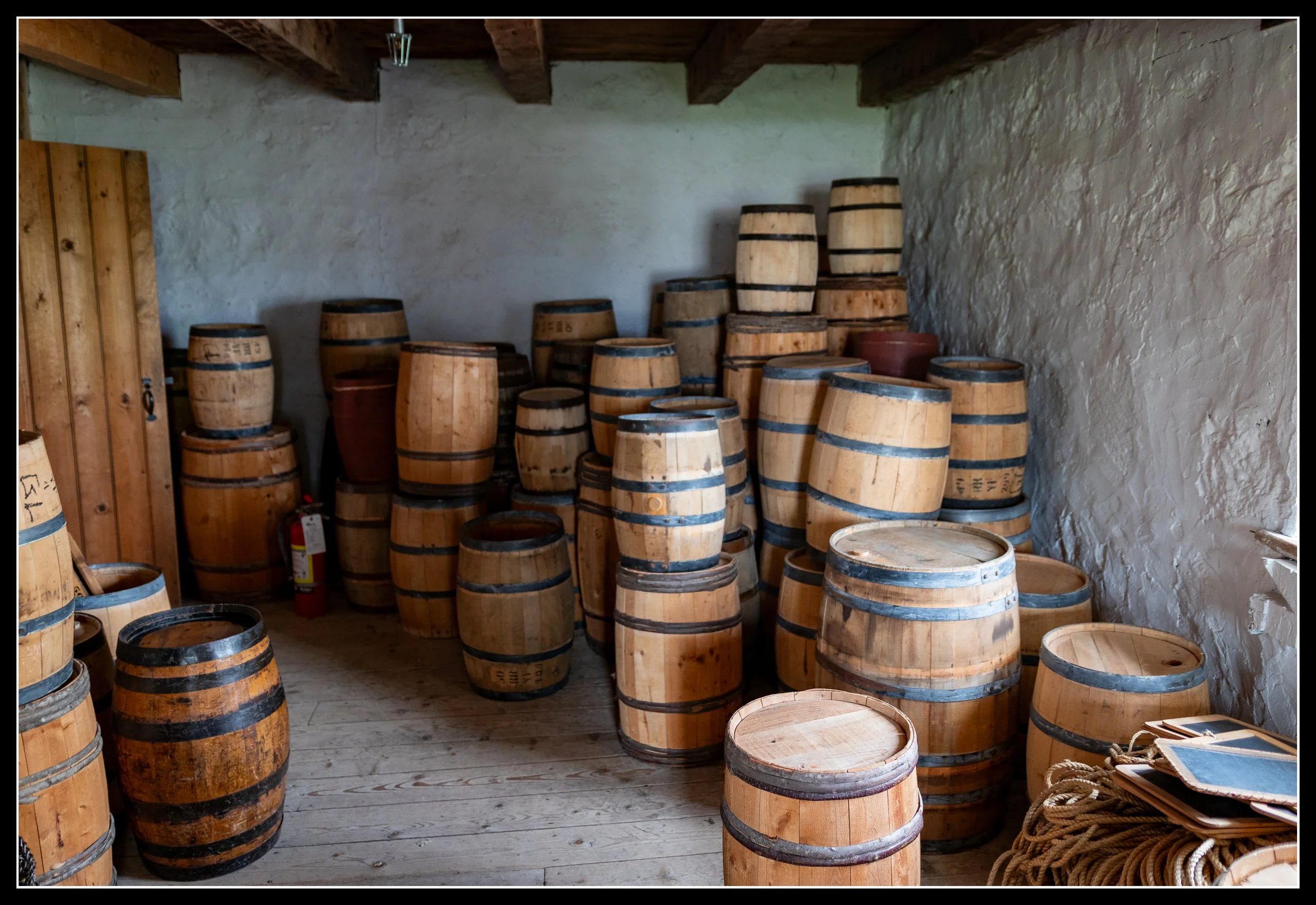
White Oak Barrels
Those barrels only work because they’re white oak. The wood’s pores are plugged tight, the grain is dense, and the staves swell into a seal that holds liquid like stone. Red oak can’t do this — only white oak carries the anatomy that makes a barrel possible.
White Oak
White oak is the survivor — the oak that grew slow, dense, and deliberate. Its pores are plugged with tyloses, making the wood naturally water‑tight, rot‑resistant, and strong enough for barrels, boats, and century‑old floors that still sit straight today. It carries tannins that act like its own built‑in armour, and a calm, even grain that feels older and more grounded than red oak. It’s hard on blades and knives, and when cutters dull and heat up, white oak will scorch. Technique matters here: sharp tools, the right RPM, and steady feed keep the burn away. White oak rewards that patience with a finish that looks like it’s been polished by time. It’s strength, memory, and proof — a tree that survived everything nature threw at it, and a wood that carries that survival into the hands of the people who build with it.
Names Follow the Tree
White oak is a tree species — Quercus alba — and the wood from that tree is called white oak. Bur oak is a different species — Quercus macrocarpa — and the wood from that tree is called bur oak. They’re cousins in the white oak group and share some traits, but they are not the same tree and not the same wood. Don’t mix them up. If the tree was a bur oak, the wood is bur oak. If the tree was a white oak, the wood is white oak. The name follows the species. Same rule for red oak — Quercus rubra — the tree is red oak, and the wood is red oak. This seems like somthing that goes without saying but really, it needs to be said.
Oak Through the Eras
From the early 1900s up until the Second World War, white oak was king. In the old apartments and houses around here, if the trim or floors were oak, they were almost always white oak — and almost always rift sawn or quarter sawn in the visible rooms. Flat sawn boards showed up only in closets, pantries, and the hidden angles nobody cared about. That was the standard. That was the good stuff. White oak was the hardwood of choice, and it showed.
(If those sawing terms are unfamiliar, don’t worry — I’m writing a full piece on how boards are cut and why it matters. It’s a universal woodworking topic, and it deserves its own room.)
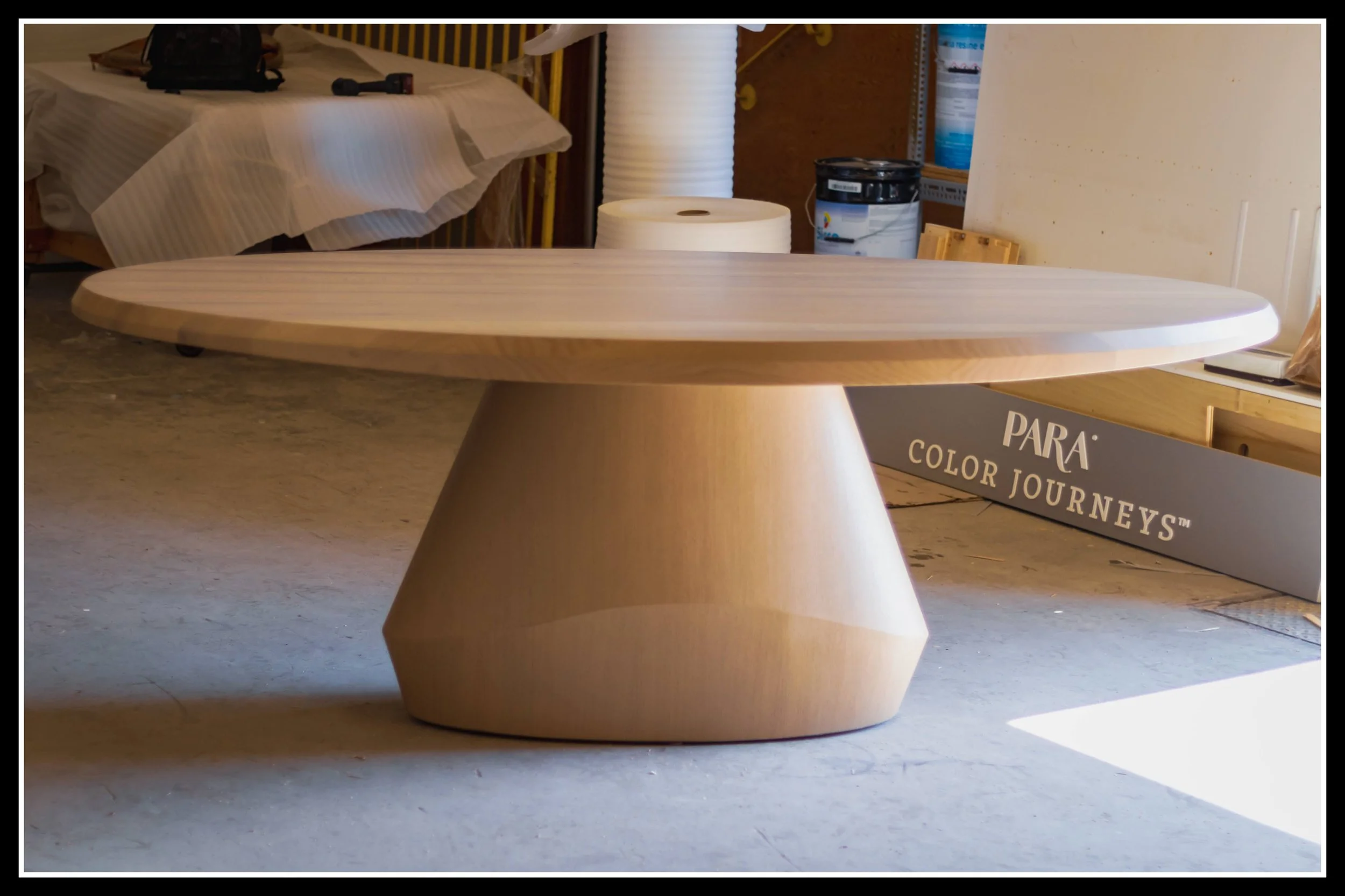
Red Oak — Custom Work Done Right
This table shows what red oak can do when it’s treated properly. A solid red oak top for strength, a veneered red oak base for clean lines and stability — the kind of build that proves the wood was never the problem. Good red oak still stands tall.
Then something changed.
After the war, Douglas fir started showing up more often in millwork and interior trim. White oak slowly slipped out of everyday use. And by the time wall‑to‑wall carpet came into fashion — covering hardwood floors and painting over trim — the old white oak era was basically buried. Literally.
In the 1970s, kitchens changed. Before that, cabinets were built into the house by carpenters — part of the structure, fitted to the walls, made from whatever the region supplied. But then factory‑made cabinets arrived. Modular boxes, face frames, and doors were built off‑site and installed as a complete unit. Early versions weren’t great, but they were fast, consistent, and cheap. And red oak fit that system perfectly. It machined easily, stained quickly, and worked well with mass‑production tooling. That shift — from built‑in to factory‑made — is what opened the door for red oak to take over.
Once factory cabinets became the norm, red oak filled the vacuum. Through the 70s, and especially the 80s and 90s, it dominated. It was cheaper, easier to source, and fit the builder‑grade supply chain. Most of the red oak in homes from that era was flat cut, veneered on thin 1/4" panels, and finished with whatever clear coat got it out the door. It was popular, but it didn’t age well. A generation grew up with those kitchens — the rattling doors, the orange tones, the thin finishes — and it left a mark. Red oak became “grandma’s kitchen.” Boring. Dated. Something to paint over.
Today, oak doesn’t carry the same reputation it once did. Good builders can make red oak look sharp again, and designers are starting to see it in a better light. White oak, meanwhile, has become the premium choice — but it comes with a price tag. Flat cut white oak is expensive enough; quarter sawn white oak is in a different league entirely. Veneers are limited, sheet goods are limited, and most of it is special order. Custom builders often have to lay up their own veneered panels — 3/8" or thicker — because the pre‑made options just aren’t there. Red oak has more sheet goods available, but even that depends on the cut and the supplier.
Why White Oak Costs More
White oak is more expensive for a few simple reasons, and they all stack. It grows slower, taking decades longer to reach harvest size. It’s harder to regenerate — white oak is fussy, while red oak reseeds so aggressively that foresters often have to cut it back. Then there’s the drying. White oak takes far longer in the kiln, especially in 8/4 thickness, and rushing the schedule risks internal defects like honeycombing or case hardening. Those defects will be covered in another story, but the short version is this: if the kiln isn’t run perfectly, the wood can be ruined from the inside out. That time, risk, and waste all add to the cost.
On top of that, white oak simply has less sheet‑good and veneer availability. Much of it is special order, and custom builders often have to lay up their own panels because the pre‑made options don’t exist — at least not in smaller markets like ours. Red oak doesn’t carry those same burdens. It grows faster, regenerates easily, dries quicker, and has a more forgiving supply chain. That difference shows up on the invoice.
Oak on the Prairies — A Timeline Written in Wood
That’s the real story of oak on the Prairies. White oak built the early 1900s — the trim, the floors, the rooms that still feel anchored to their era. Red oak built the 70s through the 90s — the factory kitchens, the builder‑grade boom, the look an entire generation grew up with. And today, both woods carry the weight of their eras. When you see oak in a house out here, you’re not just looking at grain. You’re looking at a timeline.
Grandma’s Kitchen — The Era, Not the Wood
In the end, there was grandma’s kitchen — and it was usually red oak. But that wasn’t the wood’s fault. That was the era. Builders were making cost‑cut choices to keep houses affordable, and factory‑made cabinets were still finding their footing. It could have been any species, but red oak took the hit. White oak had already built the early 1900s; red oak ended up carrying the 70s through the 90s. And today, oak is finally recovering from that old reputation because it deserved better all along. Poor old grandma just wanted a new house, a fresh start, something modern for her time. None of this was her fault either. It’s just the story of oak on the Prairies — each era leaving its mark on the wood that defined it.
Oak vs Oak — 5 Odd Little Facts
🌰 Acorn Timing
White oak acorns sprout the moment they hit the ground. Red oak acorns wait until spring — they’re procrastinators.
🐿 Squirrel Strategy
Squirrels eat white oak acorns right away. Red oak acorns? They bury those for later… way later, they will taste better.
🍁 Leaf Hang‑On Red oak
leaves cling to branches all winter like they’re not ready to leave. White oak drops early and moves on.
🔥 Campfire Personality
Red oak burns hot and fast. White oak burns slow and steady — the overnight log.
🦌 Forest Buffet
White oak feeds the forest first. Red oak feeds it last, when everything else is gone.
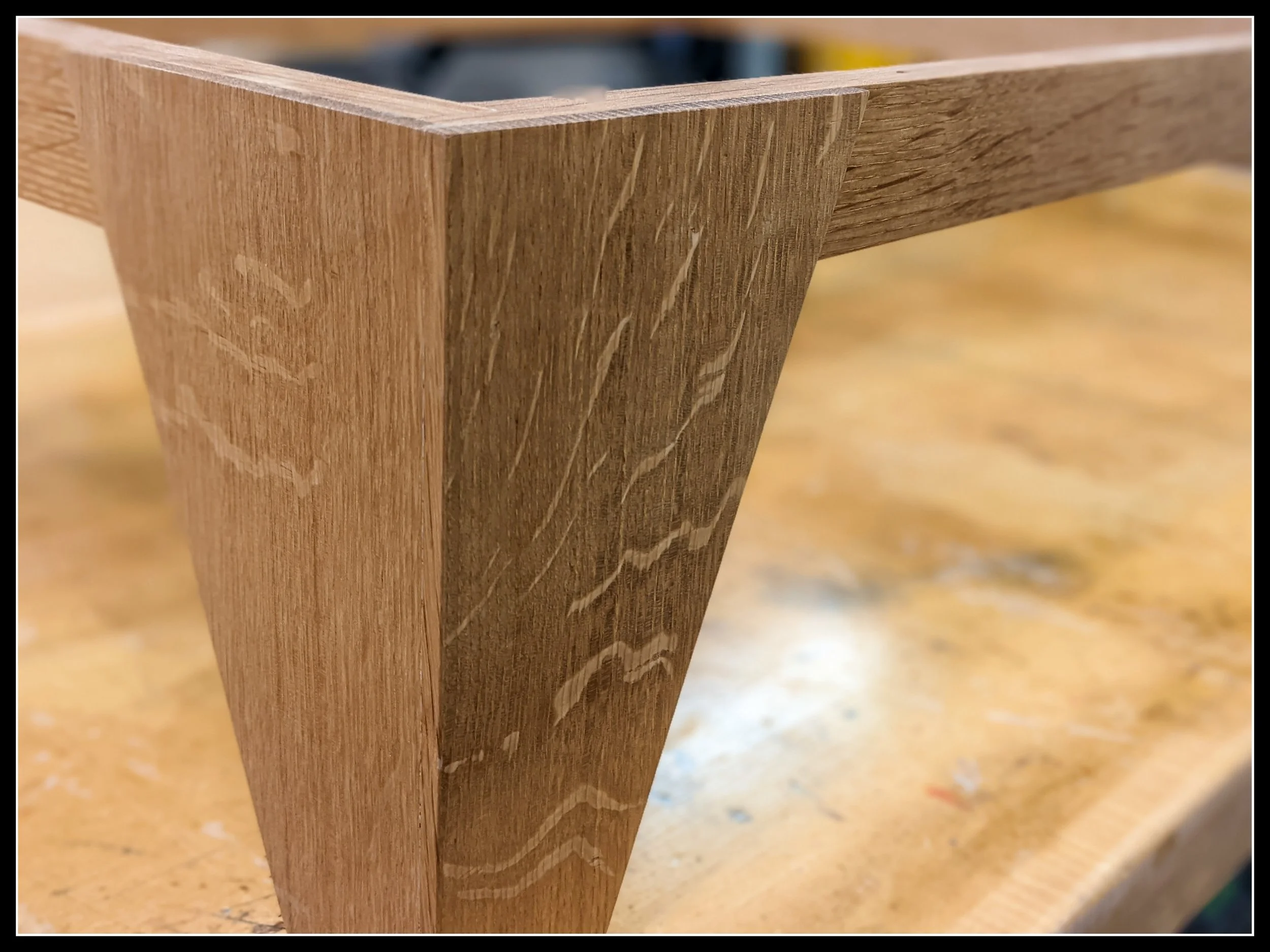
White Oak — Ray Fleck and Strength
Quartered white oak shows its identity right away. Those bright ray flecks, that tight grain, and the weight behind the cut — this plinth base is solid white oak, shaped clean and built to last. Red oak can’t make this pattern. Only white oak carries it.
Where every species, every board, and every lesson in wood science comes together — a place to explore the materials that shape our craft.
SHARE
The Wood Archive — All the wood Stories in One Place
For the living side of woodworking — the stories shaped by walnut, oak, maple, cherry, elm, cedar, and poplar — head to the Wood Archive.
If you’d like to hear from me only when something big is happening — a launch, a milestone, or a major project — you can join the mailing list below.
Written by David Flather, Red Seal cabinetmaker and founder of Knotty Dave’s Fine Woodworking — a Manitoba shop rooted in heritage restoration, storytelling, and real craft.
All photos shot by David Flather — in the shop, on the road, and in the places where craft and story meet.
Related Stories:
The Value of Wood in the Fur Trade: Winter Logging, River Transport, and York Boat Timber
The Elm Trees of North America: Canopy, Loss, and the Craft That Remains
Hard Maple: The Northern Sugar Maple Shaped by Freeze–Thaw and Tight Grain
The Workshop Library
If you enjoyed this story, there’s lots more like it inside The Workshop Library — and it’s free to explore.
Wood Archive — species, grain, working properties, and real‑world craft notes
Behind the Grain — the deeper stories inside wood, craft, and heritage
The Working Side of the Craft — tools, shop life, workflow, and the realities of making
Digital to Sawdust — Design Studio — geometry, proportion, visual flow, and design thinking
The Stories of the Shop — the personal side of craft, the shop’s history, and the quiet moments that shape the work
House & Hearth — heritage home restoration, the hearth room, winter culture, and the lived‑in side of craft
I’m just one man with a shop, building this archive one story at a time. If you’d like to follow the journey as it unfolds, explore The Workshop Library — new stories every week.
