

Walnut
Quick Answer: What is walnut wood?
Walnut is a strong, stable North American hardwood known for its dark heartwood, pale sapwood, smooth machining, and balanced strength. It contains natural extractives that resist decay, and its colour changes over time with UV exposure. Walnut is prized for furniture, cabinetry, and fine woodworking because it cuts cleanly, finishes beautifully, and stays dimensionally stable.
Dark heartwood from natural extractives
Pale sapwood because it’s still alive
Juglone suppresses nearby plants
Cuts cleanly with sharp tools
Fades in sunlight without UV protection
Strong but cooperative for furniture
Not rare — just good wood
Walnut — Good Wood, Honest Wood, No Hype Required
Walnut has a reputation bigger than the tree itself. People talk about it like it’s rare, exotic, or sacred, but in the shop it’s just wood — good wood, honest wood, and one of the most enjoyable hardwoods to work with. This Ramble is about the tree, the lumber, the hype, and the reality.
BY THE END OF THIS STORY
You’ll understand walnut as a tree shaped by sun, soil, and chemical defence, why its heartwood darkens and its sapwood stays pale, how juglone affects the forest around it, why walnut behaves so well in the shop, and how UV light changes its colour over time. You’ll also see why walnut’s reputation comes from the craft, not the hype — and why this hardwood is simply good wood when you’re working with it.
⏱️ Estimated Reading Time: 9 minutes
Walnut vs Other Hardwoods
Walnut vs Maple — walnut is softer, easier to machine
Walnut vs Oak — walnut is darker, less porous
Walnut vs Cherry — walnut stays cooler in tone
Walnut vs Birch — walnut is more predictable
Walnut — Fast Summary
Walnut is a strong, stable North American hardwood with dark heartwood, pale sapwood, and natural extractives that resist decay. It machines smoothly, behaves predictably, and finishes beautifully, but it fades in sunlight without UV protection. Walnut’s colour comes from heartwood chemistry, not juglone, and its defects — knots, sapwood, grain shifts — are simply the tree’s life written into the board. Cooperative, balanced, and quietly beautiful, walnut earns its reputation not from hype but from how well it works in the shop.
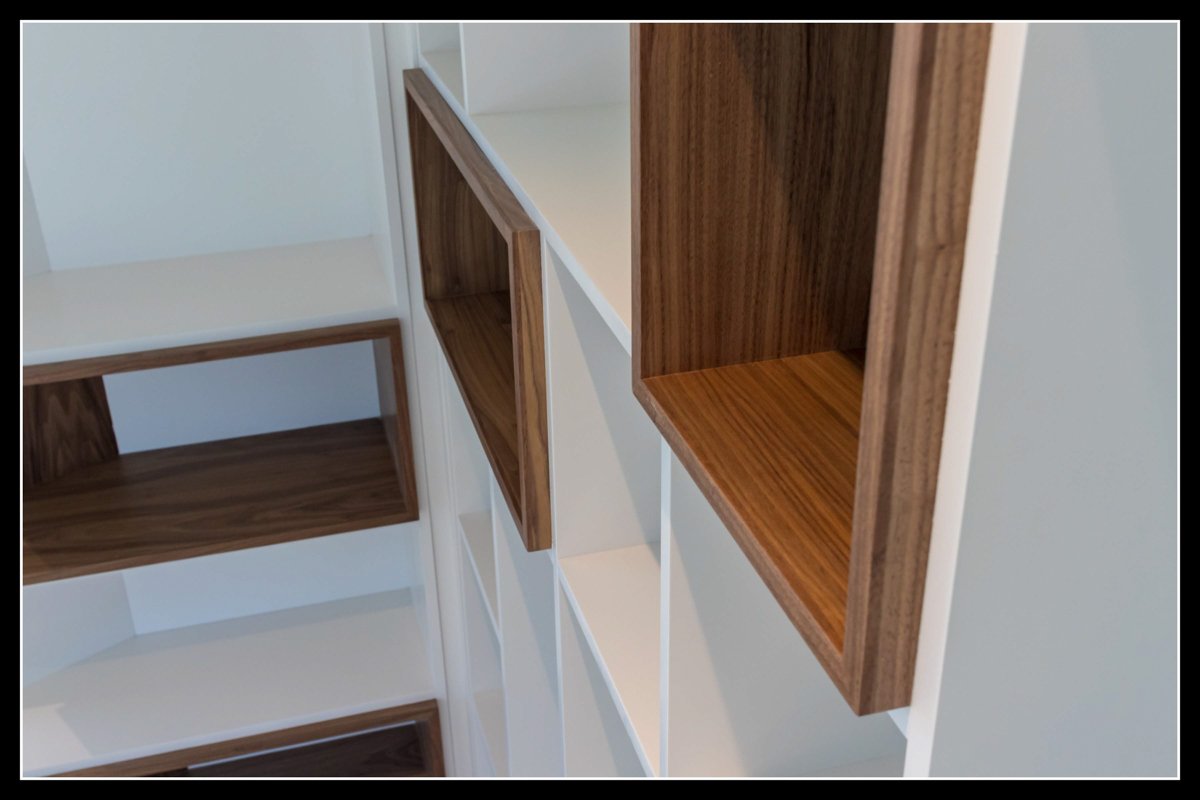
Walnut in a Modern Build
This shelving unit shows walnut in its clean, modern form — straight lines, sharp geometry, and grain that holds its own beside painted panels. Walnut doesn’t need ornament to look good; it just needs light, accuracy, and a purpose. Projects like this prove that walnut isn’t only for heirloom furniture or prestige pieces. It works just as well in contemporary builds, where the grain becomes part of the architecture instead of the spotlight.
Walnut Grades in the Shop
I’ve built a lot of projects with walnut, and I won’t lie — I enjoy the whole process. Ordering it, picking it up, digging through the pile, cutting it, milling it. Even though it’s expensive and considered the most “luxury” domestic hardwood in North America, you really do get what you pay for.
My supplier carries two grades: a standard grade with more knots and sapwood, and a premium grade with fewer defects and a tighter colour range. I’m usually disappointed with the standard stuff. But at the end of the day, walnut is just wood. We’re the ones who turn it into a status symbol. The tree itself doesn’t care. It deals with storms, bugs, worms, broken branches, heat, cold, drought, floods, birds, squirrels — the same as every other tree. We’re the ones who elevate it to luxury branding.
So let’s take a quick look at the tree itself, because understanding the tree helps you understand the wood.
Walnut — The Tree Behind the Lumber
Black walnut grows along the eastern side of North America — mostly in the United States — with its northern range reaching into Canada from southern Ontario to the Maritimes. It grows best in warmer climates with long summers. Walnut likes deep, fertile, well‑drained soil, especially in river valleys and bottomlands. It prefers full sun and can grow massive crowns, forty to sixty feet wide. A walnut growing in the open spreads wide and stays shorter; a walnut growing in competition stretches tall with a smaller crown. That difference shows up in the lumber: open‑grown trees have more knots, forest‑grown trees have cleaner, straighter logs. And yes, if you’re wondering, walnuts come from the same tree — they’re simply the seeds that grow new trees and the same nuts you’ll find at the grocery store.
Walnut’s Chemical Defence — Juglone
Walnut also plays dirty. It uses chemical warfare — a compound called juglone — which leaches into the soil and suppresses competing plants. It’s why gardens die under walnut, and why many trees won’t grow near it. The shade helps too: that big crown throws deep, cool shade that keeps competitors away. Bugs avoid it as well; juglone and other extractives make the tree less appealing to insects and help protect the heartwood from decay.
What Actually Makes Walnut Dark
And here’s the important part: juglone does not actually create the dark colour in walnut. The dark heartwood comes from a mix of extractives — phenols, quinones, tannin‑like compounds — that accumulate as the tree ages. Juglone is one of them, but it’s not the main pigment. The sapwood stays pale because it’s still alive and moving water; the heartwood darkens because it’s no longer active and fills with these protective compounds. That’s what gives walnut its famous chocolate‑brown colour and its natural resistance to rot.
And yes, that’s science. I don’t need to fully understand every chemical pathway either. I’m a woodworker. That level of detail is fascinating, but it’s irrelevant to the table saw. What does matter is knowing that knots, defects, and sapwood aren’t random flaws — they’re the physical record of how the tree lived. They’re the growth process written into the board. And those things absolutely affect how a piece of walnut behaves in the shop.
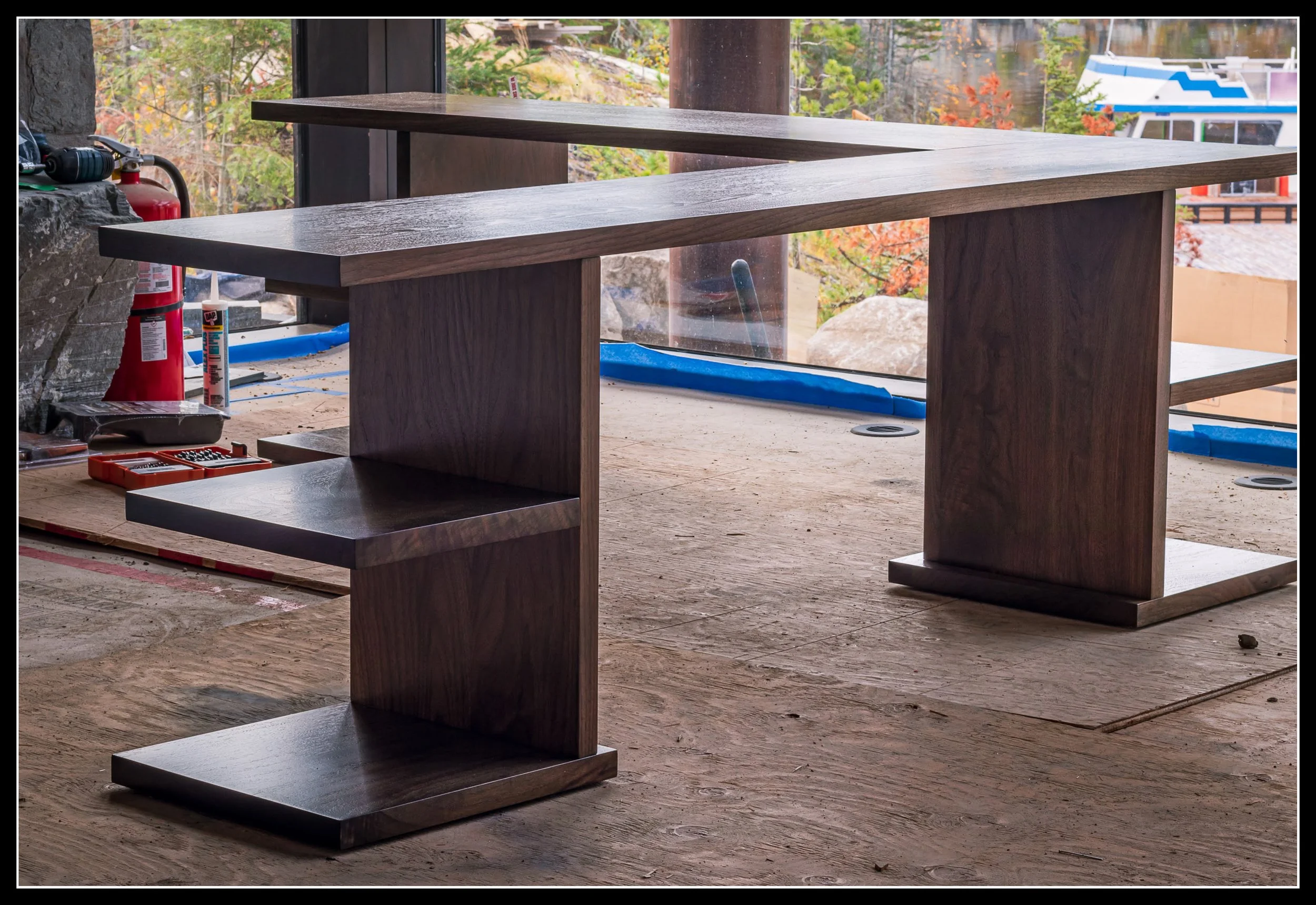
Walnut Doing What Walnut Does Best
This sofa table is walnut in its natural role — strong, stable, and quietly beautiful. It wraps around the back of two sofas set at ninety degrees, built to fit the room instead of impress it. No luxury branding, no hype, just honest walnut doing real work. Even on a construction site, the colour, weight, and grain stand out. This is the kind of project that reminds you walnut isn’t rare or sacred — it’s just good wood, and it earns its reputation by how it behaves in your hands.
Working Walnut in the Shop
Straight‑grained walnut is a dream to cut and mill. A sharp blade slices through it like it’s cooperating. A hand plane will take a whisper‑thin curl without fighting you. A router will cut a clean edge profile without chattering. It’s one of the few woods where you can almost relax while machining it.
But throw a knot into the mix and things change. Tear‑out becomes a possibility, grain reverses, and you have to pay attention. Even then, walnut never seems as nasty about it as some other species. It’s more forgiving than red oak, less temperamental than maple, and nowhere near as unpredictable as birch. Even its defects behave politely.
And walnut is a tough wood. Not “maple tough” or “white oak durable,” but a nice middle ground — strong enough for furniture that gets used, soft enough that it won’t chip your tools, and stable enough that it doesn’t twist itself into a pretzel while it dries. It’s that balance that makes walnut such a pleasure to work with. It’s cooperative.
Walnut’s Downsides — Price and Sunlight
But walnut does have downsides. The first is the price. Depending on the grade, it can cost four times more than other hardwoods — but that’s a market trend, not a flaw in the tree. When I was a kid, my parents had a walnut living room set: end tables, coffee table, and a chesterfield. I didn’t know or care what it was made of. It was just furniture. Years later, when I started working with wood and saw walnut for the first time — the branding, the prestige, the “luxury” label — I remembered that old set and asked my dad about it. He told me it was walnut.
I looked at it again. The wood was faded, washed out, almost grey‑brown. It didn’t look anything like the rich chocolate walnut I was seeing in the shop. I thought he was wrong.
Years later, I worked on a job where we installed thousands of feet of thick walnut railing in the biggest mall in town. Beautiful, dark walnut. It looked incredible. Today those railings look just like my parents’ furniture — washed out and faded. The mall has skylights. My parents had 1960s windows. In both cases, there was almost no UV protection. The sun did what the sun always does.
Why Walnut Fades
UV rays break down the lignin in the wood fibres, and once the lignin goes, the pigments that give walnut its deep colour break down too. That’s why walnut fades. It’s not bad finishing. It’s not cheap stain. It’s sunlight.
So when you build with walnut, this has to be part of the plan. Modern windows have UV coatings. Some finishes include UV inhibitors. Even a light stain adds pigment that helps protect the wood. I’ll get into the science and the finishing options in a separate ramble — that’s coming — but the point is simple: if walnut sees sunlight, it will change. You can slow it down dramatically, but you can’t stop it completely.
A north‑facing room, where direct sun never hits the wood, is ideal. That’s where walnut stays walnut.
Treat Walnut Like Wood
Walnut is just wood. When you’re working with it, treat it as what it is — wood. There are offcuts and scraps. Use the scraps in jigs and cutting boards. Burn the pieces that are too small or too twisted to save. In the shop, walnut shouldn’t carry the branding the luxury furniture world puts on it. We can only store so many scraps before the pile becomes a burden.
I’m not saying waste it — far from it. But some pieces have defects or sapwood that just don’t fit the build. The sapwood is still walnut. I save it if I know I can use it. I save everything I reasonably can, and once a year I turn the pile into cutting boards. I wrote a whole story about that — the Scrapstravaganza. It’s a good reminder that walnut isn’t royalty. It’s a tree, it’s wood.
Don’t cut walnut like you’re afraid of its value. That’s how mistakes happen and efficiency disappears. Walnut is just a tree. But in the shop, in your hands, under a sharp blade, it becomes something else. It’s the wood that teaches you to appreciate grain, to respect the tree it came from. And that’s why we keep coming back to it.
And the next time I order walnut, it’s just as exciting as the last time. But then again, I’m excited every time I get wood — no matter the species. It’s all wood. It’s all potential. Walnut just happens to be the one that reminds you why you fell in love with the craft in the first place.
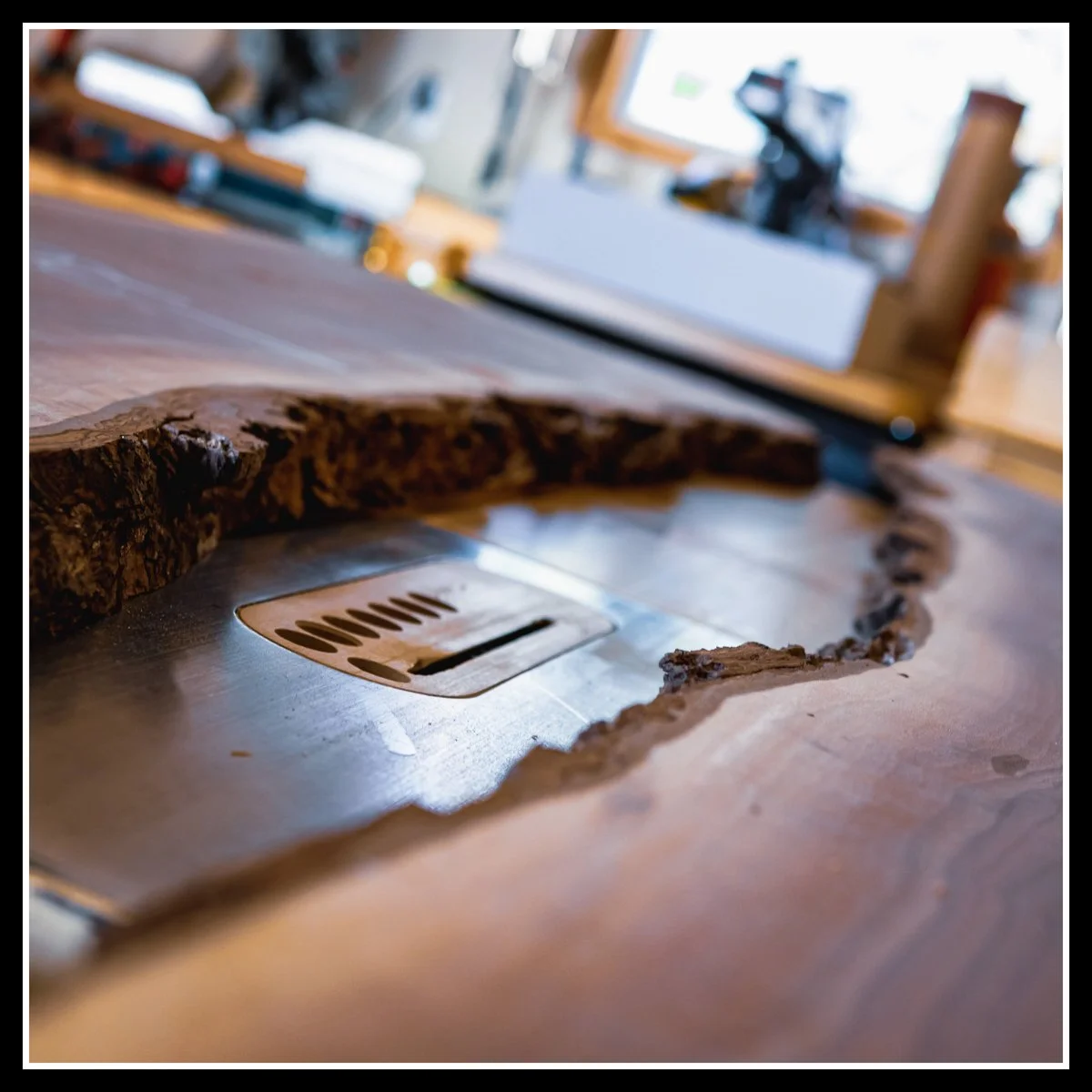
Walnut, Unfiltered
This book‑matched live‑edge slab is walnut at its most honest — wide, heavy, and carrying every contour the tree grew. Before it became a custom desk, it sat on the saw like a reminder that walnut’s beauty isn’t branding or prestige. It’s grain, weight, colour, and the way two halves of the same tree mirror each other when you open the log. Projects like this show walnut’s real character: not luxury, not hype, just the raw material that makes you stop for a moment before you start cutting.
Deep Scraped Walnut — Grain, Warmth, and Honest Texture
Walnut already carries its own warmth — rich colour, steady grain, and a natural depth that shows even before the finish goes on. These Deep Scraped Collection pieces push that character further, using brushed grain, layered stain, glaze, and 2K poly to bring out the shadows walnut hides in its texture. Walnut takes scraping beautifully; the earlywood opens, the heartwood darkens, and the finish settles into the grain without losing clarity. Walnut may have a reputation for luxury, but under texture it becomes what it really is: honest wood with warmth, depth, and a grain that rewards intention.
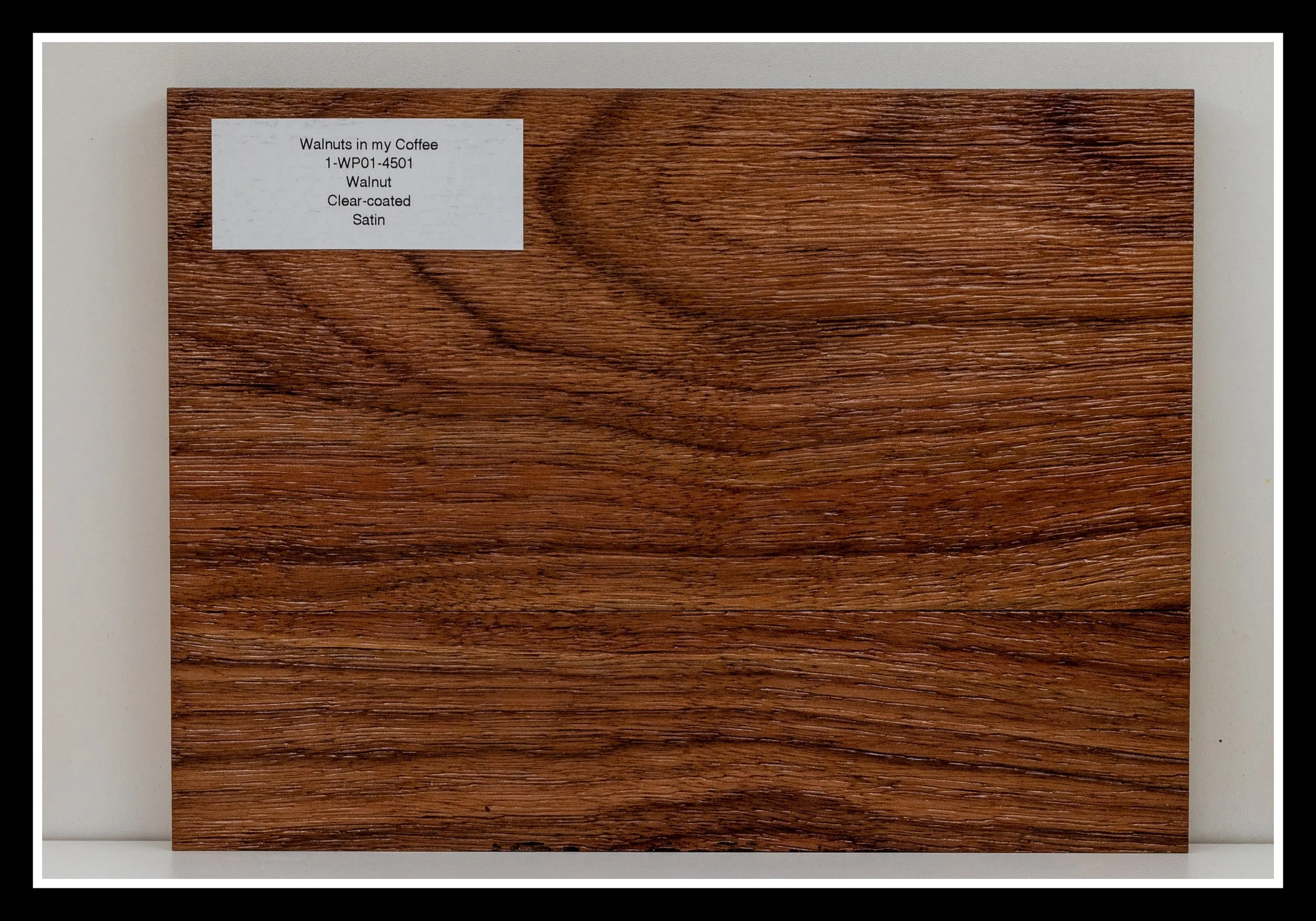
Walnuts in My Coffee — Warm Grain and Satin Calm
This finish is walnut at its most relaxed — scraped for texture, stained for warmth, and sealed under a satin 2K poly that softens the sheen without muting the grain. Walnut’s natural colour does most of the work here; the scraping opens the earlywood, the stain deepens the tone, and the topcoat lets the grain stay honest. It’s a simple finish with a quiet mood, named for the colour that reminded me of coffee swirling around a handful of walnuts. Walnut doesn’t need drama — just intention — and this finish proves it.
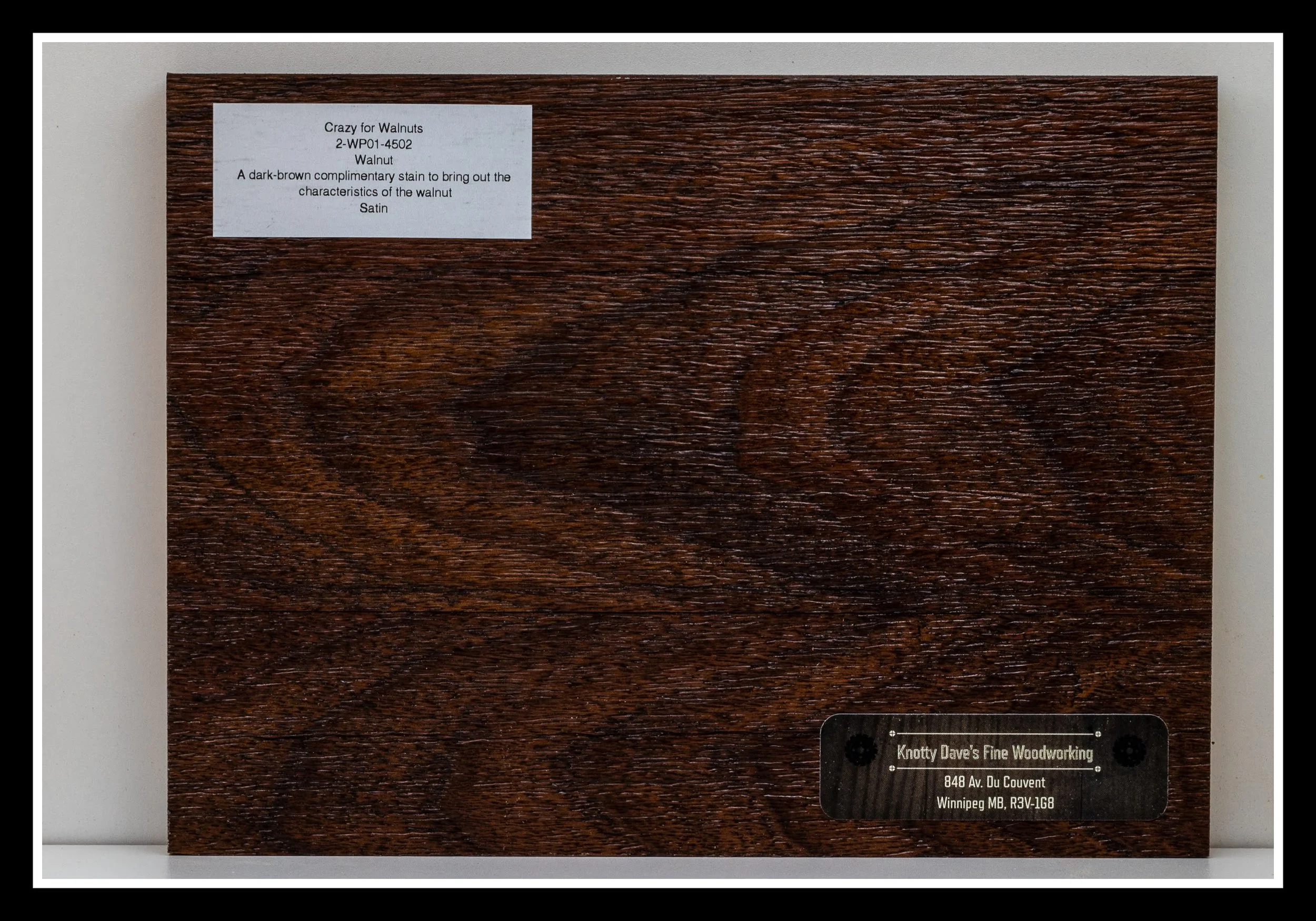
Crazy for Walnut — Deep Warmth and Firelight Grain
Crazy for Walnut is the deep, rich side of the walnut spectrum — scraped for texture, stained for warmth, glazed for shadow, and sealed under a 2K poly that gives the surface a quiet, steady glow. This finish feels like gatherings, firelight, and long evenings — walnut with a deeper emotional register. The scraping opens the earlywood, the glaze settles into the grain, and the stain pulls the colour into a darker, more expressive tone. Walnut has always been a warm wood, but finishes like this show how far that warmth can go when you push the grain with intention.
Where every species, every board, and every lesson in wood science comes together — a place to explore the materials that shape our craft.
SHARE
The Wood Archive — All the wood Stories in One Place
For the living side of woodworking — the stories shaped by walnut, oak, maple, cherry, elm, cedar, and poplar — head to the Wood Archive.
If you’d like to hear from me only when something big is happening — a launch, a milestone, or a major project — you can join the mailing list below.
Written by David Flather, Red Seal cabinetmaker and founder of Knotty Dave’s Fine Woodworking — a Manitoba shop rooted in heritage restoration, storytelling, and real craft.
All photos shot by David Flather — in the shop, on the road, and in the places where craft and story meet.
Related stories:
Outdoor Wood: Rot Resistance, Freeze‑Thaw Survival, and 200 Years of Real‑World Weather
The Value of Wood in the Fur Trade: Winter Logging, River Transport, and York Boat Timber
Old Cedar — Reclaimed Deck Boards, Cedar Grain, and Building Muskoka Chairs
The Elm Trees of North America: Canopy, Loss, and the Craft That Remains
The Workshop Library
If you enjoyed this story, there’s lots more like it inside The Workshop Library — and it’s free to explore.
Wood Archive — species, grain, working properties, and real‑world craft notes
Behind the Grain — the deeper stories inside wood, craft, and heritage
The Working Side of the Craft — tools, shop life, workflow, and the realities of making
Digital to Sawdust — Design Studio — geometry, proportion, visual flow, and design thinking
The Stories of the Shop — the personal side of craft, the shop’s history, and the quiet moments that shape the work
House & Hearth — heritage home restoration, the hearth room, winter culture, and the lived‑in side of craft
I’m just one man with a shop, building this archive one story at a time. If you’d like to follow the journey as it unfolds, explore The Workshop Library — new stories every week.
