

Cordless Drills: Quit Overthinking Them
The Working Side of the Craft
The Tools, Machines, and Thinking Behind the Work
What Cordless Drills Actually Do — And Why Specs Matter Less Than You Think
If you’ve ever stood in a hardware aisle staring at torque numbers, clutch settings, and battery charts, this Ramble is for you. Drills are the most overthought tool in the shop. I’ve used every voltage, every battery chemistry, every brand over the last 25+ years, and the truth is simple: drills spin bits. That’s it. If you want the real story — the stuff that actually matters when you’re building — keep reading.
Estimated read time: 5 minutes
BY THE END OF THIS STORY
By the end of this story, you’ll know what actually matters in a drill — the build, the battery, the chuck, and the bit — and why pros keep multiple setups instead of swapping bits all day. You’ll understand the real difference between drills, impactors, and clutches, and why 12V often beats 18V when you’re overhead or on a ladder. In the end, you’ll see drills the way the shop sees them: simple tools that spin bits so you can get the job done.
The series that follows the machines, tools, workflow, and shop moments that shape how real work gets done.
The Early Days
I bought my house in the late 1990s, back when cordless drills were just starting to take over, I didn’t even own one. My first drill was a little Makita—seven‑something volts, no removable battery, just a cord you plugged into the handle. Its biggest selling point was variable speed. It worked fine until someone broke into my garage and stole it.
Then I bought a DeWalt 14.4V, and that battery felt massive compared to the Makita. I ran that drill until the Ni‑Cad pack finally gave up — like every battery eventually does. All batteries die, but Ni‑Cad was notorious for fading early, developing memory problems, and leaving people convinced their drill was on its last legs when it was really just the battery chemistry calling it quits — the classic Ni‑Cad confusion people still Google today.
The Cabinet Shop Era
Around that time I was apprenticing in a cabinet shop, where everyone seemed to run Bosch drills for reasons nobody could explain. So I followed suit and bought a Bosch 14.4V Ni‑Cad. I destroyed it almost immediately. It was a homeowner‑grade drill pretending to be a shop tool. Bosch had different build tiers back then, and I bought the wrong one — the plastic‑fantastic version that wasn’t meant for daily cabinet‑shop abuse.
That’s when I started paying attention to build quality and battery life. But money was tight, so I picked up a Bosch 12V impactor — the small lithium‑battery style. That thing was tough. Small, but impressive. It fit into tight spaces and stood up to constant shop abuse. I still have it, and I still use it. That little drill is the reason I’m locked into the Bosch battery platform. Not because it’s Bosch, but because all my drills take the same battery.
Why I Own Six Drills
Right now I have six drills. Two are 18V, the rest are 12V.
And honestly? The biggest issue I ever face with any drill — any brand — is the time it takes to switch a bit. That’s why I have six drills. It lets me keep multiple bits spinning without constant bit changes. The other issue is the constant search for the drill that was just in my hands two minutes ago. And yeah, I have six drills, but the one I can’t find is always the one with the bit I need. That’s shop life. That’s not the drill’s fault. That’s an equipment‑operator problem.
What Actually Matters
When I buy a drill, all I care about is build quality and amp‑hours. I buy Bosch because I have piles of their batteries, but otherwise the brand doesn’t matter. DeWalt, Makita, Milwaukee — they’re all good. All I care about are the jobs on the bench.
The bits in the drill are actually the bigger deal. I need a drill that can handle hole saws and big Forstner bits, with a ½" chuck that opens wide and a hammer feature for the occasional bit of cement I need to drill. It doesn’t matter how tough a drill is when you’re watching a dull bit spin and smoke on a piece of maple. Be careful when that happens — that’s when bits snap off in the wood. That’s a bit problem, not a drill problem.
Drills, Impactors, and the Clutch Confusion
In a cabinet shop, drills and impactors go together. Drill for pre‑drilling and countersink, impactor to drive the screw. That’s the easy stuff. The bigger stuff is hole saws. When I first started using them, the saw would bind in the wood, and the torque would transfer straight to my wrists. I hated hole saws until one day I used my head and realized: use the clutch, dummy. That’s what it’s for. The clutch works exactly like a torque wrench — it slips at a set pressure. That’s why people get confused. On metal parts, torque can be measured. On wood, you’ve got spring growth, late growth, heartwood, sapwood, knots, compression wood, tension wood — wood density is inconsistent. Torque doesn’t matter. You drive screws and you eye the depth. The clutch just keeps the hole saw from grabbing and twisting your wrists off. That’s the whole clutch confusion people search constantly.
And if you’re wondering about impactors, the main benefit is simple: Impact drivers don’t apply smooth torque like a drill. They apply rapid bursts of rotational force. Those micro‑impacts do two things:
They seat the bit deeper into the screw head.
They maintain engagement even when resistance spikes.
That’s why you can drive long screws, deck screws, structural screws, and pocket‑hole screws without cam‑out. It’s the core of impact driver vs drill confusion.
The Truth After 25+ Years
Look, I’ve used drills for 25+ years. I’ve owned or used every voltage, every battery chemistry, every brand. And after all that, here’s the truth.
At the end of the day, drills aren’t complicated. They spin bits. They don’t care about torque charts, clutch theories, or battery debates. They care about whether you can actually get the job done without stopping every ten minutes to switch a bit or shake out your wrist. And when you’re on ladders or drilling overhead, that big 18V pack gets heavy fast — the 12V is the hero, not the spec monster.
So quit overthinking the drill. The build matters. The battery matters. The chuck matters. The work matters.
Everything else is noise.
Get building.
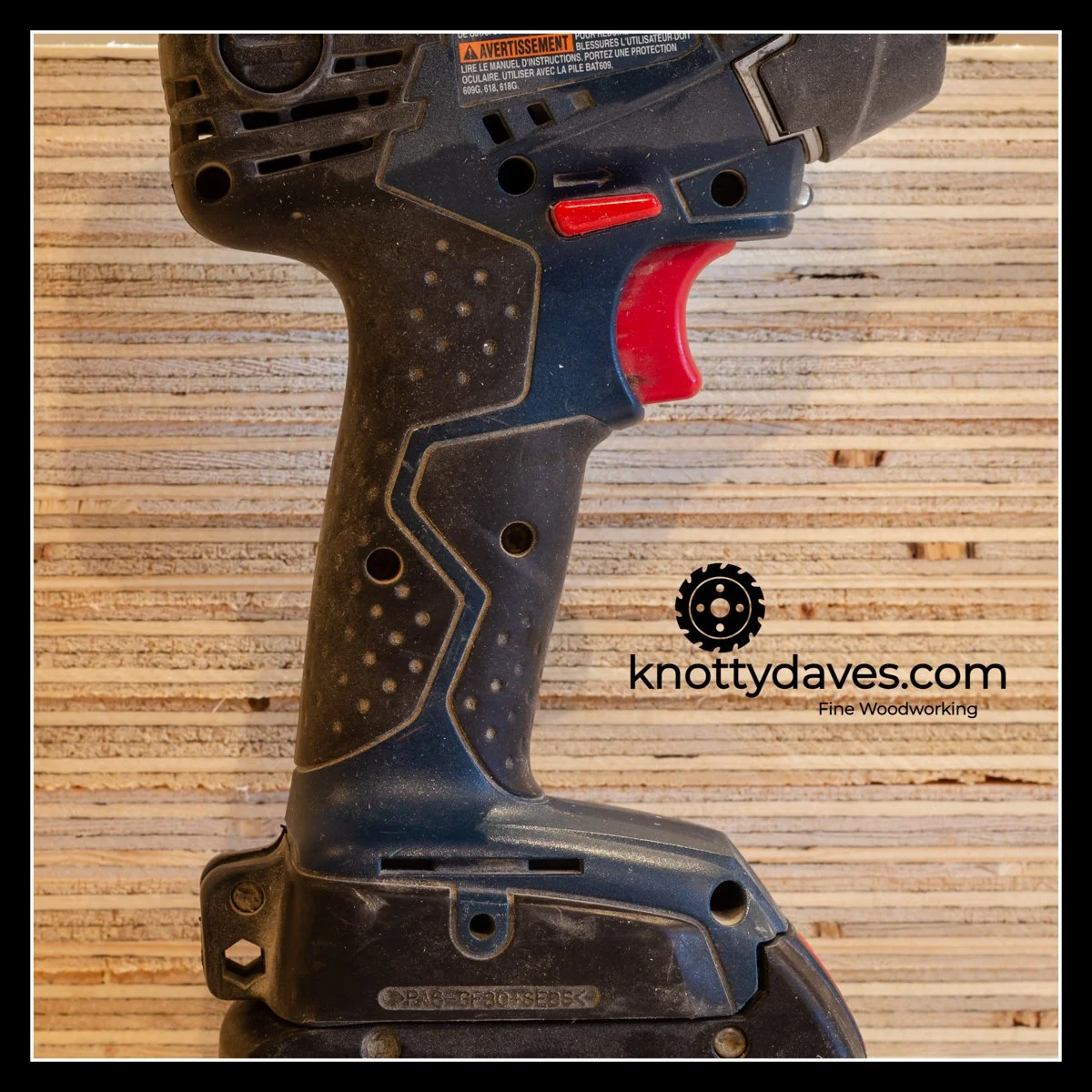
Bosch 18V: Fifteen Years, 3 Generations of Batteries, Still Kicking
This is my 18V Bosch drill, and I’m pretty sure I bought it around 2008 or 2009 — which makes it older than my business. It’s been through three sets of batteries and more job sites and cabinet shops than I can count. I’ve dropped it off ladders, tailgates, benches, had it rained on, frozen, buried in sawdust, and once dropped it in horse shit. Wipe it off, pull the trigger, still works. After fifteen‑plus years of abuse, this drill has outlasted shops, jobs, and tools that were supposed to be “better.” Specs don’t matter. Longevity does.
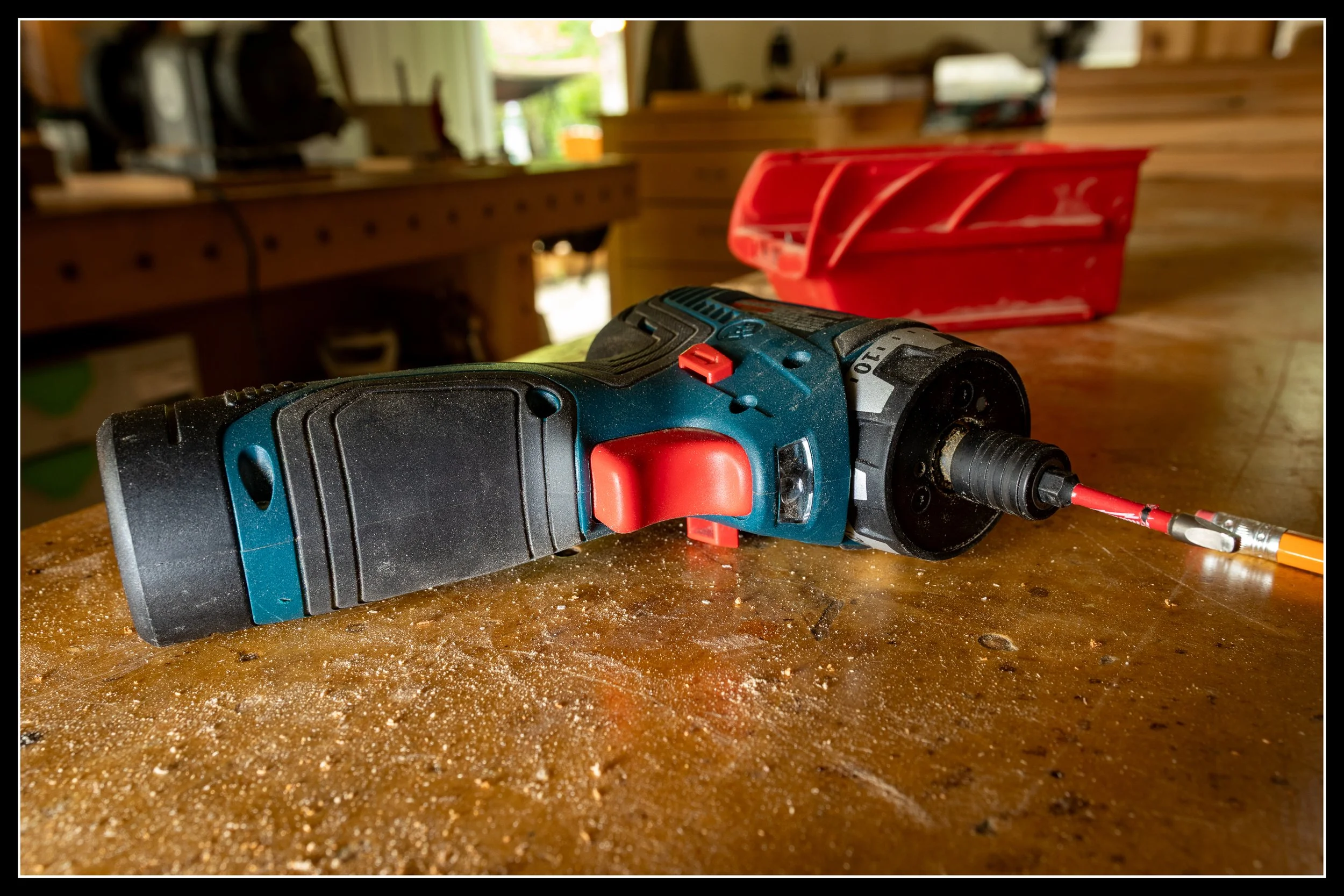
12V Pocket Driver — Earning Its Dues
A newer 12V pocket driver, resting on the bench between jobs. Light, quick, and built for tight spaces, it’s the kind of tool that proves itself through repetition — one screw, one pilot hole, one cabinet at a time.
Together, gathered in one place so the machine stories, tool reflections, and workflow moments stay connected — easy to find and easy to return to.
SHARE
The Working Side of the Craft — Connected Through Machines, Tools & Stories
If you want the stories shaped by table saws, bandsaws, grinders, fences, and jigs — the honest, noisy side of woodworking — the Working Side Of The Craft is one click away.
If you’d like to hear from me only when something big is happening — a launch, a milestone, or a major project — you can join the mailing list below.
Written by David Flather, Red Seal cabinetmaker and founder of Knotty Dave’s Fine Woodworking — a Manitoba shop rooted in heritage restoration, storytelling, and real craft.
All photos shot by David Flather — in the shop, on the road, and in the places where craft and story meet.
Related stories:
Return to: Shop Rambles
