

The Compound Mitre Saw: Fastest Way to Cut the Wrong Angle
The Working Side of the Craft
The Tools, Machines, and Thinking Behind the Work
Why the Mitre Saw Isn’t a Precision Tool — And What It Actually Does Well
Most people buy a mitre saw expecting precision, clean cuts, and perfect angles. Then they use it and wonder why nothing lines up. This story explains what the mitre saw actually is — and why understanding its real purpose can save you a lot of frustration.
Estimated read time: 5 minutes
BY THE END OF THIS STORY, YOU’LL KNOW:
Why mitre saws are built for speed, not accuracy
When they shine — and when they fail
How to use them without expecting precision they can’t deliver
The series that follows the machines, tools, workflow, and shop moments that shape how real work gets done.
A Misunderstood Tool
The biggest problem with the mitre saw is that it’s a misunderstood tool. It looks like a machine that promises accurate cuts and clean dust collection. It’s light, portable, and every brand sells a folding stand with wheels. You can throw it in the back of a truck and set it up anywhere with a power supply.
But the reality is different.
Built for Speed, Not Perfection
Mitre saws get rained on, snowed on, dropped, dragged, and used to cut wood, aluminum, plastic, cardboard — anything that doesn’t fit in the garbage gets trimmed on the mitre saw. On a jobsite, it’s the communal crosscut station for six different guys. It’s built to take a beating, run fast, and set up fast. One person can load it, unload it, and get it running in minutes.
That’s the selling feature. Right — it cuts angles too.
But this tool is designed to be good enough, not perfect.
Who the Mitre Saw Is Actually For
Who is it designed for? People who need speed. People who run profitable businesses. Carpenters who are rushed by clients, foremen, designers, deadlines, and weather. The mitre saw exists to serve that world. It’s built around fast and cheap. Quality is never the top feature, no matter what the marketing says.
If you’re looking for long-lasting precision, this tool will disappoint.
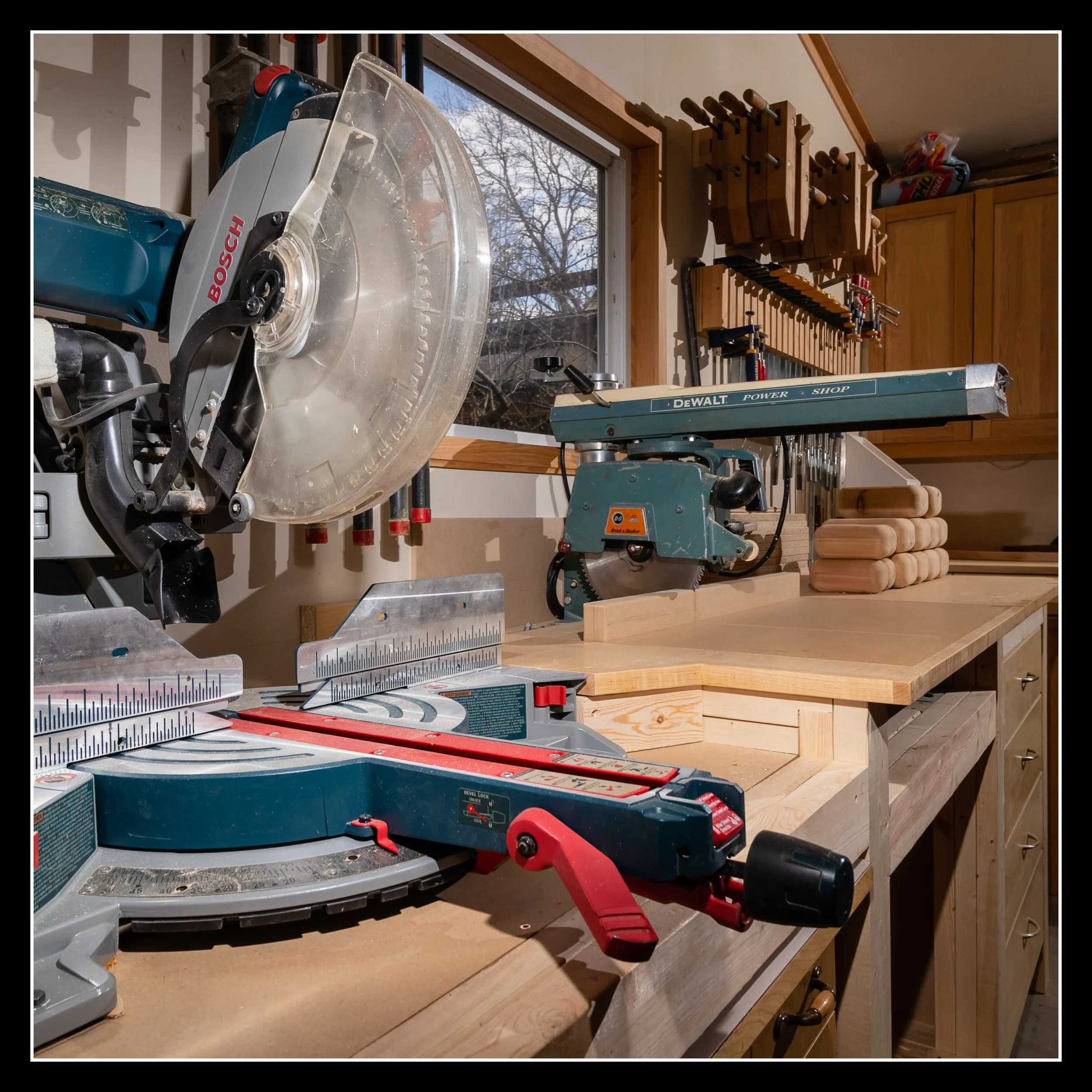
Bosch Axial‑Glide in the Shop
The Bosch Axial‑Glide lives in my shop as a reliable jobsite carry‑over. It does the work, it’s smooth to operate, and it handles everyday cuts without complaint — but like every mitre saw, I expect issues when it comes to perfect mitres. That’s just the nature of the tool. In a real shop environment, it’s a convenience machine, not a precision instrument, and understanding that keeps expectations realistic.
Why Cabinetmakers Don’t Use Mitre Saws for Precision Work
Cabinetmakers use mitre saws — every shop has one — but when we have 300 mitres to cut for applied frames on cabinet doors, we’re not using a mitre saw.
I’ve been in this trade for decades. I’ve used every brand. I’ve seen how these saws get treated, transported, abused — and they just keep running. But in a cabinetmaking environment, in a furniture shop, they suck. I have the Bosch Axial Glide 12". Honestly, I hardly use it unless I’m on site. In the shop, I use the radial arm saw and the table saw. They’re more accurate. With simple jigs made from shop scraps, 100% accurate mitres are possible.
It’s slower, but I hit the mark the first time.
The Mitre Saw’s Real Superpower
That’s the nature of the business. We all want fast and convenient, and the mitre saw is the fast food tool of the woodworking industry. When we depend on it for accuracy, many of us will be disappointed. The saw is not made for high accuracy.
But that doesn’t mean it’s junk.
When I’m installing crown moulding, the room isn’t square. Ceilings sag. Walls slope. Accuracy doesn’t matter the same way it does when making perfect frames in a shop. The mitre saw is great at making small adjustments to fit an imperfect reality. That’s its superpower. That’s why it exists. And it does a good job.
Accuracy in Imperfect Reality
If I’m building a deck out of treated spruce for a crooked old house, the wood is never straight. It’s cupped, twisted, bowed. The saw needs to work with that. How accurate can it be? And does it even matter?
The detents are just targets we’re aiming for in a world full of out‑of‑square corners and out‑of‑plumb walls. That’s the world.
Appreciating the Tool for What It Is
This story might sound negative, but that’s not the intent. Understanding a tool’s purpose before buying one helps avoid disappointment. Mitre saws are the backbone of the onsite world — nothing else can do what they do. And they do it well. I would never be without one.
Even though I have mine fully adjusted to be as accurate as possible, I still expect issues. And if I need to pivot to the table saw, I pivot. Because when the job is done, the client doesn’t see the tool I used — they see a job well done.
In the end, the mitre saw isn’t a precision tool. It’s a jobsite tool built for real‑world conditions. When you understand that, you stop expecting it to be something it isn’t — and you start appreciating it for what it does better than anything else.
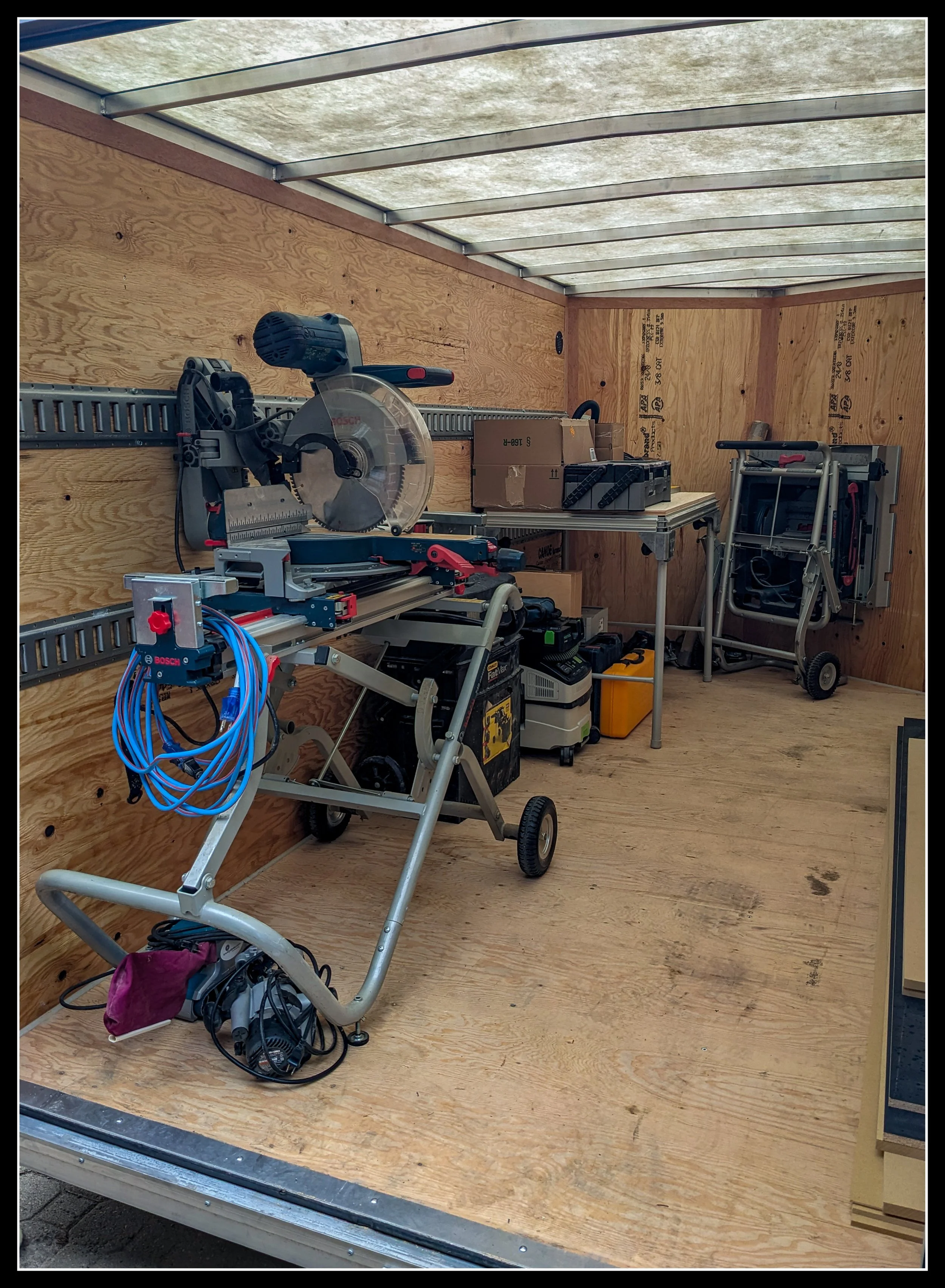
Mitre Saw in the Utility Trailer
The mitre saw rides in the utility trailer and gets used right where it sits. No fancy setup, no shop environment — just real‑world work. This is exactly where the mitre saw shines: fast cuts, quick adjustments, and the ability to keep moving on a jobsite. It’s not a precision station, and I expect issues with mitres, but that’s life. In this world, convenience and speed matter more than perfection, and the saw does its job.
Together, gathered in one place so the machine stories, tool reflections, and workflow moments stay connected — easy to find and easy to return to.
SHARE
The Working Side of the Craft — Connected Through Machines, Tools & Stories
If you want the stories shaped by table saws, bandsaws, grinders, fences, and jigs — the honest, noisy side of woodworking — the Working Side Of The Craft is one click away.
If you’d like to hear from me only when something big is happening — a launch, a milestone, or a major project — you can join the mailing list below.
Written by David Flather, Red Seal cabinetmaker and founder of Knotty Dave’s Fine Woodworking — a Manitoba shop rooted in heritage restoration, storytelling, and real craft.
All photos shot by David Flather — in the shop, on the road, and in the places where craft and story meet.
Related stories:
Return to: Shop Rambles
