

The Table Saw That Held Me Back
Quick Answer: What’s the difference between contractor saws and cabinet saws?
A contractor saw hits its limits fast — weak motors, wandering fences, plastic cranks, vibration, and accuracy that drifts under load. A real cabinet saw has mass, power, stability, and a fence that lands square every time. Contractor saws fight you; cabinet saws disappear so the work can come forward. That’s the difference: one holds you back, the other lets you build at your best.
Contractor‑saw limits — weak motors, drifting fences, vibration, plastic parts, and accuracy that collapses under load
Cabinet‑saw stability — heavy cast‑iron mass, smooth induction power, and cuts that stay true even in hardwood
Fence reliability — contractor fences wander; cabinet fences lock square and stay square
Power and torque — 1–1.5 HP struggles; 3 HP cabinet motors cut without hesitation
Blade capacity — 10‑inch blades unlock full cut depth, better dado sets, and premium blade options
Machine that disappears — the real upgrade is workflow: the saw stops fighting you, and the work finally comes forward
How a Better Saw Changes the Work
If you’ve ever wondered whether upgrading from a contractor saw to a cabinet saw really matters, I can tell you exactly what changes — because I lived the difference. My first saw was a Rockwell Beaver with plastic cranks and a wandering fence. Years later, I stood in front of brand‑new General 350 and 650 cabinet saws, and everything I thought I knew about table saws shifted.
BY THE END OF THIS STORY
You’ll understand exactly where contractor saws hit their limits, why fences, cranks, motors, and blade size matter more than people think, how a real cabinet saw changes accuracy and workflow, why the General 350 became the turning point in your shop, and what actually improves when the machine stops fighting you and the work finally comes forward.
Estimated read time: 6 minutes
Fast Summary
A clear look at where contractor saws hit their limits — weak motors, wandering fences, plastic cranks, vibration, and accuracy that drifts under load — and how a real cabinet saw like the General 350 changes everything. This Ramble covers the Rockwell Beaver years, the turning point of the General, and the moment a machine stops fighting you so the work can finally come forward.
Table Saw — Fast Summary
Contractor saws hit a ceiling
Cabinet saws change accuracy
Fence quality matters
Motor power matters
Blade size matters
Mass = stability
Better machines stop fighting you
Contractor Saw vs Cabinet Saw — Quick Comparison
Contractor Saw — underpowered, flexible, accuracy drifts
Cabinet Saw — heavy, stable, precise
Motor — 1–1.5 HP vs 3 HP
Dust Collection — open backs vs sealed cabinets
Workflow — constant negotiation vs smooth, predictable cuts
Learning the Hard Lessons in My 20’s
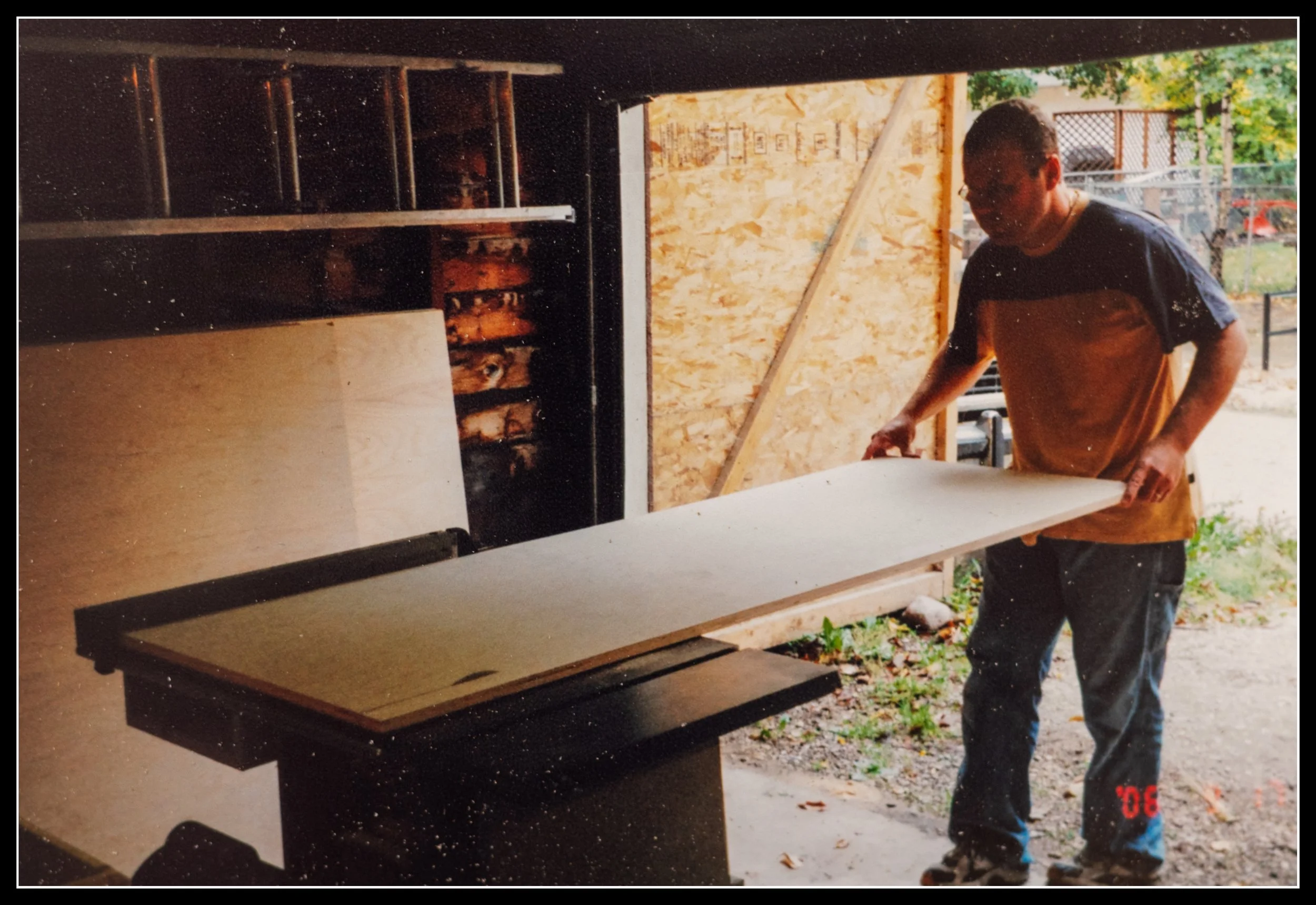
This was me in my twenties, running the old Rockwell Beaver and learning every mistake the hard way. I remember this project clearly — I needed identical parts, but every time the sheet touched the fence it drifted, so each piece ended up bigger than the last. Then during assembly I discovered the blade wasn’t at 90 degrees; it was sitting at 3 degrees. Every cut was off. Every part needed fixing. It was frustrating, but it was also the kind of experience that puts real miles on a young woodworker. These were my pre‑professional dues, paid in sawdust, miscuts, and stubborn determination.
Learning the Hard Lessons in My 20’s
Back when I was a young man, I bought my first table saw off a bulletin board at the local co‑op — a Rockwell Beaver with a cast‑iron top. At the time, I thought cast iron was the ultimate mark of quality. Compared to the aluminum jobsite saws that were starting to show up, it felt solid, heavy, and honest. It had a smooth‑running induction motor and took a nine‑inch blade, which didn’t bother me — I’d only ever run an eight‑inch anyway.
In its own way, that saw was perfect for me then. I was inexperienced, eager, and convinced that familiarity was the same thing as knowledge. It looked like my dad’s saw, so I figured I knew enough to risk the $125 I paid for it. But what it really turned out to be was a long, slow, necessary lesson in what a real table saw should be.
At first, I was just learning the basics — how to avoid kickback (and I had a few), how to cut without burning the edge, and why a sharp blade mattered. Once those fundamentals settled in and I started building actual projects, my skill grew into that stage every woodworker hits: the avid novice who finally knows enough to see exactly what’s holding him back.
And that’s when the saw started telling the truth.
When a Contractor Saw Hits Its Ceiling
Piece by piece, the Rockwell revealed its limits. The cranks that raised and tilted the blade were plastic — sticky, slow, and fragile. One cracked right on the spindle. The motor was underpowered, stalling under heavy loads. The fence was short, fussy, and never stayed square; if a board bumped it too hard, the fence deflected and the measurement grew. Every cut became a negotiation.
The machine was hard to move, so I built a custom mobile base with a little door to shovel out the sawdust. Real dust collection wasn’t an option — contractor saws have wide‑open backs, and trying to seal it felt like more work than it was worth. I wanted to build things, not spend my life fixing my table saw. It wasn’t a disaster, just a ceiling. A reminder that cast iron alone doesn’t make a good machine.
The First Time I Saw a Real Cabinet Saw
The full truth landed when I started college. Sitting side by side in the school shop were brand‑new General 350 and 650 cabinet saws. Those two machines left a mark on me — at the time they felt like the best saws ever made, and maybe I was young and impressionable, but the impression stuck. Later, during my work experience in a professional shop, I got to run a brand‑new cabinet‑style SawStop — the smoothest machine I’d ever touched. After using those saws, my little contractor saw didn’t feel wonderful anymore. But I was a student on a thin budget. I needed other tools more, so I kept struggling with the old Beaver. It was “good enough,” at least for a while.
Finding the Saw That Changed Everything
But I kept a constant eye on Kijiji. I knew the right saw would show up eventually. And when it did, I moved fast: a 1977 General 350 with a 3‑horsepower, 240‑volt motor.
That saw was a tank. It was so heavy we had to strip it down — removing the fence rails and the cast‑iron top — just to get it on and off the truck with three guys.
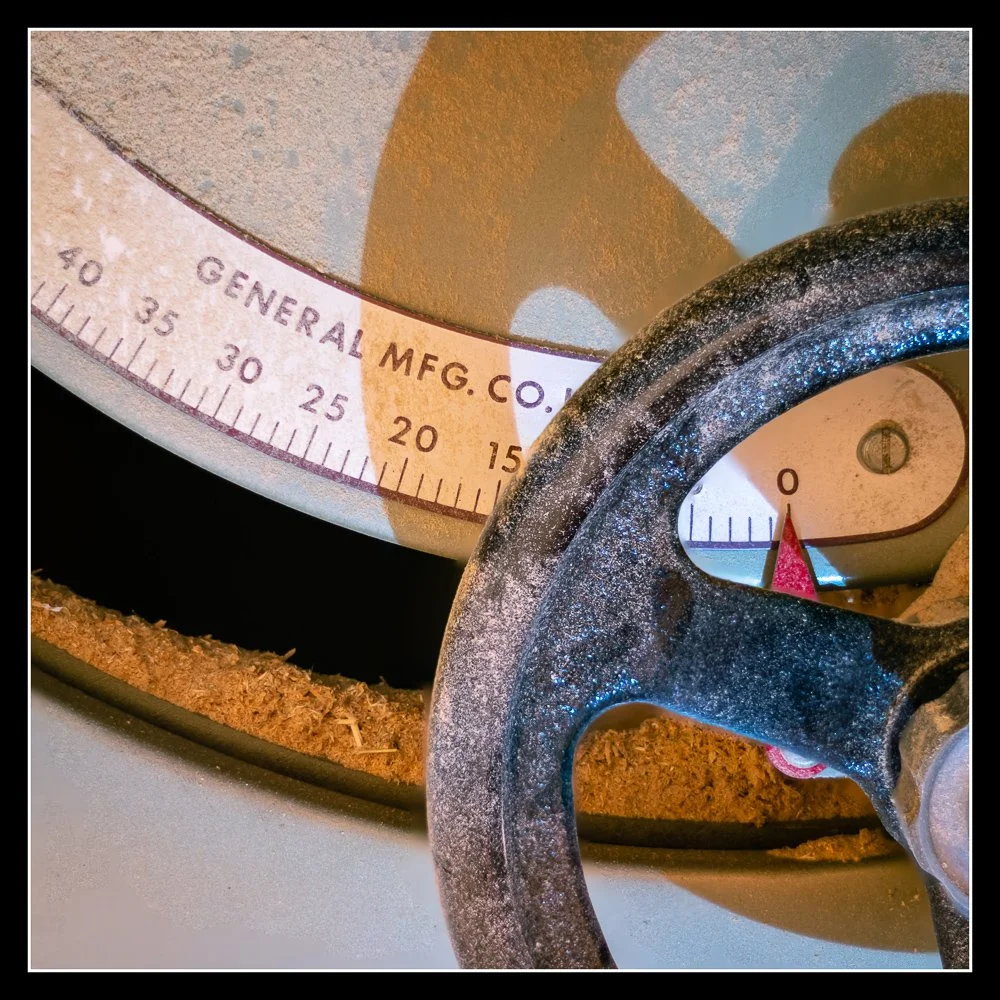
This is the General
This close‑up of the General 350’s cast‑iron crank is a reminder of what real machinery feels like. The weight, the precision, the smooth rise of the blade — it’s everything the old contractor saw never had. After reading the story, this image shows the difference in one glance: solid engineering, no plastic, no slop, no guessing. Just a tool built right, built to last, and built to let a woodworker finally work without fighting the machine.
What a Real Cabinet Saw Actually Feels Like
The difference between the two machines was night and day. The General had a massive footprint and a classic T‑style Biesemeyer fence — set it once, and it landed square every time, making tenoning jigs and shop accessories effortless. It had a proper 240‑volt power switch, whereas my old saw didn’t even have one at first; you literally plugged it into the wall and watched the whole machine jump as the blade came up to speed. I eventually added a switch, but it never changed the feel. The General just ran smooth. Not SawStop smooth, but smooth enough.
An old cabinet saw like mine lacks a few modern features, like factory dust collection or a riving knife, so I customized my own solutions. It features an excellent ripping guard with kickback dogs that works beautifully, though like all guards, it comes off for dado blades and specialized jigs.
When the Work Becomes the Focus
The important thing is that this saw has never fought me. For the last twenty years, I’ve built extremely high‑end products for clients on this machine. Instead of worrying about a motor stalling or a fence slipping, I spend my energy figuring out how to execute tricky cuts. Outside of regular maintenance, the only issue it ever gave me was a single snapped drive belt. Brand‑new cabinet saws were always way out of my budget, but this Canadian‑made cast‑iron workhorse refuses to die.
And here’s the truth I didn’t understand until I owned both: a good table saw doesn’t make you a better woodworker — it just stops getting in the way. My old Rockwell Beaver taught me every frustration a bad machine can offer. The General taught me what it feels like when the tool finally disappears and the work becomes the focus. That’s the real difference — not horsepower, not fences, not cast iron. It’s the moment you stop fighting your saw and start building the life you meant to build.
I’m not sorry I bought that old Rockwell Beaver. We had some great times, and it taught me essential woodworking skills I desperately needed. It also taught me how to get under the saw, make adjustments, and see how everything works. It was a $125 saw, so making mistakes or accidentally wrecking something while learning felt low‑risk.
Most importantly, that old saw was the primer that got me where I am today — the initial spark that grew into a life in woodworking. Because of the struggles with that saw, I can fully appreciate the cast‑iron tank called the General that sits in the middle of my shop — the tool I rely on for absolutely every build that passes through here.
And maybe one day I’ll upgrade from the General. The journey’s still growing, still exciting.
Take a close look at these details
This is the kind of build quality that separates a real cabinet saw from everything that held me back.
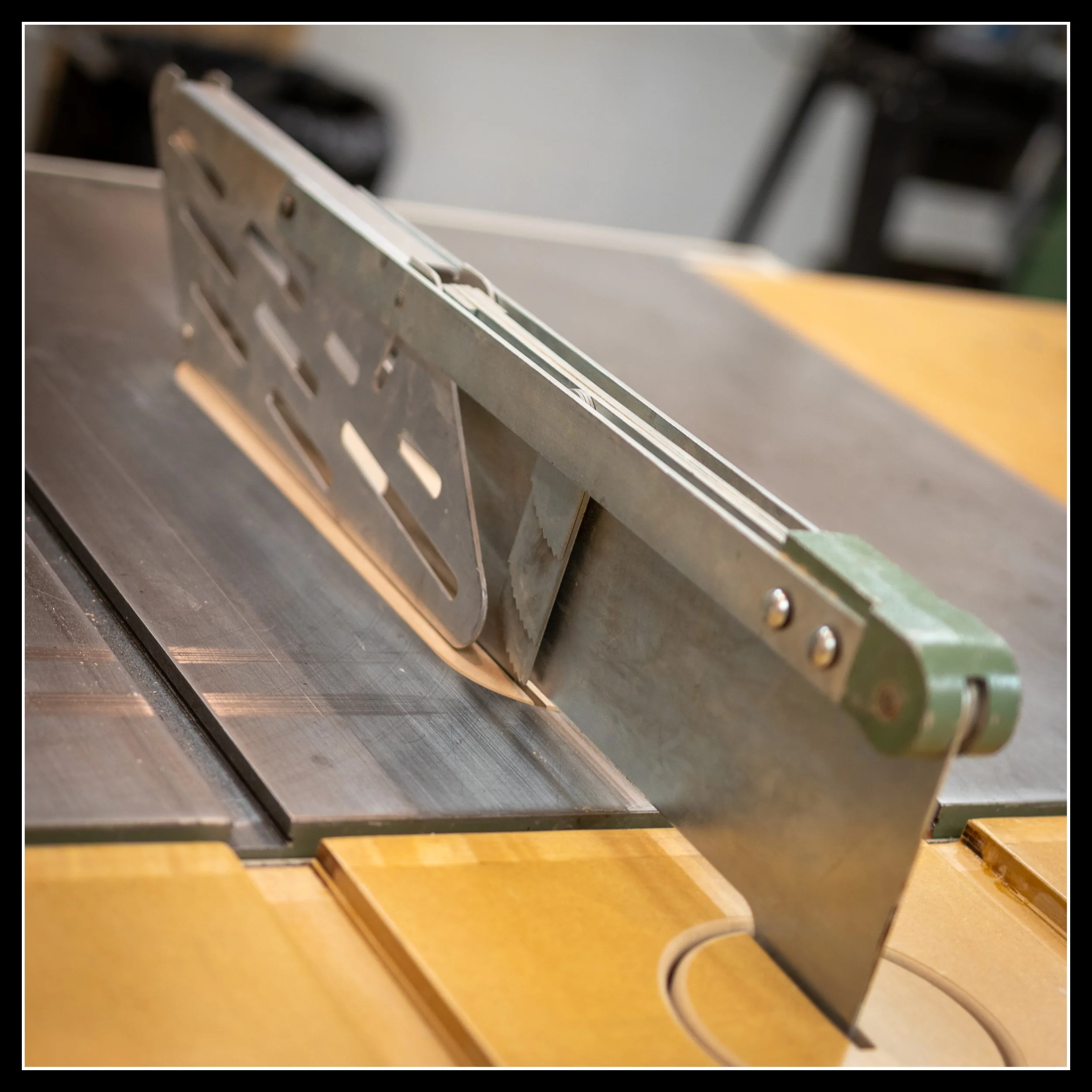
General’s Original Splitter & Guard — Steel, Cast Iron, and Real Protection
The original General splitter and guard assembly is a perfect example of why old Canadian cabinet saws earned their reputation. Heavy steel, cast‑iron brackets, and kickback dogs that actually bite — nothing plastic, nothing flimsy, nothing pretending to be a safety feature. This setup wasn’t designed for marketing photos; it was built for real shops, real cuts, and real risk. Contractor saws never had anything like this. The splitter stays aligned, the guard tracks true, and the kickdogs do exactly what they’re supposed to do. It’s the kind of machinery that reminds you why a proper cabinet saw changes the way you work: accuracy, safety, and confidence built right into the steel.
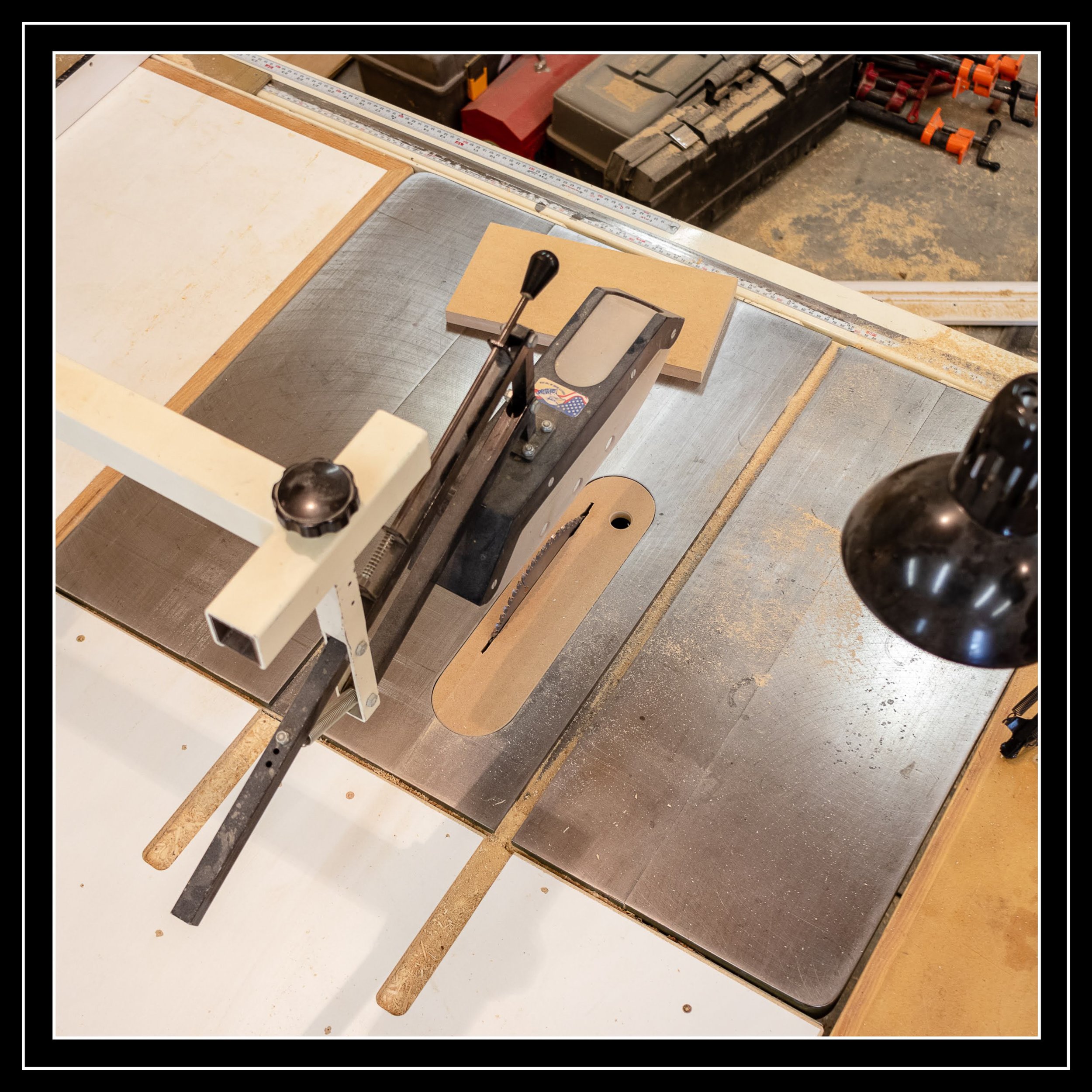
General 350 Cast‑Iron Top — The Heart of a Real Cabinet Saw
This view of my General 350’s cast‑iron top. The side and outfeed tables have been upgraded since this photo, but the core remains the same: thick cast iron, dead‑flat, vibration‑killing mass that defines what a true cabinet saw feels like. Contractor saws flex, chatter, and wander. A General doesn’t. Even after decades of work, the top still holds accuracy, still absorbs the cut, and still reminds me why this saw became the center of my shop. It’s the kind of machinery that outlives trends, upgrades, and owners — the foundation everything else is built around.
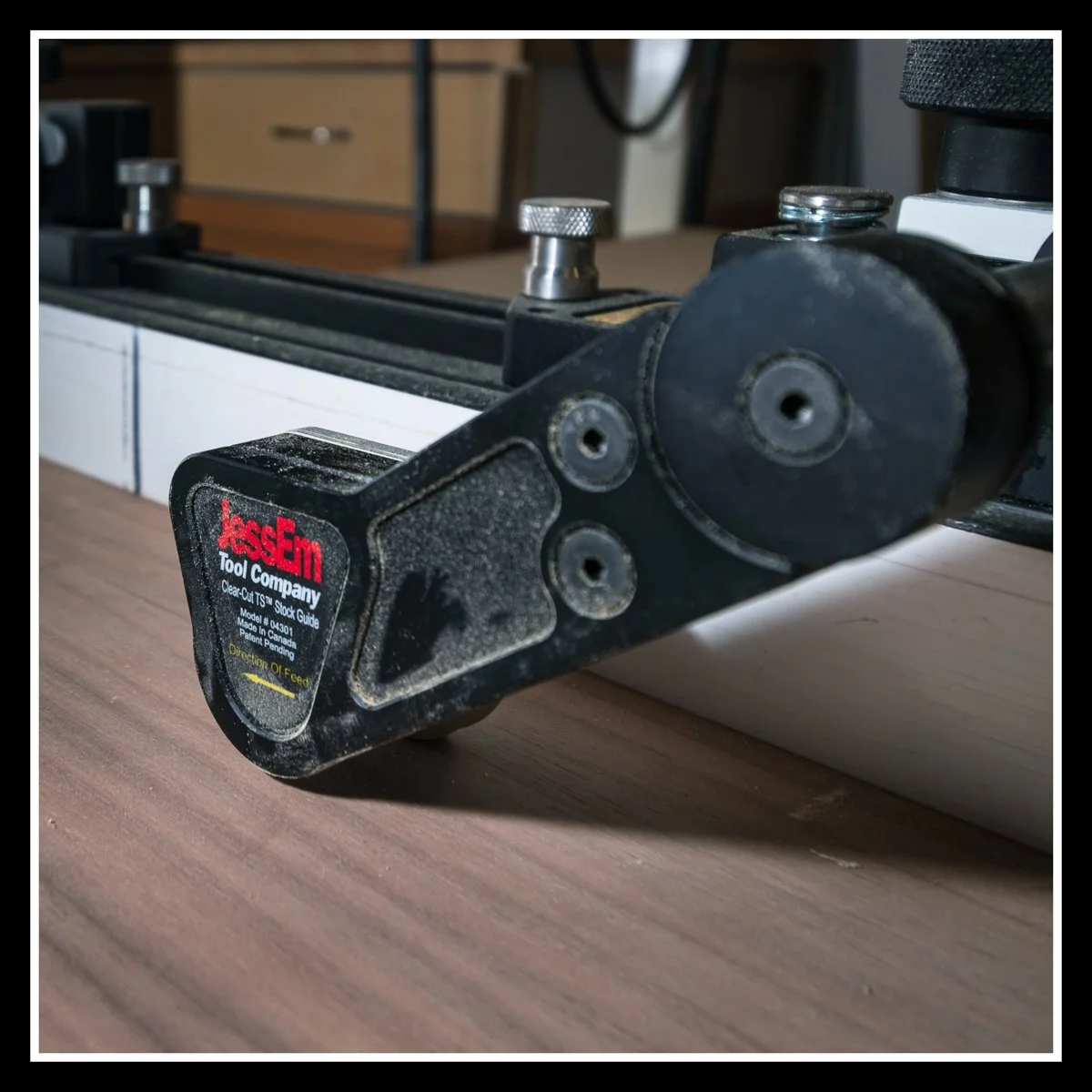
JessEm Clear‑Cut Stock Guides — Extra Hands for the Cuts That Matter
These JessEm Clear‑Cut TS Stock Guides are one of the few store‑bought upgrades that genuinely change how a table saw feels. They act like an extra pair of hands on tricky cuts — holding the board tight to the fence, pressing it down to the table, and keeping everything stable when grain wants to wander. The wheels only roll forward, never back, so kickback forces get shut down before they start. On a cast‑iron cabinet saw like the General 350, they turn precision into consistency: smoother rips, cleaner edges, and less fighting the wood. It’s the kind of accessory that doesn’t replace skill — it just lets the saw and the woodworker work at their best.
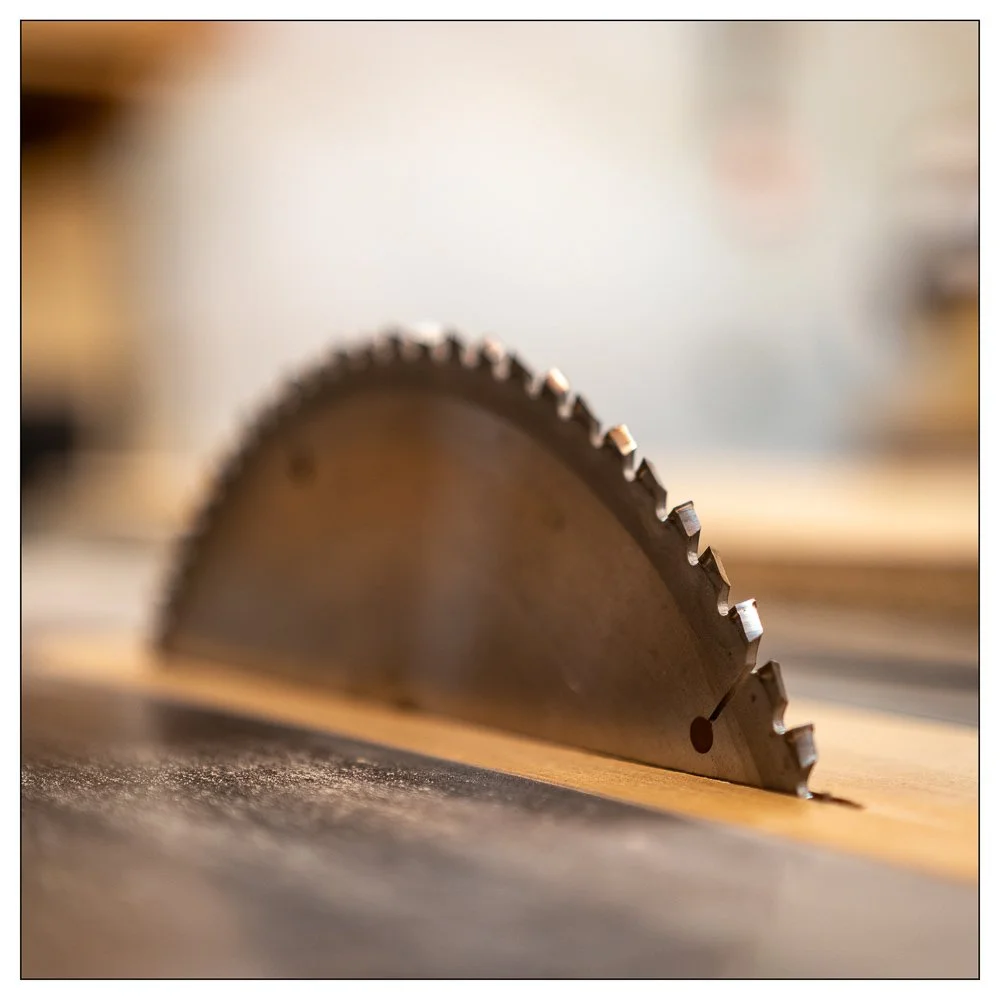
The 10‑Inch Standard — What Real Table Saws Run Today
A 10‑inch blade is the standard on every serious table saw today, and once you’ve used one, you understand why. My old contractor saw only took a 9‑inch blade, and that single inch changed everything — fewer blade options, limited cut depth, and no access to the premium blades that make clean work possible. A modern 10‑inch cabinet saw like the General 350 opens the door to real woodworking: full‑height rips, proper dado sets, and blades built for hardwood, joinery, and precision. This photo shows the difference in one glance — the blade a real saw is supposed to carry.
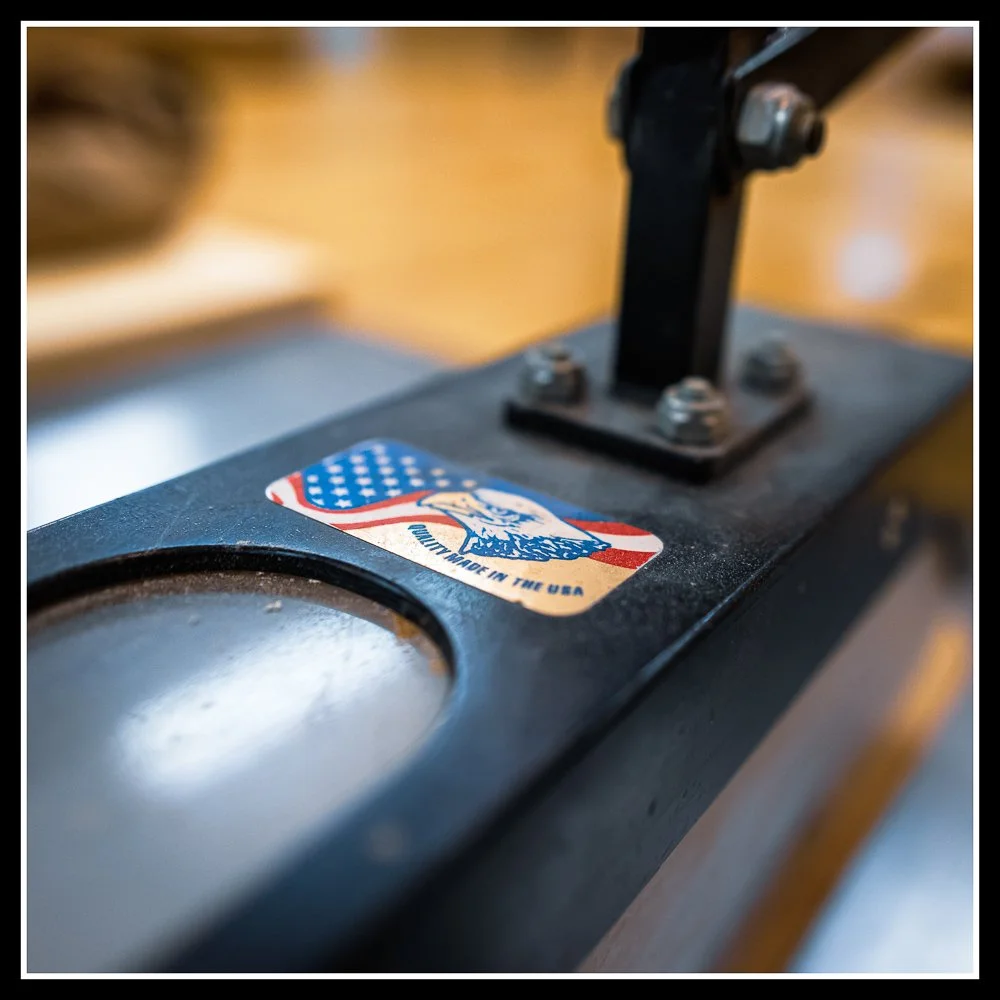
Biesemeyer Overhead Guard — Quick‑Release Protection for Real Work
The Biesemeyer overhead guard is built for the kind of work where the main guard needs to come off fast — dado sets, jigs, sleds, and anything that demands open access to the blade. For sheet goods, though, nothing beats it. The overhead design keeps the cut visible, the dust under control, and the guard out of the way of fences and fixtures. It’s heavy steel, built right, and made for shops where the guard isn’t a decoration but a tool. On a cabinet saw like the General 350, it’s the perfect balance: safety when you want it, freedom when you need it, and the ability to switch between the two without breaking your workflow.
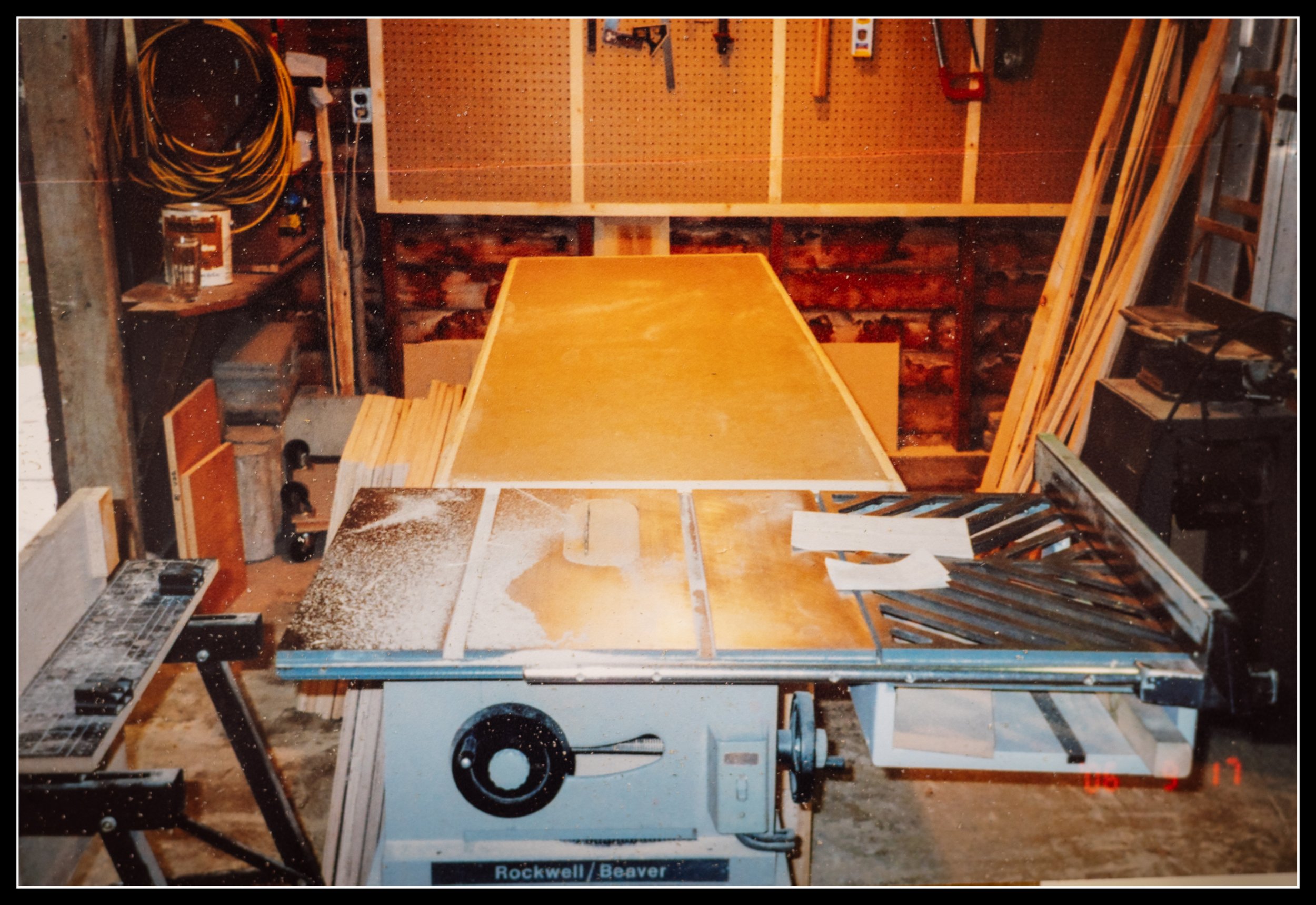
The Rockwell Beaver tablesaw
This old Rockwell Beaver was my first table saw — the machine that taught me every frustration a contractor saw can offer. Plastic cranks, a wandering fence, an underpowered motor, and a cast‑iron top covered in dust from whatever project I was stubbornly pushing through. Looking at it now, sitting in the shop with plywood on the bench and tools on the pegboard, I can see exactly why every cut felt like a negotiation. It wasn’t a bad saw; it was a beginner’s saw. The one that taught me how machines work, how grain fights back, and how limitations shape a woodworker long before better tools arrive.
When the Machine Stops Being the Limitation
Looking back at every photo — the old contractor saw, the guards, the stock guides, the cast‑iron top — the whole story becomes obvious. A woodworker grows, and eventually the machine has to grow too. The Rockwell Beaver taught me the hard lessons. The General 350 taught me what happens when the saw finally disappears and the work comes forward. That’s the real turning point in any shop: the moment the tool stops holding you back, and the craft becomes the thing that leads.
Together, gathered in one place so the machine stories, tool reflections, and workflow moments stay connected — easy to find and easy to return to.
SHARE
The Working Side of the Craft — Connected Through Machines, Tools & Stories
If you want the stories shaped by table saws, bandsaws, grinders, fences, and jigs — the honest, noisy side of woodworking — the Working Side Of The Craft is one click away.
If you’d like to hear from me only when something big is happening — a launch, a milestone, or a major project — you can join the mailing list below.
Written by David Flather, Red Seal cabinetmaker and founder of Knotty Dave’s Fine Woodworking — a Manitoba shop rooted in heritage restoration, storytelling, and real craft.
All photos shot by David Flather — in the shop, on the road, and in the places where craft and story meet.
Related rambles:
The Radial Arm Saw: Forty‑One Years of Real Shop Use, Safety, and Cross‑Cut Accuracy
My First Bandsaw That Didn’t Suck — A Woodworker’s Journey Through Vintage Saws
How Thickness Planers Really Behave: Tearout, Ridges & Grain That Fights Back
Zero‑Clearance Throat Plates: Clean Cuts, Safer Tablesaw Work, and a Simple MDF Build
The Workshop Library
If you enjoyed this story, there’s lots more like it inside The Workshop Library — and it’s free to explore.
Wood Archive — species, grain, working properties, and real‑world craft notes
Behind the Grain — the deeper stories inside wood, craft, and heritage
The Working Side of the Craft — tools, shop life, workflow, and the realities of making
Digital to Sawdust — Design Studio — geometry, proportion, visual flow, and design thinking
The Stories of the Shop — the personal side of craft, the shop’s history, and the quiet moments that shape the work
House & Hearth — heritage home restoration, the hearth room, winter culture, and the lived‑in side of craft
I’m just one man with a shop, building this archive one story at a time. If you’d like to follow the journey as it unfolds, explore The Workshop Library — new stories every week.
