

My First Bandsaw That Didn’t Suck
Quick Answer — What separates a good bandsaw from a frustrating one?
A good bandsaw tracks straight, holds alignment, and cuts without drift. Bad bandsaws fight you — misaligned wheels, weak motors, sloppy guides, and tables that aren’t square to the blade. The difference is simple: one limits your skill, the other keeps up with it.
Straight tracking — wheels aligned, blade centered, and cuts that follow the line instead of wandering
Stable cast‑iron mass — heavy frames and wheels that kill vibration and keep the blade honest
True table alignment — the table and fence set to the blade’s natural path so drift disappears
Real power — induction motors that don’t stall, hesitate, or bog down in hardwood
Reliable guides — guides that stay square, stay tight, and keep the blade supported under load
Machine that keeps up — the saw stops limiting your skill and finally lets your work come forward
The Bandsaw That Finally Showed Me What a Real Cut Looks Like
My First Bandsaw That Didn’t Suck is a woodworker’s journey through the machines that shaped a career — from a 30" Rockwell Beaver in junior high to the Canadian‑made General 490 that finally delivered the cut I’d been chasing. If you’ve ever fought blade drift, tuned a stubborn saw, or wondered what makes a bandsaw truly worth owning, this story walks through every lesson learned along the way.
BY THE END OF THIS STORY
You’ll understand why small bandsaws hold you back, how table alignment actually fixes drift, what separates cast‑iron Canadian machines from lightweight imports, and why the General 490 became the first saw that could keep up with my skill instead of limiting it.
Estimated read time: 10 minutes
Fast Summary
A woodworker’s journey through the bandsaws that shaped a career — from mid‑century Rockwell Beaver cast‑iron classics to cheap 1980s imports and finally the Canadian‑made General 490 that delivered the cut he’d been chasing. This Ramble covers blade drift, wheel alignment, guide repairs, and the real differences between small saws that hold you back and cast‑iron machines that let your skill come forward.
The Junior High Monster
This story can’t start with the best bandsaw ever — even though it runs so damn nicely. It has to start where all stories start: when I didn’t have one.
My first bandsaw experience was in junior high back in the 1980’s. One of those huge Rockwell Beaver machines with 30" wheels — the kind where, when you shut it off, the wheels just keep spinning unless you stomp on the worn‑out foot brake and it squeals itself to a stop. It even had a broken lamp bolted to it, and I bet that lamp would’ve been real nice if it worked.
But jokes aside, it was a well‑built cast‑iron giant. It’s probably still spinning somewhere, because those things were indestructible. Except the lamp. And the brake.
It was a great introduction to bandsaws. Kids learned basic safety and basic cutting — but nothing about maintenance or how the machine actually worked. And for years, that was it.
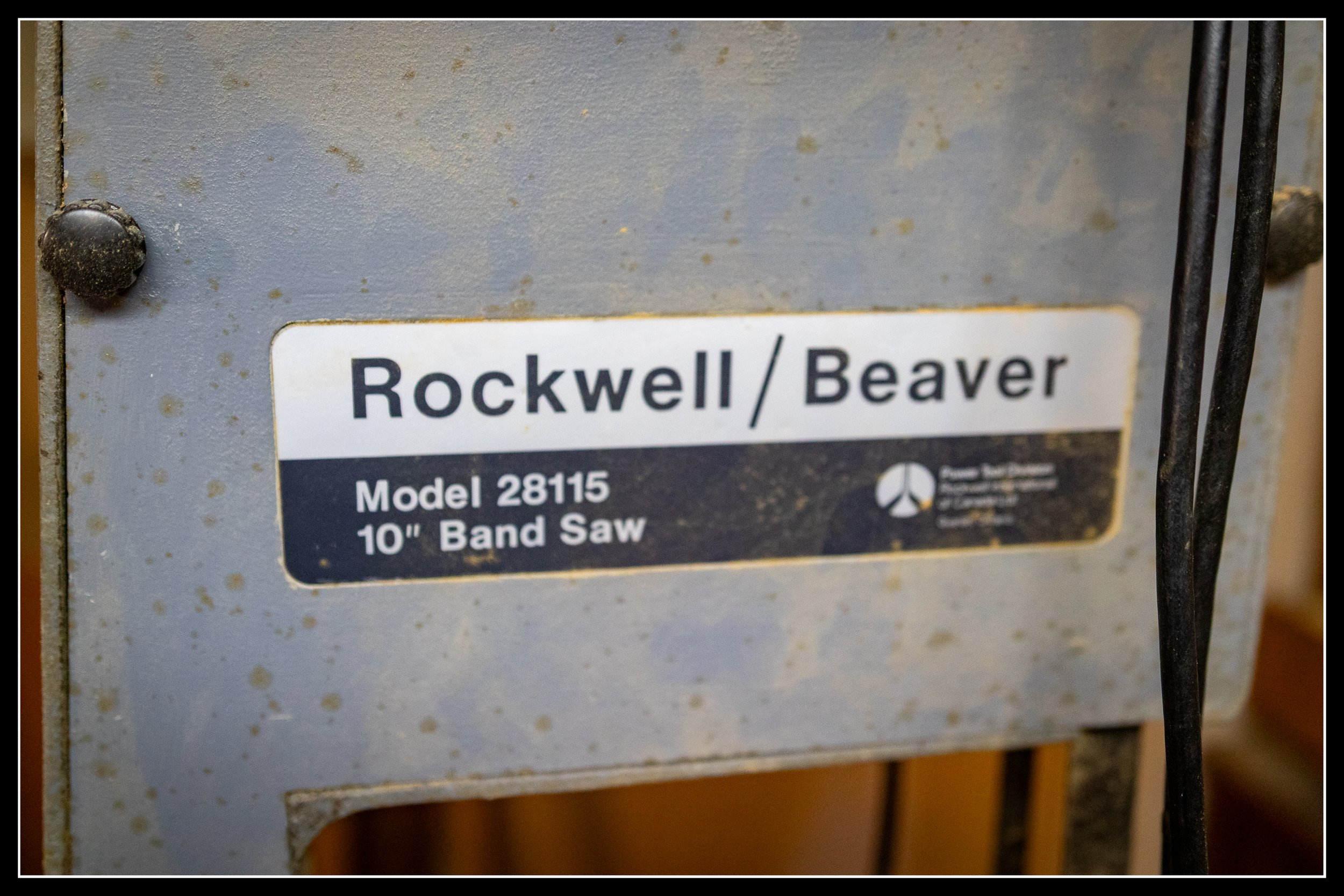
Rockwell/Beaver Model 28115 — 1950’s 10" Bandsaw
The Rockwell/Beaver Model 28115 comes from a unique moment in Canadian tool history, when Beaver Power Tools of Guelph, Ontario was transitioning into Rockwell’s North American manufacturing network. Beaver had been producing cast‑iron woodworking machines since the 1930’s, known for their durability and small‑shop practicality. In the mid‑1950s, Rockwell acquired Beaver and began rebranding the lineup, creating hybrid machines like this Model 28115 — built with Beaver’s Canadian cast‑iron engineering and Rockwell’s expanding industrial distribution. These saws were designed for homeowners, schools, and small professional shops, offering reliable performance at a time when Canadian‑made machinery was becoming a staple in woodworking across the country.
The 10" Rockwell Beaver
Then one day my wife brought home a phone number from the co‑op. An elderly fellow was selling his entire woodworking collection. He lived walking distance from my house.
I bought almost all his tools, including a 10" Rockwell Beaver bandsaw — a kind of apologetic‑looking thing. Floor model, metal base, cast‑iron body, induction motor, all the parts were there. He’d bought it new in the 1950’s.
And to me, it was amazing. I had a bandsaw. I was happy.
It was well made for such a small saw, but eventually I got better at woodworking and started to feel it holding me back. The 10" throat was the biggest issue — the saw was always getting in its own way. But for the fifty bucks I spent, at least I owned a bandsaw.
The Foremost 14"
Then came the day I was at a farm looking at a stationary belt sander I wish I never bought. The farmer asked if I’d be interested in a 14" bandsaw.
We walked out to his barn through soft snowdrifts that filled my shoes and soaked my socks. In the dark, next to an old forgotten tractor, sat an off‑brand bandsaw — a Foremost. I’d never heard of that name, but it worked. He asked $200. I shook his hand.
Back at the shop, I learned a lot from that saw — especially about maintenance. The blade kept falling off the wheels, turning a quick cut into a 30‑minute side project. Eventually I figured it out: the wheels were misaligned.
I shimmed the bottom wheel, used a straightedge, tightened the bolts, and that was the end of blades falling off.
It had no fence, but it had a good induction motor. Enough power for basic cuts, but no resawing. I started researching aftermarket accessories, but eventually decided to keep an eye out for something better.
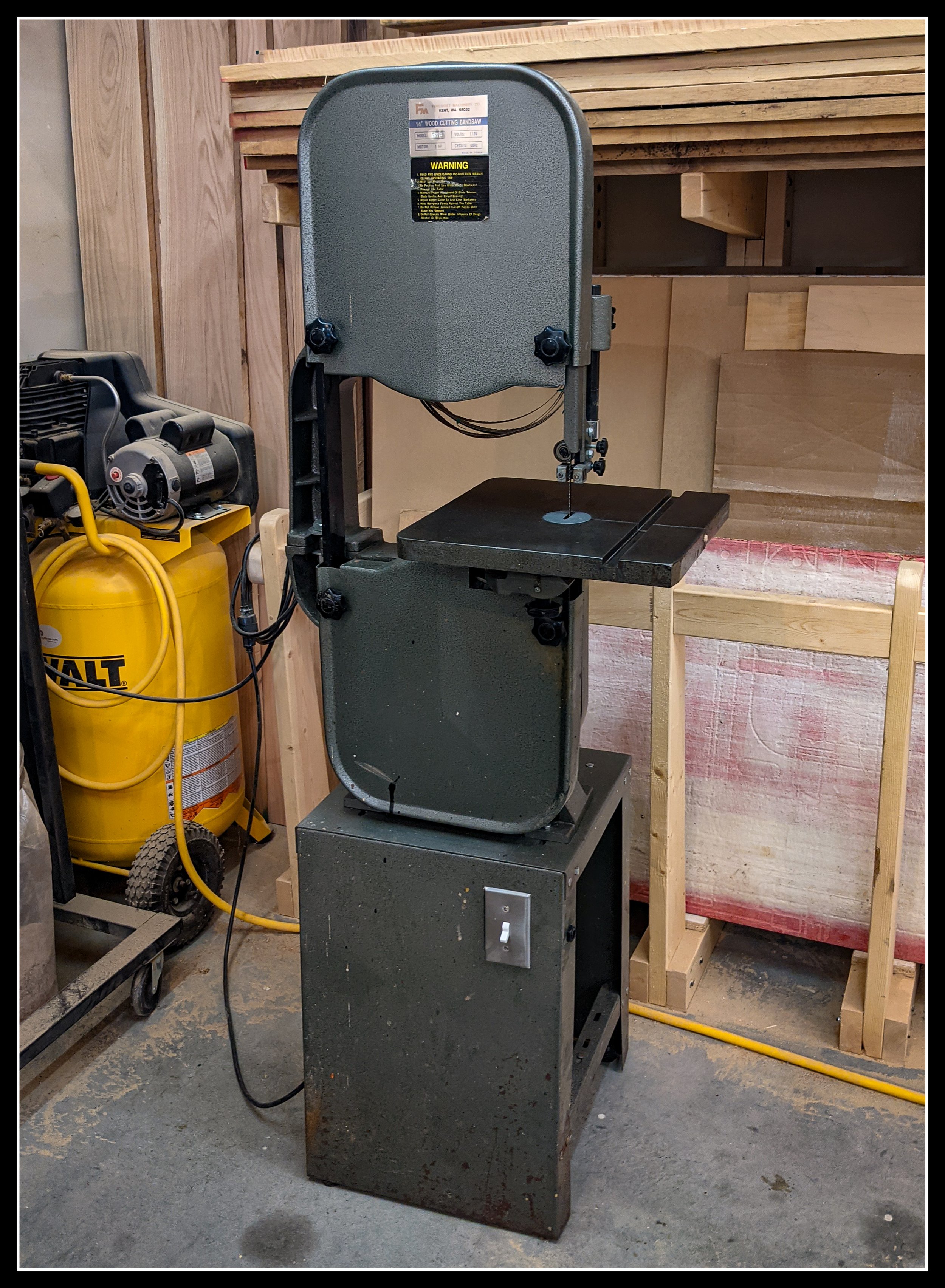
Foremost 14" Bandsaw — 1980’s Import That Expanded the Shop
The Foremost 14" Bandsaw represents the wave of Asian‑import woodworking machines that entered North America in the late 1970’s and 1980’s. Foremost was one of many off‑brand manufacturers producing cast‑iron, belt‑driven bandsaws for small shops and hobbyists, offering more power and throat capacity than the compact Canadian machines of the 1950’s. These saws were heavier, typically equipped with a 1 HP induction motor, and built to mimic the proven 14" American designs of the era. While not a premium brand, Foremost machines were reliable enough to open the door to larger projects — giving woodworkers the ability to cut thicker stock, handle wider curves, and push beyond the limitations of small 10" saws. This was the saw that let bigger ideas happen in the shop.
College — The Big Saws
Then I started college, taking a course called Wood Products. And guess what — they had a 30" Rockwell Beaver bandsaw with a broken lamp and squeaky brake! That was awesome.
But here we learned about saw maintenance and advanced techniques. This saw had no fence — it was for basic cuts and circles. Not for resawing.
For resawing, the college had a 48" monster. Loud, solid cast iron, wheels behind a cage, a power feeder, and a tall fence. Built back when dust collection meant sweeping at the end of the day. No brake. Those 48" wheels would spin for ten minutes after shutdown.
This was the biggest saw I ever used.
I went to college for five years. During the apprenticeship phase, that 48" giant was gone, replaced by a Laguna bandsaw built for resawing. Much smaller, quieter, fancy disc brake, proper dust collection. I think it was an 18" 3HP — I’m fuzzy on the exact number, but I remember being impressed. Huge upgrade for the cabinetmaking shop. And the 30” Rockwell Beaver bandsaw, they fixed the lamp, it was nice
During my work experience, the shop that employed me had one bandsaw: a Poitras — Quebec‑built, later acquired by General. Not 48", but maybe 30". The cast iron was unbelievable. The most overbuilt saw I’ve ever seen.
The shop had 40 people building custom millwork. None of them used this saw. It was only used by the truck driver when he wasn’t driving — he made cedar shims for the installers. That’s it. A 14" saw could’ve done the job. At least they were using it.
I used it for cutting circles a few times with a jig. Yay me.
All these nice saws showed me what my current 14" saw couldn’t do. That’s a hard pill to swallow. Because I could do more. I could build better. So I needed a better bandsaw if the right one turned up.
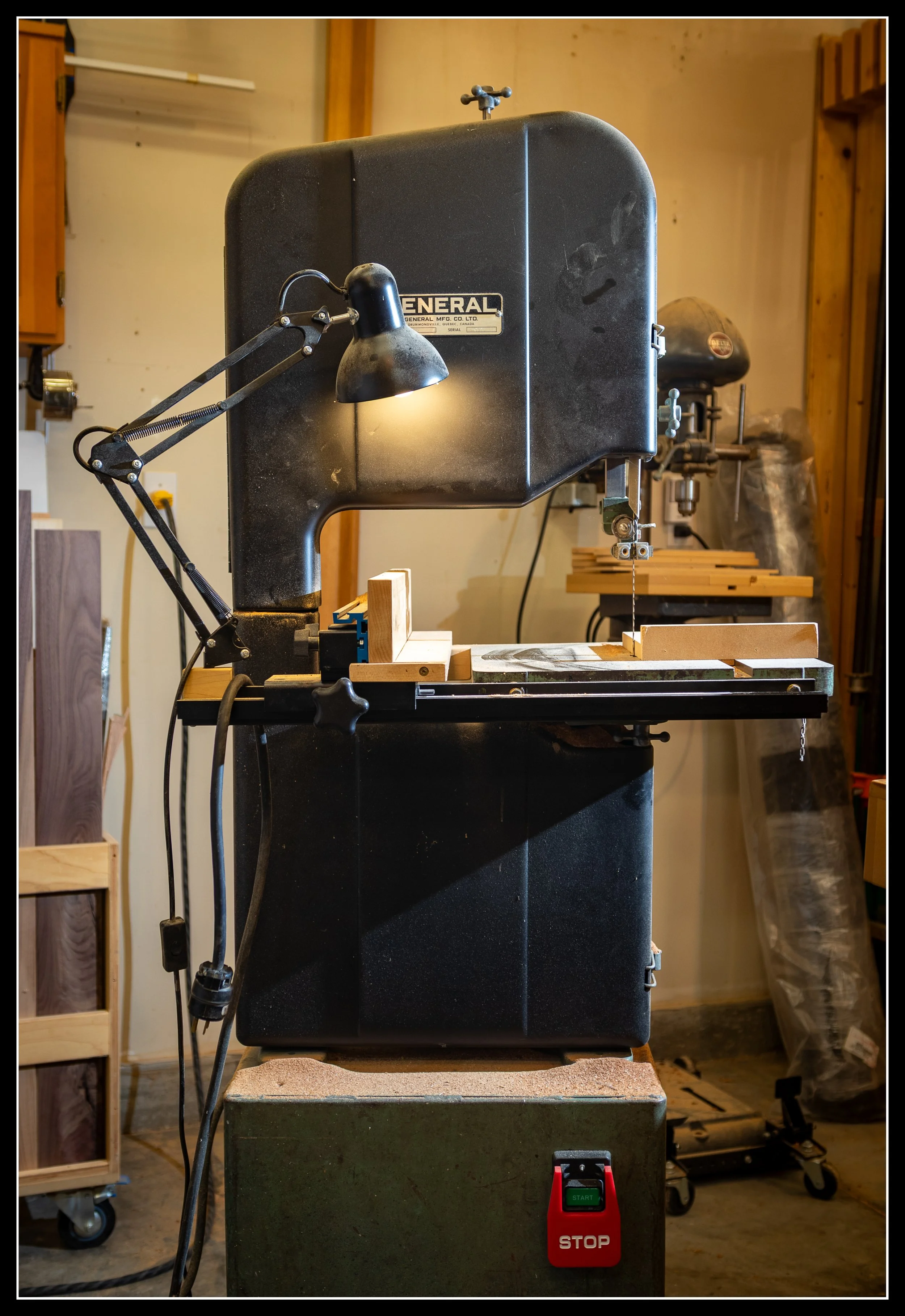
General 490 Bandsaw — Canadian Cast Iron Built to Last
The General 490 15" Bandsaw is a product of Canada’s golden era of machinery manufacturing, built in Drummondville, Quebec around 1984 when General was producing some of the most respected cast‑iron woodworking tools in North America. Unlike the lightweight import saws of the 1980’s, the 490 was engineered for stability, longevity, and precision — thick cast‑iron wheels, a rigid frame, and a motor that could be rewired for 240V without complaint. Even rough and battle‑scarred, these machines endure for decades, and once properly aligned they cut straighter than anything in their class. The 490 wasn’t flashy, but it was honest: a Canadian‑made workhorse built to outlive its owners and deliver reliable performance in real shops, not showrooms.
The General 490 — The Saw That Didn’t Suck
I wanted a General 490 — the 15" Canadian‑made bandsaw. Well built, cast iron, and able to take an aftermarket fence. I’d heard nothing but good things about Canadian Generals.
One day on Kijiji, I saw a local listing. I texted the guy. He still had it. That night, it was in my shop.
It cost $900, and just so you know where we are in the story: this is the saw that didn’t suck — or it would be.
Because when I first set it up, something felt off. Nothing serious, just… wiggly.
Turns out the former owner had taken the entire saw apart — every single piece — probably to repaint it. The doors were sanded and painted black. Then, I guess, he gave up and reassembled it finger‑tight.
So I went over the entire saw. Every bolt. Every alignment. Everything. Then I rewired the 1.5 HP motor for 240V.
I had great fun fixing it because I’m that kind of guy. This made the saw mine. I marked it as Knotty Dave’s.
With every bolt tight and the saw humming, I tested it — and it cut wood. Fantastic.
I ordered a Kreg aftermarket fence. It installed perfectly. But the first time I used it, nothing cut straight. Wood drifted away from the fence.
And here’s the thing: drift isn’t mysterious. It’s just misalignment — of the table, not the blade.
On a bandsaw, the blade follows its natural path. You don’t adjust the blade to the table — you adjust the table and fence and mitre slot to the blade.
If the table is angled even a tiny bit left or right, the wood will naturally follow the blade’s path. You can fight it with muscle, the saw will win every time. Drift is the blade telling you the machine isn’t aligned.
It’s the same idea as a cabinet saw: If the blade isn’t parallel to the miter slot, the wood will either pull away from the fence or bind into it. A bandsaw behaves exactly the same — just quieter.
The previous owner had the table off, so of course it was misaligned.
So I went through the whole alignment process:
centering the blade on the wheels
checking the guides
squaring the table to the blade
aligning the fence to the blade’s true cutting path
With trial and error, I got it perfect. To this day, if wood ever drifts, it’s a dull blade — not alignment.
This is the saw that didn’t suck. I still use it. It has battle scars. It’s been used hard. But General made saws that don’t quit and don’t suck.
The Lesson
Those other two saws were great for the skill level I had at the time. But as my skill grew, my needs changed, and small saws held me back like pants that were too small.
Those little saws taught me what makes a good saw. Skilling out beyond what the saw could do taught me what I needed.
The General 490 fit my small shop, had the power, had the cast iron I love, could take an aftermarket fence, and was within my budget. It hit all the right buttons.
It’s the first bandsaw that didn’t suck. But if my needs grow, even this saw could hold me back. It can’t resaw anything over 7½" — that’s with the guard off — but I haven’t needed that yet.
Advice for Woodworkers
If you’re a young woodworker with a budget: get your hands dirty — fix an old one. Learn how they work. That way you’ll appreciate a well‑built saw when you see it. I’ve never lost a dollar selling used saws. Use them for years, and often you get what you paid or more.
If you’re older and have the money: get what your heart desires.
Let’s cut some wood.
General 490 Bandsaw — Cast‑Iron Frame Built for Real Woodworking
The General 490 15-inch bandsaw was built during Canada’s golden era of cast‑iron machinery, and this photo highlights exactly why these saws earned their reputation. The frame is massively overbuilt — thick, rigid, vibration‑killing cast iron that keeps the blade tracking true even under heavy cuts. Unlike lightweight import saws of the 1980s, the 490 was engineered for stability and longevity, and once aligned properly it delivers straighter cuts than anything in its class. This image shows the kind of construction that made the 490 a favourite among Canadian cabinetmakers and the first bandsaw in my shop that truly didn’t suck.
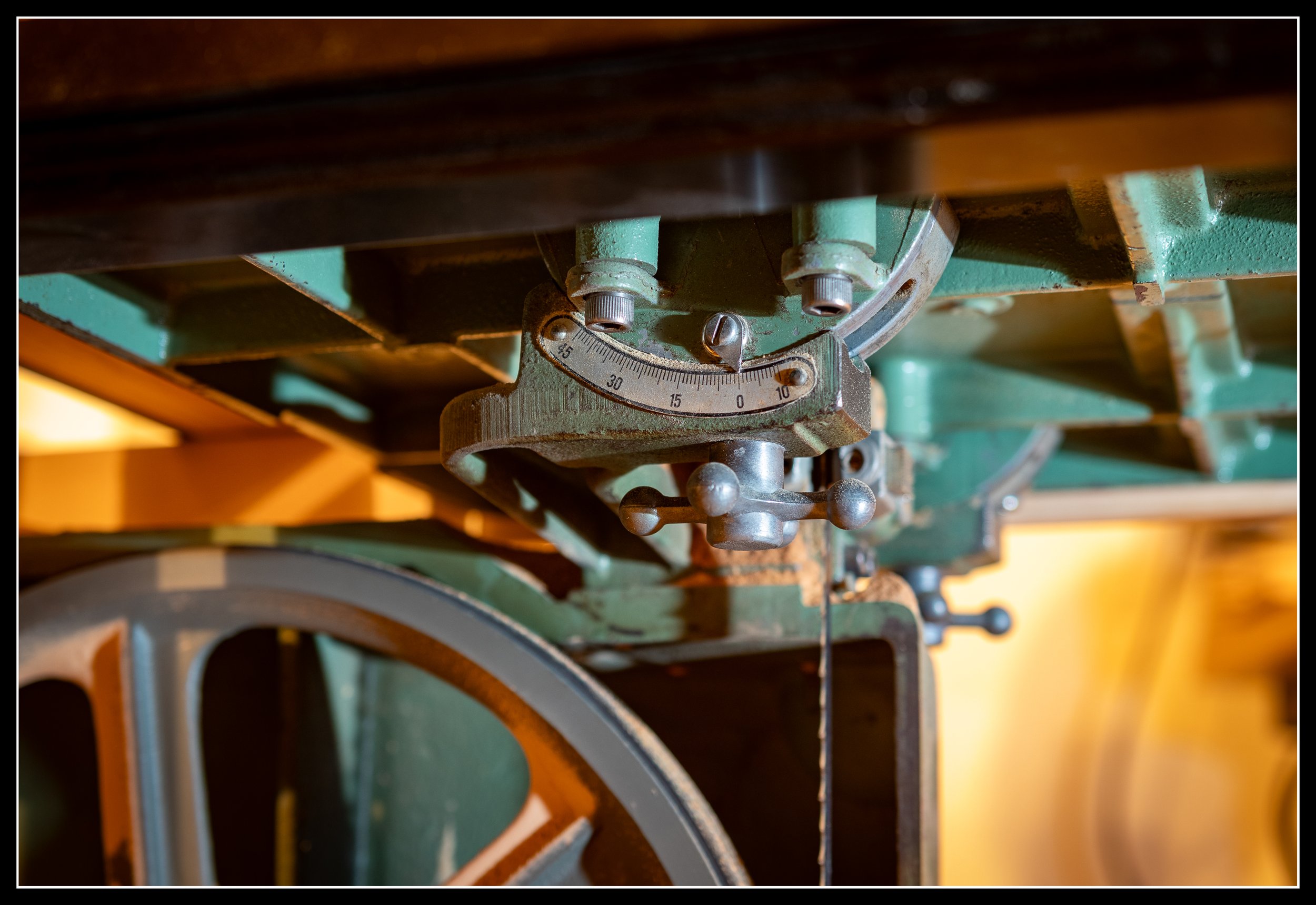
General 490 Bandsaw — Cast‑Iron Trunnion and Angle Gauge Assembly
The General 490 15-inch bandsaw was built during the era when Canadian machinery manufacturers still overbuilt everything, and this photo shows one of the best examples of that philosophy: the cast‑iron trunnion assembly under the table. There’s no plastic, no stamped steel, no shortcuts — just thick iron, machined surfaces, and a rock‑solid angle gauge that keeps the table stable and true. This is the kind of construction that separates real woodworking machines from lightweight imports, and it’s one of the reasons the 490 became the first bandsaw in my shop that truly didn’t suck.
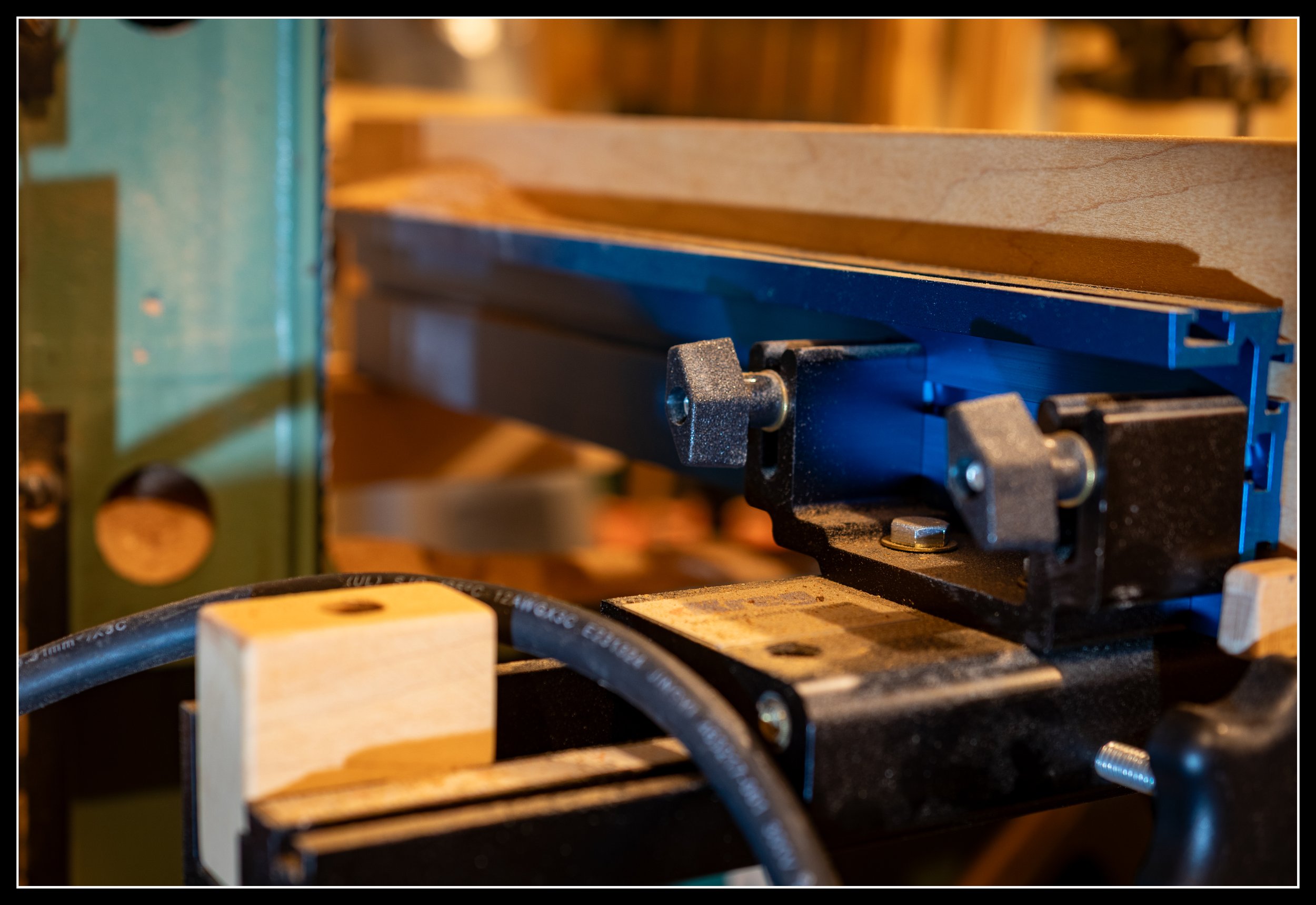
Kreg Bandsaw Fence on the General 490 — Precision Upgrade for Cast‑Iron Machines
The Kreg aftermarket bandsaw fence is one of the few modern accessories that fits the General 490 like it was made for it. The 490’s cast‑iron table and rigid frame give the fence a rock‑solid foundation, and once aligned to the blade’s natural cutting path, it turns the saw into a precision machine. This photo shows the fence in action — clean, square, and perfectly suited to a Canadian‑made bandsaw built decades before Kreg existed. It’s the upgrade that finally let this saw cut straight, proving that the right fence can transform even a battle‑scarred machine into a trustworthy shop workhorse.
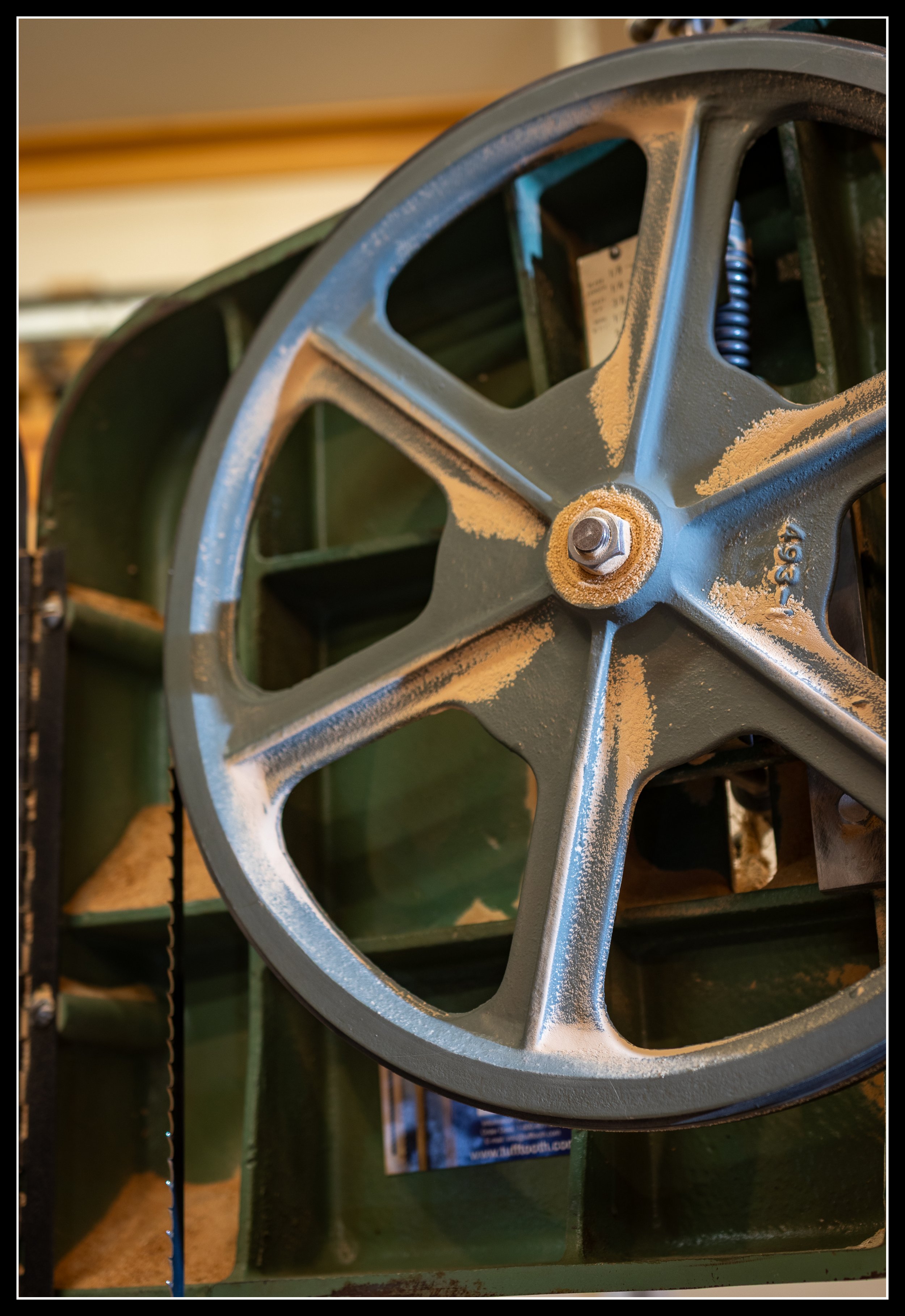
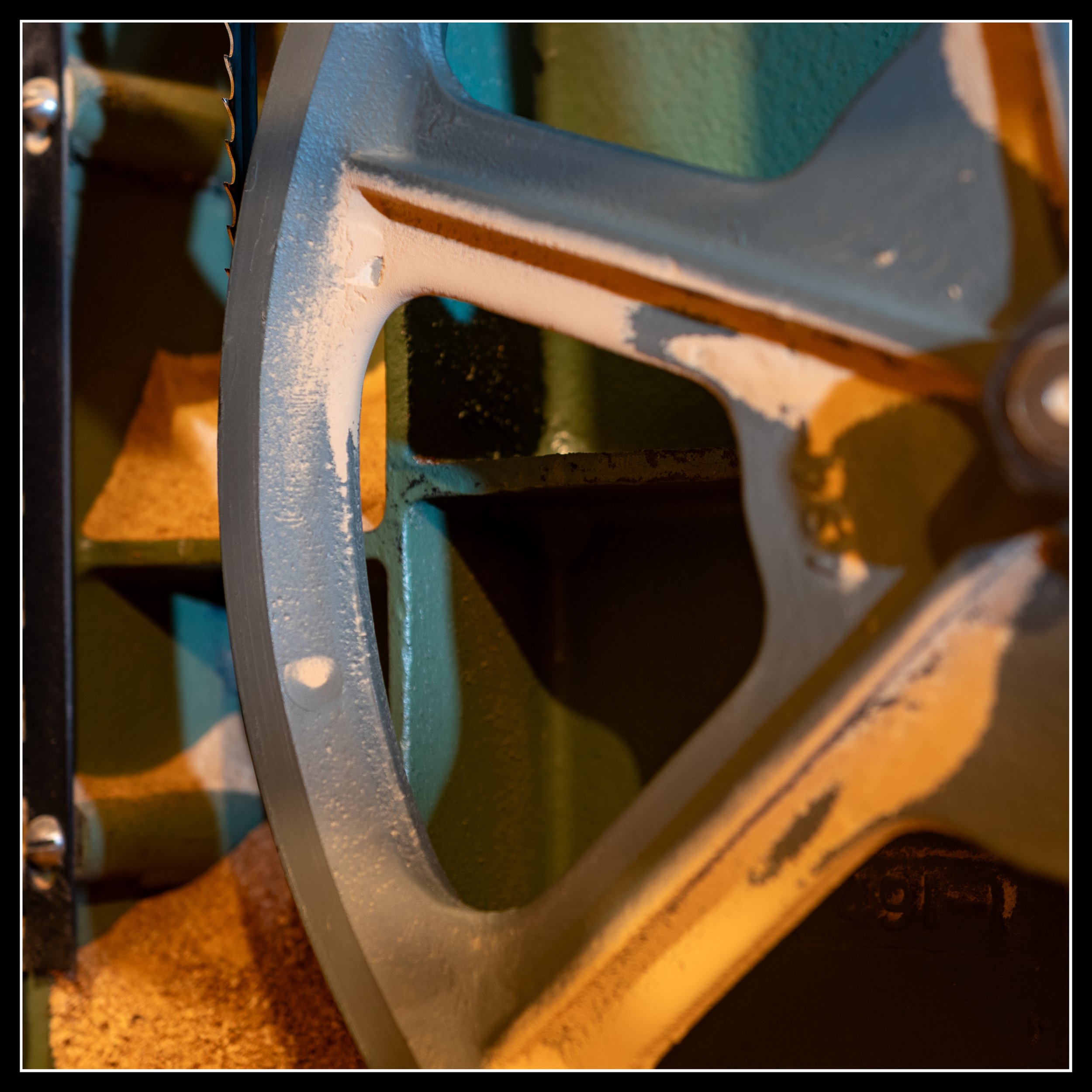
General 490 Bandsaw — Cast‑Iron Upper Wheel Assembly
The upper wheel on the General 490 is one of the clearest examples of why these Canadian‑made bandsaws earned their reputation. Everything here is cast iron — thick, heavy, vibration‑killing mass that keeps the blade tracking true and stable. No plastic housings, no lightweight shortcuts, just honest machinery built for real woodworking. This photo shows the wheel, hub, and frame exactly as they were meant to be: durable, overbuilt, and ready to run for decades. It’s the kind of construction that separates the 490 from modern import saws and one of the reasons this machine became the first bandsaw in my shop that truly didn’t suck.
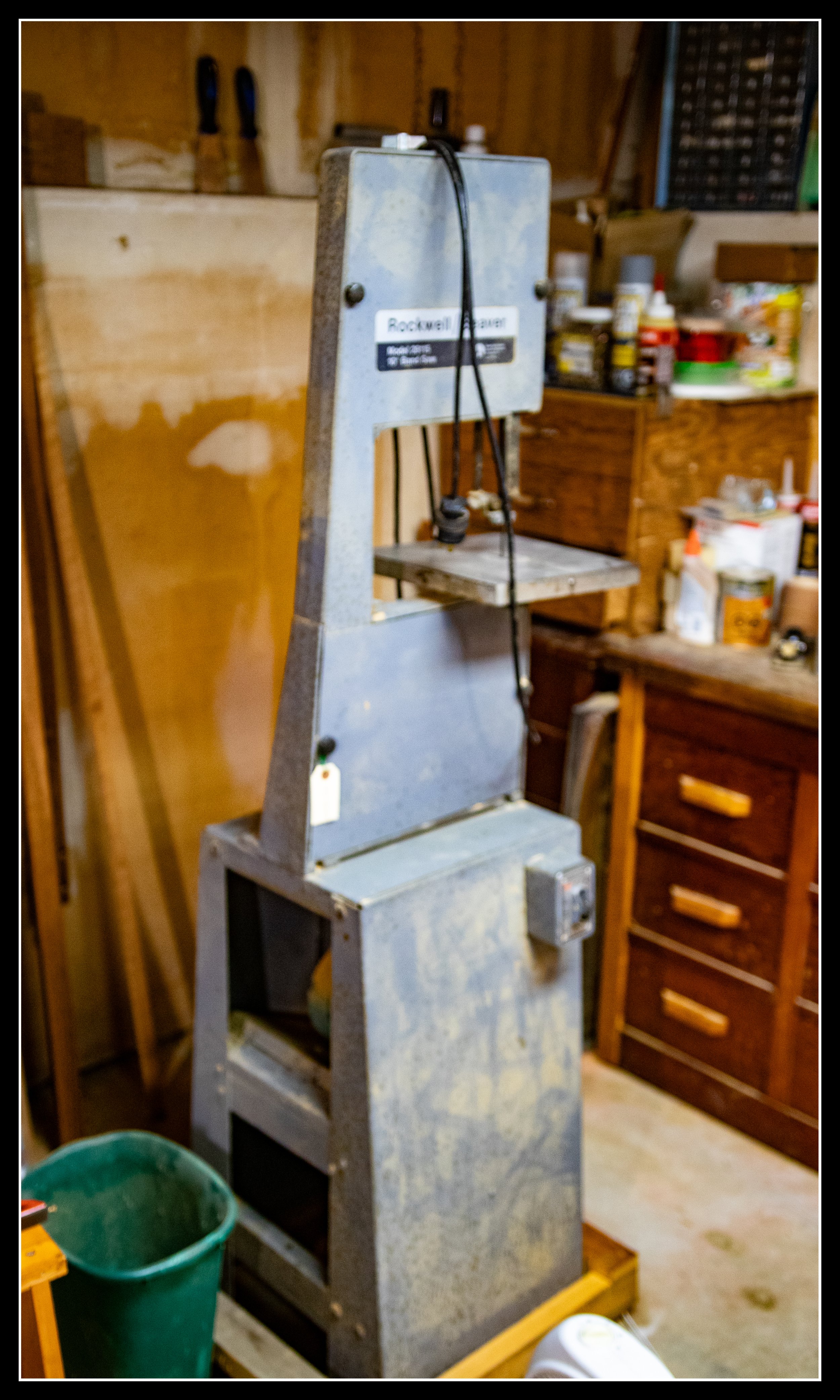
Rockwell Beaver 10" Bandsaw — A 1950’s Canadian Classic
The Rockwell Beaver 10" Bandsaw was one of the most common small-shop machines in mid‑century Canada, built during the 1950’s when Rockwell’s Beaver division was producing cast‑iron tools for home woodworkers and small professional shops. This little floor‑model saw was compact, reliable, and surprisingly well made for its size — induction motor, cast‑iron frame, and a metal base that kept it planted. It didn’t have the throat or power for serious resawing, but for light cutting and early woodworking skills, it was a dependable starter machine that introduced thousands of Canadians to bandsaw work.
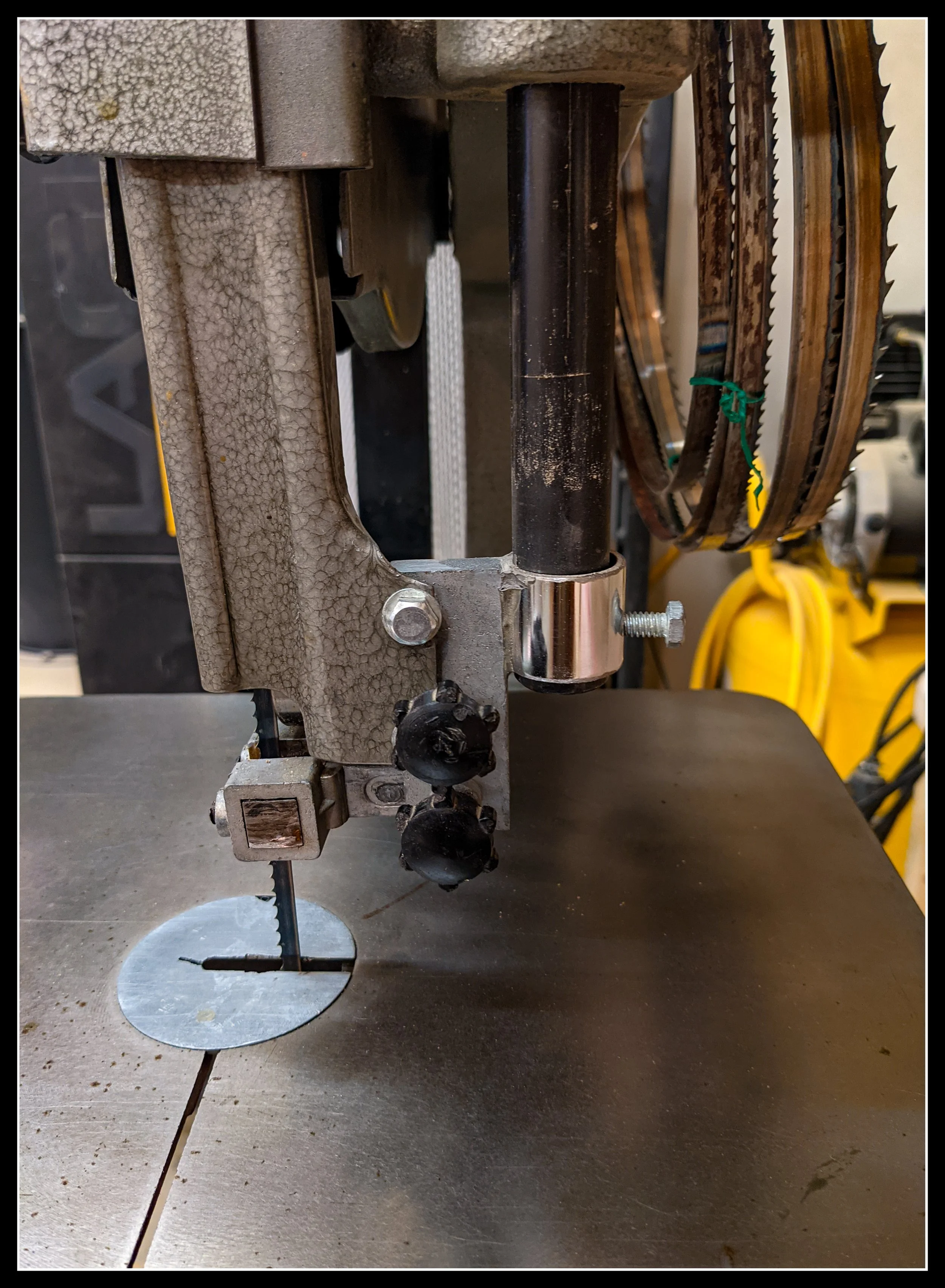
Foremost 14" Bandsaw Repair — Fixing a 1980’s Import the Hard Way
The Foremost 14" Bandsaw was a typical 1980’s Asian import — affordable, heavier than the old 10" Beaver, and equipped with a 1 HP induction motor that opened the door to bigger projects. But the low‑grade metallurgy showed its limits when the upper guide support literally crumbled in my hands one day. The machine shop refused to weld it, citing poor metal quality, so I rebuilt the support using a section of closet rod and JB Weld. It wasn’t elegant, but it worked, and it kept the saw running despite chronic wheel misalignment that caused blades to fall off until I shimmed the lower wheel. For a $200 off‑brand saw, this kind of repair was part of the deal — and even with its flaws, it still pushed my shop into larger, more ambitious work.
Together, gathered in one place so the machine stories, tool reflections, and workflow moments stay connected — easy to find and easy to return to.
SHARE
The Working Side of the Craft — Connected Through Machines, Tools & Stories
If you want the stories shaped by table saws, bandsaws, grinders, fences, and jigs — the honest, noisy side of woodworking — the Working Side Of The Craft is one click away.
If you’d like to hear from me only when something big is happening — a launch, a milestone, or a major project — you can join the mailing list below.
Written by David Flather, Red Seal cabinetmaker and founder of Knotty Dave’s Fine Woodworking — a Manitoba shop rooted in heritage restoration, storytelling, and real craft.
All photos shot by David Flather — in the shop, on the road, and in the places where craft and story meet.
Related Stories:
How a Jointer Removes Cup, Bow, Crook & Twist — The Straight Facts About Milling Wood
The Radial Arm Saw: Forty‑One Years of Real Shop Use, Safety, and Cross‑Cut Accuracy
The World Runs on Pencils — Woodworking, Shop Life, and the Tool Everyone Loses
Old Machines, New Machines, and the Quiet Math of a Working Life
The Workshop Library
If you enjoyed this story, there’s lots more like it inside The Workshop Library — and it’s free to explore.
Wood Archive — species, grain, working properties, and real‑world craft notes
Behind the Grain — the deeper stories inside wood, craft, and heritage
The Working Side of the Craft — tools, shop life, workflow, and the realities of making
Digital to Sawdust — Design Studio — geometry, proportion, visual flow, and design thinking
The Stories of the Shop — the personal side of craft, the shop’s history, and the quiet moments that shape the work
House & Hearth — heritage home restoration, the hearth room, winter culture, and the lived‑in side of craft
I’m just one man with a shop, building this archive one story at a time. If you’d like to follow the journey as it unfolds, explore The Workshop Library — new stories every week.
