

Grandpa’s Toolbox
Quick Answer — What is Grandpa’s Toolbox actually about?
A Quiet Story about heritage tools, basement shops, and the hand plane passed from Grandpa to father to son — a reflection on how old tools carry memory, lineage, and the lessons that shape a woodworker’s craft across generations.
Old tools teach patience, purpose, and real craftsmanship
Heritage tools carry memory through their handles and weight
The basement shop becomes the first classroom
Grandpa’s hand plane becomes a generational heirloom
Auger bits, braces, and vintage tools reveal old‑world skill
Tools shape identity across father, son, and apprentice
How Old Tools Teach Us Patience, Craft, and Where We Come From
Woodworkers carry their history in their hands, and this story is one of mine — a quiet memory from the basement shop where I first learned what tools really were. These old hand tools shaped the way I see craftsmanship, patience, and the work that lives beyond the wood itself. This is one of the Quiet Stories, the ones that stay with us long after the sawdust settles.
I originally wrote this for Canadian Woodworking Magazine, but it’s always been a piece of my own history. It belongs here too — in the Rambles, where the stories live.
BY THE END OF THIS STORY
You’ll understand why old tools carry more than metal and wood — how memory lives in their handles, how lineage passes through their weight, and how a simple box of Grandpa’s tools shaped the way I work, teach, and see the craft today.
⭐ Estimated Reading Time: 4 minutes
Fast Summary
This Quiet Story goes back to the basement shop where woodworking first took root — a place filled with Grandpa’s old tools, each carrying memory, lineage, and the quiet lessons that shaped a lifetime of craft. From auger bits to a 1950s hand plane, this story explores how heritage tools teach patience, identity, and the kind of craftsmanship that lives beyond the wood itself.
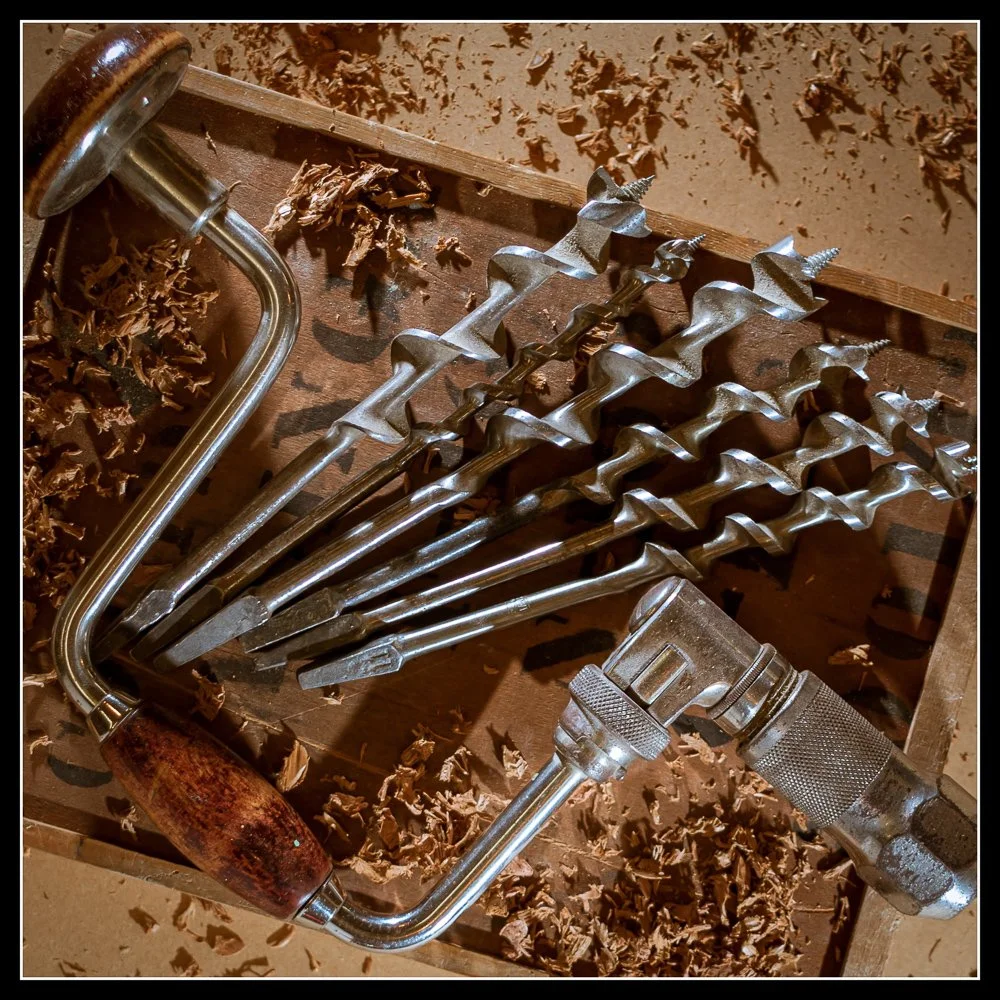
Grandpa’s Brace and Auger Bits
Some of Grandpa’s tools came to me loose, scattered, or worn down to nothing — but the brace and auger bits were different. He built a small plywood box to hold them, corners mashed from years of use, the lid stained dark from oil and damp basement air. Inside, the brace still turns smooth, the wooden handle polished by his hands and mine. The auger bits sit in their rows, each one sharpened who‑knows‑how-many times, each one ready to bore a clean hole if I ever ask it to. They’re simple tools, but they carry the weight of real work — the kind done slowly, by hand, with patience and purpose. I keep them together in his box, just the way he intended.
The Basement Shop Where It All Began
When I was a teenybopper in the 80s — big hair, no supervision — the basement woodworking shop was my safe place. Tools scattered across old plywood benches, a fluffy layer of sawdust clinging to the paintbrushes, putty knives, and used paint rollers hanging from bent nails along the wall. Most days I was cutting wood or gluing up some crooked little board. But sometimes, when I couldn’t find a scrap to build with and the fireplace had already eaten the good offcuts keeping winter’s cold fingers outside, I’d clean the shop.
Everything had its place.
Sawdust swept into the bin.
Order restored.
And if all that was done and my “shop time” still wasn’t satisfied, I’d pull the old tools out from below the bench.
A plywood box with mashed corners, stained black from grease and years of dampness that seeped through the basement walls. Grandpa’s tools were inside — heavy with old metal, memory, and loss. Beneath layers of cobwebs, sawdust, and the occasional dead cricket, a secret forgotten but still felt. I’d slide that old box out and let the soft yellow light of the room reveal what it could.
The sawdust smelled old — that unmistakable blend of tool oil, light rust, douglas fir and the kind of nostalgia only Grandpa’s shop and his old vintage tools could hold.
A bit and brace with a set of auger bits.
An old steel electric drill.
A hand plane.
Chisels with edges long dull, their sharpness gone as Grandpa’s shaky hands could no longer bring them back.
I understood the drill.
But the bit and brace? That thing was a mystery. I’d practice with it, drilling holes full of tear-out and disappointment, wondering why Grandpa needed such a tool, where he got it, and what he used it on. The truth, of course, was simple: power cords used to be too short. This was cordless before cordless was cool.
But as neat as it was, the bit brace had no sway over me like the hand plane did.
That hand plane…
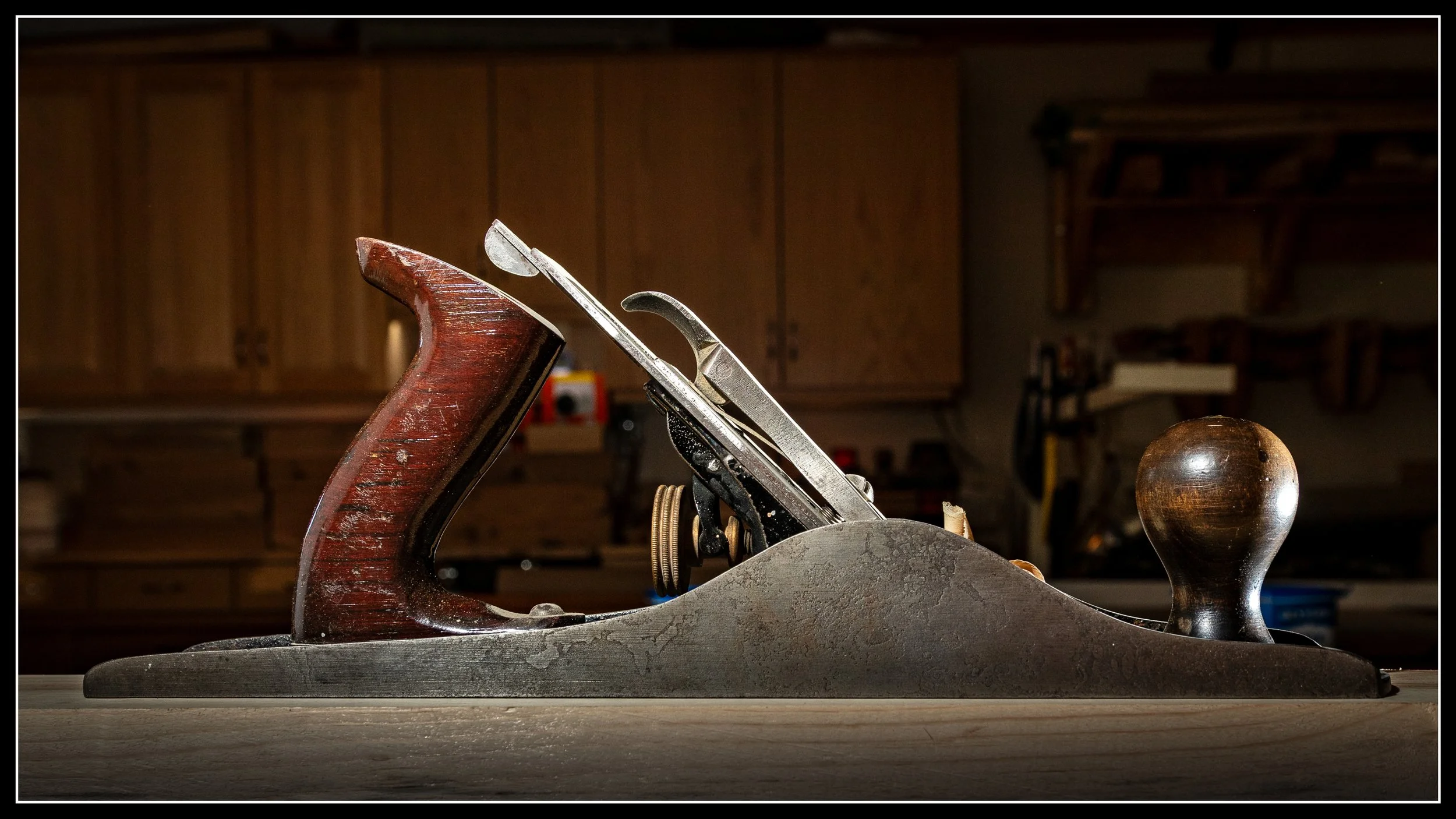
Grandpa’s hand plane
— the one tool from his box that stayed with me. Old metal, worn wood, and every lesson it ever taught still lives in my shop.
Dark wooden knob and tote.
Metal with a light rust and a roughness, a deep gray patina from years of storage and damp basement air. Grooves along the sole and old bits of wood still curled at the blade.
Brass screws turned brown with dried oil and time.
Old‑world craftsmanship in every line.
I didn’t know what it was for, but I knew exactly how it was meant to be held. I’d turn it over in my hands, studying every curve and screw, feeling the weight of it, imagining the work it once did. I’d dust it off and rub a light coat of oil on its surface, knowing that one day I’d figure this thing out.
Then I’d place everything back in the box, slide it under the bench, turn off the lights, and head upstairs. I’d wash my hands, watching the grease and tang of old metal swirl down the drain.
That was decades ago — more than I care to count — but here we are.
The Tools That Followed Me Into My Own Shop
That box is probably still in Dad’s old workshop, smelling the same, with a few more dead crickets inside.
The tools live in my shop now.
The bit brace sits in a drawer, taking up space, waiting for its moment in the light again. But the hand plane? I figured that one out. It’s restored, loved, and part of a collection where dozens of planes sit lined up together — all because of Grandpa’s old toolbox. It’s the only plane that passed from his hands to mine, and now I use it all the time. I smile as Leo, my son and apprentice, discovers the same lessons it once taught me. And with tools scattered across plywood benches, I’m proud to watch how these tools are shaping him into the craftsman he’s becoming.
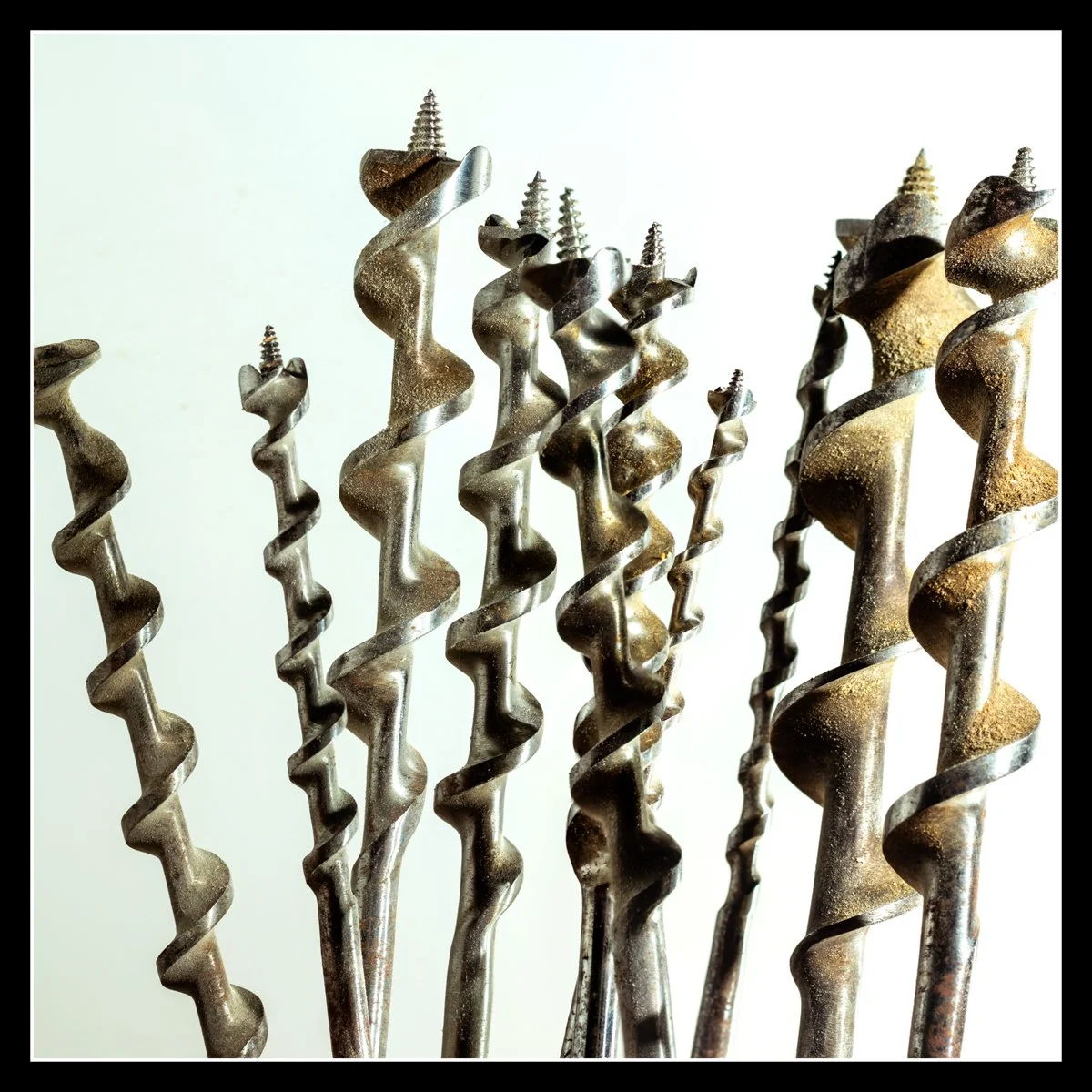
Grandpa’s Auger Bits
These are Grandpa’s auger bits — the full set he kept in the plywood box he built with his own hands. I stood them up one afternoon for a photo shoot, wanting to see them the way he might have seen them: lined up, proud, ready for work. Each bit carries its own history in the spiral flutes and worn steel, sharpened who‑knows‑how-many times, used long before cordless drills made life easy. They were the quiet backbone of his shop, boring holes in fence posts, jigs, cabinets, and whatever else needed doing. I don’t use them often, but I keep them together, upright, and respected — a small tribute to the man who taught me what tools really mean.
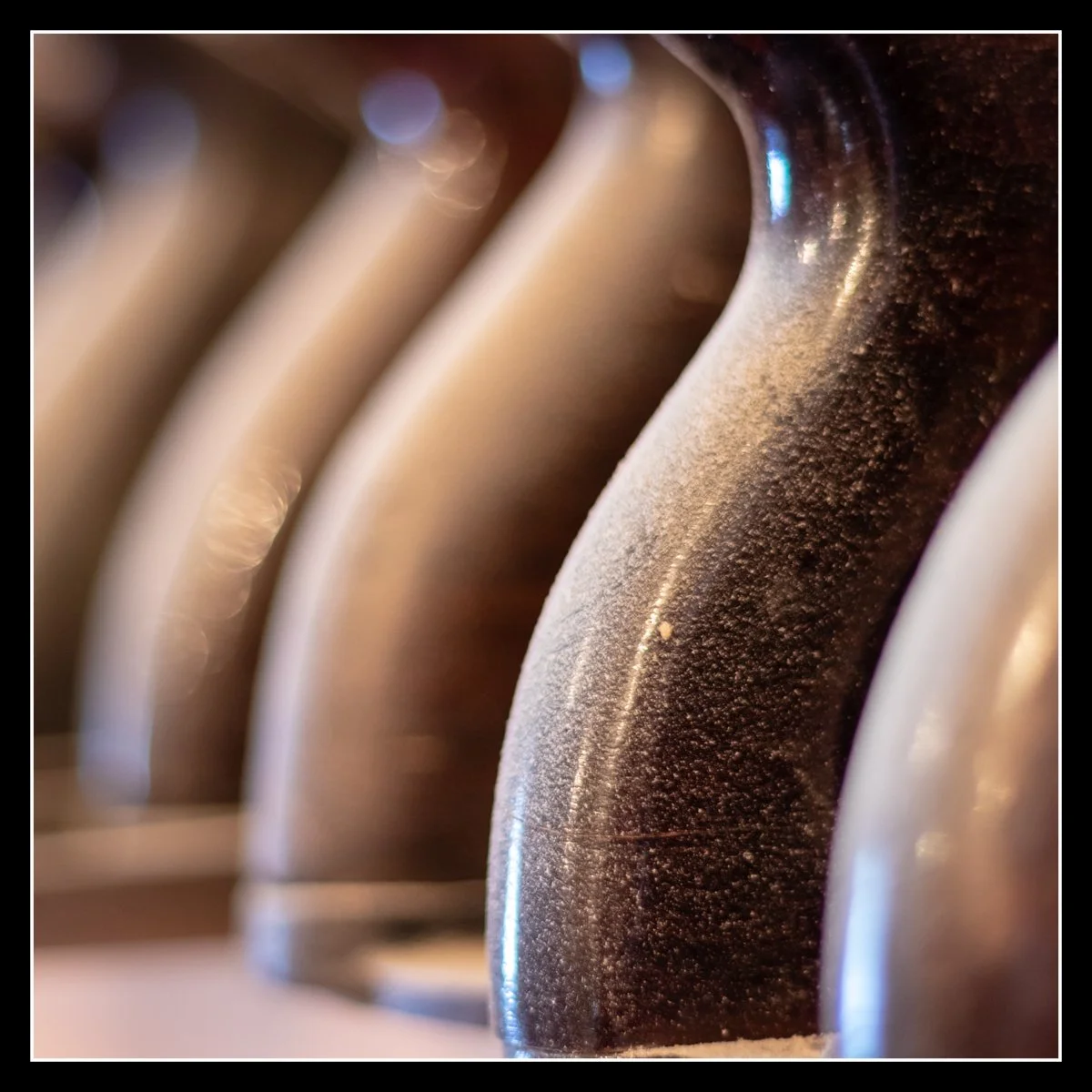
Handplane collection
These are some of the handplanes I’ve collected over the years — a small part of a larger story that started with Grandpa’s old No. 5C. Once I understood that first plane, the rest followed naturally. I learned how to tune them, how to read the grain, how to trust the weight of a tool that doesn’t need electricity to do perfect work. Each plane here has been cleaned, sharpened, and brought back to life. They’re not museum pieces; they’re working tools, shaping boards in the same way craftsmen did a century ago. They remind me where I came from.
This story is part of a small collection of reflections about the tools, lessons, and quiet moments that shape a woodworker’s life. These aren’t tutorials — they’re the memories and experiences that teach us how to see the craft differently, one quiet moment at a time.
SHARE
The Quiet Stories — Connected Through Behind the Grain
For the quiet side of woodworking — The Quiet Stories that sit behind the grain, where the background work, the memories, and the cancer chapters live — head to Behind the Grain.
If you’d like to hear from me only when something big is happening — a launch, a milestone, or a major project — you can join the mailing list below.
Written by David Flather, Red Seal cabinetmaker and founder of Knotty Dave’s Fine Woodworking — a Manitoba shop rooted in heritage restoration, storytelling, and real craft.
All photos shot by David Flather — in the shop, on the road, and in the places where craft and story meet.
Related rambles:
How to Arrive at Perfect: A Quiet Story About Imperfection in Woodworking
Sawdust — How a Radial Arm Saw Shaped a Lifetime of Woodworking
The Power of Lazy: A Quiet Story About Working Smarter in the Shop
The Workshop Library
If you enjoyed this story, there’s lots more like it inside The Workshop Library — and it’s free to explore.
Wood Archive — species, grain, working properties, and real‑world craft notes
Behind the Grain — the deeper stories inside wood, craft, and heritage
The Working Side of the Craft — tools, shop life, workflow, and the realities of making
Digital to Sawdust — Design Studio — geometry, proportion, visual flow, and design thinking
The Stories of the Shop — the personal side of craft, the shop’s history, and the quiet moments that shape the work
House & Hearth — heritage home restoration, the hearth room, winter culture, and the lived‑in side of craft
I’m just one man with a shop, building this archive one story at a time. If you’d like to follow the journey as it unfolds, explore The Workshop Library — new stories every week.
