

Kick Back
Quick Answer — What causes kickback on a table saw?
Kickback happens when the wood pinches the blade, lifts off the table, or gets pulled into the rising rear teeth faster than you can react. Rough or unmilled boards, slow feed rate, dull blades, and misalignment all increase the risk. Kickback isn’t random — it’s the saw telling you something upstream has already gone wrong.
Blade pinch — the kerf closes on the blade, especially with twisted or rough lumber
Rear‑tooth lift — the rising back teeth grab the board and launch it
Unmilled boards — rough stock rocks on the table and shifts pressure mid‑cut
Slow feed rate — hesitation lets the blade bite instead of cut
Dull or misaligned blades — increases friction, heat, and binding
Operator assumptions — kickback happens when you assume a cut is “simple”
A Quiet Day That Turned Sharp
January 23rd was supposed to be a simple shop day — cedar on the benches, warm coffee, and Leo and I making sawdust while we built deck chairs for summer. Nothing dramatic, nothing unusual. Just a cold prairie morning where the shop felt like the only warm place around. But even predictable days can turn sharp, and one stubborn ash board reminded us both how fast a quiet rhythm can break.
BY THE END OF THIS STORY
You’ll understand how kickback happens, why rough or unmilled boards become unstable on the saw, how feed rate and blade pinch create danger, and why respect — not fear — is the mindset that keeps woodworkers safe at the table saw.
Estimated read time: 5 minutes
Fast Summary
A real‑world look at table‑saw kickback — the moment a rough ash board rocked on the saw, pinched the blade, and launched into Leo’s stomach. This Ramble explains why rough lumber is unstable, how feed rate affects blade pinch, and why the rear teeth cause kickback. It’s a story about shock, teaching, and the respect every woodworker learns the hard way.
The Day in the Shop
It’s a cold day here in the Red River Valley. Sun dogs, ice fog, and frozen sidewalks were highlighting the monotone morning. Birds were silent, the hum of a cold engine warming itself for its drive to work on this slow-moving day. Even the shop door had something to say as its icy metal knob stung my bare hand when I twisted the poor frosty thing. Despite the weather, life goes on here in Canadian prairie country — it just takes a little longer to get moving.
As the door opened, the shop met me with warm tones of summer‑grown cedar spread across the benches, accompanied by the sappy scent that cedar aspires to. As I looked upon this pile of offcuts, scraps, and dust, all I thought was, “I’ve got to clean this mess up.”
The day was like most, except the coffee tasted better — as it should on cold days. Saws were running, radio playing. My son Leo and I were making fresh sawdust for the dust bin. We were building cedar deck chairs for the coming summer. It had the makings of a great day: predictable and simple.
We got the chairs to the point that they were milled, shaped, sanded, and the parts neatly stacked on the bench ready for finish. It was time to shift gears. I had a presentation planned for a group of children in grades 3 and 4 at a local school. We needed some wood samples so I could show these students what different woods look like. The topic was sheet goods, softwood, and hardwood — wood in structures we use daily.
The Cut That Went Wrong
I had Leo cutting the samples on the table saw while I sanded. He cut all the species of wood we had in the shop until he reached an ash board. Ash is a hard, stubborn wood that will fight you, the saw, and anything else in its way. Today was no different.
As that board moved through the saw, Leo and I felt the shift as the spinning, whirring hum of metal cutting wood changed. With it, time slowed for a moment, and we both recognized the tilt in the way the shop felt. Leo slowed the feed rate. It sounded like the wood was pinching the blade. Slowly, cautiously, he moved the board through. I thought to move and shut it down, but Leo finished the cut, and for a split second I thought all was okay.
The Kickback
Then it happened. As the wood was clearing the back of the blade, the sound lowered in a way that’s never good and — WHAM — the wood kicked and slammed into his belly. The throat plate was ejected, the guard jumped, and even the push stick was damaged by the force this saw is capable of.
Leo turned the saw off in record time. I shut the dust collector down. As I walked to him, I asked, “Are you ok?” He looked at me, and I could see in his eyes that physically nothing was wrong, but he was shaken and the adrenaline was surging.
“I’m ok, it just hit my belly,” he said, shock in his voice.
“Are you bleeding? Are you cut? Look and see,” I said.
He inspected himself and said, with disbelief in his eyes, “I’m ok. My thumb hurts, but that’s all.”
The Lesson
I was relieved — my son was ok. I went straight into master‑teaching‑apprentice mode; he’s a grown man who doesn’t need coddling. I asked him, “What did we learn? Let’s look. Investigate.”
As Leo picked up the thrown offcut, it was apparent what went wrong. The piece was unmilled — far too rough — and it rocked on the saw top. Nothing was said — a moment passed between us as I looked him in the eyes and saw the disappointment and understanding settle in.
“Look,” I said. “Don’t be afraid of the saw — that won’t help you. Getting back on it with newfound respect is the best way to move on. Events like this make you a better cabinetmaker. It’s happened to me too. And importantly, you’re ok.”
Already he was coming off his adrenaline spike and seemed relieved I was calm and present with him. He grabbed his drink and sat down for a needed break. I finished what he was doing on the saw. After five minutes, Leo was back at work. His first cut looked overly cautious, but he got back to his usual flow on the second cut, reading the wood with newfound respect, knowing what could go wrong in a moment.
I now know Leo is a safer table saw operator after this, even if he doesn’t feel it. But more than that, he’s better with all the tools in the shop because he learned the hard way. I’ve told him since day one of his apprenticeship: the most dangerous tool isn’t the table saw or the radial arm saw — it’s the one you’re currently using.
Feed Rate & Pinch
Kickback begins when the board stops moving cleanly past the blade. If the feed rate slows or the wood starts to pinch, the blade’s rear teeth grab instead of cut. That grab is violent — it lifts the board, throws it forward, and ejects anything loose on the table.
Why Rough Boards Rock
A rough, unmilled board doesn’t sit flat. It rocks on the saw top, shifting pressure from one point to another. When the board tilts even slightly, the kerf closes on the blade. That’s the moment the saw decides it’s done cooperating.
The Real Cause of Kickback
Kickback isn’t about the blade at the front — it’s about the back of the blade. The rear teeth are rising toward you. If the wood binds there, the saw becomes a launcher. Every cabinetmaker learns this once, and the lesson stays for life.
End of Day
We finished our day, and eventful as it was, it ended like all the others — predictable and simple. The sappy scent of cedar still hung in the air. It followed me, clinging to my clothes as if asking if I’d come back tomorrow. The cold wind met me on the way outside, reaching deep into my open jacket with its icy fingers. I shivered and thought of Leo. He was lucky today.
I went home. The day was good, but it carried weight, and I felt it.
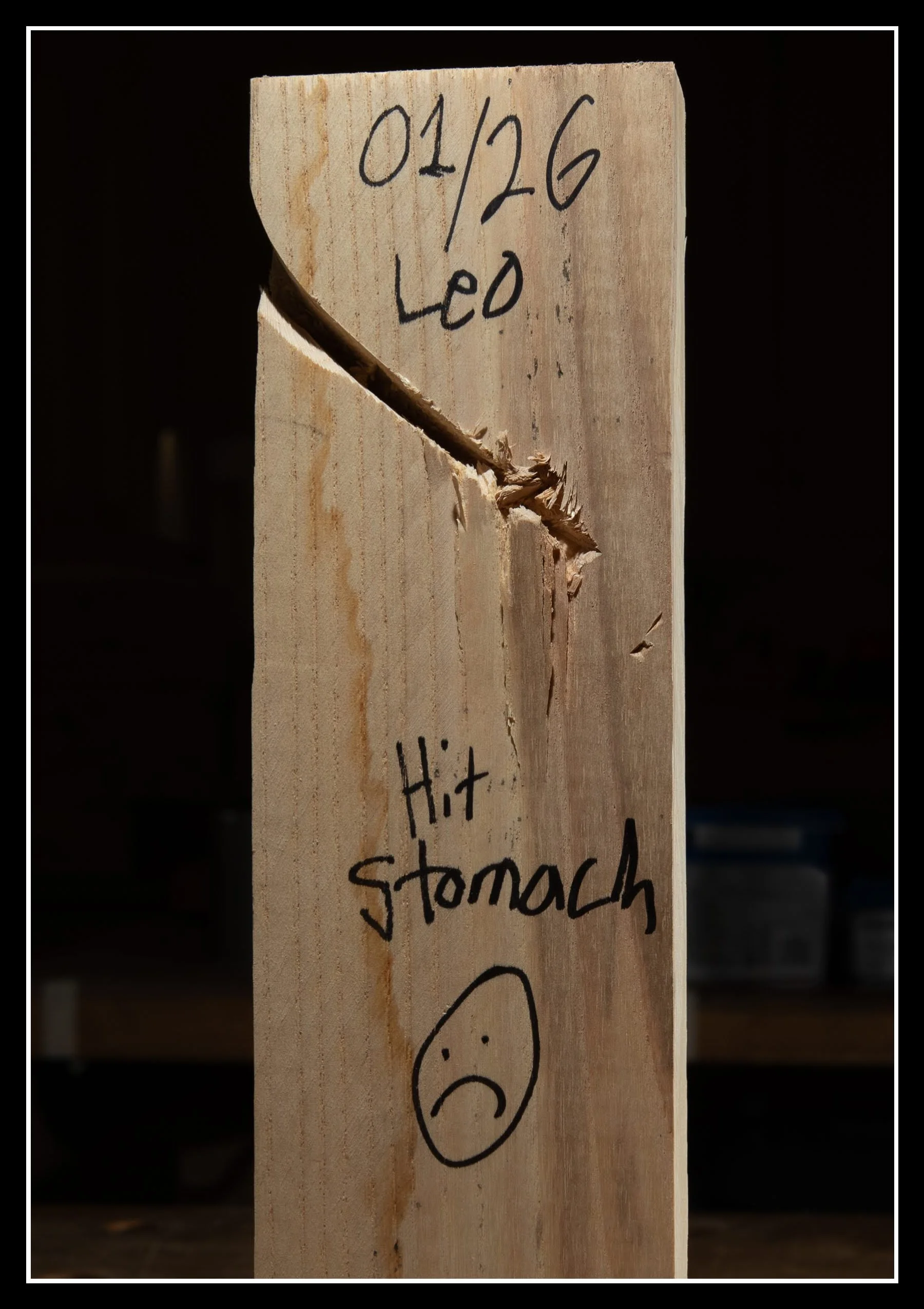
Ash Board Kickback Reminder
This is the piece of ash that kicked back on Leo — the board that changed the tone of an otherwise predictable January shop day. It lives in the shop now as a reminder of why proper milling matters and how quickly a rough, unstable board can turn dangerous. Every cabinetmaker has a moment like this, and this scarred offcut carries the lesson forward: respect the saw, respect the wood, and never assume a cut is routine.
Together, gathered in one place so the machine stories, tool reflections, and workflow moments stay connected — easy to find and easy to return to.
SHARE
The Working Side of the Craft — Connected Through Machines, Tools & Stories
If you want the stories shaped by table saws, bandsaws, grinders, fences, and jigs — the honest, noisy side of woodworking — the Working Side Of The Craft is one click away.
If you’d like to hear from me only when something big is happening — a launch, a milestone, or a major project — you can join the mailing list below.
Written by David Flather, Red Seal cabinetmaker and founder of Knotty Dave’s Fine Woodworking— a Manitoba shop rooted in heritage restoration, storytelling, and real craft.
All photosshot by David Flather — in the shop, on the road, and in the places where craft and story meet.
Related stories:
How Thickness Planers Really Behave: Tearout, Ridges & Grain That Fights Back
The Radial Arm Saw: Forty‑One Years of Real Shop Use, Safety, and Cross‑Cut Accuracy
Woodworking After 50: How Experience, Patience, and a Personal Shop Redefine the Craft
The Workshop Library
If you enjoyed this story, there’s lots more like it inside The Workshop Library — and it’s free to explore.
Wood Archive — species, grain, working properties, and real‑world craft notes
Behind the Grain — the deeper stories inside wood, craft, and heritage
The Working Side of the Craft — tools, shop life, workflow, and the realities of making
Digital to Sawdust — Design Studio — geometry, proportion, visual flow, and design thinking
The Stories of the Shop — the personal side of craft, the shop’s history, and the quiet moments that shape the work
House & Hearth — heritage home restoration, the hearth room, winter culture, and the lived‑in side of craft
I’m just one man with a shop, building this archive one story at a time. If you’d like to follow the journey as it unfolds, explore The Workshop Library — new stories every week.
