

American White Elm
Quick Answer: What makes American white elm unique?
American white elm is a tough, flexible hardwood with rope‑fiber grain, interlocked growth, and colour that ranges from pale gold to deep brown. It resists splitting, bends well, and carries the history of Dutch elm disease — a fungus that erased elm canopies across North America. Elm survives in cold climates, thrives in cities, and produces lumber with movement, character, and a story written into every board.
American white elm — tough, flexible hardwood
Elm grain — rope‑fiber, interlocked
Elm colour — pale gold → brown
Elm woodworking — bending, turning, joinery
Dutch elm disease — canopy loss
Urban lumber — modern milling
American White Elm — From Canopy Loss to Craft Rediscovery
Dutch elm disease erased elm canopies across North America, hollowing out a species that once shaped entire cities. Winnipeg fought back and preserved one of the last great elm stands, creating a modern chapter where elm returns as both a survivor tree and a meaningful woodworking material.
By the end of this story
You’ll understand why American white elm became the defining tree of North American cities, how Dutch elm disease reshaped an entire continent, and why working with elm today feels like rediscovering a lost chapter of woodworking history.
Estimated read time: 12 minutes
Elm vs Other Hardwoods — Quick Comparison
Elm — flexible, interlocked grain
Ash — straight grain, shock‑resistant
Oak — strong, ring‑porous
Maple — hard, uniform
Hickory — extremely tough
Quick Summary
American white elm is the hardwood that once shaped entire North American cities — a flexible, interlocked‑grain tree whose sweeping canopies defined streets from Winnipeg to Washington before Dutch elm disease erased most of them. Winnipeg’s cold winters, woodpeckers, and aggressive forestry program preserved one of the last great elm stands, creating a rare modern chapter where elm is still part of daily life. As diseased trees are safely milled and kiln‑dried, elm has re‑entered the craft world: rope‑fiber grain, wild colour variation, stubborn milling, excellent bending, and a deep sense of history in every board. Working with elm today means rediscovering a species that disappeared from lumberyards for decades — a survivor tree with movement, character, and a story written into every fibre.
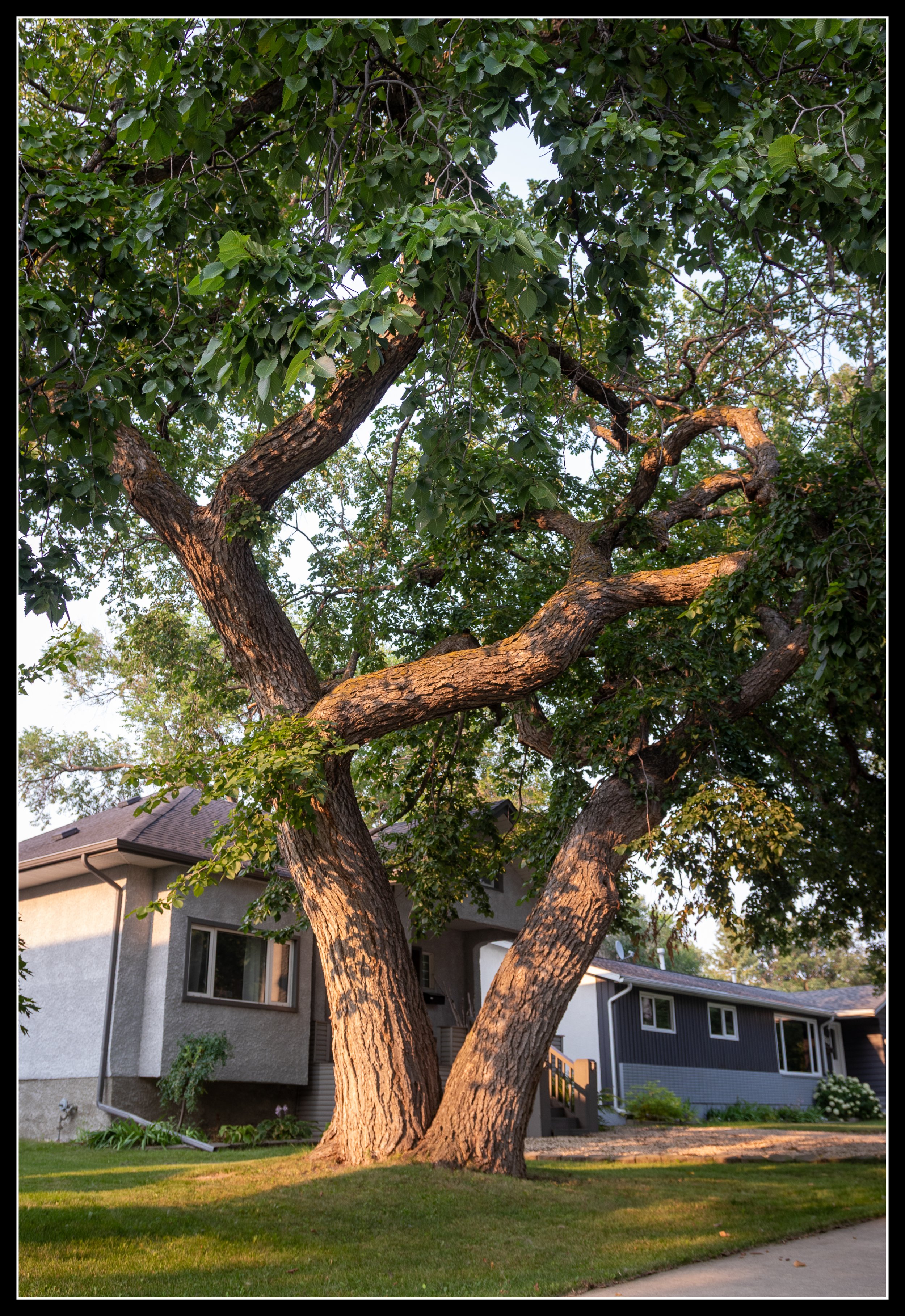
The Most Beautiful Elm I’ve Ever Seen
This elm stands in my neighbourhood, and in my opinion it’s the most beautiful one I’ve ever seen. It isn’t the biggest, but the way it carries itself — the sweep of the branches, the weight of the canopy, the way it anchors the houses around it — makes it unforgettable. The photo doesn’t do it justice. In person, it feels like a living piece of architecture, a tree that has shaped the street for generations. This is where the story begins: with a living elm, before the disease, before the milling, before the kiln, before the lumber becomes craft. A reminder of what these trees were before Dutch elm disease took so many of them, and why their wood carries meaning.
Where the Elm Story Begins
When I was a kid, I remember adults talking in low, worried tones about Dutch elm disease. It was here, they said, and soon all of Winnipeg’s elm trees would be infected and die. The idea felt impossible. These trees were everywhere — towering giants lining boulevards, arching over streets to form those long green tunnels that defined entire neighbourhoods.
Dutch elm disease arrived in Winnipeg in 1975. At the time, the city held an estimated 275,000 American white elms, many of them mature, cathedral‑crowned trees that shaped the look and feel of the city. Winnipeg wasn’t alone. Cities across North America — Boston, New York, Chicago, Toronto, Montreal, Detroit — all had elm‑lined streets. But only a few major cities were truly defined by their elms. Winnipeg was one. Minneapolis–St. Paul was another, with roughly 200,000 elms before the disease arrived. They called it the city of green tunnels, with boulevards nearly identical to ours. Dutch elm disease reached the Twin Cities in the early 1960s, and by the 1980s, most of their elms were gone. Today, only scattered survivors remain.
Washington, D.C. was the third great elm city. The National Mall was planted almost entirely with American elm, creating long shaded promenades and a recognizable “Washington look.” Embassy Row and parts of Georgetown shared that same elm identity. But when Dutch elm disease arrived in the 1950s–70s, it wiped out most of the original plantings. The National Park Service replanted with disease‑resistant cultivars. Washington still looks like an elm city, but it’s a maintained version of the old canopy, not the original ones that grew there before the disease.
Across the Prairies, it wasn’t just the big cities fighting to protect their elms. Smaller communities — places like Portage la Prairie, Brandon, and Morden — built their own elm canopies and worked hard to keep them alive. Regina is only now seeing Dutch elm disease arrive, and their battle is just beginning. Saskatoon and Moose Jaw have been fortunate so far, still standing in that rare window before the disease reaches them. These towns may not have the famous cathedral canopies of Winnipeg, but their boulevards and crescents are just as much a part of the prairie elm story.
Yet despite the arrival of Dutch elm disease, Winnipeg and many other northern prairie towns still have healthy, mature elms. Winnipeg today has roughly 160,000–210,000 American elms — maybe more. When the disease arrived, the city had the advantage of watching what was happening down south. They had time to prepare, to learn, and to act. And when the disease finally reached Winnipeg, the city was ready.
Dying trees were cut and removed once the frost came each fall, then incinerated at Brady Road landfill. Homeowners weren’t allowed to remove elm infected trees themselves; the city handled it. If a healthy elm needed removal, the homeowner had to call an arborist and pull a permit so the wood could be disposed of properly. Elm firewood on private property meant fines. Winnipeg wasn’t messing around. These trees mattered to people here, and the city meant to save them.
Crews still head out every summer to mark infected trees with orange spray paint, and in winter those trees are removed. In riverbank areas where logs can’t be hauled out, the trees are cut into cookies — three‑inch thick rounds — and left to dry for a month or so before being burned on site.
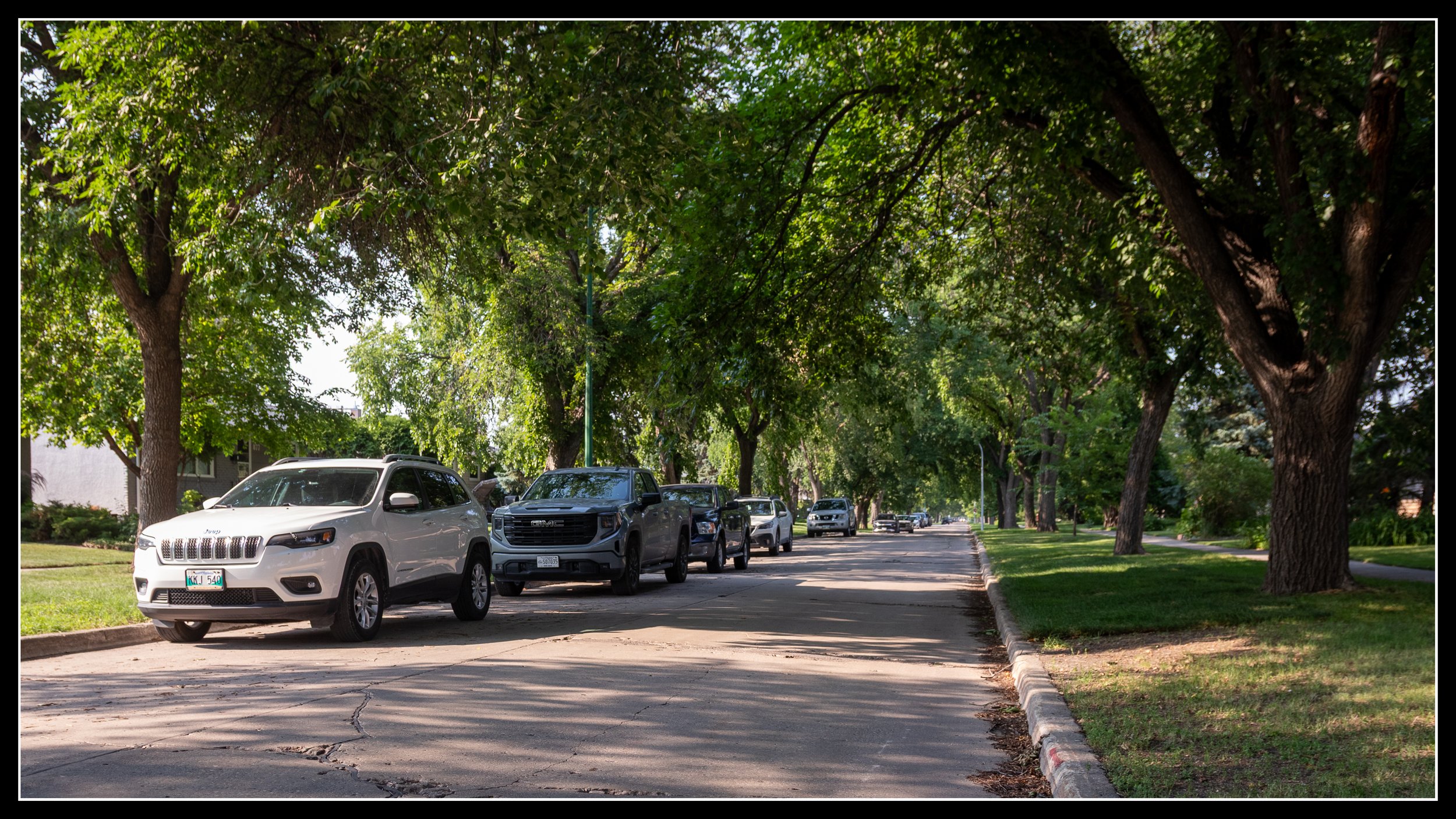
A Winnipeg Street Under Its Elm Cathedral
Winnipeg isn’t a city with a few surviving elm streets — it’s a city built under them. Entire neighbourhoods were planted in American white elm, creating these long, continuous tunnels of green that became part of the city’s identity. This photo shows what locals know well: the canopy isn’t a rarity or a remnant. It’s the everyday experience of living in Winnipeg, one of the last true elm cities left in North America.
What is Dutch elm disease?
It’s a fungus believed to have originated in Asia. Asian elms coexisted with it for millennia, which is why they’re resistant. The fungus arrived in North America in 1930 through infected elm logs shipped from Europe for veneer production. The first confirmed case was in Cleveland, Ohio, and it spread rapidly from there.
The elm bark beetle — native to North America — is the accidental accomplice in this story. The beetle doesn’t cause the disease; it simply carries the fungus. Adult beetles feed briefly on healthy elms, but they spend weeks or months living under the bark of dead or dying elms, where they lay their eggs. Many of those dying trees are infected, and the beetles pick up the fungus as they move from tree to tree. And yes — they fly.
Why do northern communities still have American elms?
Because the cold helps us. Brutal prairie winters — nights at –37°C, cold snaps that last weeks — kill off beetle eggs. Winnipeg sits in climate zone 3; Kenora is zone 2. These beetles have a hard time here. Their numbers are far lower than in places like New York or Minneapolis. And when larvae start moving in spring, woodpeckers — their number‑one predator — can reduce beetle populations by 30% to 60%.
Those two factors alone dramatically improve the survival odds for northern elms. Add Winnipeg’s aggressive urban forestry program, and the American white elm still thrives here, forming those green summer tunnels that define the city’s identity.
In the 1970s through the 1990s, Winnipeg stopped planting American white elms and turned instead to Siberian elms, hoping they would be a disease‑resistant alternative. They were smaller, more brittle, and lacked the majestic crowns of native elms. They looked more like giant weeds — littering neighbourhoods with seeds every spring, snapping in windstorms and ice storms, and often dying just when they finally started to look like real trees. They were a poor replacement.
Around the year 2000, the city began planting American white elms again — not genetically modified, just descendants of trees that had survived the disease. In spite of Dutch elm disease, Winnipeg kept fighting: saving the old trees, planting new ones, and refusing to let the elm identity fade. This city will always have American white elms. It’s a defining feature for every generation that lives here.
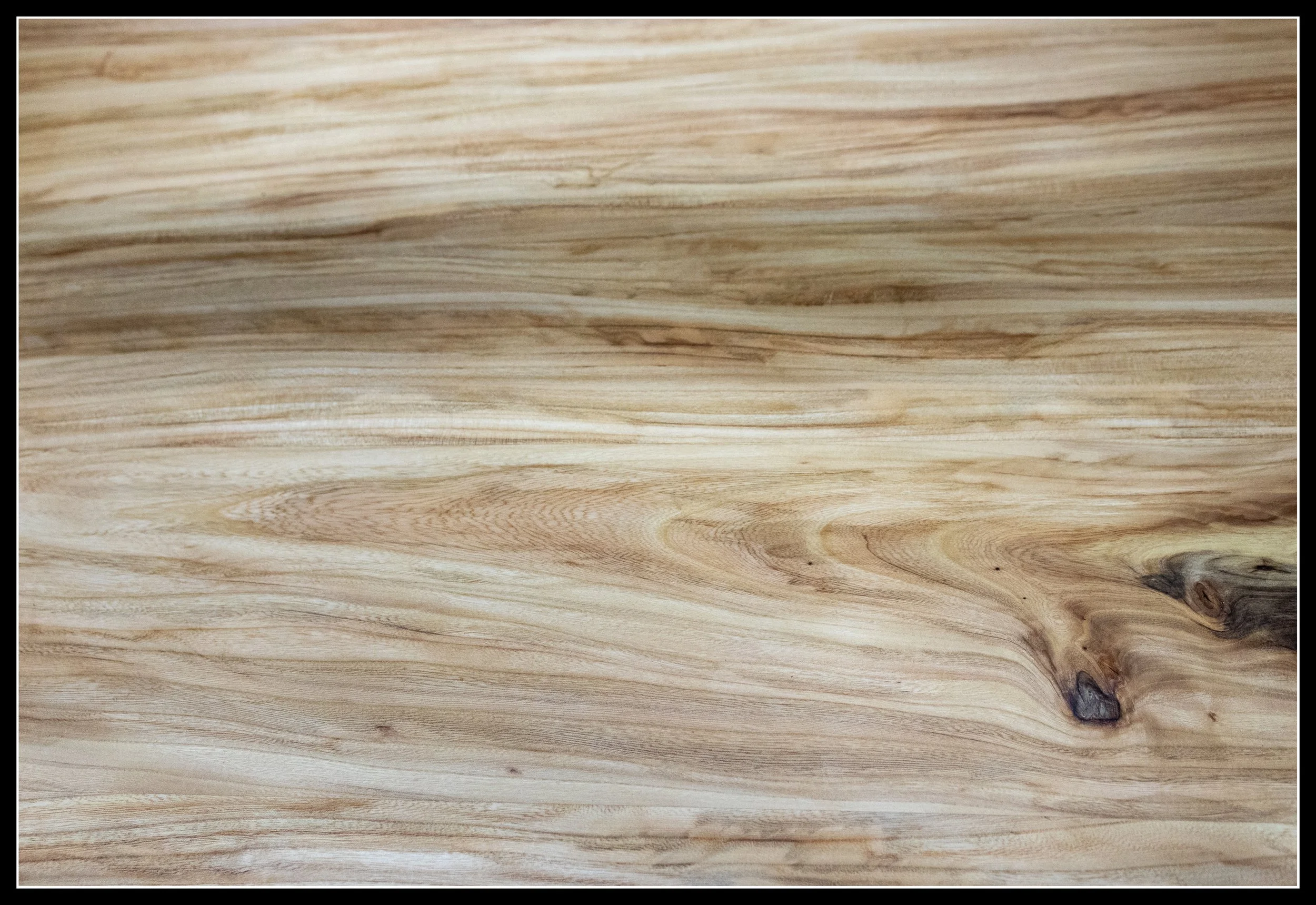
Elm’s Rope‑Fiber Grain Up Close
Elm has one of the most recognizable grain patterns in North American hardwoods — long rope‑fiber lines, interlocked growth, and the shifting light‑and‑dark bands that make it both beautiful and notoriously difficult to plane. This close‑up shows the species’ signature movement: grain that twists, climbs, and changes direction, giving elm its strength and its character. For builders, this is the look that sets elm apart from ash, oak, and maple — a grain that refuses to run straight.
American white elm — the tree, the wood, and the shift in the story
Before Dutch elm disease reshaped the continent, white elm was a common and respected hardwood. After the disease arrived, cities continued to salvage what they could, milling infected trees as a way to deal with removals. But by the 1980s, elm lumber was scarce. By the 1990s, it was virtually gone. In Winnipeg, elm disappeared from lumberyards in the mid‑70s because the city burned its dead wood instead of milling it — a necessary choice in the fight to save the living trees.
Most woodworkers in Winnipeg (until recently) have never worked with elm. Many have never even seen it. And because the supply vanished for decades, elm became a forgotten wood — a species with a long history but no presence on the shelves.
Yet the tree itself never disappeared. American white elm grows naturally from the eastern Rockies to the Atlantic, and in Canada from eastern Saskatchewan to the Maritimes. But you’ll also find it in cities far outside that native range — Calgary, Edmonton, Lethbridge, Medicine Hat, Prince George, Kelowna, Vancouver Island, St. John’s, and many others — places where people planted it because the tree proved tough enough to thrive almost anywhere. It grows naturally in river valleys and floodplains, yet it’s surprisingly drought‑resistant. It doesn’t live as long as a bur oak, but far longer than a box elder (Manitoba maple) — roughly 200 to 250 years. It isn’t a pioneer species or a survivalist species; it’s something in between. A generalist. A street fighter. A tree that grows fast in open ground when young, then settles into a tough, flexible maturity.
If caterpillars defoliate it, the elm can refoliate the same summer. If branches break, it grows new ones. It doesn’t need prime soil. It grows in sand, clay, and the compacted boulevards of Winnipeg — and that’s saying something. It’s adapted to wind, bending and flexing instead of cracking. That resilience shows up in the lumber it produces: twisted, interlocked grain that can be both a challenge and a gift.
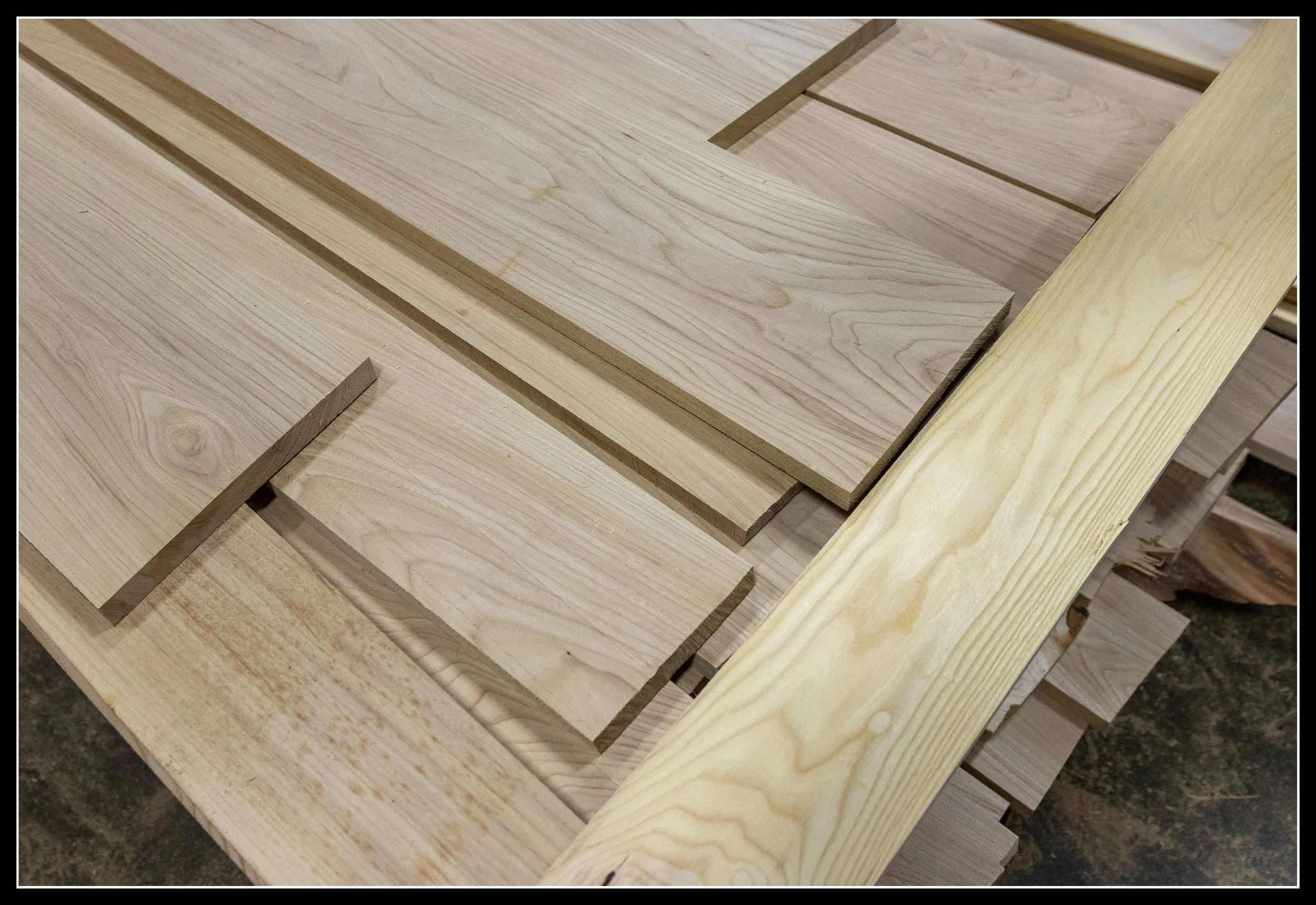
Elm’s Wild Colour and Grain Variation
These elm boards came in from the same batch, yet the colour swings wildly from piece to piece — classic elm behaviour. The species is famous for its rope‑fiber grain, but just as defining is the way its colour shifts: honey, straw, russet, pale gold, and deep brown all appearing in a single load. Elm doesn’t mill into uniformity; it mills into character. For builders, this variation is part of the appeal — every board tells a different story, even when they arrive stacked together at Urban Lumber.
A bridge into the woodworking world
This is where the story shifts — from the elm as a symbol of cities and survival, to the elm as a material in the hands of a craftsman.
The same traits that helped the tree endure storms, droughts, insects, and disease show up in the wood itself. The interlocked grain that kept branches from splitting in prairie winds becomes the ropey, stubborn grain that resists hand planes. The flexibility that let the tree sway through blizzards becomes the shock‑absorbing strength that made elm the wood of choice for wheel hubs, tool handles, and bent laminations.
The history of the tree and the behaviour of the wood are not separate stories. They are the same story — one lived in the canopy, the other revealed at the bench.
Elm as wood — character, challenges, and rewards
Elm is notoriously difficult to split as firewood. Its reputation was legendary. This was the wood left for the young guys who wanted to prove something. When hydraulic splitters arrived, many people bought them specifically to deal with elm. Elm firewood bans were an urban rule — rural landowners were never restricted, and they continued cutting dead elm for firewood whenever they wanted. But that same refusal to split made elm excellent for steam bending. It can take a tight radius without breaking, though it springs back aggressively if rushed. As a bent lamination, elm is said to be one of the best woods you can work with. Glue bonds beautifully with its interlocked grain.
Factories never liked elm. It was unpredictable, hard on tools, and didn’t behave like the tidy, uniform woods they preferred. But for a craftsman, elm offers something different — a wood with personality. A wood that demands attention. A wood that rewards patience.
On the lathe, elm is a joy. Last summer I turned a table pedestal from elm and was thoroughly impressed. There was tear‑out, sure, but compared to maple or oak, I’ll choose elm whenever I can. It’s open‑grained and pale — that’s why it’s called white elm — softer than maple, lighter than oak, and it has a smell people describe as a cow barn. I thought it smelled like busy city streets. It’s an earthy scent. Either way, it’s distinct in a nice way.
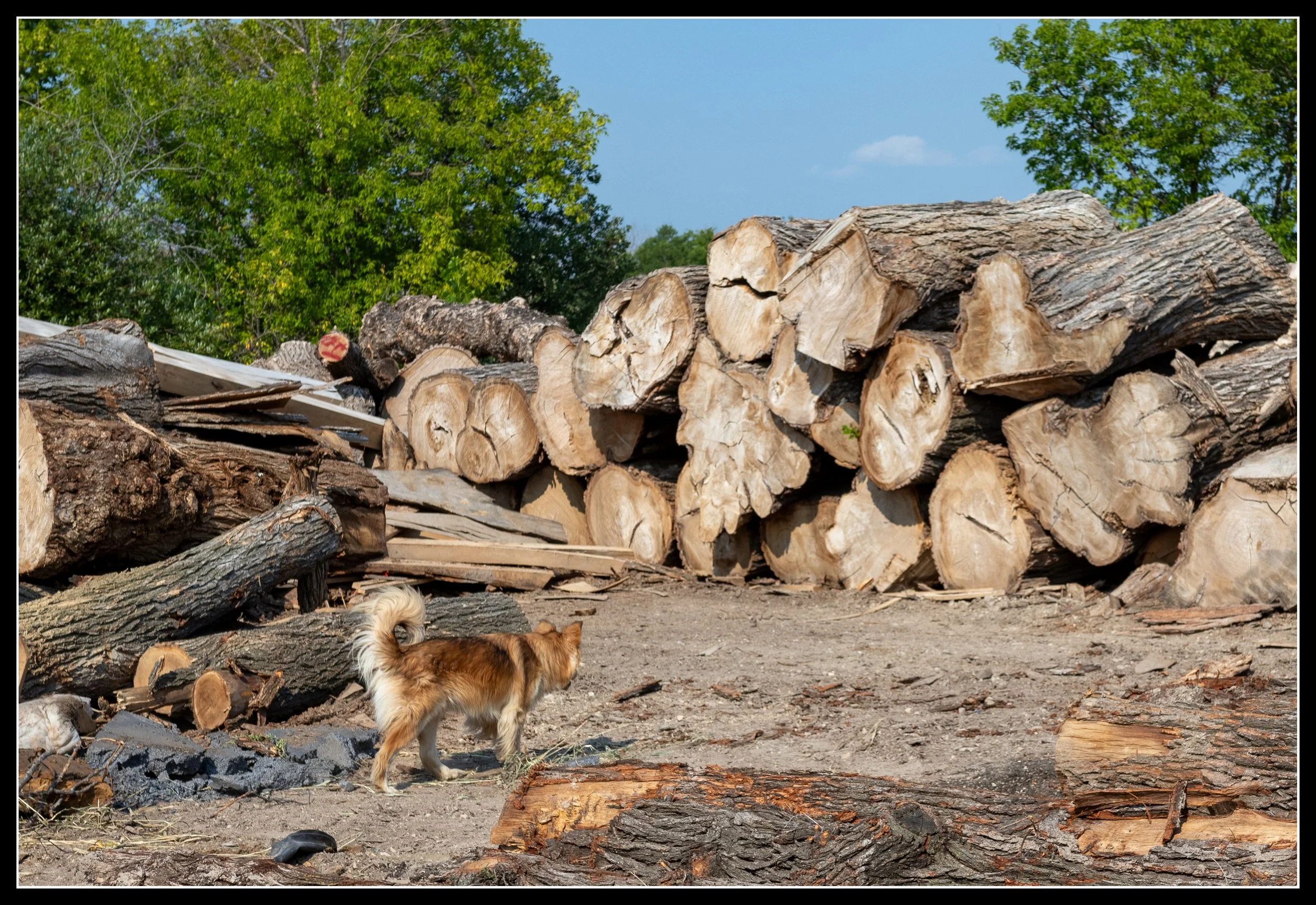
Massive Elm Logs Waiting for the Mill
Walking the log yard, you see just how large Winnipeg’s elms really are. These aren’t recent plantings or mid‑century trees — most of them are at least 100 to 120 years old, planted when the city was still forming its neighbourhoods. Their size tells the story: heavy, twisted trunks with rope‑fiber grain that has been building strength for more than a century. Elm moves, shifts, and refuses straight lines, and the scale of these logs explains why. Standing beside them, you understand how these trees shaped Winnipeg’s streets, its shade, and its identity for generations.
Elm outdoors — the heartwood and the truth
Elm can be used outdoors, but with conditions. It’s not as rot‑resistant as cedar or white oak, but if the wood stays above grade and can dry between wet cycles, it performs well. Historically, elm was used for snowshoes, paddles, boat parts, and outdoor tool handles. Pioneers used it for wheel hubs because nothing else held up as well.
But here’s the important detail:
It’s the heartwood that survives outdoors. The sapwood does not.
Sapwood rots quickly. Heartwood holds its own.
That distinction matters — for furniture, for joinery, for any outdoor application. And it’s a detail most people never hear because elm lumber has been absent for so long.
Why elm lumber disappeared — and why that matters
Elm didn’t vanish because it was a bad wood.
It vanished because the trees vanished.
When Dutch elm disease swept across North America, the priority was containment. Cities burned infected trees. Mills avoided elm because of the fungus risk.
But once kilns came on the scene, and people realized heat‑treating killed the fungus, milling became normal in some places — mostly in the southern U.S. where the volume was smaller and private mills were more common.
Factories still avoided elm because of its unpredictable grain, and as the big elms died off, the supply chain collapsed. By the time milling was safe and practical, the elm era was already over in most cities.
By the time the disease had run its course, elm lumber had slipped out of the woodworking world entirely.
A whole generation of woodworkers grew up without ever touching it.
Elm became a ghost wood — remembered by old‑timers, unknown to everyone else.
That absence shaped the craft. When a material disappears for 30 or 40 years, it loses its place in the collective memory. Techniques fade. Knowledge fades. Appreciation fades. And when the wood finally returns, it feels like discovering a lost chapter of woodworking history.
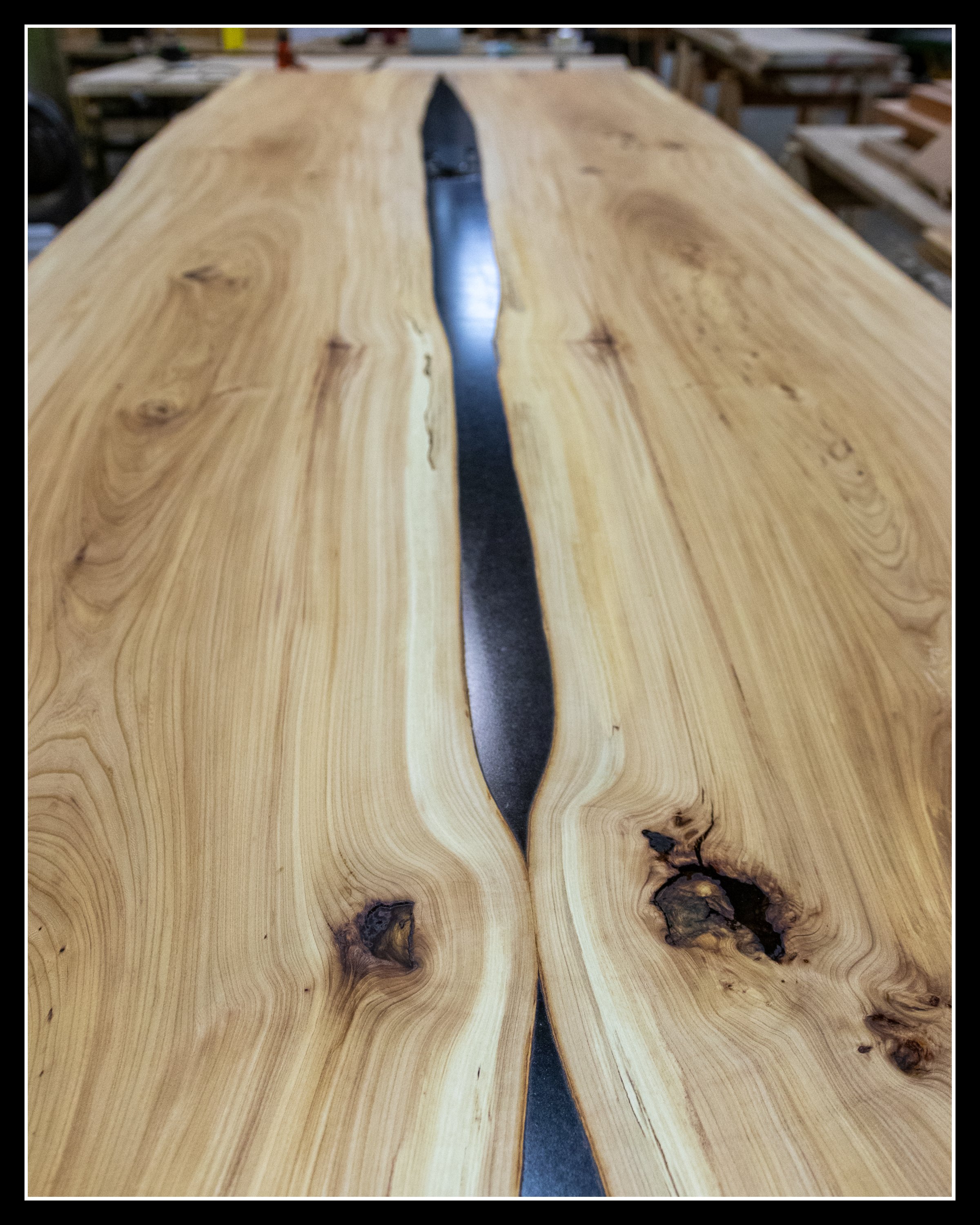
Bookmatched Elm Slabs Joined in Epoxy
These two elm slabs were bookmatched from the same tree, their mirrored grain running in long, wavy lines that shift direction as the surface moves. The epoxy seam holds the pair together while highlighting the natural contrast between the slabs — colour changes, cathedral arches, twisted grain flow, and the subtle movement elm is known for. Freshly sanded, the surface shows the species’ character clearly: unpredictable, expressive, and full of life even before finish is applied.
What elm looks like — colour, figure, and finishing
Elm is an open‑grained hardwood with a pale, creamy base colour — sometimes almost white, sometimes with warm straw tones. The heartwood can shift into light browns or muted tans, but it never reaches the deep chocolate of walnut or the red of cherry. Its beauty comes from movement, not colour.
The grain is where elm shows its character:
twisted, interlocked, ropey, alive.
Under finish, elm can surprise you. Oils deepen the contrast and reveal the swirling grain. Film finishes highlight the texture. Stains behave unpredictably — sometimes blotchy, sometimes stunning — but when elm takes a finish well, it has a warmth and motion that few woods can match.
Elm ages gracefully. It doesn’t darken dramatically like cherry or amber like pine. It settles. It mellows. It becomes more itself.
Why this story matters
Elm is more than a species.
It’s a symbol of endurance, loss, memory, and renewal.
Cities fought for these trees.
Communities mourned them.
Generations grew up under their shade.
And now, decades later, the wood from these giants is finding its way back into the hands of craftspeople. To work with elm today is to participate in a story that began long before any of us were born — a story of resilience, adaptation, and the quiet strength of a tree that refused to disappear.
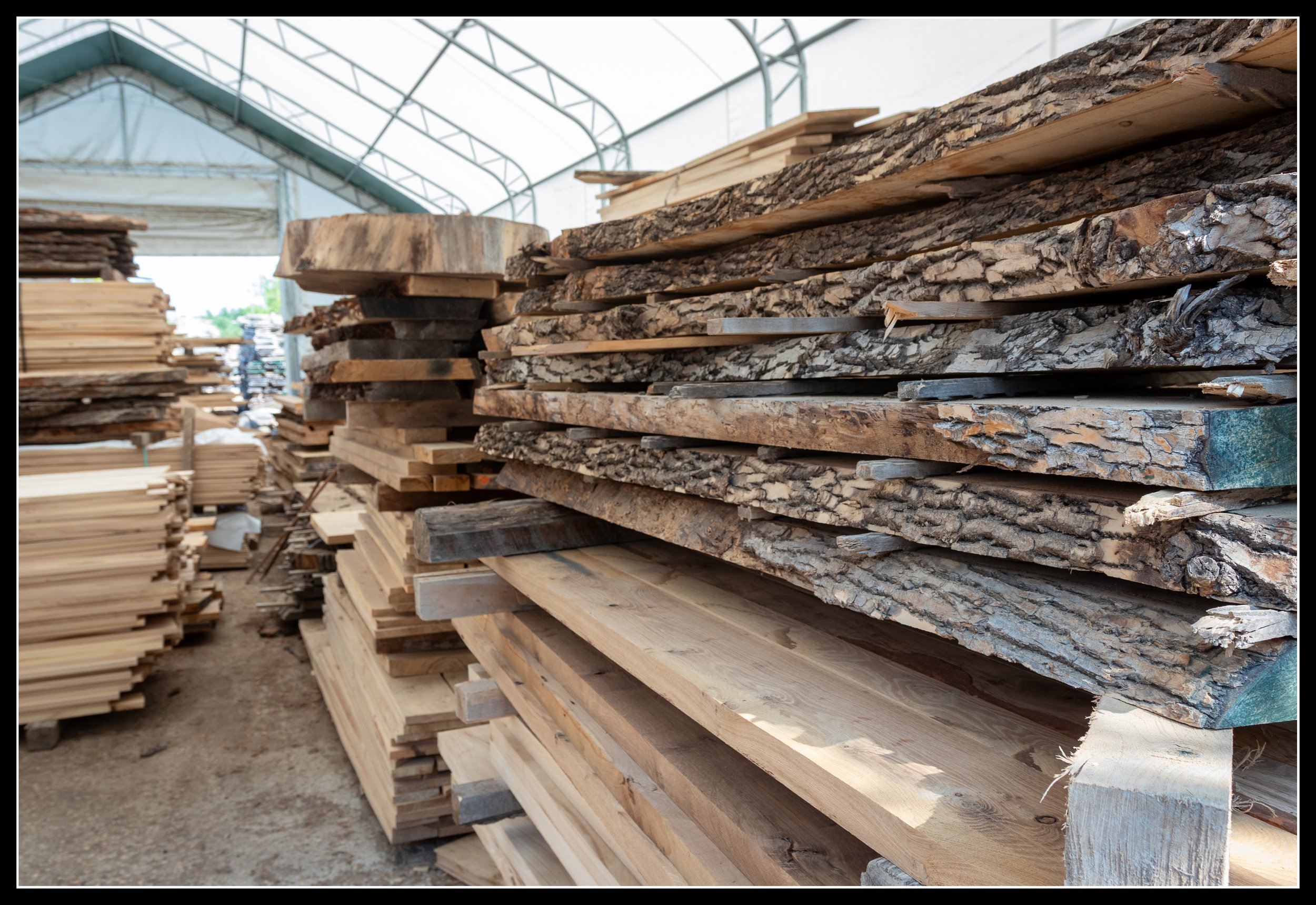
Kiln‑Dried Elm Slabs Ready for the Bench
Urban Lumber is one of the few places in Winnipeg where elm is still milled with the care it deserves. These kiln‑dried, live‑edge slabs show the species’ rope‑fiber grain and heavy structure — the traits that make elm both challenging and rewarding to work with. Dried slowly to avoid collapse and case‑hardening, the slabs are stacked and ready for builders who want authentic Winnipeg elm with real history behind it.
American white elm lumber today
Across North America, elm lumber is now a specialty wood. Few large trees remain, and when one of the survivors is cut — whether from disease, storm damage, or urban development — the log may end up at a mill. But it’s unpredictable. Every elm is different. Some are straight and clean. Others are twisted, full of tension, or riddled with metal from decades of life in a city. Many logs never make it to the saw at all.
Elm has been off the shelves for so long that most woodworkers don’t even consider it an option. But when elm does appear, demand is immediate. It’s rare. It’s meaningful. And it exists only as solid wood — there is no commercial elm veneer industry anymore. If I need elm veneer in my shop, I have to make it myself. There simply isn’t enough supply for mills to produce it.
Across the continent, lumberyards rarely encounter this wood. When they do, it feels like a piece of history — a survivor species with a story written into every board, every twist of grain, every stubborn curl of fibre.
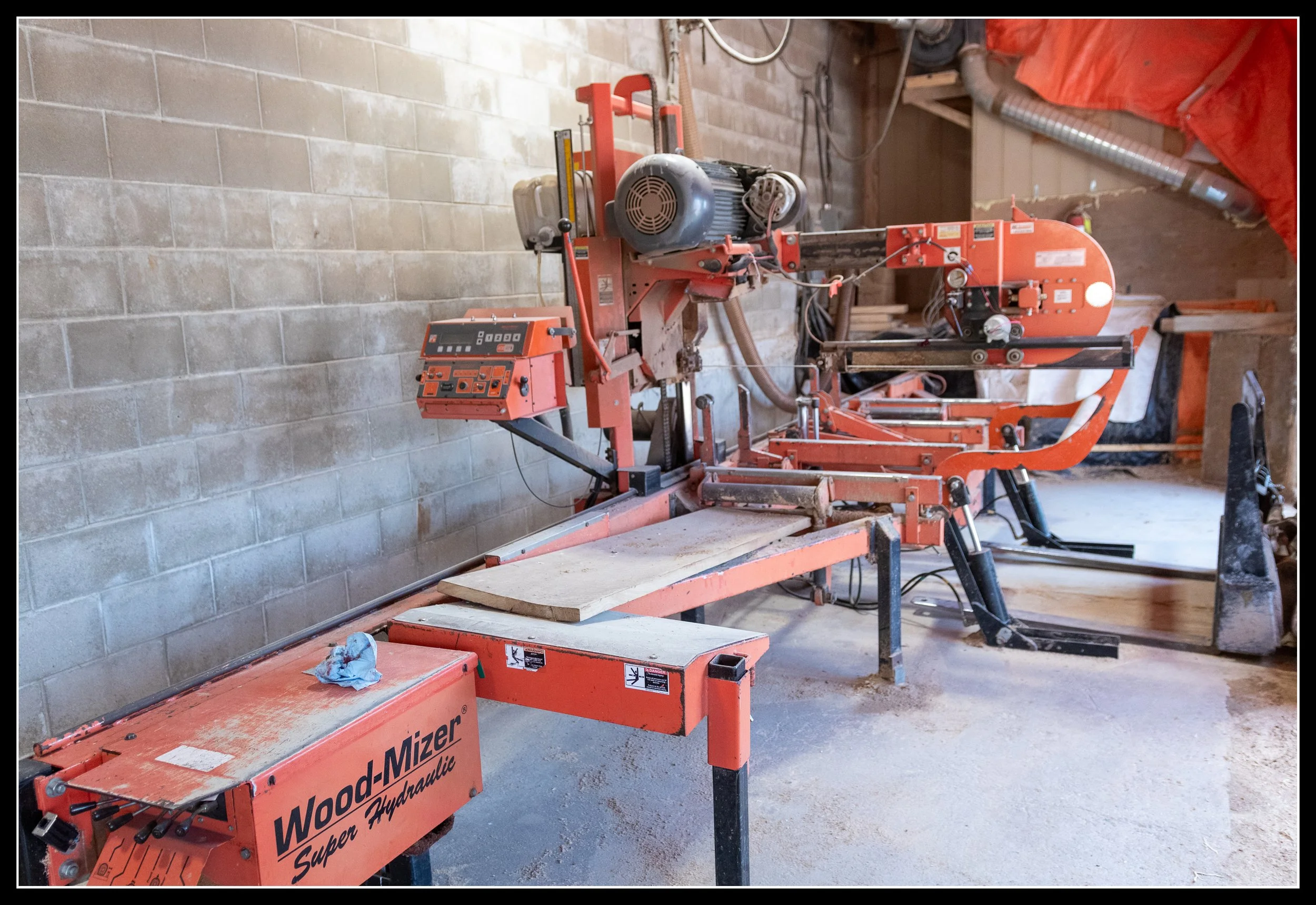
Electric Wood‑Mizer Built for Urban Elm Milling
This electric Wood‑Mizer is one of the mills used to process Winnipeg’s urban elm — a job that’s harder than most people realize. Urban trees live long lives surrounded by people, fences, nails, screws, wire, and hardware buried deep in the trunk. When a blade hits metal, it’s destroyed instantly, forcing a shutdown and slowing production. Mills like this are built for heavy hardwood, but urban elm pushes them to their limits, demanding constant blade changes, careful cuts, and a patient operator who knows how unpredictable city trees can be.
The value of elm wood and Urban Lumber
I’ve had the opportunity to work with white elm. This wood has a history like no other I’ve worked with. Dutch elm disease shaped the recent story around this species, and to see it piled on the bench is a privilege many woodworkers in North America will never get to experience.
In Winnipeg, the fight for elms has been happening for most of my life, and handling this wood was never an option. So when there’s 150 board feet in the back of the truck, it feels like a hidden level in a game — a secret door, and somehow I have the key.
When I’m unloading wood of any kind, even spruce, it’s a moment of peace and grounding — a moment where I feel connected to the land through the wood. But with white elm, there’s an extra bond in that connection. This wood came from my city, the city of elms. From the streets I’ve driven, walked, and lived on. This tree survived the same winters I did, in the same land we shared.
That connection is alive, and extra respect is given to this tree that didn’t survive Dutch elm disease. This isn’t just elm wood — it’s the lumber from a tree whose identity was shaped by a disease and by the city it lived in, a city that fought for it. As a tree, it was as much a Winnipegger as I am. In fact, it had been part of this city far longer.
That’s the grounding I feel when I handle wood from a Winnipeg white elm. There are a lot of elm stumps in this city — trees that succumbed to the disease that threatened them — and each time I see one, I hope it found its way to Urban Lumber, a Winnipeg shop that mills and kiln‑dries elm lumber.
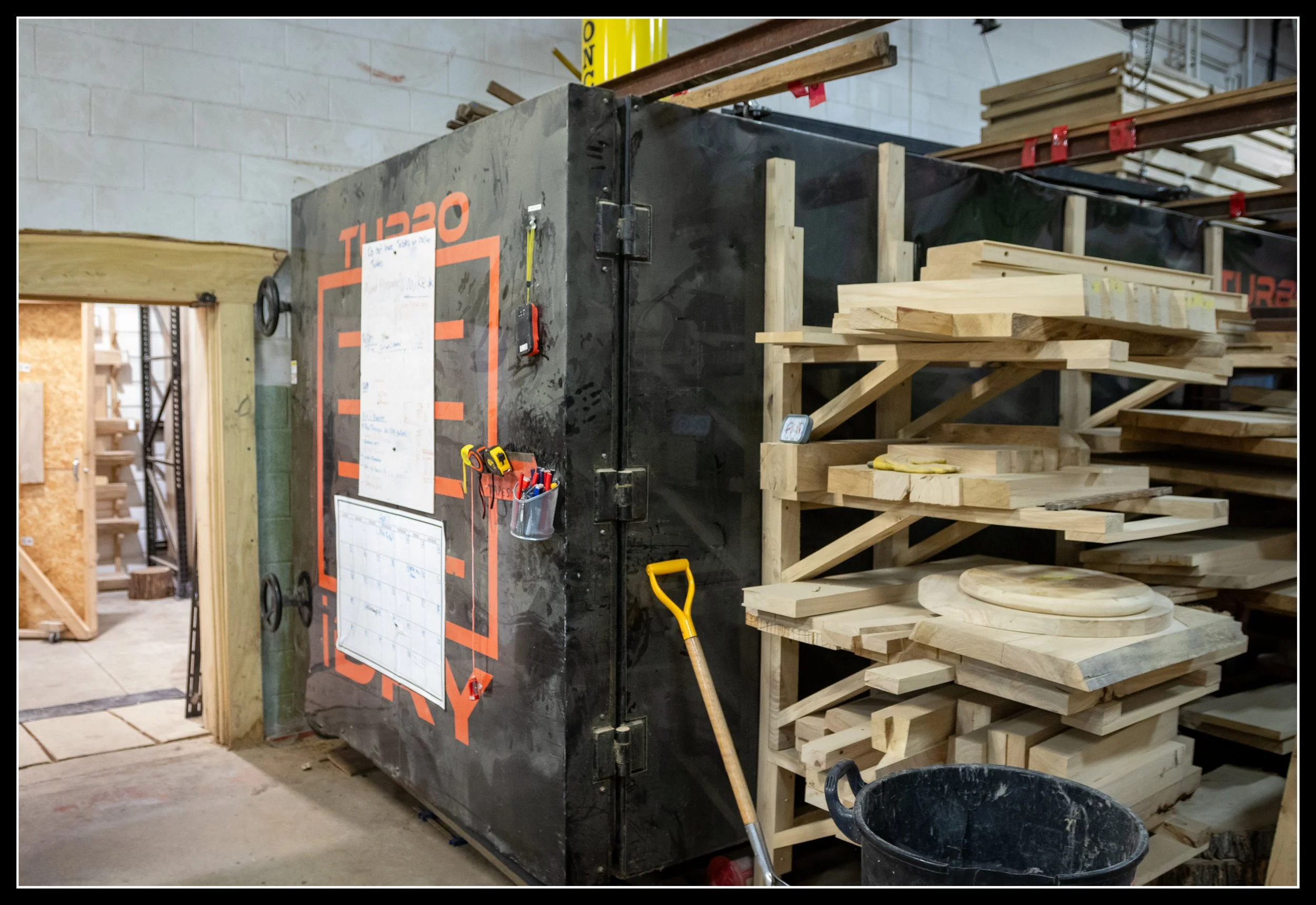
Plate Kiln Built for Elm’s Difficult Drying
Elm is one of the hardest North American hardwoods to dry. In a traditional kiln, it twists, cups, bows, and warps so aggressively that you can lose 30% of a load. This kiln solves that problem. It’s a plate kiln with an overhead bladder: the boards are stacked in layers, metal plates run between each layer, and heated water circulates through those plates. As the load warms, the bladder above inflates, applying heavy, even pressure across the entire stack. That pressure forces elm to dry straight instead of fighting itself. Mike swears by this system — and the results prove it. The boards come out flat, stable, and with dramatically higher yield.
The quiet shift — Winnipeg’s elm milling era
Some time around the mid‑2000s, Winnipeg was still cutting diseased trees and hauling them to Brady Road. But change was coming in the way the city was able to fight the disease. Up until this point, Winnipeg didn’t have much in the way of lumber mills. It’s a prairie town without dense forests surrounding it. But around this time, a few small mills appeared — nothing large, but still progress. These mills had access to kilns, and once it was proven that kiln‑drying could kill Dutch elm disease, the city realized there was value in milling elm instead of burning it.
This was a quiet policy shift. Slowly, a few trees were milled and a few boards were sold. And yes, it was a slow beginning. But Winnipeg has the largest — and one of the last — stands of white elm in the world, at least on a meaningful scale. Allowing some milling was a way to see what might be possible.
The disease lives in the inner bark to the edge of the sapwood, not the heartwood, so when milling, the bark is cut off and destroyed safely. Any remaining fungus is eliminated in the kiln — a slow, controlled process that dries the wood and raises the temperature high enough to kill insects and pathogens. Once kiln‑dried, the lumber is safe. Most wood, regardless of species, goes through this process today. If lumber is shipped internationally or overseas, untreated wood can spread insects and diseases just like Dutch elm disease once was. That’s why the kiln is critical in a global wood market.

Mike McGary — The Elm Millwright
Mike McGary walked me through the log yard and the shop, explaining every step of how elm becomes lumber. He and his wife Carlee are the reason elm wood is available to the woodworking public at all. Milling elm is a hard business — the trees are huge, unpredictable, full of metal from a century of urban life, and difficult to dry without major loss. But through their grit, patience, and absolute commitment to the craft, they’ve made the operation work. Their mill employs a full staff, keeps elm alive as a usable species, and gives woodworkers access to material that would otherwise be chipped, burned, or thrown away. Standing beside Mike in the yard, you see the scale of the work and the passion behind it.
Over the next 15 to 20 years, Winnipeg allowed private companies to come to Brady Road and identify elm logs suitable for milling. Most logs don’t make the cut — urban trees often contain metal, storm damage, or structural issues. Kilns are slow, and drying capacity is limited, so this becomes the bottleneck at the mill. It’s the rate‑limiting step for how quickly elm can be processed. But the mills take what they can handle, and they treat the privilege with care. Responsible handling of diseased wood is essential if this quiet partnership is to continue.
Today, in 2026, Winnipeg has several lumber suppliers, but only one mill — Urban Lumber — actively salvaging and milling elm from the city’s removals. Mike McGary and Carlee Farmer, who co‑own the mill, call it tree recycling. Elm is the focus, but they also mill bur oak, ash, and cottonwood — big city trees that would otherwise go to the dump. The yard holds piles of elm logs waiting to be milled, and stacks of kiln‑dried elm ready for woodworkers. Walking with Mike through the shop and the yard, one thing was clear: their commitment to recycling elm is the reason I have access to this wood at all. They created a sustainable elm supply and made it work — not an easy task, but one that’s allowing a new generation of woodworkers to rediscover the species. Elm in Winnipeg now has a new chapter, and if you want to be part of it, connect with their shop and build something out of elm.
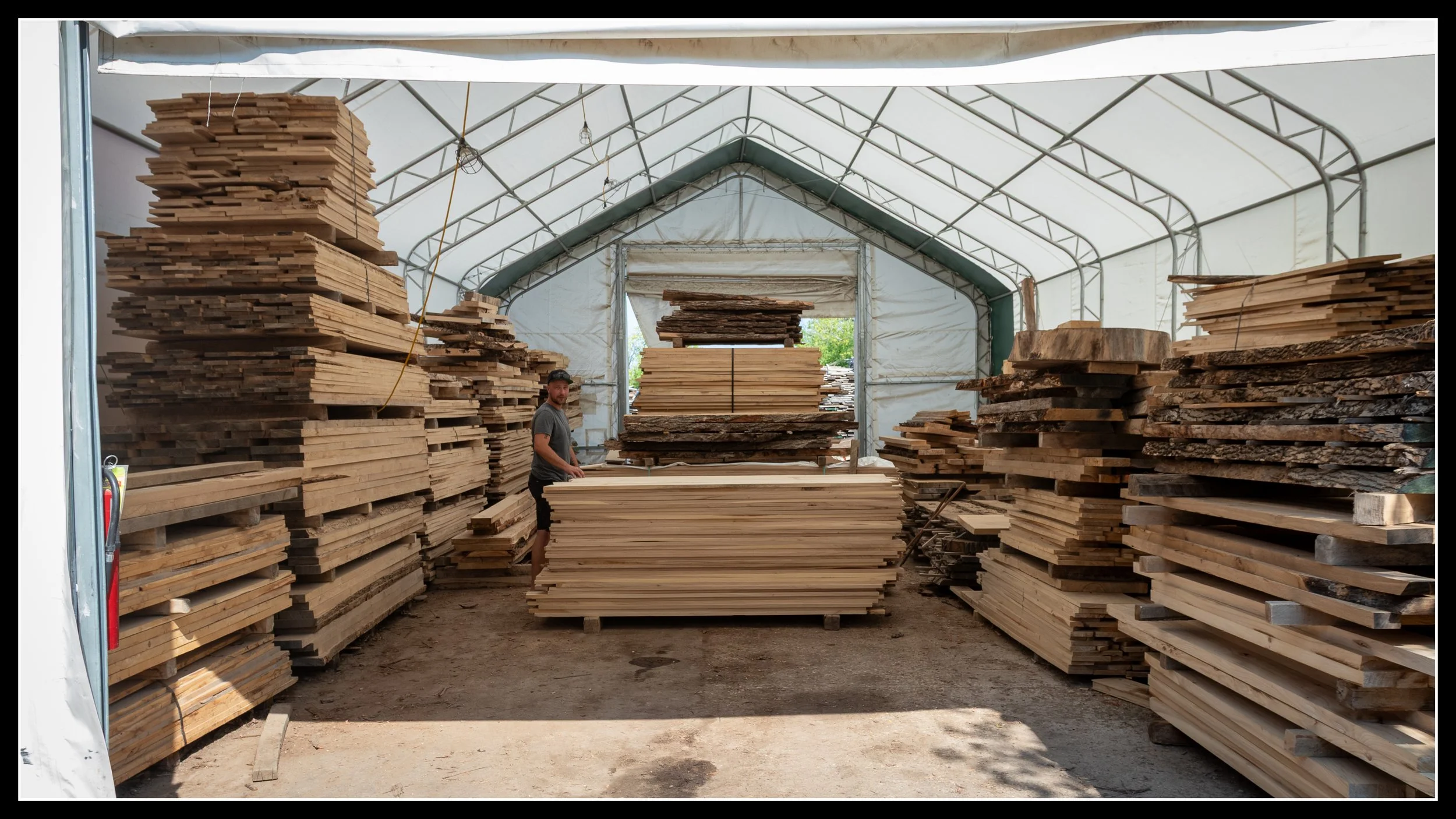
Kiln‑Dried Elm Inventory Ready for New Work
This is part of the elm inventory milled and kiln‑dried on site, stacked and waiting for its next chapter. The boards show everything elm is known for: shifting grain direction, colour variation from pale gold to deep brown, and the mix of smooth cuts and live edges that come from processing century‑old urban trees. Once dried, elm becomes stable, strong, and full of character — ready for builders who want material with history and movement in every board.
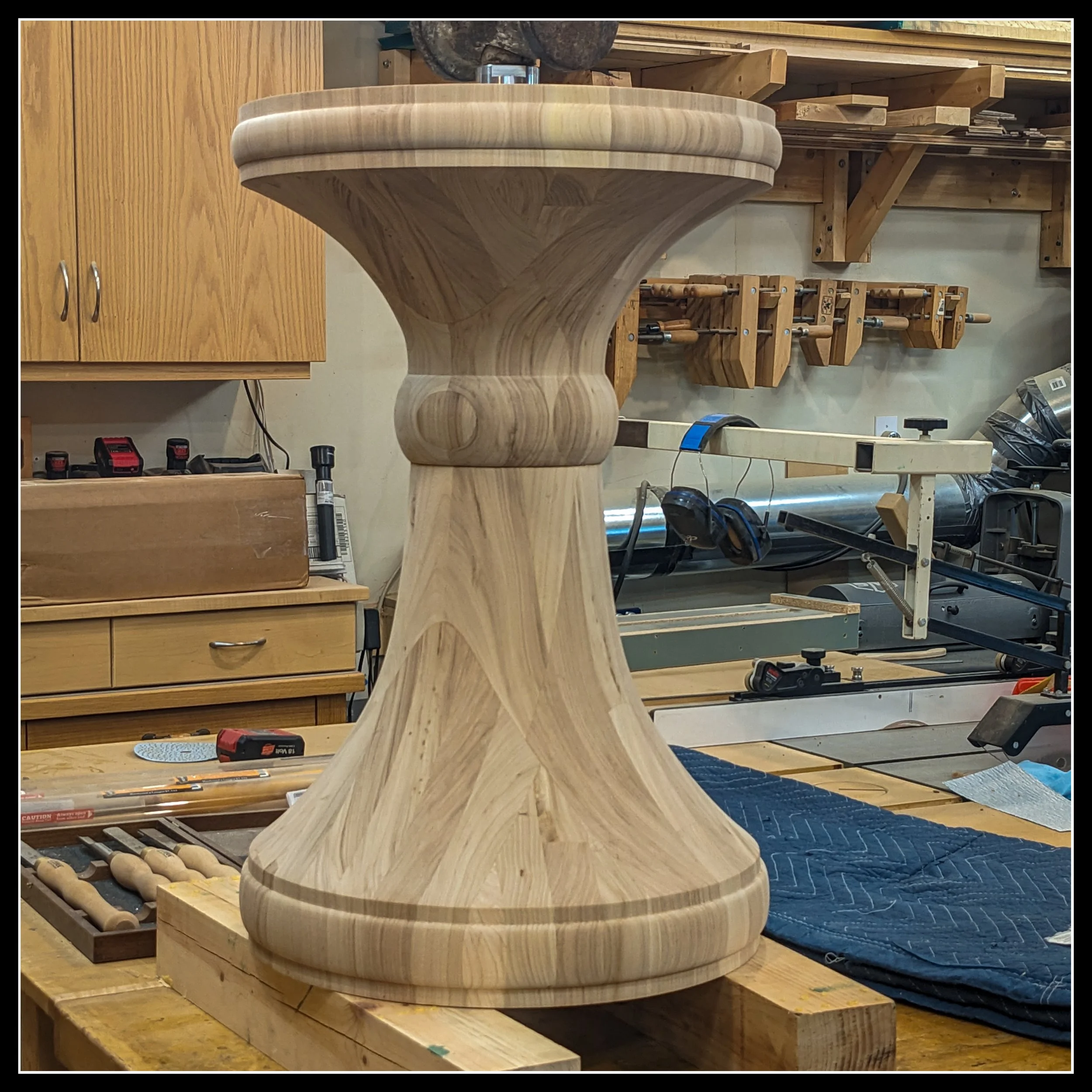
Elm Pedestal Turned in the Shop
Back in my own shop, this elm pedestal came off the lathe smoother than expected. Elm has a reputation for being stubborn in the mill and unpredictable in the kiln, but on the lathe it behaves surprisingly well — steady cuts, clean curves, and a grain that reveals movement as the form takes shape. This blank came from Urban Lumber, part of their kiln‑dried inventory, and once mounted it turned into a balanced, flowing pedestal with crisp transitions and a strong center ring. Elm may fight in other stages, but in turning it shows a cooperative side that impressed me.
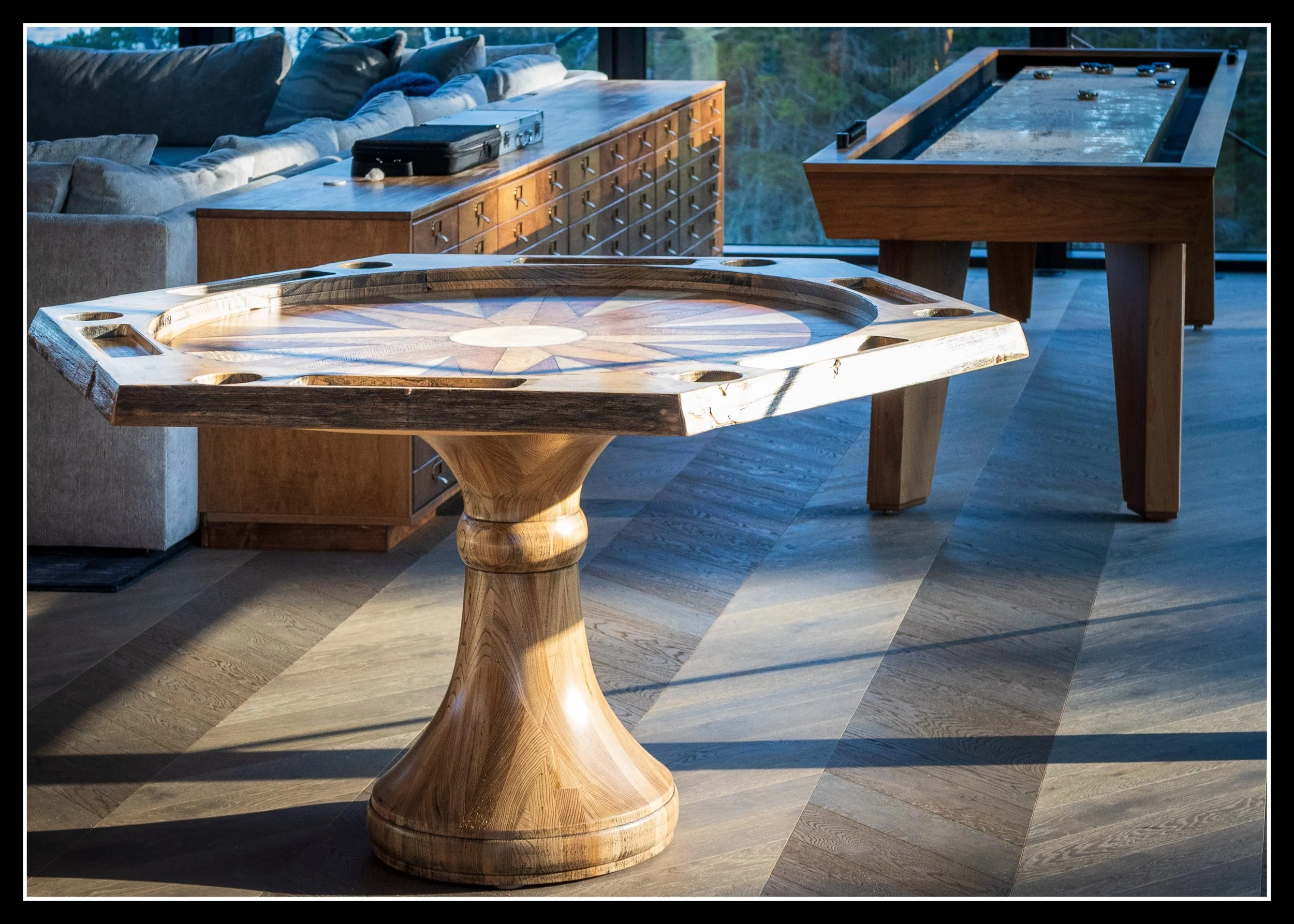
Elm Games Table — A Second Life for a Century‑Old Tree
This games table is made from elm — wood from the trees that once lined the streets of Winnipeg. These trees felt our winters, endured hot Julys, survived blizzards, droughts, canker worms, tent caterpillars, and a century of traffic from buses, cars, and trucks. Many stood for more than 120 years before Dutch elm disease finally proved more than they could handle. The elm used here has found a second life: stained, glazed, and finished in 2K poly, ready for a night of cards. A tree that watched generations pass now becomes a table that will host generations more.
Where every species, every board, and every lesson in wood science comes together — a place to explore the materials that shape our craft.
SHARE
The Wood Archive — All the wood Stories in One Place
For the living side of woodworking — the stories shaped by walnut, oak, maple, cherry, elm, cedar, and poplar — head to the Wood Archive.
If you’d like to hear from me only when something big is happening — a launch, a milestone, or a major project — you can join the mailing list below.
Written by David Flather, Red Seal cabinetmaker and founder of Knotty Dave’s Fine Woodworking — a Manitoba shop rooted in heritage restoration, storytelling, and real craft.
All photos shot by David Flather — in the shop, on the road, and in the places where craft and story meet.
Related rambles:
Outdoor Wood: Rot Resistance, Freeze‑Thaw Survival, and 200 Years of Real‑World Weather
Hickory Wood: Strength, Shock Resistance, and Why It’s Tougher Than Oak or Ash
The Value of Wood in the Fur Trade: Winter Logging, River Transport, and York Boat Timber
The Workshop Library
If you enjoyed this story, there’s lots more like it inside The Workshop Library — and it’s free to explore.
Wood Archive — species, grain, working properties, and real‑world craft notes
Behind the Grain — the deeper stories inside wood, craft, and heritage
The Working Side of the Craft — tools, shop life, workflow, and the realities of making
Digital to Sawdust — Design Studio — geometry, proportion, visual flow, and design thinking
The Stories of the Shop — the personal side of craft, the shop’s history, and the quiet moments that shape the work
House & Hearth — heritage home restoration, the hearth room, winter culture, and the lived‑in side of craft
I’m just one man with a shop, building this archive one story at a time. If you’d like to follow the journey as it unfolds, explore The Workshop Library — new stories every week.
