

Radial Arm Saw — Best Cross-Cut Saw Ever Made
Quick Answer — Why was the radial arm saw considered the best cross‑cut saw ever made?
Because it brings the blade to the wood instead of forcing wood across a table saw. A radial arm saw delivers long, accurate cross‑cuts, handles dado work, accepts custom jigs, and offers repeatability that mitre saws can’t match. Its decline wasn’t about capability — it was about marketing, liability, and the rise of portable tools.
Blade‑to‑wood cutting — accuracy improves when the blade travels instead of forcing stock across a table saw
Long, repeatable cross‑cuts — stable arm travel, fixed bench setups, and perfect 90° returns
Dado + jig versatility — accepts dado blades and custom jigs that expand joinery and problem‑solving
Industrial cast‑iron stability — heavy arms, induction motors, and rigid tolerances unmatched by homeowner models
Decline by marketing, not capability — mitre saw portability and liability fears overshadowed a tool that still excels at cross‑cuts
The radial arm saw is one of the most capable and misunderstood woodworking machines ever built. Originally developed by DeWalt in the 1920’s as a multi‑purpose industrial tool, it became a fixture in factories and production shops, especially as North American manufacturing accelerated through the 1930’s and into the wartime years. Its strength was simple: long, accurate cross‑cuts made by bringing the blade to the wood instead of forcing wood across a table saw. For cabinetmakers, millworkers, and builders, this changed everything.
After the war, smaller homeowner versions appeared — still well made, but never as powerful as the industrial machines. Over the decades, quality declined as manufacturers cut costs, and when the portable mitre saw arrived, the radial arm saw began to fade from everyday shop life. A major Sears recall in the 1990’s finished the job, erasing the tool’s reputation almost overnight.
Yet in skilled hands, and used for what it was truly designed for — cross‑cutting — the radial arm saw remains one of the most precise, customizable, and problem‑solving tools in the shop. This story looks at its history, its decline, and why it still matters today.
BY THE END OF THIS STORY
You’ll understand why the radial arm saw was once the most capable cross‑cut machine in North America, how industrial cast‑iron models differ from homeowner versions, why cross‑cutting is its true purpose, how setup and maintenance affect accuracy and safety, and why this tool still matters even after mitre saws took over the modern shop.
Estimated Read Time: ~8 minutes
Fast Summary
A cabinetmaker’s 41‑year history with radial arm saws — from 1950s cast‑iron DeWalts to modern contractor‑grade machines. This Ramble explains why cross‑cutting is the saw’s true purpose, how industrial models differ from homeowner versions, why setup and maintenance matter, and how wood behavior affects safety. It’s a story about accuracy, history, decline, and why the radial arm saw still matters today.
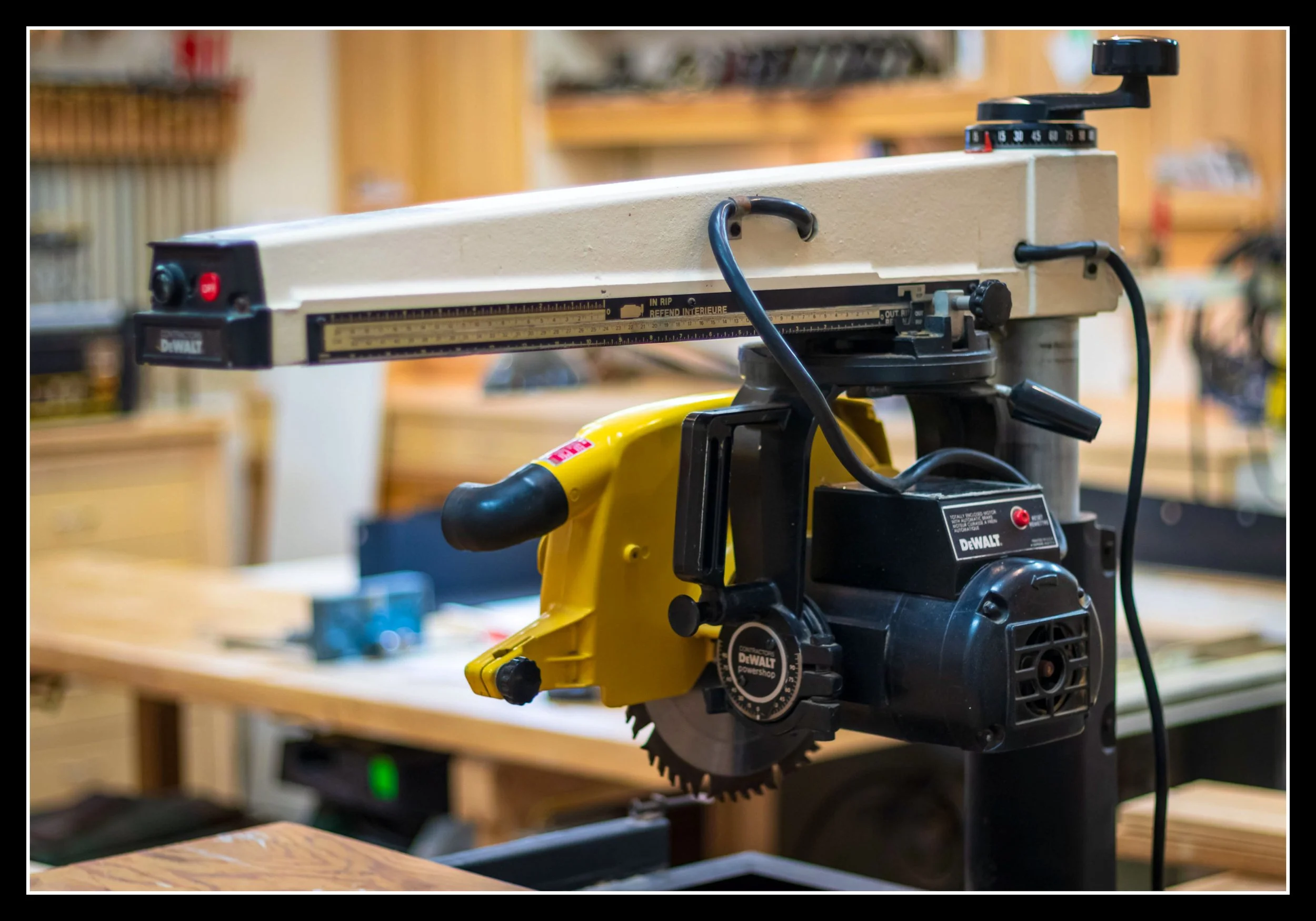
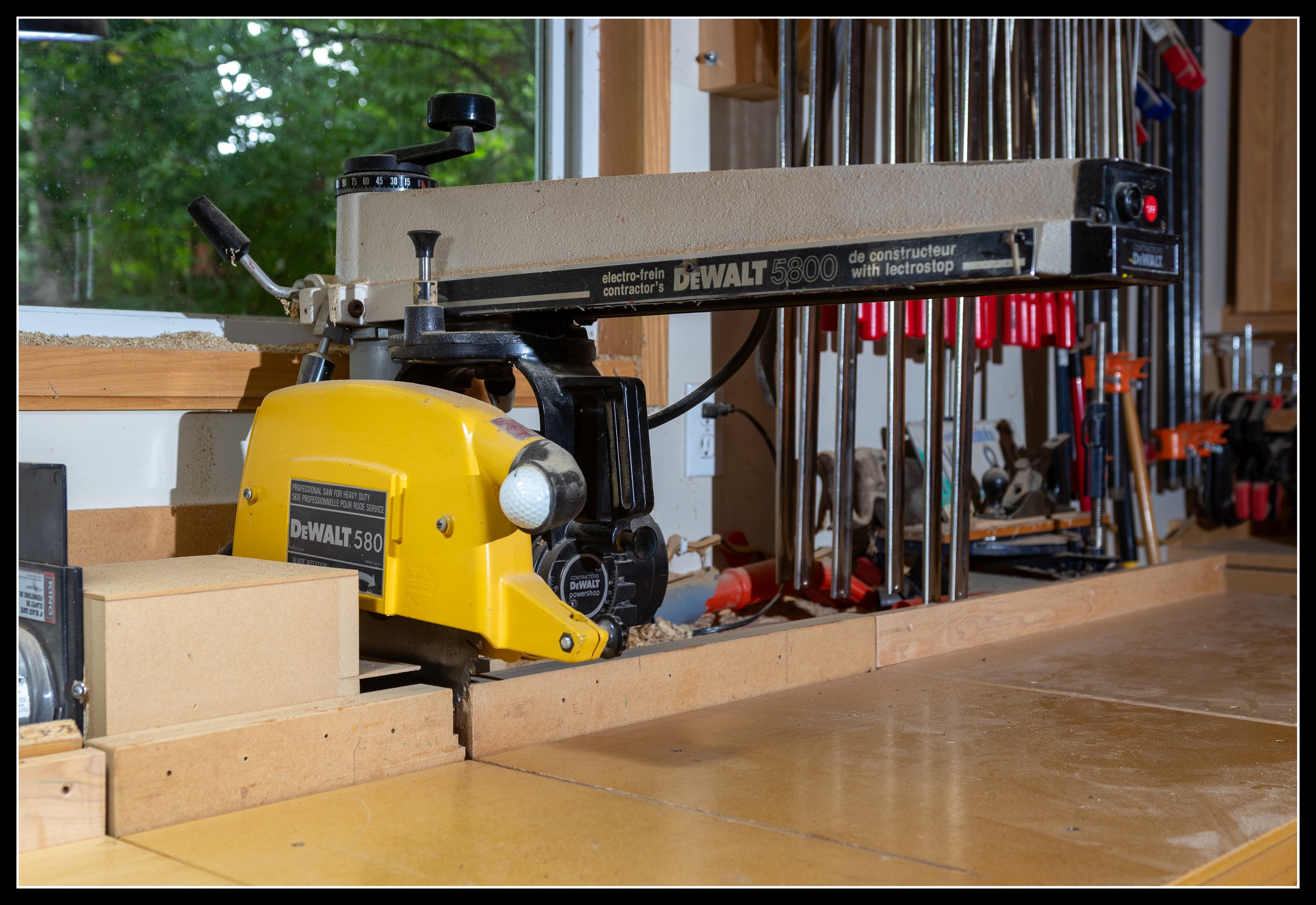
DeWalt 5800 — Canadian‑Made 12" Radial Arm Saw
The DeWalt 5800 is one of the last Canadian‑made radial arm saws from the mid‑1980s, built during the final era when these machines still carried heavy cast‑iron arms, induction motors, and industrial‑grade accuracy. This 12" model was barely used, which is rare for a tool of this age, and it shows in the smooth travel of the arm and the clean, tight tolerances. While some plastic knobs appear on these later machines, cast iron still does the real work — giving the 5800 the rigidity and repeatability that made DeWalt’s Canadian production famous. For long cross‑cuts, dado work, and custom jigs, this saw remains a benchmark of what a radial arm saw should be.
A Saw From Another Time
Back in the 1980’s I was a teenager and our grade 7 shops class had a 10" DeWalt radial arm saw. It sat in a proper cross‑cut bench, dedicated to cross‑cuts only. We learned it as a cross‑cut saw, full stop. Sure, it could rip, but we didn’t talk about that. The table saw was for ripping — it was good at ripping. And the radial arm saw was good at cross‑cutting. Simple. Nobody questioned it.
But the tool was marketed as a jack‑of‑all‑trades: cross‑cut, rip, shape, sand — all on a sacrificial wood surface. That “one size fits all” attitude meant it performed okay at most things, but it excelled at one: cross‑cutting.
I’ve known a lot of old‑timer cabinetmakers. None of them recommend ripping on a radial arm saw. They all say the same thing: cross‑cutting is what that saw is good at. Yet none of the shops I ever worked in had one. The mitre saw took over — lightweight, cheap, aluminum and plastic, packed with safety features to keep workers safe.
My Own History With the Radial Arm Saw
I’m not sure I qualify as an old‑timer yet — maybe that’s wishful thinking — but in 2026 I can say I’ve been using radial arm saws since I was thirteen. Forty‑one years. Damn close to earning the badge.
My grandpa had a 1950’s DeWalt 9". As a kid, I thought it looked ancient compared to my dad’s 10" DeWalt from the late 1960’s. Dad’s saw was the first one I ever used. I was too young when Grandpa was still using his, and he was too old by the time I was learning on Dad’s. I wish I had a longer window with him, but that’s the way it goes.
Dad taught me to use his saw. I never felt afraid of it. The table saw was far scarier. The radial arm saw was solid and mounted in a proper cross‑cut bench — great for long parts. I cut dados into plywood for shelving, made birdhouses and clocks. I even made a few waterbeds.
Later, in junior high, we had a similar 10" DeWalt in the shop class. That’s where I first used a dado blade. It opened up ideas — shelving, cabinets, joinery. The saw became more than a cross‑cut tool.
After grade 9 I drifted into autobody, then into the family jewellery business. But Dad’s saw was always there when I needed it.
When I bought my first house, a cheap 1970’s radial arm saw found me — sticky grease, worn bearings, tired motor. I cleaned it and researched everything I could find, which wasn’t much in the early 2000’s. I got it running well enough for a while.
Then I went to college for cabinetmaking. They had a black 16" Original Saw Company (formerly DeWalt) radial arm saw — the biggest one I’ve ever used. Tremendous power. It cut through damn near anything. My skill grew.
Years later I was tired of my cheap saw. I’d built a proper cross‑cut bench for it, but it was underpowered and the cross‑cut capacity was too small at 13". So I kept an eye open for a bigger model. A few months later I found a DeWalt 12" contractor‑grade radial arm saw. Far better build quality than the old 10". More powerful. Wired for 240V — that always makes a difference. The 12" fits my shop perfectly, and it has a 17" cross‑cut capacity.
This is the saw I’m using today: a Canadian‑made DeWalt 5800 from the mid‑1980’s, just before Original Saw Company took over production.
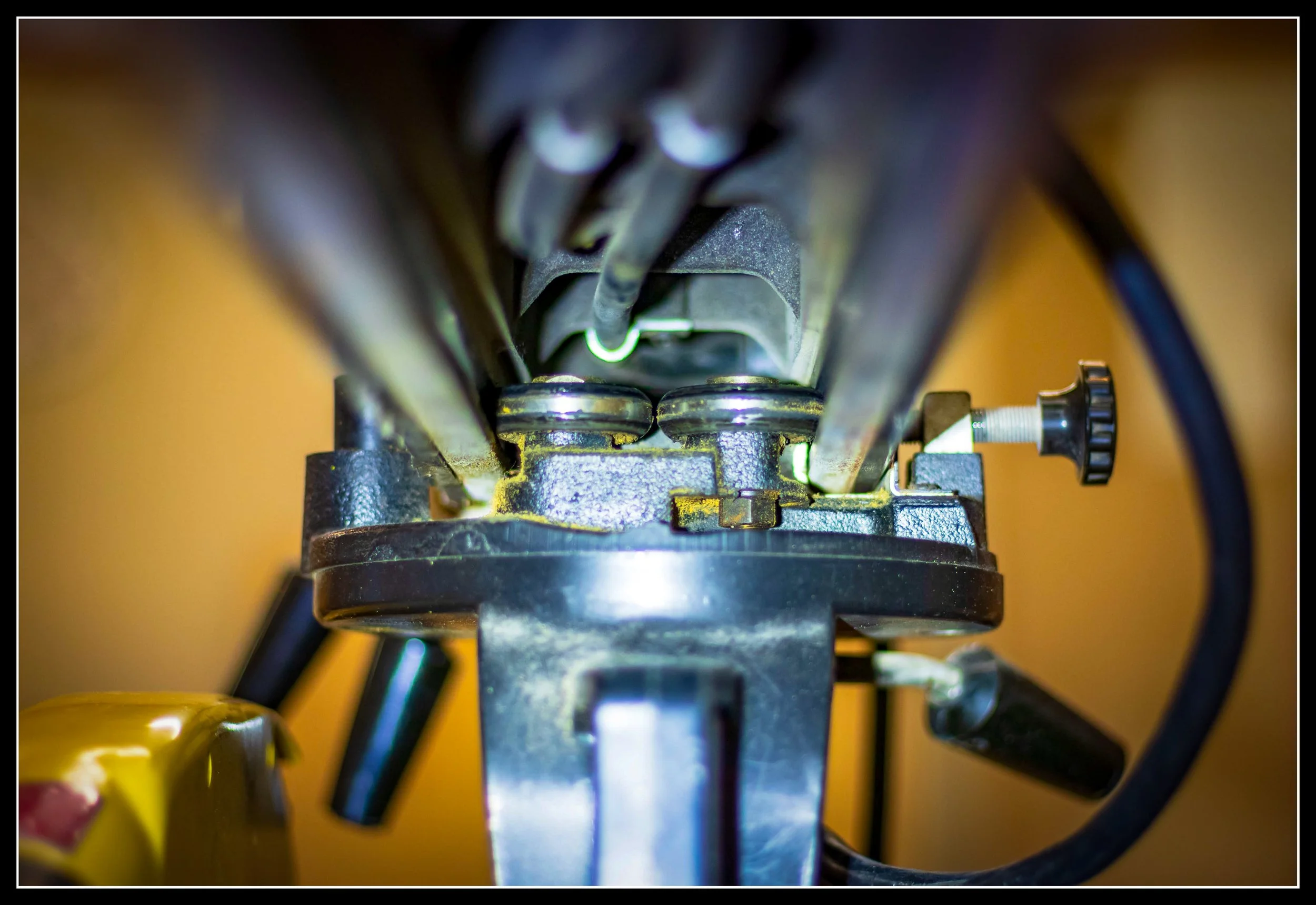
Roller Bearings in the Arm — Clean, Dry, and Honest
The roller bearings inside the arm are the quiet heroes of a radial arm saw. They don’t want grease, they don’t want oil, and they don’t want fancy shop tricks — they just want to be clean and dry. That’s what keeps the travel smooth and the accuracy true. I wipe the track and bearings with wet wipes; it’s the fastest, simplest way to clear dust and buildup without leaving residue. Just be careful when you reach in there — it’s surprisingly easy to pinch your fingers between the bearings and the track if you’re not paying attention.
The Elephant in the Room: Safety
I know one guy who lost a finger on a radial arm saw. This is the story he told me. He was new in the shop, cutting parts all day. The saw had an automatic return to the wall. He’d make the cut, let it go, pick up the next piece, repeat. After three weeks, one time the saw didn’t return. He spun around with the next piece in hand and put his finger straight into the blade.
Avoidable. More training should have been given. Training should have included tool maintenance and the importance of a clean work area. If the roller‑bearing track gets dirty, clean it. Make sure dust collection isn’t plugged. And don’t be hungover when operating dangerous equipment.
Most of the guys I knew who lost fingers lost them on the table saw — likely because more time is spent on that saw.
If you’re worried about a tool that cuts wood being dangerous, woodworking might not be for you. IKEA sells furniture. Might be best for some people. All you need is an allan key.
The tool that scares me most in the shop is the table saw. More things can go wrong there than on a radial arm saw, as long as the radial arm saw is used for cross‑cuts. In all my years in the industry, there’s only one tool most cabinetmakers refused to use — the shaper. They feared it. And yes, it’s a freaky tool. But I used it for the experience. Compared to a shaper, the radial arm saw seemed tame.
Still, the most dangerous aspect of any tool is the human user. I’ve seen that over and over again.
The Erasure of a Great Tool
The radial arm saw has been lost in its own shadow for decades. You know exactly what I’m saying. The tool was deemed unsafe. And with the cheaper, lighter, portable mitre saw, the radial arm saw disappeared from shop life.
Was this really about safety, or about selling new tools? Was it about liability? I don’t know. And honestly, I don’t care.
What I see is a very good tool made with cast iron and steel, an induction motor that can be wired for 240V, a customizable wood top, and a longer cross‑cut capacity than most mitre saws.
Best part: you can pick them up cheap on Kijiji. A good 12" saw for $300. Takes two people to load it. A 12" contractor‑grade saw is built much better than a 10" homeowner saw — and for the price difference, hunt down a 12" or larger.
Understanding Wood: Half the Battle
Research the saw. Understand the saw. Understand maintenance and power output. Understanding the wood is half the battle to saw safety. A few examples:
Bowed wood — place the crown down. so it contacts the table. As the wood drops during the cut, the kerf opens.
Crooked wood — place the crown toward the fence. This won’t pinch the blade.
Thick wood (1.5" or more) — take a nibble, back off, recut the kerf. Keep it open.
Kickback — never panic. Hold the handle firm and shut off the machine. With proper wood placement, kickbacks are rare.
These things aren’t exclusive to a radial arm saw. All saws have their risks. Understanding them — or not — is the human variable that changes the outcome.
Why the Radial Arm Saw Still Matters
A radial arm saw can handle a dado blade. Huge advantage when cutting multiple dados on long stock.
The customizable wood table can take hold‑downs and clamps that make otherwise impossible cuts not only possible but safe. I haven’t added them to my saw yet, but I should.
The wood fence is customizable. Dust extraction is customizable. And while dust extraction on a radial arm saw isn’t perfect, it’s still far better than my Bosch 12" mitre saw.
And yes — a radial arm saw can cut perfect 90‑degree angles. You just need to understand how to set it up. When the saw is set for 90 degrees you’ll feel a little wiggle room side to side — that’s normal. Push to one side of the wiggle, tighten it down, and it will always return to the same spot. I set my saw like that years ago and it still goes back to 90 degrees every time.
The radial arm saw is good with custom jigs. Jigs allow difficult angles that need perfect repeatability. This makes the saw a problem‑solver when you’re scratching your head trying to figure out how to make a cut. This saw has saved me over and over.
The radial arm saw is best for cross‑cuts, period. But the customizable aspect and ability to put a dado blade on the saw make it the best cross‑cut saw out there. It’s used in combination with other saws — a mitre saw sometimes beats it. These saws are best side by side in the same bench. And with a table saw, a track saw, and an MFT bench, you can accomplish almost anything.
Final Thought
I once was rushing through a job, deep in thought, free‑hand drilling with a cordless drill and a 5/8" Forstner bit. I punched through the wood and straight into my hand on the other side. The point is simple: the most dangerous tool in the shop is the one you’re using. You can always get another piece of wood. Your fingers are where the value is. Be careful on all woodworking tools.
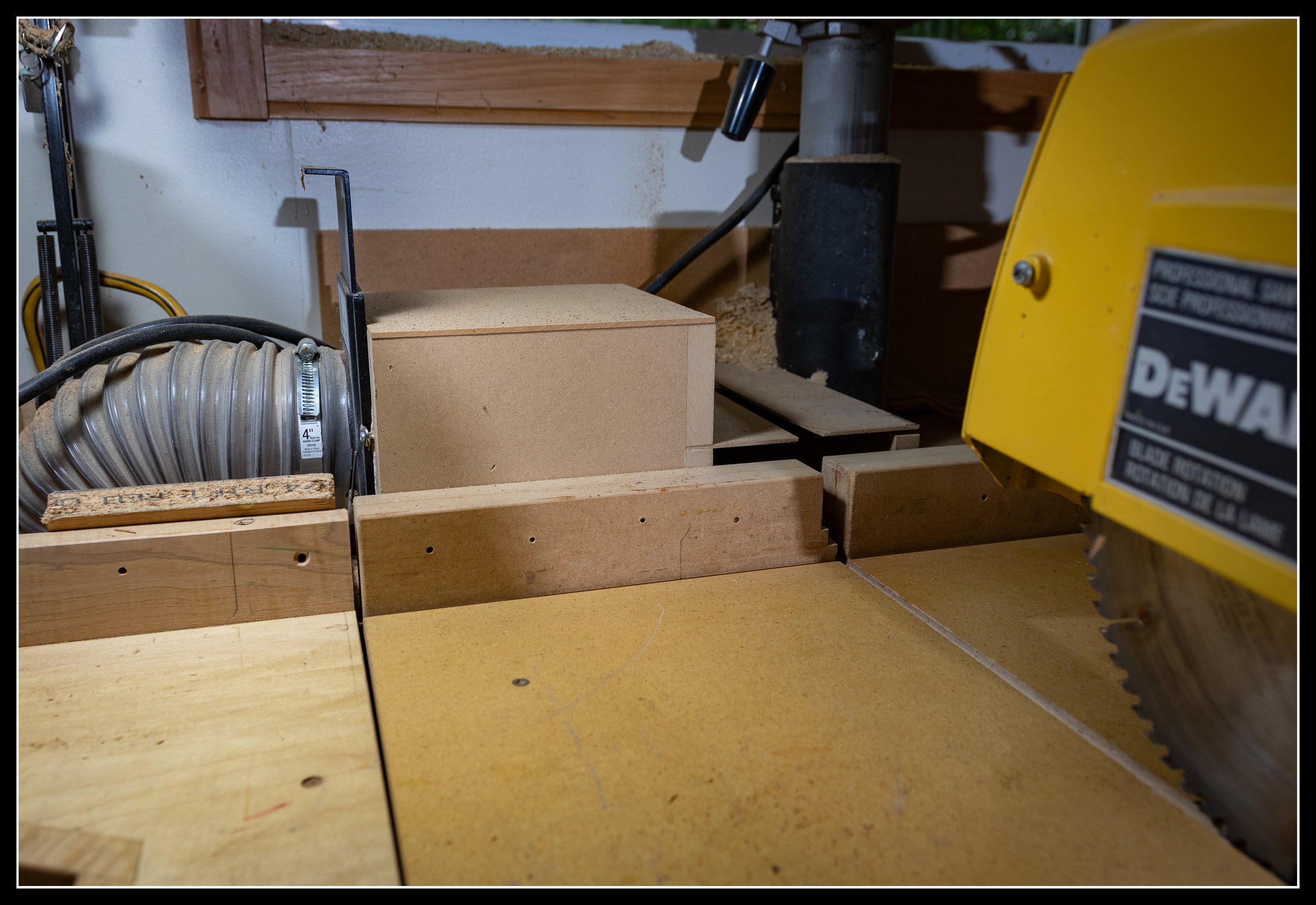
Dust Flow on the Radial Arm Saw — Straight Back Into the Fence
On this saw, most of the dust goes exactly where you want it to: straight into the fence and directly into the dust‑collection system. Cross‑cuts throw dust back, so the fence becomes the natural catch point. It works surprisingly well for everyday cuts. Where this setup falls short is with a dado blade — the dust comes off the cutter differently, and the fence system is too low for chips to enter the port. That’s a future improvement and likely a future story. For now, this photo shows a simple, honest dust‑collection setup that handles the bulk of the mess without pretending to be perfect.
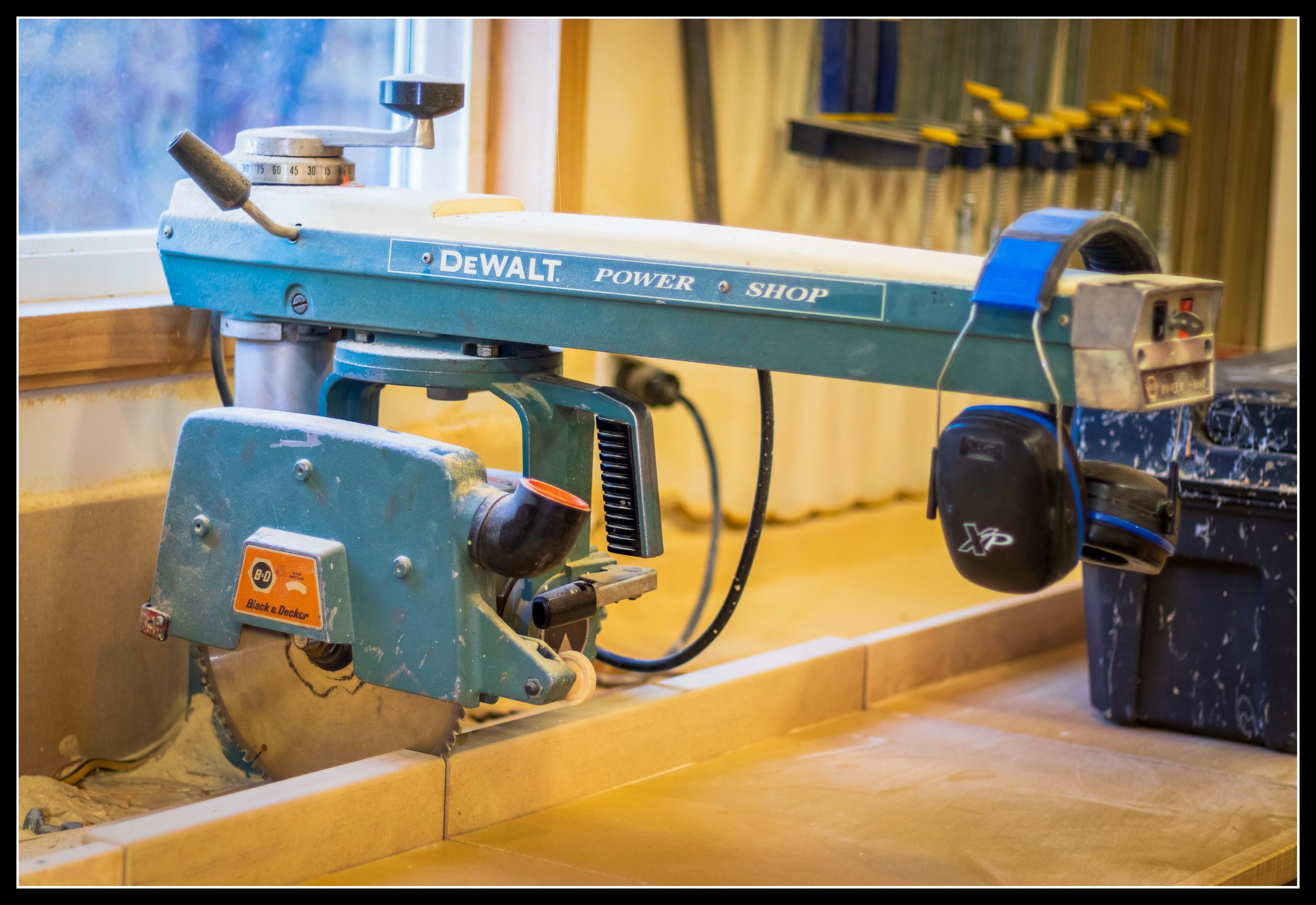
DeWalt 10" Homeowner Radial Arm Saw — Bare‑Bones Cast Iron
This 10" DeWalt homeowner saw from the 1960’s represents the lightest version of what a radial arm saw could be. The arm carries only the minimum amount of cast iron needed to function, and you can feel it the moment you touch the machine. It works, but it flexes. It cuts, but it wanders if pushed too hard. These saws were built for homeowners, not production shops, and the design reflects that — lighter castings, simpler hardware, and just enough rigidity to get the job done. It’s a good example of how far apart the homeowner and contractor models really were.
DeWalt 12" Contractor Radial Arm Saw — Full Cast‑Iron Arm, Full Capability
The 12" contractor‑grade DeWalt from the 1980’s is a completely different machine. The arm is solid cast iron — heavy, rigid, and built for accuracy. This is the kind of saw you find in real shops, not basements. The difference in build quality is immediate: tighter tolerances, smoother travel, stronger motor, and a cross‑cut capacity that actually opens up workflow. Compared to the homeowner model, this saw feels planted, confident, and ready for production work. It’s the last era when DeWalt still built these machines with serious materials and serious intent.
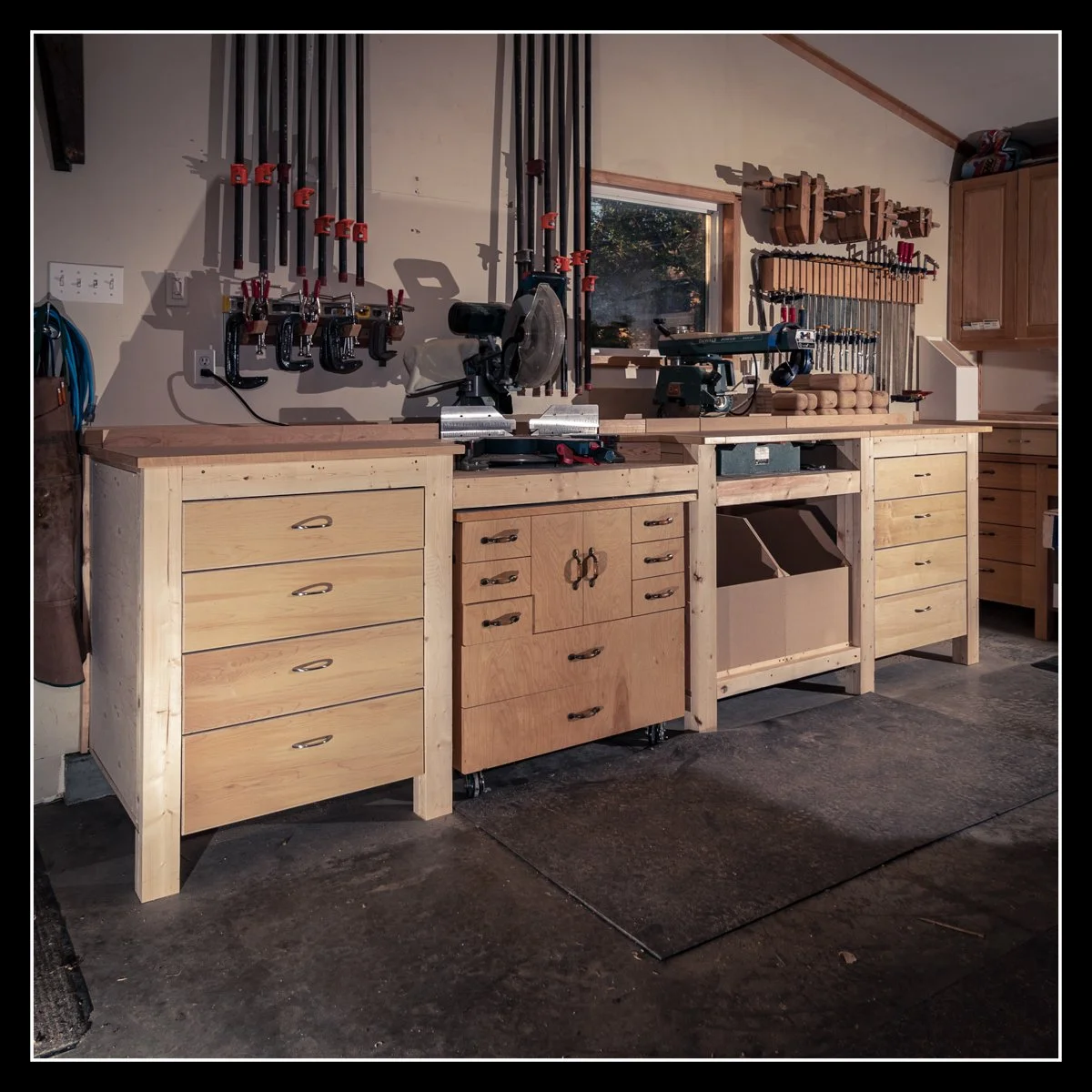
Cross‑Cut Bench — Where the Radial Arm Saw Shines
This is the cross‑cut bench built around my first radial arm saw, and it’s the setup that makes the tool truly shine. A radial arm saw is at its best when it has a dedicated bench, fixed fence, and room to work — no dragging it around, no temporary stands, just a permanent station built for accuracy. Paired with a mitre saw on the same line, this bench gives you the best of both worlds: long, repeatable cross‑cuts on the radial arm saw and quick angle work on the mitre saw. It’s a simple layout, but it’s the kind of workflow that keeps a shop efficient and honest.
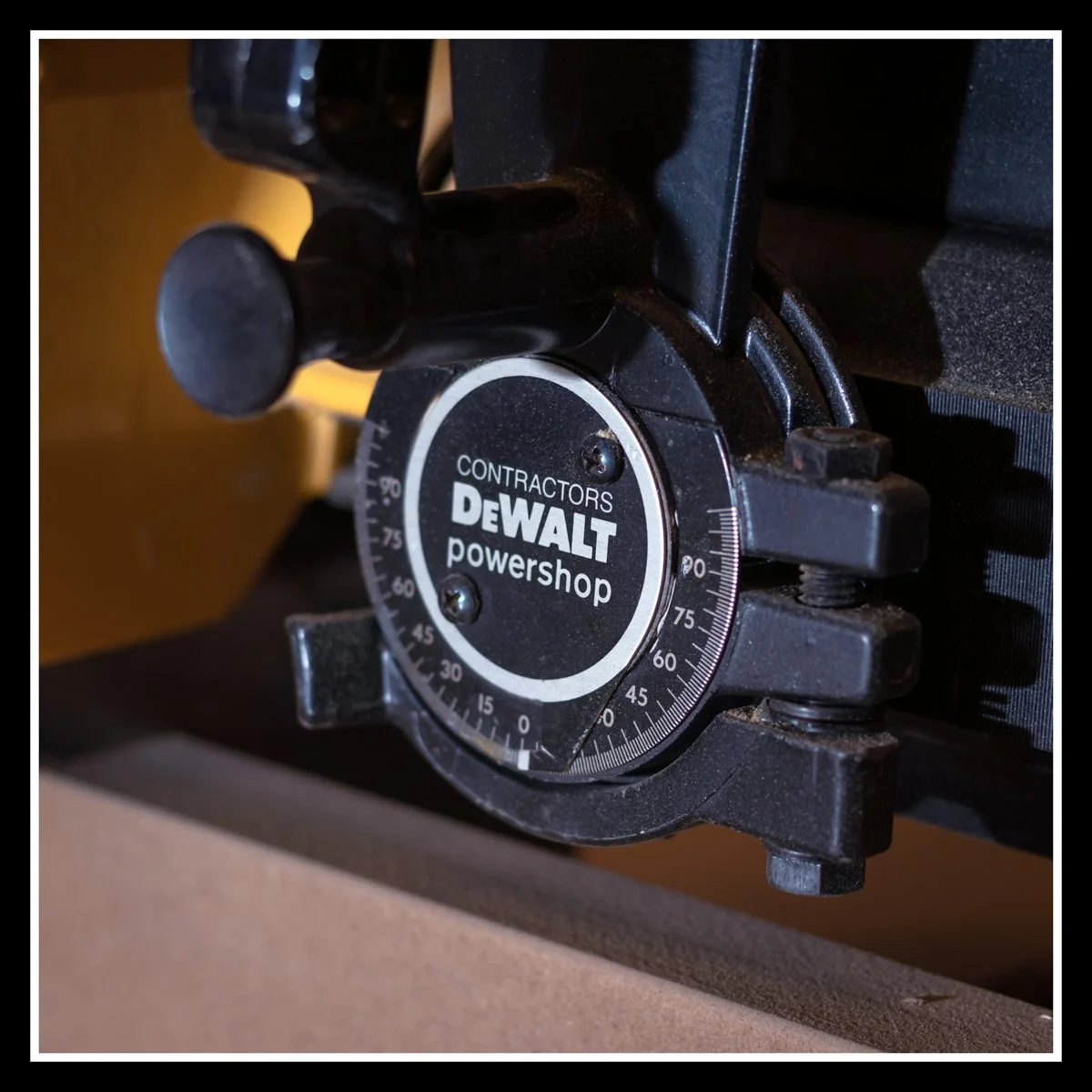
DeWalt 5800 Motor Detail — Heavy Cast‑Iron Power
This detail shot highlights the motor assembly on the Canadian‑made DeWalt 5800, where the cast‑iron construction is most visible. The weight of the housing keeps vibration low and accuracy high, especially during long cross‑cuts and dado work. The angle dial and adjustment hardware show how these contractor‑grade machines were built for repeatability — simple mechanical controls, heavy materials, and no compromise on rigidity. This is the kind of engineering that separates the 12" professional saws from the lighter 10" homeowner models you’ll see in the next photocard.
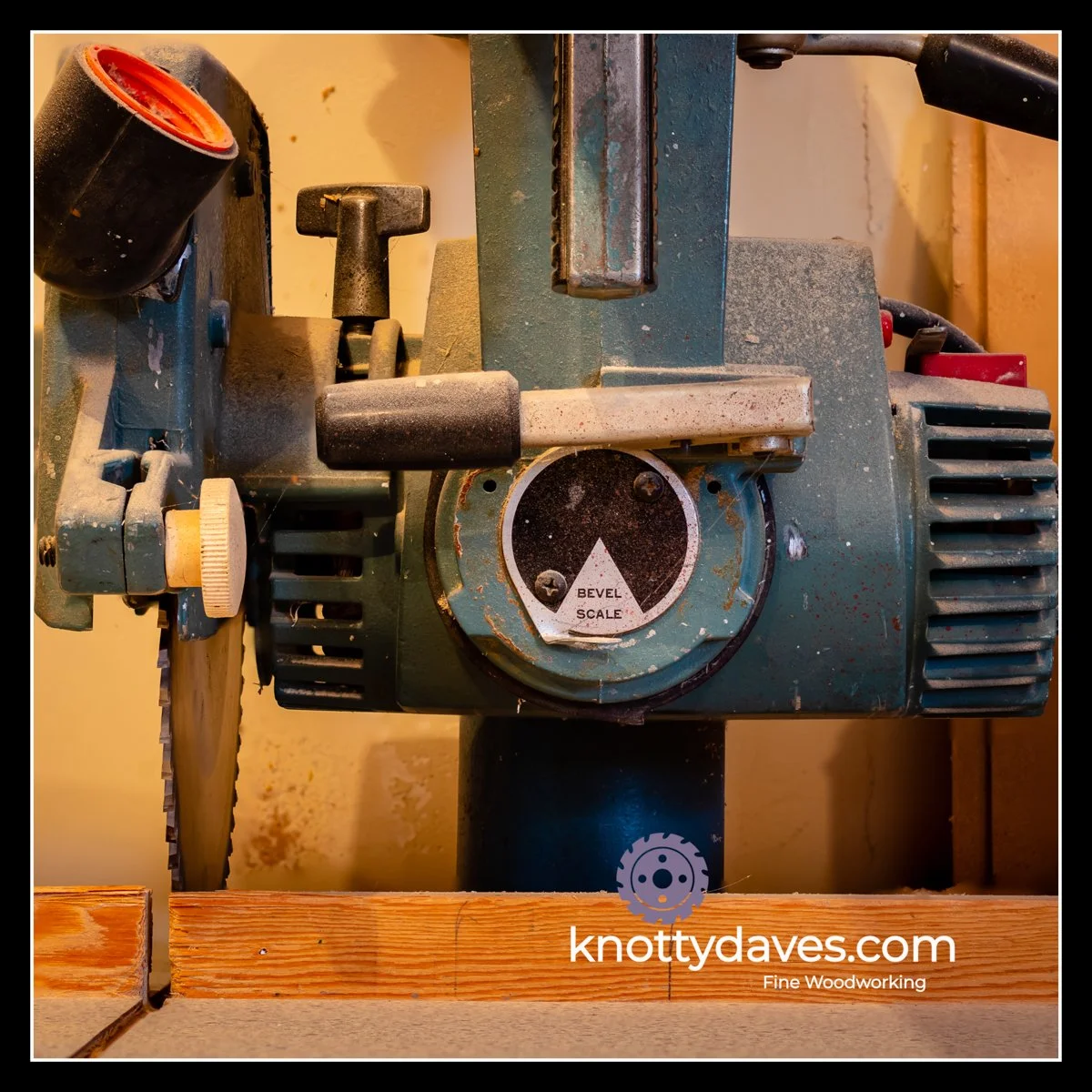
DeWalt 10" Homeowner Radial Arm Saw — My First Saw
This 10" DeWalt homeowner radial arm saw was the first one I ever owned. It worked well enough, but the lighter build was obvious the moment you touched it. The angle gauge was missing, the levers were bent sheet‑metal instead of cast components, and the overall feel of the machine was serviceable rather than solid. It could cross‑cut and handle basic dado work, but once I upgraded to the 12" contractor‑grade DeWalt 5800, the difference in power, rigidity, and accuracy was night and day. This saw is a good example of how far apart the homeowner and professional models really were.
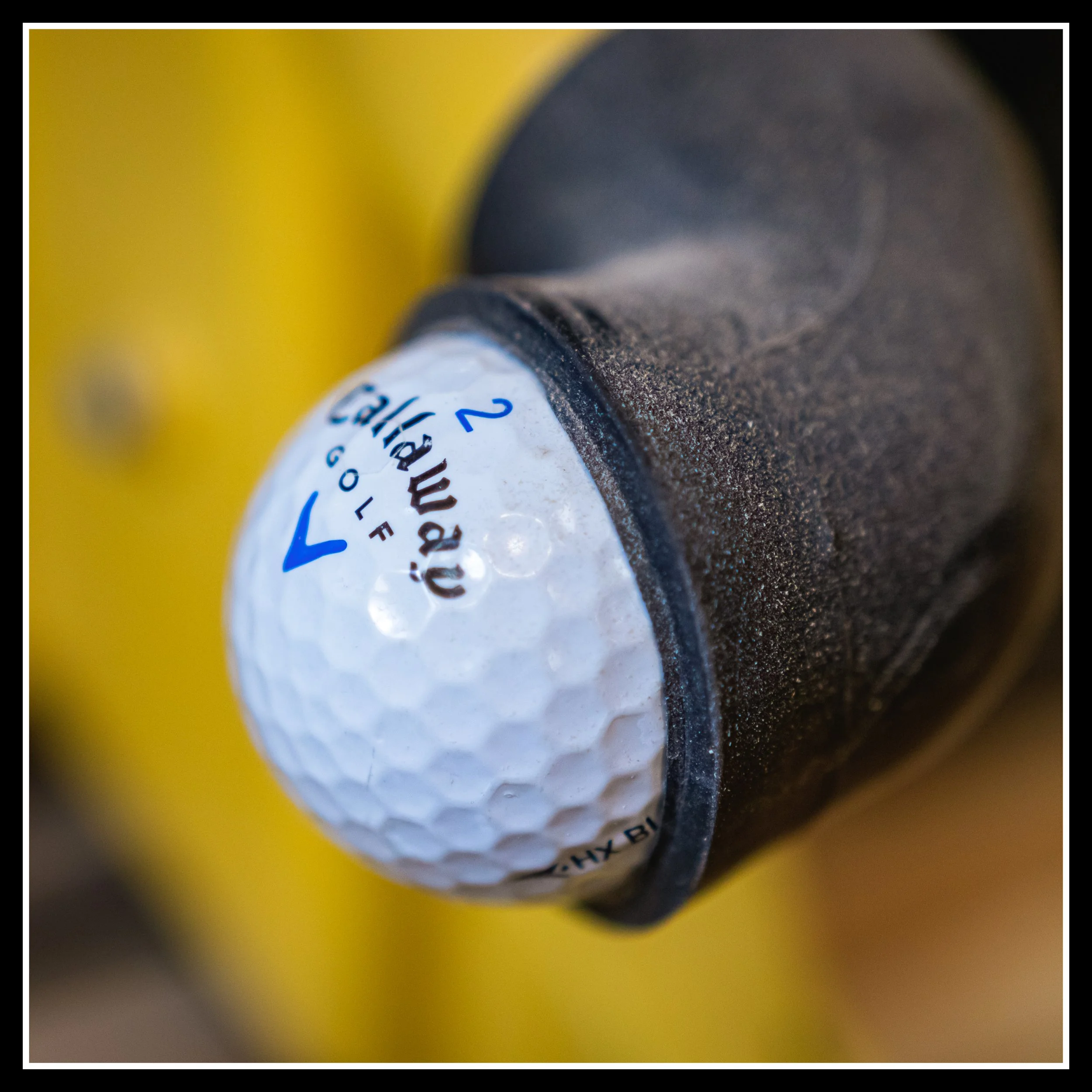
Dust Port on the DeWalt Guard — More Trouble Than It’s Worth
The dust‑extraction ports on the DeWalt radial arm saw guard were designed with ripping in mind, not cross‑cuts — and it shows. During cross‑cutting, almost no dust reaches these ports, making them more decorative than functional. On my saw, I plug the port with a golf ball to keep fine dust from blowing out the side. It’s a simple fix for a design that never really worked, and a good example of how radial arm saws often relied on shop‑built dust solutions rather than factory engineering.
Together, gathered in one place so the machine stories, tool reflections, and workflow moments stay connected — easy to find and easy to return to.
SHARE
The Working Side of the Craft — Connected Through Machines, Tools & Stories
If you want the stories shaped by table saws, bandsaws, grinders, fences, and jigs — the honest, noisy side of woodworking — the Working Side Of The Craft is one click away.
If you’d like to hear from me only when something big is happening — a launch, a milestone, or a major project — you can join the mailing list below.
Written by David Flather, Red Seal cabinetmaker and founder of Knotty Dave’s Fine Woodworking — a Manitoba shop rooted in heritage restoration, storytelling, and real craft.
All photos shot by David Flather — in the shop, on the road, and in the places where craft and story meet.
Related stories:
My First Bandsaw That Didn’t Suck — A Woodworker’s Journey Through Vintage Saws
Woodworking After 50: How Experience, Patience, and a Personal Shop Redefine the Craft
How a Jointer Removes Cup, Bow, Crook & Twist — The Straight Facts About Milling Wood
How Thickness Planers Really Behave: Tearout, Ridges & Grain That Fights Back
The Workshop Library
If you enjoyed this story, there’s lots more like it inside The Workshop Library — and it’s free to explore.
Wood Archive — species, grain, working properties, and real‑world craft notes
Behind the Grain — the deeper stories inside wood, craft, and heritage
The Working Side of the Craft — tools, shop life, workflow, and the realities of making
Digital to Sawdust — Design Studio — geometry, proportion, visual flow, and design thinking
The Stories of the Shop — the personal side of craft, the shop’s history, and the quiet moments that shape the work
House & Hearth — heritage home restoration, the hearth room, winter culture, and the lived‑in side of craft
I’m just one man with a shop, building this archive one story at a time. If you’d like to follow the journey as it unfolds, explore The Workshop Library — new stories every week.
