

The Value of Wood
Quick Answer: Why was wood essential to the fur trade?
Wood was essential because it was survival. Across the fur trade — Hudson’s Bay Company, North West Company, and every inland post — timber meant heat, shelter, tools, boats, and the ability to endure the northern frontier. Winter logging, frozen muskeg crossings, river transport, and hand‑built York boats formed the timber economy that kept the entire trade system alive. Wood wasn’t a resource — it was the lifeline of the continent.
Winter logging — inland spruce, poplar, tamarack
Muskeg crossings — frozen‑ground access
River transport — spring breakup
York boats — spruce + tamarack
Timber economy — firewood + construction
Wood as survival — heat, shelter, tools
The Value of Wood — Why Timber Meant Survival
Woodworking today feels modern, but in the fur‑trade era wood was survival. Winter logging, frozen muskeg crossings, river transport, and hand‑built York boats formed the timber economy that kept the Hudson’s Bay Company and North West Company alive. This story traces how wood built York Factory — and why the material that meant survival then still matters today.
By the end of this story
You’ll understand why wood was the lifeline of York Factory, how winter logging and river transport shaped the fur‑trade economy, and why the material that meant survival in 1817 still means survival today. The true value of wood.
⏱️ Estimated Reading Time: 15 minutes
Comparison — The Woods That Made It Possible
Spruce — structure, planking
Poplar — crates, interior work
Tamarack — boat ribs, rot resistance
White oak — barrels, storage
Driftwood — firewood economy
Quick Summary
Wood was the lifeline of the fur‑trade frontier — the material that made heat, shelter, tools, boats, and transport possible in a world without roads, quarries, or machinery. Winter logging across frozen muskeg supplied spruce, poplar, and tamarack; spring breakup carried the logs to York Factory; and every building, boat, barrel, sled, and fire depended on that timber. The men who cut, hauled, shaped, and burned wood kept the Hudson’s Bay Company alive, and their work shows how deeply survival once depended on trees. Today wood arrives by forklift, but its value — as structure, fuel, craft, and connection — hasn’t changed.
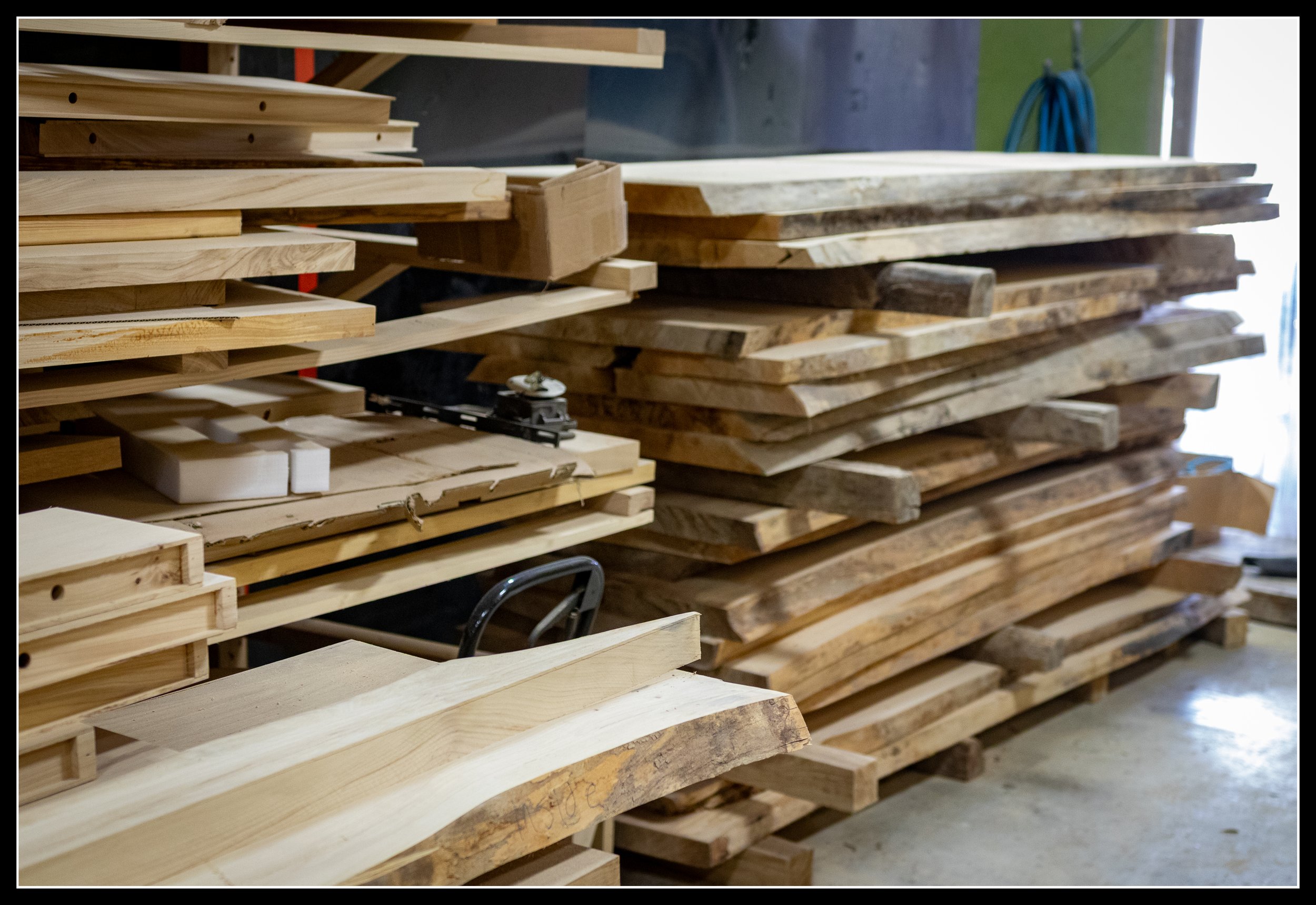
Modern Elm Supply – A Sharp Contrast to 19th‑Century Wood Harvesting
This stack of kiln‑dried elm represents the ease of accessing wood in the modern world. Today, all it takes is a drive to the mill, a quick load‑up, and a return to the shop. Two centuries ago, the Hudson’s Bay Company relied on winter logging, frozen muskeg crossings, and spring river floods to move timber from the inland forests to York Factory. This photo anchors the story’s opening contrast: the convenience of contemporary woodworking versus the brutal, hand‑powered reality of the 1800s.
today
Every time I need walnut, cherry, or oak, I figure out how much I want and call my supplier. All he needs is the species, the amount, and the grade if there’s more than one option. They call when the order is ready. I drive down, we chat, and someone brings the lumber to my truck with a forklift. I pay, head home, unload it into the shop, and finally get to see what I bought. That’s either the fun part of the day or the disappointing one.
Then the lumber goes on the rack until I’m ready to mill. Sometimes that’s a week later. Before milling, I double‑check the design on my computer, then start selecting boards and grain patterns to get the best look with the least waste. Then the cutting and milling begin, in a heated, fully powered shop.
This is the pattern of a modern custom woodworking shop. At least the world as I know it. Not much has changed in the big picture — cutterheads evolve, software evolves, power tools evolve, and some shops have CNC now. The industry moves forward slowly, steadily. Changes stack up while we’re busy milling wood. We look back twenty years and realize how much shifted when we weren’t paying attention.
But this is our world. Everyone is “figuring on biggering” — a nod to Dr. Seuss and The Lorax, one of my favourites. We keep working, building, and paying the bills. If we try to imagine woodworking 200 years from now, it's impossible. But one thing is certain: the wood itself won’t change. It will behave the same, smell the same, look the same. And if the population grows, we’ll need more of it. That’s where the evolution will happen — in how we grow, harvest, mill, and use wood.
The world is always changing. The human world, I mean. How we build. What we build. How we get materials. The world moves while we’re too busy to see it, and eventually we forget how it was. Generations come and go and it feels like it’s always been this way. But it hasn’t. It evolved from a world of trees, and the humans who relied on them.
To imagine 200 years into the future, it makes sense to look 200 years into the past. Compare woodworking today to the 1970s and 80s — huge changes, especially in CAD and computer‑controlled equipment. Go back further to the 1940s and 50s — logging practices were different, carbide tools were just coming out, plywood existed but not the particleboard we know. No melamine. No MDF. Radial arm saws were the rage and the word “cordless” didn’t exist. Small changes, but they add up. And all of this is still easy to picture.
So let’s take a deep dive into what woodworking was in Manitoba 200 years ago. How did they manage and survive? Back then it wasn’t Manitoba — it was Rupert’s Land. There was no train until 1877. All trade came from Hudson Bay by boat; the great ox‑cart routes to the south were still decades away. No lumber yards. No trucks. No phones. No electricity. Even nails were scarce.
And at Hudson Bay, at York Factory — the economic engine of the region — the entire fur trade would collapse without wood. So how did woodworking get done then?
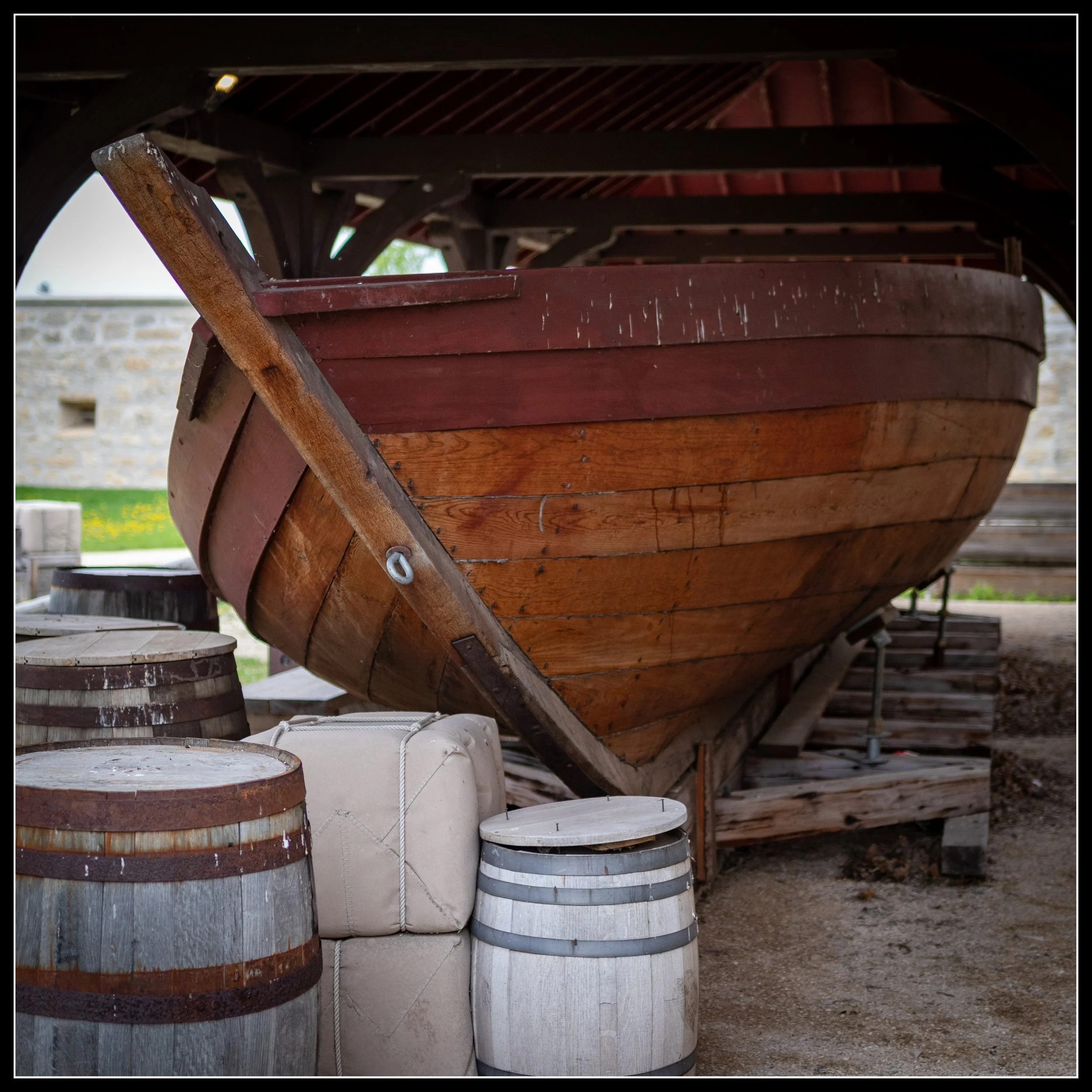
Replica York Boat at Lower Fort Garry – The Southern Terminus of the Hudson Bay Route
The York boat at Lower Fort Garry represents the final southern destination of the historic Hudson Bay transport route. Traveling more than 1,200 kilometres from York Factory along the Hayes River, Nelson River, Lake Winnipeg, and the Red River, these boats carried furs, trade goods, and supplies through some of the most demanding waterways in North America. This replica preserves the scale, construction, and heritage of the vessels that powered the fur trade for over a century.
York Factory, 1817
Let’s go there and have a look around.
York Factory sits at the mouth of the Hayes River, on the coast of Hudson Bay, an arctic region north of the treeline. The ground is tundra — wet, shifting, sinking every spring and summer. The main building was a massive timber‑framed construction, all solid wood — an earlier form that predates the Depot that stands on the site today. Surrounding it is a compound of large timber buildings and, in earlier years, a full palisade made of hundreds of long, straight timbers. It wasn’t just for wind or animals — the Hudson’s Bay Company (HBC) built it during the years of conflict with the North West Company, when theft, raids, and rivalry were real concerns. The palisade gave the fort authority and kept the compound organized, but on shifting tundra it leaned and sagged, a row of tall timbers tilting like an angry set of teeth in need of braces.
They didn’t use stone because the land didn’t give them any. York Factory sits on tundra and clay — no bedrock, no quarries, nothing to cut or shape. Timber was the only material available, and it was the vernacular of the region. In Europe, stone is everywhere. On Hudson Bay, it simply isn’t.
There are no docks here. The shoreline is tidal mud and clay. All movement from the fort to the river happens on a beaten trail carved into the bank — a path that shifts every year as the ground slumps toward the river. When the Company ship arrives, it never comes close to shore. It anchors at Five Fathom Hole, where the water is deep enough for a square‑rigged vessel — about 11 km from the fort.
The fort sends boats out, shallops — big surf‑capable boats up to 45 feet long — row or sail out to meet the ship. Alongside them are the Bay York boats, built for the chop and wind at the river mouth. And the flats, the small fast boats for people and mail. All of them made of wood.
They load furs onto the ship, unload trade goods and passengers, and race the tide back to shore before the water drops. Everything the fort needs passes through those boats.
At York Factory, everything depends on wood.
Furniture. Tables. Fish racks. Dog sleds. The blacksmith shop. The cooperage. The carpenter’s shop. The palisade. The boats. The sledges. The roof trusses. The floors. The barrels. The crates. The scaffolding. The tools. The infrastructure. Even the caskets.
All of it built at York Factory.
Without power.
Without lights.
Often without a roof.
Just men, tools, and timber.
🌲 Winter Forestry: Where the Wood Begins
Let’s start at the source — the forest.
The men worked in snow up to their knees, trudging through the treeline along the river’s edge, looking for the right trees. Saws rasped and axes rang through the dense winter air. A warming fire always burned nearby — sappy spruce limbs and driftwood crackling, smoke hanging under the canopy despite the wind. The rhythm never changed: work until fingers stopped working, warm up by the fire, then back to the trees. One fell, then another. When the short northern sun dropped, the day was over. Tomorrow, they would do it again.
The men who cut those trees were Orkney men, Métis men, and Cree men, each shaped by the land in different ways, all bound by the same cold work.
This was inland forest.
Not the scrub around the fort, not the willow and dwarf birch clinging to the tundra, but the real forest — the one that begins about ten kilometres inland, where the muskeg finally ends and the land rises just enough to drain. That’s where the permafrost loosens its grip, where the ground firms up, and where proper trees can take hold.
It was only accessible in the dead of winter, when the muskeg froze hard enough to cross and the rivers locked in place. The cold was deadly, the daylight short, and the work unforgiving.
What the Muskeg Really Is
Muskeg isn’t just “wet ground.” It’s a living sponge — layers of peat, roots, water, and half‑rotted vegetation stacked on top of permafrost. In summer it swallows boots, sled runners, and wagon wheels. Even a light load sinks. The inland forest near York Factory was unreachable for most of the year because the muskeg between the fort and the treeline never supported weight.
In winter everything changed. The muskeg froze solid, the rivers locked in place, and the land finally became passable. Only then could men haul tools, food, and sleds inland to reach the spruce, poplar, and tamarack they needed. Without winter, there was no forestry — and without forestry, York Factory had no boats, no buildings, and no firewood. The muskeg dictated the entire rhythm of the year.
The crew travelled by dog sled, hauling tools, food, blankets, and the few comforts they could manage. Their destination was the winter camp — a crude cluster of shelters near the river’s edge. This was base camp. Their home for weeks. Their refuge from the wind. Their only warmth.
And every year, base camp moved.
Because every year, the nearest trees were gone.
The first season, they cut the spruce right along the river.
The next year, they walked farther.
And farther.
And farther.
Twenty years of that adds up.
The forest retreats.
The men chase it.
The trees had to be close to the river — that was the rule.
Because the only way to get timber back to the fort was to leave the logs on the frozen river and let the spring breakup carry them downstream. The river was the highway. The ice was the road. Gravity and current did the hauling.
For the HBC, everything depended on the river — frozen in winter, flooding in spring — the only route that could carry timber from the inland camps back to York Factory.
But that was spring’s problem.
For now, they cut trees.
They wanted white spruce — tall, straight, thick. The backbone of York Factory. Beams, planks, ribs, floors, roofs — spruce held the place together.
They wanted poplar — easy to work, useful for crates, interior trim, and anything that didn’t need to bear heavy loads.
And they wanted tamarack — tough, dense, rot resistant. Tamarack made York boats possible. The men harvested not just the trunks but the roots, carving out the natural ninety‑degree bend where trunk meets root. Those curved pieces became the ribs of the boats. They were shaped right there in the snow and hauled back to the fort by hand. Too valuable to risk losing to the spring flood.
Why Axes Loosened in the Cold
Tool steel in the early 1800s wasn’t the alloyed, temperature‑stable metal we use today. Blacksmiths at York Factory forged axe heads from simple carbon steel — iron with just enough carbon to harden. In deep cold, that steel contracted more than the wooden handle, shrinking the eye of the axe and loosening the fit. A tool that felt solid at the fire could rattle loose an hour later in −30°C wind.
The men compensated the only way they could: constant refitting. Handles were wedged, re‑wedged, soaked, dried, and sometimes replaced entirely. The blacksmith forged new heads when old ones cracked or wore thin, and every tool in the winter camp needed attention. Steel was precious, but it wasn’t perfect — and the cold exposed every weakness.
Understanding early tool steel makes one thing clear: the work wasn’t just cutting trees. It was keeping the tools alive long enough to do it.
The work was brutal.
Some days were −15°C.
Some were −37°C.
The windchill was always worse.
Fingers froze.
Noses froze.
Beards iced solid.
Axe heads shrank in the cold and loosened on their handles.
Hands stopped working.
Frostbite hovered over every task.
So fires burned constantly.
Small warming fires at the cutting site — just enough to thaw fingers, melt snow for water, heat tea.
At night a larger fire was kept inside the crude hearth at base camp — the only real warmth they had, the only place to dry mitts, the only place to cook.
This was where they lived until the forestry work was done.
Cutting, trimming, stacking, surviving.
All the while, the fort sent supplies and messages by dog sled — a thin line of communication across frozen emptiness.
And when spring came, they packed up camp and returned to the fort.
The logs stayed behind, waiting for the river to wake up.
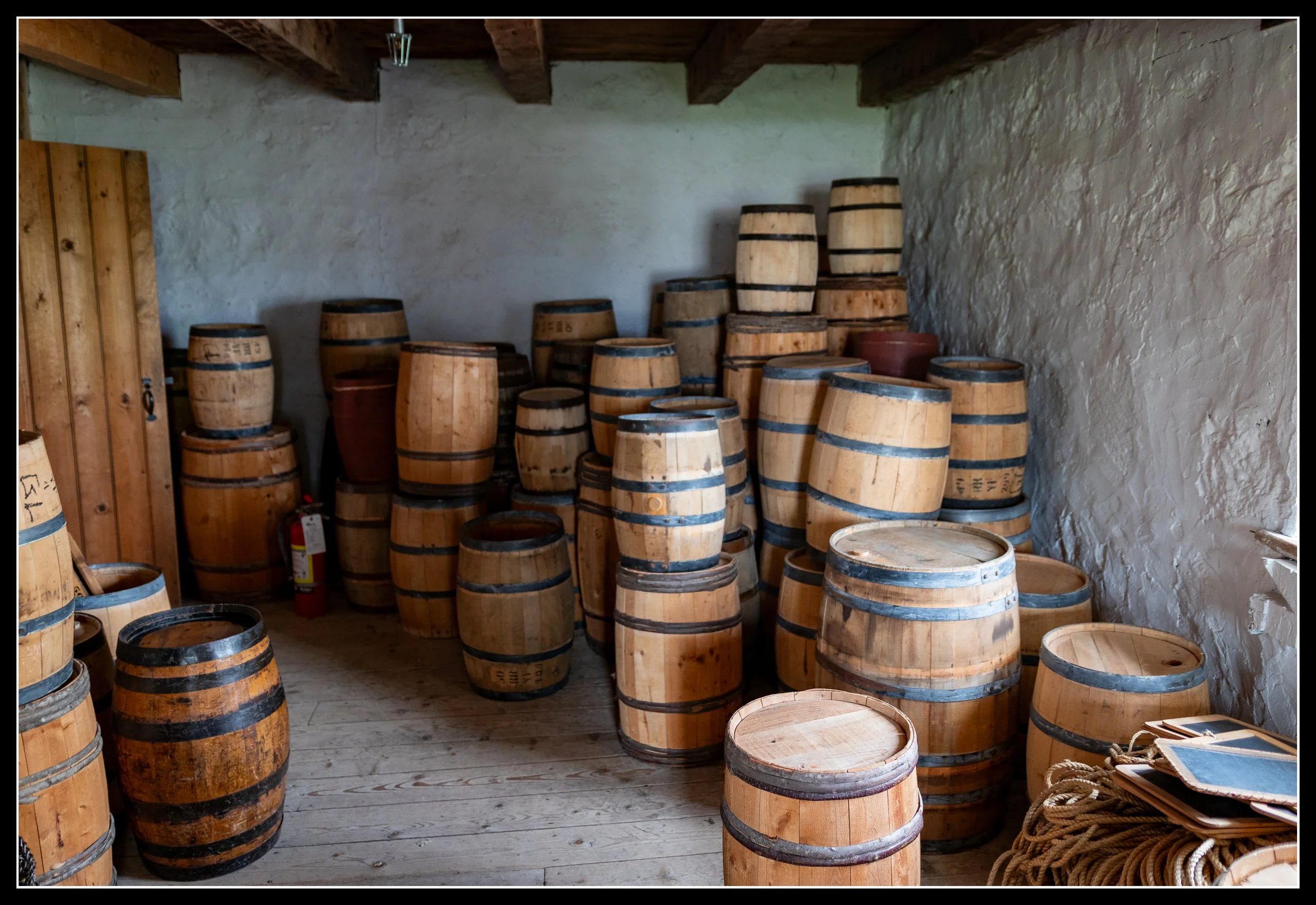
White Oak Barrels
These white oak barrels at Lower Fort Garry are a reminder of how far wood travelled to keep the fur trade alive. York Factory had no oak trees, yet barrels were everywhere — storing food, gunpowder, rum, nails, textiles, and anything that needed to survive the Atlantic crossing. They arrived from England and Scotland full, and were repaired for years because every stave mattered. In a place where spruce, poplar, and tamarack built the world, white oak was the quiet import that held the economy together. Even here, the value of wood wasn’t just in what grew locally, but in what the world was willing to send across an ocean.
Back at the Fort
Arriving back at the fort didn’t mean a holiday. The river was still frozen thick, not moving, not carrying anything. Until breakup, there was no lumber, no driftwood, no logs coming down from the winter camps. So the men turned to everything else that needed doing — and at York Factory, everything needed doing.
Axe handles had to be repaired. Axe heads refitted or reforged. New handles cut for the blacksmith’s fresh tool heads. Buildings needed attention. Dog sleds needed repairs. And sometimes a casket was needed. In a place where the ground shifted and sagged every year, nothing stayed straight for long. Everything made of wood — which was everything — needed constant work.
The most important job, every single day, was firewood.
Fire to heat.
Fire to cook.
Fire to smoke fish.
Fire to run the blacksmith shop.
Fire to steam bend wood.
Fire to survive.
It was the first task in the morning and the last task at night. Life depended on it. They burned driftwood whenever they could get it, and every scrap of lumber that wasn’t fit for building — and when that wasn’t enough, they cut smaller spruce and poplar just for fuel. Most of the wood they harvested never became buildings or boats. Two‑thirds of it went straight into the fire: heat, cooking, smokehouses, forges, steam boxes. Firewood was the real economy of York Factory. They could never run out. More wood was burned than built.
But as essential as firewood was, boatbuilding was a close second — and boatbuilding depended on fire too.
While they waited for the river to break and the winter logs to arrive, the men started York boat construction and repairs — the main workhorse of the Hudson’s Bay Company, built for the northern wilderness. The tool kit was simple: adze, axes, chisels, drawknife, scrub plane, brace and bits, and a mallet. Enough to build a one‑ton boat that could carry two tons of cargo through rapids, lakes, tidal chop, and the long fur‑trade routes of the interior.
These boats were built outside on a tidal beach, on open tundra, exposed to the bitter, humid Arctic wind off the Bay. This was the assembly and fitting area — no shelter, no walls, just men, tools, and timber.
Up by the fort, the blacksmith forged the hardware: spikes, nails, brackets, straps. In the saw pit, spruce logs were ripped into planks. The pit was exactly what it sounded like — a hole in the ground with a log suspended above it. One man stood on top, one in the pit below, and together they worked the long pit saw, ripping the log into boards. Hard, slow, heavy work. But this was the lumber pile that fed everything: boat parts, floorboards, roof planks, crates, sled runners — whatever the fort needed.
This was the rhythm of early spring at York Factory.
Waiting for the river to wake up.
Working through the cold.
Keeping the fires alive.
Preparing for the moment when the logs would start sliding down the Hayes, not crashing but gathering, drifting, carried by the cold, rising water toward the fort.
The Return to Today
These men couldn’t imagine a world 200 years in the future any more than we can. But they knew one thing with absolute clarity: wood was their lifeline. Their heat, their shelter, their tools, their boats, their economy — everything depended on it. And it wasn’t just York Factory. Everywhere in this country, wood was survival.
Today we stand on the shoulders of those pioneers. Like us, they were so busy building what they needed that they didn’t notice the world changing around them. But they understood the value of wood. And like them, we still depend on wood. In a climate like Canada, we always will.
It’s easy to forget how we got here. Easy to take for granted a world where lumber arrives by forklift instead of spring floodwater. But streamlining the industry hasn’t reduced the importance of wood. Wood in 2026 matters every bit as much as wood in 1817 — the difference is only in how hard we have to work to get it.
So, what is the value of wood?
I’ll leave that up to you.
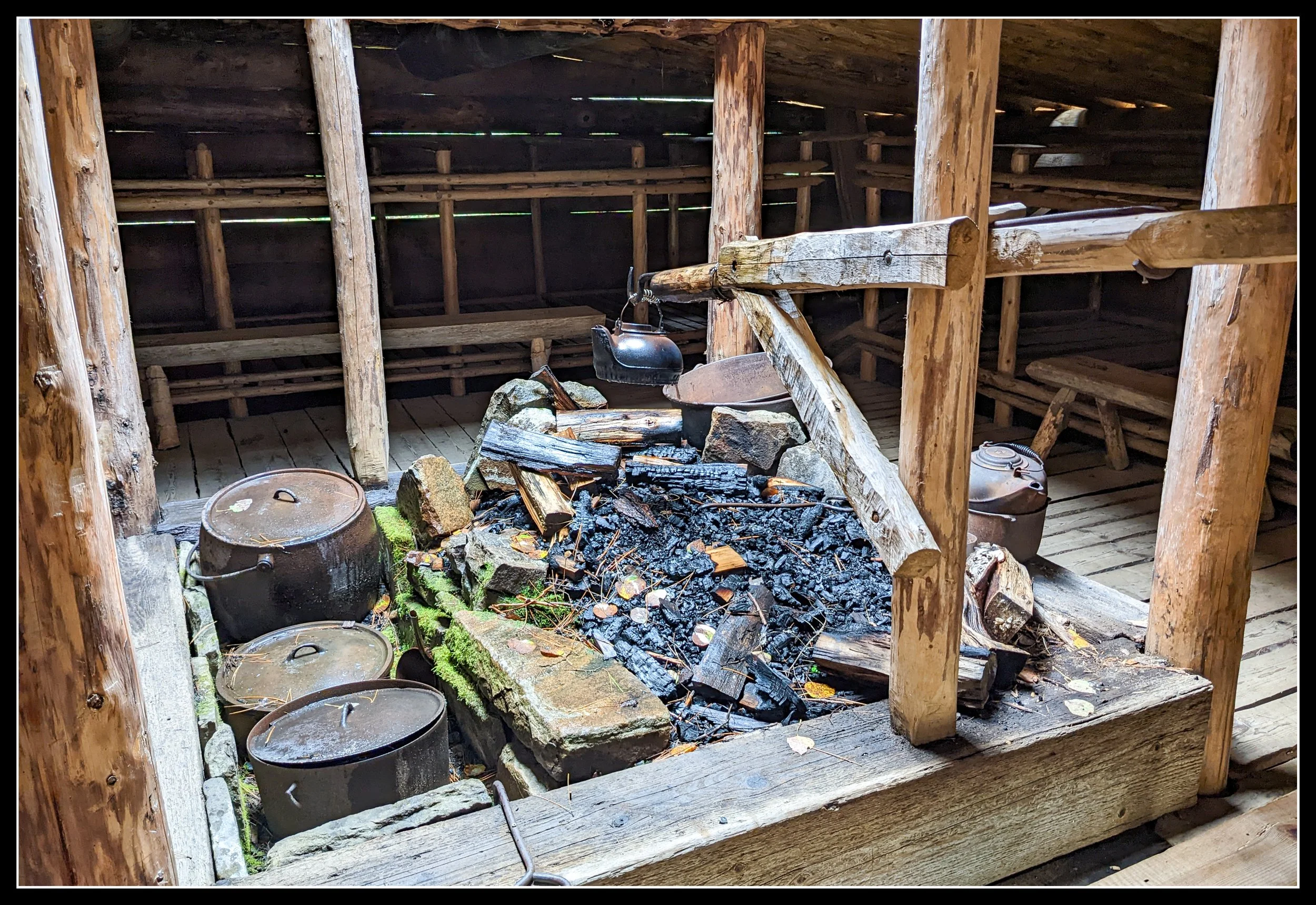
Historic Logger’s Camp – A Glimpse Into 19th‑Century Timber Life
This reconstructed logger’s camp in Algonquin Park reflects the same conditions faced by winter forestry crews supplying York Factory in the early 1800s. Though separated by geography, both camps relied on hand‑cut timber, open‑fire cooking, rough‑hewn shelters, and weeks of isolation in deep snow. The men who harvested spruce, poplar, and tamarack for the Hudson’s Bay Company lived in camps much like this one—simple, cold, and built entirely from the land around them.
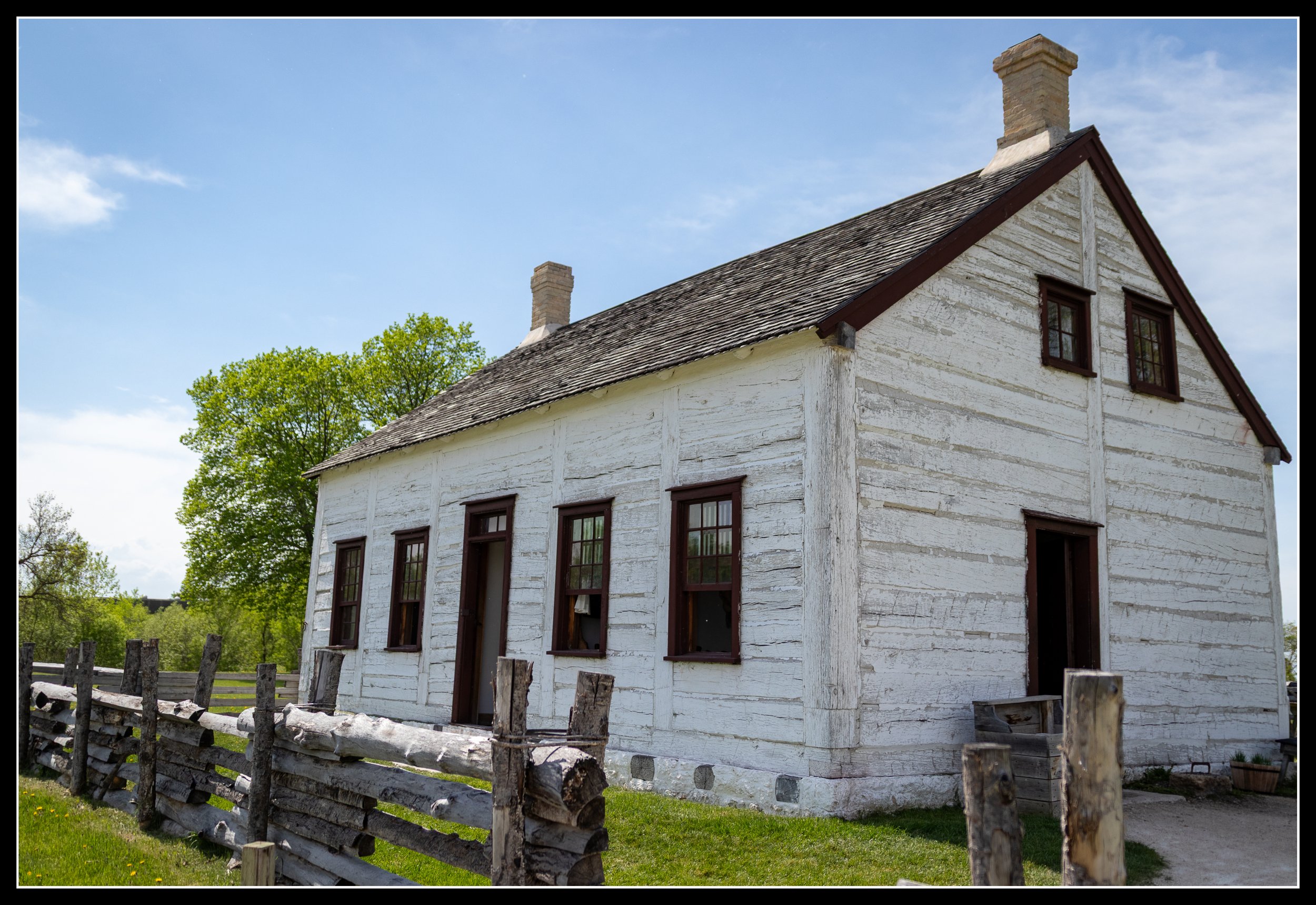
Lower Fort Garry Residence – Hand‑Built Red River Timber Construction
This historic residence at Lower Fort Garry represents the southern end of the York boat supply route from Hudson Bay. Built in the early 19th century using local Red River timber, every beam and board was harvested, shaped, and fitted by hand. Unlike the northern spruce and tamarack used at York Factory, this structure reflects the post‑and‑frame building traditions of the Red River Settlement, where settlers relied on nearby forests and manual craftsmanship to create durable homes in a frontier landscape.
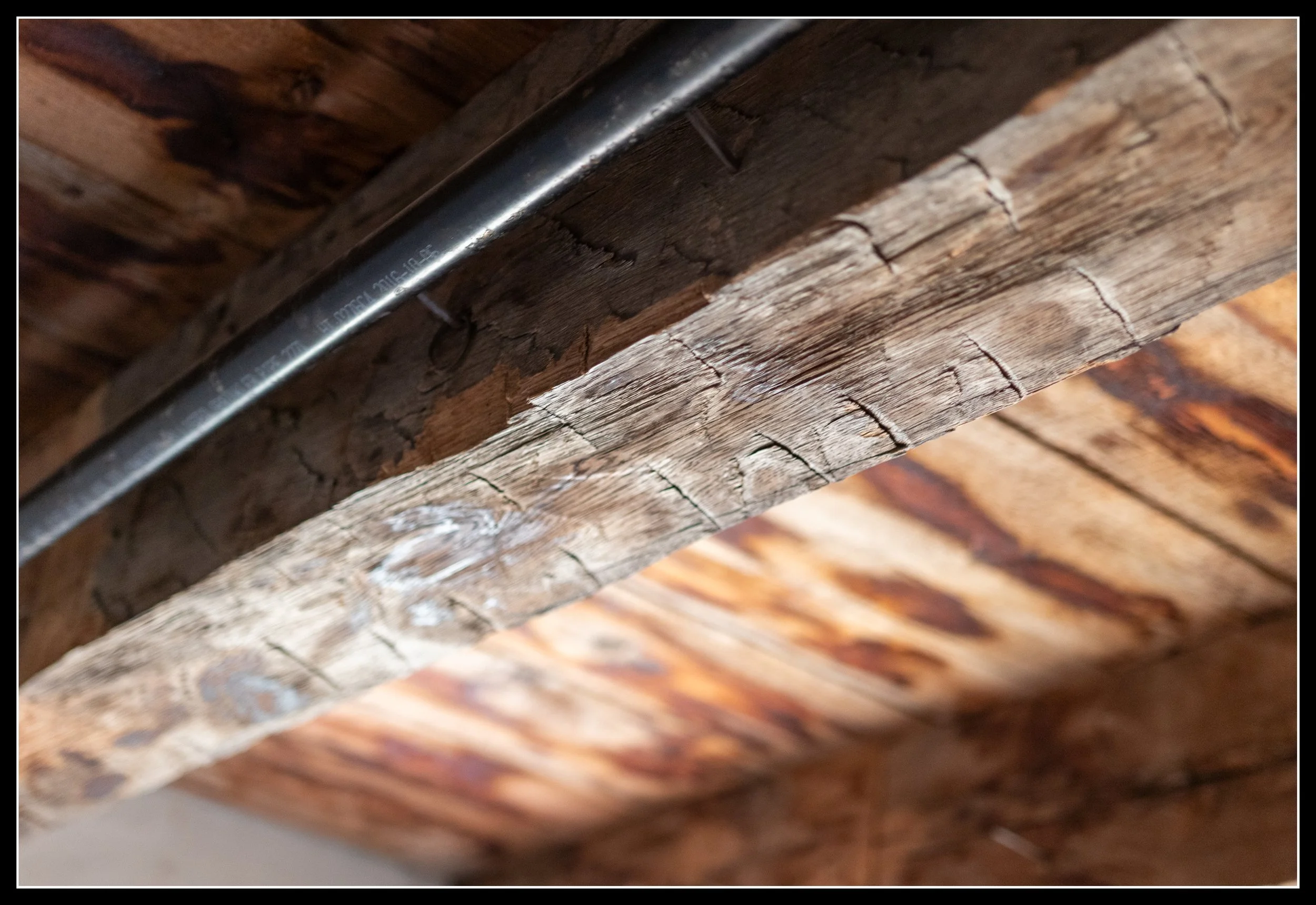
Where the Past Still Holds Weight
This beam stopped me in my tracks. You can still see every adze stroke from the day it was shaped — long before anyone thought to run plumbing through the place. It’s the kind of timber that reminds you how buildings used to be made: one swing at a time, one surface at a time, one person standing exactly where you’re standing now. The modern pipe bolted to it doesn’t ruin anything; it just shows the building is still doing its job, still carrying weight, still part of a living fort instead of a frozen exhibit.
Below is the york boat at Lower Fort Gary Museum
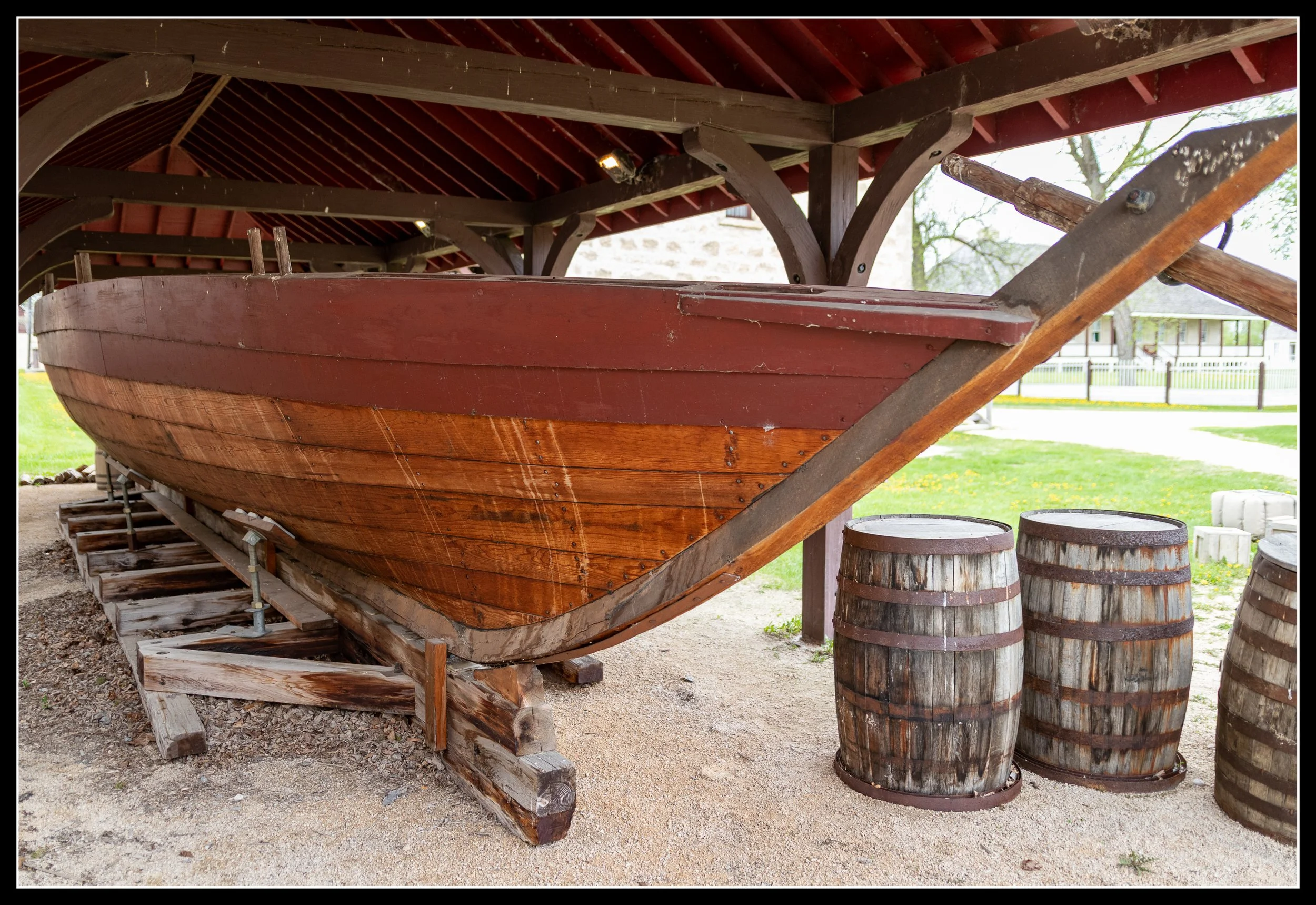
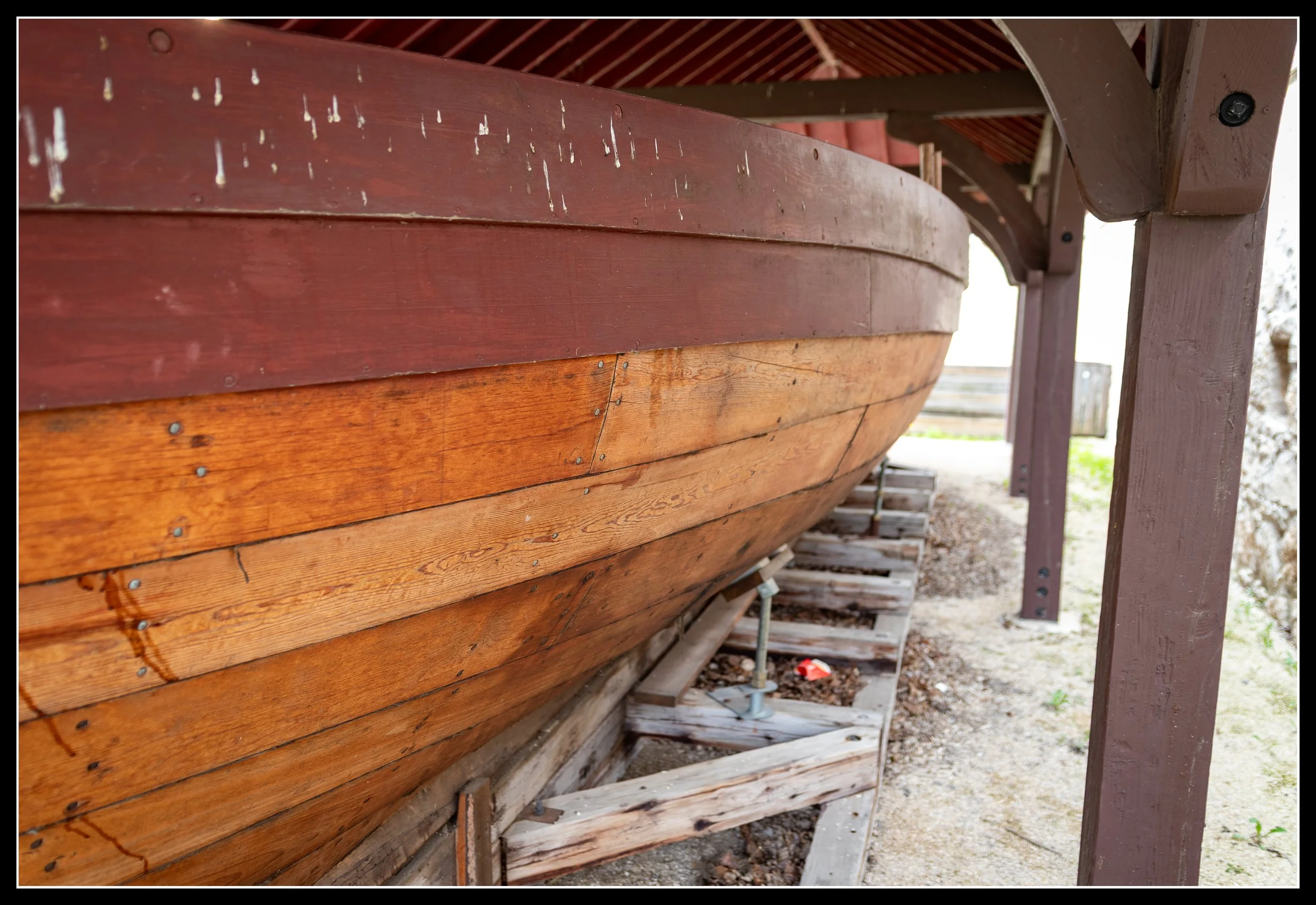
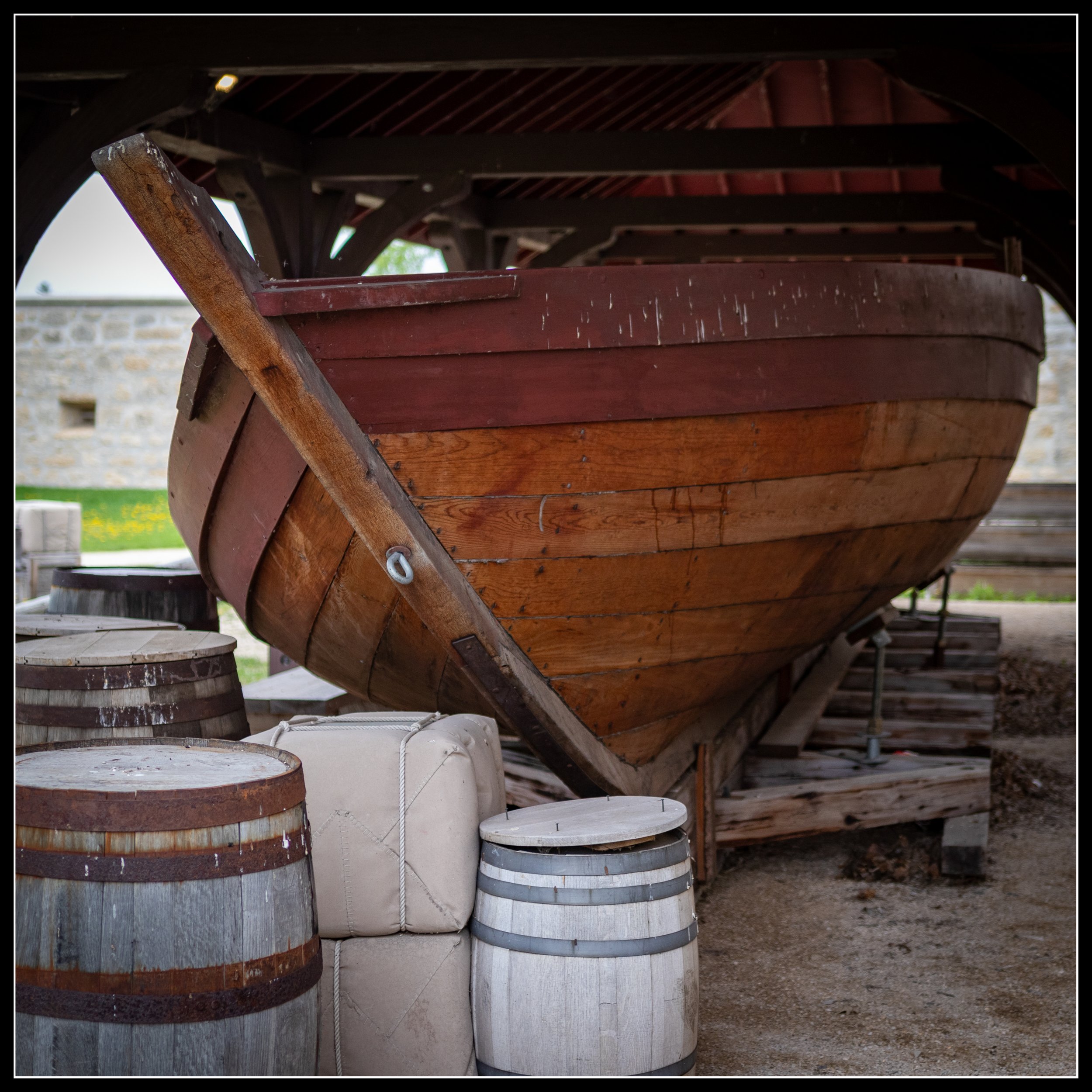
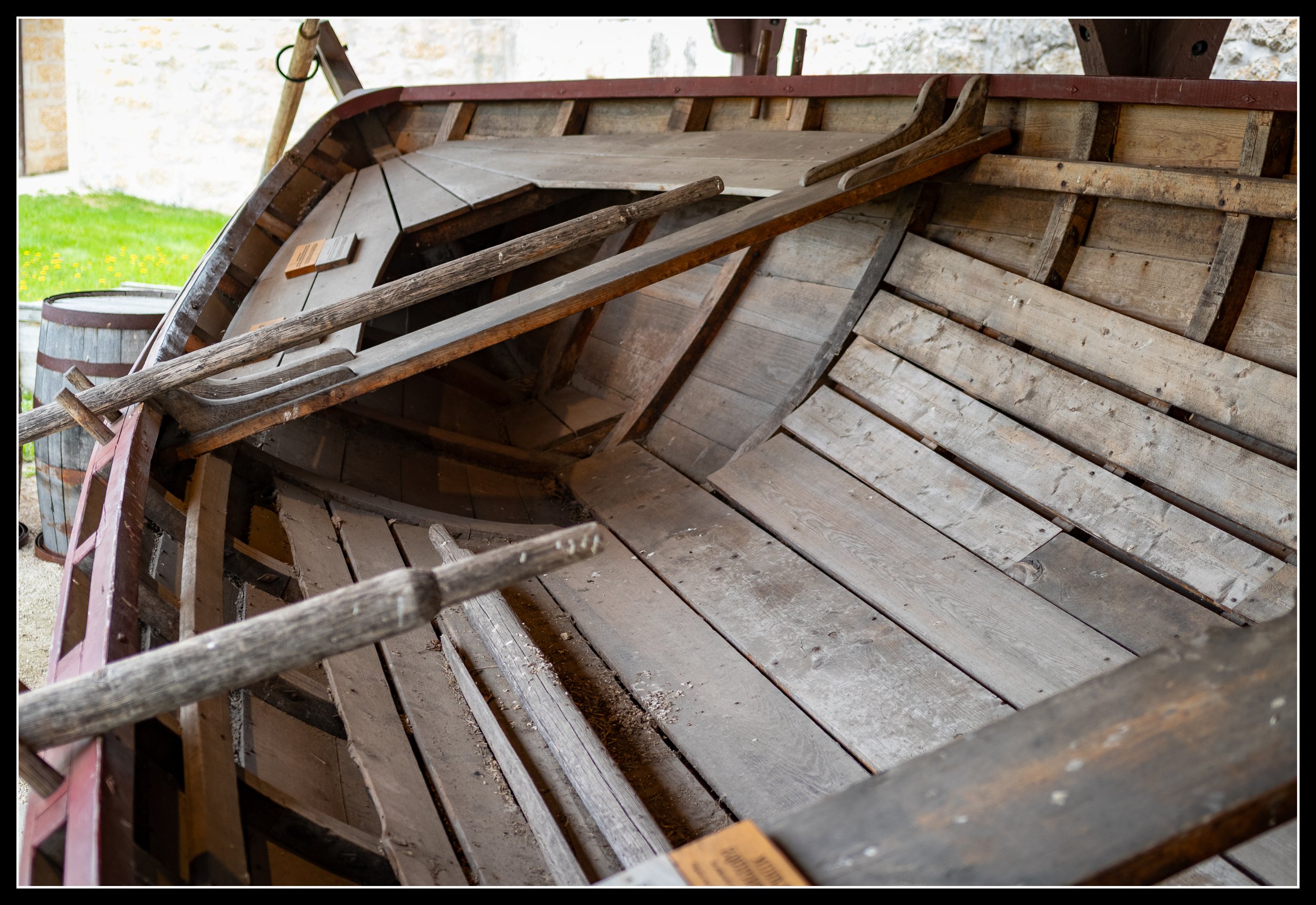
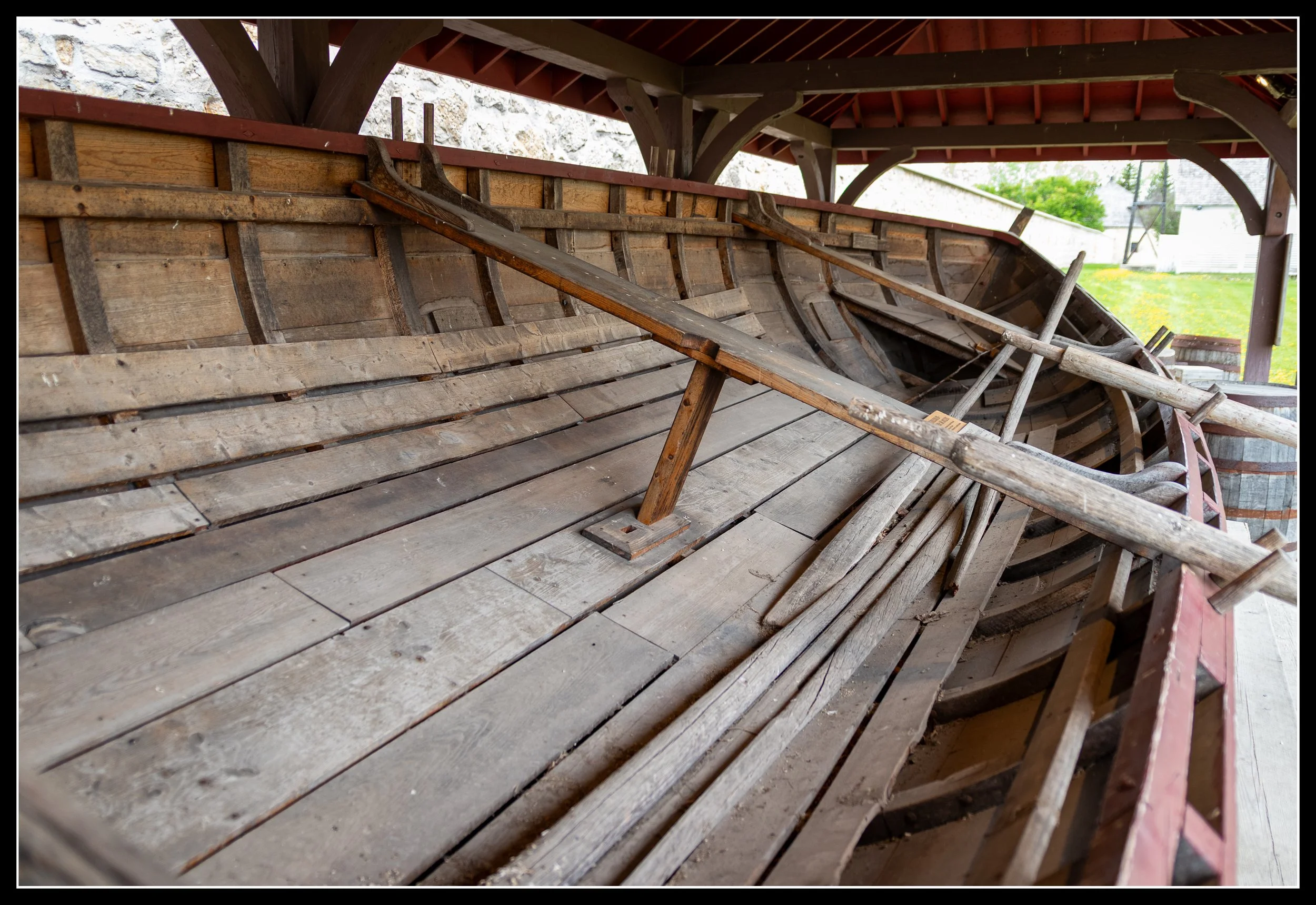
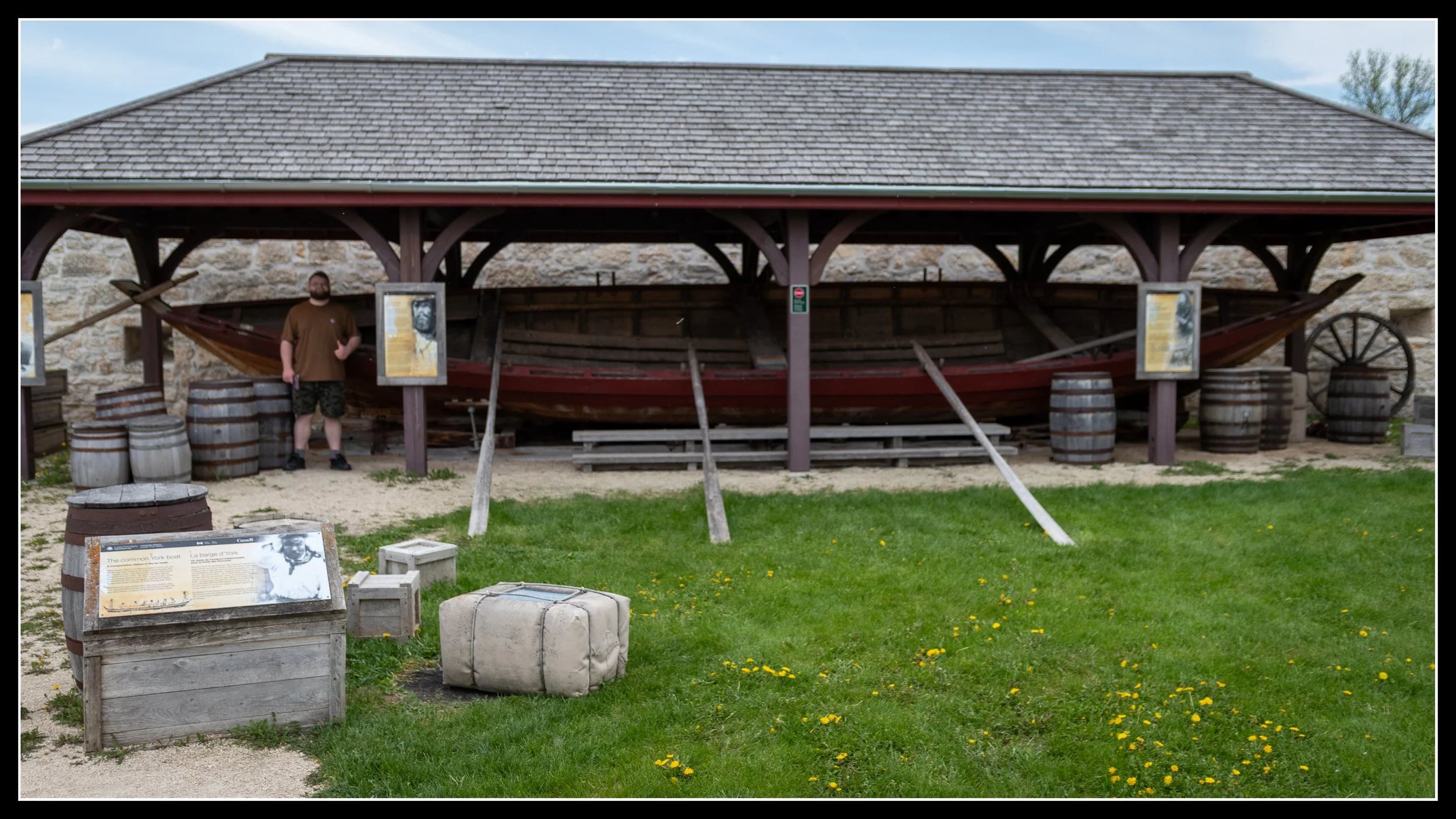
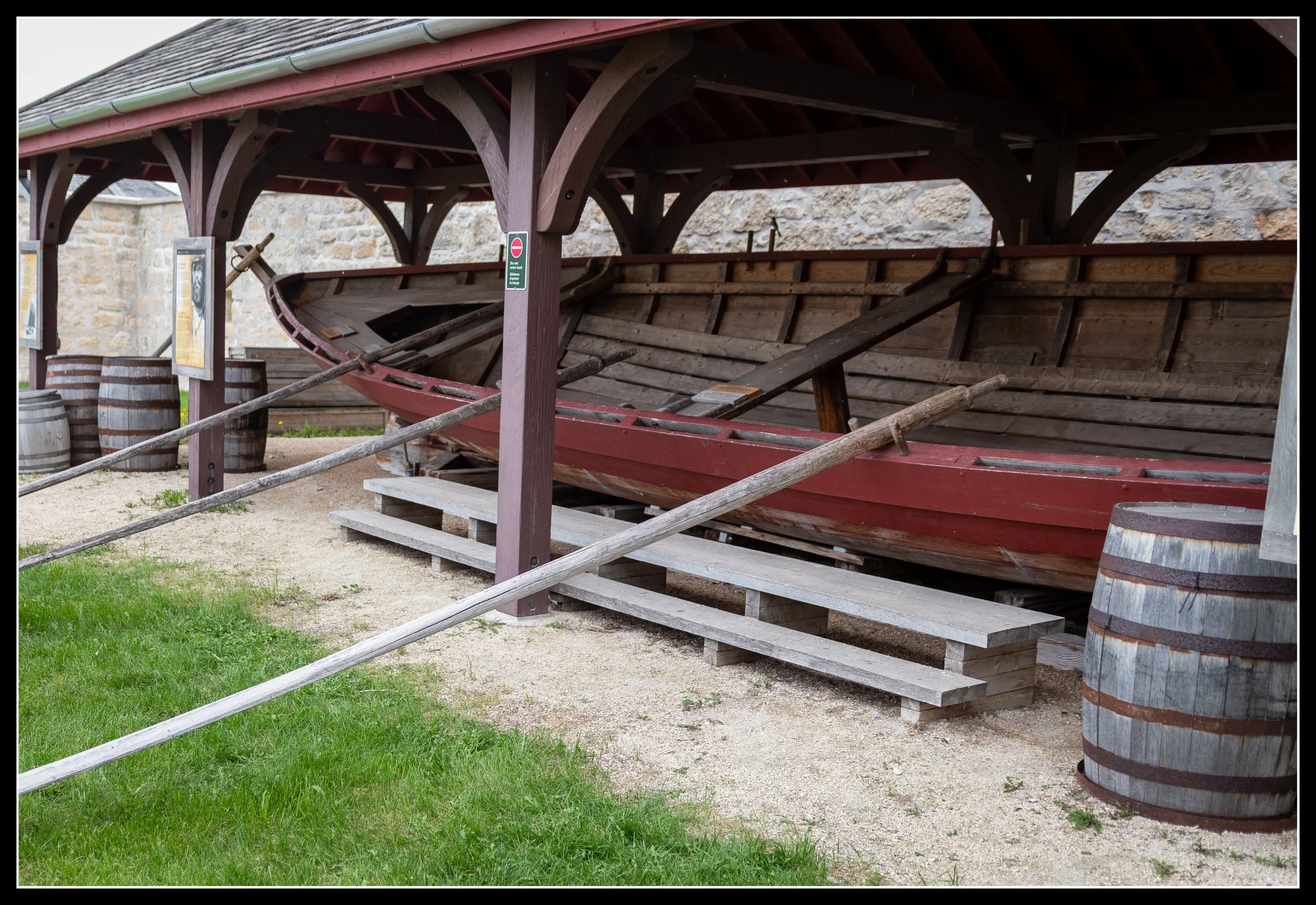
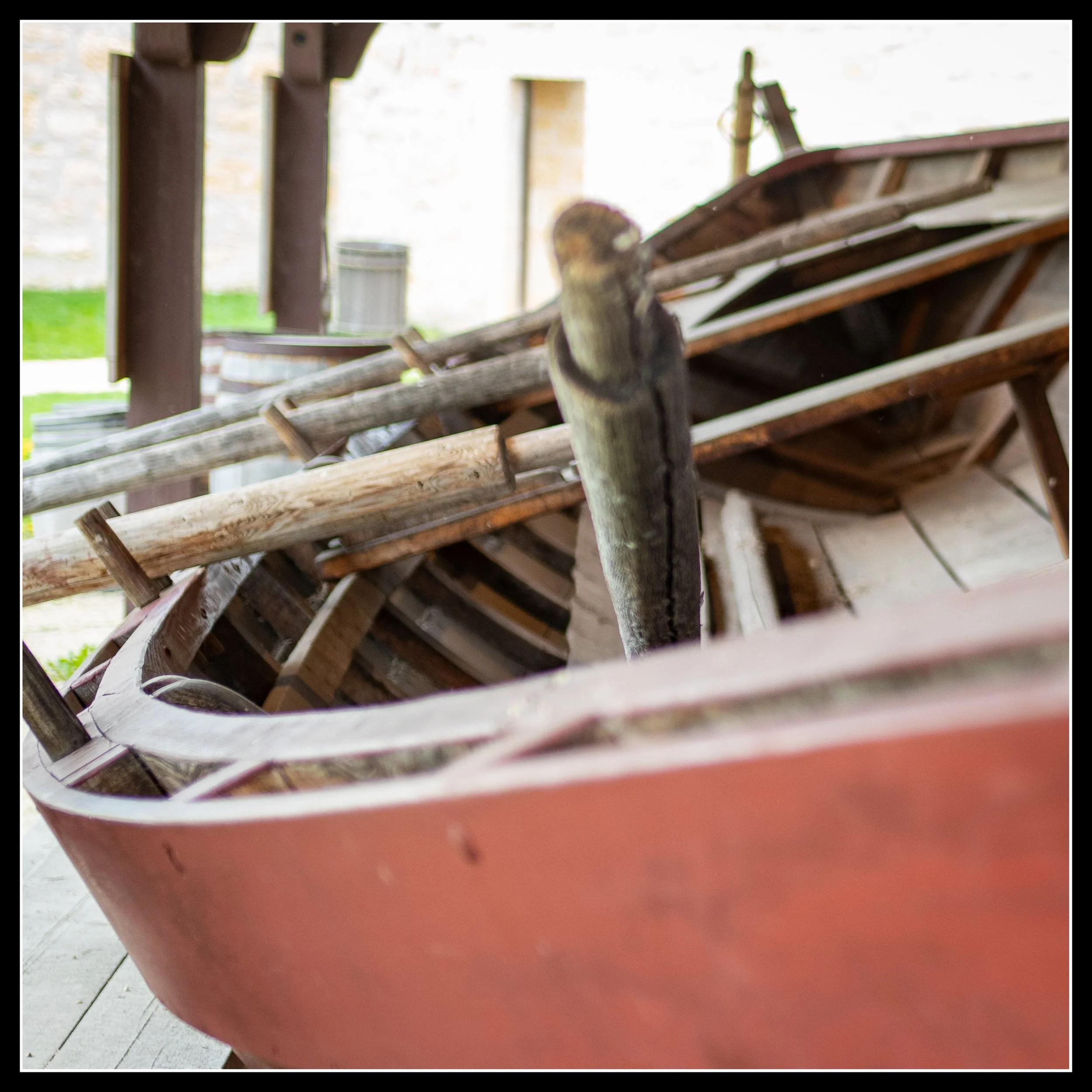
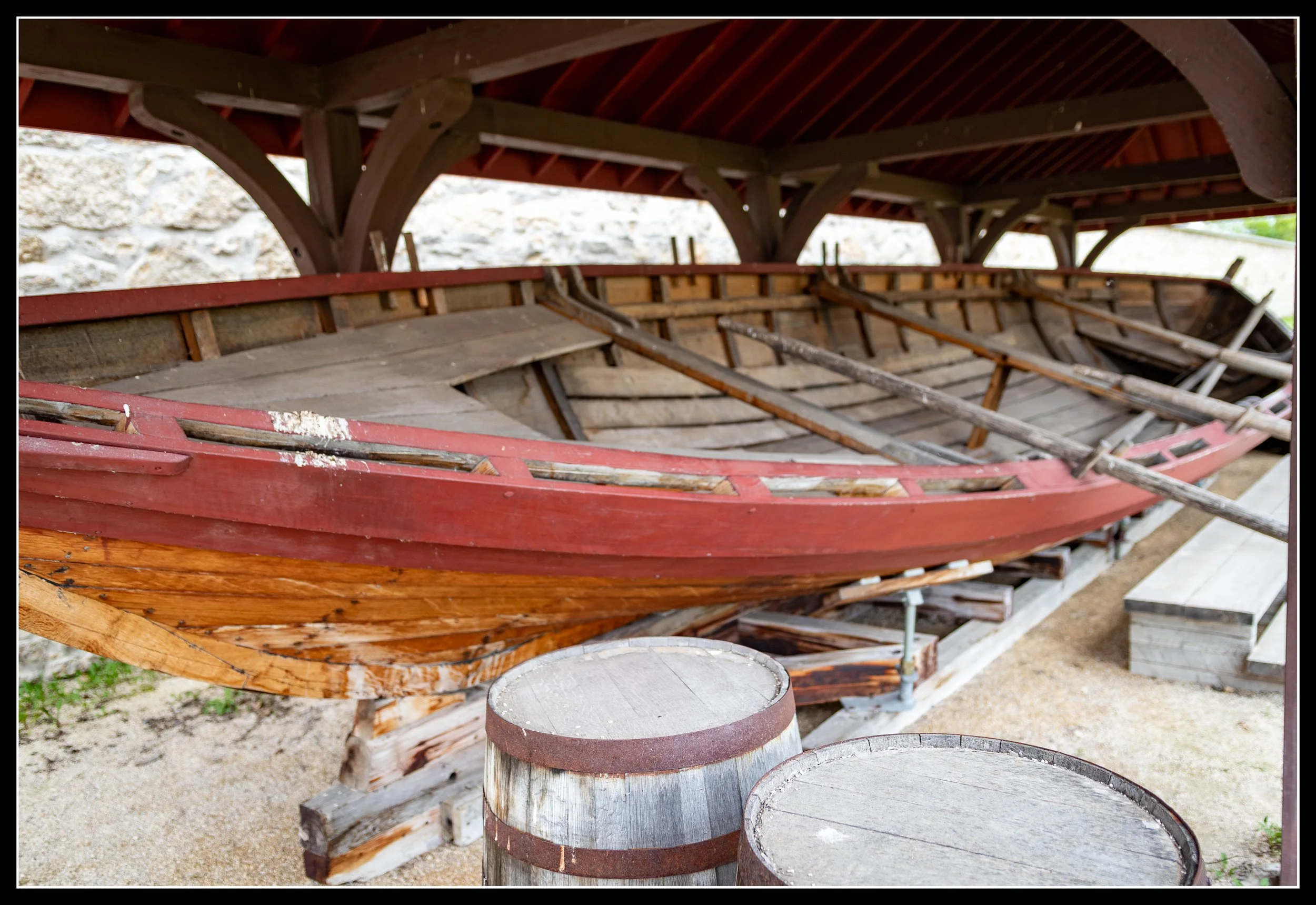
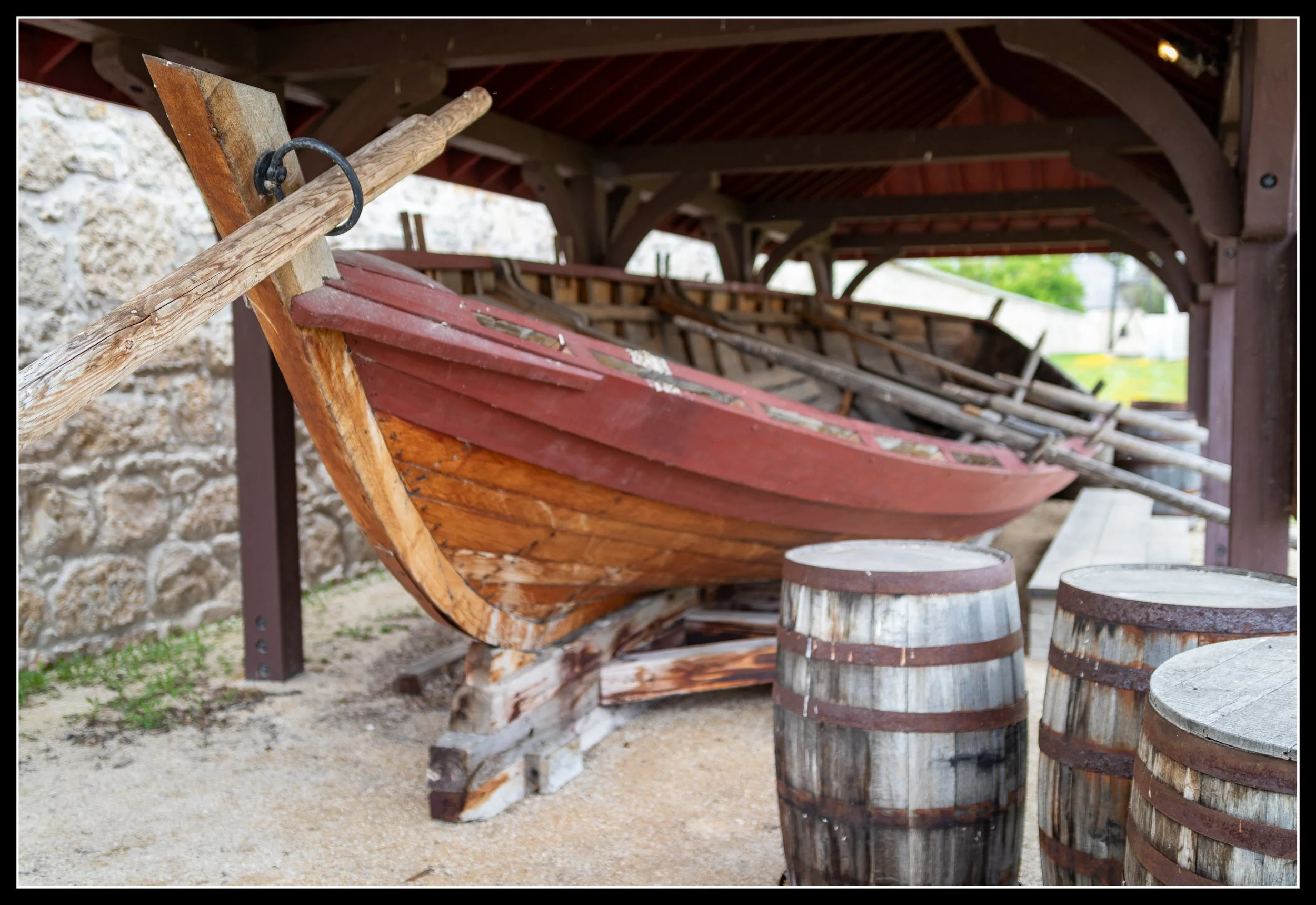
The York Boat
This York boat at Lower Fort Garry is a reminder of what wood made possible in Rupert’s Land. Though this one is a museum reproduction, it was built to look like the originals — white spruce and tamarack shaped by hand with adzes and drawknives. These boats carried the entire economy of the Hudson’s Bay Company. Every rib, plank, and knee came from the inland forest the men chased farther each winter. Tamarack roots became the curved ribs, spruce became the planking, and every piece was bent, fitted, and fastened without power, shelter, or comfort. A York boat wasn’t just transportation — it was the lifeline between the interior and the Bay. Standing in front of one today makes it clear: the value of wood wasn’t abstract. It was survival, trade, movement, and connection, all held together by trees that grew ten kilometres inland and men who knew how to turn them into a vessel strong enough to carry a continent.
Where every species, every board, and every lesson in wood science comes together — a place to explore the materials that shape our craft.
SHARE
The Wood Archive — All the wood Stories in One Place
For the living side of woodworking — the stories shaped by walnut, oak, maple, cherry, elm, cedar, and poplar — head to the Wood Archive.
If you’d like to hear from me only when something big is happening — a launch, a milestone, or a major project — you can join the mailing list below.
Written by David Flather, Red Seal cabinetmaker and founder of Knotty Dave’s Fine Woodworking — a Manitoba shop rooted in heritage restoration, storytelling, and real craft.
All photos shot by David Flather — in the shop, on the road, and in the places where craft and story meet.
Related stories:
Understanding Wood: Why Trees Grow the Way They Do — And How That Shapes Every Board
Hardwood vs Softwood: The Real Difference, Strength, Uses, and How Each Tree Family Evolved
The Workshop Library
If you enjoyed this story, there’s lots more like it inside The Workshop Library — and it’s free to explore.
Wood Archive — species, grain, working properties, and real‑world craft notes
Behind the Grain — the deeper stories inside wood, craft, and heritage
The Working Side of the Craft — tools, shop life, workflow, and the realities of making
Digital to Sawdust — Design Studio — geometry, proportion, visual flow, and design thinking
The Stories of the Shop — the personal side of craft, the shop’s history, and the quiet moments that shape the work
House & Hearth — heritage home restoration, the hearth room, winter culture, and the lived‑in side of craft
I’m just one man with a shop, building this archive one story at a time. If you’d like to follow the journey as it unfolds, explore The Workshop Library — new stories every week.
