

Thickness Planers: Taming Wood and Humbling Woodworkers
Quick Answer — What does a thickness planer actually do?
A thickness planer makes both faces parallel, cleans up rough lumber, and controls thickness precisely. It does not flatten a board — it follows whatever shape the bottom face already has. A planer reveals grain, ridges, tear‑out, and feed problems instead of hiding them, and it shows you exactly what the wood is made of.
A planer makes faces parallel — it copies whatever shape the bottom face already has.
A jointer creates the first flat face — it removes twist, cup, bow, and crook.
A planer controls thickness — ¾", ⅝", or any exact dimension.
A jointer controls shape — flat + straight, safe for the table saw.
A planer cleans up rough lumber — removes sawmill marks and uneven surfaces.
A jointer makes the planer possible — without a flat face, the planer simply copies defects.
Together they turn rough lumber into real material — flat + straight, then parallel + thickness.
How a Thickness Planer Reveals Grain, Removes Ridges, and Handles Difficult Boards
If your planer isn’t cutting cleanly — ridges, rough patches, grain fighting back — this story will make sense to you. I’ve used everything from small portables to 30" industrial machines, and the lessons they teach stay with you. Some machines behave. Some don’t. And some simply show you what the wood really is.
BY THE END OF THIS STORY
You’ll understand why thickness planers reveal grain instead of hiding it, how ridges, snipe, scallops, and tear‑out actually form, why wax solves feed problems, what separates portable planers from cast‑iron industrial machines, and how the General 130 changed the way real milling feels in a working shop.
Estimated read time: 5 to 6 minutes
Fast Summary
A thickness planer exposes grain, ridges, tear‑out, and feed problems — doing what a jointer can’t. This Ramble explains how planers reveal wood behavior, why wax solves feed issues, why snipe happens, how portable planers differ from cast‑iron machines, and why the General 130 changes real milling. It’s the honest truth about the machine that humbles woodworkers and teaches lessons you don’t forget.
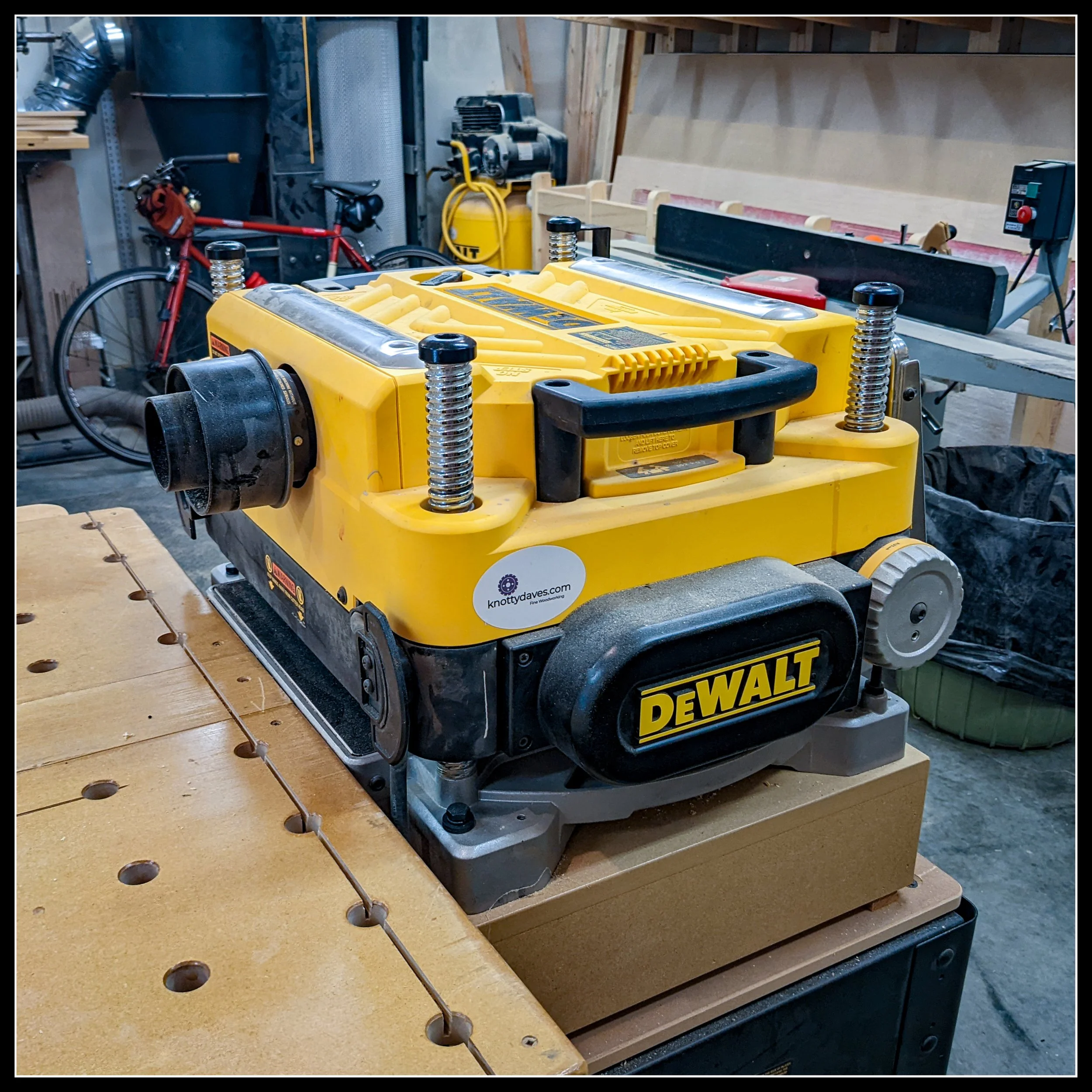
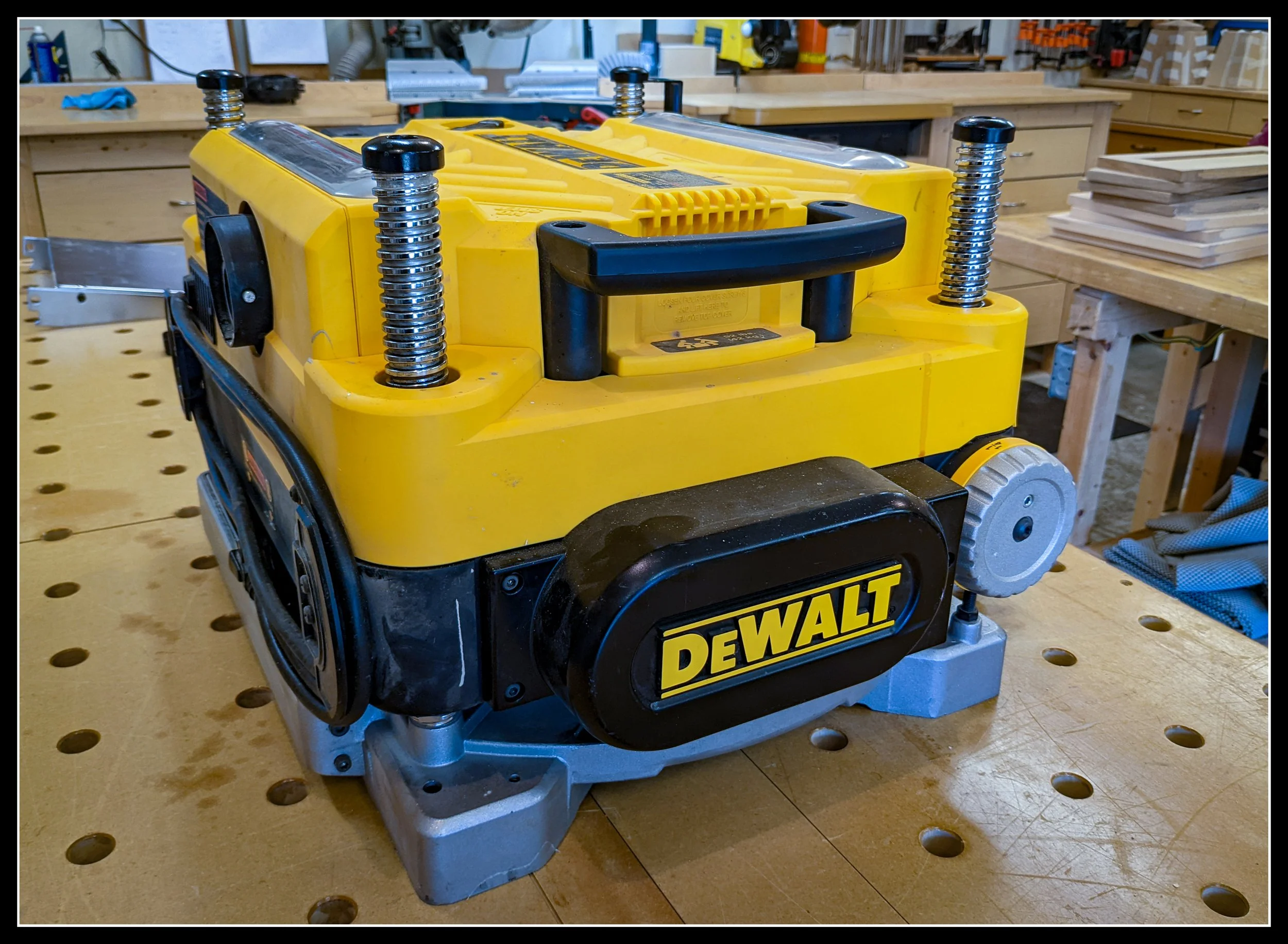
DeWalt DW735: The 13-Inch Workhorse in My Shop
The DeWalt DW735 has earned its reputation as the go‑to 13" planer for small shops, and this photo shows exactly why. It’s a machine that punches far above its weight: solid elevation posts, a built‑in chip‑ejection blower, and a feed system that stays surprisingly consistent for a portable. This planer has flattened boards for years in my shop, from stubborn grain to rough lumber that needed real convincing. It’s not a cast‑iron General, but it’s honest, reliable, and it always tells the truth about the wood you feed it.
The Machines That Shape You
I’ve worked with a lot of thickness planers over the years — real machines, heavy machines, the kind that shape your understanding of woodworking. Back in my first year at college, we had a 30" Rockwell Beaver: a massive, old‑school unit with decades of mileage and the attitude to match. In second year it was replaced with a 30" General International with numeric thickness control. Metric or imperial, didn’t matter — punch in the number and the bed adjusted automatically. If the digital readout said 19 mm, you got 19 mm. Every single time.
That General wasn’t just accurate. It was the best thickness planer I’ve ever used. And it set the standard I’ve measured every planer against since.
Today the college has replaced it with something more “cutting edge.” They like staying modern. But none of the professional shops I worked in had anything like that. Most had off‑brand cast‑iron units, never wider than 20", and one shop didn’t even let us use theirs — one guy milled everything for the whole place. Cabinet shops don’t need fancy planers. They’re milling edging, not furniture. For them, a 20" planer is overkill.
The DeWalt Era — Lessons From a Portable Planer
As a student, I used to wander the local woodworking store. They had a brand‑new Canadian‑made General 130 sitting on the showroom floor — a 14" planer. I loved it. Decided right then that one day I’d own that machine.
But like most woodworkers, I eventually bought a portable Dewalt 13" planer. In my opinion it’s still the best portable planer out there. Smooth cuts, easy to use, just light enough to move alone and just heavy enough to hurt your back.
I was taking it to my dad’s place for a project. Lifted it out of the trunk and felt something shift in my back. So I did the most logical thing: ignored it, carried the planer into the basement, set it up for him, and pretended everything was fine. By the time I drove home, I knew I was in trouble. Next morning I couldn’t get out of bed. Missed a week of work, went back too soon, and dealt with back issues for months. Eventually, moving large cabinets into a basement, it shifted again — three more weeks off.
Point is: don’t be a hero. Get help. You’ll ignore this advice anyway, but you’ve been warned.
Back to the planer. It performs flawlessly. I’d say 1/8" is the deepest cut I’d recommend. Keep sharp knives and wax the bed. Once I had feed issues and couldn’t figure out why — wood would stop feeding and grind in one spot. All it needed was wax. Every thickness planer suffers from this. Resin builds up on the bed and causes drag. Clean it, wax it, done.
Any wax works: tea‑light candle, wax paper, car wax, furniture wax. Whatever you’ve got. On big jobs you may need to wax more than once a day. Softwood is stickier, so expect more maintenance.
Also keep the chip ejection clear. These machines are simple. Slowing the feed rate reduces scallop marks — normal, unavoidable, and that’s what sanding is for. Snipe is reality on every planer. The only way to eliminate it is backing up the cut with another board. Otherwise, plan for snipe. Cut boards long and sand it out. Infeed/outfeed tables help a bit, but they’re not a cure.
I used my Dewalt a lot, and when I started Knotty Dave’s, that planer became rough. It’s great for hobby work, but I’d run mine five hours straight some days. It’s not built for that. Too much plastic, not enough power. It would trip the breaker seven feet into a ten‑foot board. Wide, long boards are asking a lot from a portable planer. And when a knot explodes inside, the plastic housing can break. I replaced the housing a couple of times. Still, it was an awesome little unit.
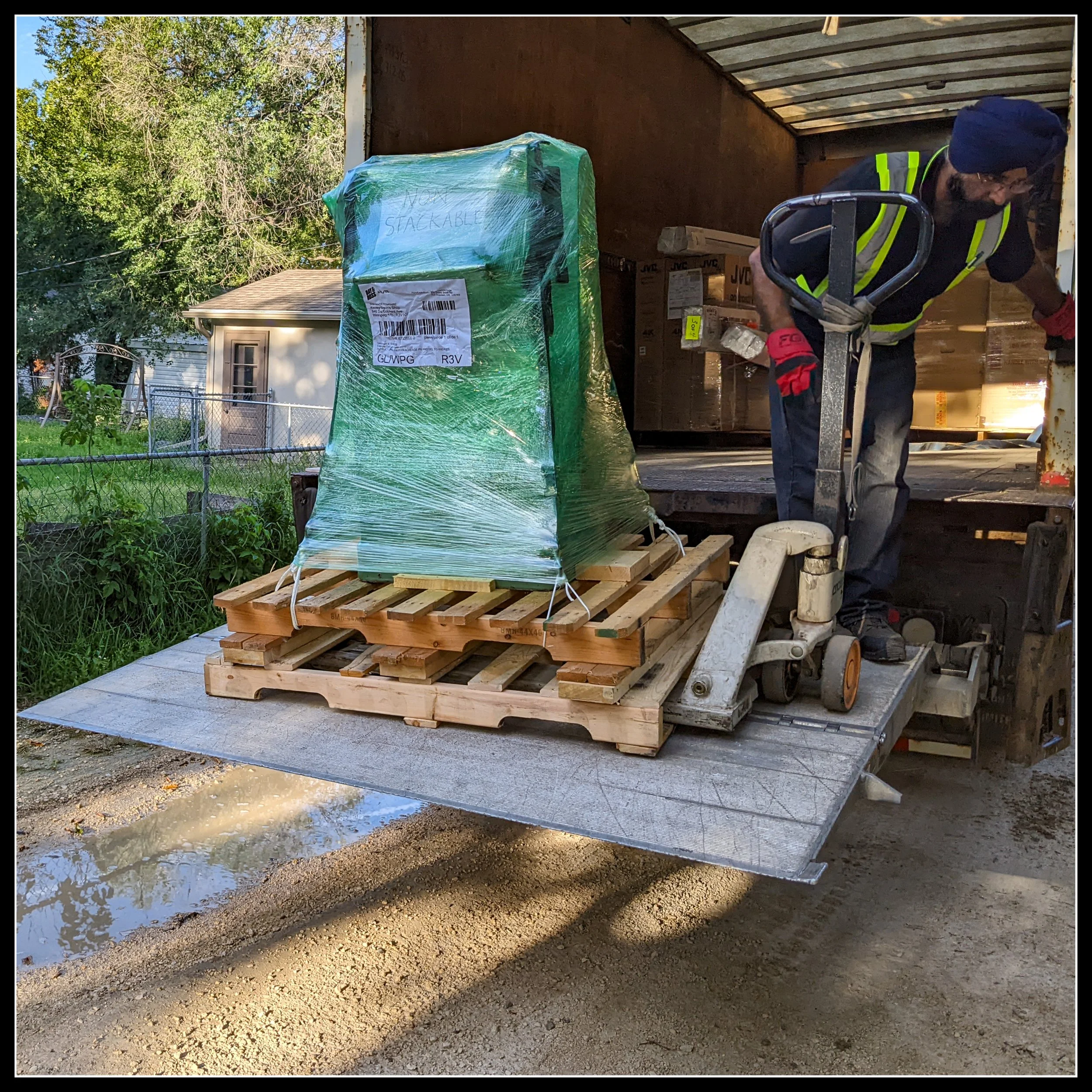
The General 130 Arrives: A Day That Changed Everything
This was the day the General 130 came home — a cast‑iron milestone rolling off a truck and into my life. I didn’t know it then, but fall of 2022 was the moment everything was about to shift. I was feeling the first subtle signs of cancer, just hints at the edges, nothing loud yet. And there I was, watching a pallet jack lower one of the finest planers ever built onto my driveway. It was a happy day, a proud day, and now, looking back, a marker in time: the last chapter before the fight, before the rebuild, before the world changed and I changed with it.
The Upgrade
Eventually I’d had enough. I’d already bought a 3 HP dust collector, and big planers need real dust collection. I’d been using a shop vac on the Dewalt — those systems are made for each other. Big planers have 4" ports and need suction.
With the dust collector in place, I could finally get any planer I wanted. I looked around. Lots of machines, lots of options. Most were too big for my shop or too expensive. The smaller units felt like compromises.
Then I remembered that old Canadian‑made General 130 I admired years ago. General is gone now, and the 130 isn’t made anymore. A 14" cast‑iron planer with a small footprint and lots of power — perfect for my shop. But they’re almost impossible to find out west. In southern Ontario and the east coast they’re common. Made in Drummondville, Quebec — and that’s where the population density is.
After watching the used market for a year, a clean 130 showed up on Kijiji in the Niagara region. I messaged the owner. We had great conversations about where it came from and how he barely used it. He got it from a school as part of a tool package, and it sat in his barn for five years. He didn’t need it.
I trusted him. He trusted me. I sent a deposit, arranged shipping, and paid the balance when the shipper picked it up. A week later it was in my shop.
Of all the tools I’ve bought, this planer was the most exciting purchase I’ve ever made.
To my surprise, it had a 5 HP motor — bigger than expected and bigger than listed. 240 V, 30 A. I’ve never stalled it or even heard it slow down. Small footprint, big attitude. And quieter than the Dewalt.
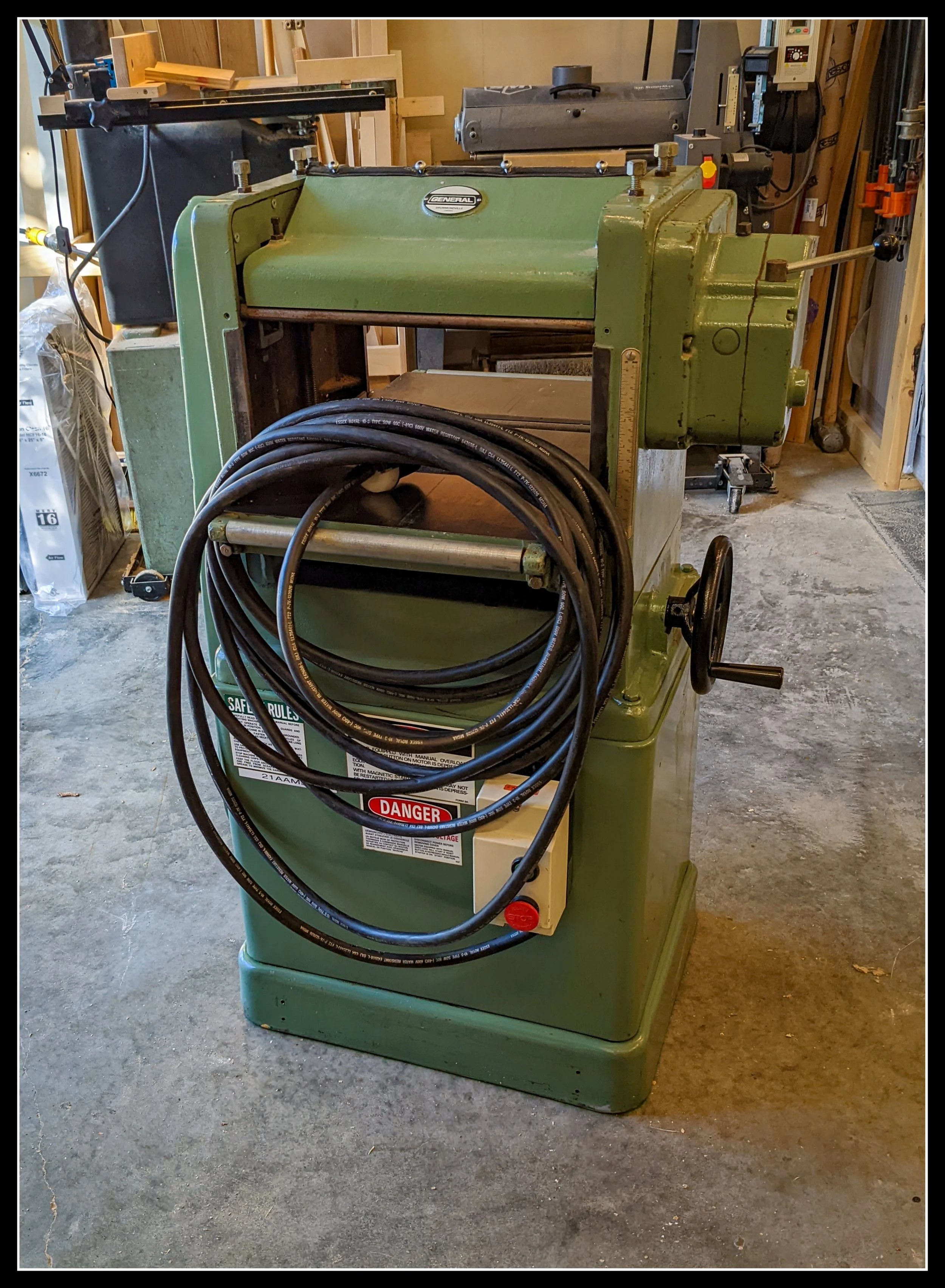
First Look at the General 130: Unwrapped Iron
Seeing the General 130 unwrapped for the first time is a moment every woodworker remembers. Cast iron, Canadian-built, and built to outlive its owner — it’s the kind of machine that changes a shop the second it arrives. This photo captures that first quiet inspection: the tables still dusty from shipping, the crank untouched, the machine settling into its new home. A good day, a proud day, and the start of a long relationship with one of the finest planers ever made.
Real Planer Reality
The General has straight HSS knives. As they wear, chips form and leave ridges. I get the blades sharpened for $20 — problem solved. Tearout can still happen, especially in figured wood. If you’re using HSS knives, keep a spare set sharp and ready, lighten the cut, understand the grain, and good luck. Difficult grain tests patience and knives. Carbide cutterheads help.
I upgraded my jointer to a helical carbide head — it handles difficult grain better, but tearout can still happen. Drum and wide‑belt sanders cure this problem. There are no easy answers. Difficult grain is like planing end grain — problems occur, and sometimes you just have to fight through it.
Planer vs Jointer
If you’re new to woodworking and wondering if a planer can do the job of a jointer: no, it can’t. There are workarounds with shims and sleds, but they’re slow if you have a lot of wood to mill. I wrote a story about the jointer — take a look.
A thickness planer is when your woodworking gets serious. Combine it with a jointer and you’re set.
I never forgot that General 130. Not once. Through college, through shop jobs, through the years with the DeWalt, through the back injuries, through starting Knotty Dave’s — that planer stayed in the back of my mind.
And when the time finally came, I didn’t settle. I didn’t compromise. I kept the promise I made to myself as a young woodworker standing in a tool store, dreaming about the future.
Now it sits in my shop, doing the work I always hoped it would.
Some tools you buy because you need them. Some tools you buy because you earned them.
The General 130 is the second kind.
One day I may upgrade it to a carbide cutterhead. Not necessary, but a worthy upgrade. And if I do, that’ll be a new story — and you’ll find it here in the Rambles.
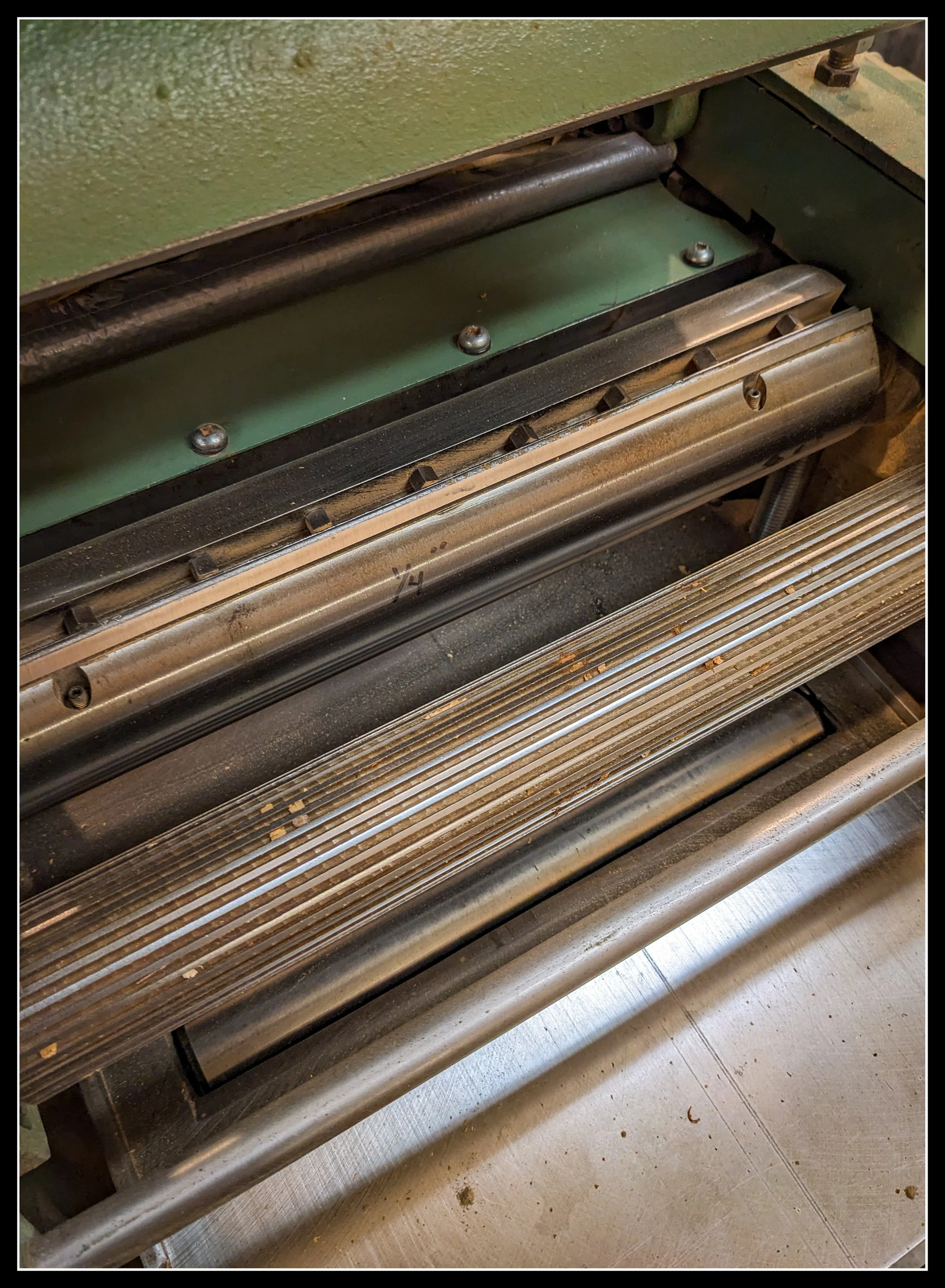
Inside the General 130: Cutterhead and Feed Roller
A peek inside the General 130 shows exactly why these machines earn their reputation. The cutterhead sits solid and centered, flanked by heavy feed rollers that grip and drive stock with the kind of authority only cast‑iron planers deliver. The machining is clean, the tolerances tight, and even the wear patterns tell a story of precision. This is the part of the planer most woodworkers never see — the quiet, mechanical heart that makes every pass smooth, predictable, and unmistakably General.
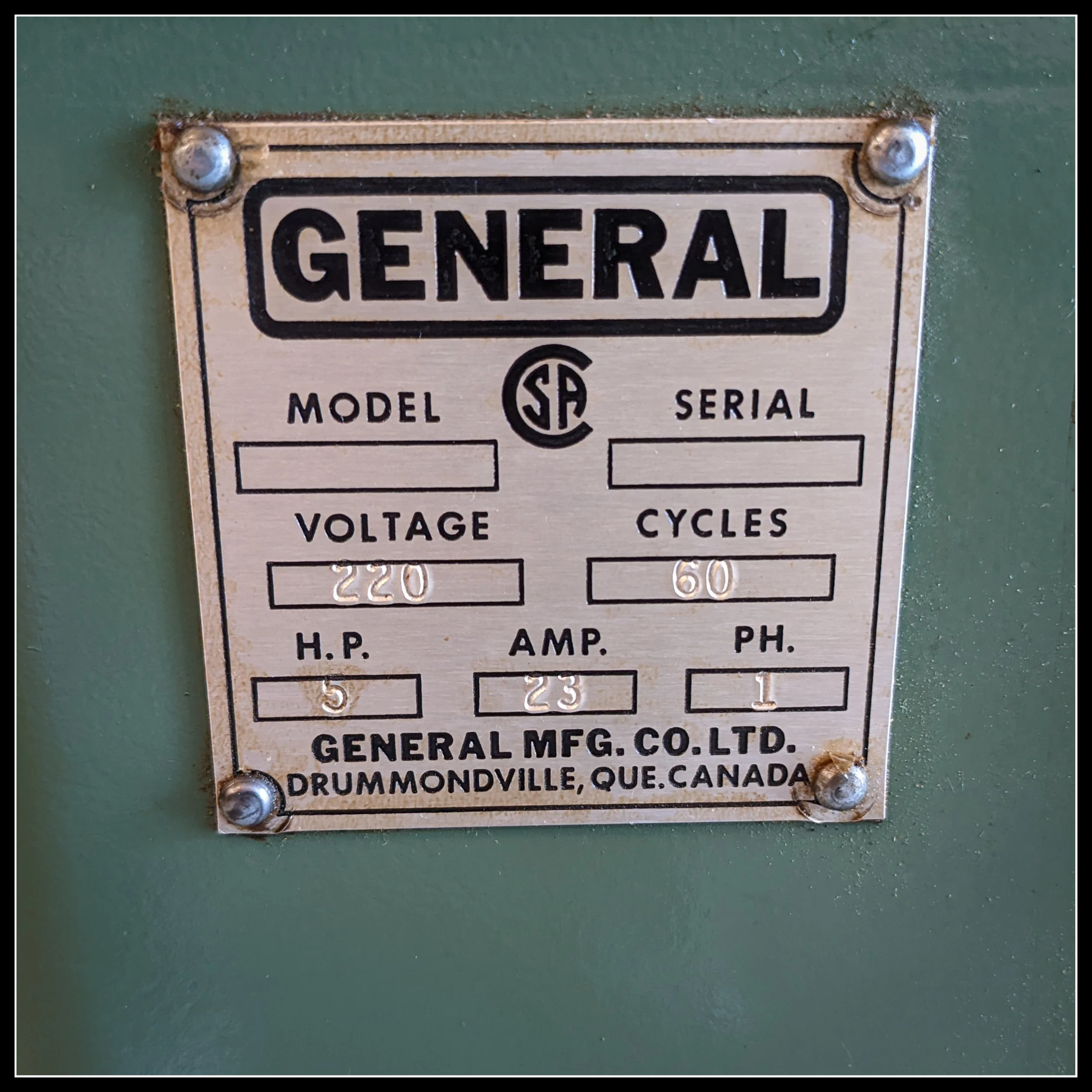
General 130 ID Tag: The Rare 5 HP Model
Most General 130 planers were built with 3 HP motors, which was already more than enough for the cutterhead, feed system, and chip‑clearance these machines were designed around. This tag shows the uncommon 5 HP single‑phase version — not more cutting capacity, but more stability. The planer still has the same mechanical limits, the same safe depth of cut, and the same feed pressure, but the bigger motor keeps the cutterhead speed steadier when you hit dense grain or a knot. It’s not about taking heavier passes; it’s about a machine that refuses to bog down. The tag is simple, stamped steel, but it marks one of the rare heavy‑spec builds General produced.
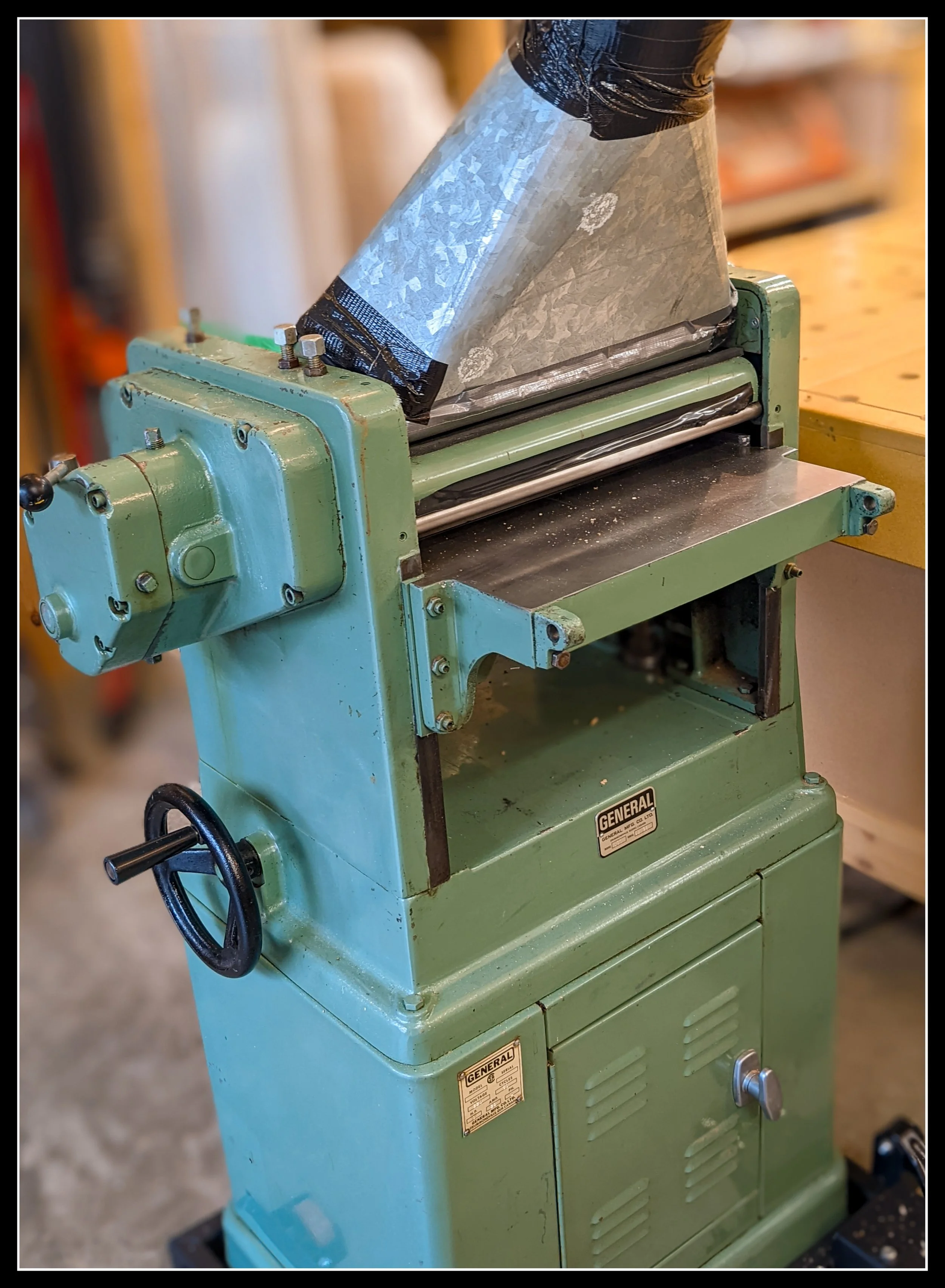
General 130: Set Up, Tuned, and Ready to Work
The General 130 looks right at home once it’s set up and tuned — a slab of Canadian cast iron that doesn’t need to prove anything. In this shot the outfeed roller was still out for repair, but the machine itself was already settled, aligned, and ready to spin. Even with a part missing, the planer carries that unmistakable General presence: heavy, quiet, confident, and built to work for decades. Some machines earn their reputation over time; this one arrives with it.
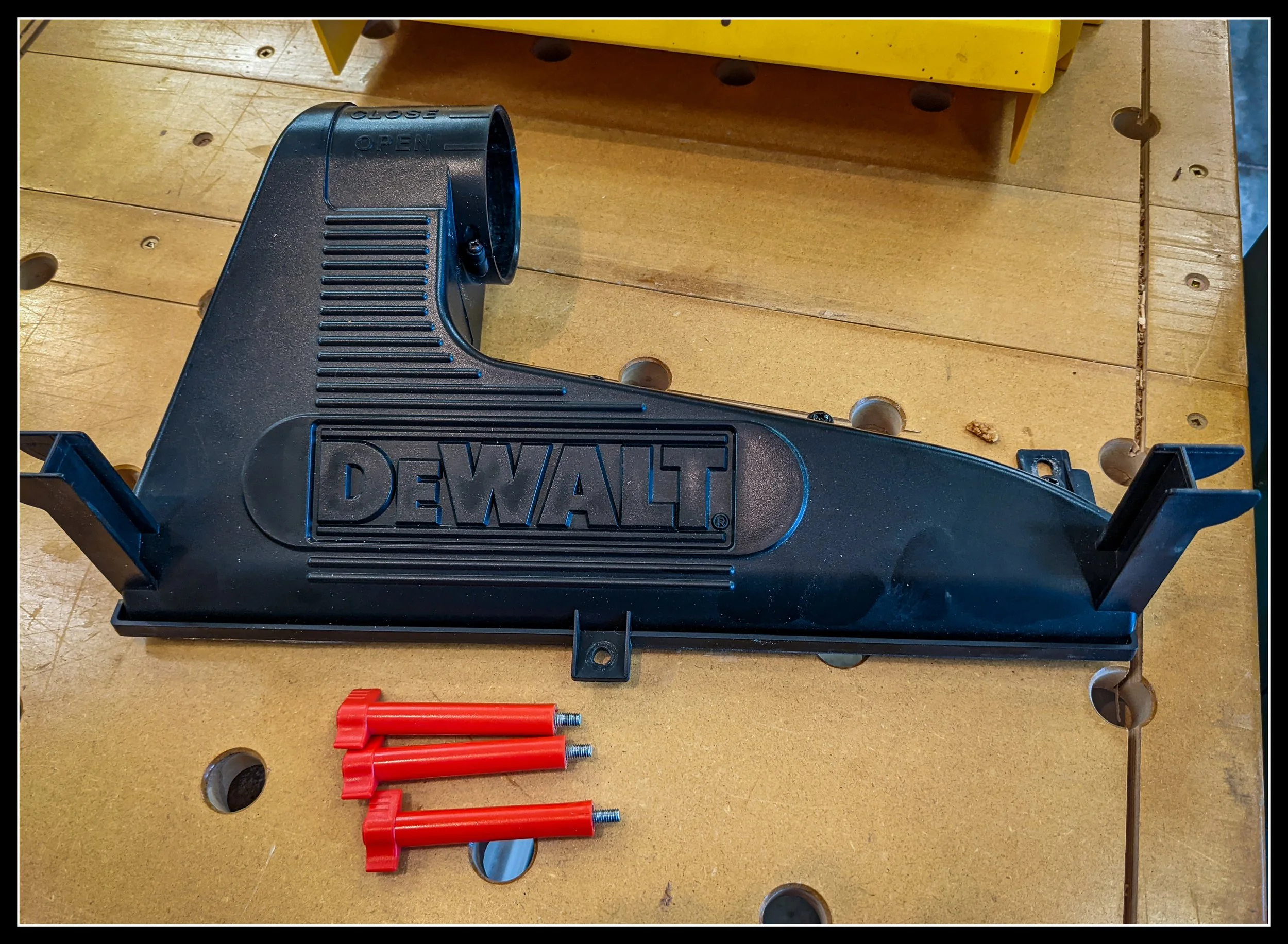
DW735 Dust Ejection Housing: The First Part to Fail
This dust‑ejection housing sits fully inside the DW735, supported on all sides, and it doesn’t fail from bumps or hose weight — it fails from violence. When a knot explodes or a chunk of grain breaks loose under the cutterhead, the blower fires it straight into this plastic chute like a projectile. It takes years of wear without complaint, but one big hit is all it takes to crack it. Every DW735 owner eventually discovers this part the hard way.
Beginner Tips
Sharp knives — fresh knives solve most problems.
Wax the bed — keeps boards feeding smoothly.
Take shallow cuts — 1/16"–1/8" is plenty.
Plan for snipe — cut boards long and sand the ends.
Use a jointer first — a planer doesn’t flatten boards.
What a Planer Actually Does (The Straight Facts)
A planer makes a board uniform in thickness and gives it a clean, flat surface. That’s its job. Everything else is secondary.
It does NOT flatten a board. A planer follows whatever shape the bottom face has. If the board is twisted or cupped, the planer will copy that twist or cup onto the top face.
It DOES make both faces parallel. Once the bottom face is flat (usually from a jointer), the planer makes the top face perfectly parallel to it.
It DOES clean up rough lumber. A planer removes sawmill marks, tear‑out, and uneven surfaces, leaving a smooth, ready‑to‑use board.
It does NOT fix edge problems. A planer doesn’t straighten edges. That’s jointer or tablesaw work.
It DOES control thickness precisely. If you need a board at ¾", ⅝", or any exact dimension, the planer is the tool that gets you there.
It does NOT replace a jointer. A planer can’t create a reference face. It can only improve the face you already have.
The simple truth
A planer’s job is thickness + surface quality.
A jointer’s job is flat + straight.
They work together.
Together, gathered in one place so the machine stories, tool reflections, and workflow moments stay connected — easy to find and easy to return to.
SHARE
The Working Side of the Craft — Connected Through Machines, Tools & Stories
If you want the stories shaped by table saws, bandsaws, grinders, fences, and jigs — the honest, noisy side of woodworking — the Working Side Of The Craft is one click away.
If you’d like to hear from me only when something big is happening — a launch, a milestone, or a major project — you can join the mailing list below.
Written by David Flather, Red Seal cabinetmaker and founder of Knotty Dave’s Fine Woodworking — a Manitoba shop rooted in heritage restoration, storytelling, and real craft.
All photos shot by David Flather — in the shop, on the road, and in the places where craft and story meet.
Related stories:
My First Bandsaw That Didn’t Suck — A Woodworker’s Journey Through Vintage Saws
Contractor Saw vs Cabinet Saw: The Real Difference I Learned the Hard Way
The Radial Arm Saw: Forty‑One Years of Real Shop Use, Safety, and Cross‑Cut Accuracy
Kickback on the Table Saw — What Really Happens and How Woodworkers Prevent It
The Workshop Library
If you enjoyed this story, there’s lots more like it inside The Workshop Library — and it’s free to explore.
Wood Archive — species, grain, working properties, and real‑world craft notes
Behind the Grain — the deeper stories inside wood, craft, and heritage
The Working Side of the Craft — tools, shop life, workflow, and the realities of making
Digital to Sawdust — Design Studio — geometry, proportion, visual flow, and design thinking
The Stories of the Shop — the personal side of craft, the shop’s history, and the quiet moments that shape the work
House & Hearth — heritage home restoration, the hearth room, winter culture, and the lived‑in side of craft
I’m just one man with a shop, building this archive one story at a time. If you’d like to follow the journey as it unfolds, explore The Workshop Library — new stories every week.
