

Red oak
Quick Answer: Why does red oak tear out?
Red oak is a ring‑porous hardwood with huge earlywood pores and dense latewood fibres. That soft–hard–soft–hard pattern causes tear‑out during machining, especially on planers, jointers, and shapers. Its open grain also drinks stain fast and shows texture honestly.
Open‑pored hardwood
Fast‑growing canopy tree
Earlywood pores = tear‑out
Latewood strength = stability
Indoor‑only wood
Takes stain easily
Red Oak — The Wood We All Know
Red oak is familiar wood — the kind that teaches you something the first time you meet it. Even though it isn’t a Manitoba tree, it became a Manitoba wood. From the late 1970s through the 1990s, red oak filled the builder‑grade kitchens and cabinet doors that shaped Prairie homes. It wasn’t glamorous, but it defined an era.
By the end of this story
You’ll understand why red oak behaves the way it does — from its earlywood pores to its latewood strength — and why it became the wood that defined an entire generation of builders and homes.
Estimated read time: 8 minutes
Red Oak vs Other Hardwoods — Quick Comparison
Red Oak — open‑pored, fast‑growing, tear‑out prone
White Oak — sealed pores, water‑resistant, decay‑resistant
Maple — hard, smooth, less tear‑out
Walnut — softer, beautiful grain, easier to machine
Ash — springy, impact‑absorbing
Red Oak — Fast Summary
This story explains why red oak tears out — from its huge earlywood pores to its dense latewood fibres — and how that soft–hard–soft–hard ring pattern shapes everything from machining to finishing. It covers how red oak grows, why it dominates forests, why it stains so easily, and how it became the wood that defined Prairie homes from the 1970s through the 1990s. You’ll see red oak’s strengths, weaknesses, and honest grain, and why it remains a cornerstone of cabinetmaking education.
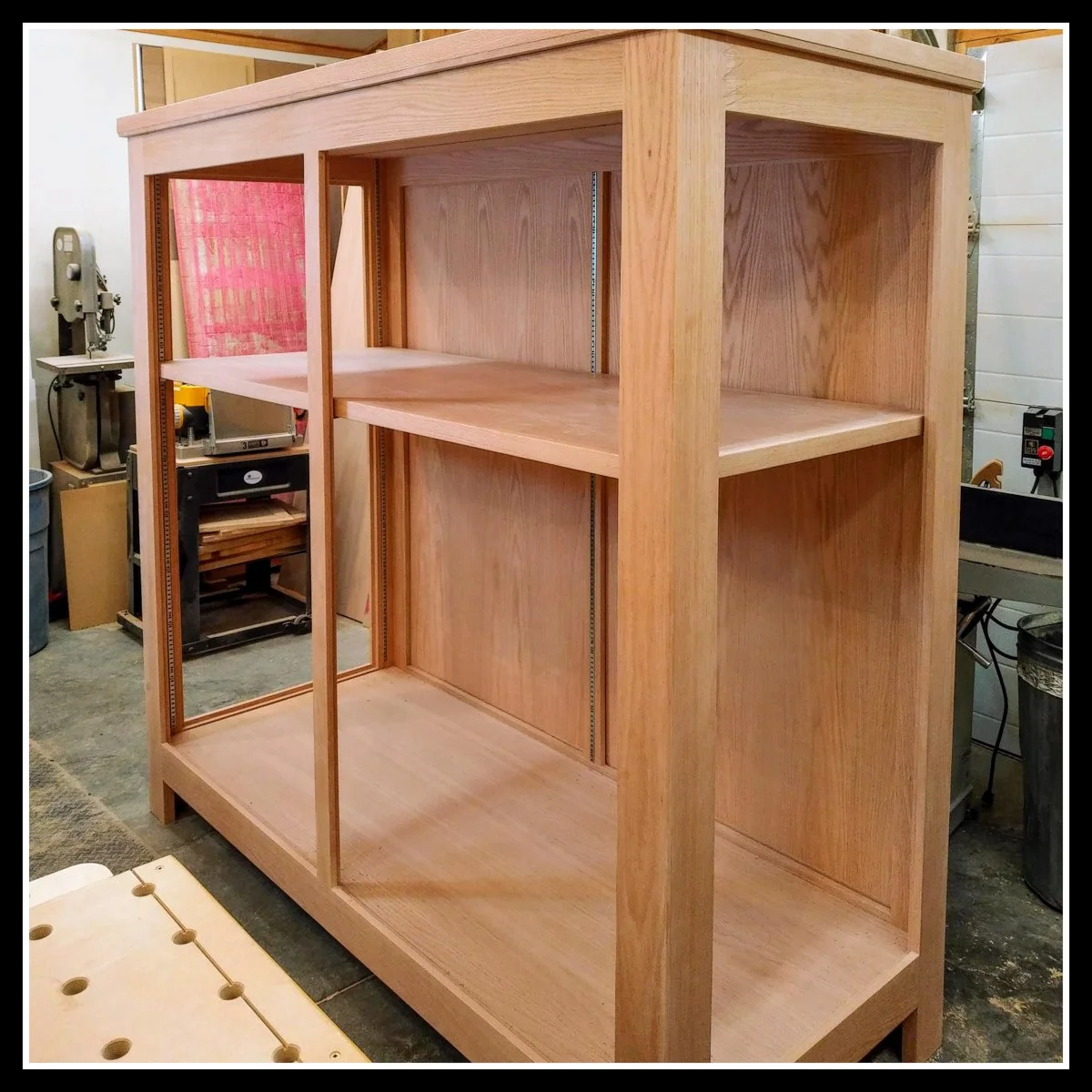
Red Oak Showcase — Winnipeg Railway Museum
This display case is built from red oak for the Winnipeg Railway Museum, a mix of solid wood and veneer shaped for strength, stability, and clean lines. The frame is all solid oak, with veneer panels laid up for the back and interior surfaces to keep the piece light and stable. No finish has been applied yet — the wood is shown in its raw state, straight from the shop, with every joint, groove, and surface ready for the next stage. It’s honest cabinetmaking: simple materials, precise work, and a structure built to hold history.
The First Time I Meet Red Oak
When I first went to college for Cabinetmaking, the shop felt enormous — big benches, heavy vises, wood floors, table saws, panel saws, planers, jointers, and machines I’d never seen before. I was excited just to be there, but the smell of wood was overwhelming in the best way. It was the life of the craft. It seeped into my clothes and into some deep part of my memory.
Soon enough our instructor started talking, giving us the tour, explaining the tools and the shop rules. Weeks later, when we were finally ready, we got our first project.
It was the first time I ever worked with red oak. The school had a whole lift of it — like picking through 2×4 spruce at the hardware store, except it was red oak. Take your pick. I’d never sifted through a pile of hardwood before.
We were milling and gluing panels for frame‑and‑panel, five‑piece solid wood cabinet doors. Learning the saws, the jointer, the planer, gluing techniques, the shaper. And learning the patience it takes when a door is 90% done and the wood blows out a chunk from an otherwise perfectly fine panel.
Yup — that was my door.
My instructor asked me why it happened. I stood there searching for an answer I didn’t have, then blurted, “Because it’s oak.” He looked at me, nodded his head, and said, “Yeah. I’ll accept that. Good answer.” I had no idea why that answer was right. I walked away confused, chipped panel in hand, and went back to practicing patience until I figured out a fix for my poor panel.
I’ve worked with red oak for decades since. It’s a solid workhorse and a popular choice for all kinds of builds. And it will test your patience the same way it tested mine — with tear‑outs and chips. But to understand why, you have to understand where the wood comes from.
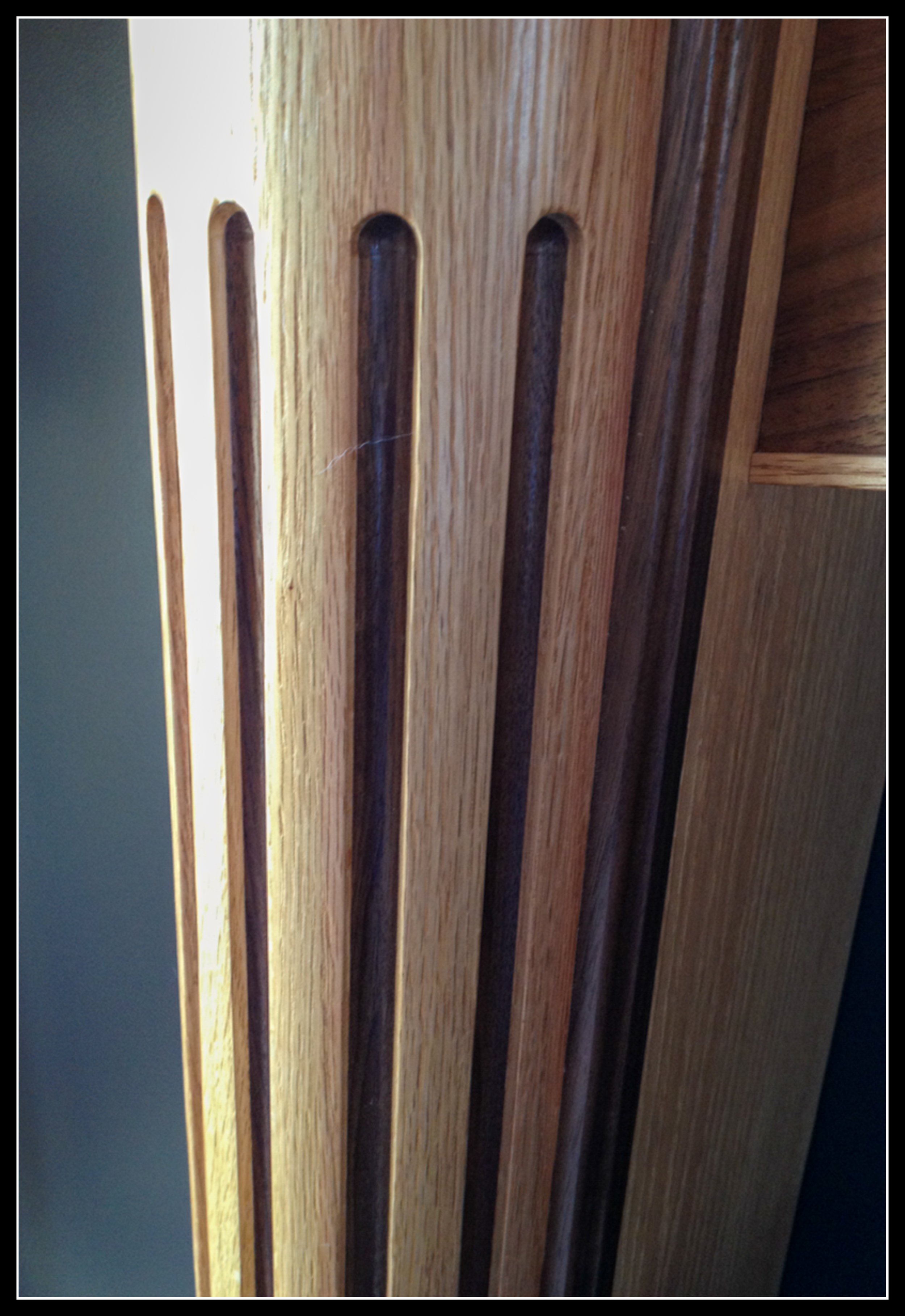
Walnut & Red Oak Column — Mantle Craftwork
This column sits in the mantle of a cast‑iron pellet stove, built from two woods that behave nothing alike. The dark band is solid walnut, inlaid cleanly and left natural. The red oak around it is rift‑cut on the rounded face and veneer on the back, finished clear to show its grain. The contrast is intentional — walnut’s quiet depth against oak’s straight, disciplined lines — a small architectural detail that carries the same honesty as the stove it frames.
Where Red Oak Grows
Northern red oak grows in southern Ontario, Quebec, and pockets of the Maritimes. It grows throughout the eastern and central United States, from Minnesota to Georgia, from the Great Lakes to the Appalachians.
How Red Oak Takes Over a Forest
Red oak loves rich, moist soils and dominates forests with its ability to spread. Squirrels bury acorns for a rainy day, forget half of them, and the forest takes care of the rest. Those sprouts grow fast — not poplar fast, but fast enough to reach the canopy, spread a wide crown, and thicken a strong trunk with heavy bark.
Fast Growth, Slow Consequences
And here’s the part most people miss: when oak is called “fast,” it means it grows tall fast, thick fast, and competitive fast — not pioneer‑species fast, but fast enough to win the canopy and hold it for centuries.
Once red oak gets above its neighbours, it outcompetes the trees around it and then lives for generations. That’s why we get long, knot‑free, wide boards from red oak.
Other trees grow faster, but that isn’t the game red oak plays. Poplar shoots up, dies young, and rots fast. Red oak grows fast enough, takes over the forest, and holds its ground for centuries. Poplar is a weed. Red oak is a dynasty.
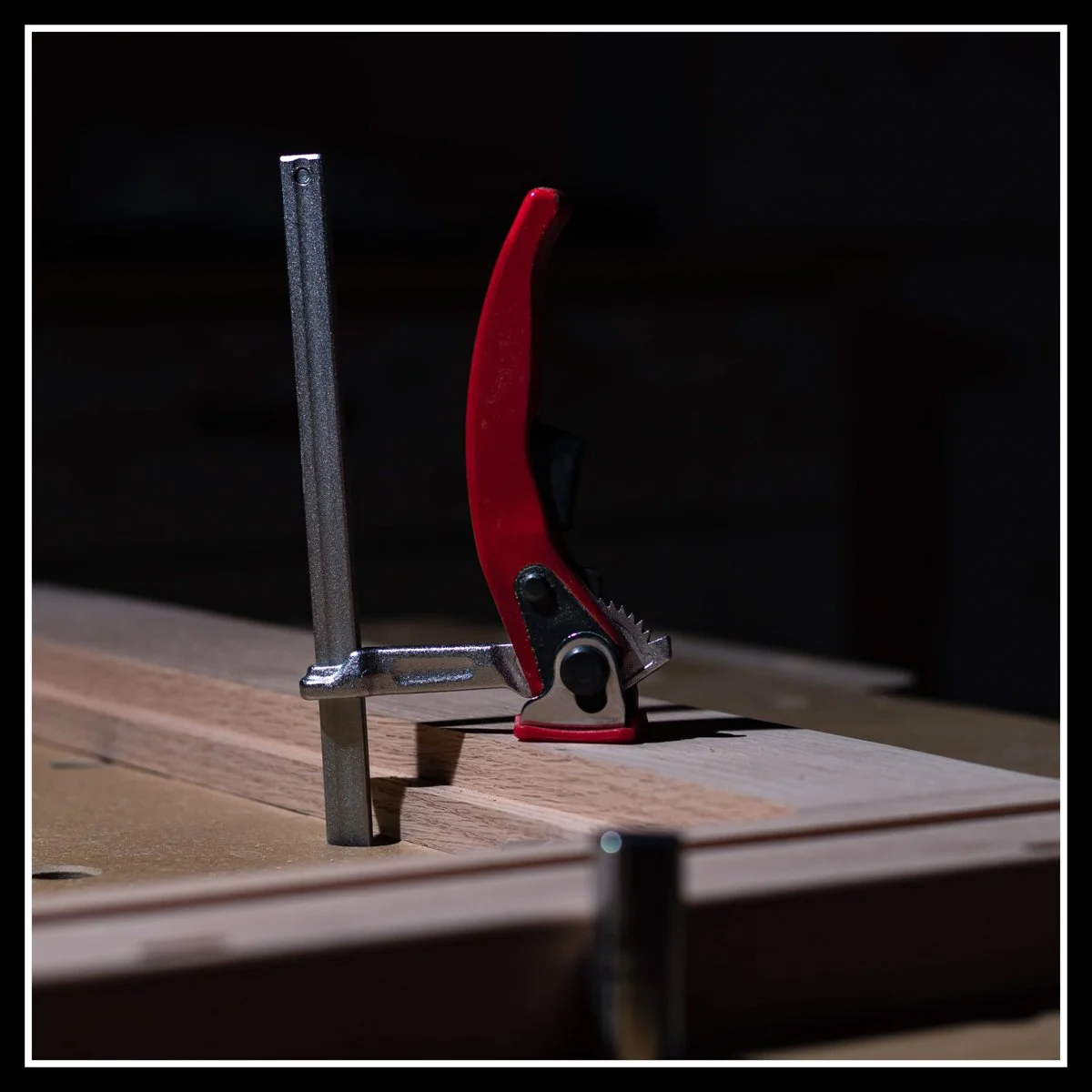
Surface Clamp & Rift‑Cut Red Oak
A surface clamp holds a piece of rift‑cut red oak tight to the bench for milling work — one of those small shop moments that never really changes. The clamp bites cleanly, the oak stays put, and the work begins. Rift grain behaves beautifully under pressure: straight, disciplined, and predictable. It’s the kind of setup every woodworker knows by feel — simple tools doing honest work.
Earlywood, Latewood, and the Grain That Defines Red Oak
When spring comes, red oak grows as fast as it can. In that burst of early growth, it builds huge earlywood pores — like drinking straws — moving water straight up the trunk to feed the leaves. Those open pores give red oak the coarse, open grain it’s famous for.
By July, the tree switches modes. Spring is about speed — reaching higher, filling out leaves, expanding the canopy. Summer is about survival. Storms roll in. The canopy is heavy. The trunk is under load. So the latewood ring is built for strength: thick‑walled fibres loaded with lignin, the natural glue that stiffens wood. Dense, dark, and strong — exactly what the tree needs to stand through wind and weather.
Year after year, the tree repeats this cycle — speed in spring, strength in summer — stacking ring upon ring, thickening its trunk and branches, each layer doing its job.
That’s why red oak has such dramatic contrast between earlywood and latewood. And that’s also why it machines the way it does. Every growth ring reads soft–hard–soft–hard. And guess what that causes? Tear‑out. A shaper or planer, given the right opportunity, will grab the hard latewood and rip it out of the soft earlywood beside it.
How Red Oak Takes Finish — Stain, Grain, and Those Big Open Pores
Red oak’s open pores drink stain fast — far faster than maple, cherry, or birch. That’s why red oak can swing from pale to dark in a single wipe. Those same pores also make glaze settle beautifully, giving depth and shadow that other woods can’t match.
But those open pores are also why red oak is indoor‑only. Water wicks straight up the grain. Outdoors, it rots quickly. Indoors, it finishes cleanly, takes colour evenly, and shows texture honestly. It’s one of the most forgiving woods to stain — and one of the most revealing if the prep work isn’t perfect.
Red oak has become a cornerstone in the hardwood industry and in woodworking shops — especially in college cabinetmaking programs. It’s the wood you learn on, the wood you make mistakes with, and the wood that teaches patience. Thinking back to that day in college, when my instructor asked why the wood tore out and I said, “Because it’s oak” — yeah. I’d accept that answer too. Now I know exactly why it was the right one.
Red oak is big, open‑grained, and honest. A simple wood, sure — but it shaped me early, and that’s a story worth keeping.
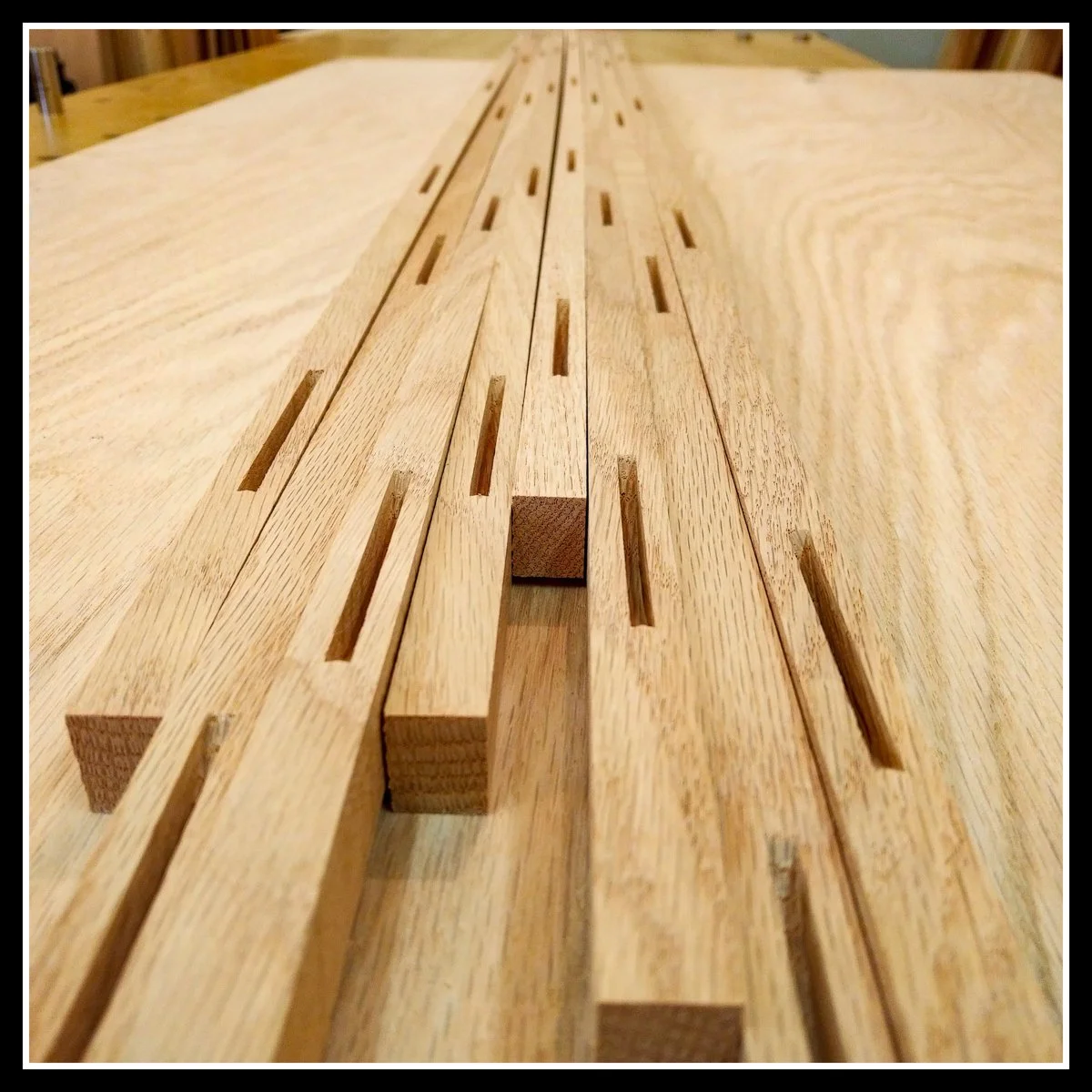
Red Oak Parts — Ready for Assembly
These red oak components are laid out on a red‑oak‑veneered panel, mortises cut and everything ready for assembly. It’s the quiet stage of a build — the moment when the parts are milled, the joinery is crisp, and the project exists as potential. Solid oak for strength, veneer for stability, each piece doing its job before the clamps come out. This is the part of the craft most people never see, but it’s where the work really begins.
⭐ Deep Scraped Red Oak — Grain, Contrast, and Honest Texture
Red oak doesn’t hide anything — big pores, bold grain, and a rhythm of soft–hard–soft–hard that shows exactly how the tree grew. These Deep Scraped Collection finishes push that honesty further, using brushed grain, layered stain, glaze, and 2K poly to bring out the dramatic contrast red oak is famous for. Scraping opens the earlywood, the glaze settles into the pores, and the stain rides the latewood like a shadow line. Red oak has always been the wood that teaches patience, but under texture it becomes something else entirely — loud, open, and full of the straight‑up character that makes oak oak.
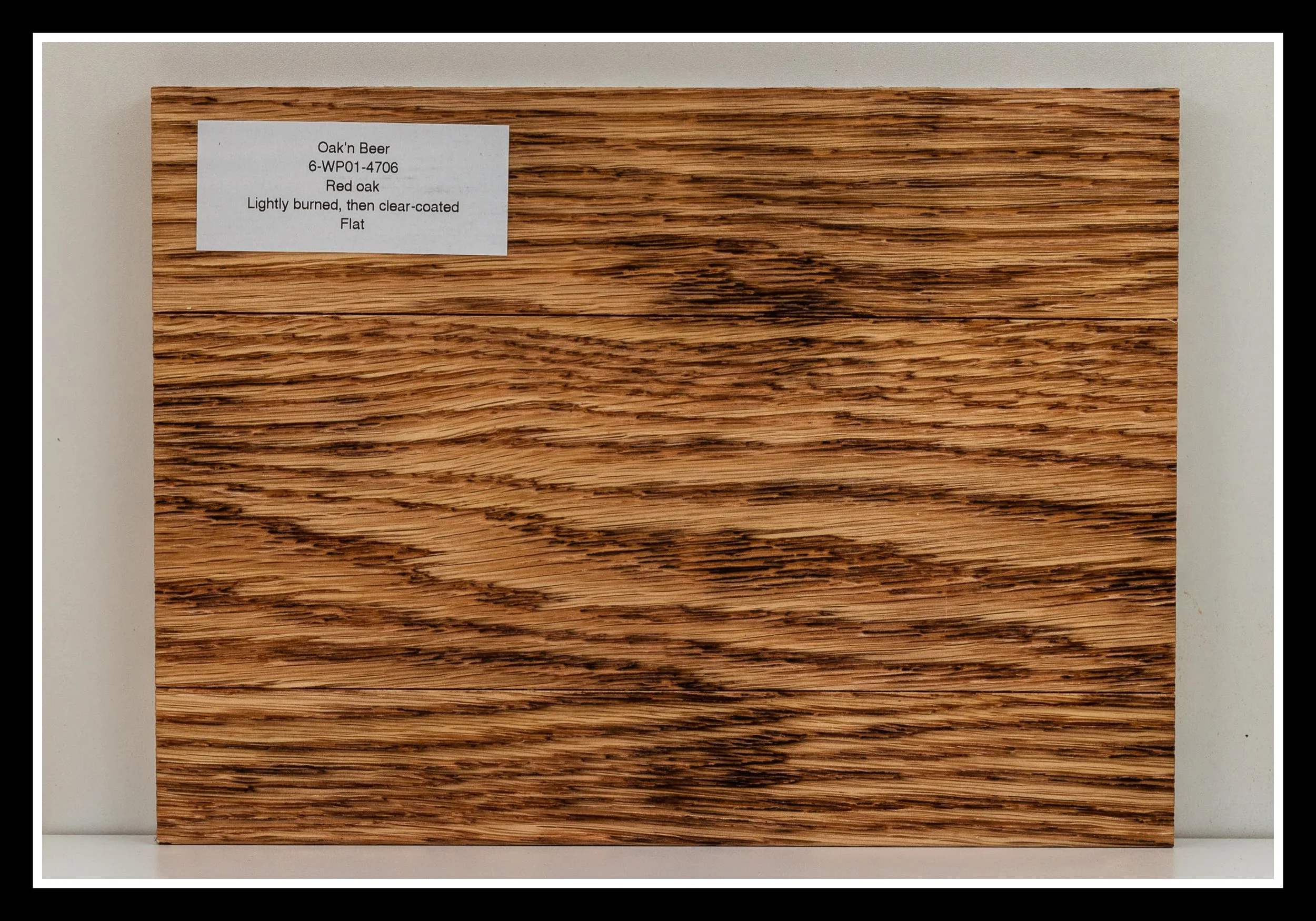
Oak’n Beer — Burly Grain With Firelight Personality
Oak’n Beer is red oak doing what red oak does best — big pores, bold grain, and a burly texture that feels right at home in a bar with drinks, laughter, and a bit of noise. The surface is brushed deep, burned for warmth, glazed for shadow, and sealed under a 2K poly that keeps the grain honest. Red oak takes scraping beautifully; the earlywood opens wide, the latewood stands firm, and the burn settles into the pores like firelight. It’s a finish with character — rugged, open, and built for places where people gather, or for a quiet night at home beside the fireplace. Red oak has always been a straight‑up wood, and this finish leans into that personality.
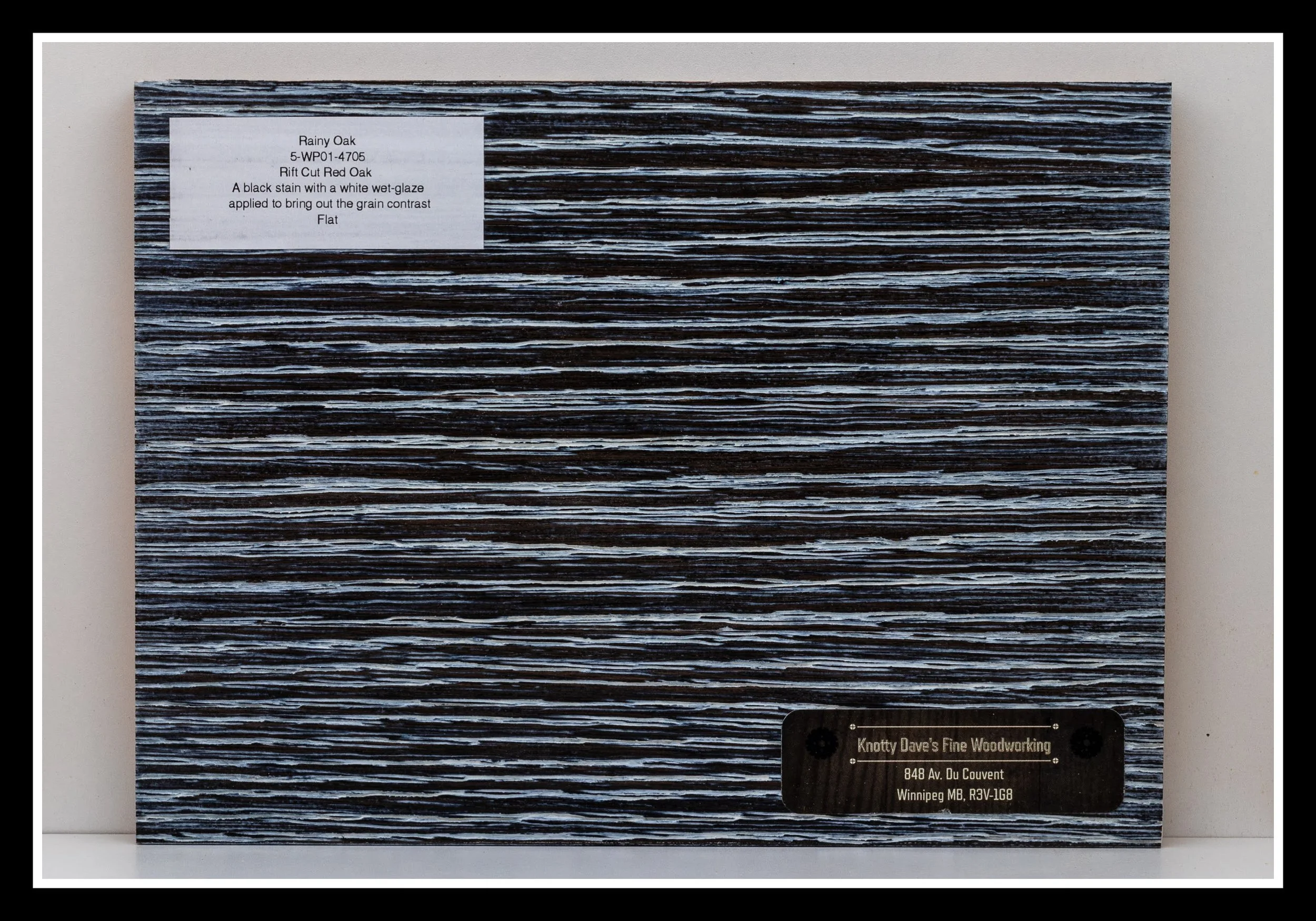
Rainy Oak — High‑Contrast Grain With a Lake‑Day Mood
Rainy Oak feels like a wet shoreline — brushed deep, stained black, glazed white, and sealed under a 2K poly that keeps the contrast sharp without losing the grain. Red oak’s big pores take scraping beautifully; the earlywood opens wide, the latewood stands firm, and the glaze settles into the texture like ripples on a rainy lake. It’s dramatic, moody, and unmistakably oak — the kind of finish that feels at home in a cabin, a bar, or anywhere the weather has a story to tell. I don’t know why it reminds me of Rainy River, Ontario, but it does — maybe it’s the way the grain carries light and shadow like water under a grey sky.
Where every species, every board, and every lesson in wood science comes together — a place to explore the materials that shape our craft.
SHARE
The Wood Archive — All the wood Stories in One Place
For the living side of woodworking — the stories shaped by walnut, oak, maple, cherry, elm, cedar, and poplar — head to the Wood Archive.
If you’d like to hear from me only when something big is happening — a launch, a milestone, or a major project — you can join the mailing list below.
Written by David Flather, Red Seal cabinetmaker and founder of Knotty Dave’s Fine Woodworking— a Manitoba shop rooted in heritage restoration, storytelling, and real craft.
All photos shot by David Flather — in the shop, on the road, and in the places where craft and story meet.
Related Stories:
The Elm Trees of North America: Canopy, Loss, and the Craft That Remains
Ash Trees: Green, White, Black, and the Emerald Ash Borer Threat
The Value of Wood in the Fur Trade: Winter Logging, River Transport, and York Boat Timber
The Workshop Library
If you enjoyed this story, there’s lots more like it inside The Workshop Library — and it’s free to explore.
Wood Archive — species, grain, working properties, and real‑world craft notes
Behind the Grain — the deeper stories inside wood, craft, and heritage
The Working Side of the Craft — tools, shop life, workflow, and the realities of making
Digital to Sawdust — Design Studio — geometry, proportion, visual flow, and design thinking
The Stories of the Shop — the personal side of craft, the shop’s history, and the quiet moments that shape the work
House & Hearth — heritage home restoration, the hearth room, winter culture, and the lived‑in side of craft
I’m just one man with a shop, building this archive one story at a time. If you’d like to follow the journey as it unfolds, explore The Workshop Library — new stories every week.
