

Wood Doesn’t Lie: Lessons From the Woodpile to the Workshop
Quick Answer — Why Wood Reveals Its Character
Wood reveals its character because grain, knots, moisture, and species traits are honest. A log splits clean when the grain is straight and fights when it twists; wet fibres bend, frozen fibres snap, and every knot records a moment in the tree’s life. Wood behaves exactly as it grew — in the woodpile, in rough‑cut lumber, and in the workshop — and learning to read that behaviour is the foundation of clean, predictable woodworking.
Grain direction — wood splits with the grain and fights across it
Knots and scars — every defect records the tree’s life
Moisture behaviour — wet fibres bend, frozen fibres snap
Shear strength — wood flexes across the grain instead of breaking
Species traits — every wood behaves according to how it grew
Reading Grain & Movement In Wood
Everything I know about wood grain and movement started in the woodpile — splitting firewood taught me how wood bends, breaks, resists, and reveals its character. The workshop only confirmed what the axe already taught.
BY THE END OF THIS STORY
You’ll understand how wood grain, movement, shear strength, knots, moisture, and fibre behaviour reveal themselves long before a board reaches the shop — and why the lessons learned splitting firewood are the same ones that guide milling, joinery, and species selection in the workshop. You’ll see how grain direction, defects, wet vs frozen fibres, and species traits shape every cut, every board, and every decision a woodworker makes.
Read time: 4 minutes
Fast Summary
Wood doesn’t lie — grain direction, knots, moisture, and species traits reveal themselves long before a board reaches the shop. The woodpile teaches the same lessons the workshop does: straight grain behaves, twisted grain fights, wet fibres stretch, frozen fibres snap, and every defect tells the truth about how the tree grew.
Comparison — Woodpile vs Workshop
Workshop — Tools Confirm the Truth
Planers and jointers reveal the same grain reversals
Tear‑out happens where the axe struggled
Rough‑cut lumber hides defects the woodpile exposes
Species behaviour shapes every cut and decision
The workshop proves what the woodpile already taught.
Woodpile — Raw, Honest, Unfiltered
Grain direction — straight logs split clean, twisted logs fight
Moisture — wet fibres bend, frozen fibres fracture
Knots — every knot is a record of the tree’s life
Immediate feedback — every swing teaches something
The woodpile shows wood exactly as it grew.
Bottom Line — Wood Behaves How It Grew
The woodpile teaches the truth. The workshop confirms it. Wood doesn’t lie.
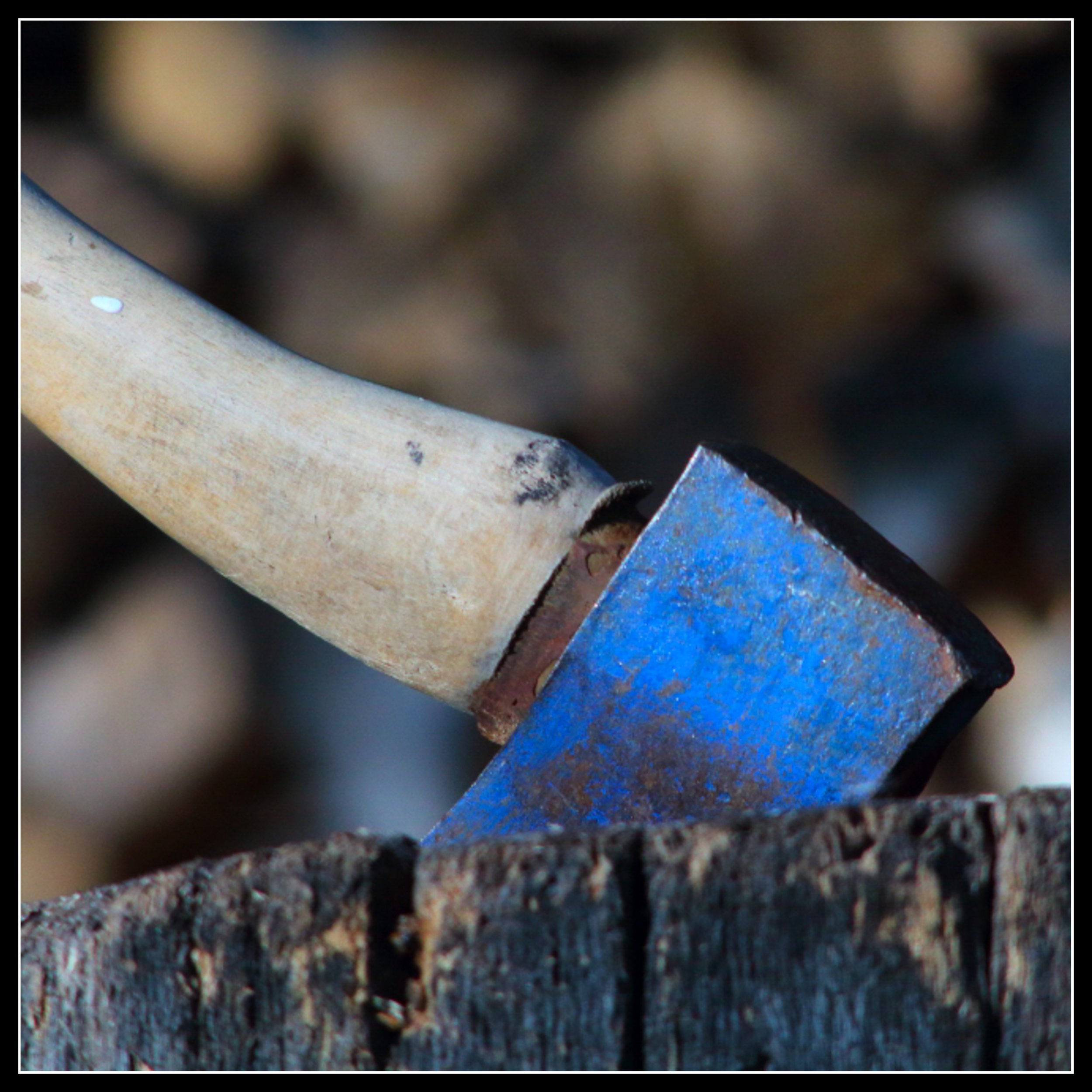
The Axe Taught the First Lesson
Before I ever touched a jointer or planer, the axe taught me everything I needed to know about wood. You learn grain by feel long before you learn it by sight — the way a straight log opens with a single swing, the way a twisted one fights back, the way wet fibres stretch and frozen fibres snap clean. Every swing is a conversation with the tree’s history. The workshop only confirmed what the woodpile made obvious: wood doesn’t lie. It behaves exactly the way its grain tells you it will, whether you’re splitting firewood or milling boards for a cabinet.
Grain, Knots, and the Truth Inside a Log
Every fall, right up until I moved out of my parents’ house, we had a ritual. Dad would order four full cords of firewood, and my brother and I would go out with splitting mauls to “earn our keep.” We thought we were just doing chores. Really, we were learning wood.
Wood splits with the grain — that’s the first lesson. Across the grain, it refuses. When you’re swinging an axe for hours, you learn that early. Grain isn’t straight. It follows knots, scars, crotches — all the imperfections a tree collects over a lifetime. Those twists fight back. The nice logs, the straight ones, split with a single swing. The others teach patience.
Wet Wood, Dry Wood, Frozen Wood
Wet wood is tougher. The fibres bend and stretch, turning stringy instead of brittle. Frozen wood, on the other hand, splits like a dream. All of that — wet, dry, frozen, straight, twisted — was obvious in the woodpile long before I ever stepped into a workshop as a cabinetmaker.
The Workshop Confirms the Woodpile
In the shop, the lessons don’t change. Full‑length boards behave exactly like the firewood did. The only difference is the tools. Instead of a maul, we’re using jointers and planers, cutting through the same imperfections and rolling our eyes when the tear‑out happens. But it’s just wood doing what wood does. It’s not a willing participant in any planer or milling process.
Rough‑Cut Lumber Hides Its History
Rough‑cut lumber hides its history. The sawmill slices straight through the knots and scars, so the trouble isn’t always visible. That’s why understanding wood movement and grain behaviour matters. If the tear‑out is bad, that board might not be the right candidate for a tabletop or fine furniture. Maybe it belongs somewhere else in the project. Wood tells you what it wants to be if you know how to read it.
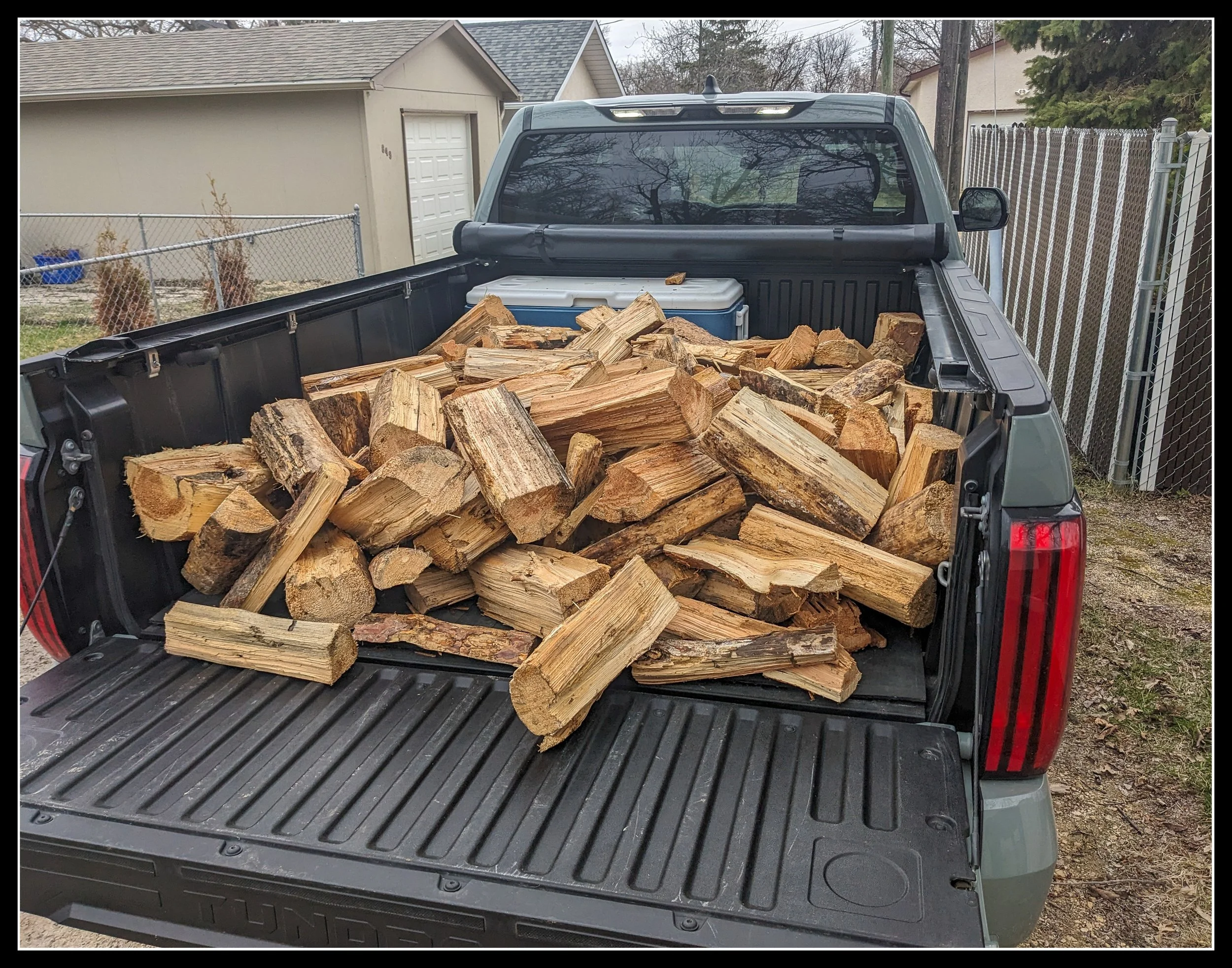
A Load of Pine on a Cloudy Back‑Lane Morning
Firewood is the most honest version of wood you can haul — no milling, no grading, no planing, just the tree as it grew. A truck bed full of pine on a grey morning carries the same lessons the woodpile taught years ago: straight grain splits clean, twisted grain fights back, and every knot is a record of the tree’s life. Before boards become furniture, before tools shape anything, wood exists like this — rough, real, and waiting to teach you something if you’re paying attention.
Shear Strength — Wood’s Other Gift
Across the grain, wood has another gift: shear strength. Try chopping a tree across the grain and you’ll see. It bends, flexes, springs back. That’s why we can build stairs, houses, sheds — even the seat on a kid’s swing. Steel can bend and spring too, but it’s heavy, expensive, and it doesn’t take a nail the way wood does.
There’s an old saying: a pound of wood is stronger than a pound of steel. It showed up in one of my college textbooks, and I’ve hated it ever since. Too many variables. What wood? Cedar or oak? Straight grain or twisted? Dry or wet? Perfect or full of defects? Steel is uniform. Wood is character.
Species Behaviour — Every Wood Has Its Own World
Cedar is light and soft, but it resists decay better than almost anything. Oak is dense, tough, and strong in shear. Fir is straight‑grained and reliable. Every species — hardwood or softwood — has its own behaviour, its own strengths, its own weaknesses. Use each material in its appropriate world.
That’s the real lesson — the one that started in the woodpile and never left.
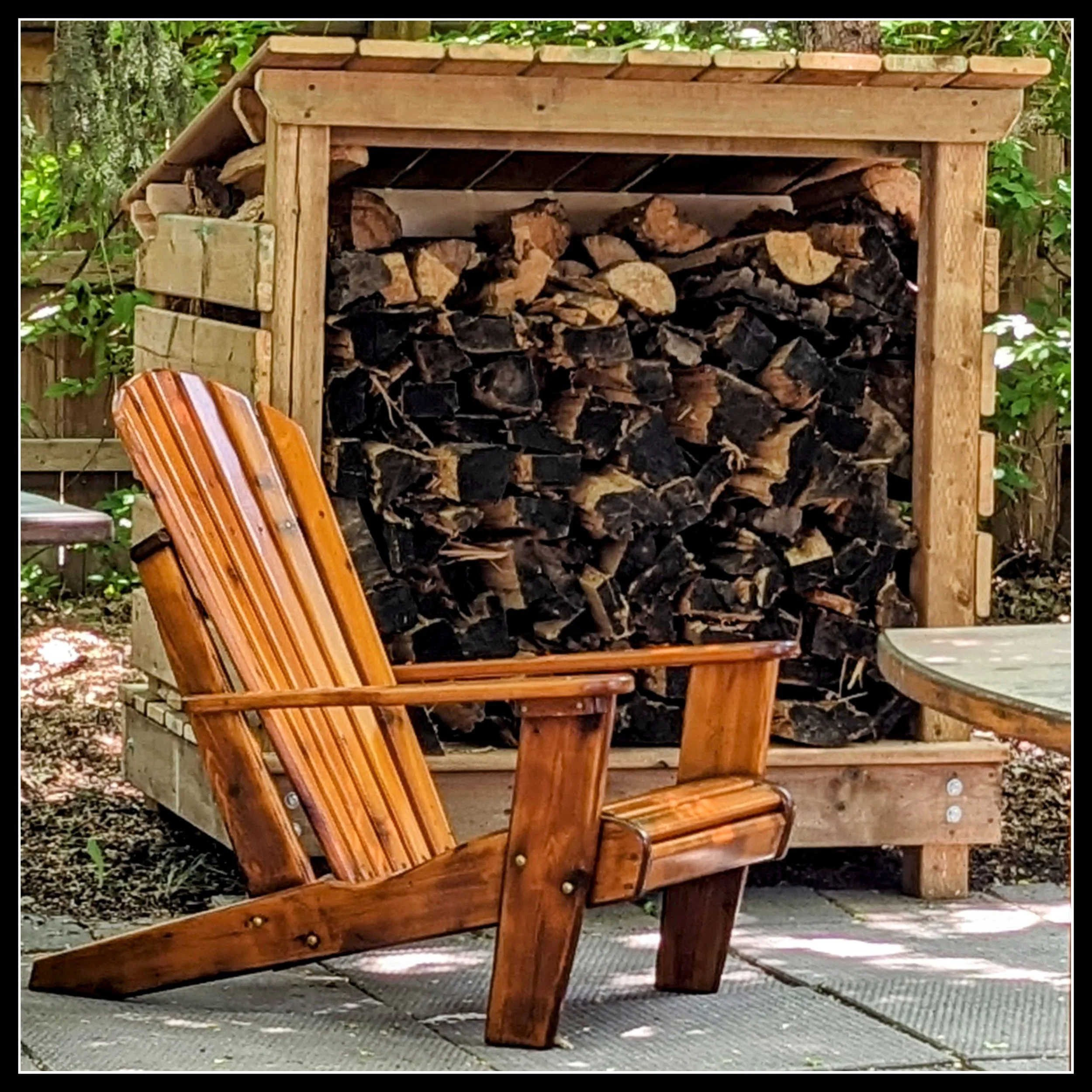
The Shelter That Keeps the Lessons Close
A firewood shelter is the quiet archive of a backyard — three walls, a leaning roof, and rows of poplar stacked with their blackened end grain facing out like a record of every season. This one sits under trees with a cedar deck chair in the foreground, but the wood shed is the real focus. Poplar dries fast, checks early, and shows its history in every split face. Stacking it teaches the same truths the woodpile always did: grain direction, tension, stubborn knots, and the way wood behaves when left to weather honestly. It’s a small structure, but it holds decades of understanding.
Where every species, every board, and every lesson in wood science comes together — a place to explore the materials that shape our craft.
SHARE
The Wood Archive — All the wood Stories in One Place
For the living side of woodworking — the stories shaped by walnut, oak, maple, cherry, elm, cedar, and poplar — head to the Wood Archive.
If you’d like to hear from me only when something big is happening — a launch, a milestone, or a major project — you can join the mailing list below.
Written by David Flather, Red Seal cabinetmaker and founder of Knotty Dave’s Fine Woodworking — a Manitoba shop rooted in heritage restoration, storytelling, and real craft.
All photos shot by David Flather — in the shop, on the road, and in the places where craft and story meet.
Related Stories:
Hardwood vs Softwood Growth Rates: The Truth About Pioneer Trees
The Value of Wood in the Fur Trade: Winter Logging, River Transport, and York Boat Timber
Douglas Fir: The Wood That Built a Generation — Memory, Craft, and Grandfather’s Shop
Hardwood vs Softwood: The Real Difference, Strength, Uses, and How Each Tree Family Evolved
The Workshop Library
If you enjoyed this story, there’s lots more like it inside The Workshop Library — and it’s free to explore.
Wood Archive — species, grain, working properties, and real‑world craft notes
Behind the Grain — the deeper stories inside wood, craft, and heritage
The Working Side of the Craft — tools, shop life, workflow, and the realities of making
Digital to Sawdust — Design Studio — geometry, proportion, visual flow, and design thinking
The Stories of the Shop — the personal side of craft, the shop’s history, and the quiet moments that shape the work
House & Hearth — heritage home restoration, the hearth room, winter culture, and the lived‑in side of craft
I’m just one man with a shop, building this archive one story at a time. If you’d like to follow the journey as it unfolds, explore The Workshop Library — new stories every week.
