

Pine
Quick Answer: What is pine wood?
Pine is a softwood from a large global family of resin‑rich, fast‑growing trees built for open, sun‑blasted ground. Its lumber is pale, knotty, lightweight, and easy to work, with a warm grain and a signature resin scent. Pine dents easily because it grows quickly, but it planes, cuts, and sands with almost no resistance. Many pine species evolved with fire, and their resin, knots, and fast growth all show up in the boards we use in the shop.
Softwood built for open ground
Resin‑rich — insect defence + fire ecology
Fast‑grown — dents easily, knots everywhere
Bright, pale grain — takes stain + paint well
Easy to work — planes, cuts, sands smoothly
Fire‑adapted cones in many species
Huge global family — White Pine, Red Pine, Jack Pine, SYP, Ponderosa, Lodgepole
Cottage‑country wood — trim, walls, furniture
Pine — A Family of Trees Built for Open Ground
Pine has lived in the background of Canadian life for so long that we barely notice it anymore. It’s the wood of cottages, bunk beds, bead board walls, and campfires that crackle in the dark. But pine didn’t start as a gentle, domestic wood. It began as a survivor on harsh, sun‑blasted ground, shaped by fire and exposure, and the lumber still remembers. This room is where we look at pine for what it really is — not generic, not simple, but a family of trees built for open country and bright light.
BY THE END OF THIS STORY
You’ll understand pine as a pioneer species built for open, sun‑blasted ground, why its resin, knots, and fast growth shape the lumber we use, how Eastern White Pine fits into a larger global pine family, and how this familiar shop‑class wood carries fire, light, and memory in every board.
Read time: 5 minutes
Pine vs Other Softwoods
Pine vs Spruce — pine is softer, more resinous
Pine vs Fir — fir is straighter‑grained, stronger
Pine vs Cedar — cedar is rot‑resistant, aromatic
White Pine vs Yellow Pine — SYP is stronger, heavier, bolder grain
Fast Summary
Pine is a fast‑grown, resin‑rich pioneer softwood built for open, sun‑blasted ground. Its knots, pale grain, and warm scent come from a life shaped by fire, exposure, and speed. In the shop it’s bright, soft, easy to work, and full of character — the familiar cottage‑country wood that planes smoothly, dents easily, and carries its whole history in every knot and resin pocket. Pine isn’t just “shop‑class lumber”; it’s a global family of fire‑adapted trees whose fast growth and resin‑rich grain define the boards we use.
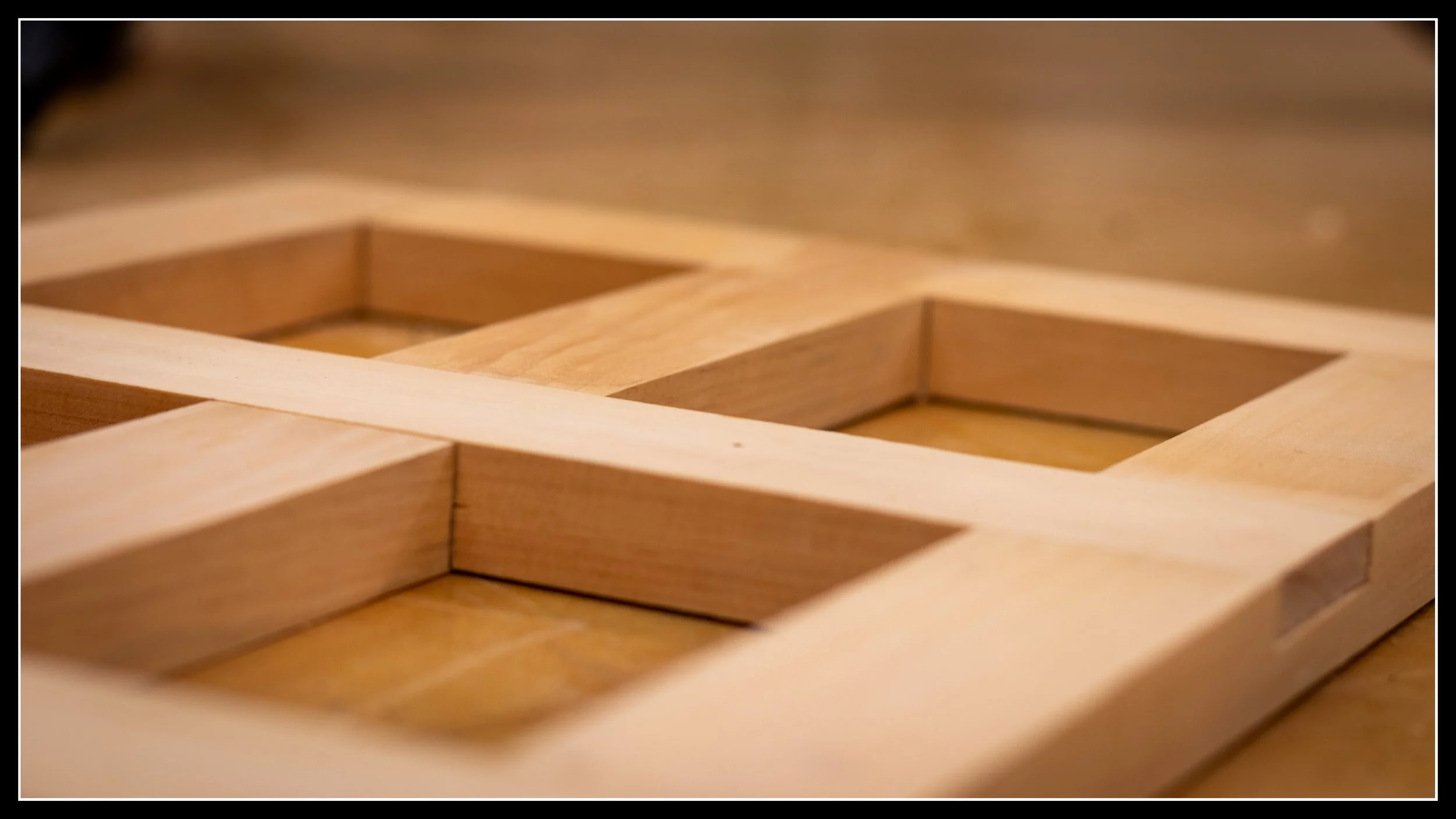
Hand‑Cut Joinery Frame in Eastern White Pine
Hand‑cut joinery in Eastern White Pine — a college project where every joint had to be cut by hand and graded on accuracy. I don’t remember the mark, but I remember the feel of the chisel, the smell of the resin, and the way pine teaches you patience long before you earn skill.
Pine wood characteristics
There are so many trees in the world that it gets confusing trying to sort out what they’re all good at — their character, their strengths, their weaknesses. And it gets even more tangled when you look at a name like pine. One word, dozens of subspecies, all lumped together as if they’re the same. Unless you’ve worked with them, it’s easy to think pine is just pine. It isn’t. And the only way to understand pine as a wood is to understand what pine is as a tree.
Pine didn’t evolve to be a shade tree or a deep forest tree. It didn’t evolve for cold mountain ridges like spruce, or wet, chemical rich soils like cedar. Pine came into the world about 130 million years ago to fill a very specific gap in the landscape — the open, sun blasted, fire reset ground where nothing else could get a foothold. That’s pine’s origin story. That’s its identity.
Pine is a pioneer species
It rushes into the places left behind by fire, storms, drought, and glacial retreat. It likes heat. It likes sun. It likes exposure. Some pines even carry cones sealed with resin that only open in fire, dropping seed onto fresh ash. Not all pines do this, but enough of them do that fire is part of the family story. Pine grows fast, throws branches quickly, and doesn’t wait for perfect conditions. It takes what it can get and makes a life out of it. And that ecological role shows up in the lumber.
Pine in the shop
Pine is bright, warm, knotty, resinous, and honest. It’s soft under the chisel, forgiving under the plane, and full of character. In Canada, pine means Eastern White Pine — the wood most of us first touched in shop class. I still remember the shelf we all had to make, the way the sap stuck to my hands for days, and how it clogged sandpaper in minutes. But the smell made up for it. That sharp, sweet resin scent is pine’s signature. I still associate that smell with the school wood shop.
Pine: insect defense and surviving fire
That resin exists for a reason. It’s the tree’s defence system — a flood of sticky, aromatic pitch that seals wounds, traps insects, blocks fungi from getting in, and gums up saw blades. And in the bigger picture, resin is part of pine’s relationship with fire. Resin burns hot, and pine wood is light, so when a stand of pine goes up, it goes up fast. That full, hot burn clears the ground, melts the resin on fire sealed cones, and creates the perfect open, sun baked soil for the next generation of pine to take hold. If you’ve ever burned pine in a campfire and heard it snap and pop, that’s the resin talking.
In Canada, pine is cottage country. It’s bead board and wall boards, floorboards and trim, bunk beds and kitchen tables. It paints beautifully and stains well if you seal it first, but it dents easily because it grew fast. That’s part of its charm — pine doesn’t hide its life story. Every knot is a branch that reached for the sun.
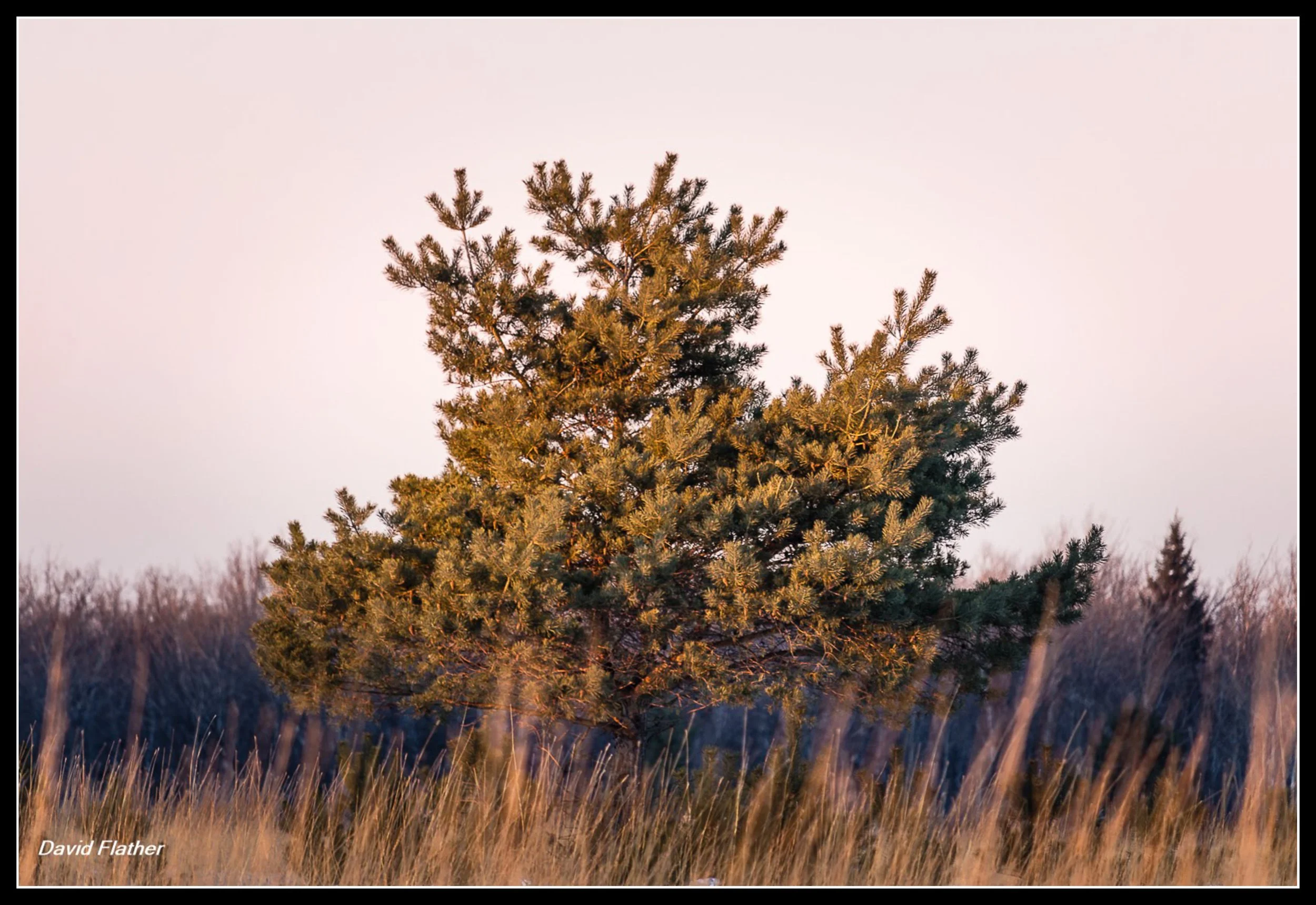
A Pine Standing in Birds Hill
This pine stands in the open ground at Birds Hill Provincial Park — likely a White Pine — holding its shape through winter light and cold air. Even in snow season, you can see the traits that define the family: long needles catching what sun they can, branches reaching for open sky, and a single trunk rising out of exposed ground. It’s pine in its real landscape, the living version of the boards we work with in the shop.
The pine family
Pine is a whole world, not a single tree. Eastern White Pine is the one we know best in Canada — the board on the bench, the trim in the cottage, the wood most of us first learned to shape. But it’s only one member of a much larger family. There are pines built for fire, pines built for wind, pines built for mountains and dry country and long southern heat. Red Pine, Jack Pine, Ponderosa, Lodgepole, Southern Yellow Pine, Sugar Pine, Jeffrey Pine, Longleaf — each one with its own story, its own landscape, its own way of growing.
This Ramble shines a broad light on Eastern White Pine because it’s the pine that shaped our region and our hands. But it can’t tell the whole story of the family. There will be more pine stories to come, and much of what’s said here belongs to all of them — the resin, the fire, the sun, the speed, the character written into every knot.
American pine — Southern Yellow Pine — is a different animal entirely. Dense, strong, bold grained, and full of muscle. Same family, different world. We don’t have it here; it grows in the southern United States and is used for framing houses. SYP is stronger than spruce, grows fast, and is sold cheaper than the furniture grade pine we use in Canada. It still carries resin and that familiar pine smell, but it’s uses, weight, and behaviour are completely different. Same name, different wood.
We all work with the woods our regions give us, and no one gets to know every species on earth. But once you understand that trees grow out of the conditions they evolved for — sun or shade, fire or moisture, speed or patience — the differences start to make sense. Pine isn’t just pine. It’s a whole family of trees shaped by open ground and bright sun, and every board carries that history in its grain.
Pine in the world
To me, pine is a wood of cold northern air and clean lakes. It’s a canoe trip through the glacial‑scraped Canadian Shield or a rocky mountain hike where the wind whispers through long, gentle branches. Pine grows where the air is clear and the land feels ancient. It’s the smell of the forest itself, the home of eagles and bears, and the smoky scent that clings to your clothes after a night by the fire.
But for all that softness, pine is born of fire and light and sun‑baked ground. It rebuilds forests after loss and turns harsh landscapes into beauty. It’s a sensory delight for humans — so much so that we bottle its scent for cars, a kind of everyday tribute no other tree receives.
In a world filling with plastic and carbon fiber, pine holds its value as an elemental retreat — something warm, honest, and alive, simmering in the background like a stew on the back burner of a wood cookstove on a blustery winter day.
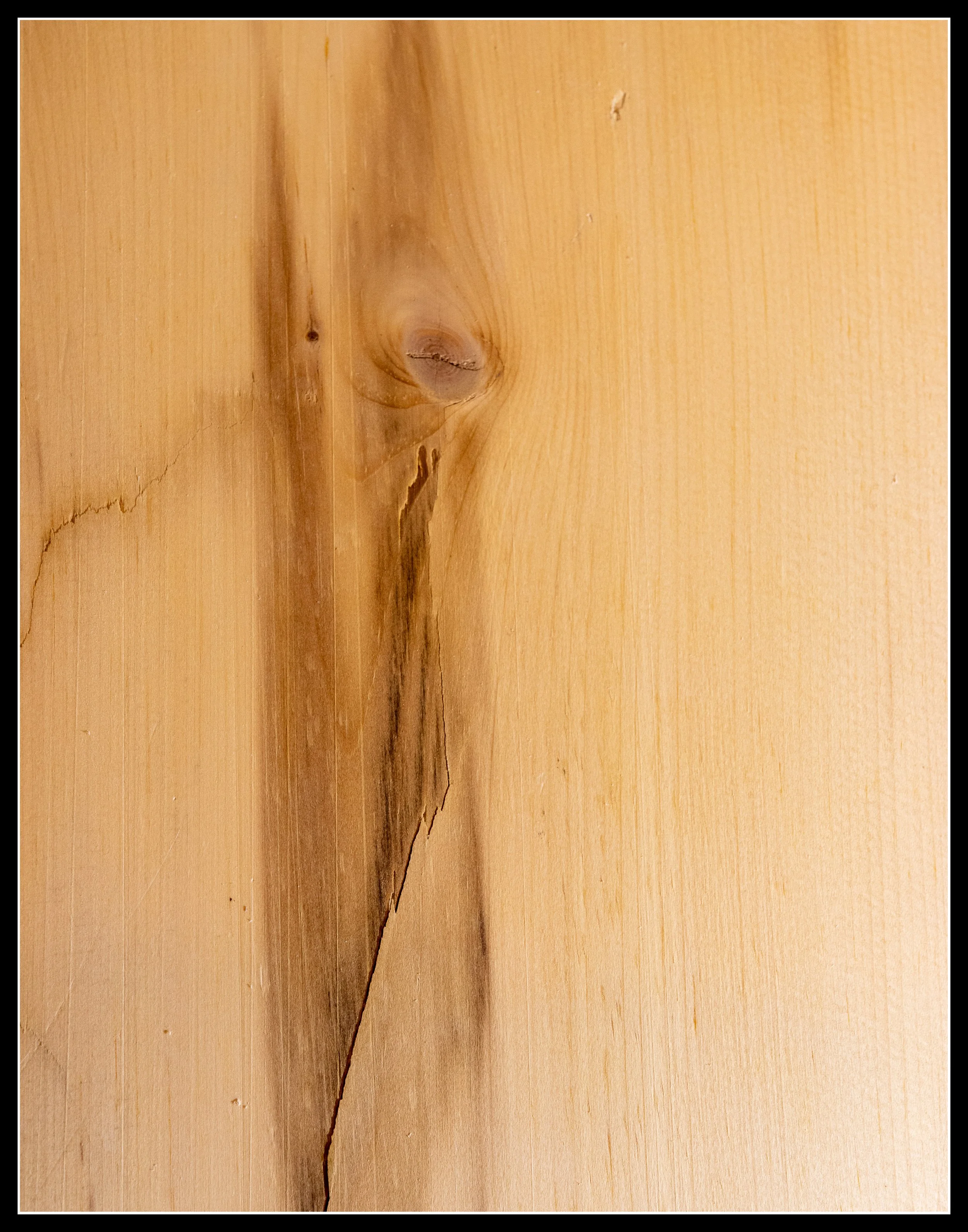
A White Pine Board Up Close
White Pine never hides where it came from. The pale grain, the soft growth lines, the knots that mark every branch that reached for the sun — it’s all right there on the surface. This board shows the character pine is known for: warm, light, resin‑touched, and shaped by open ground and bright light. It’s the pine most of us first learned to work with, the one that still carries the scent of shop class and cottage walls.
Deep Scraped Pine — Grain, Light, and Layers
Pine is known as the shop‑class wood — bright, soft, resinous, and familiar. But when you work it with intention, pine becomes something far more expressive. These Deep Scraped Collection pieces show how pine responds when you raise the grain, brush the earlywood, layer stain and glaze, and seal everything under 2K poly. Pine’s fast‑grown structure takes texture beautifully, and its pale grain shifts into warmth, shadow, and depth when you push it. Pine isn’t boring, and it isn’t simple — it’s a wood built for light, and with the right finish, it can glow.
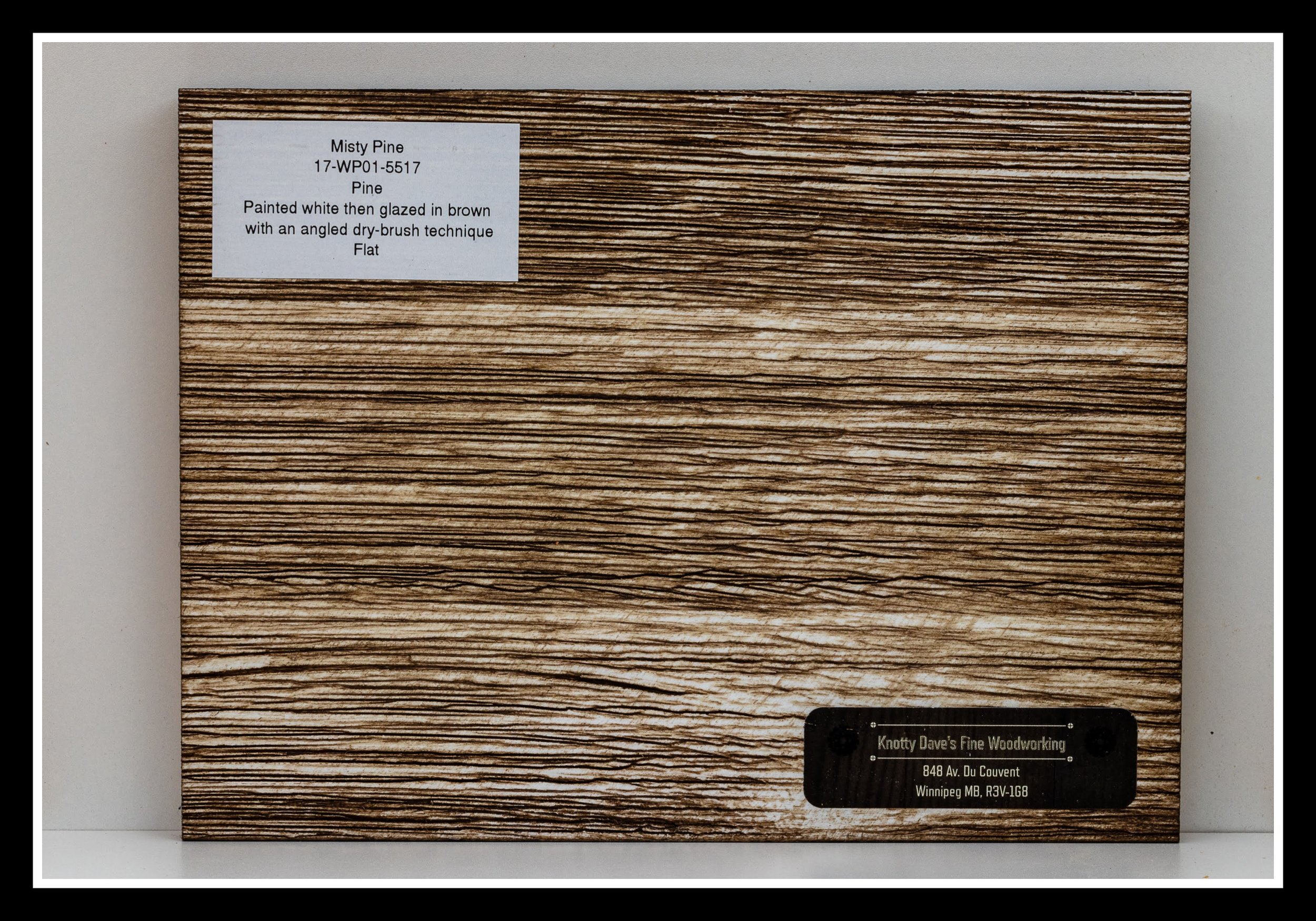
⭐ Misty Pine — Layered Grain and Soft Shadow
Misty Pine is a layered finish built on texture. The grain is deep‑scraped and brushed to pull the earlywood forward, then painted white to create a soft base. A brown glaze settles into the ridges, adding warmth and shadow, and a 2K poly seals everything under a calm, matte surface. Pine’s pale grain makes it perfect for finishes like this — it takes colour gently, holds texture well, and transforms from shop‑class lumber into something atmospheric when you treat it with care. With intention, pine can carry mood just as well as any hardwood.
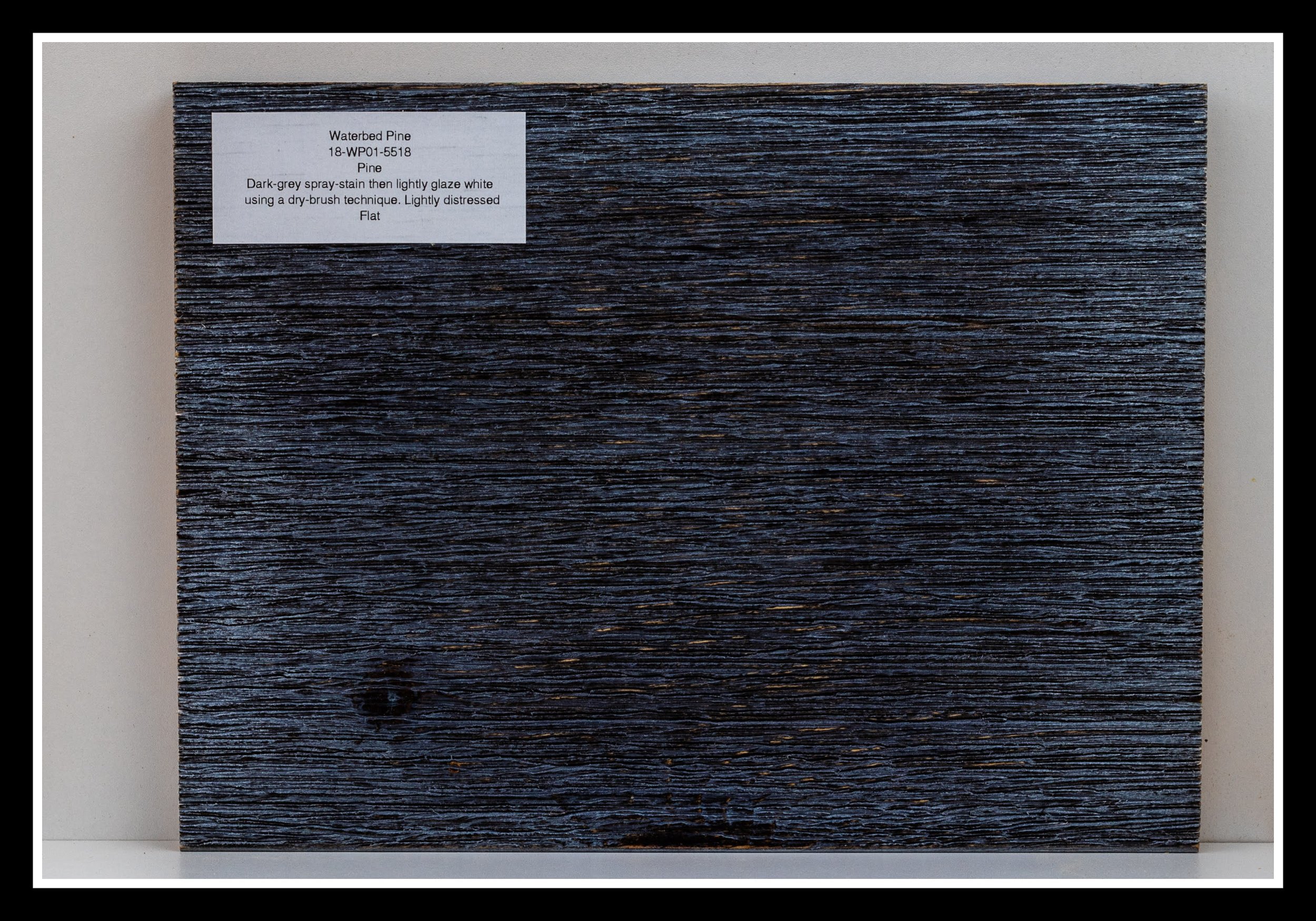
Waterbed Pine: Deep‑Scraped Grain With Stain, Glaze, and 2K Poly
Waterbed Pine — A Childhood Board Reborn. When I was in grade nine shop class, I built a waterbed — my first real furniture project — and I loved that thing. Years later, when life moved forward and I met my future wife, the bed had to go, but I kept the pine boards it was made from. This finish comes from that wood. Waterbed Pine is deep‑scraped, stained, glazed, and sealed under 2K poly — a far better finish than the bed ever had. Pine isn’t just the shop‑class wood; it carries memory, and when you treat it with intention, it can turn a piece of your past into something worth keeping.
Where every species, every board, and every lesson in wood science comes together — a place to explore the materials that shape our craft.
SHARE
The Wood Archive — All the wood Stories in One Place
For the living side of woodworking — the stories shaped by walnut, oak, maple, cherry, elm, cedar, and poplar — head to the Wood Archive.
If you’d like to hear from me only when something big is happening — a launch, a milestone, or a major project — you can join the mailing list below.
Written by David Flather, Red Seal cabinetmaker and founder of Knotty Dave’s Fine Woodworking — a Manitoba shop rooted in heritage restoration, storytelling, and real craft.
All photos shot by David Flather — in the shop, on the road, and in the places where craft and story meet.
Related stories:
Walnut: The Truth Behind North America’s Most Famous Hardwood
Douglas Fir: The Wood That Built a Generation — Memory, Craft, and Grandfather’s Shop
Cherry Wood: Grain, Colour, Tannin, and the Tree Behind the Boards
Outdoor Wood: Rot Resistance, Freeze‑Thaw Survival, and 200 Years of Real‑World Weather
The Workshop Library
If you enjoyed this story, there’s lots more like it inside The Workshop Library — and it’s free to explore.
Wood Archive — species, grain, working properties, and real‑world craft notes
Behind the Grain — the deeper stories inside wood, craft, and heritage
The Working Side of the Craft — tools, shop life, workflow, and the realities of making
Digital to Sawdust — Design Studio — geometry, proportion, visual flow, and design thinking
The Stories of the Shop — the personal side of craft, the shop’s history, and the quiet moments that shape the work
House & Hearth — heritage home restoration, the hearth room, winter culture, and the lived‑in side of craft
I’m just one man with a shop, building this archive one story at a time. If you’d like to follow the journey as it unfolds, explore The Workshop Library — new stories every week.
