

Oscillating Belt Sander — Simplicity and Effectiveness. You Need One
Quick Answer — How Pros Use an Oscillating Belt Sander
An oscillating belt sander looks simple, but the way it removes material is anything but. Professionals keep the belt level, use almost no pressure, and move in slow, steady passes because the oscillation can take an edge out of square if you lean or linger. The tool works beautifully when you let it — clean cutting, crisp edges, and no burn marks — but only if you treat it as a precision machine instead of a brute‑force sander.
Keep the belt level — no tilt, no wandering
Use light pressure — let the machine cut cleanly
Sand in steady, controlled passes
Stop as soon as the edge is crisp
Switch to the spindle only when curves demand it
Use dust extraction to keep the abrasive cutting flat
The Oscillating Sander That Punches Above Its Weight
This little oscillating belt sander earns its keep because it solves real problems without taking up space, costing a fortune, or demanding finesse. It’s one of those rare small‑shop tools that quietly does perfect work whenever you reach for it — simple, reliable, and far more capable than it looks.
By the End of This Story
You’ll understand why this simple, affordable oscillating belt sander earns a permanent place in a small shop — and why it’s one of those rare tools that quietly does its job perfectly every time you need it.
Estimated read time: 2 minutes
Quick Answer
An oscillating belt sander looks simple, and it is — but you still need to respect how it removes material. Use almost no pressure and move in slow, steady passes, because the oscillation can take more stock than you expect if you lean or linger. The tool works beautifully when you let it: clean cutting, crisp edges, and no burn marks. But it only behaves that way when you treat it like a precision machine instead of a brute‑force sander.
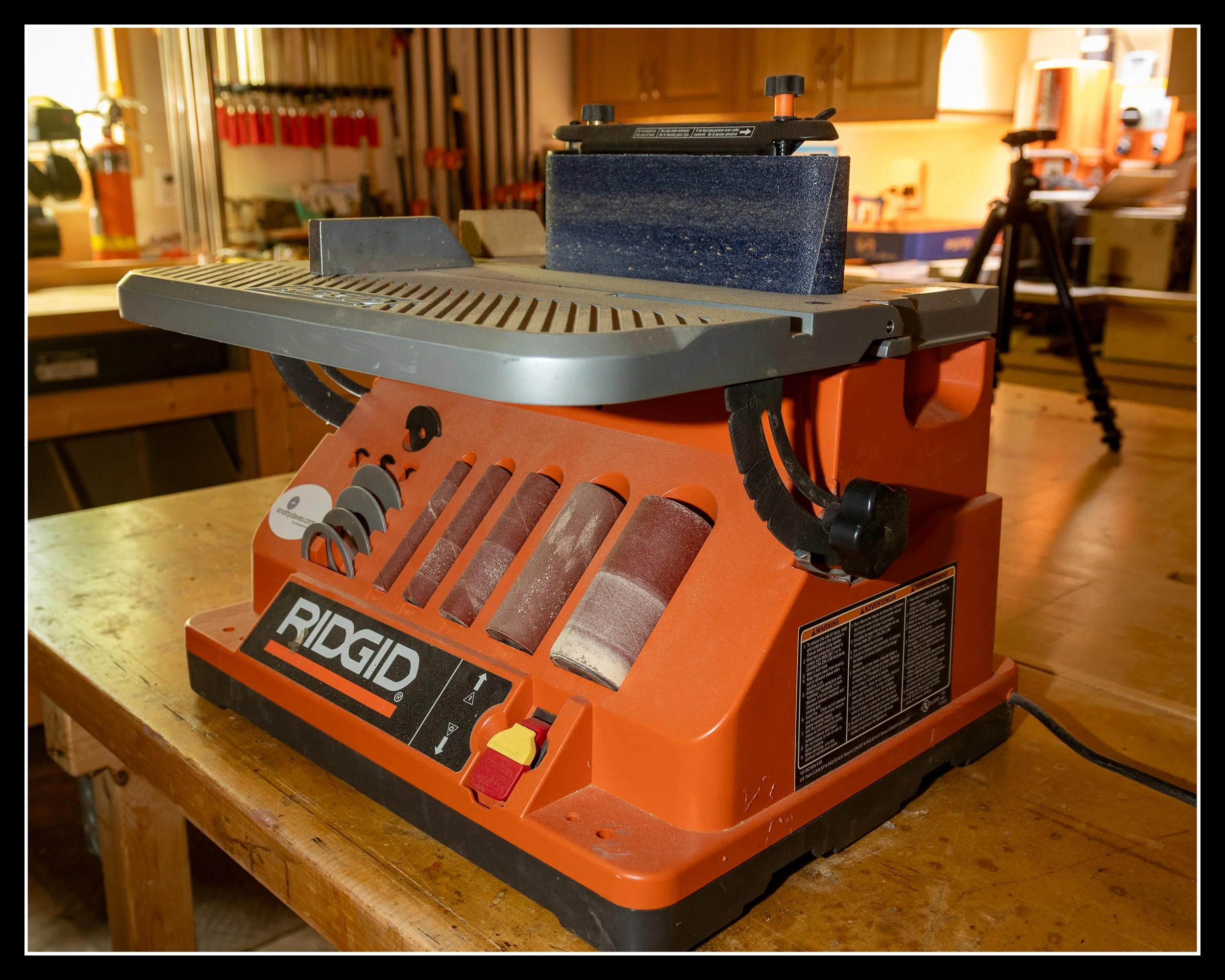
Ridgid Oscillating Belt and Spindle Sander
A Ridgid oscillating belt and spindle sander sitting on the workbench in the shop, set up with the belt installed and the spindle drums stored in the front compartments. The machine is ready for edge sanding and curve work, surrounded by the tools and workflow of a real working shop.
Why I Bought This Tool
If you work in a small shop, this is one of the few sanding tools that punches way above its weight.
I remember buying this tool back in 2009. I needed a way to edge sand hundreds of bevels on small pieces, and this machine handled the job perfectly. It’s not a daily‑use tool, but when I need it, I need it.
It might be plastic and aluminum and feel a little cheap, but it’s the right mix of real‑world grit and affordability. Not bad for a box‑store machine with genuinely good dust extraction — a tool every woodworker will use if you have one.
What Makes It So Effective
This is how a belt sander gets tamed. This tool can shape or finish‑sand edges. You can run belt grits up to 220. It keeps edges square and crisp. The oscillating action keeps belts from wearing too quickly and prevents track lines from showing up on the wood. You get a proper sanded edge without fighting the machine.
Key reasons this tool works:
Keeps edges square — crisp, clean, no wandering
Prevents burn marks — oscillation stops scorch lines
Stops belt track lines — no grooves or chatter
Accepts fine grits — up to 220 for finish‑ready edges
Converts to a spindle sander — curves, arcs, inside corners
Dust extraction — surprisingly good for a belt‑style machine
The Spindle Sander Bonus
With the flick of a lever, the belt sander disappears and the tool becomes a spindle sander. I don’t need spindle sanding often, but having it in the same footprint is real value.
I’m not trying to sell this tool. I have no affiliate link and no way to make a dollar recommending it. It’s just a tool that impressed me. I own a lot of tools, but this one has been one of those rare buys that works and is affordable. It fits in a small shop and it’s light enough to be considered portable. Store it under the bench until you need it. Hook up your shop vac and the dust collection is decent for a belt sander.
The fact that this tool hasn’t had a design change in twenty years tells you everything — the unit has been perfected. That’s why, if you’re a woodworker, you need one. It’s not fancy, but it’s one of the few tools that’s earned its place in my shop for almost twenty years.
This might be a short ramble, but the tool is just too basic and works too perfectly to need anything more.
Together, gathered in one place so the machine stories, tool reflections, and workflow moments stay connected — easy to find and easy to return to.
SHARE
The Working Side of the Craft — Connected Through Machines, Tools & Stories
If you want the stories shaped by table saws, bandsaws, grinders, fences, and jigs — the honest, noisy side of woodworking — the Working Side Of The Craft is one click away.
If you’d like to hear from me only when something big is happening — a launch, a milestone, or a major project — you can join the mailing list below.
Written by David Flather, Red Seal cabinetmaker and founder of Knotty Dave’s Fine Woodworking — a Manitoba shop rooted in heritage restoration, storytelling, and real craft.
All photos shot by David Flather — in the shop, on the road, and in the places where craft and story meet.
Related stories:
My First Bandsaw That Didn’t Suck — A Woodworker’s Journey Through Vintage Saws
Belt Sanders: Why They Dig, Gouge & Ruin Surfaces When Used Wrong
Orbital Sanders: Why They Leave Waves & How Pros Keep Surfaces Flat
Finishing Sanders vs Orbitals: The Mistake Almost Every Beginner Makes
The Workshop Library
If you enjoyed this story, there’s lots more like it inside The Workshop Library — and it’s free to explore.
Wood Archive — species, grain, working properties, and real‑world craft notes
Behind the Grain — the deeper stories inside wood, craft, and heritage
The Working Side of the Craft — tools, shop life, workflow, and the realities of making
Digital to Sawdust — Design Studio — geometry, proportion, visual flow, and design thinking
The Stories of the Shop — the personal side of craft, the shop’s history, and the quiet moments that shape the work
House & Hearth — heritage home restoration, the hearth room, winter culture, and the lived‑in side of craft
I’m just one man with a shop, building this archive one story at a time. If you’d like to follow the journey as it unfolds, explore The Workshop Library — new stories every week.
