

Texture in Woodwork: The Maker’s Signature
Quick Answer — What Texture Means in Woodwork
Texture in woodwork is the surface you shape and the finish you choose, working together to create something intentional. It’s not the accidental marks left by rushed work — it’s the deliberate choices that age a piece hard or polish it to a mirror. Both ends of the spectrum speak, and both belong to bespoke work, where someone went further than they had to. Texture is the part people touch first, the part they remember, and in a world full of synthetic materials, it becomes the maker’s signature — the human part of the build.
Texture is the surface plus the finish. It’s the way tool marks, pores, fibers, and sanding patterns interact with oil, varnish, or gloss to change how wood feels and how it catches light.
Accidental texture isn’t texture. Milling marks, swirl scratches, and poorly sanded filler are just the results of budgets and deadlines — not design.
Intentional texture lives at both extremes. Distressed surfaces age a piece hard; piano‑grade gloss makes wood look almost synthetic. Both are deliberate, slow, and not for everyone.
Texture is where bespoke work shows itself. It’s the part of the build where you can see — and feel — that someone went further than they had to.
Texture is the maker’s signature. In a world full of synthetic materials, choosing real wood and real texture is choosing the human part of the build.
how texture creates language in design
Wood is an artistic medium with character and life. In bespoke work, texture brings that character to the surface — a signature shaped by time, care, and the maker’s hand.
By the end of this story
By the end of this story, you’ll know why texture is the maker’s voice in woodwork.
fast summary
This story shows how texture isn’t just a surface detail — it’s the quiet language that reveals the maker’s hand, shapes the way light moves across a piece, and turns simple geometry into something that feels alive. If you care about how furniture communicates mood, honesty, and intention, this is the chapter that finally makes that invisible part visible.
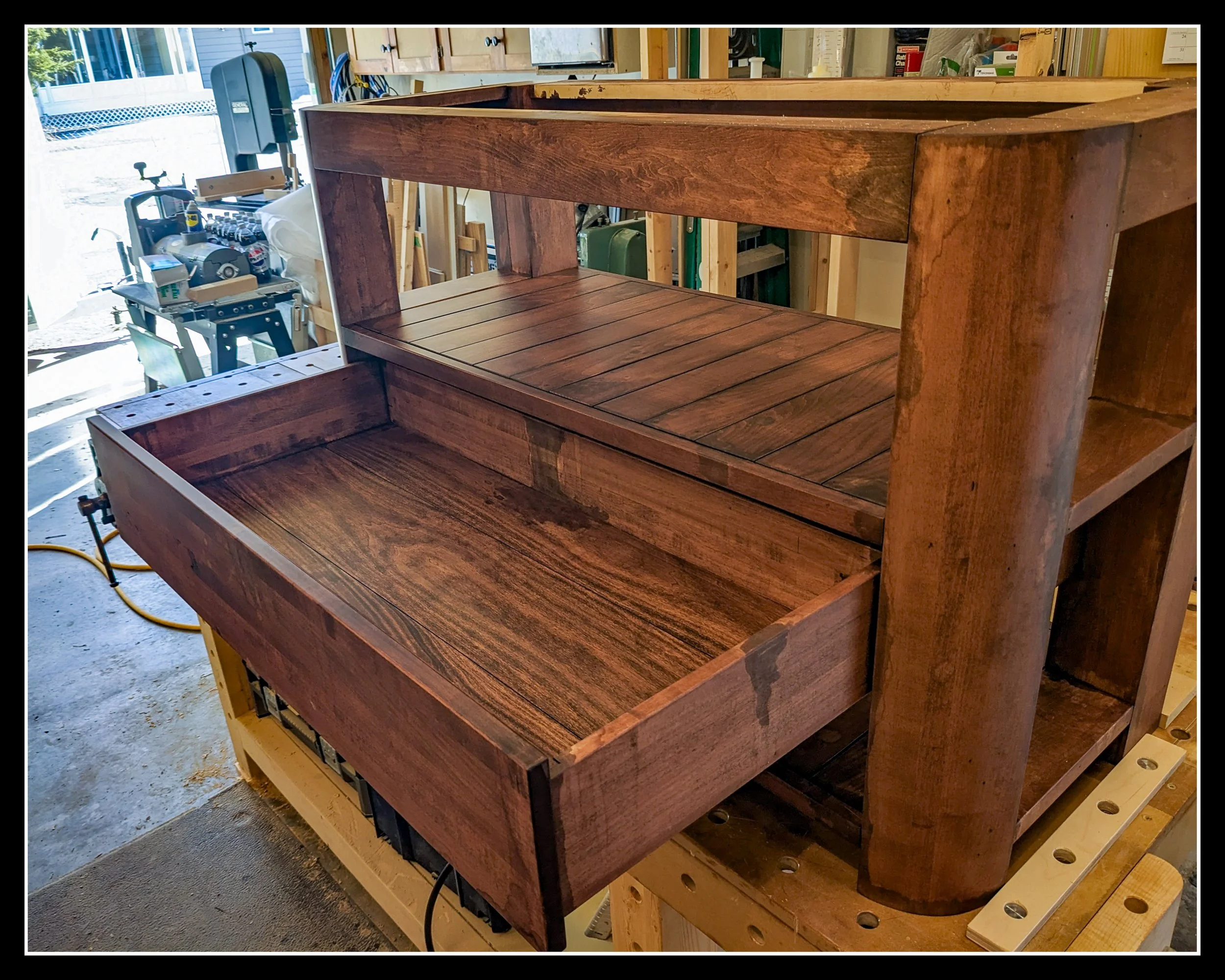
Distressed Maple Vanity — Aged and Restored Texture
A maple vanity intentionally distressed to look aged by water, wear, and time. The drawer shows controlled stain marks and discoloration that mimic water damage, while the rest of the piece carries the presence of a restored build. This is deliberate texture — the kind that makes new wood feel lived‑in, human, and full of history.
Texture (in woodworking design) — the definition
Texture, when you’re talking design, is a loaded word. In the design world it can mean wallpaper, carpet, hardwood flooring, stone, metal, upholstered furniture, lighting fixtures, hardware, paint on drywall — and a whole world of things I’m probably not thinking of. But I’m thinking about wood. I’m a Red Seal Cabinetmaker. That’s where my head goes first, that’s what designers hired me to build, and that’s what this story is about: how texture affects a design when it comes to wood.
Texture, when we’re talking about wood, isn’t just the raw surface. It’s the way the surface geometry and the finish work together. The pores, the fibers, the tool marks, the sanding pattern — and then the oil or varnish that settles into those details and changes how the wood feels and how it catches light. Texture is the surface you design and the finish you choose. You can’t separate the two.
Intentional vs. accidental texture
First off, if you’re walking through a space and see milling marks, swirl scratches, or filler that wasn’t sanded enough, that’s not texture. Well, technically it is — but it’s not intentional texture. It’s the kind created by laziness, budgets, and deadlines. You see it in commercial spaces all the time.
The texture I’m talking about is different. It’s the kind that comes from a sanded surface that later gets a cabinet scraper dragged across it to leave a hand‑scraped finish. It’s a perfect piece that gets wiped with a chain or has gravel ground into it to create a distressed look. It’s stain left running down a drawer front, nail holes left open, raw edges left proud. This kind of texture ages a piece hard, and it’s honestly difficult to do after I’ve spent a week perfecting a build. But the look is impressive. It’s intentional. And it’s definitely not for everyone.
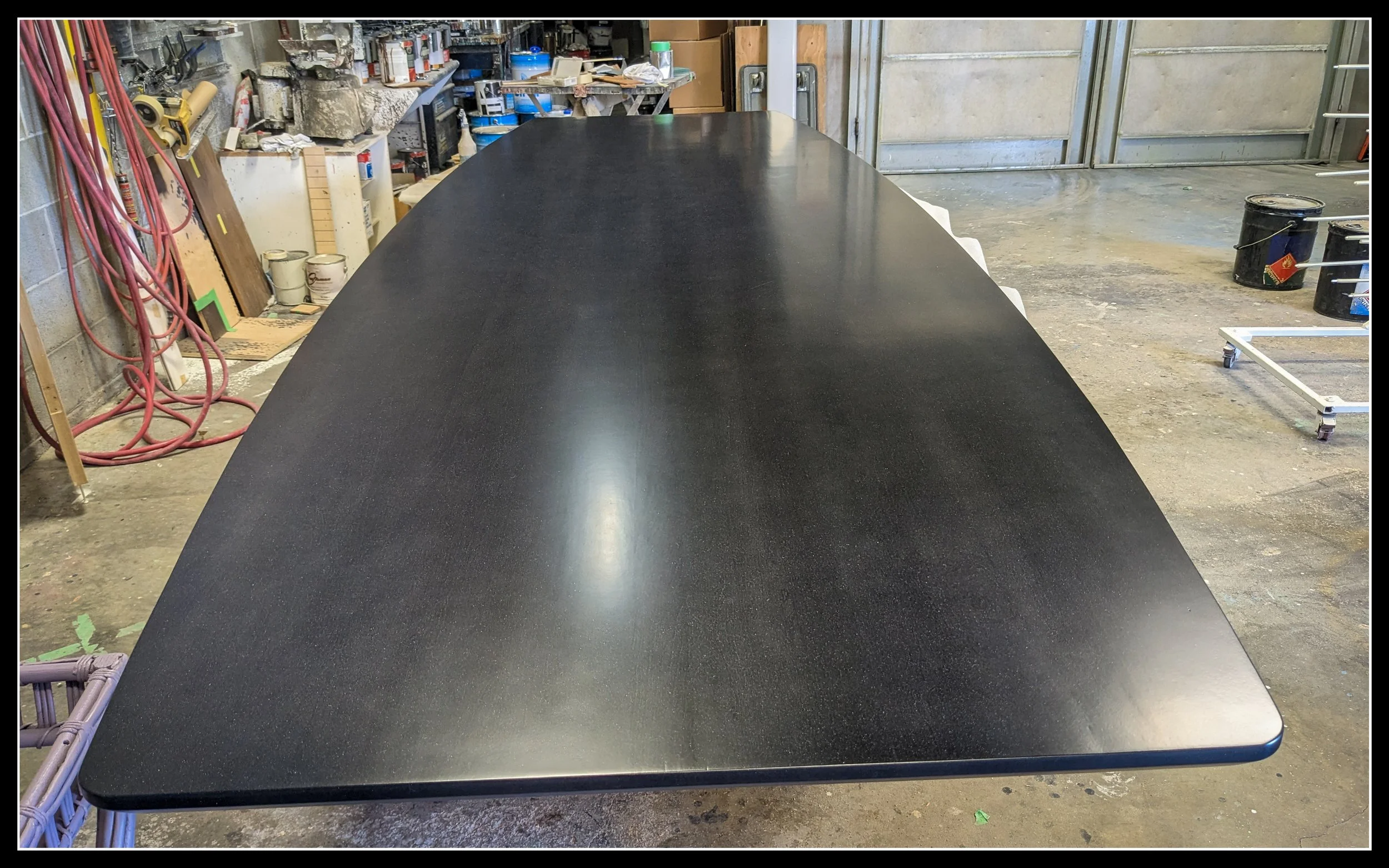
Polished Maple Table — Refined Surface Texture
A polished maple table finished to a deep, reflective sheen. Maple’s tight grain and subtle pore structure make it ideal for refined texture work, allowing light to glide across the surface without breaking. This kind of finish shows the opposite end of the texture spectrum — slow, deliberate, layered, and precise — where the wood begins to look almost synthetic, yet still carries the honesty of real craftsmanship.
The opposite end of the spectrum
Then there’s the opposite end of the spectrum — the surface that’s been sanded and perfected, then finished in gloss, layer after layer, wet‑sanded and polished until the wood starts looking synthetic. Plastic with wood grain. Paint with depth. A grand piano is the perfect example. This is texture too. It’s intentional. And it’s definitely not for everyone.
But that’s design. Individuality lives in design, and when it’s done right, the texture — whether distressed or polished to a mirror — reflects a mood that flows through the whole piece.
Where both extremes meet
What both of these extremes have in common is that they’re not ordinary. You don’t find them in mass‑produced furniture or big‑box retail. They’re bespoke choices, and they cost money because they cost time. They’re deliberate. They’re slow. They’re done by someone who cares. And even though they sit on opposite ends of the spectrum — one aged hard, one polished to a mirror — both textures function, and both speak. They tell you that someone made a decision about how this piece should feel in the world. That’s the part of design I can talk about. I may not design the pieces, but I build them, and texture is the one place where the maker’s hand still gets to say something.
Why texture matters
The reason texture matters is simple: people interact with it. They touch it. They run their hand across a drawer front or a table edge long before they notice proportion or layout lines. Texture is the first thing they feel, and sometimes the only thing they remember. A distressed surface invites the hand. A polished surface warns it. One says “come closer,” the other says “stand back.” Texture changes how a piece is experienced, and that’s why it’s worth talking about. It’s not theory. It’s not design‑school language. It’s the practical reality of how people respond to wood.
Bespoke
Designers love the word “bespoke,” but most people don’t really know what it means. A client once explained it better than any textbook. He compared the room I was about to build to a Ferrari — hand built, tuned, and finished beyond anything you’d ever call average. He had just bought a brand‑new Corvette, and he described that car as factory production. Both cars are beautiful. Both perform. But they are not the same. That cleared it up for me. Bespoke means built above and beyond the everyday. And in woodwork, texture is where that difference gets amplified. It’s the part of the build where you can see — and feel — that someone went further than they had to. Bespoke is built to order, not purchased from a big‑box store. It’s not click‑and‑ship. It’s a conversation with a designer or a maker, and it takes time.
Texture as the maker’s signature
What all of this leads to is simple: in the bespoke design world, texture becomes the maker’s signature. It’s the part of a piece that is undeniably human in a world increasingly filled with synthetic materials. Bespoke is choosing a cedar deck chair when you could have had plastic. It’s choosing a solid wood dining table when you could have bought a factory‑produced one with a thin finish and a veneered sheet‑good top. It’s choosing hardwood flooring instead of laminate. These decisions build a home in layers, and every layer adds to the language of the space. And if laminate flooring is your jam, that’s fine — there are options for everyone. But when someone chooses wood, and chooses texture, they’re choosing the part of the build where the maker still gets to speak.
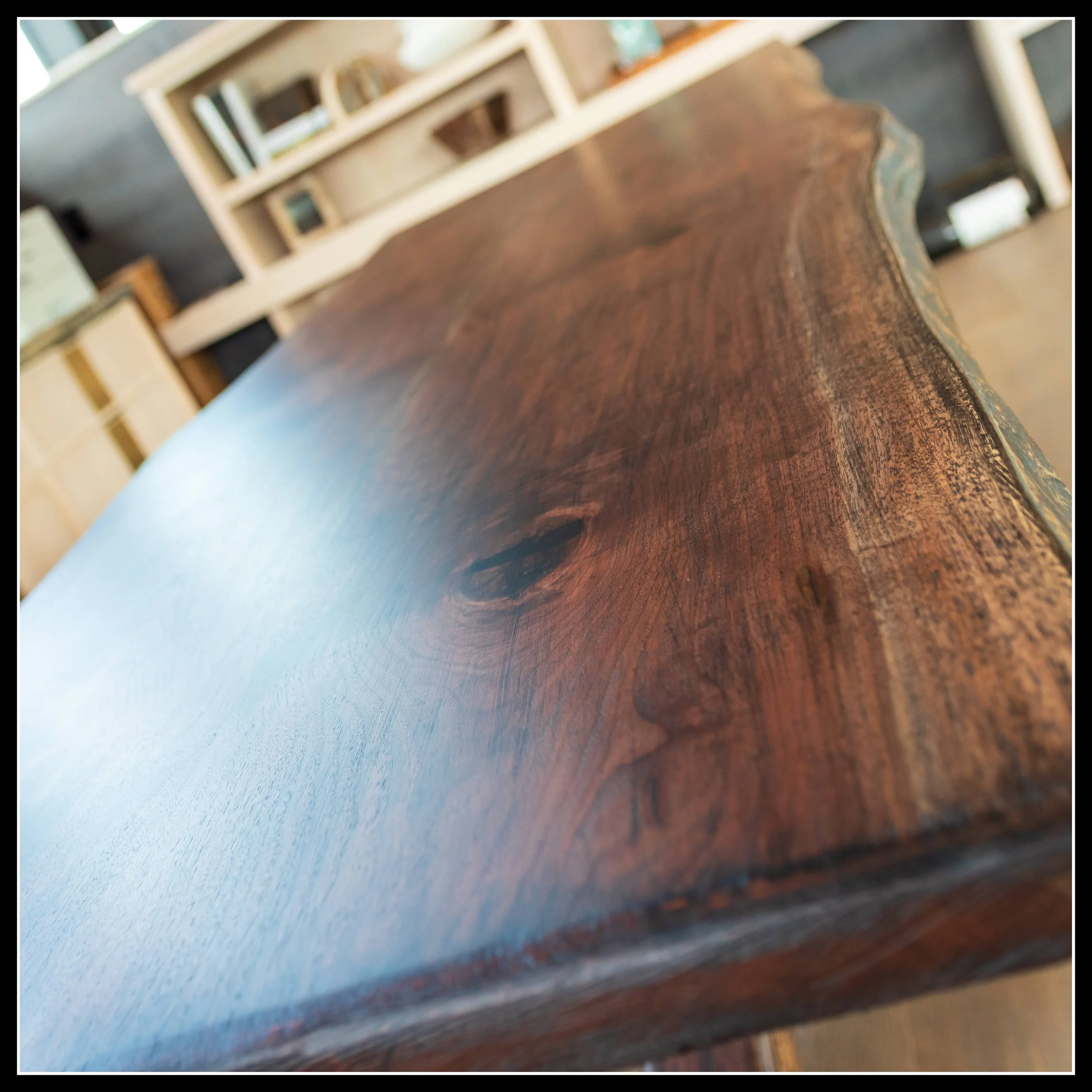
Hand‑Scraped Walnut Table — Texture Shaped by the Maker
A walnut table finished with a cabinet scraper instead of sanding, leaving a surface that carries subtle facets, light breaks, and the quiet irregularities of handwork. Glaze and stain settle into those micro‑planes, highlighting the depth and movement walnut is known for. This is intentional texture — the kind that feels human, honest, and unmistakably crafted, where the surface becomes the maker’s signature.
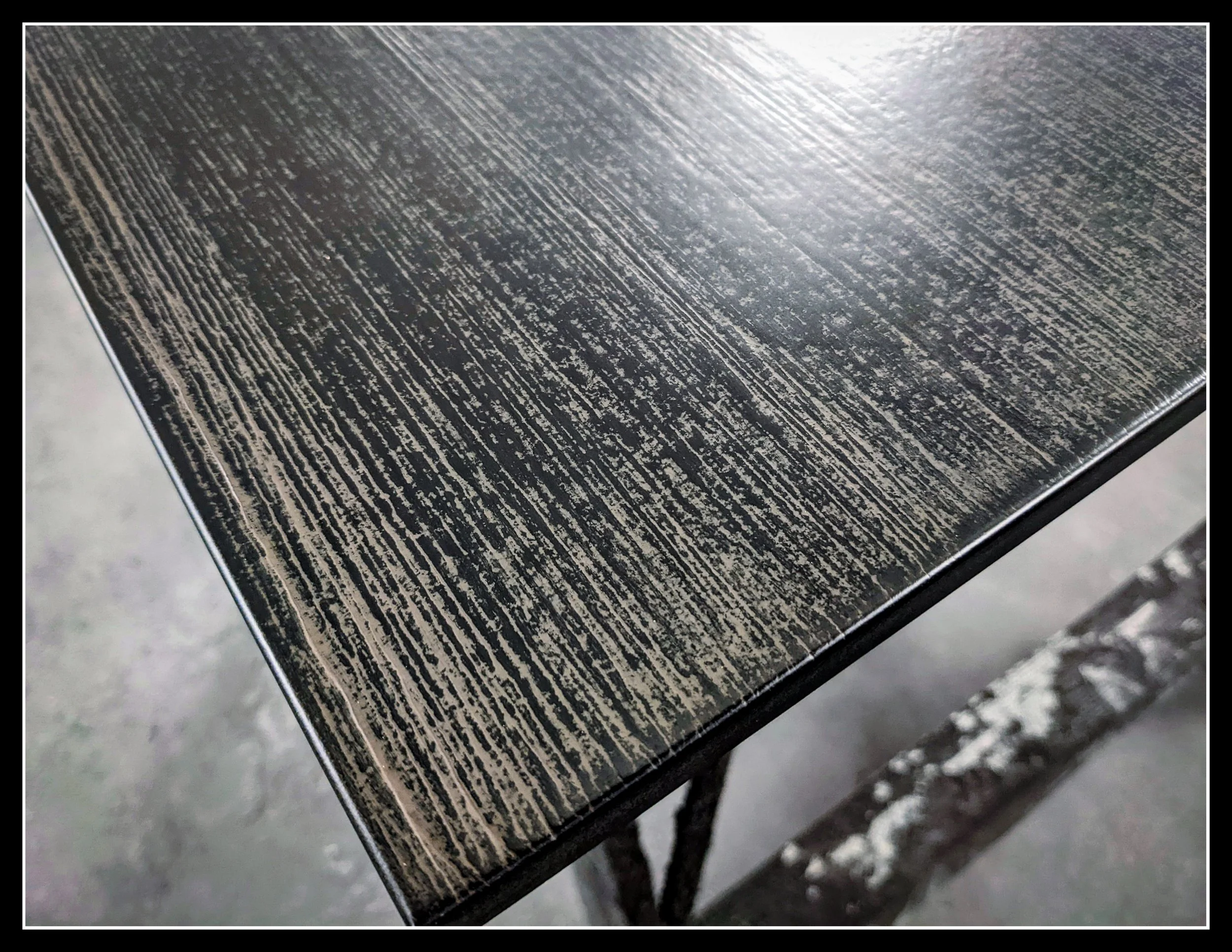
Brushed MDF Panel — Painted, Glazed, and Textured by Hand
This MDF panel was brushed in the shop to raise a textured grain, then painted, glazed, and finished with a protective top coat. The brushing creates directional ridges that catch glaze and light differently than raw MDF ever could, giving the surface a weathered, tactile feel. This is intentional texture — a manufactured material transformed through handwork into something expressive, layered, and full of character.
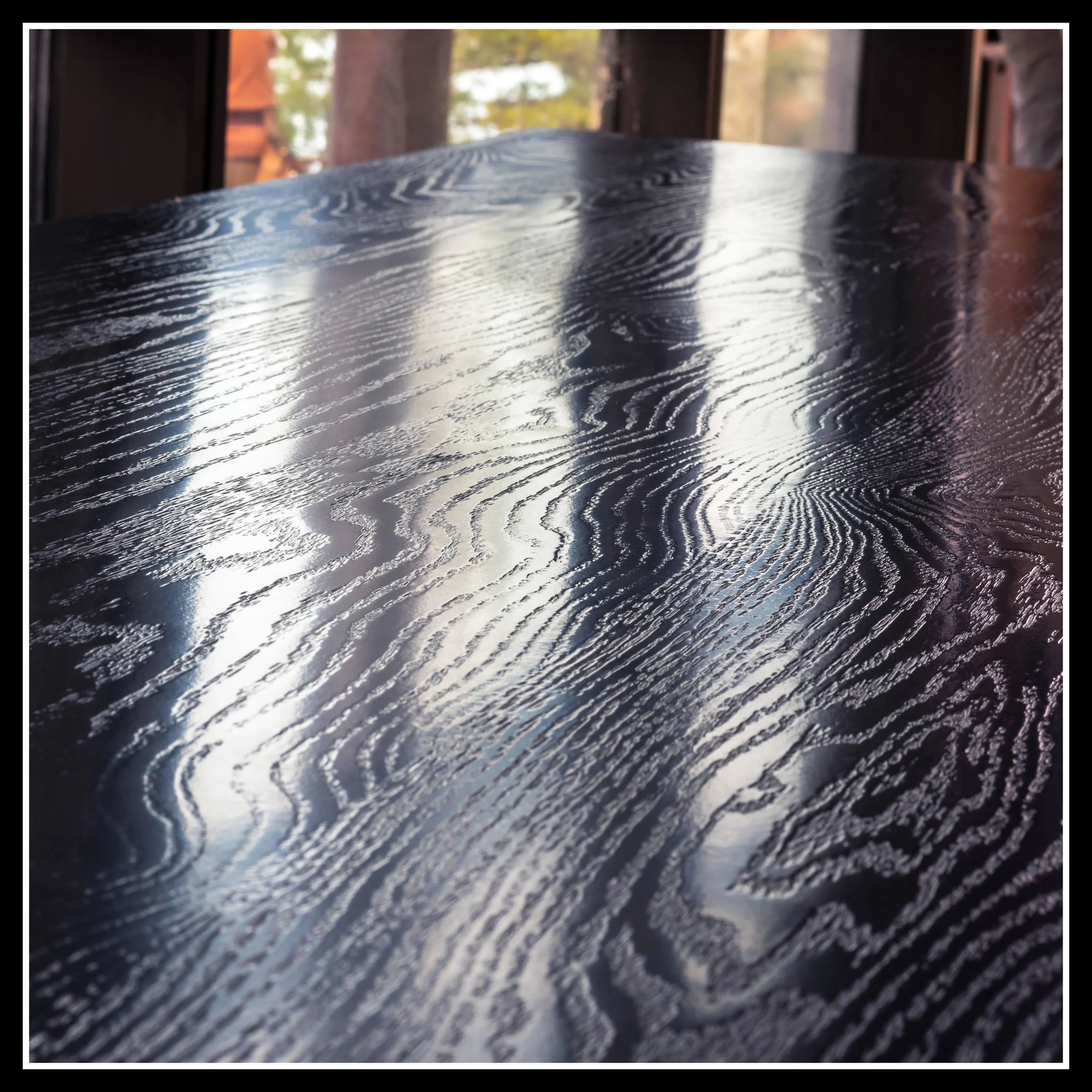
Red Oak Table — Bold Texture from Seasonal Growth
This red oak table shows the dramatic texture created by the tree’s own biology — the soft, open spring growth and the dense, hard summer growth. Those alternating bands catch glaze and light differently, producing bold contrast and a surface that feels alive even when polished. This is natural texture, not added texture: the wood’s own structure doing the work, revealing the story of how the tree grew.
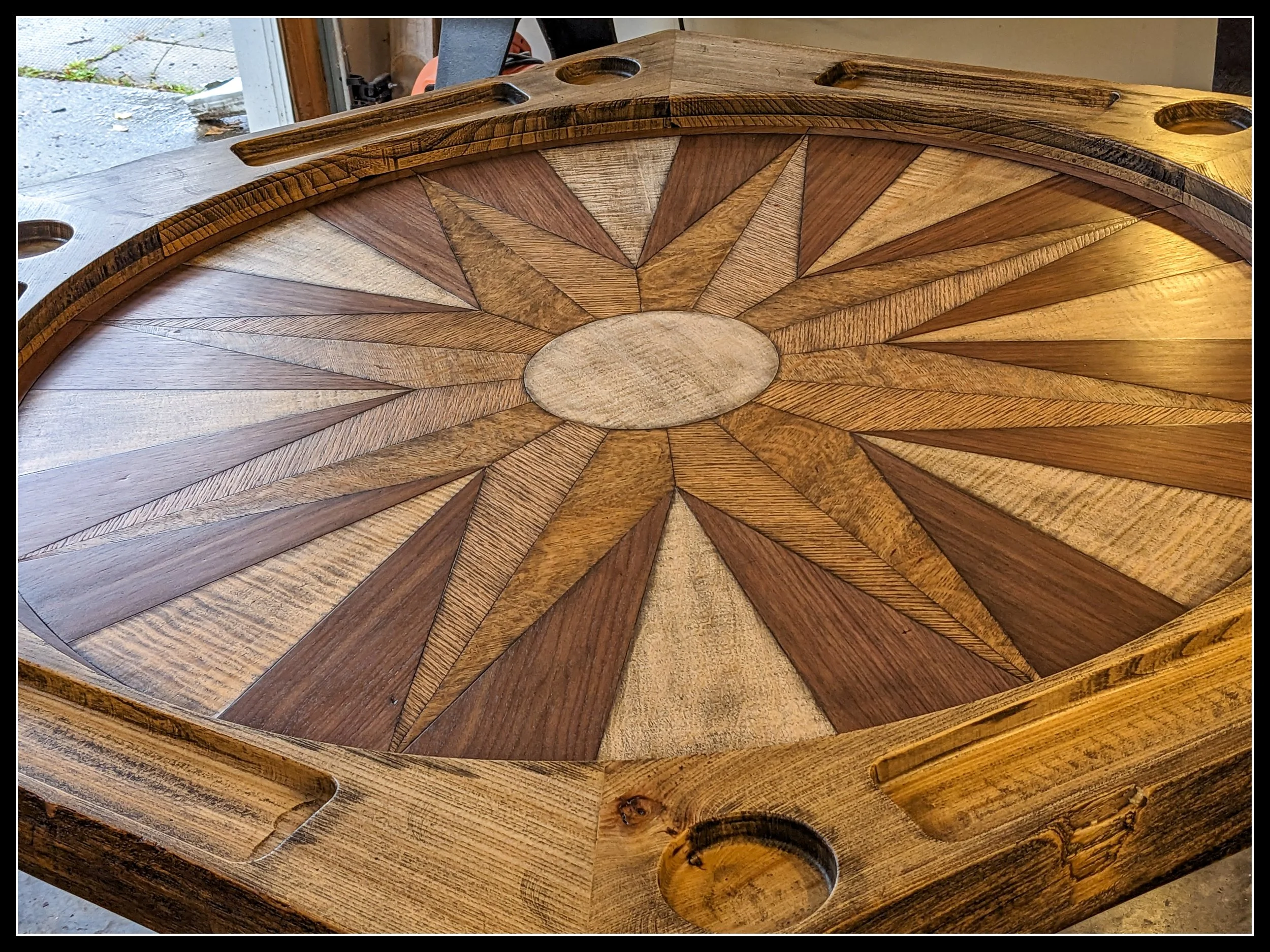
Starburst Games Table — Multi‑Species Texture with Distressed Detail
This starburst games table blends red oak, white oak, walnut, figured maple, and American white elm into a geometric pattern that feels alive. The surface has been intentionally distressed and filled with texture — tool marks, subtle wear, and finish variations that settle into the contrasting species. The result is a piece that breathes: a table where the pattern, the texture, and the handwork all speak at once, showing how deliberate imperfection can make a design feel human, warm, and full of history.
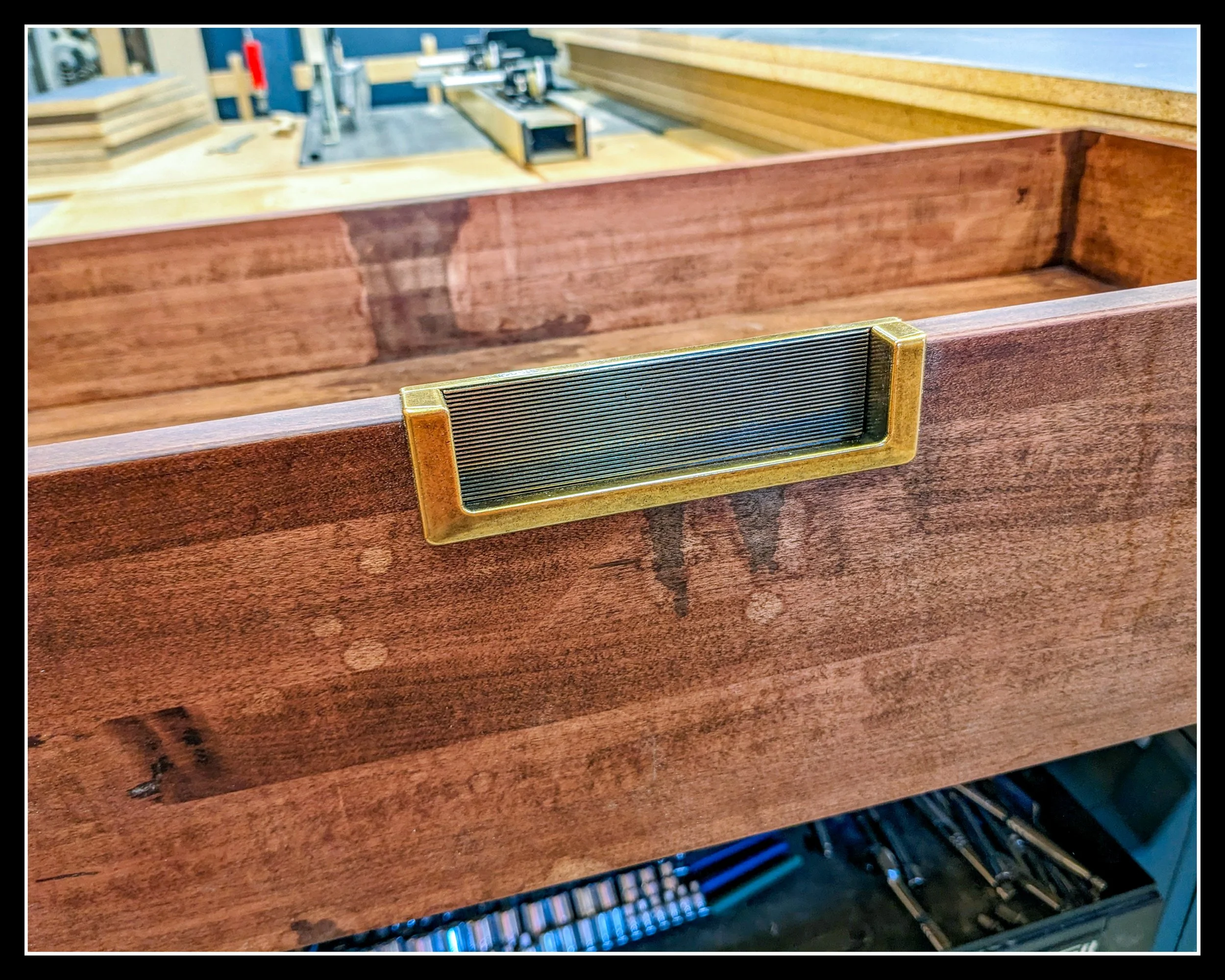
Distressed Drawer Box — Texture From a Hard‑Lived Surface
A drawer box intentionally built brand new but finished to look like it lived a rough life — dents, wear, and age sitting under a newer sheen. The distressing is crafted, not inherited, giving the surface the story of a piece that was used hard and later refinished, even though it’s fresh from the shop. This kind of texture adds depth and honesty to a build, showing how controlled aging and restoration techniques can work together to create interest, character, and a human touch.
Digital to Sawdust — Design Studio
Digital tools, layout, and proportion — the design side of woodworking before the sawdust begins.
SHARE
Digital to Sawdust — Design Studio
Lessons in woodworking design, geometry, and digital layout — teaching how furniture is shaped with intention.— head to the Design Studio. Just one click away.
If you’d like to hear from me only when something big is happening — a launch, a milestone, or a major project — you can join the mailing list below.
Written by David Flather, Red Seal cabinetmaker and founder of Knotty Dave’s Fine Woodworking — a Manitoba shop rooted in heritage restoration, storytelling, and real craft.
All photos shot by David Flather — in the shop, on the road, and in the places where craft and story meet.
Related stories:
Design Geometry: How Designers Shape the Visual Weight of Furniture
Profiles: Light, Shadow, and Mood — How Light, Shadow, and Edges Shape a Room
The Quiet Geometry of Furniture: How Curves Change a Room, Softening Rectangular Design
The Workshop Library
If you enjoyed this story, there’s lots more like it inside The Workshop Library — and it’s free to explore.
Wood Archive — species, grain, working properties, and real‑world craft notes
Behind the Grain — the deeper stories inside wood, craft, and heritage
The Working Side of the Craft — tools, shop life, workflow, and the realities of making
Digital to Sawdust — Design Studio — geometry, proportion, visual flow, and design thinking
The Stories of the Shop — the personal side of craft, the shop’s history, and the quiet moments that shape the work
House & Hearth — heritage home restoration, the hearth room, winter culture, and the lived‑in side of craft
I’m just one man with a shop, building this archive one story at a time. If you’d like to follow the journey as it unfolds, explore The Workshop Library — new stories every week.
