

Profiles: Light, Shadow, and Mood
What do profiles actually do in a room?
Profiles shape how light moves across edges, creating shadow lines that quietly influence the mood and visual weight of the space. They act as small pieces of geometry that guide the eye and help a room feel intentional instead of accidental.
They control light transitions — soft curves blend light; sharp breaks throw crisp shadows.
They set visual weight — deep profiles feel heavier; shallow ones feel lighter.
They define mood — calm, formal, relaxed, or crisp depending on the shadow line.
They connect architecture and furniture — tying edges, mouldings, and surfaces into one visual language.
Understanding How Profiles Shape a Room
Profiles influence the way a room feels by controlling how light transitions across edges, creating shadow lines that guide the eye and set the tone of the space.
By the end of this story
You’ll see profiles not as decorative edges, but as small pieces of geometry that shape light, shadow, and the quiet mood of a room.
⏰ Estimated read time: 4 minutes
Quick Summary
Profiles shape how light moves across edges, creating shadow lines that influence the mood, weight, and intention of a room. They’re small pieces of geometry that guide the eye, connect architecture and furniture, and quietly define how a space feels.
Light transitions — curves soften light; sharp breaks create crisp shadows
Visual weight — deeper profiles feel heavier, shallow ones lighter
Mood setting — shadow quality changes how a room reads
Architectural connection — edges tie surfaces into one visual language
Why Edges Matter
I wasn’t sure about writing a story on profiled edges. Woodworkers have been shaping edges for hundreds of years, and it feels like common ground — something everyone already knows. But the more I thought about it, the more I realized edges deserve their own chapter. They’re quiet, but they’re vital. Beneath the surface, profiled edges create a mood.
A square edge is utilitarian. It works fine in a mudroom or laundry room where function is the only goal. But the design world extends far beyond utility, and when a piece is being conceived, the mood of the space should be in mind. Edges help set that mood.
A profile is more than the edge on a countertop. It’s the light valance above a window, the crown moulding that finishes a room, the raised panel on a door, the pedestal under a table, the vertical column that carries a line upward, the plinth that grounds a cabinet, the shelf that feels lighter or heavier depending on its shadow, the casing around a doorway, the frame around a window. Profiles are everywhere, and they quietly shape how a space feels.
So yes — this is worth a story. And it’s important.
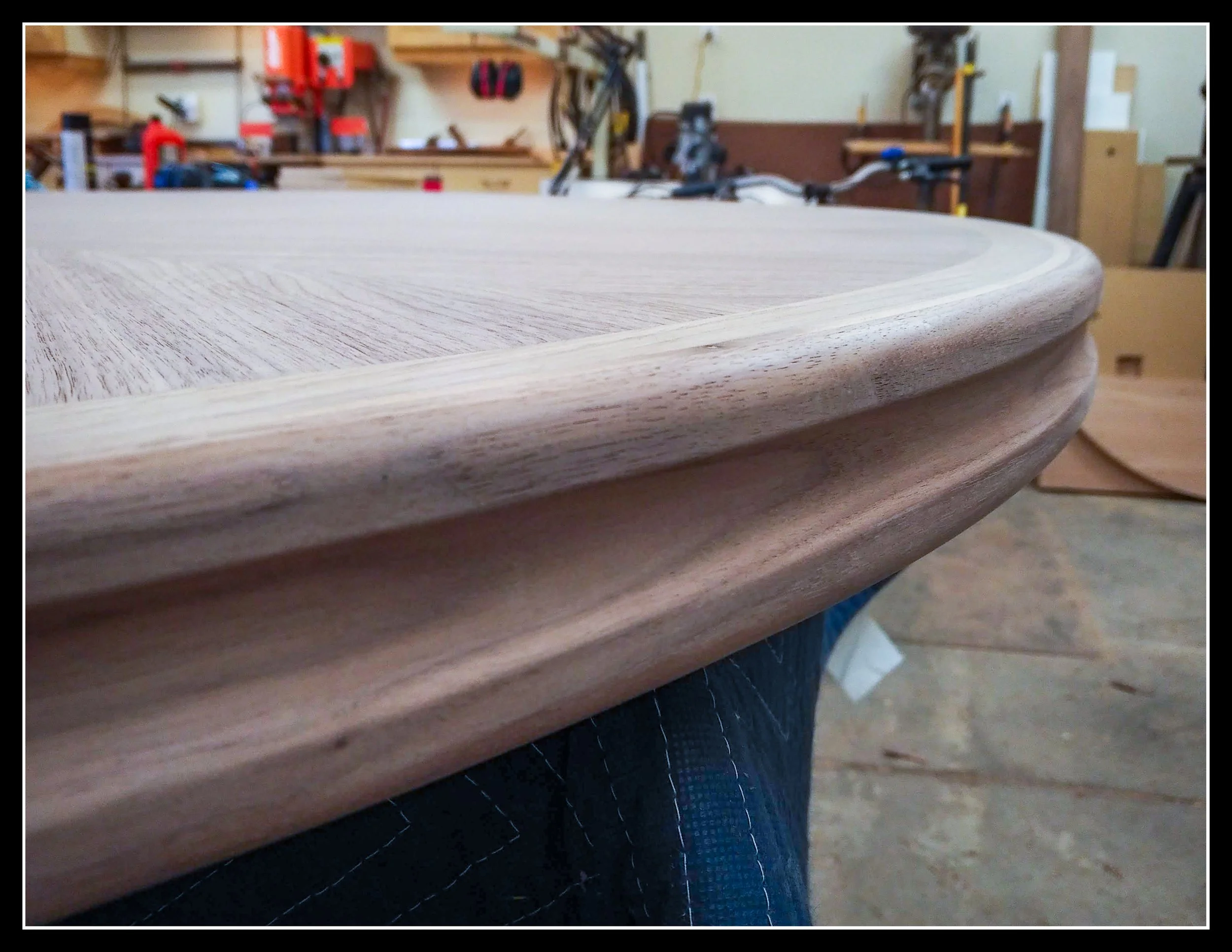
Walnut Table Edge Profile — Round Table Detail
A close, detailed view of the profiled edge on a round walnut table. The image highlights the smooth curvature, layered contour, and refined craftsmanship of the edge, showing how the profile shapes light, shadow, and the mood of the piece. The background reveals the woodworking shop where the table was built, reinforcing the connection between design, process, and finished work.
Profiles in the Room
Profiles exist for two very simple reasons: how they look and how they feel. Touch is obvious — a sharp edge feels different than a soft one. But the visual side is more interesting, because it’s not really about the profile itself. It’s about light and shadow.
A square edge creates one harsh shadow. A cove or bead creates a soft transition of light. A radius makes light wrap instead of break.
Crown moulding is the clearest example. A simple crown leans into the room with a single flat face, throwing one clean shadow. A full cornice — beads, coves, ogies, sharp breaks — leans three inches into the room and creates a whole landscape of light. Some edges catch glare. Some fall into shadow. Some transitions glow. Some disappear. None of it is consistent from top to bottom.
This is light play, and it creates mood.
Profiles shift the visual weight of a room. They pull the eye upward. They give the ceiling presence. They create anchor lines that guide your eye across the space. They connect furniture to architecture. They make a room feel intentional instead of accidental.
Profiles aren’t decoration. They’re geometry — and geometry is light.
Light, Shadow, and Mood
This is where profiles quietly become part of the room’s architecture. They aren’t just tradition or ornament — they’re geometry that controls how the room feels. A profile can lift a ceiling, soften a transition, or give a cabinet presence it didn’t have before. It can make a doorway feel formal or relaxed. It can make a shelf feel lighter or heavier. Every break in the profile is another opportunity for light to change direction, and every change in direction is another chance to shape mood.
Light behaves the same way on live‑edge slabs. I have a live‑edge coffee table in my home, and it’s honestly the centrepiece of the room. A horizontal live edge throws a whole series of vertical shadows. That’s the magic — the light guides the eye through the shadow lines around the table.
Shadow Lines
A shadow line is simply the place where light stops and form begins. It’s the thin boundary that tells your eye what the shape really is. Every profile creates its own shadow line, and the character of that line decides how the piece feels. A sharp break throws a hard shadow and makes the form feel crisp or formal. A soft curve blends the shadow and makes the form feel calm or quiet. Deep profiles stack multiple shadow lines, each one shifting the visual weight and guiding the eye. Once you start seeing shadow lines as part of the design — rather than accidents of lighting — you understand why profiles matter so much.
Profiles don’t create shadow lines so much as they improve the quality of them. They soften transitions so visually we feel intention in the design rather than the bare minimum to get the job done.
Quiet Geometry
Profiles are one of those details you stop noticing once you understand what they’re doing. They become part of the room’s quiet geometry, shaping the way light moves and how the edges feel under your hand. A good profile doesn’t call attention to itself — it just makes the piece feel right. It improves the shadow lines, settles the transitions, and gives the design intention instead of accident. When the profiles are considered, the whole room feels more grounded. When they’re not, you can sense it even if you can’t explain why. That’s the real value of edges and profiles: they guide the mood without ever needing to speak.
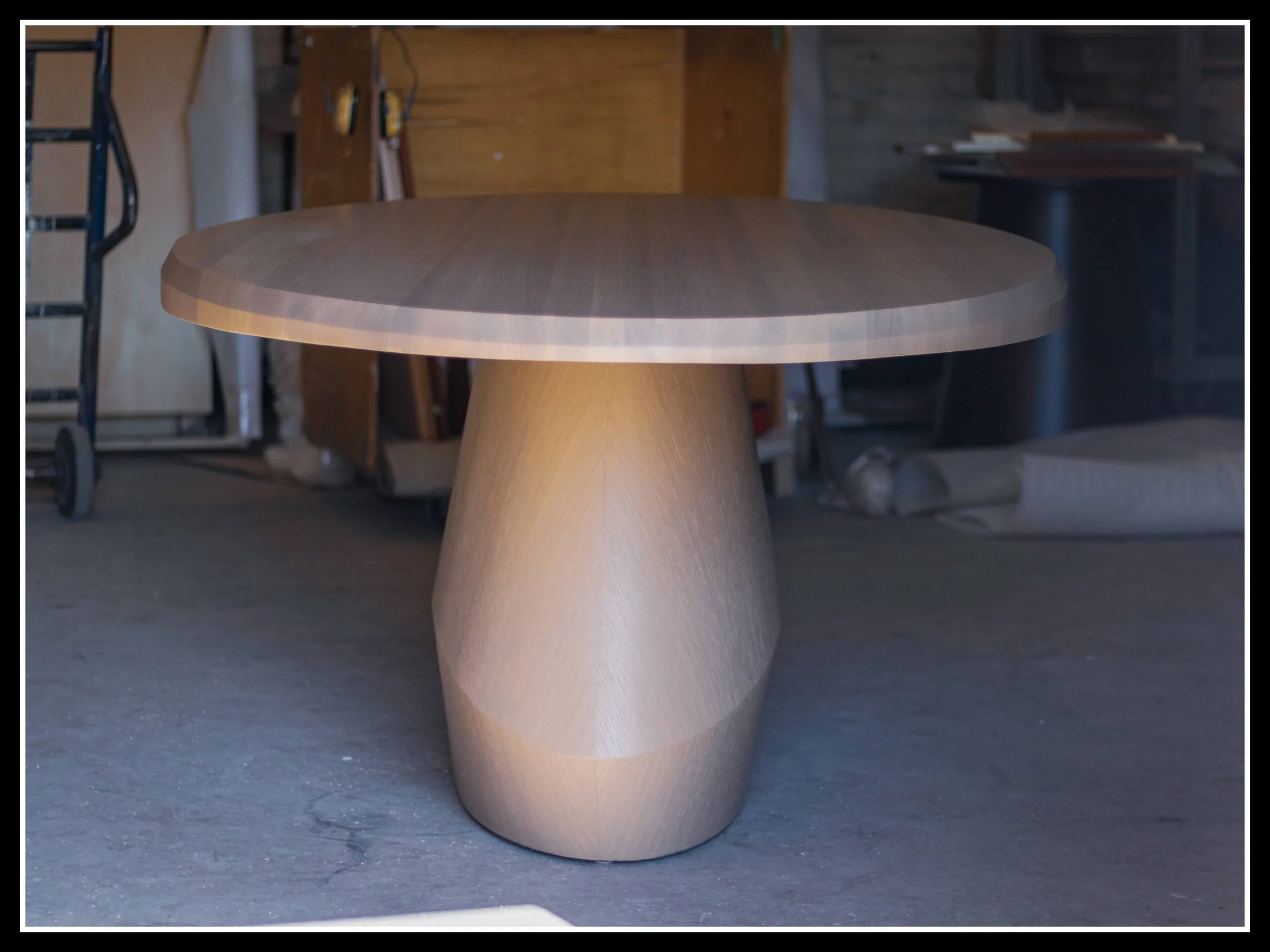
Red Oak Table — Tapered Underside Edge Profile
A round red oak table showing how the tapered underside affects the edge profile. The taper pulls the shadow inward, making the outer rim appear lighter and more refined. The image highlights the relationship between geometry, light, and visual weight in furniture design.
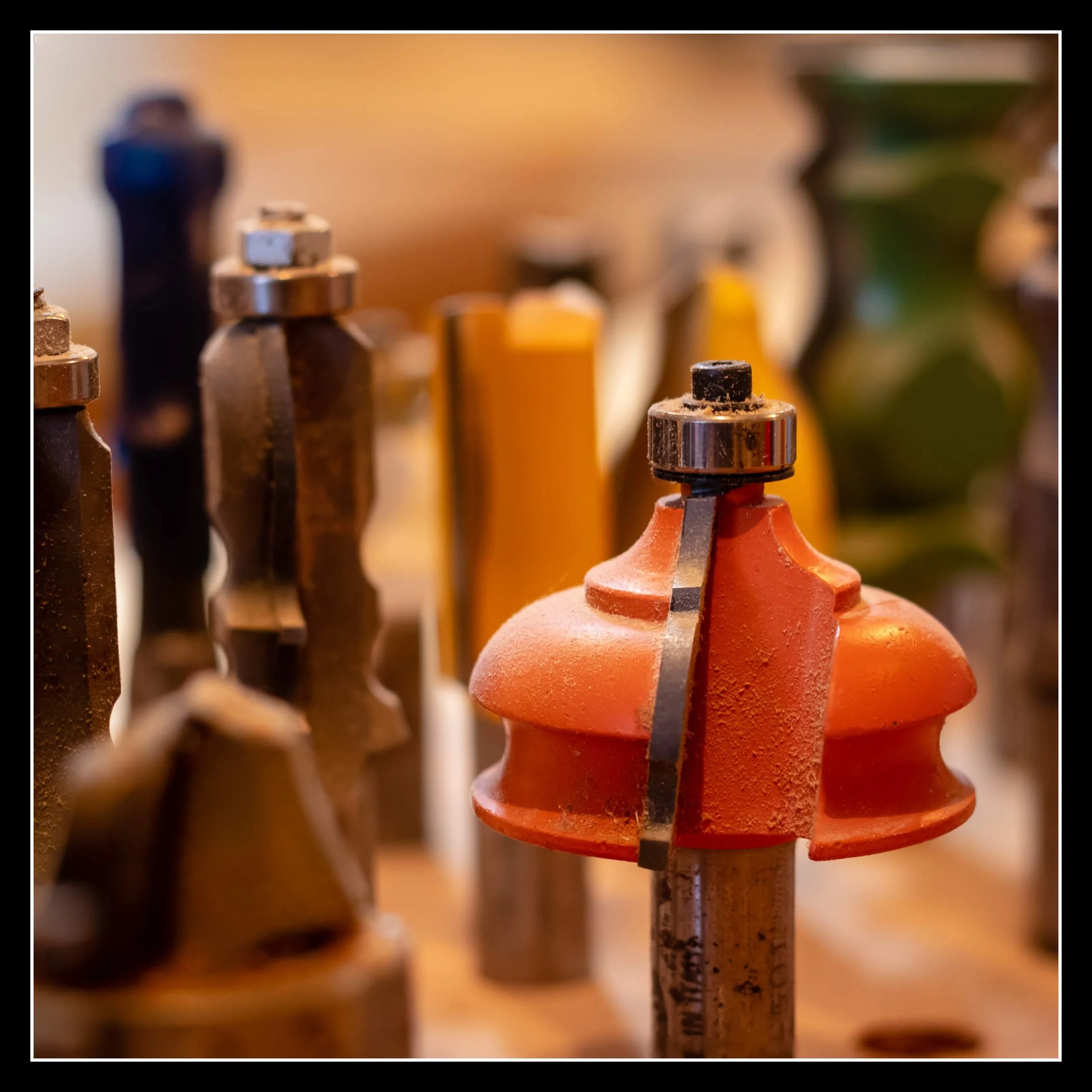
Profile Router Bits — Edge Geometry Tools
A close view of several woodworking router bits used for shaping profiled edges. The image highlights the variety of bit geometries—roundovers, coves, beads, and ogees—that create different light transitions and shadow lines in finished furniture. The focus on the large red bit emphasizes how tool geometry directly influences the mood and visual weight of a piece.
Digital to Sawdust — Design Studio
Digital tools, layout, and proportion — the design side of woodworking before the sawdust begins.
SHARE
Digital to Sawdust — Design Studio
Lessons in woodworking design, geometry, and digital layout — teaching how furniture is shaped with intention.— head to the Design Studio. Just one click away.
If you’d like to hear from me only when something big is happening — a launch, a milestone, or a major project — you can join the mailing list below.
Written by David Flather, Red Seal cabinetmaker and founder of Knotty Dave’s Fine Woodworking — a Manitoba shop rooted in heritage restoration, storytelling, and real craft.
All photos shot by David Flather — in the shop, on the road, and in the places where craft and story meet.
Related stories:
Design Geometry: How Designers Shape the Visual Weight of Furniture
Visual Weight in Woodworking: How Proportion Shapes the Feel of Furniture
The Quiet Geometry of Furniture: How Curves Change a Room, Softening Rectangular Design
The Workshop Library
If you enjoyed this story, there’s lots more like it inside The Workshop Library — and it’s free to explore.
Wood Archive — species, grain, working properties, and real‑world craft notes
Behind the Grain — the deeper stories inside wood, craft, and heritage
The Working Side of the Craft — tools, shop life, workflow, and the realities of making
Digital to Sawdust — Design Studio — geometry, proportion, visual flow, and design thinking
The Stories of the Shop — the personal side of craft, the shop’s history, and the quiet moments that shape the work
House & Hearth — heritage home restoration, the hearth room, winter culture, and the lived‑in side of craft
I’m just one man with a shop, building this archive one story at a time. If you’d like to follow the journey as it unfolds, explore The Workshop Library — new stories every week.
