

Cherry
Quick Answer: What makes cherry wood unique?
Cherry is a fast‑growing pioneer hardwood with warm heartwood, pale sapwood, and a grain shaped by good years and bad. Its earlywood and latewood absorb stain differently, causing blotching, and its tannin‑rich heartwood darkens in sunlight. Cherry machines easily but burns fast, dents under clamps, and carries gum pockets from stress years — all part of the tree’s history written directly into the board.
Pioneer species — fast growth, sun‑loving
Earlywood vs latewood — density shifts
Gum pockets — stress years
Tannin — sunlight darkening
Sapwood vs heartwood — colour contrast
Machining — burns easily, dents easily
Cherry — Warm Grain, Quiet Drama, and the Tree Behind the Boards
Cherry never really goes out of style — it just steps back while other woods take their turn. A decade ago it was everywhere in my shop, and even though I don’t see it as often now, it’s still one of the most reliable, beautiful hardwoods you can put a blade to. This is a look at the tree behind the boards, and why cherry deserves every bit of the respect it gets.
BY THE END OF THIS STORY
Cherry is a fast‑growing pioneer hardwood shaped by good years and bad. You’ll see why earlywood and latewood absorb stain differently, how gum pockets form, why cherry darkens in sunlight, and how its thin‑walled cell structure affects machining. You’ll also understand why cherry’s warmth, scent, and grain make it one of the most dependable hardwoods in the shop — and why its beauty comes directly from the tree’s history.
Estimated reading time: 4 minutes
Comparison — Cherry vs Other Hardwoods
Cherry — warm tone, blotches, darkens
Walnut — dark, stable, low blotch
Maple — pale, hard, prone to tearout
Red oak — open grain, stains easily
Birch — blotches even more than cherry
Summary — Cherry at a Glance
Cherry is a fast‑growing pioneer hardwood shaped by good years and bad — wide rings in easy seasons, tight rings and gum pockets in hard ones. Its earlywood and latewood absorb stain unevenly, causing blotching, and its tannin‑rich heartwood darkens in sunlight while the sapwood stays pale. Cherry machines smoothly but burns easily, dents under clamps, and carries the tree’s history directly in the grain. Warm, reliable, and quietly dramatic, cherry remains one of the most dependable hardwoods in the shop.
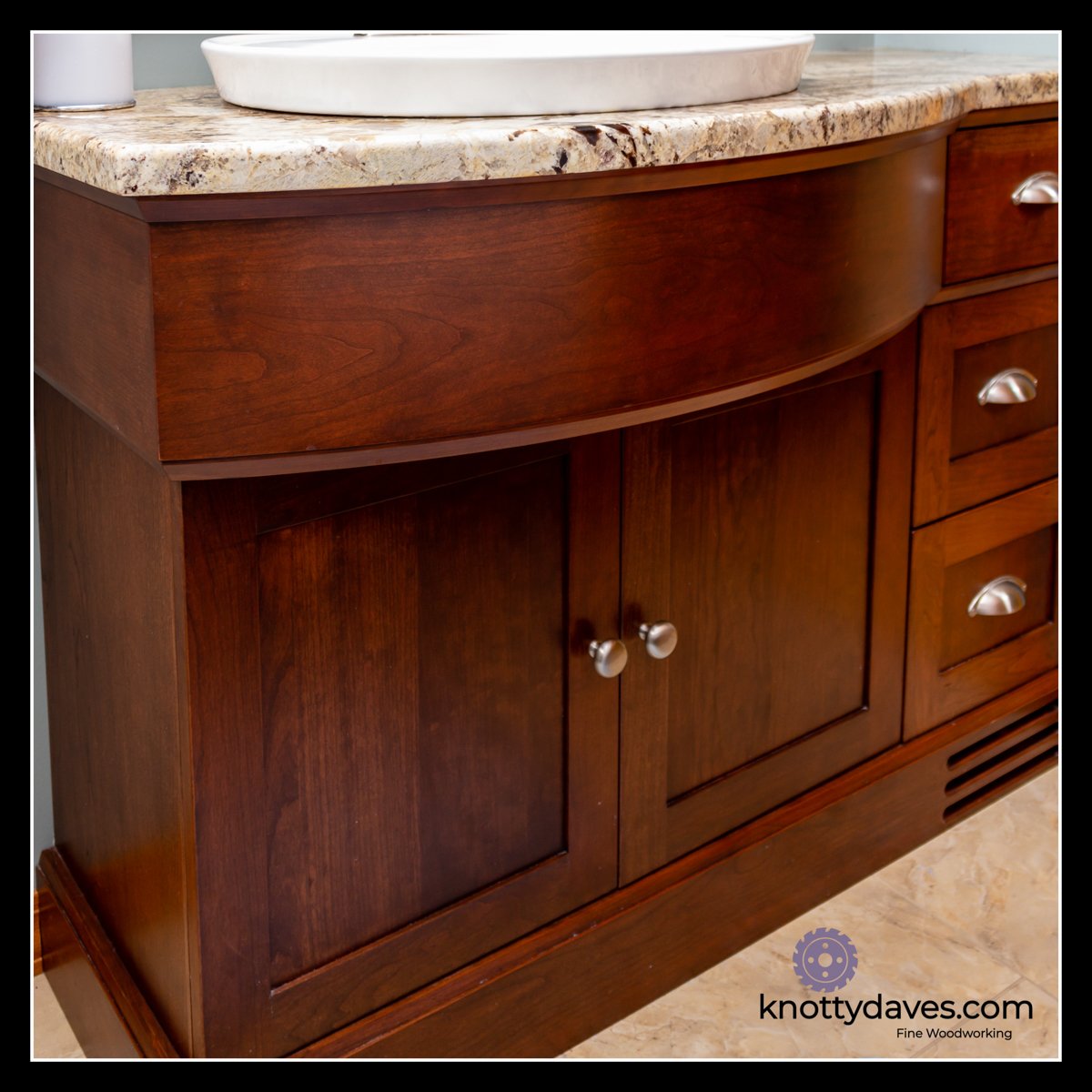
Cherry Vanity — Curves, Colour, & Craft
Cherry rewards good design, and this vanity shows it — curved facing, clean joinery, and a vent cut into the base that blends right into the grain. Cherry takes stain beautifully, but only if you respect its temperament. The earlywood and latewood absorb colour differently, and the gum pockets from stress years can shift tone. When you get it right, though, cherry gives you that deep, warm finish no other hardwood can fake. This piece is a reminder of how good cherry can look when you work with the tree instead of against it.
Cherry in the Shop
Going back about a decade or so, cherry was the boss. Every other job seemed to be cherry, and it was a nice wood to cut and mill. The routers, planer, and table saw would rip straight lines through that warm whiskey‑coloured stock without complaint. The sweet almond scent that comes off fresh shavings is unforgettable. It’s been a while since I’ve worked with cherry, and sometimes I catch myself wishing a designer would spec it again, or a client would commission a cherry table just so I could cut into it. These days it’s usually walnut ,maple or red oak. That’s just the way it goes, but it doesn’t devalue cherry. It’s still an uptown wood choice — sleek sheen, deep tones, and a colour that only gets better with age.
Cherry drifts in and out of fashion — designers chase their colours like seasons — but the wood itself never changes. It’s the same tree, the same scent, the same warm glow waiting under the blade.
Understanding the Cherry Tree
Working with cherry has its challenges, though. Something this nice deserves a bit of understanding. Like all the woods I write about, I like to look at the tree first — how it grew, how it survived. Wood isn’t manufactured. It’s a living thing that had a life before it ever reached the mill.
Black Cherry — The Pioneer Hardwood
The tree is called Black Cherry. Yes, it grows cherries, but not the ones we buy at the store. Those come from a different relative. Black cherry is a pioneer species. It spreads into open areas, grows fast when it’s young, and loves sun and moist soil. It’s not a big fan of drought or insects. In the tough years — dry summers, bug pressure, sudden cold snaps — the tree slows down. Growth rings tighten. The wood gets denser. And the tree produces gum to seal wounds and keep itself alive. Good years are the opposite: rain, sun, no pests. The tree surges upward again, laying down wider earlywood with thinner walls and fewer extractives.
Good Years, Bad Years — Rings, Density, and Gum
This cycle repeats for decades. Good years, bad years, fast rings, slow rings, gum pockets from stress. By the time the tree is harvested — forty, sixty years in — all of that history is locked inside the trunk. At the mill, the saw cuts straight through those years, exposing grain that will make beautiful cabinetry and furniture.
Why Cherry Blotches
Cherry cuts clean and sands smooth, but this is also where the tree’s past shows up. The density shifts between earlywood and latewood, the gum pockets from stress years — all of it affects how the wood absorbs stain. That’s why cherry blotches. Not “maybe.” It will. It’s just the nature of the tree. A quick pass with wood conditioner keeps it in line — nothing fancy, just enough to even out what the tree lived through.
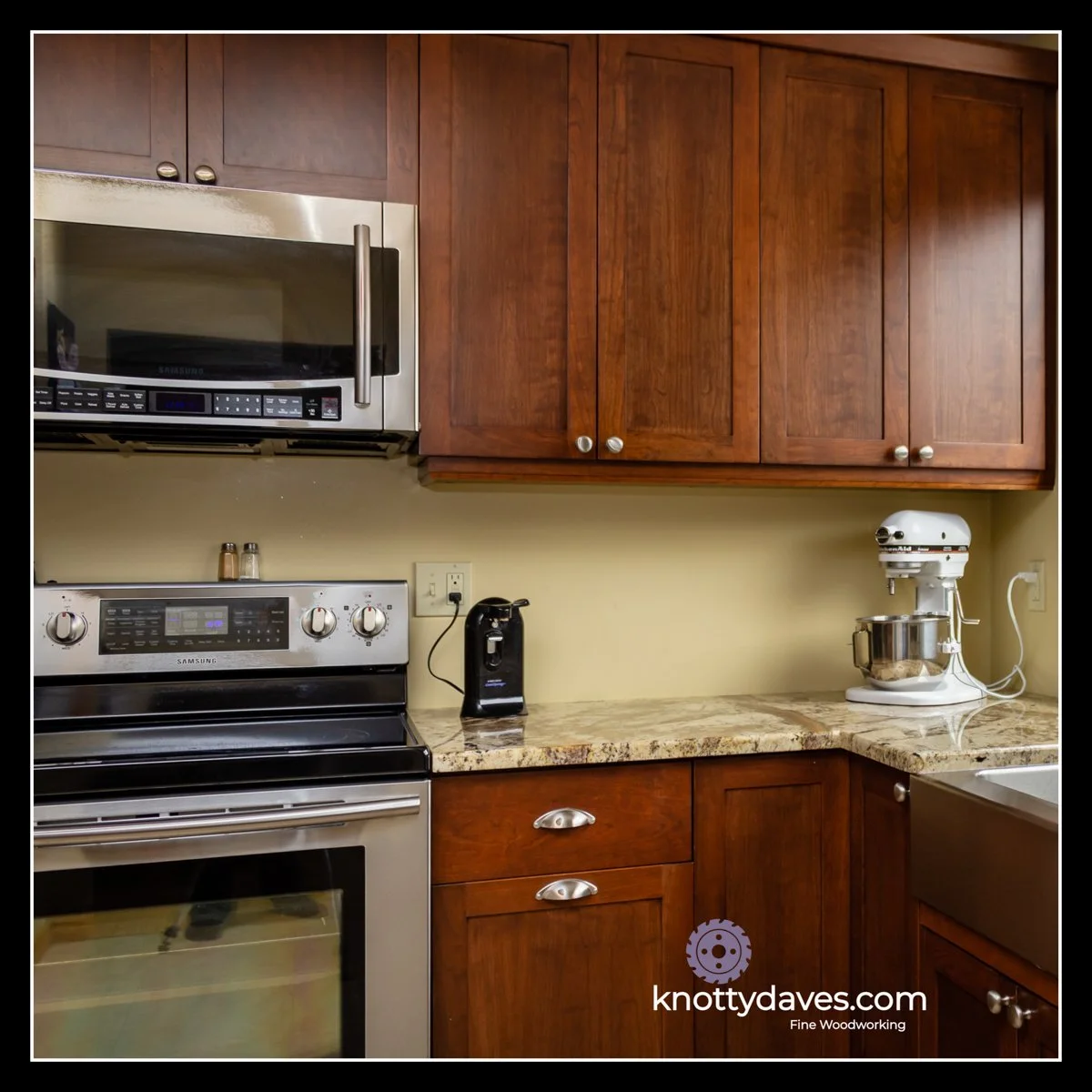
Cherry Kitchen — Warm Grain in Everyday Use
Cherry doesn’t just shine in furniture — it settles into a kitchen with the same quiet confidence. These cabinets show how cherry handles real life: warm grain, steady colour, and a finish that deepens as the years roll by. The stain ties the whole room together, pulling the counters, appliances, and upper cabinets into one clean line. Cherry can be tricky to stain, but when you get it right, you get this — a kitchen that feels lived‑in, grounded, and built to last.
Cherry’s Tannin and Sunlight
Cherry also carries a lot of tannin. That’s its chemical defense against bugs and fungi, and it’s the reason cherry darkens in sunlight. The heartwood deepens and warms over time, aging into a colour you can’t fake. Sapwood, on the other hand, stays pale. That contrast only grows with age, so woodworkers have to be careful how they store cherry, especially veneers. You don’t want boards pre‑aging in the shop. Everything should start fresh and darken together in its final home.
Cherry’s cell walls are thin — part of its pioneer strategy to grow fast and beat other trees to the sky. Combine that with its closed grain, and the wood burns easily. Don’t linger with a router bit or a jointer. Cherry will tell on you. That thin‑walled cell structure also means cherry suffers from clamp denting more than other woods.
Heartwood, Sapwood, and the Tree’s Architecture
Cherry heartwood holds that deep whiskey colour I mentioned earlier, and it only gets richer with time. The sapwood has a stark contrast to the heartwood, and it doesn’t deepen at all — that sharp divide will only get stronger as the heartwood ages. The tree carries two to three inches of sapwood all around the trunk. This is the living wood, the part that moves water to the leaves. The leaves, through photosynthesis, create the nutrients the tree needs, and those move down through the cambium just behind the bark. That’s how the tree feeds new growth. The heartwood is essentially dead — it supports the tree, but it doesn’t move water. In the shop, unless sapwood is part of the design, we cut it out in favour of the heartwood.
I’d like to order a pile of cherry boards and fill my shop with the sweet smell of it again. Fine dust drifting through late‑afternoon sunbeams from the open door. I just need the right uptown job.
Deep Scraped Cherry — Grain, Colour, and Warm Contrast
Cherry already carries its own warmth — that whiskey‑coloured heartwood, the almond‑sweet scent, and a grain that deepens every year it sees light. These Deep Scraped Collection finishes push that natural character further, using brushed grain, layered stain, glaze, and 2K poly to bring out the contrast cherry hides in its earlywood and latewood. Cherry takes texture beautifully; the grain opens, the colour warms, and the finish settles into the wood without losing clarity. Cherry has always been an uptown hardwood, but under texture it becomes something else entirely — warm, expressive, and full of quiet drama.
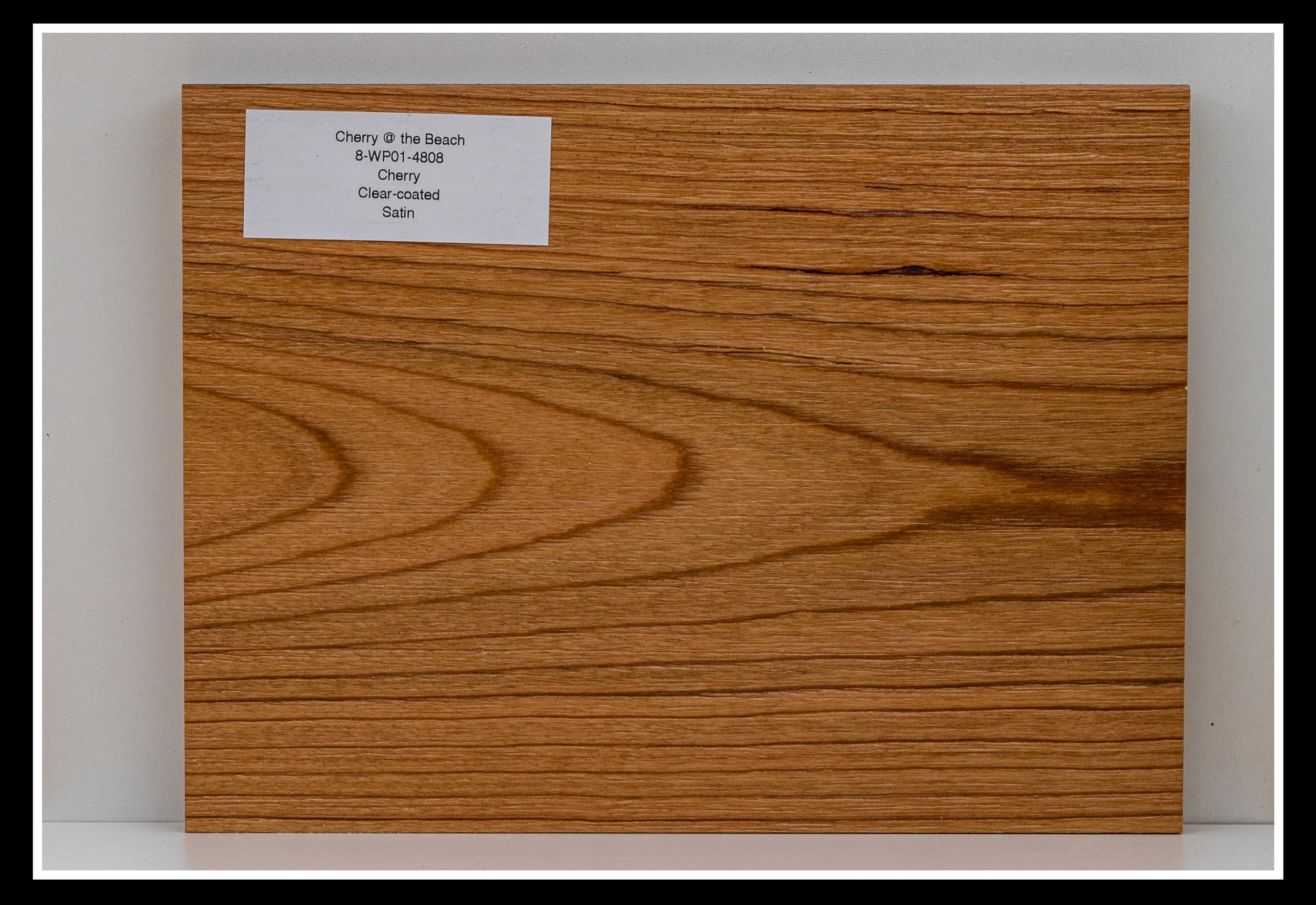
Cherry at the Beach — Simple, Warm, and Easygoing Grain
Cherry at the Beach is the calm side of cherry — scraped for gentle texture, stained just enough to warm the heartwood, and sealed under a satin 2K poly that keeps everything soft and honest. It’s a finish that feels like a day at the beach: simple, relaxed, and quietly bright. Cherry’s natural glow does most of the work here; the scraping opens the earlywood, the stain settles into the grain without pushing it, and the topcoat lets the wood breathe. This is cherry without drama — warm, steady, and exactly what the species gives you when you let it be itself.
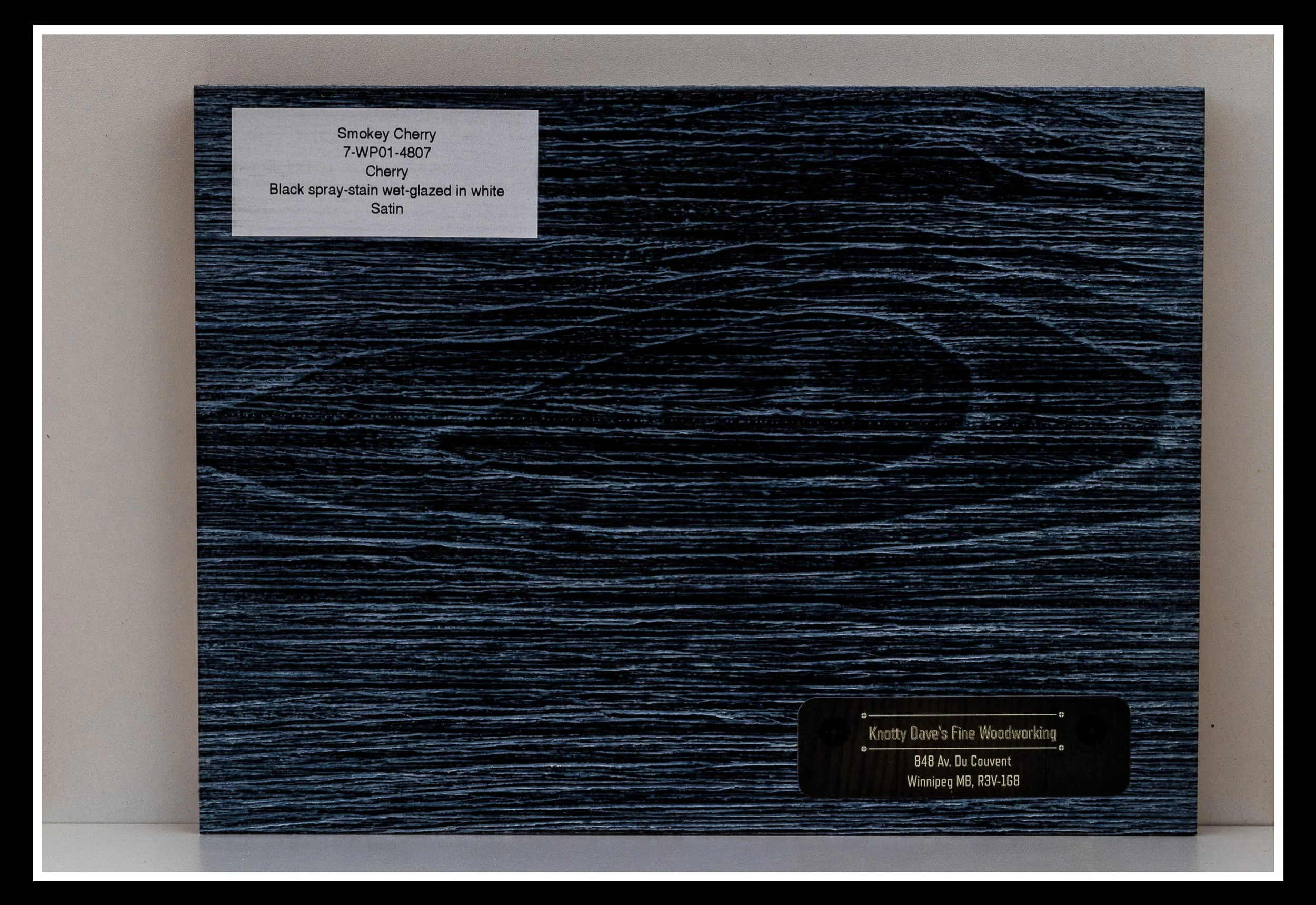
Smokey Cherry — Dreamlike Grain With Shadow and Light
Smokey Cherry feels like a dream — brushed deep, stained black, glazed white, and sealed under a satin 2K poly that gives the whole surface a soft, smoky glow. The scraping opens the earlywood, the stain pushes the colour into a dramatic tone, and the glaze settles into the grain like fog drifting through the texture. Cherry’s natural warmth hides under the surface, showing through just enough to keep the finish alive. This is cherry at its most expressive — textured, moody, and full of the quiet life that comes from pushing the grain with intention.
Where every species, every board, and every lesson in wood science comes together — a place to explore the materials that shape our craft.
SHARE
The Wood Archive — All the wood Stories in One Place
For the living side of woodworking — the stories shaped by walnut, oak, maple, cherry, elm, cedar, and poplar — head to the Wood Archive.
If you’d like to hear from me only when something big is happening — a launch, a milestone, or a major project — you can join the mailing list below.
Written by David Flather, Red Seal cabinetmaker and founder of Knotty Dave’s Fine Woodworking — a Manitoba shop rooted in heritage restoration, storytelling, and real craft.
All photos shot by David Flather — in the shop, on the road, and in the places where craft and story meet.
Related stories:
Wood Doesn’t Lie: Understanding Grain, Movement, and the Truth Inside Every Board
Ash Trees: Green, White, Black, and the Emerald Ash Borer Threat
The Workshop Library
If you enjoyed this story, there’s lots more like it inside The Workshop Library — and it’s free to explore.
Wood Archive — species, grain, working properties, and real‑world craft notes
Behind the Grain — the deeper stories inside wood, craft, and heritage
The Working Side of the Craft — tools, shop life, workflow, and the realities of making
Digital to Sawdust — Design Studio — geometry, proportion, visual flow, and design thinking
The Stories of the Shop — the personal side of craft, the shop’s history, and the quiet moments that shape the work
House & Hearth — heritage home restoration, the hearth room, winter culture, and the lived‑in side of craft
I’m just one man with a shop, building this archive one story at a time. If you’d like to follow the journey as it unfolds, explore The Workshop Library — new stories every week.
