

What happens when a drawing finally becomes real?
It’s the moment your digital work stops being reversible and starts carrying real‑world consequences. The first cut is where all the measuring, drafting, checking, and confirming either proves itself or collapses. It’s the point where responsibility shifts from the screen to the saw, and the job becomes something you can’t take back.
The digital phase ends — drawings, measurements, and planning lock into place
Responsibility becomes physical — no one double‑checks your work; the cut is yours
Accuracy gets tested — the first cut reveals whether the drawing was honest
Stress spikes before momentum starts — fear first, then flow
The build becomes real — sawdust piles up and the project looks back at you
The moment a digital drawing stops being an idea and becomes a commitment.
When the drawing becomes real, every measurement, every assumption, and every quiet decision made during the drafting phase suddenly matters. The shop doesn’t care how confident you felt at the computer — it only responds to the accuracy you bring into the room. That moment, when the saw starts and the material meets the plan, is where responsibility shifts from theory to truth. It’s the point where your preparation either holds up or teaches you a lesson you never forget.
By the end of this story
By the end of this story, you’ll understand why the first cut carries all the weight of the drawing behind it.
Estimated read time: 4 minutes
Fast Summary
When the Drawing Stops Being an Idea and Starts Being a Commitment
This story connects the entire design and photography series by revealing the part of the process most people never see: the pressure that sits behind every measurement and every approved drawing. It shows how a project shifts from digital planning to physical reality, why accuracy carries real consequences, and how that moment of commitment shapes everything that follows. It’s the human side of precision — the emotional thread that ties the drawings, the build, and the final photographs into one continuous arc.
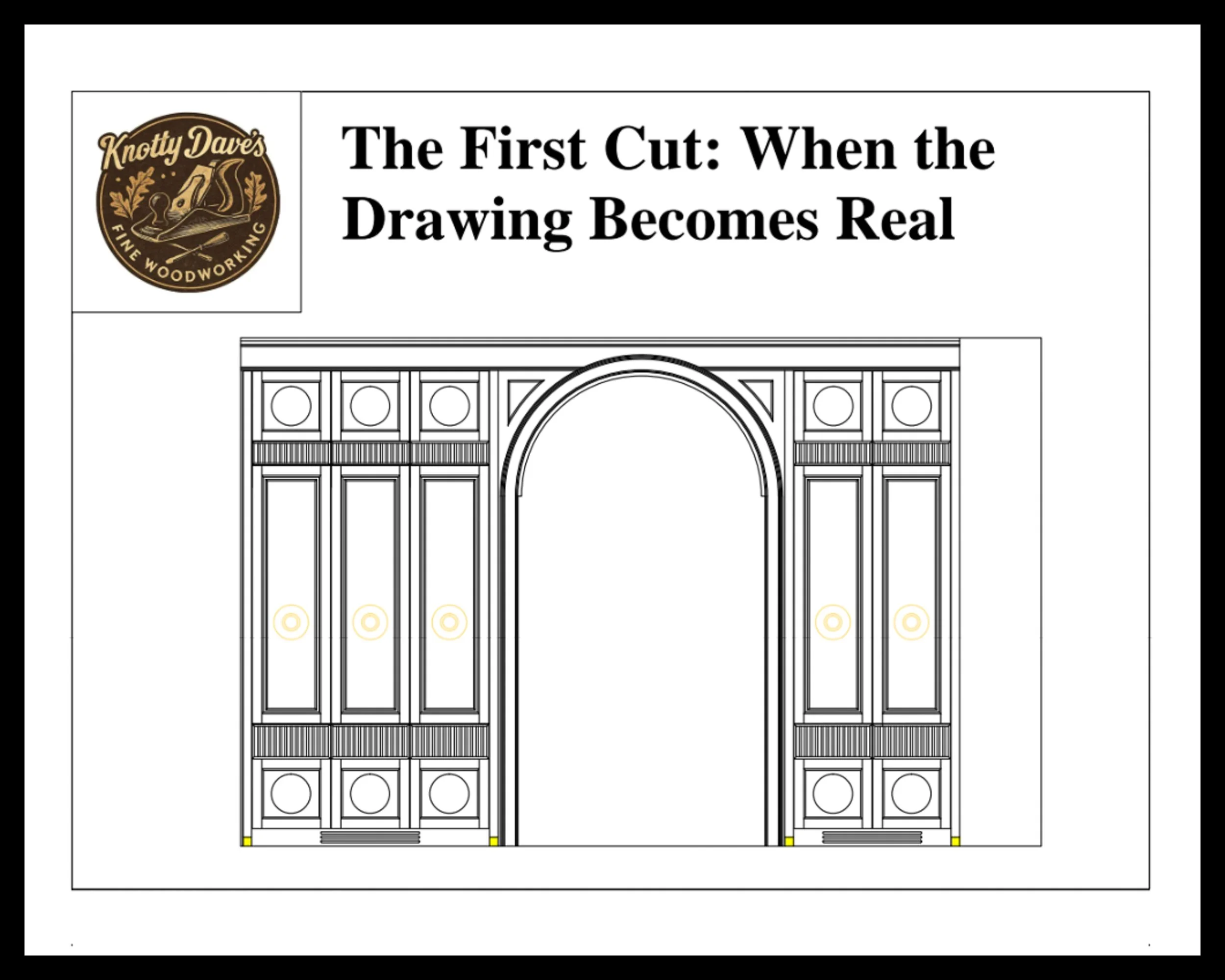
The Drawing Locked In — The Last Safe Moment
This elevation represents the final moment of control before the build begins. Every measurement, every proportion, every detail is frozen here — the last reversible stage of the job. Once the first cut is made, this drawing becomes a commitment, not a concept. For complicated builds like this one, the elevation carries all the weight: it’s the promise you make to the room, and the standard you’ll be judged against when the cabinets finally meet the real‑world conditions you measured months earlier.
The First Cut — Digital to Sawdust
Over the years I’ve had so many jobs that I’ve forgotten half of them — not the lessons, just the jobs. Most of those early ones were apprentice work: do as you’re told, build what’s handed to you, trust the drawings because someone else made them. A designer I never met created the concept, a draftsperson turned it into shop drawings, and by the time it reached me, I just built it. And usually I never saw the job again once it was trucked out of the shop.
But once I opened my own shop, everything changed.
Now I’m the one who measures the rooms. I confirm door and window locations. I check electrical outlets, heat registers, and every detail that matters. I catch mistakes from other people’s measurements. I triple‑check everything before a single line is drawn.
The designer or owner signs off on my drawings — but the responsibility is mine. Nobody double‑checks my work. If something is wrong, that’s on me.
And that’s where the stress behind the drawings lives.
The Digital World: Calm, Controlled, and Deceptively Safe
Drafting feels safe. The room dimensions are locked in. The elevations make sense. The joinery is planned. The cut list is clean.
On the screen:
mistakes can be undone
lines can be nudged
dimensions can be corrected
nothing tears out
nothing binds
nothing surprises you
The digital world is perfect — or at least it pretends to be.
But drawings don’t build cabinets. All of those design ideas are interesting, but eventually somebody has to turn on a saw.
The Moment Everything Becomes Real
The job moves from the digital world to the real one the moment the material arrives and the saws start humming. Sawdust piles up. Boards stack on the bench. The project looks back at you.
That first cut — that exact moment — is the point of no return.
The drawing better be right. The measurements better be honest. The engineering better hold up.
And the bigger the job, the heavier that moment feels.
Apprentices never feel this. They’re shielded from it. They just build what they’re given. But as an owner, that stress is mine — and I love it. It sharpens you. It reminds you that the digital world is only a plan, and the real world is the truth.
Once the first cut is made, the fear dissolves. Momentum takes over. The build becomes a rhythm. The drawing becomes a guide instead of a threat.
I follow the plan I created, trusting every decision I made in the digital phase. Every joint, every reveal, every tolerance — all of it has to carry through to the end.
The Stress Returns — Install Day
The first‑cut stress comes back right before install day.
That’s when the design has to fit the room. Not the room in the drawing — the real room.
Installs can take weeks. But once I’m through the door and things are going well, the stress fades. The client sees progress. They get excited. And that excitement makes the work lighter.
Then the job is done. The DSLR comes out. Tripod, flashes, angles, details.
The project becomes digital again — captured, documented, archived. I pack up my gear and may never see the work I poured myself into ever again. The photos are all I keep.
And then I’m on to the next job. The cycle resets. And soon enough, I’m facing that first cut again.
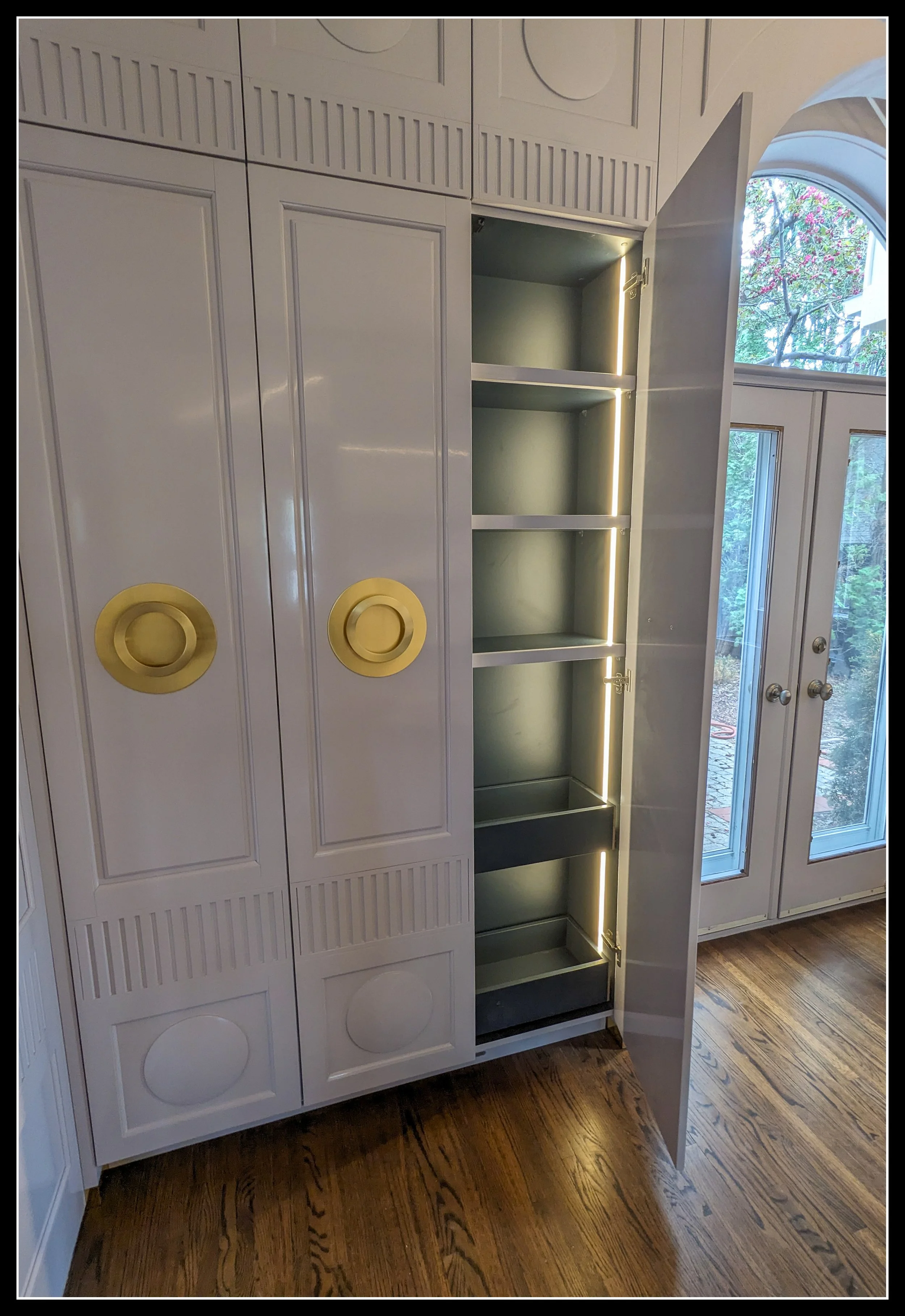
Install Day — When the Room Demands the Truth
Looking at a room that needs to be built is where the pressure starts. At some point, the first cut is made, and from that moment forward every hour poured into the build becomes time you can’t replace. Install day is where that commitment gets tested. The cabinets have to fit the real room — not the one in the drawing — and this is where your grit shows up. All the quiet decisions made months earlier meet the physical world, and the room tells you whether your preparation can stand its ground.
Digital to Sawdust — Design Studio
Digital tools, layout, and proportion — the design side of woodworking before the sawdust begins.
SHARE
Digital to Sawdust — Design Studio
Lessons in woodworking design, geometry, and digital layout — teaching how furniture is shaped with intention.— head to the Design Studio. Just one click away.
If you’d like to hear from me only when something big is happening — a launch, a milestone, or a major project — you can join the mailing list below.
Written by David Flather, Red Seal cabinetmaker and founder of Knotty Dave’s Fine Woodworking — a Manitoba shop rooted in heritage restoration, storytelling, and real craft.
All photos shot by David Flather — in the shop, on the road, and in the places where craft and story meet.
Related stories:
Profiles: Light, Shadow, and Mood — How Light, Shadow, and Edges Shape a Room
The Quiet Geometry of Furniture: How Curves Change a Room, Softening Rectangular Design
The Workshop Library
If you enjoyed this story, there’s lots more like it inside The Workshop Library — and it’s free to explore.
Wood Archive — species, grain, working properties, and real‑world craft notes
Behind the Grain — the deeper stories inside wood, craft, and heritage
The Working Side of the Craft — tools, shop life, workflow, and the realities of making
Digital to Sawdust — Design Studio — geometry, proportion, visual flow, and design thinking
The Stories of the Shop — the personal side of craft, the shop’s history, and the quiet moments that shape the work
House & Hearth — heritage home restoration, the hearth room, winter culture, and the lived‑in side of craft
I’m just one man with a shop, building this archive one story at a time. If you’d like to follow the journey as it unfolds, explore The Workshop Library — new stories every week.
